Your tablet presses are running right now — and statistically, at least one is drifting outside acceptable compression force tolerances without triggering a single alert in your current system. That silent deviation is not a quality event waiting to happen. It is a recall, a batch loss, and a compliance gap your next FDA audit will surface before your QA team does. As the executive responsible for pharmaceutical manufacturing performance, the predictive infrastructure to eliminate this permanently is available today.
AI-driven predictive maintenance for tablet compression equipment — transforming punch wear data, turret vibration signals, and die condition metrics into clinical-grade manufacturing outcomes.
The Strategic Case for Compression Intelligence
Tablet press failures manifest as incremental drift — a 0.8 kN deviation in main compression force, an asymmetric punch penetration depth — until a batch falls outside hardness specification. Intelligent compression force monitoring reframes this entirely: your operations leadership receives predictive alerts 48-72 hours before a deviation becomes a defect, structurally eliminating unplanned downtime as a budget line item. Schedule a Strategic Solution Session to see how a unified analytics platform eliminates these gaps across your entire solid dose line.
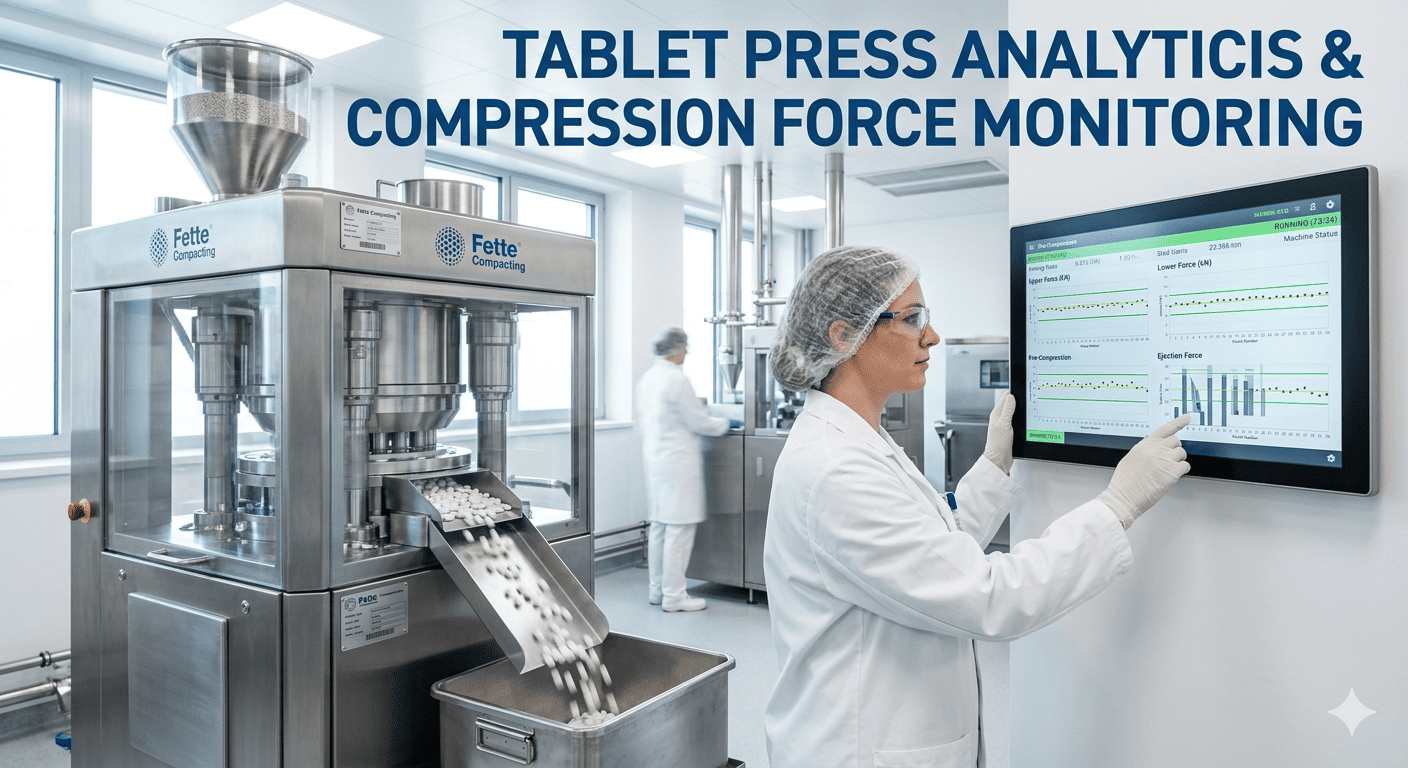
Compression Force Trending
Continuous main and pre-compression force analysis with SPC control charting, drift detection, and automatic out-of-tolerance escalation before batch impact.
Turret Vibration Analytics
High-frequency vibration signature monitoring to detect bearing degradation, cam track wear, and imbalance patterns invisible to manual inspection cycles.
Punch & Die Wear Tracking
Individual punch force profiling across every station to identify tip fracture risk, cupping deviation, and coating wear — enabling precision replacement scheduling.
Die Analytics & Fill Depth
Die cavity fill consistency correlated with powder flow data to neutralize tablet weight variation at the source before it propagates to hardness or disintegration failure.
Current State vs. Future State: The Cost of Inaction
Every week your tablet line operates without predictive compression monitoring, costs distribute invisibly across batch rejections, emergency maintenance labor, and compounding regulatory exposure. Schedule a Strategic Solution Session to review our site-specific ROI calculator.
| Platform Component | Current State | Future State — AI | Operational Impact | Priority |
|---|---|---|---|---|
| Compression Force | Manual spot checks; deviations found post-batch | Continuous AI monitoring; alerts at 2 sigma drift | Batch loss elimination | High |
| Punch Replacement | Fixed calendar intervals; surprise failures | Condition-based wear signature scheduling | 30-45% tooling cost reduction | High |
| Turret Bearing Health | No early warning; multi-day unplanned stops | Vibration trending detects degradation 72hrs ahead | $180K-$400K downtime avoided | Medium |
| Tablet Weight Variance | IPC sampling; variance attributed to formulation | Die fill correlated to compression in real time | Reject rate under 0.3% achievable | High |
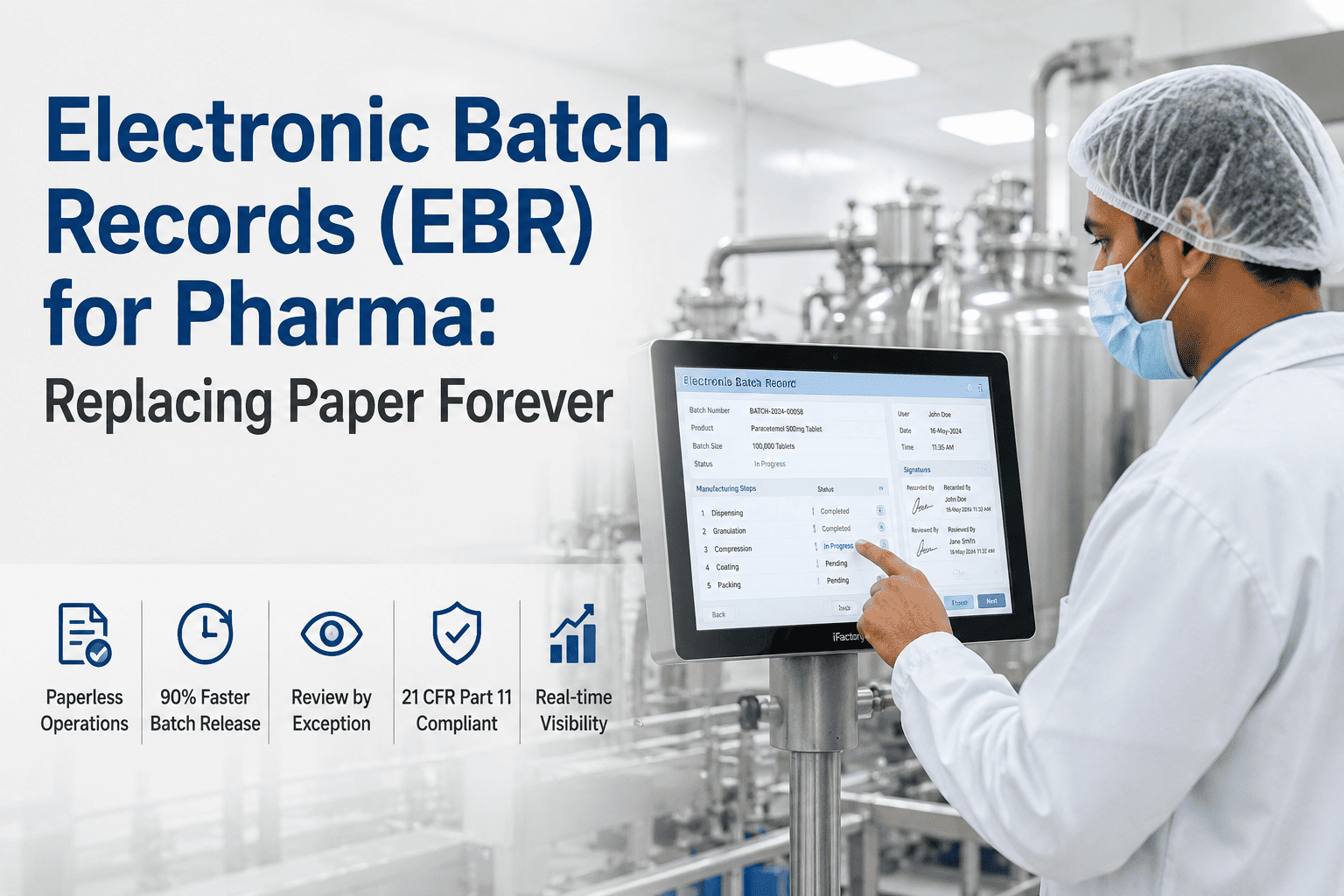
| Regulatory Documentation | Manual batch records; audit prep takes weeks | Immutable 21 CFR Part 11 trail auto-generated | FDA readiness continuous | Medium |
| OEE & Throughput | OEE 55-65% due to unplanned stops | OEE 82-88% sustained through predictive loop | +$2M-$6M annual throughput gain | Lower |
Five-Layer Intelligence Architecture for Tablet Press Monitoring
A mature compression analytics platform is a layered intelligence architecture — delivering ROI at every deployment phase. Schedule a Strategic Solution Session to review our reference architecture for secure, GMP-compliant multi-press orchestration.
Sensor Instrumentation & Edge Data Capture
High-resolution force transducers and accelerometers retrofitted on each press station, processing raw signals at 10kHz — computing peak force, force-time integrals, and ejection force profiles at the edge before cloud transmission.
Real-Time SPC & Anomaly Detection
Dynamic SPC control charts generated continuously for each parameter. ML anomaly detection distinguishes equipment-origin signals from formulation-driven variation, eliminating false alarms that erode operator trust and maintenance credibility.
Predictive Failure Modeling
Ensemble models generate remaining useful life (RUL) estimates for punches, dies, cam tracks, and bearings — presented as actionable risk scores with confidence intervals, not raw model output requiring engineering interpretation.
Automated Work Order & CMMS Integration
When models cross risk thresholds, maintenance work orders auto-generate and push to SAP PM, Maximo, or equivalent. Spare parts availability checked and interventions scheduled without manual coordination overhead.
Compliance Reporting & Digital Batch Records
Every compression event and maintenance action written to an immutable 21 CFR Part 11 audit log. Batch summaries auto-generated, reducing record closure from days to hours and QA review burden by over 60%.
Six Monitoring Gaps Undermining Your Manufacturing Performance
Most pharmaceutical manufacturers have some level of press instrumentation — what they lack is the integration layer that transforms isolated data points into a unified predictive signal. These gaps represent the structural vulnerabilities most commonly identified across solid dose manufacturing sites.
Aggregate force averages mask station-to-station variation. A single underperforming punch station can bias an entire batch while average statistics remain within specification.
Most instrumented presses log vibration data never systematically analyzed for bearing or cam track degradation. The data exists; the intelligence layer to interpret it does not.
Compression process data in MES and maintenance history in CMMS are never correlated, making causal links between equipment interventions and quality outcomes statistically invisible.
Fixed calendar replacement results in premature retirement of serviceable tooling or delayed replacement of worn tips already causing edge chipping on tablets in your current batch.
Current systems alert after an out-of-specification event is detected — not before. Without a probabilistic risk score, QA teams are always responding, never anticipating deviations.
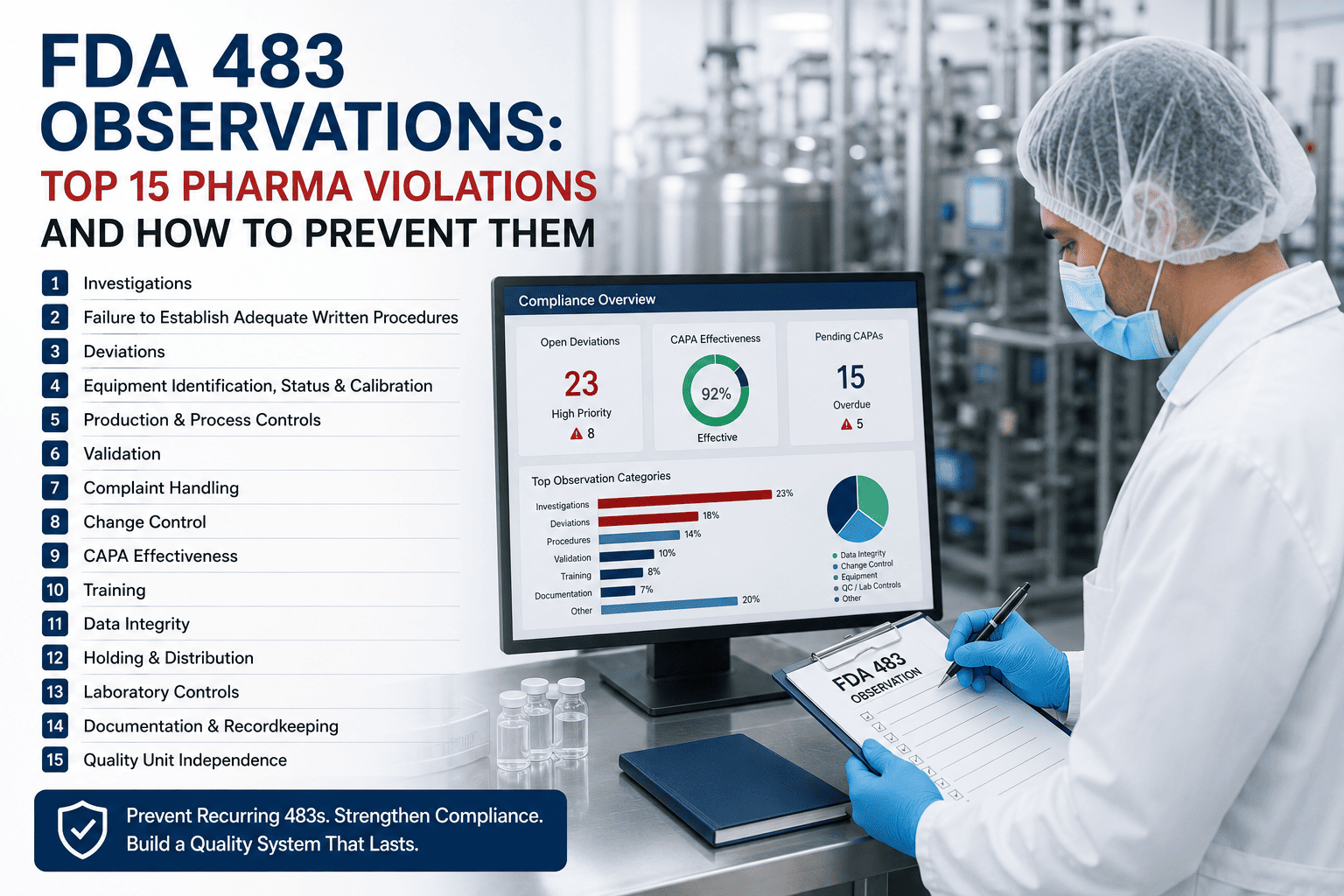
Manual batch records contain documentation gaps creating regulatory exposure. Without continuous timestamped electronic records for every parameter change, 483 observations remain a persistent risk.
Manufacturing leaders solve these gaps by moving to a unified compression intelligence layer. Teams regularly schedule a Strategic Solution Session to benchmark current programs against enterprise-grade predictive architecture designed for GMP scalability.
Launch Predictive Compression Intelligence at Your Solid Dose Site
In a 45-minute session, our team will assess your compression monitoring infrastructure, identify your highest-exposure failure risk, and present a prioritized deployment roadmap — at no cost.
Tablet Press Analytics — Executive Questions Answered
Can the platform integrate with existing Fette, Korsch, or IMA presses without hardware replacement?
Yes. The platform uses vendor-neutral OPC-UA adapters to connect with native instrumentation on all major OEMs. For older platforms, retrofit transducer kits are available requiring no press disassembly or mechanical revalidation.
What is the validation pathway for deploying AI monitoring in a GMP environment?
The platform ships with a pre-built CSV package including IQ, OQ, and PQ protocols against GAMP 5 Category 4 guidelines — satisfying both FDA 21 CFR Part 11 and EU Annex 11 requirements. Schedule a Strategic Solution Session to review the validation package with our compliance architects.
What ROI timeline should we present to our CFO?
Most solid dose sites achieve full platform ROI within 9-14 months, driven by batch loss elimination and tooling cost reduction. By year three, predictive AI maintenance typically delivers 3-5x the initial investment. Request an Operational Audit to initiate a site-specific ROI model.
Can compression analytics data export to our QMS and EBR systems?
Yes. Native connectors are available for Veeva Vault, MasterControl, TrackWise, and eBR systems from Werum and Rockwell. Compression force profiles and maintenance records push directly to electronic batch records, eliminating manual transcription errors. Book a Demo to see live EBR sync in action.
Launch Your Predictive Compression Intelligence Pilot Today
Join the solid dose manufacturers already optimizing tablet quality and press lifecycles with AI-driven compression analytics. Secure your compliance posture and automate your maintenance cycles.