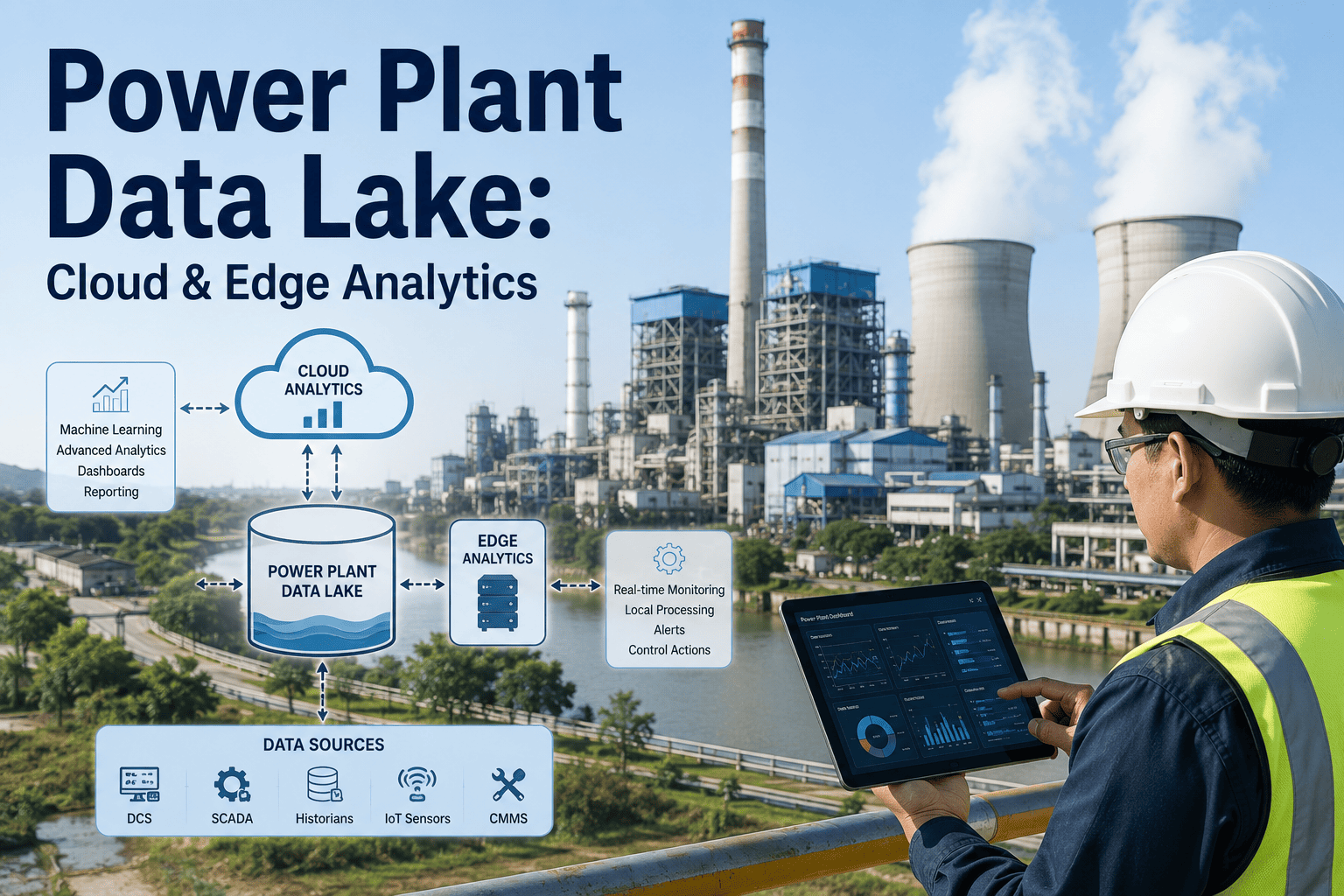
Every power plant operations leader evaluating an AI-driven analytics platform eventually arrives at the same decision point: cloud or on-premise deployment? The question sounds architectural, but it is fundamentally operational. The answer determines where your plant's sensor data lives, how quickly AI inference happens who controls access during a network outage, how you satisfy NERC CIP cybersecurity requirements, what your total cost of ownership looks like over a five-year horizon. Neither model is universally correct — the right deployment architecture depends on your plant' connectivity profile, cybersecurity obligations, existing IT infrastructure, and the specific analytics capabilities you need most. This guide maps every material difference between cloud and on-premise AI-driven deployments for U.S. power plants so your team can make the right choice — or, increasingly, the right hybrid combination — for your operating environment.
Cloud vs. On-Premise AI-Driven
for Power Plants
Security, latency, data ownership, compliance, and cost — mapped side by side so your team can choose the deployment model your plant actually needs.
Why Deployment Architecture Is a Strategic Decision, Not an IT One
Most power plant teams treat the cloud versus on-premise question as an IT procurement decision — a matter of infrastructure cost and vendor preference. That framing misses the operational consequences that flow directly from deployment architecture choices. Where AI inference happens determines response latency. Where data is stored determines regulatory exposure. What happens to analytics capability during a network outage depends entirely on how the platform was deployed. These are reliability and compliance questions, not just infrastructure ones.
The structural reality for U.S. power plants is that three factors make the deployment decision more consequential than in most industries: cybersecurity regulations (NERC CIP) that impose specific requirements on how operational data is stored and accessed; connectivity environments that range from urban gas plants with redundant fiber to remote wind farms with no reliable cellular coverage; and the real-time nature of fault detection, where the difference between 50ms edge inference and 600ms cloud round-trip can determine whether a protective action fires before or after a failure propagates.
Head-to-Head: Cloud vs. On-Premise vs. Hybrid — Full Comparison
The table below is the definitive comparison across every dimension that matters for U.S. power plant deployment decisions. Read across any row to understand how each architecture handles a specific operational or compliance requirement.
| Decision Dimension | Cloud Deployment | On-Premise Deployment | Hybrid (Edge + Cloud) |
|---|---|---|---|
| AI Inference Latency | 200–800ms round-trip. Acceptable for dashboards and reporting. Too slow for real-time protective actions. | 10–50ms local inference. Suitable for time-critical fault detection and protective action triggers. | Edge handles real-time inference (<50ms). Cloud handles fleet analytics and model retraining. |
| Offline Capability | Analytics go dark during connectivity loss. Technicians and dashboards lose access until signal returns. | Full analytics capability maintained indefinitely without network dependency. | Edge layer maintains full local capability offline. Cloud layer syncs automatically on reconnect. |
| Data Sovereignty | Operational data resides on vendor or cloud provider infrastructure. Data residency agreements required. | All operational data remains within plant network perimeter. Full owner control at all times. | Raw sensor data processed at edge. Aggregated analytics data syncs to cloud with configurable retention. |
| NERC CIP Compliance | Requires thorough vendor cybersecurity attestation. Access logging must extend to cloud infrastructure. More complex to audit. | Data never leaves controlled perimeter. Simpler CIP audit posture for most facility types. | Edge layer satisfies CIP perimeter requirements. Cloud layer requires vendor CIP attestation for synced data. |
| Upfront Capital Cost | Low. No server hardware, no data center infrastructure. Operational expense model. | High. Server hardware, network infrastructure, and IT staffing required. Capital expense model. | Moderate. Edge nodes at asset clusters. Minimal cloud infrastructure. Mixed CapEx/OpEx. |
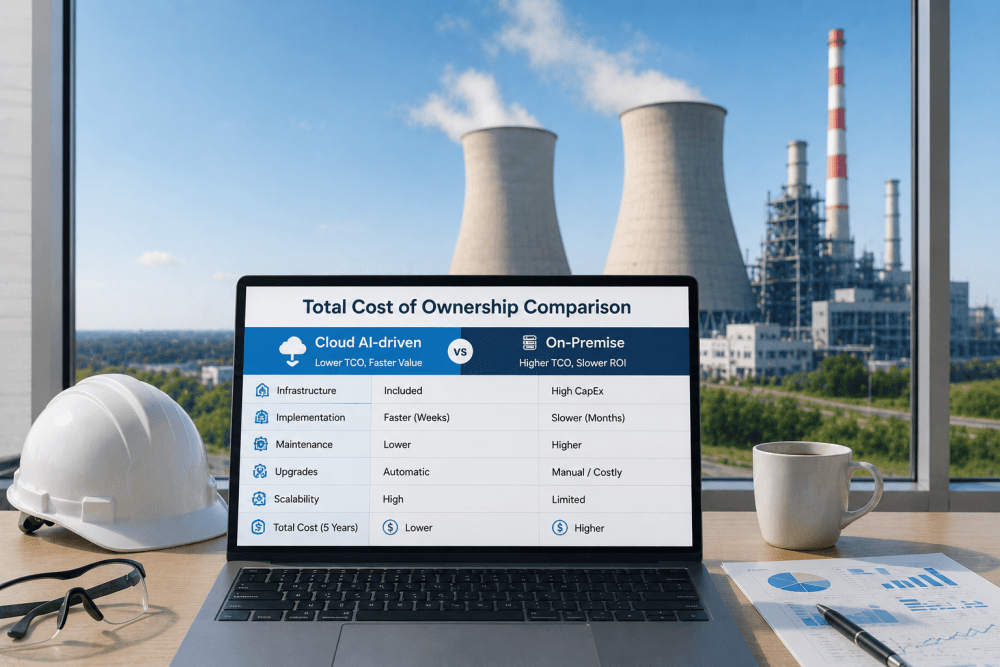
| 5-Year Total Cost of Ownership | Predictable subscription cost. No hardware refresh cycles. Lower for most mid-size plants. | High hardware, maintenance, and IT staffing costs. Hardware refresh at 5–7 years adds significant cost. | 40% lower 5-year TCO than pure on-premise across reported deployments. Optimal cost-capability balance. |
| AI Model Updates | Automatic. Vendor deploys updated models without plant IT involvement. Fastest path to improved accuracy. | Manual. Model updates require IT deployment effort and scheduled downtime windows. | Cloud retrains models automatically. Updated models push to edge nodes on next connectivity window. |
| Fleet-Wide Analytics | Full fleet visibility. Cross-plant pattern detection, benchmarking, and model improvement from aggregated data. | Single-site analytics only. No cross-fleet learning unless data is manually aggregated and exported. | Full fleet analytics in cloud layer. Edge layer provides site-level real-time intelligence. |
| IT Staffing Requirement | Minimal. Vendor manages infrastructure, security patching, and uptime. Low internal IT burden. | Significant. Dedicated IT resources required for server management, patching, backups, and security. | Low. Edge nodes are managed appliances. Cloud layer managed by vendor. Minimal internal IT burden. |
| Deployment Timeline | 4–8 weeks from contract to production. No hardware procurement lead times. | 12–24 weeks. Server procurement, installation, network configuration, and security review required. | 5–10 weeks. Edge node deployment at asset clusters plus cloud tenant provisioning. |
When Each Deployment Model Is the Right Choice
The comparison table above maps capabilities — but the right deployment decision depends on matching those capabilities to your plant's specific profile. The decision framework below identifies the plant characteristics that make each model the clear operational choice.
NERC CIP Cybersecurity: How Deployment Architecture Affects Compliance Posture
NERC CIP is the dimension of the deployment decision that most frequently surprises plant operations teams during vendor evaluation. The cybersecurity requirements are not uniform across deployment models — and the compliance burden is substantially different depending on where operational data resides and who can access it. The following breakdown maps what each standard actually requires from your deployment architecture.
CIP-002 — Asset Identification
Requires identification of all Bulk Electric System cyber assets. Cloud-deployed analytics platforms that access operational data from BES assets must be included in scope. On-premise systems within the plant perimeter have a cleaner classification path under most utilities' existing CIP programs.
CIP-005 — Electronic Security Perimeters
Requires documented and enforced electronic security perimeters around BES cyber systems. Cloud deployments require detailed documentation of data flows across the ESP boundary. On-premise deployments within the existing ESP are typically simpler to document. Hybrid models require clear definition of which data crosses the ESP boundary for cloud sync.
CIP-010 — Configuration Change Management
Requires documented change management for BES cyber systems. Automatic model updates in cloud deployments must be incorporated into the CIP-010 change management framework. On-premise deployments give IT teams direct control over when and how model updates are applied — though this control comes at the cost of slower accuracy improvement cycles.
CIP-013 — Supply Chain Risk Management
Requires documented supply chain risk management for vendors providing software and services to BES cyber systems. Cloud analytics vendors must supply CIP-013 vendor risk assessments. iFactory maintains current CIP-013 documentation for both cloud and hybrid deployment configurations, available to customers during audit preparation.
Total Cost of Ownership: 5-Year Financial Model
The deployment model decision has long-term financial consequences that are frequently underestimated when plant teams focus on first-year licensing costs. The 5-year TCO comparison below reflects actual cost structures from iFactory deployments across U.S. power generation facilities of comparable scale — a 300 MW combined-cycle plant used as the reference case.
Expert Review: What Power Plant Operations Leaders Say About the Deployment Decision
The cloud versus on-premise debate in power plant AI analytics is frequently driven by assumptions that do not survive contact with operational reality. Most plants I work with arrive at this decision having already decided — either because their IT team defaults to on-premise for control reasons, or because their operations team defaults to cloud for speed reasons. Neither default is wrong, but both are incomplete without testing the assumptions against the plant's actual operating environment.
Conclusion: Match the Architecture to the Operating Environment
The cloud versus on-premise question does not have a universal answer for U.S. power plants — but it does have a right answer for each specific plant, if you map the decision against the actual operating environment rather than organizational defaults. Plants with reliable connectivity, limited IT infrastructure, and multi-site analytics needs will typically find cloud deployment delivers the fastest ROI with the lowest operational burden. Plants with strict data sovereignty requirements, existing IT capacity, and regulatory constraints that limit external data flows may find on-premise the only viable path. For the largest category — remote generation sites, multi-site operators, and plants where real-time fault detection cannot tolerate cloud latency — hybrid edge-plus-cloud architecture delivers the best combination of local intelligence, fleet analytics, and cost efficiency.
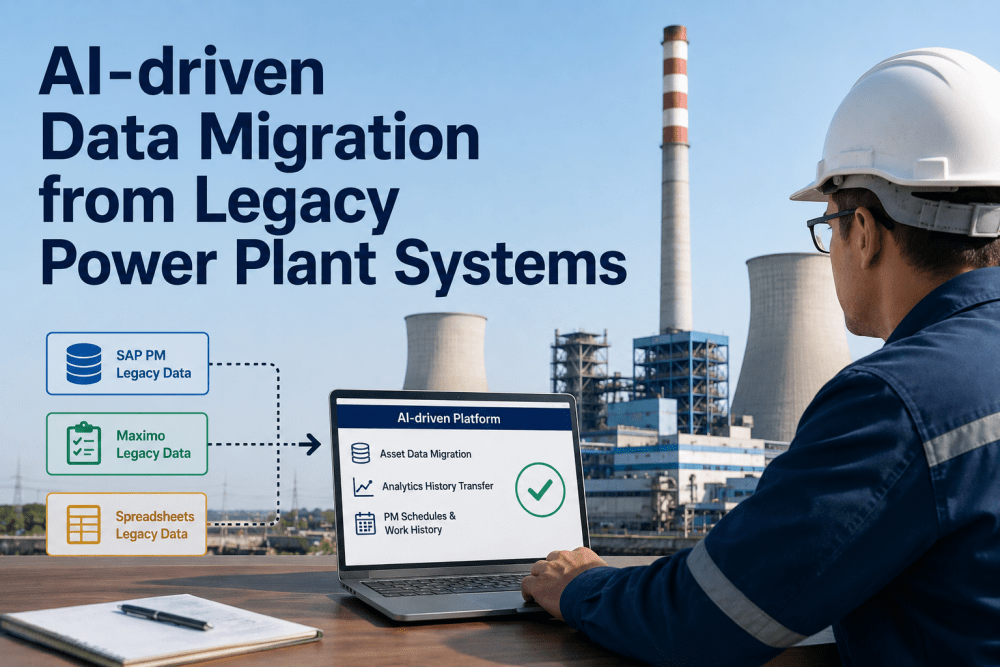
The deployment model decision is not permanent. iFactory's platform supports migration between deployment configurations as plant requirements evolve — from cloud to hybrid as a remote site expands, or from on-premise to hybrid as an aging server infrastructure approaches its refresh cycle. The right approach is to make the current decision on current operating realities, with a clear understanding of what each architecture delivers and what it costs over a full five-year horizon.