Power Plant Process Safety Management — AI Risk Assessment & Barrier Verification

By Johnson on July 7, 2026

power-plant-process-safety-management-psm-ai

Every major process safety incident investigation eventually finds the same pattern: the hazard was already identified, in a HAZOP study or a hazard register sitting in a document management system, and the barrier meant to control it had quietly stopped functioning the way the study assumed. Equipment gets modified, production rates increase, and control strategies shift, but the safeguards defined years earlier rarely get re-verified against those changes. An EHS manager can hold a perfect stack of hazard studies and still miss the one barrier that degraded last quarter. iFactory connects your hazard studies directly to live equipment condition so every safeguard stays verified against current reality, not the reality that existed when the study was signed, and you can book a demo to see your own critical barriers mapped this way.

EHS MANAGEMENT · PROCESS SAFETY · BARRIER VERIFICATION

A Hazard Study Is Only as Good as the Barrier It Assumes Is Still Working

iFactory keeps every safety-critical barrier — from pressure relief systems to gas detection to fire suppression — linked to live equipment condition, so your team knows the moment a protective layer identified in a HAZOP or PHA study stops behaving the way the study assumed.

THE LAYERS THAT KEEP A HAZARD FROM BECOMING AN INCIDENT

Process Safety Works Through Stacked Layers of Protection — Not One Big Safeguard

No single barrier is expected to stop a hazard on its own. Instead, layers of protection stack so that if one fails, the next is designed to catch it. The problem is that a stack of paper barriers looks identical to a stack of working ones until the moment they are actually tested.

Process Design
Inherently safer design choices made at the engineering stage, before any control system exists.
Basic Process Control
Normal control loops holding temperature, pressure, and flow within intended operating limits.
Alarms & Operator Response
Critical alarms designed to prompt a trained operator to intervene before conditions escalate.
Safety Instrumented Systems
Independent automatic protection that trips the process when it approaches a defined safe limit.
Physical Protection
Relief valves, rupture discs, containment, and fire suppression as the final mechanical barriers.
HIGH-ENERGY SYSTEMS EHS TEAMS MANAGE

Power Plants Concentrate Several High-Energy Hazards in One Facility

Steam Systems

High-pressure, high-temperature steam presents both thermal and mechanical energy release hazards, particularly at boiler drums, headers, and turbine seals.

Hydrogen Systems

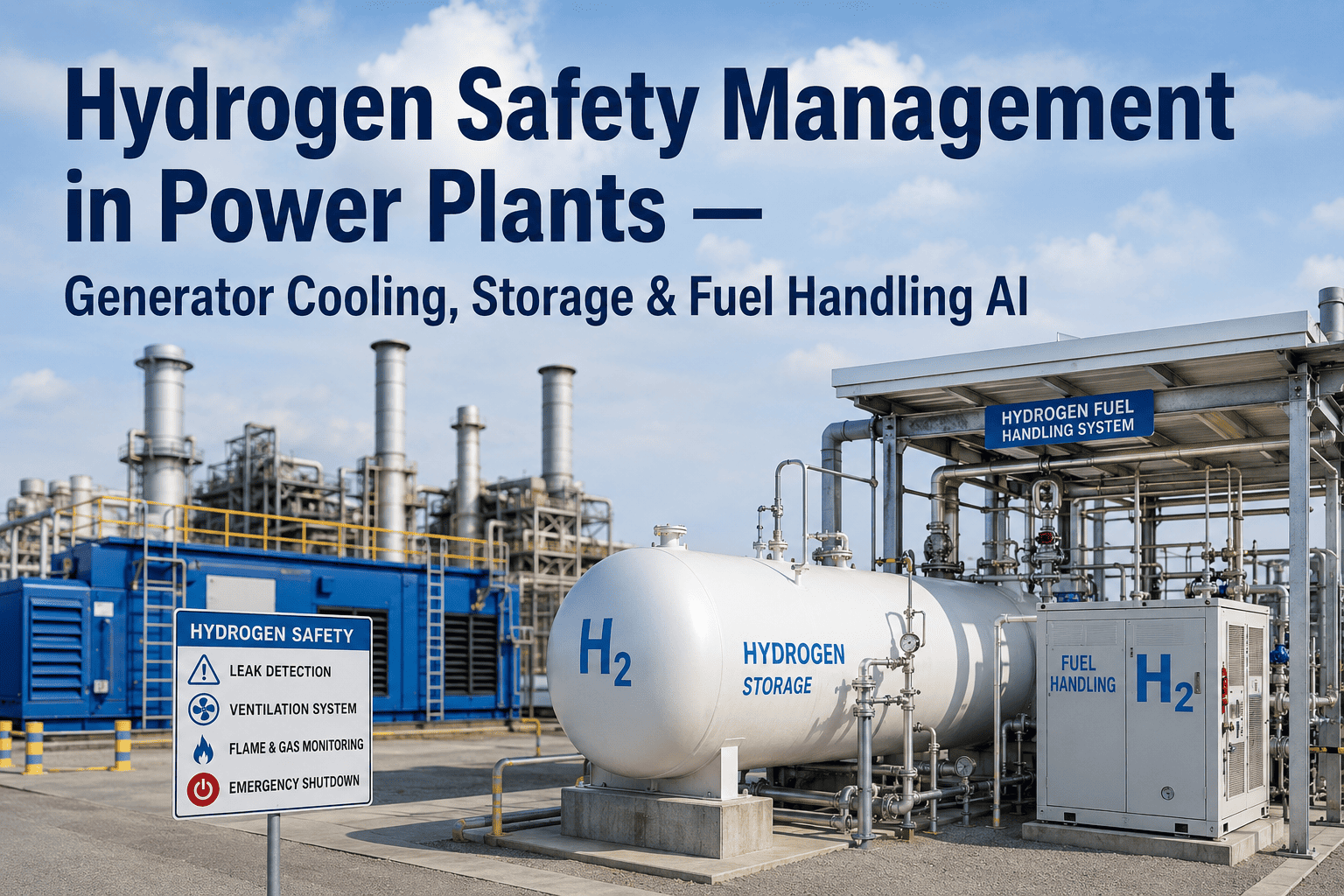
Generator cooling systems using hydrogen introduce flammability and purge-sequence hazards that require strict barrier verification during startup and shutdown.

Ammonia Systems

SCR emissions control systems storing and injecting ammonia carry toxic release hazards that demand continuous leak detection and isolation readiness.

Rotating Equipment

Turbines, compressors, and pumps concentrate stored mechanical energy that can release suddenly during a bearing or coupling failure.

A Barrier That Looks Fine on Paper Can Still Be Silently Degraded in the Field

iFactory verifies your process safety barriers against live equipment condition, not just the assumptions made when the hazard study was written.

STATIC STUDY VS LIVE VERIFICATION

What Changes When Hazard Studies Are Connected to Real Equipment Instead of Filed as Documents

Question an Auditor Asks Paper-Based PSM Program iFactory-Connected PSM Program
Is this barrier still valid after the equipment was modified? Requires manual cross-reference against management-of-change records Barrier status flagged automatically when linked equipment changes
Which safeguards are degraded right now? Only visible at the next scheduled inspection Visible continuously on a live risk dashboard
Can we prove barrier integrity during an audit? Manual document reconstruction across multiple systems Auditable record generated directly from equipment condition history
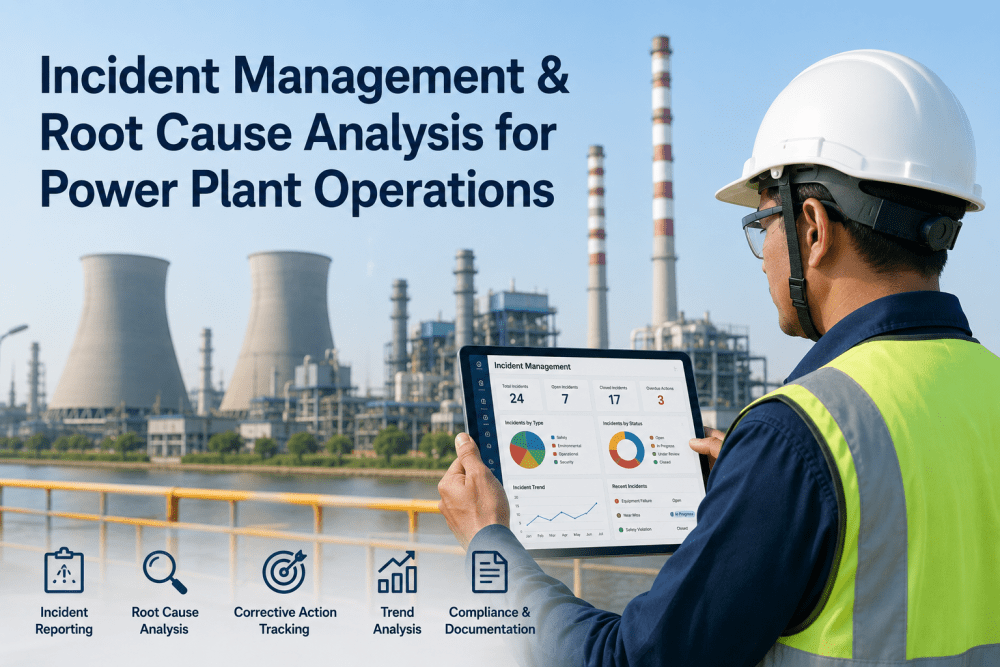
Are near-misses linked back to specific barrier weaknesses? Investigated case by case, insights often stay siloed Patterns aggregated across incidents to flag recurring barrier gaps
HOW IFACTORY VERIFIES BARRIERS

Three Ways iFactory Keeps Safeguards Honest Between Formal Hazard Study Revisions

Equipment-linked hazard registers. Every identified hazard, critical element, and defined barrier is tied to its corresponding physical equipment tag, creating one consistent source of truth across operations, maintenance, and HSE teams.
Change-triggered re-assessment. When equipment is modified, a production rate shifts, or a control strategy changes, the barriers depending on that equipment are automatically flagged for review instead of waiting for the next scheduled audit.
Near-miss pattern aggregation. Incidents and near-misses across the facility are analyzed together to surface recurring barrier weaknesses that a single case-by-case investigation would likely miss.
FREQUENTLY ASKED QUESTIONS

Questions EHS Managers Ask About AI-Driven Process Safety Management

How does iFactory know a barrier has degraded without a physical inspection?
iFactory links each defined safeguard to the live condition data of the equipment it depends on, so a change in vibration, pressure, temperature, or control signal behavior on that equipment automatically flags the barrier for review rather than waiting for the next scheduled walkdown. This does not replace physical inspection, but it tells your team exactly where to prioritize inspection effort between scheduled audits. Book a demo to see how a specific barrier in your hazard register would be monitored.
Can this replace our HAZOP or PHA studies?
No, and it is not designed to. HAZOP and PHA studies remain the structured, expert-led process for identifying hazards and defining the barriers meant to control them. iFactory's role begins after that study is complete, keeping the defined barriers verified against real equipment condition as time passes and the plant changes, which is the gap most paper-based programs struggle to close. Contact our support team to discuss how this fits alongside your existing PHA schedule.
How does management of change get reflected in the barrier register?
When an equipment modification, production rate change, or control strategy update is logged, iFactory automatically flags every barrier associated with that equipment tag for re-assessment rather than requiring someone to manually remember which safeguards might be affected. This closes one of the most common gaps identified in major incident investigations, where a change was properly logged but the barriers it affected were never re-evaluated. Book a demo to see the change-triggered workflow in action.
Does this help with our high-energy systems specifically, like steam and hydrogen?
Yes, high-energy systems including steam, hydrogen cooling, and ammonia injection are exactly the systems where a degraded barrier has the highest consequence, which is why they benefit most from continuous verification rather than periodic inspection alone. iFactory tracks the specific critical elements associated with these systems, such as relief valve status, purge sequence completion, and leak detection response, against their defined safe operating envelopes. Contact our support team for guidance specific to your high-energy systems.
What does an audit-ready barrier record actually contain?
An audit-ready record includes the hazard identification source, the defined barrier and its critical elements, the equipment condition history supporting its current status, any change-triggered re-assessments, and the incident or near-miss history connected to that barrier, all generated directly from the platform rather than manually assembled across separate systems. This is the same evidence regulators expect under frameworks requiring documented hazard analyses and mechanical integrity programs. Book a demo to see a sample audit export.

Know Which Barriers Are Actually Working, Not Just Which Ones Are on Paper

iFactory keeps your process safety barriers verified against live equipment condition, so nothing slips through between hazard study revisions.

Share This Story, Choose Your Platform!