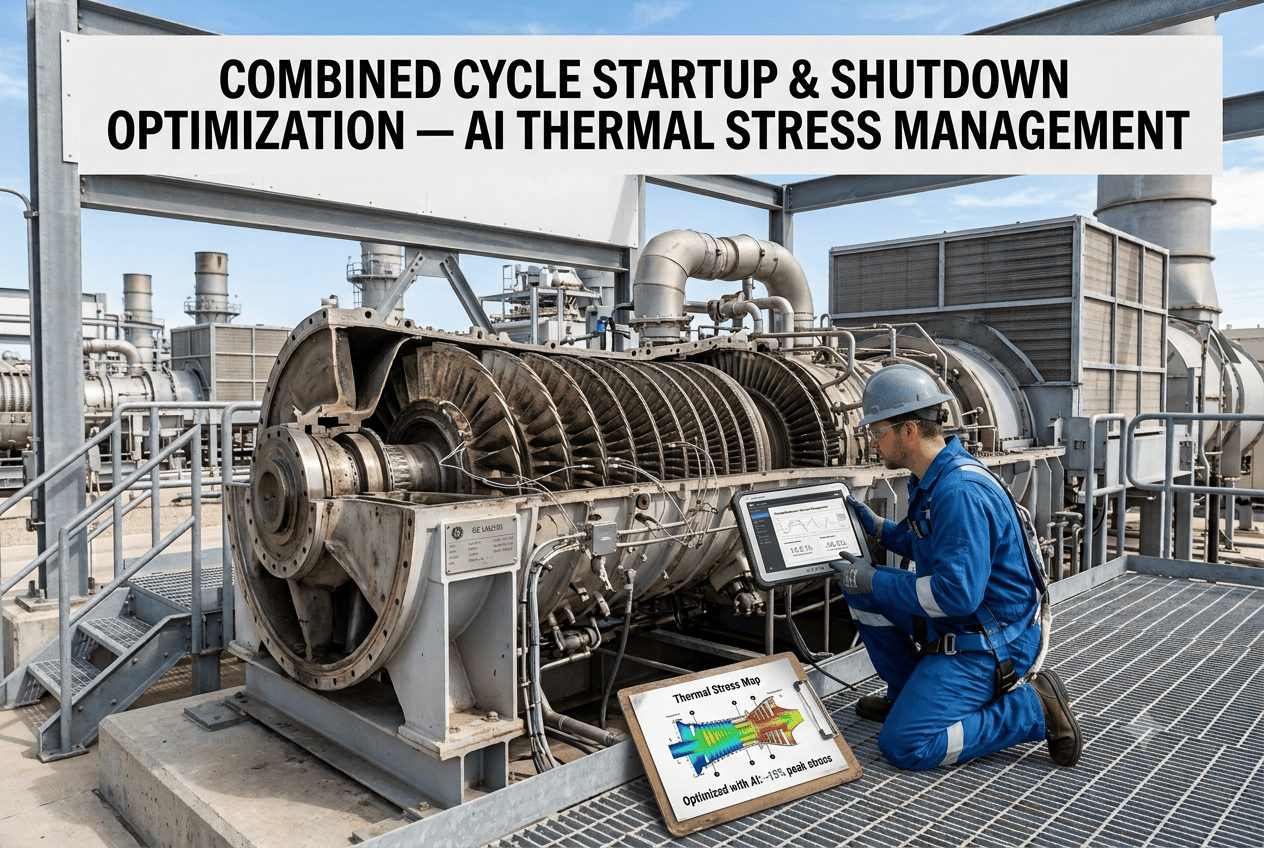
A single cold start on a combined cycle gas turbine inflicts roughly the same fatigue damage on hot-section components as 150 to 200 hours of steady-state running, yet many plants still launch every startup on a fixed, conservative sequence built for the worst-case thermal condition regardless of how the unit actually stood down. Push the ramp rate too hard and you risk cracking a rotor bore or a thick-walled HRSG drum; hold it too conservative and every restart burns an extra hour of fuel and lost dispatch revenue that a faster sequence could have captured safely. The right startup path depends on standstill time, metal temperature, ambient conditions, and drum wall thickness — variables that change on every single shutdown, which is exactly the kind of multivariable optimization problem AI is built to solve in real time. Book a demo to see how AI-optimized startup sequencing balances speed against thermal stress on your specific units.
PLANT MANAGER GUIDE · OEE & PERFORMANCE · AI STARTUP SEQUENCING
Every Startup Is a Trade-Off Between Speed and Metal Fatigue — AI Finds the Line Your Fixed Sequence Can't
iFactory's AI startup optimization reads standstill time, metal temperature, and ambient conditions on every shutdown to build a hot, warm, or cold start sequence that reaches dispatch as fast as thermal stress limits allow — instead of defaulting to the same conservative ramp every time.
150-200x
Fatigue Damage of a Cold Start vs. One Run-Hour
~40 Min
Achievable Hot Start Time on Optimized F-Class Units
20x
More Damaging: Cold Start vs. Warm Start Cycling
THE THREE START TYPES
Hot, Warm, and Cold Aren't Just Labels — They're Different Physics Problems
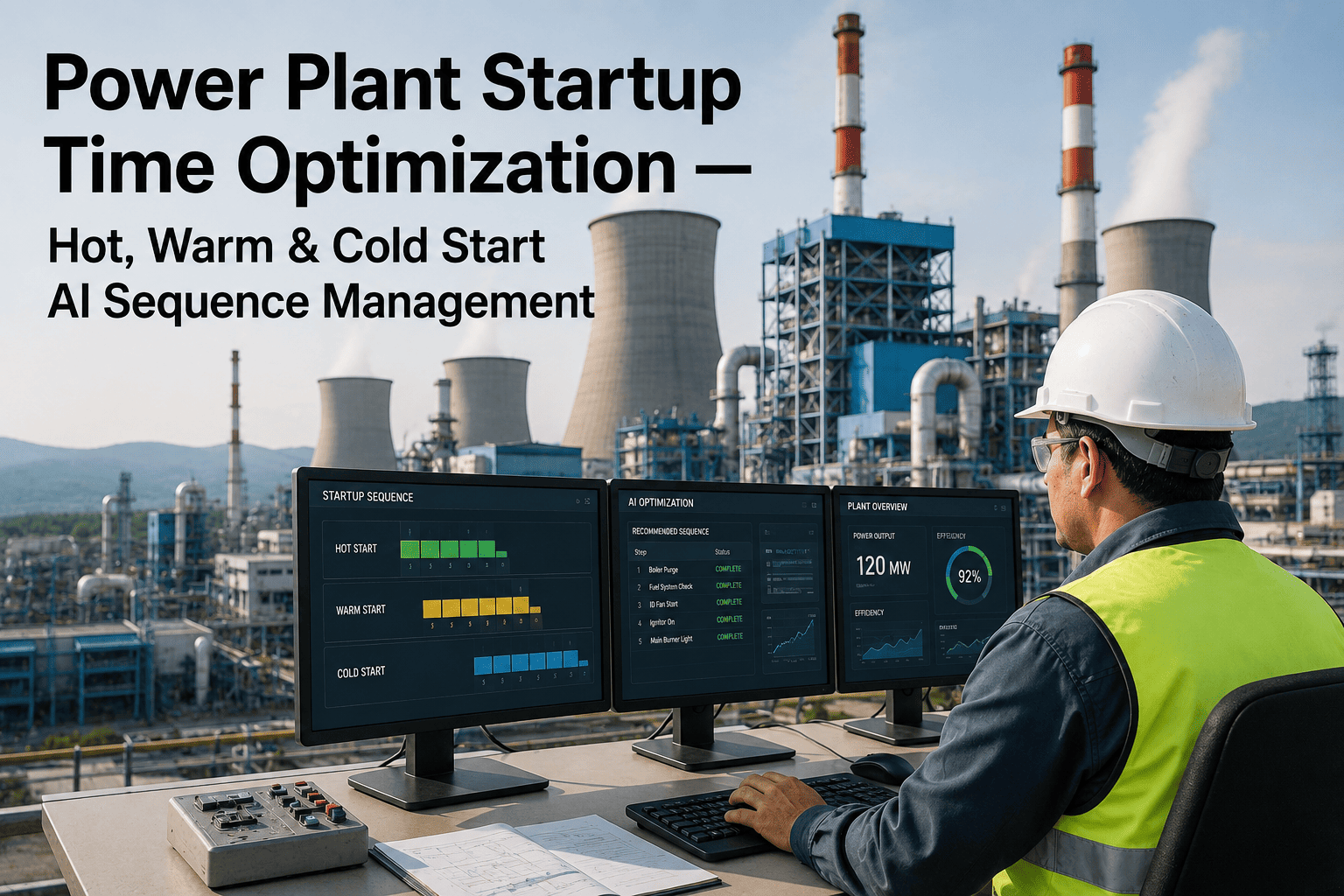
Startup classification is set by how long a unit has been standing still and how much heat its thick-walled components have already lost. A hot start deals with a rotor and HRSG drum that are still close to operating temperature; a cold start deals with metal that has fully equalized to ambient, meaning every ramp step has to fight much larger thermal gradients before it can move faster. The spectrum below shows how standstill time maps to start type and typical duration on a well-optimized F-class combined cycle unit. Getting the classification wrong in either direction has a real cost — treating a warm start as cold wastes fuel and dispatch time on unnecessary caution, while treating a cold start as warm risks pushing thick-walled components past their safe thermal gradient.
HOT START
≤ 8 Hours Standstill
HP inlet metal temperature above roughly 345°C. Achievable in about 40 minutes including purge timer on optimized units.
WARM START
8 - 48 Hours Standstill
HP inlet metal temperature between roughly 220°C and 345°C. Typically requires close to 1 hour to reach stable load.
COLD START
48 - 120+ Hours Standstill
HP inlet metal temperature below roughly 220°C. Thick-walled HRSG drums push this toward 2 hours on conventional sequences.
THE HIDDEN COST
Why a Cold Start Costs More Than the Extra Hour of Fuel
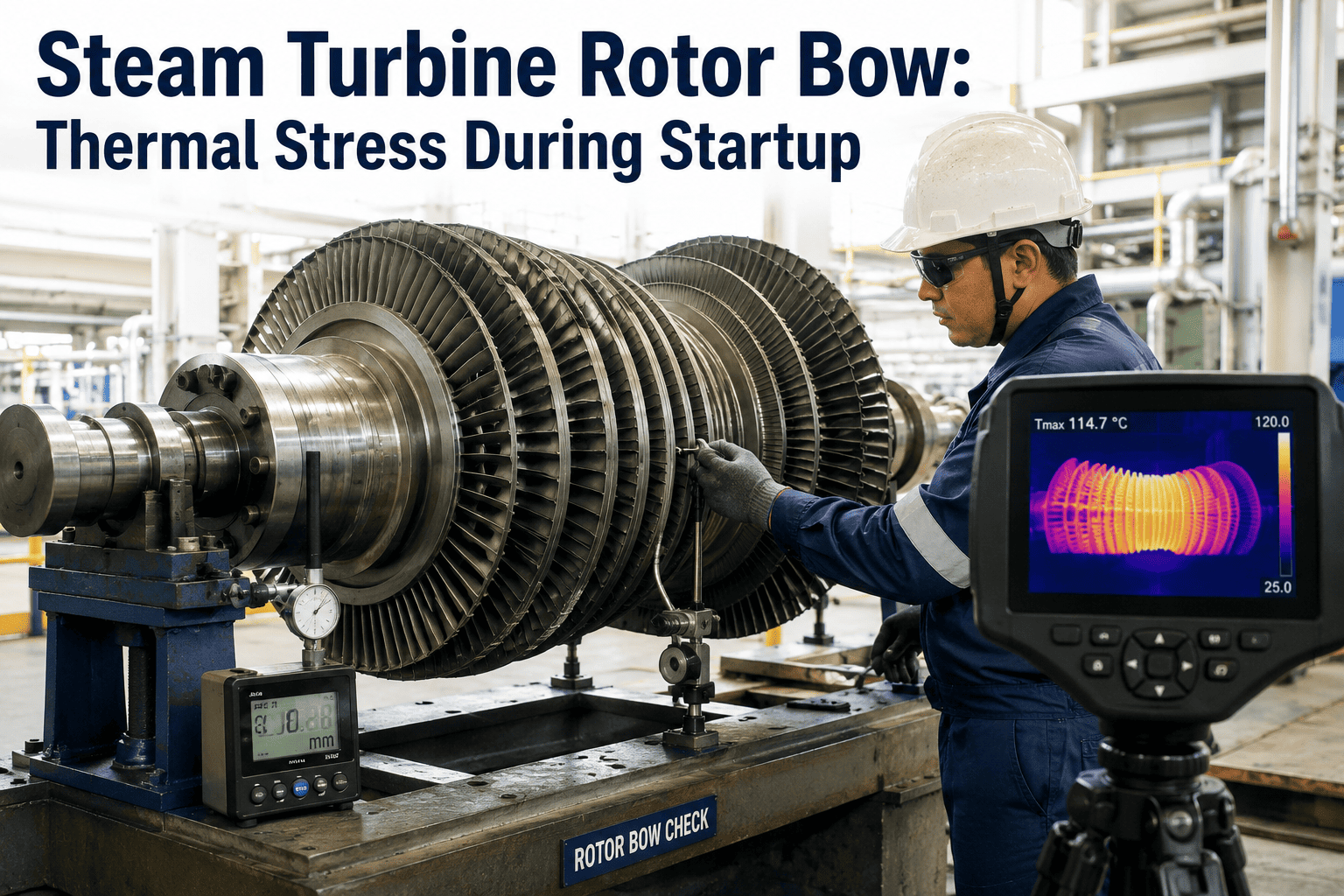
Maintenance teams that track Equivalent Operating Hours instead of raw run hours already know this — a single start type doesn't just cost time, it costs a weighted chunk of component life. Thermal cycling from ambient up to combustion temperature and back creates low-cycle fatigue stress that steady-state running simply doesn't produce, and cold starts carry the largest weighting by a wide margin.
Equivalent operating hour weighting per start event, relative to one hour of steady-state running. A single cold start can consume the fatigue-life budget of over a week of continuous operation.
Your Fixed Startup Curve Is Optimized for the Worst Case, Every Single Time
Most startup sequences are set once by the OEM for the most conservative cold-start scenario and never adjusted for the actual condition of the unit on a given day. iFactory's AI reads real-time metal temperature and standstill data to safely close that gap.
HOW THE OPTIMIZATION WORKS
From Shutdown to Synchronization — Where AI Adjusts the Sequence
AI startup optimization doesn't override your protection logic or your OEM's thermal stress limits — it works inside them, continuously recalculating the fastest safe path to load based on the actual condition of the unit rather than a fixed lookup table.
1
Read Real Metal Temperature, Not Elapsed Time
Instead of classifying a start purely by standstill hours, the model reads actual HP rotor bore and HRSG drum metal temperature from existing thermocouples to determine the true starting condition.
2
Calculate the Live Thermal Stress Margin
The model continuously compares current metal-to-steam temperature differential against the manufacturer's stress limit curve, identifying exactly how much ramp margin is available at each step.
3
Adjust Ramp Rate and Attemperation in Real Time
Steam temperature, HRSG diverter position, and load ramp targets are adjusted dynamically as conditions change, rather than following a static setpoint schedule built for the worst case.
4
Log Every Start for Fatigue-Life Tracking
Each startup event is logged with its actual thermal stress profile, feeding directly into equivalent operating hour tracking so maintenance planning reflects real cumulative fatigue, not an assumed average.
TIME TO STABLE LOAD
Fixed Sequence vs. AI-Optimized Sequence by Start Type
The gap between a conservative fixed sequence and a condition-based AI sequence is largest exactly where it matters most — the warm and cold starts that make up the majority of restarts on a plant cycling against renewable generation.
| Start Type |
Standstill Duration |
Conventional Fixed Sequence |
AI-Optimized Sequence |
| Hot Start |
Up to 8 hours |
Approximately 40-45 minutes |
As fast as thermal margin allows, typically under 30-40 minutes on modern units |
| Warm Start |
8-48 hours |
Approximately 60 minutes |
Reduced through live attemperation and ramp adjustment |
| Cold Start |
48-120+ hours |
Approximately 90-120 minutes |
Reduced via optimized diverter damper staging and desuperheater setpoints |
WHAT FASTER, SAFER STARTS DELIVER
The Numbers Behind Startup Optimization on a Cycling Fleet
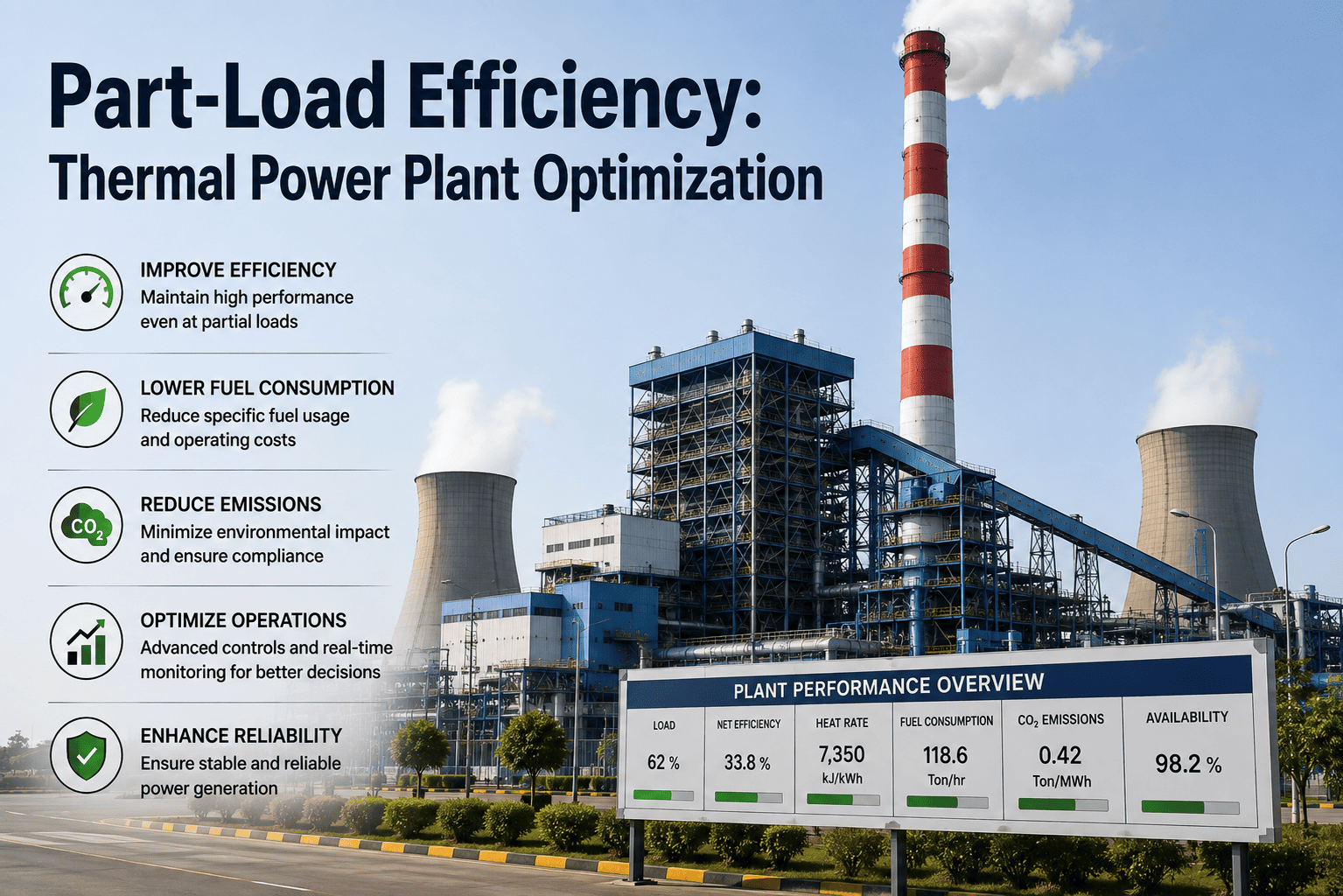
Startup time reduction is not just an efficiency metric — it directly changes fuel consumption, emissions during transient operation, dispatch flexibility, and how fast a plant can respond when a grid operator calls for capacity. As renewable penetration increases the frequency of cycling on thermal generation, the plants that can start faster without sacrificing component life gain a real advantage in both revenue capture and equipment longevity.
<30 Min
Fast-Start Target for Modern CCGT Units
Achievable to minimum stable load on optimized F-class combined cycle units with attemperation and sequencing upgrades.
3-4x
Faster EOH Accumulation on Cycling Plants
Plants running heavy cycling duty against renewable generation accrue fatigue life far faster than run-hour tracking alone would suggest.
$150K/Day
Typical Lost Revenue From an Unplanned Outage
The scale of cost avoided when thermal-stress-aware startup sequencing prevents a cascading component failure.
Real-Time
Ramp Adjustment vs. Fixed Lookup Tables
AI recalculates the safe ramp path continuously instead of committing to a static curve set at commissioning.
FREQUENTLY ASKED QUESTIONS
Questions Plant Managers Ask About AI Startup Sequencing
Does AI startup optimization override our turbine OEM's protection logic or thermal stress limits?
No. The AI model operates entirely inside the thermal stress limits and protection logic your OEM has already defined for the unit — it does not modify trip setpoints, protection curves, or the fundamental safety envelope of the startup. What it changes is how conservatively the sequence is run within that envelope, using live metal temperature and stress margin data instead of a fixed lookup table built for the worst-case scenario.
Book a demo to see how the optimization layer respects your existing OEM limits.
What data does the model need to classify a start and adjust the ramp rate correctly?
The model reads existing instrumentation your plant already has — HP rotor bore metal temperature, HRSG drum metal temperature, steam temperature, standstill duration, and ambient conditions. No new sensors are typically required for a standard combined cycle unit, since these measurements are already available from the DCS or historian. The model uses this data to determine the true starting condition rather than relying on elapsed standstill time alone, which can misclassify a start when ambient conditions vary.
Contact our support team to confirm what instrumentation your specific units already provide.
How much faster can we realistically expect our warm and cold starts to become?
The achievable reduction depends heavily on your specific HRSG design, attemperation capability, and how conservative your current fixed sequence already is. Units with final steam attemperation systems and adjustable diverter damper staging typically see the largest gains on warm and cold starts, since these are the components that let steam temperature be adjusted independently from gas turbine ramp rate. A site-specific assessment against your unit's actual thermal stress curves gives an accurate answer rather than a generic industry figure.
Book a demo to get a startup time reduction estimate specific to your fleet.
Does faster startup sequencing increase the risk of component damage over time?
The goal of AI startup optimization is the opposite — reducing unnecessary thermal stress, not increasing it. A fixed conservative sequence often over-protects on hot and warm starts where more margin is actually available, while a poorly tuned aggressive sequence risks exactly the rotor bore and HRSG drum damage you're trying to avoid. The AI model closes the gap by using the real stress margin available at each moment, which in practice reduces cumulative fatigue exposure compared to either overly conservative or manually rushed startups.
Contact our support team to review the stress-margin methodology in detail.
How does startup optimization connect to our existing equivalent operating hours and maintenance planning?
Every startup event optimized by the AI model is logged with its actual thermal stress profile, not an assumed average for its classification, and that data feeds directly into equivalent operating hour tracking. This gives maintenance planners a more accurate picture of cumulative fatigue life across the fleet, since two "cold starts" with different actual stress profiles no longer get treated identically in your maintenance interval calculations.
Book a demo to see how startup data integrates with your existing EOH and maintenance planning workflow.
Stop Starting Every Unit for the Worst Case
iFactory's AI reads the real thermal condition of your units on every shutdown and builds the fastest safe path back to stable load — cutting fuel cost and lost dispatch time without asking your team to trade away equipment life. Book a session to map startup optimization onto your fleet.