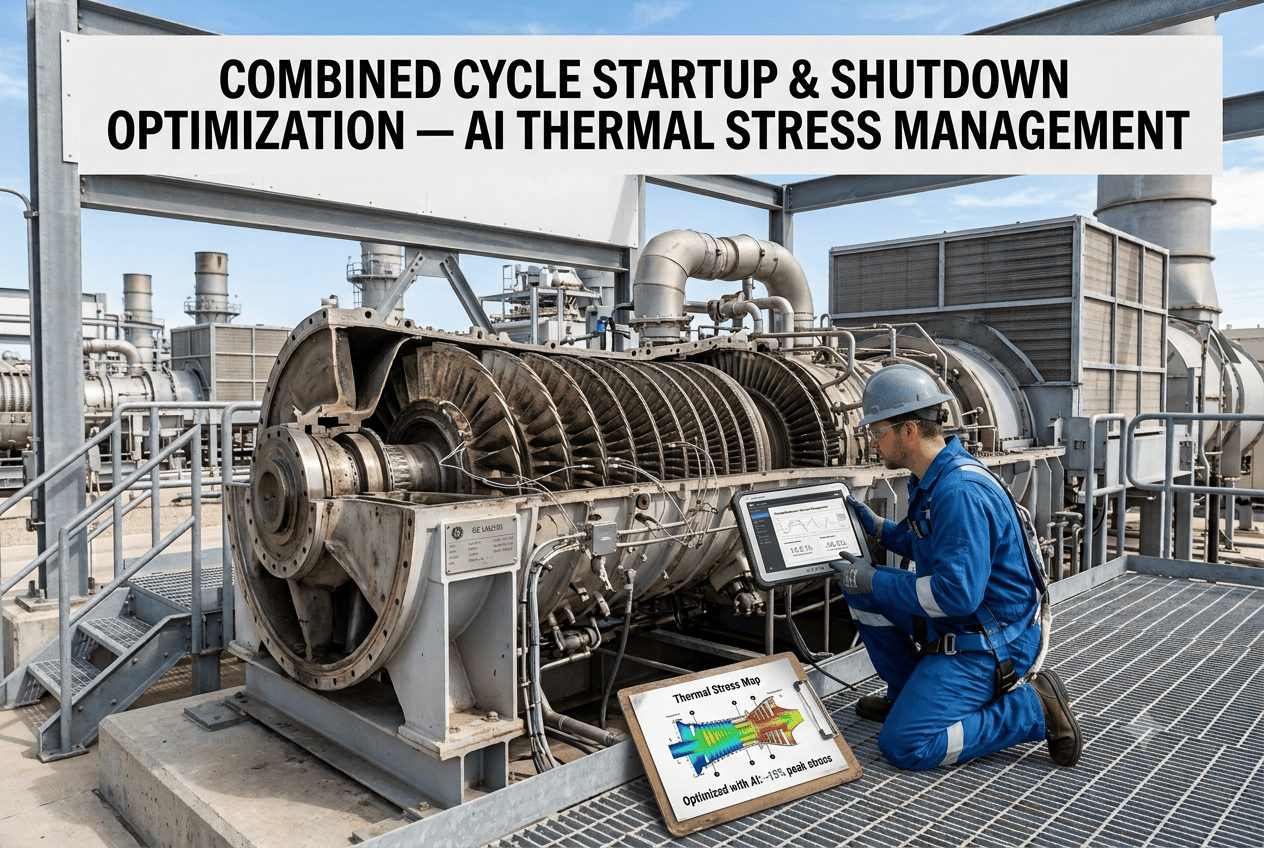
A combined cycle unit can technically reach full load in under an hour, but the number that actually matters to a process engineer is not the clock — it is the thermal stress accumulating inside the steam turbine rotor and the HRSG high-pressure drum while that clock is running. Push the ramp too hard to hit a fast-start target and every cycle quietly consumes fatigue life that only shows up years later as a cracked header or a rotor bore inspection finding. Push it too conservatively and the plant loses dispatch revenue every single start. iFactory tracks steam-metal differential temperature, drum wall stress, and rotor thermal state in real time so your startup sequence hits the fastest safe ramp instead of a fixed time on a procedure sheet, and you can book a demo to see it plotted against your own unit's last cold start.
Every Fast Start Is a Trade Between Dispatch Revenue Today and Rotor Life Tomorrow
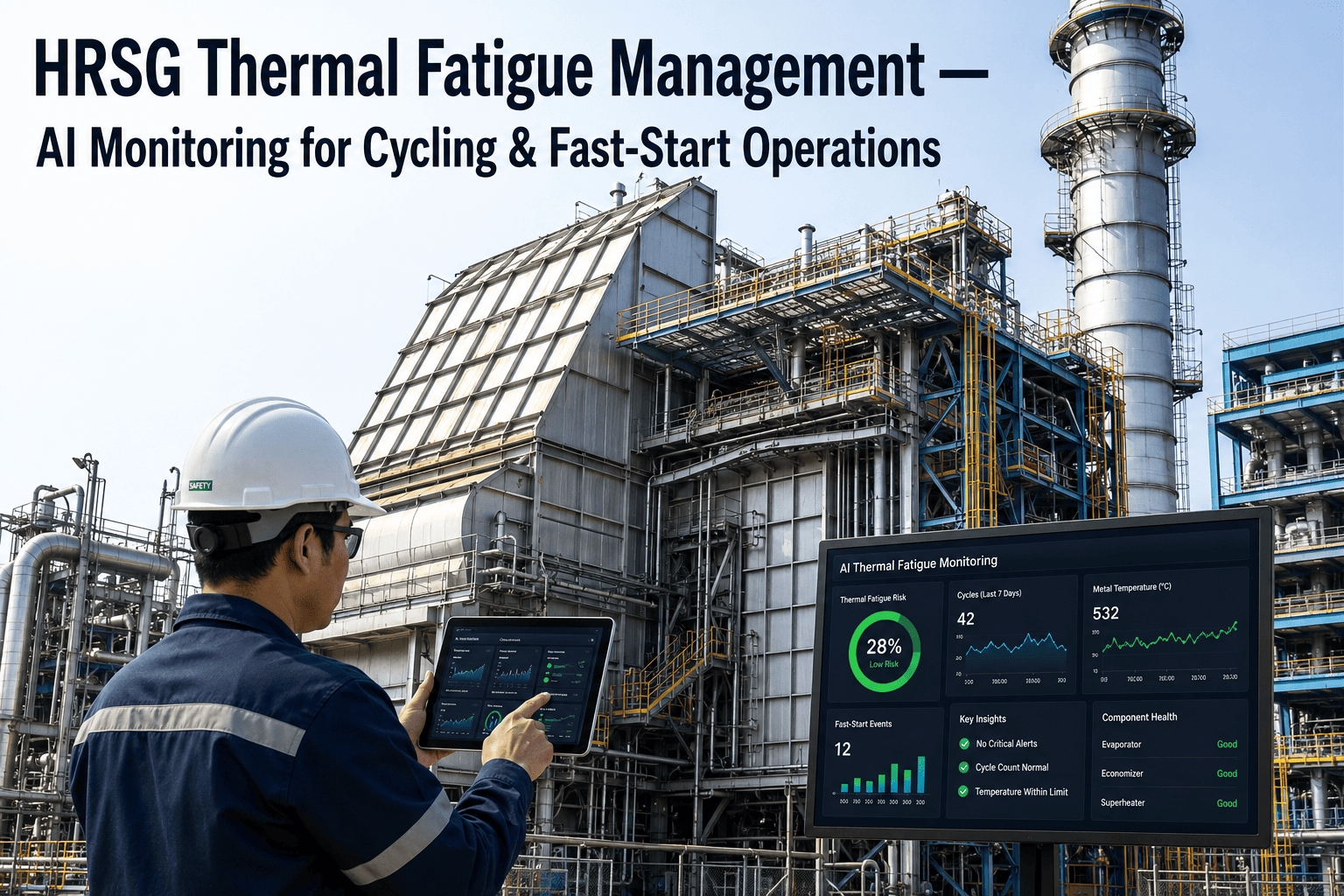
iFactory's AI models the thermal stress limits of your steam turbine rotor and HRSG drum in real time, so operators can ramp to the fastest safe startup rate the unit's actual metal condition allows — not a generic curve from the OEM manual.
Two Components Set the Real Speed Limit on Every Startup — Not the Gas Turbine
A simple-cycle gas turbine can reach full speed in roughly 20 minutes regardless of how cold it is. The steam turbine rotor and the HRSG cannot, because both are thick-walled components where the inside and outside surfaces heat at different rates, and that mismatch is what generates the stress that eventually cracks metal.
Steam Turbine Rotor
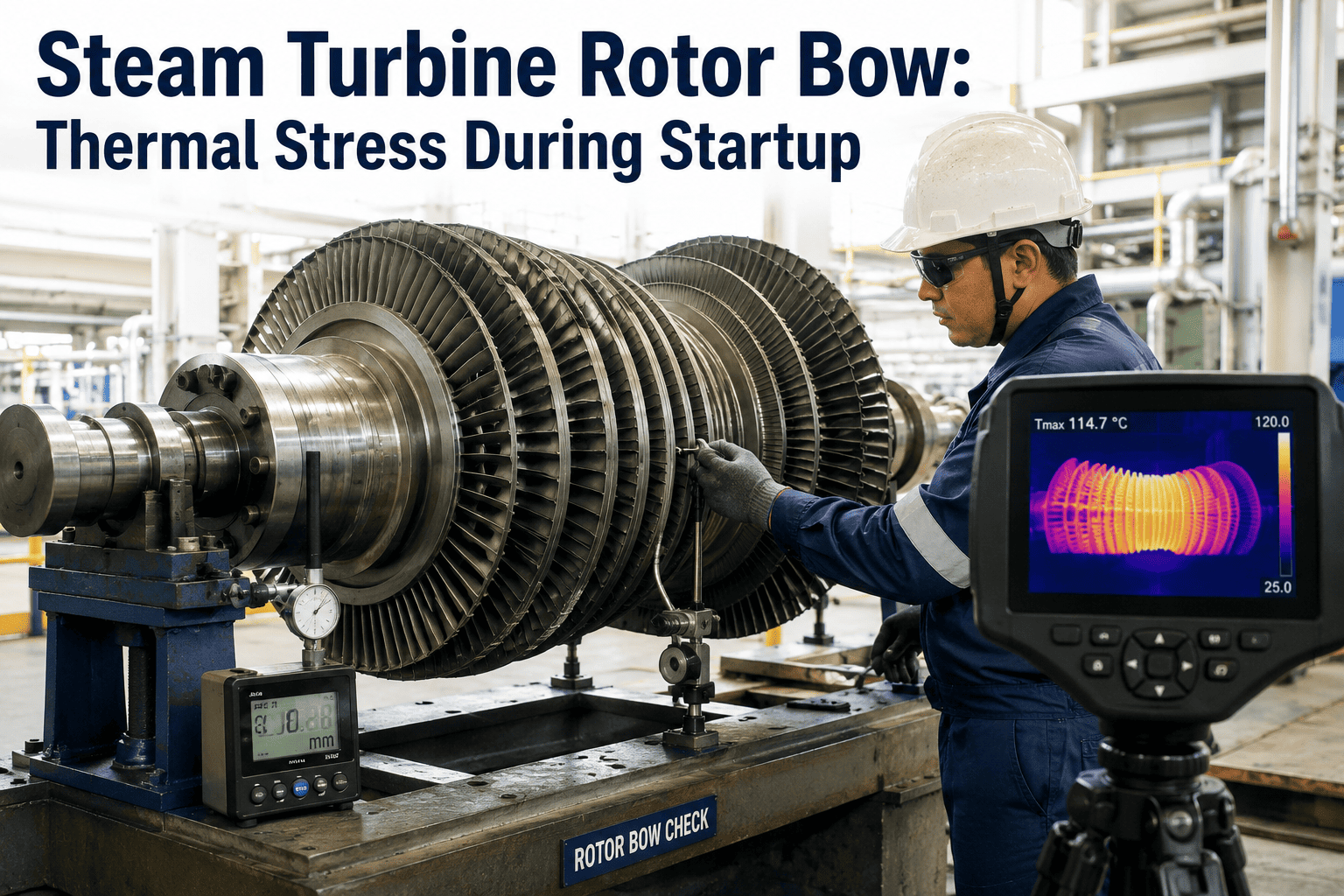
Thermally decoupled from the gas turbine, the rotor's allowable ramp rate is set by the steam-metal temperature differential measured at the inner bowl. Exceeding the calculated stress limit trades startup speed directly for rotor fatigue life.
HRSG High-Pressure Drum
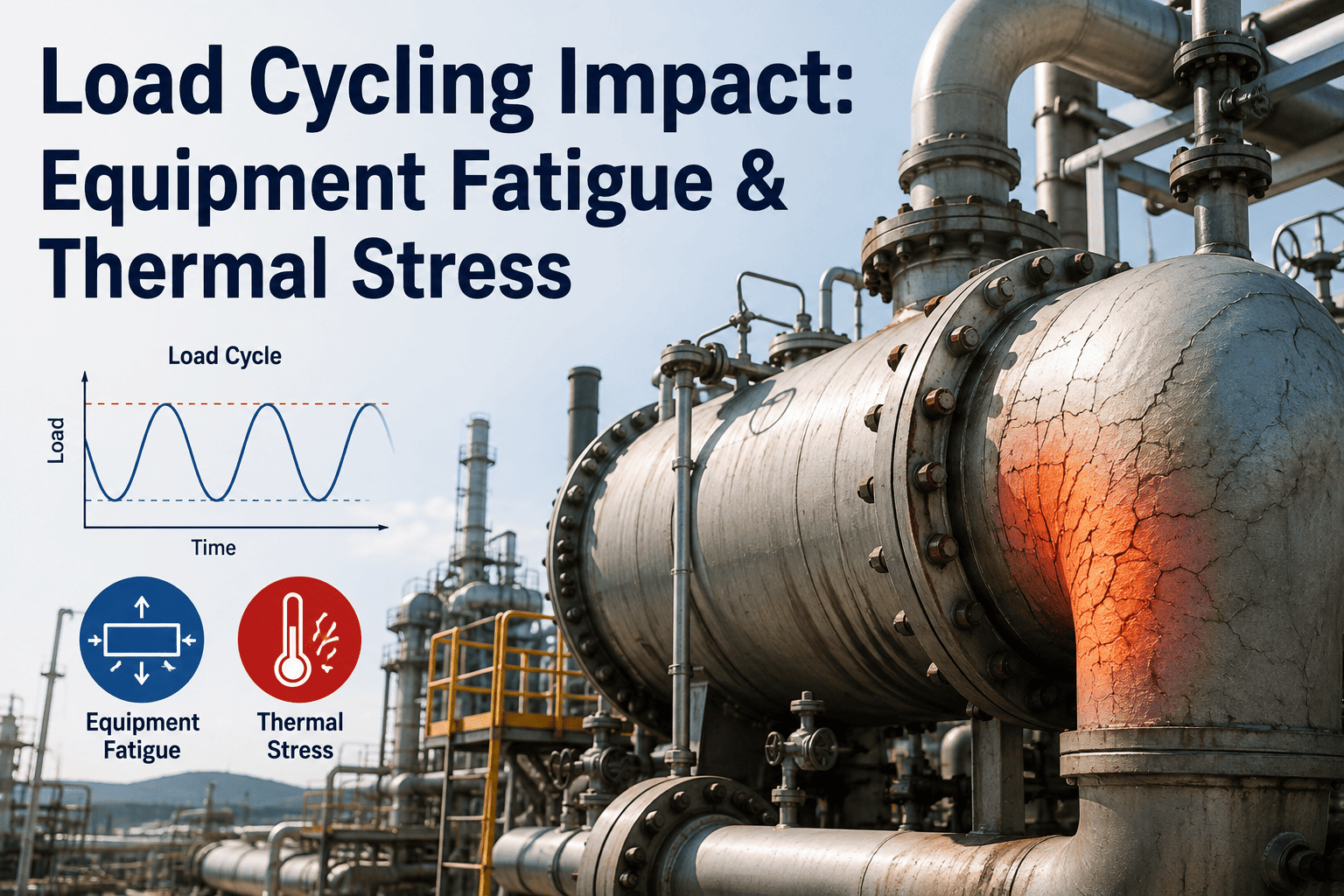
On drum-type HRSGs, the thick cylindrical drum wall experiences mechanical and thermal stress that act in opposite directions during startup and the same direction during shutdown, making the drum the other hard limit on ramp speed.
Where Thermal Stress Actually Accumulates During a Cold Start
Every startup moves through the same four phases, but the stress-critical window is narrower than most procedures assume, which is exactly where a fixed ramp curve loses to a condition-based one.
Purge & Ignition
Fast-start plants increasingly use a purge credit performed during the prior shutdown, shaving minutes off the beginning of the next start.
GT Ramp to Part Load
Hot exhaust gas floods a relatively cool HRSG, and steam pressure and flow begin rising, lagging behind the gas turbine's own ramp.
Steam Admission to ST
This is the highest-risk window: rotor stress monitors and drum stress calculations govern how fast temperature is allowed to rise from here forward.
Load Ramp to Dispatch
Once thermal stress margins clear, load can climb quickly, since the remaining limits shift from metal stress to combustion and emissions control.
Your OEM Startup Curve Was Built for a Generic Unit — Not Yours
iFactory reads your steam turbine's actual rotor stress state and your HRSG drum condition to find the fastest ramp your specific unit can take today.
What Actually Changes Between a Conventional Startup and a Fast-Start Sequence
| Design Element | Conventional Startup | Fast-Start Design |
|---|---|---|
| HRSG steam drum | Thick-walled recirculating drum, stress-limited ramp | Once-through sections, less thermal mass, faster heat-up |
| Steam turbine casing | Single-casing, slower stress equalization | Multi-casing HP/IP/LP with rotor stress monitor |
| Purge sequence | Full purge before every start | Purge credit taken during prior shutdown |
| Excess steam handling | Minimal bypass needed | Full-capacity steam dump and bypass systems required |
Three Signals That Turn a Fixed Startup Curve Into a Condition-Based One
What Process Engineering Teams Report After Moving to Condition-Based Startup Control
Questions Process Engineers Ask About Startup and Shutdown Optimization
Stop Trading Rotor Life for a Startup Time That May Not Even Be Necessary
iFactory reads your steam turbine and HRSG's real thermal state to find the fastest safe ramp, start after start.