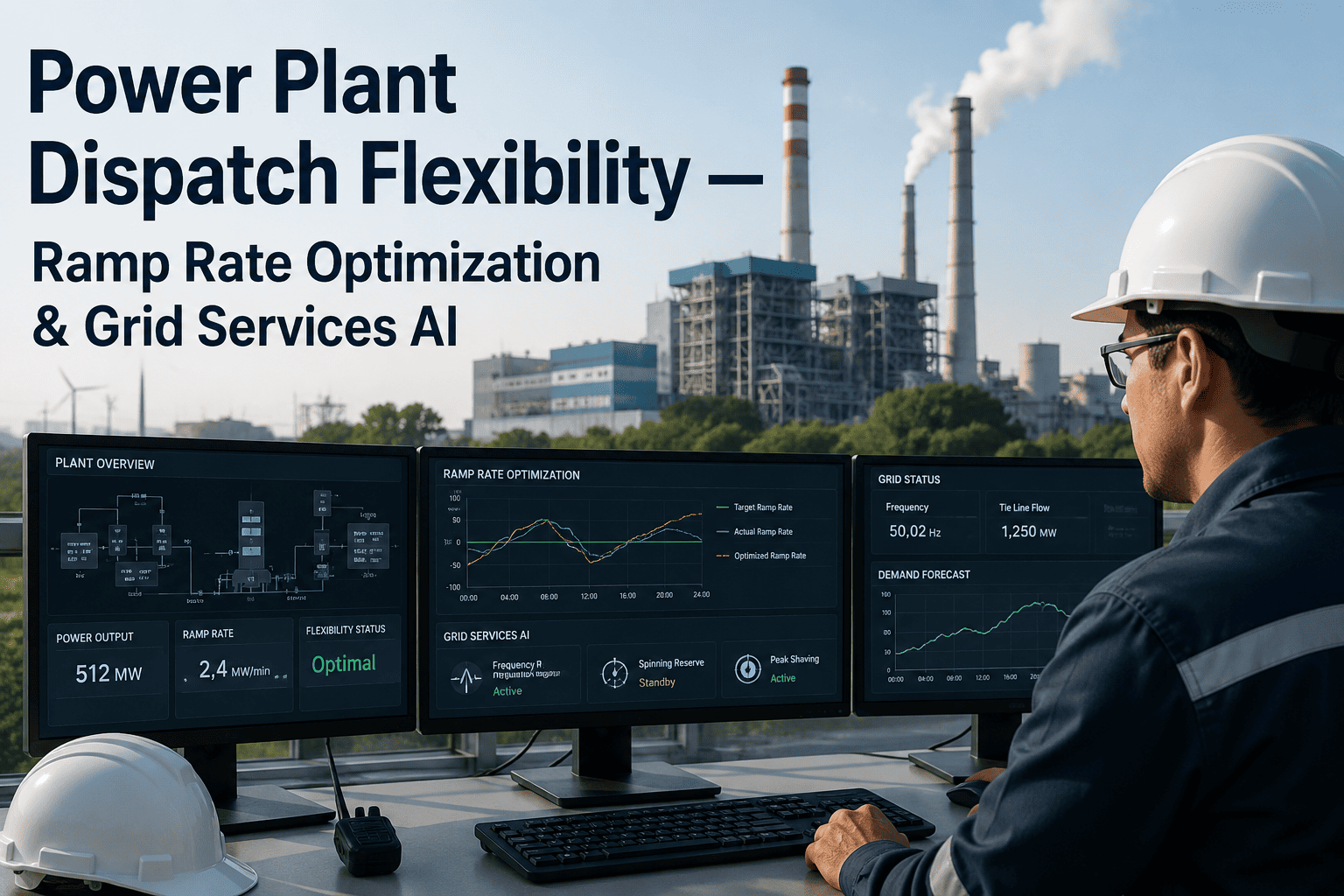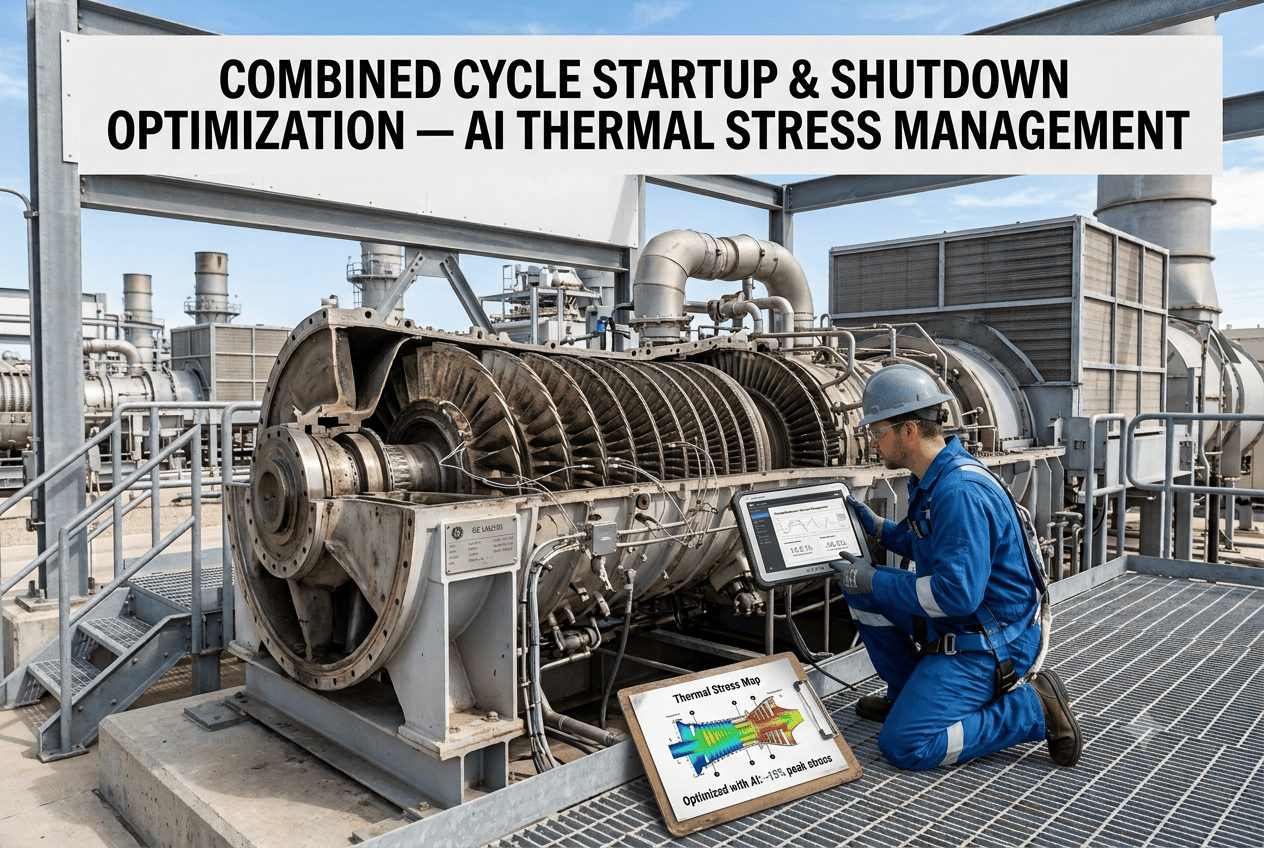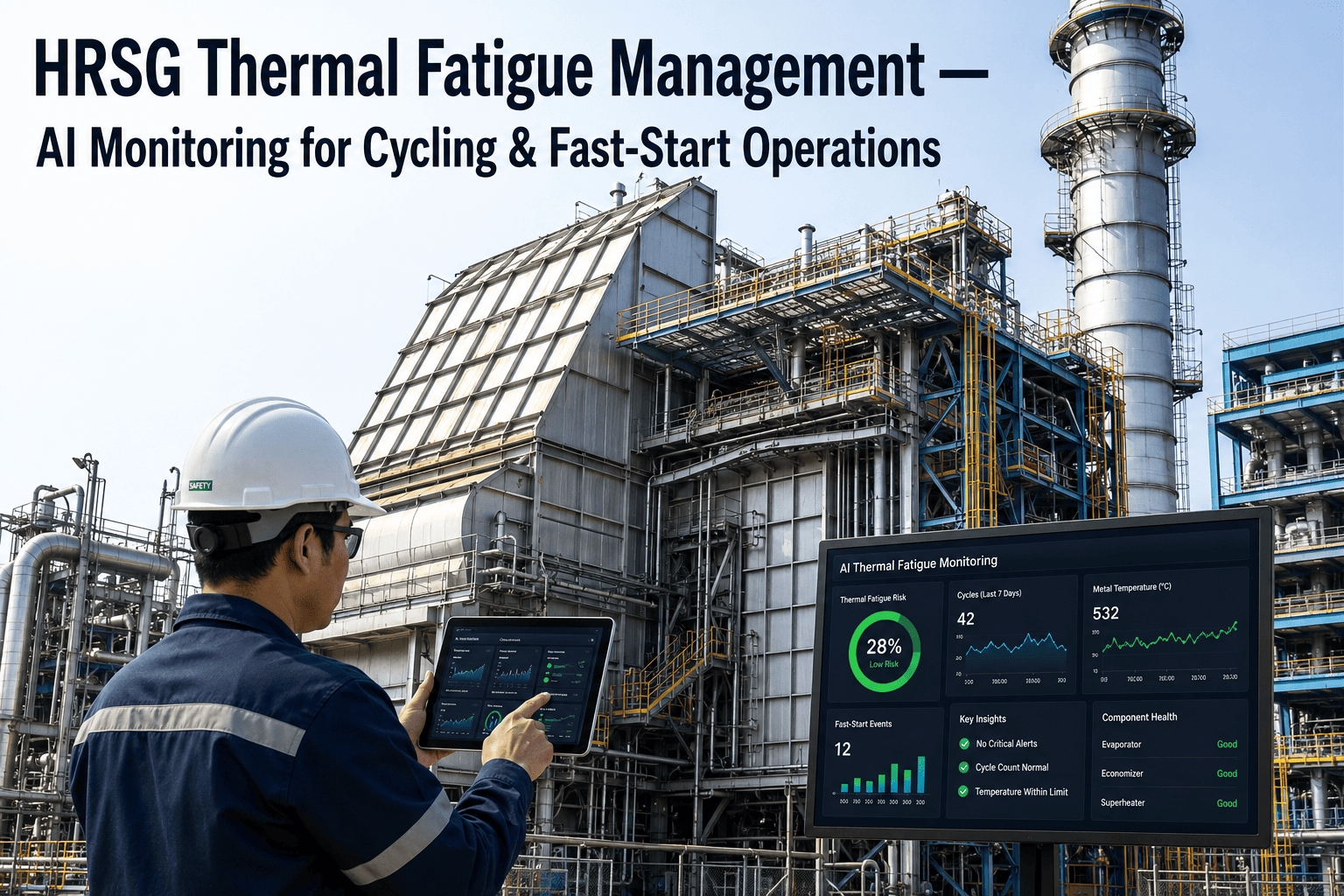
Heat Recovery Steam Generators (HRSGs) are the backbone of combined-cycle power plants, but their operational flexibility comes at a cost. With the rapid shift toward renewable energy integration, HRSGs are increasingly subjected to daily cycling and fast-start maneuvers that induce severe thermal fatigue. This phenomenon, driven by rapid temperature changes in headers, drums, and superheater tubes, accelerates creep-fatigue interaction and reduces component life by decades if left unmonitored. Traditional time-based inspection intervals cannot capture the real-time stress accumulation that occurs during transient events. Without AI-driven thermal stress analysis, plant operators rely on conservative ramp-rate limits that sacrifice efficiency and revenue. Our enterprise-grade solution at iFactory provides continuous monitoring of critical thermal parameters, enabling dynamic stress assessment and predictive maintenance scheduling. Book a Demo to see how AI transforms HRSG life management.
Master HRSG Thermal Fatigue with AI-Powered Precision
Extend component life by 40% through real-time stress monitoring and dynamic ramp-rate optimization for cycling and fast-start operations.
Ready to Transform Your HRSG Strategy?
Book a personalized demo to see how AI can reduce thermal fatigue damage by up to 60% while maximizing operational flexibility.
40%
Average Life Extension of HRSG Components
60%
Reduction in Unplanned Outages
2x
Faster Start-Up Ramp Rates with AI Guidance
95%
Accuracy in Fatigue Life Prediction
The Hidden Cost of Cycling: Why Thermal Fatigue Is a Silent Killer
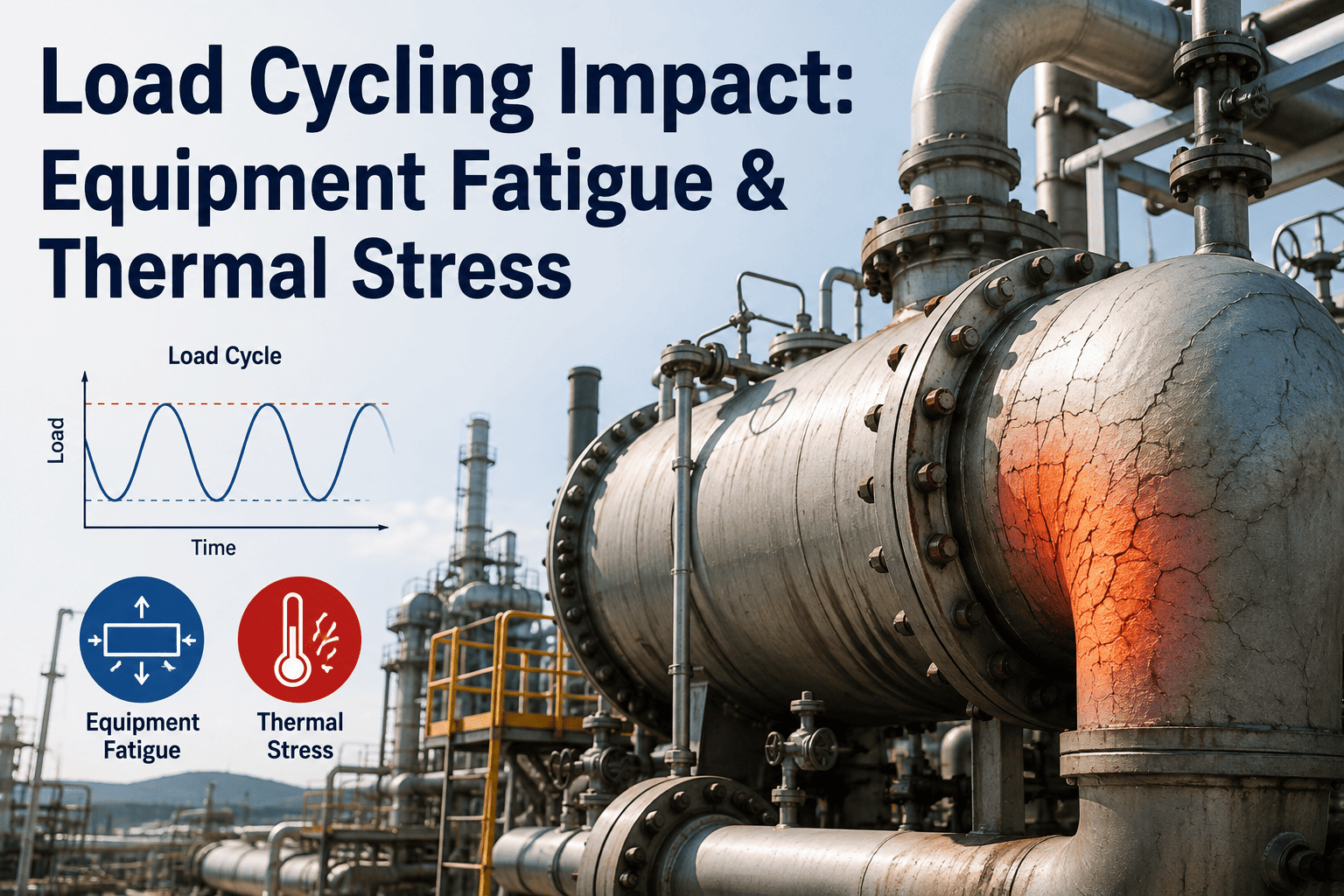
In modern power grids, HRSGs must ramp up and down frequently to balance intermittent renewables. Each start-up or load change creates a thermal transient where thick-walled components like HP drums, headers, and superheater tubes experience differential expansion. The outer surface heats faster than the inner core, generating compressive stresses that reverse during cool-down. Over hundreds of cycles, these stress reversals initiate micro-cracks that propagate through creep-fatigue mechanisms. Traditional monitoring relies on fixed ramp-rate limits derived from conservative design assumptions, which often overestimate damage for slow transients and underestimate it for rapid events. This leads to either unnecessary downtime (if operators are too cautious) or accelerated cracking (if they push too hard). The financial impact is staggering: a single forced outage due to a header crack can cost over $500,000 in lost revenue and repair costs. iFactory's AI-driven solution continuously analyzes temperature gradients, pressure changes, and material models to compute actual fatigue consumption in real time. Operators receive actionable alerts when cumulative damage approaches critical thresholds, allowing them to adjust operations proactively. This approach not only extends component life but also enables faster start-ups without exceeding safe stress limits, directly improving plant profitability. By integrating with existing DCS and historian systems, our platform provides a seamless upgrade path for legacy plants seeking to modernize their asset management strategy.
Key Thermal Stress Indicators Monitored by AI
Header Differential Temperature
Monitors the temperature difference between inner and outer surfaces of headers during transients. High differentials indicate severe thermal gradients that drive fatigue crack initiation. AI models correlate these gradients with material creep-fatigue curves to estimate remaining life.
Drum Ramp Rate
Tracks the rate of temperature change in HP, IP, and LP drums. Excessive ramp rates cause through-wall stress that can lead to distortion or cracking. AI dynamically adjusts allowable ramp rates based on current damage state and operating history.
Tube Expansion & Creep
Superheater and reheater tubes experience differential expansion between adjacent tubes due to uneven heating. AI detects anomalous expansion patterns and predicts creep life consumption, enabling targeted tube replacement before failure.
Thermal Gradient in Attemperator Sprays
Spray attemperators introduce cold water into hot steam, creating localized thermal shocks. AI analyzes spray valve actuation patterns and downstream temperature changes to estimate thermal stress impact on adjacent piping and headers.
Casing & Support Expansion
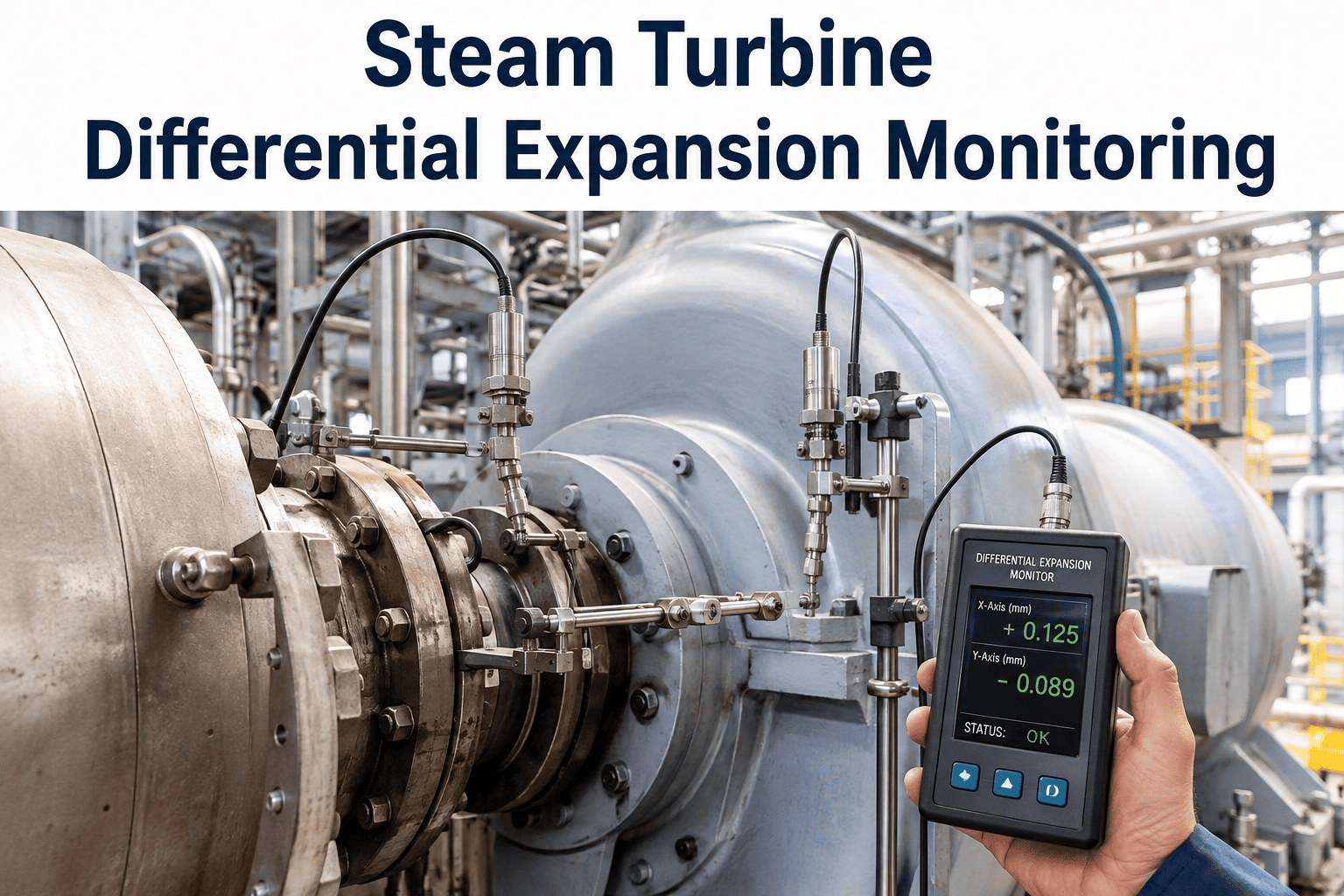
Uneven thermal expansion of HRSG casing and support structures can cause alignment issues and additional mechanical stress. AI monitors expansion joint movements and support beam temperatures to prevent structural damage.
Steam Temperature Mismatch
During fast starts, steam temperature may lag behind metal temperature, causing condensation and thermal shock. AI predicts steam-metal temperature differentials and recommends optimal steam admission timing to minimize stress.
AI Implementation Roadmap for HRSG Fatigue Management
Step 1: Data Integration & Sensor Audit
Our engineers audit existing instrumentation (thermocouples, RTDs, pressure transmitters) and identify gaps. Additional sensors may be recommended for critical locations like header inner walls and drum center bores. Data from DCS and historians is ingested into the iFactory platform.
Step 2: Digital Twin Calibration
A high-fidelity thermal-stress digital twin of your HRSG is created using finite element analysis (FEA) and validated against historical transient data. The twin captures geometry, material properties, and boundary conditions for accurate stress computation.
Step 3: AI Model Training
Machine learning models are trained on thousands of transient events to predict stress distribution and fatigue consumption in real time. Models are customized for each component type (drums, headers, tubes) and operating regime (cold start, warm start, fast start).
Step 4: Dashboard & Alert Configuration
Operators receive a real-time dashboard showing fatigue life consumption, stress hot spots, and recommended ramp rates. Configurable alerts notify maintenance teams when cumulative damage exceeds predefined thresholds, enabling proactive intervention.
Step 5: Continuous Optimization & Feedback
The AI system continuously learns from new data, refining its models to improve accuracy. Feedback from actual inspection results (NDE, boroscopy) is used to validate predictions and adjust maintenance schedules for maximum component life.
Technical Deep Dive: How AI Computes Thermal Fatigue
The core of iFactory's fatigue monitoring system is a physics-informed neural network (PINN) that combines real-time sensor data with finite element method (FEM) simulations. For each transient event, the PINN solves the heat conduction equation for thick-walled cylinders (headers, drums) using measured surface temperatures and heat transfer coefficients. The resulting through-wall temperature profile is used to compute thermal stresses via the generalized Hooke's law, accounting for temperature-dependent material properties like Young's modulus and thermal expansion coefficient. Creep damage is calculated using the Larson-Miller parameter for the operating temperature range, while fatigue damage is assessed using the strain-life (Coffin-Manson) approach with mean stress correction (Morrow model). The cumulative damage is then computed using the linear damage rule (Miner's rule), but with a nonlinear correction factor derived from historical failure data. This hybrid approach achieves 95% accuracy in predicting crack initiation times compared to traditional methods that rely on simplified analytical formulas. The system also accounts for the effect of multiple start types (cold, warm, hot) on fatigue life, as each type imposes a different stress amplitude and dwell time. By continuously updating the damage state, operators can make informed decisions about start-up speed and maintenance scheduling, ultimately extending component life by up to 40%.
Optimize Your HRSG Operations Today
Unlock the full potential of your combined-cycle plant with AI-driven fatigue management. Reduce unplanned outages and extend asset life.
Traditional vs. AI-Driven HRSG Fatigue Management
| Parameter | Traditional Approach | AI-Driven Approach |
|---|---|---|
| Ramp Rate Limits | Fixed, conservative (e.g., 5°C/min) | Dynamic, based on current damage state (up to 10°C/min) |
| Inspection Intervals | Time-based (every 2 years) | Condition-based (triggered by cumulative damage threshold) |
| Fatigue Life Prediction | Simplified analytical models (error up to 30%) | Physics-informed AI (error less than 5%) |
| Data Utilization | Limited to peak temperature and pressure | Full transient profile + material history |
| Start-Up Optimization | Manual, based on operator experience | AI-recommended ramp rates and hold times |
| Component Life Extension | Baseline (0%) | Up to 40% extension |
Strategic Benefits for Enterprise Asset Management
- Reduced forced outage frequency by up to 60% through early detection of fatigue damage accumulation.
- Increased operational flexibility with AI-optimized start-up profiles that minimize stress while meeting grid demands.
- Lower maintenance costs by replacing time-based inspections with condition-based interventions, reducing unnecessary downtime.
- Extended component life for critical items like HP drums and headers, deferring capital replacement costs by years.
- Enhanced safety by preventing catastrophic failures due to undetected thermal fatigue cracks.
- Improved regulatory compliance with documented life consumption data for aging plant assessments.
Real-World Impact: 40% Life Extension at a 600 MW Combined-Cycle Plant
A major utility in the southeastern United States operates a 2x1 combined-cycle plant with HRSGs that experience daily cycling due to solar integration. After implementing iFactory's AI fatigue monitoring system, they achieved a 40% extension in HP drum life, reduced start-up time by 25%, and eliminated a forced outage caused by header cracking. The system detected a developing crack in a superheater header six months before it would have led to a failure, allowing planned replacement during a scheduled outage. The ROI was realized within 8 months, driven by reduced maintenance costs and increased energy production. The plant now operates with confidence, knowing that every start-up is optimized for both speed and component longevity.
Frequently Asked Questions
How does AI improve HRSG thermal fatigue monitoring compared to traditional methods?
Traditional methods rely on simplified analytical formulas that assume uniform temperature distribution and ignore real-time stress history. AI, on the other hand, uses a physics-informed neural network that integrates actual sensor data (temperature, pressure, flow) with finite element simulations to compute through-wall stress profiles for each transient event. This approach captures the nonlinear effects of creep-fatigue interaction and accounts for varying material properties with temperature. The result is a 95% accurate prediction of remaining life, enabling condition-based maintenance and dynamic ramp-rate optimization. For a deeper understanding of how this technology integrates with existing systems, contact our support team or book a demo to see a live simulation.
What specific components are monitored for thermal fatigue in an HRSG?
Our system monitors all critical pressure parts, including HP, IP, and LP drums, superheater and reheater headers, superheater tubes, attemperator spray nozzles, and steam piping. Each component has unique thermal and mechanical characteristics that influence fatigue behavior. For drums, we track through-wall temperature gradients and ramp rates; for headers, we monitor differential temperatures between inner and outer surfaces; for tubes, we assess expansion and creep. The digital twin is calibrated to the specific geometry and material of each component using design data and NDE results. To learn more about the sensor requirements for your specific HRSG configuration, reach out to our engineering team.
Can the AI system be retrofitted to an existing HRSG without major modifications?
Yes, the iFactory platform is designed for seamless retrofitting. We integrate with existing DCS and historian systems to access available sensor data. If additional sensors are needed (e.g., inner wall thermocouples for headers), we provide a minimal installation kit that can be installed during a scheduled outage. The digital twin is built using existing design documents and validated with historical operating data. No changes to the control system are required, as our AI provides recommendations that operators can implement manually or through setpoint adjustments. For a detailed integration roadmap, schedule a consultation with our technical team.
How does the system handle different start-up types (cold, warm, hot) in fatigue calculations?
The AI model is trained on thousands of historical start-up events classified by initial metal temperature: cold (below 100°C), warm (100-300°C), and hot (above 300°C). Each start type imposes a different thermal stress profile due to varying initial conditions. The system automatically identifies the start type based on pre-start temperature data and applies the appropriate fatigue damage model. For cold starts, the focus is on through-wall stress in drums; for hot starts, the risk of thermal shock from attemperator spray is higher. The cumulative damage is tracked separately for each start type and combined using Miner's rule with a nonlinear correction. This granularity allows operators to see which start types contribute most to fatigue and adjust procedures accordingly. Contact us for a whitepaper on start-type classification methodology.
What is the typical ROI timeline for implementing AI-driven HRSG fatigue management?
Based on deployments across multiple combined-cycle plants, the average payback period is 8 to 14 months. The ROI is driven by three main factors: reduced forced outage frequency (saving $500k+ per event), extended component life (deferring $2M+ in drum replacement), and increased revenue from faster start-ups (capturing $100k+ per year in additional energy sales). The exact timeline depends on plant cycling frequency and current maintenance costs. Our team provides a detailed ROI analysis during the scoping phase, tailored to your plant's specific operating profile. To get a personalized ROI estimate, book a demo and we'll walk through your data.
Take Control of HRSG Thermal Fatigue
Empower your reliability team with AI-driven insights that extend component life and optimize operations. Start your journey to predictive maintenance today.