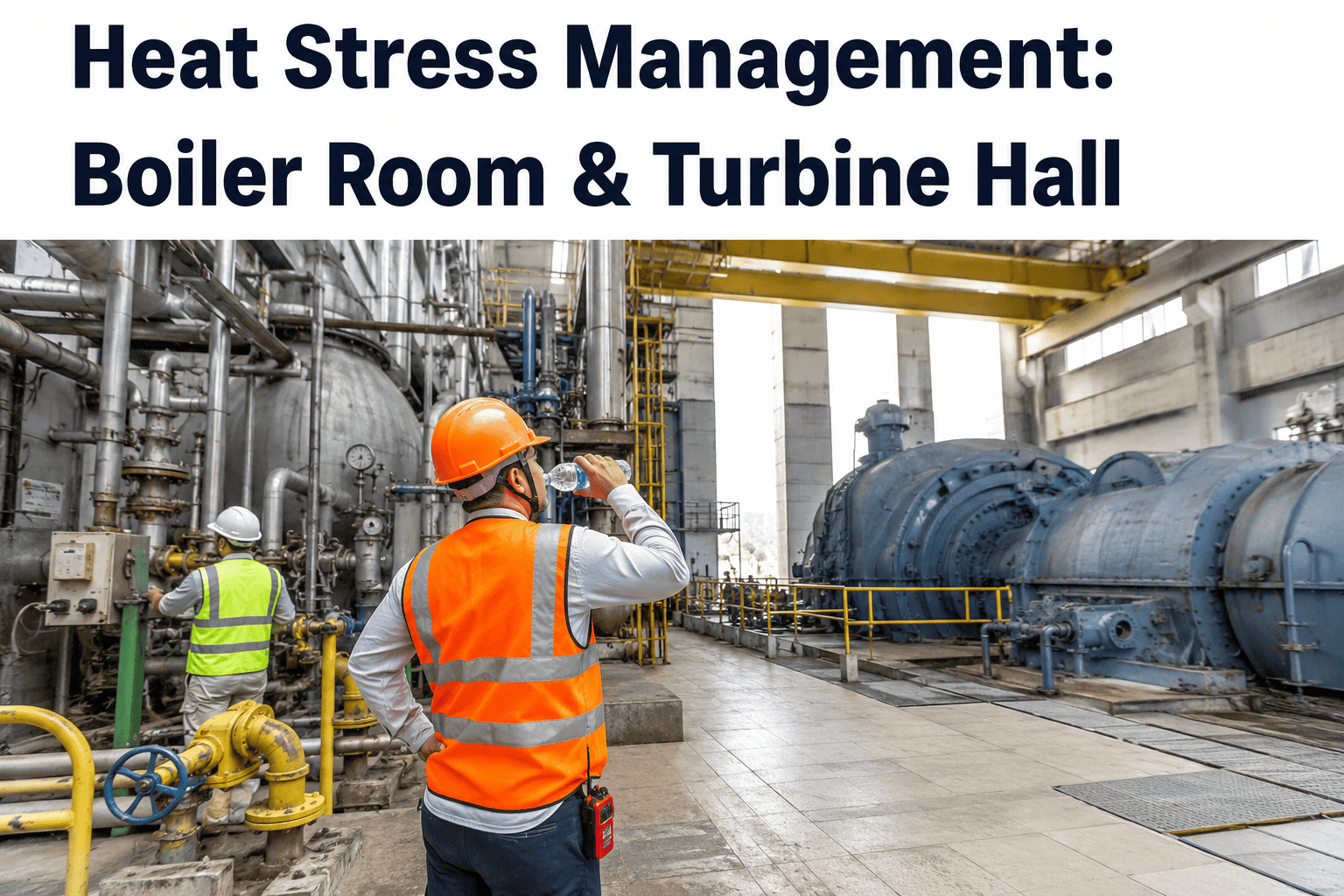
Walk onto a turbine hall deck on a July afternoon, or stand next to a boiler drum during a hot restart, and the ambient temperature can climb well past 100°F before radiant heat from steam lines, superheaters, and running turbines is even factored in. For operators, mechanics, and I&C technicians working shift after shift in these zones, that heat load is not a discomfort — it is a measurable risk to alertness, reaction time, and cardiovascular safety that employers are already accountable for under OSHA's general duty clause, standard or no finalized standard. Boiler rooms, turbine halls, and enclosed switchgear rooms sit near the top of every industrial heat-exposure list precisely because the heat sources are internal and constant, not seasonal and outdoor. A written heat illness prevention plan, WBGT-based work-rest scheduling, and continuous monitoring turn a vague safety concern into a measurable, auditable program, and platforms like iFactory's plant operations software translate ambient sensor data into real rest-break triggers instead of a seasonal poster on the breakroom wall.
Heat Stress Management for Boiler Rooms and Turbine Halls
Work-rest schedules, hydration programs, and heat illness recognition built specifically for the hottest, most enclosed zones on a power plant floor — where indoor heat sources make ambient temperature a year-round hazard, not a summer one.
Boiler Rooms and Turbine Halls Don't Cool Down at Night
Most workplace heat guidance is written around outdoor sun exposure — construction sites, roofing crews, agricultural fields. Boiler rooms and turbine halls are a different problem entirely. The heat source is internal: hot steam and condensate lines, superheater and reheater casings, generator and exciter housings, and lube oil systems that all radiate heat continuously regardless of the weather outside. A night shift in January can be just as thermally demanding as a day shift in July once radiant load, poor natural airflow, and required PPE are accounted for together.
Where the Trigger Points Actually Sit
Heat exposure guidance in the United States is currently built on two reference points that keep showing up across federal enforcement guidance and state-level standards: an initial trigger around 80°F heat index where water, shade or cooling, and basic monitoring become necessary, and a high-heat trigger around 90°F where scheduled rest breaks and closer monitoring are expected. Indoors, WBGT is the preferred measurement because it accounts for humidity, radiant heat, and air movement together, which a plain air temperature reading cannot do near a boiler casing.
These thresholds are a starting framework, not a substitute for a site-specific plan. A boiler room reading 88°F air temperature next to an uninsulated 900°F steam line can carry a WBGT well above what the air reading alone suggests, which is why a written, site-calibrated heat illness prevention plan — with a named heat safety coordinator responsible for monitoring conditions — is what actually protects a crew rather than a generic index chart.
Matching Rest Breaks to Zone Conditions and Task Load
A work-rest schedule only protects workers if it accounts for both the heat condition of the zone and the physical demand of the task being performed. A light routine round and two hours of manual valve packing in the same 90°F boiler bay are not the same exposure, and treating them as identical either under-protects the heavy task or needlessly restricts the light one.
| Zone Condition | Light / Moderate Task | Heavy Task (Manual, Insulation, Confined Space) |
|---|---|---|
| Under initial trigger | Self-paced, water readily available | Standard breaks, hydration checks each round |
| Initial to high-heat range | Scheduled water breaks, shaded rest area posted | Structured work-rest cycle, buddy system active |
| Above high-heat trigger | Shortened task windows, supervisor check-ins | Frequent cooled rest breaks, task rotation between crew members |
| Outage / confined space | Continuous monitoring, entry attendant required | Time-limited entries with mandatory cooled recovery between entries |
Task rotation deserves specific mention because it is the lowest-cost control available and frequently the most underused. Rotating two or three workers through a heavy task in a hot zone, rather than assigning one person to complete it start to finish, spreads metabolic heat load across the crew and keeps any single worker from crossing into dangerous cumulative exposure during a long outage day.
Why New and Returning Workers Need a Ramp-Up Period
A disproportionate share of serious heat illness cases involve workers in their first days of exposure — new hires, contractors brought in for an outage, or employees returning from vacation or medical leave. The body needs repeated exposure over roughly one to two weeks to build the physiological adaptations that make heat tolerable: increased sweat rate, better electrolyte retention, and a lower working heart rate at the same task load. Skipping this ramp-up is one of the most preventable causes of heat illness on any industrial site.
Contractors mobilized for a planned outage are the group most often missed by acclimatization planning, since they arrive expecting to work a full schedule from day one. Building a short ramp-up window into outage staffing plans — even a compressed two-to-three day version — meaningfully reduces first-week incident rates without materially delaying the outage critical path.
The Progression From Heat Rash to Heat Stroke
Heat illness is a spectrum, not a single event, and the earlier a crew recognizes the milder stages, the less likely anyone reaches the dangerous end of it. Every worker in a hot zone — not just supervisors — should be able to recognize these stages in themselves and in the people working next to them, since the person becoming impaired is often the least able to notice it happening.
Structured Hydration Beats "Drink More Water" Every Time
Generic hydration advice fails in boiler room conditions because thirst lags behind actual fluid loss, and workers in flame-resistant gear often underestimate how much they are sweating until a break exposes it. A structured hydration program removes the guesswork by pairing scheduled intake with visible reminders and, where task intensity is high, electrolyte replacement rather than water alone.
A commonly cited hydration reference point for heavy work in hot conditions is roughly one cup of fluid every fifteen to twenty minutes, totaling close to four cups per hour during sustained heavy exertion. This is a starting reference, not a rigid rule — it should be adjusted upward for confirmed heavy sweating tasks and supplemented with electrolytes when shifts run four hours or longer in high-heat zones.
Positioning matters as much as volume. Water and electrolyte stations placed at the actual work zone, not just at a distant breakroom, remove the friction that causes workers to skip breaks rather than walk the extra distance — a small logistics decision that measurably changes compliance with the program.
Cold water alone can also work against a hydration program when it discourages steady intake — very cold water sometimes causes workers to sip less frequently than lukewarm water taken on a regular schedule. Pairing a visible intake tracker, even something as simple as a marked bottle or a supervisor check-off sheet, with electrolyte packets during outage-level exertion closes the gap between what a plan says and what actually happens on the floor during a long, hot shift.
One Dashboard for Zone Conditions, Break Compliance, and Incident Logs
Instead of a laminated poster and a paper log, iFactory gives your heat safety coordinator a live view of every monitored zone, automatic break-schedule prompts tied to actual readings, and a documented trail for every heat-related event on site.
Engineering Controls vs. Administrative Controls
The strongest heat management programs layer engineering controls, which reduce exposure at the source, with administrative controls, which manage how work is scheduled and performed. Neither alone is sufficient in a boiler room or turbine hall, where radiant heat sources are permanent fixtures of the equipment itself.
Why a Single Fixed Sensor Isn't Enough
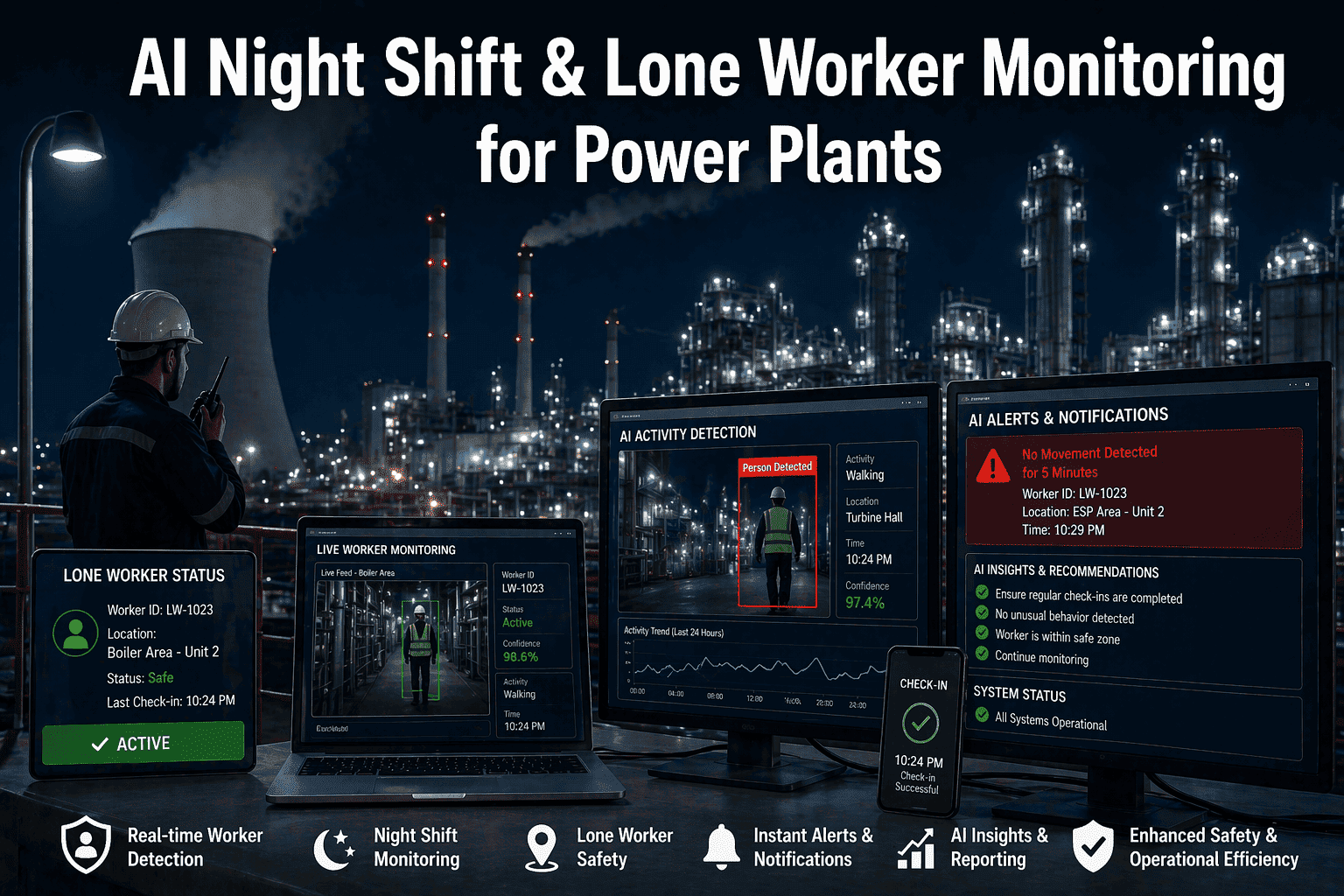
A single WBGT meter checked once at the start of a shift tells you the condition at that meter, at that moment — not the condition inside a low-airflow pocket behind a turbine casing three hours later, once the sun has moved or an adjacent unit has ramped up. Boiler rooms and turbine halls have real thermal variation across their footprint, and treating one reading as representative of the whole space is the same sampling gap that causes missed conditions everywhere else in industrial monitoring.
The other advantage of continuous monitoring is what it does for incident investigation after the fact. When a heat-related event is reported, having an actual logged condition history for that exact zone and shift — rather than a reconstructed estimate from memory — turns the investigation from guesswork into a straightforward review, and it gives the safety coordinator hard evidence to justify additional engineering controls where a zone consistently runs hot regardless of season.
Frequently Asked Questions
Give Your Boiler Room and Turbine Hall Crews Real Heat Protection
iFactory brings zone-by-zone heat monitoring, automatic work-rest triggers, and a documented compliance trail into one system built for the way power plants actually operate.