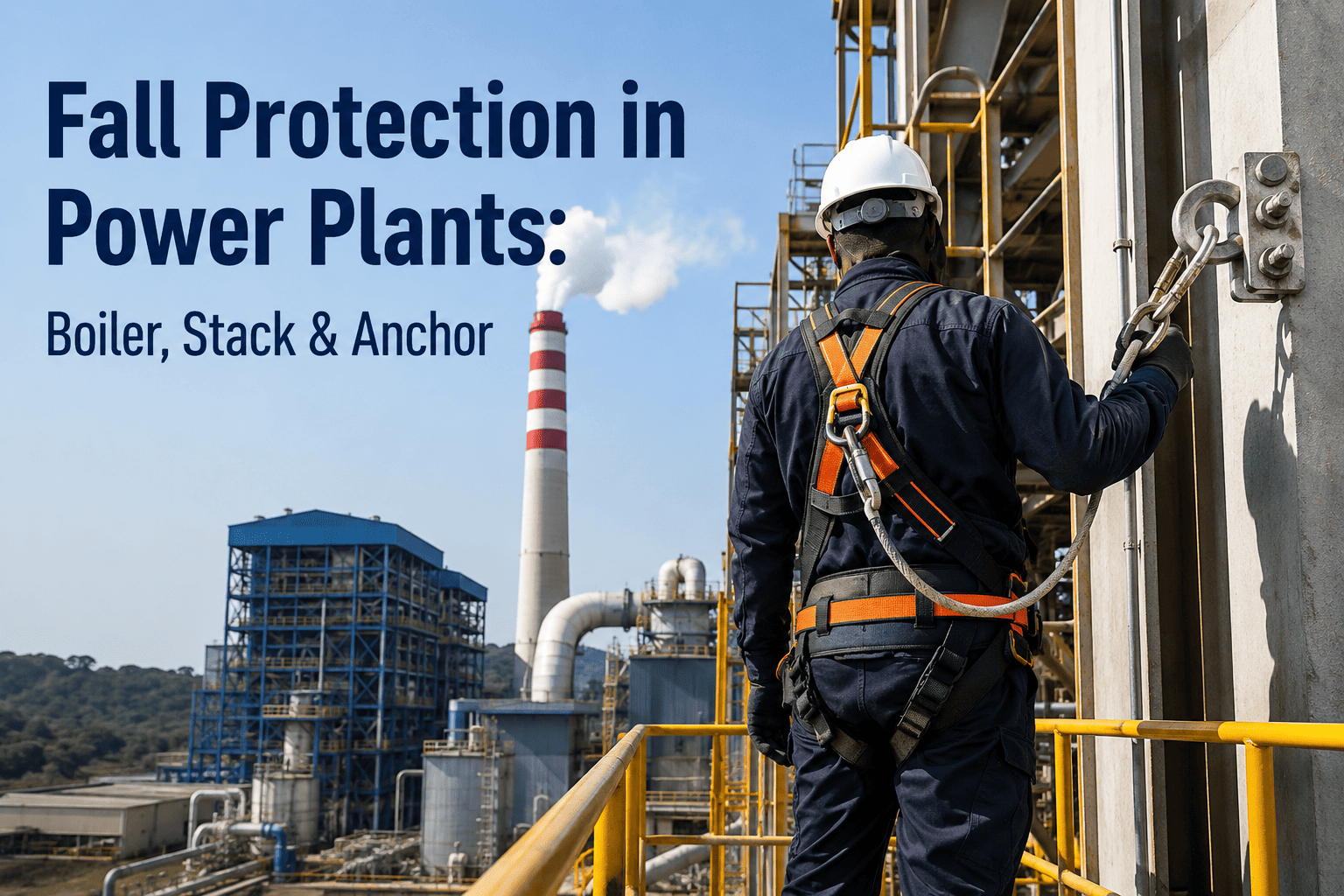
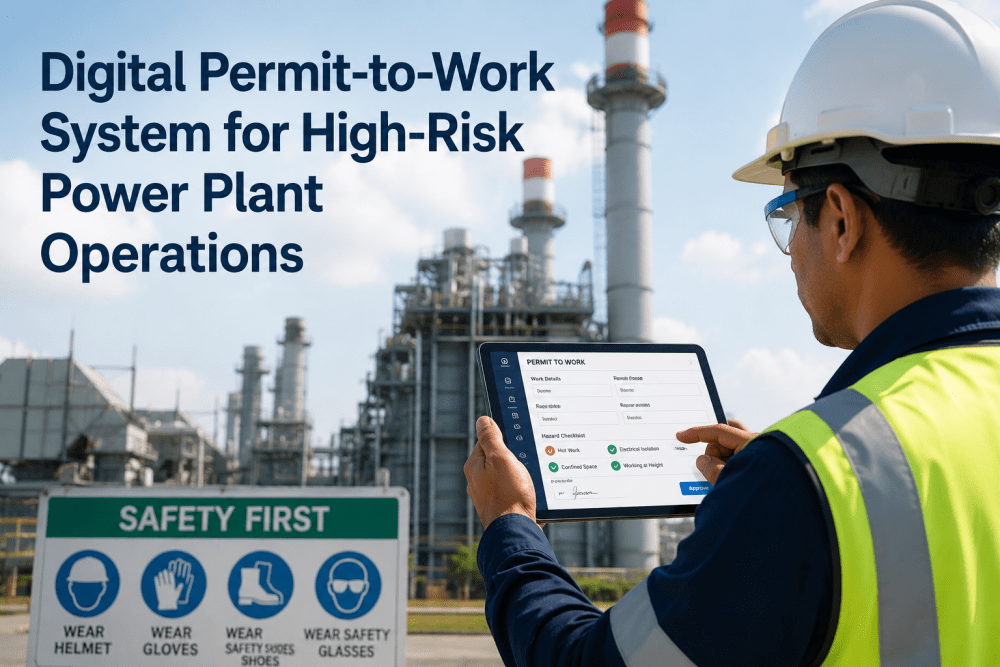
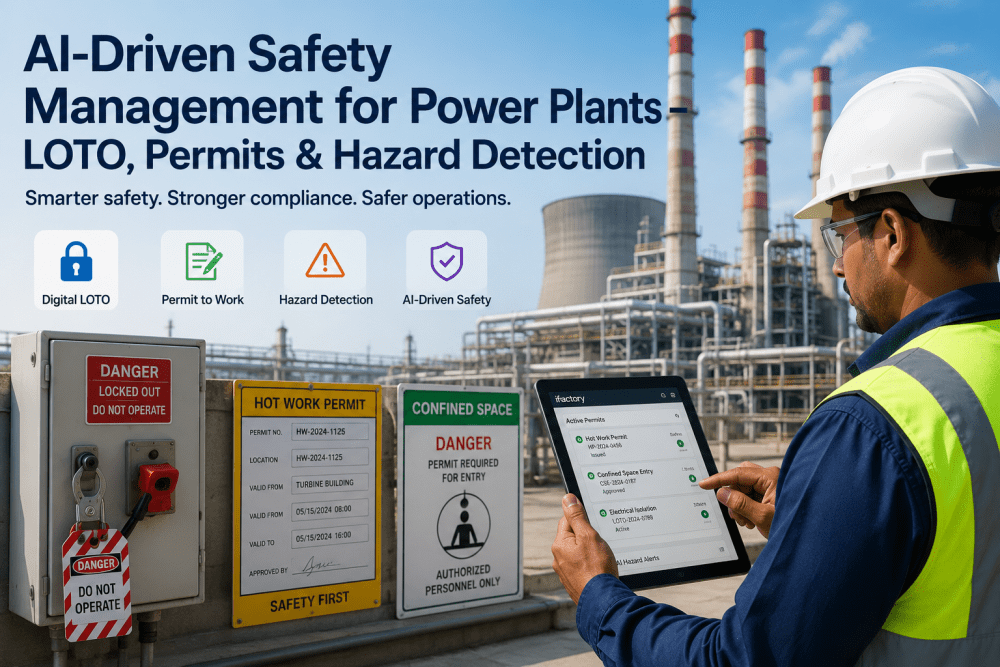
Boiler structures, stacks, cooling towers, and elevated platforms put power plant workers at height on nearly every shift, and a fall from even a modest elevation is one of the few incidents that turns catastrophic in under two seconds. Fall protection is not a single control — it is a stack of permits, inspected equipment, trained workers, and engineered anchor points that all have to be correct at the same moment someone clips in. Managing that stack across a plant with dozens of elevated work zones is where paper-based tracking quietly fails. Book a fall protection program review to see how AI tracking keeps permits, inspections, and training aligned across every elevated work zone.
Height Work Is Routine Here. Treat It Like It.
AI-powered permit tracking, harness inspection scheduling, and training compliance built for boiler structures, stacks, and elevated platforms.
The Scale of Fall Risk in Power Generation
Falls from height remain among the most cited OSHA violations across industrial facilities, and power plants carry more elevated work surfaces per square foot than almost any other industrial setting — boiler fronts, economizer platforms, stack ladders, and cooling tower decks all stacked above ground level.
of industrial fatalities are fall-related, more than any other single cause
general industry threshold above which fall protection becomes mandatory under OSHA
of fall-related citations involve equipment that was present but improperly inspected or expired
most frequently cited OSHA standard across all general industry inspections, year after year
The Hierarchy of Fall Protection Controls
Not every elevated task calls for the same control. OSHA's hierarchy runs from eliminating the height risk entirely down to personal fall arrest as the last line of defense, and most plants are relying on the bottom of the hierarchy far more than the top.
Redesign the task so height work is not required at all — ground-level valve actuation, remote monitoring.
Guardrails, toe boards, and covers that protect without requiring worker action once installed.
Anchor and lanyard configured so the worker physically cannot reach the fall hazard edge.
Harness, lanyard, and anchor engineered to stop a fall in progress — the last line, and the most equipment-dependent.
What a Compliant Height Work Permit Actually Requires
A height work permit is only as good as everything checked before it is signed. Missing any one of these elements is where most citations and near-misses trace back to.
Anchor point rated
Engineered anchor certified for 5,000 lb per worker, verified against current structural inspection.
Harness inspected
Pre-use inspection completed and logged within the current shift, not just the last scheduled cycle.
Worker training current
Fall protection training certificate valid and matched to the specific equipment being used.
Rescue plan on file
A documented suspension-trauma rescue plan specific to the work location, not a generic plant-wide policy.
Weather and conditions checked
Wind, precipitation, and surface conditions reviewed against site-specific thresholds before work begins.
Supervisor sign-off
Named accountable supervisor reviews and signs before the permit becomes active for that shift.
Where Fall Incidents Actually Start
Very few fall incidents trace back to a worker ignoring the rules. Most trace back to a gap in the system around them — a piece of equipment, a certification, or a communication step that quietly slipped.
Expired inspection tags
A harness or lanyard past its inspection date is used anyway because the tag is easy to miss at a glance during a busy shift.
Anchor point assumptions
A worker clips into a convenient structural member that was never engineered or rated as a fall protection anchor.
Outage crew turnover
Contractor crews rotate through during major outages faster than training and permit records can be manually verified.
Mismatched equipment and task
Restraint-rated equipment is used for a fall-arrest task, or the wrong lanyard length is issued for the available fall clearance.
Permit fatigue
Repetitive daily permits for the same routine task get rubber-stamped rather than fully re-verified each shift.
Delayed rescue response
A fall is arrested successfully but suspension trauma sets in because the site-specific rescue plan was outdated or unclear.
Stop Signing Permits on Assumption
iFactory ties every height work permit to live equipment inspection status and current training records, so a permit cannot be signed against expired gear or a lapsed certification.
How AI Tracking Closes the Gaps
The goal is not more paperwork. It is making sure the paperwork that already exists — inspection tags, training rosters, permit logs — is actually connected at the moment it matters.
Equipment inspection scheduling
Every harness, lanyard, and anchor point is registered with its own inspection interval and expiration alert.
Training expiration tracking
Worker certifications are matched against the specific equipment and task type they authorize, not a generic safety card.
Permit validation at issue
A permit cannot go active if the assigned worker's training or the assigned equipment's inspection has lapsed.
Full audit trail
Every permit, inspection, and training record is time-stamped and retrievable instantly for an OSHA inspection or internal review.
From an EHS Manager
We had a near-miss two years ago where a worker's harness inspection tag had actually expired the week before, and nobody caught it at the permit desk because the tag looked fine at a glance. That is exactly the kind of gap this closes — the permit simply will not issue now if the equipment or the training behind it is not current.
What Changes After Go-Live
Numbers from plants that moved height work permitting onto automated equipment and training verification within the first six months.
reduction in permits issued against expired equipment inspections
reduction in fall-protection-related near-miss reports
of active permits with a verified, current rescue plan on file
not hours, to produce a full permit and training audit trail on request
Frequently Asked Questions
Does this replace our competent person inspections?
No. A qualified competent person still performs the physical inspection of harnesses, lanyards, and anchor points as required under OSHA and ANSI Z359. What the system adds is the scheduling, expiration tracking, and permit-linkage layer, so the inspection that was completed actually blocks a permit if it later expires, rather than sitting unnoticed in a logbook. Talk to a specialist about how it complements your current inspection program.
Can it track equipment across multiple crews and contractors?
Yes. Contractor-owned equipment and training records can be logged alongside plant-owned equipment, which matters given how much elevated work during outages is performed by contract crews. The system flags contractor certifications the same way it flags employee certifications, so a permit desk is not relying on a contractor's own paper trail alone.
How does the system handle rescue plan requirements?
Each elevated work zone has a rescue plan attached as part of its permit template, and the system confirms a current, location-specific rescue plan is on file before the permit can be issued. This addresses a common citation gap where a generic plant-wide rescue plan is referenced but does not actually match the specific equipment or access constraints of the work location.
What training standards does the system track against?
Training records are matched against OSHA 1926.503 and general industry fall protection training requirements, along with any plant-specific certifications your program requires, such as competent person or rescue team qualifications. Expiration windows are configurable per certification type since refresher cycles vary by role and equipment class.
How quickly can this be deployed across an existing fleet?
Initial deployment covering equipment registration, training data migration, and permit template setup typically runs four to six weeks for a single plant, with elevated-work zones prioritized first. Book a scoping call to walk through your current permit process and get a specific rollout timeline.
Bring Every Height Work Permit Onto One System
Book a 30-minute review. Bring your current permit and equipment inspection process, and iFactory will map where training, equipment, and permit sign-off can be connected automatically.