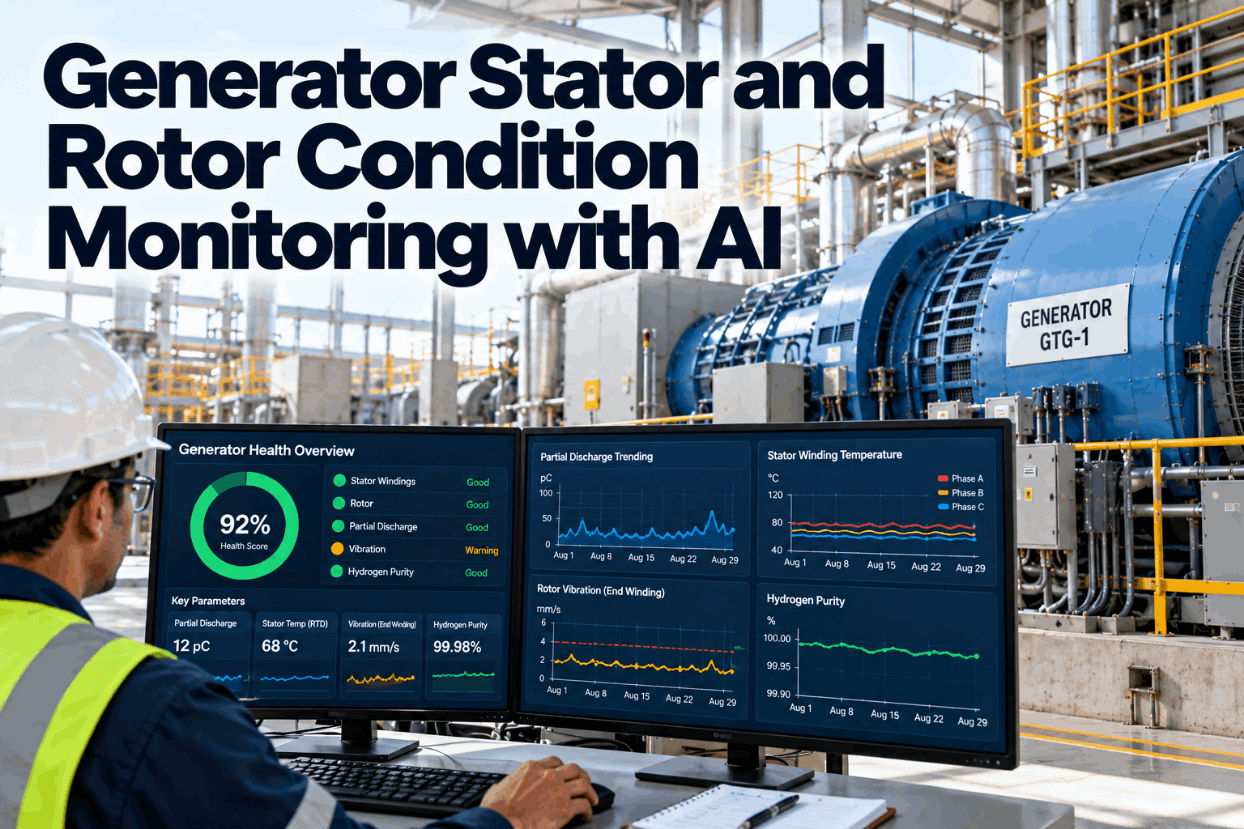
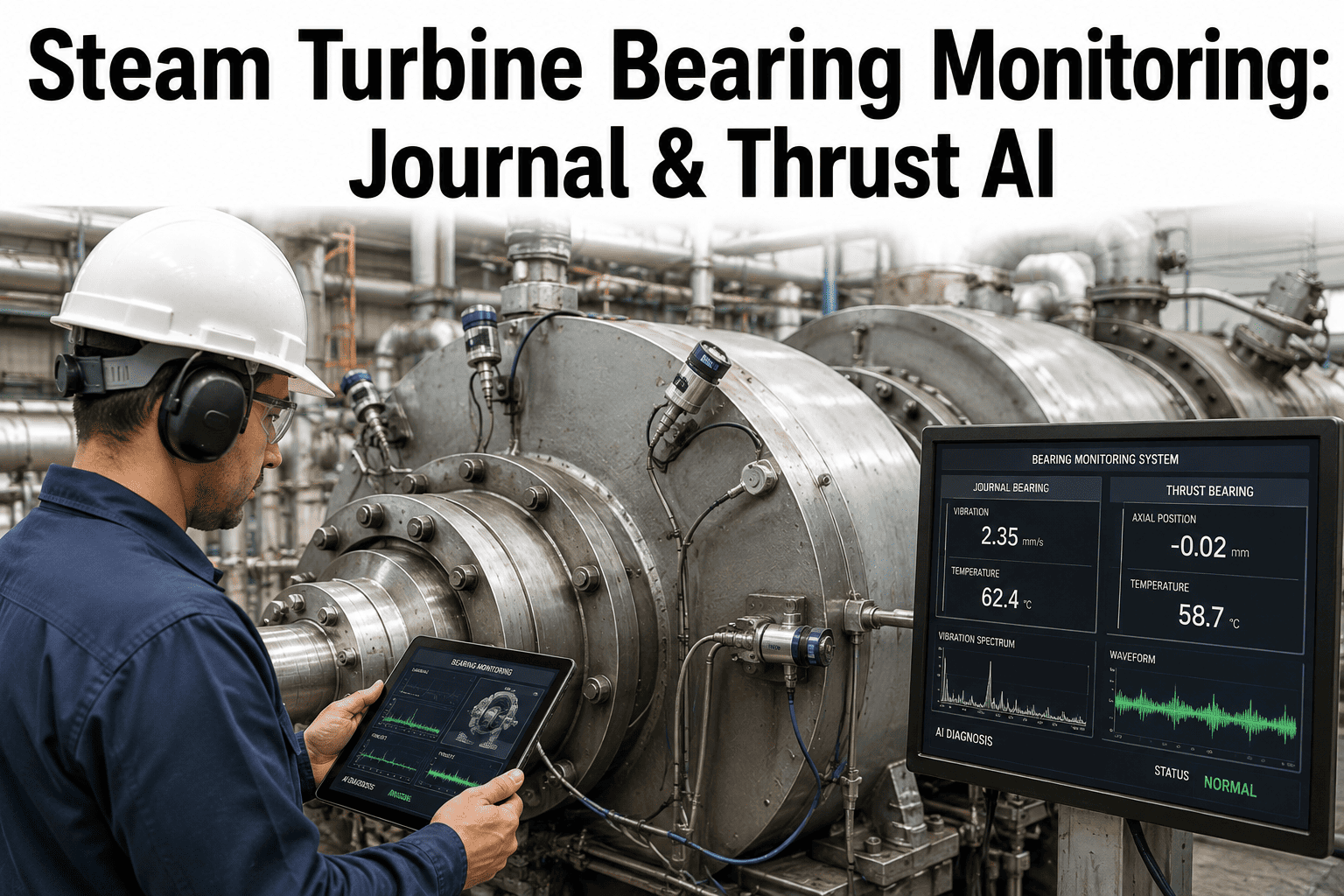
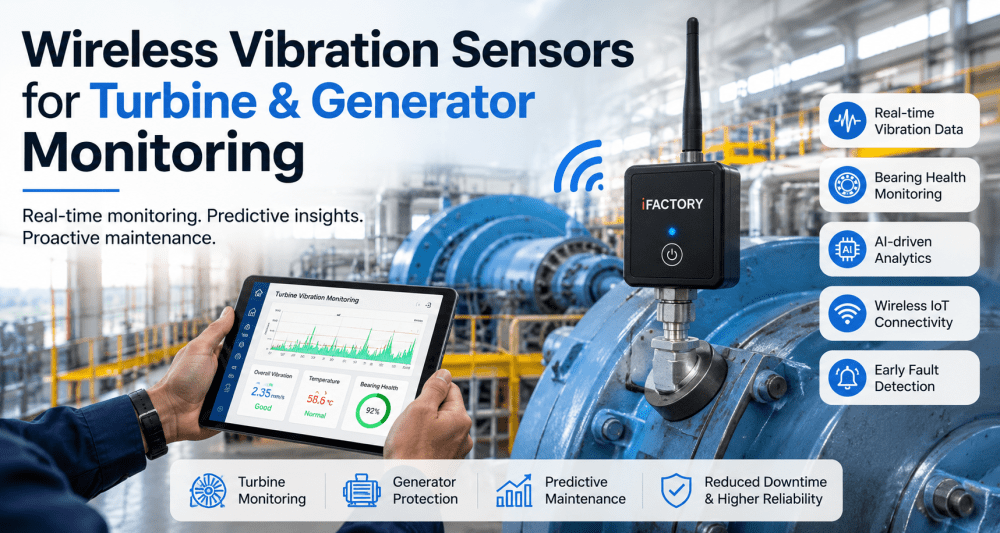
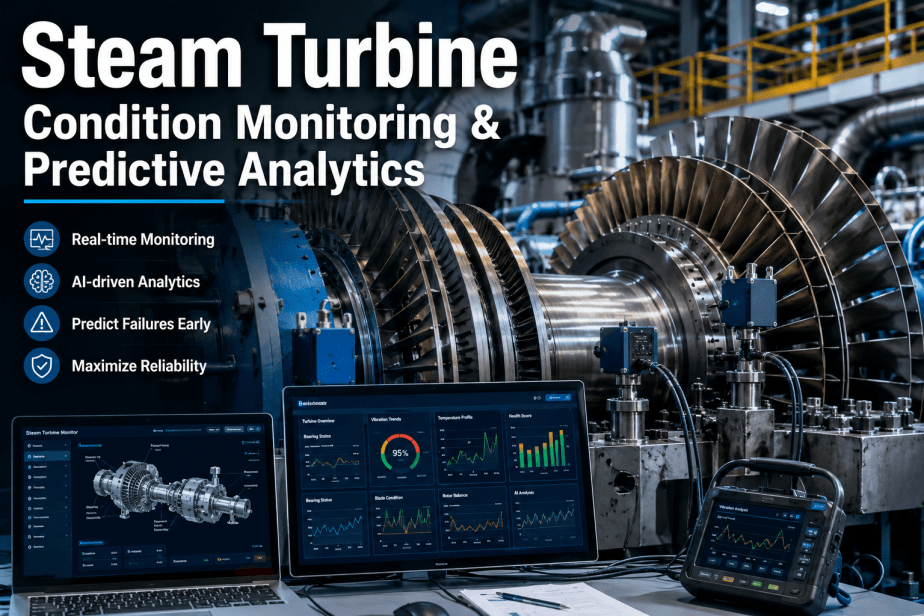
Hydropower turbines run for decades, and that longevity is exactly what makes early-stage degradation so easy to miss. A Francis runner can operate for years with a small amount of cavitation pitting before anyone notices a drop in efficiency, and a generator's stator insulation can weaken gradually long before a fault ever trips a protection relay. Plant Managers overseeing these assets are shifting from scheduled inspections to continuous AI condition monitoring that watches vibration, temperature, and electrical signatures around the clock instead of once a quarter. The goal is to catch the early signature of a developing problem while it is still a minor repair, and plants exploring this approach typically start with a short hydropower monitoring review of their current instrumentation before adding anything new.
Hydropower / Asset Condition Monitoring
Hydropower Plant Maintenance — Turbine & Generator AI Condition Monitoring
Continuous vibration analysis, cavitation detection, and bearing condition assessment across Francis, Kaplan, and Pelton units, built to extend component life and tighten maintenance timing without adding unplanned outages.
Every Turbine Type Fails Differently
Why One Monitoring Model Doesn't Fit All Units
Francis, Kaplan, and Pelton turbines are built for different head and flow conditions, and each design pushes stress onto different components. A monitoring approach tuned for one turbine type will consistently miss the failure patterns that matter most on another, which is why condition models need to be built around the specific machine rather than applied as a generic vibration threshold.
Francis Turbine
Medium head, mixed flow
Most exposed to cavitation pitting on runner blades and draft tube pressure pulsation at partial load, both of which show up as distinct vibration signatures before visible damage occurs.
Kaplan Turbine
Low head, high flow
Adjustable blade and wicket gate mechanisms introduce additional moving parts that need their own bearing and hydraulic actuator monitoring beyond the main shaft.
Pelton Turbine
High head, low flow
Impulse-driven bucket wear and nozzle needle erosion dominate the failure profile, requiring a different vibration and inspection interval baseline than reaction turbines.
Not sure which failure modes your current instrumentation actually catches? A quick review usually clarifies the gaps.
Continuous Monitoring
How AI Condition Monitoring Follows a Developing Fault
Baseline Signature Capture
Vibration, temperature, and electrical signals are recorded across normal operating conditions to establish what healthy behavior looks like for that specific unit and load range.
Early Deviation Detection
The model flags subtle shifts away from baseline, such as a new high-frequency component in the vibration spectrum, well before the deviation would trigger a fixed alarm threshold.
Failure Mode Classification
The pattern is matched against known signatures for cavitation, bearing wear, rotor eccentricity, or insulation degradation, giving maintenance teams a specific diagnosis rather than a generic warning.
Maintenance Window Recommendation
Severity trending informs whether the issue can wait for the next scheduled outage or needs earlier attention, letting teams plan repairs around river flow and demand rather than react to a trip.
Cavitation in Focus
Reading the Vibration Signature Before Damage Sets In
Cavitation begins when local pressure on a runner blade drops low enough for vapor bubbles to form, which then collapse violently against the metal surface as pressure recovers, pitting the blade over time. The acoustic and vibration signature of that bubble collapse is detectable long before pitting is visible on inspection, which is what makes continuous monitoring more valuable than periodic visual checks.
Early-stage bubble collapse signal
Developing cavitation with measurable pitting risk
Advanced cavitation requiring near-term runner inspection
Parameters Tracked
What Gets Monitored Across the Powerhouse
| Component | Monitored Signal | Failure Mode Detected |
|---|---|---|
| Turbine runner | Vibration spectrum, acoustic emission | Cavitation pitting, blade erosion |
| Main shaft bearings | Vibration amplitude, oil temperature | Bearing wear, lubrication breakdown |
| Generator stator | Partial discharge, winding temperature | Insulation degradation, hot spots |
| Generator rotor | Air gap flux, eccentricity monitoring | Rotor eccentricity, pole winding faults |
| Thrust bearing | Temperature trending, oil film pressure | Overheating, film breakdown risk |
Why Plant Managers Care
Extended Component Life Without Added Downtime
A runner replacement or generator rewind is one of the largest maintenance expenses a hydropower plant faces, and both are heavily influenced by how early degradation is caught. Continuous condition monitoring shifts inspection timing from a fixed calendar interval to actual asset condition, which means healthy components are not pulled apart unnecessarily and struggling components are not left running until a forced outage.
MTBF
Longer mean time between failures on runners and bearings
CapEx
Deferred runner and rewind spend through earlier intervention
Uptime
Fewer forced outages tied to undetected bearing or insulation faults
Common Questions
Hydropower Monitoring, Explained Simply
Can this run on older turbines that were not built with modern sensors?
Yes, most legacy hydropower units can be retrofitted with vibration, temperature, and electrical sensors without modifying the turbine or generator internals, since the monitoring equipment attaches externally to bearings, housings, and stator terminals. The AI model is then trained on that unit's own baseline behavior rather than a generic assumption, which matters more for older units with unique wear histories. A short review of the existing setup is the fastest way to confirm what a specific unit needs, and our condition monitoring walkthrough covers that in detail.
How is cavitation detection different from a standard vibration alarm?
Standard vibration alarms typically trigger on overall amplitude crossing a fixed threshold, which usually means cavitation has already progressed to visible pitting by the time it fires. Cavitation-specific detection looks at the acoustic and high-frequency vibration pattern created by vapor bubble collapse, which appears well before overall amplitude rises enough to trip a generic alarm. That earlier signal is what allows maintenance teams to plan a repair instead of reacting to one.
Does generator monitoring require taking the unit offline to install sensors?
Most partial discharge and winding temperature sensors can be installed during a normal planned outage window rather than requiring a dedicated shutdown, since they attach to existing stator terminals and winding slots without disassembling the generator. Air gap and eccentricity monitoring typically follows the same approach. Planning installation around an already-scheduled outage is the most common path plants take.
How does the system tell the difference between Francis, Kaplan, and Pelton failure patterns?
Each turbine type is modeled separately because the physical stress points differ significantly between reaction turbines like Francis and Kaplan units and impulse turbines like Pelton units. The AI model is trained on the specific sensor layout and expected operating range for that turbine type, so a Pelton bucket wear pattern is never evaluated against a Francis cavitation baseline. This unit-specific approach is what keeps the failure classification accurate across a mixed powerhouse.
What happens after the system flags a developing issue?
A flagged deviation is classified against known failure signatures and given a severity trend, which maintenance teams use to decide whether the issue can be scheduled into the next planned outage or needs earlier attention. The system does not make shutdown decisions on its own; it gives plant engineers the diagnostic detail needed to make that call with more confidence than a generic alarm would provide. Support is available to help interpret a specific flagged pattern when needed.
See what continuous condition monitoring would catch on your own turbines and generators. Book a walkthrough with our team.