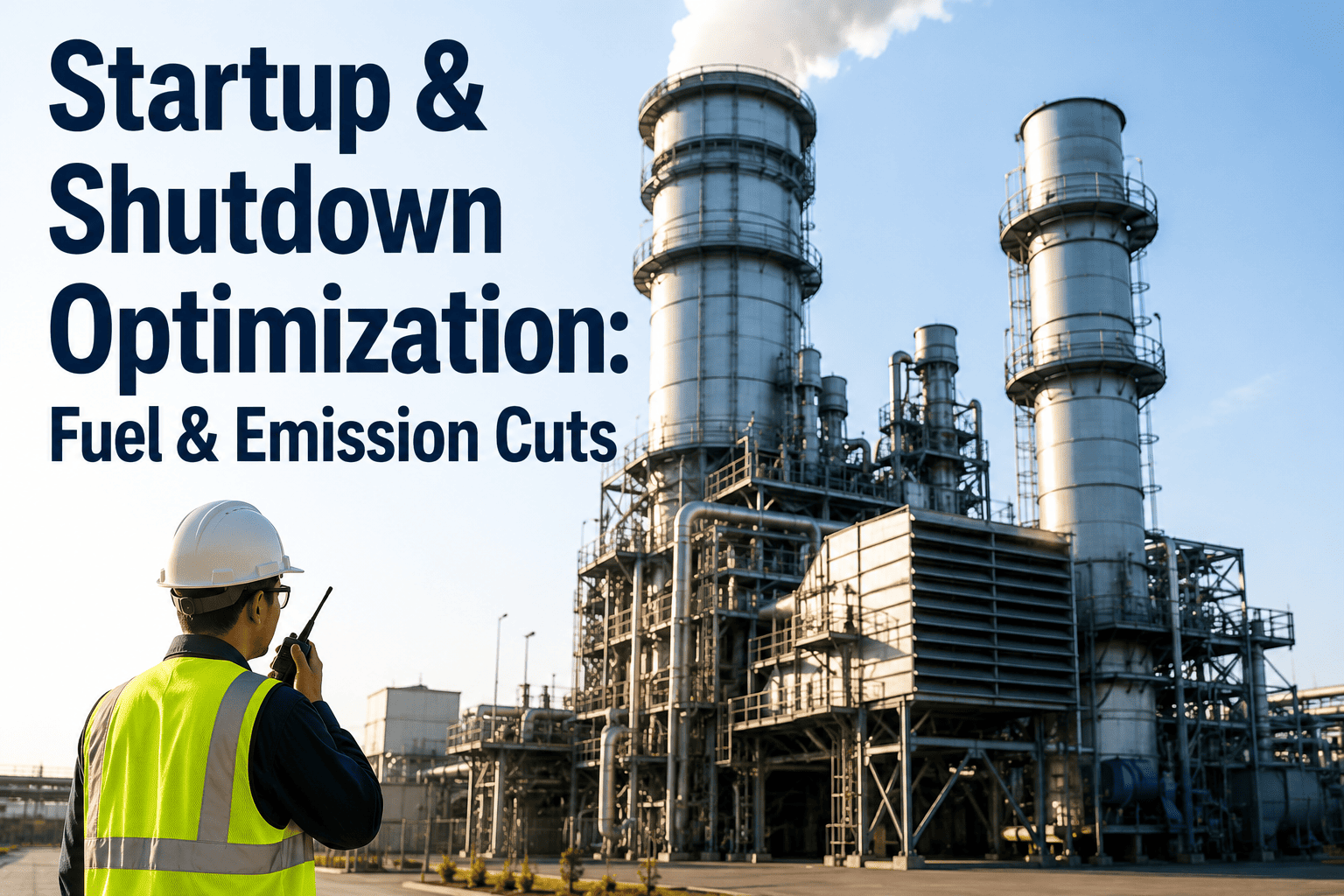
Every startup and shutdown cycle carries a cost that rarely shows up clearly on a monthly performance report: extra fuel burned to reach synchronization, extended time before the unit reaches full efficiency, and elevated emissions during the transient period when combustion is least stable. Plants that cycle frequently to follow renewable generation or dispatch signals can accumulate dozens of these transitions per year, each one an opportunity for optimization that most operators still manage with conservative, decades-old procedures. A structured startup and shutdown optimization program applies the same rigor to these transient events that plants already apply to steady-state efficiency. Book a demo to see how AI-optimized startup sequencing cuts fuel, time, and emissions together.
Cut Startup Fuel, Time, and Emissions Without Adding Risk
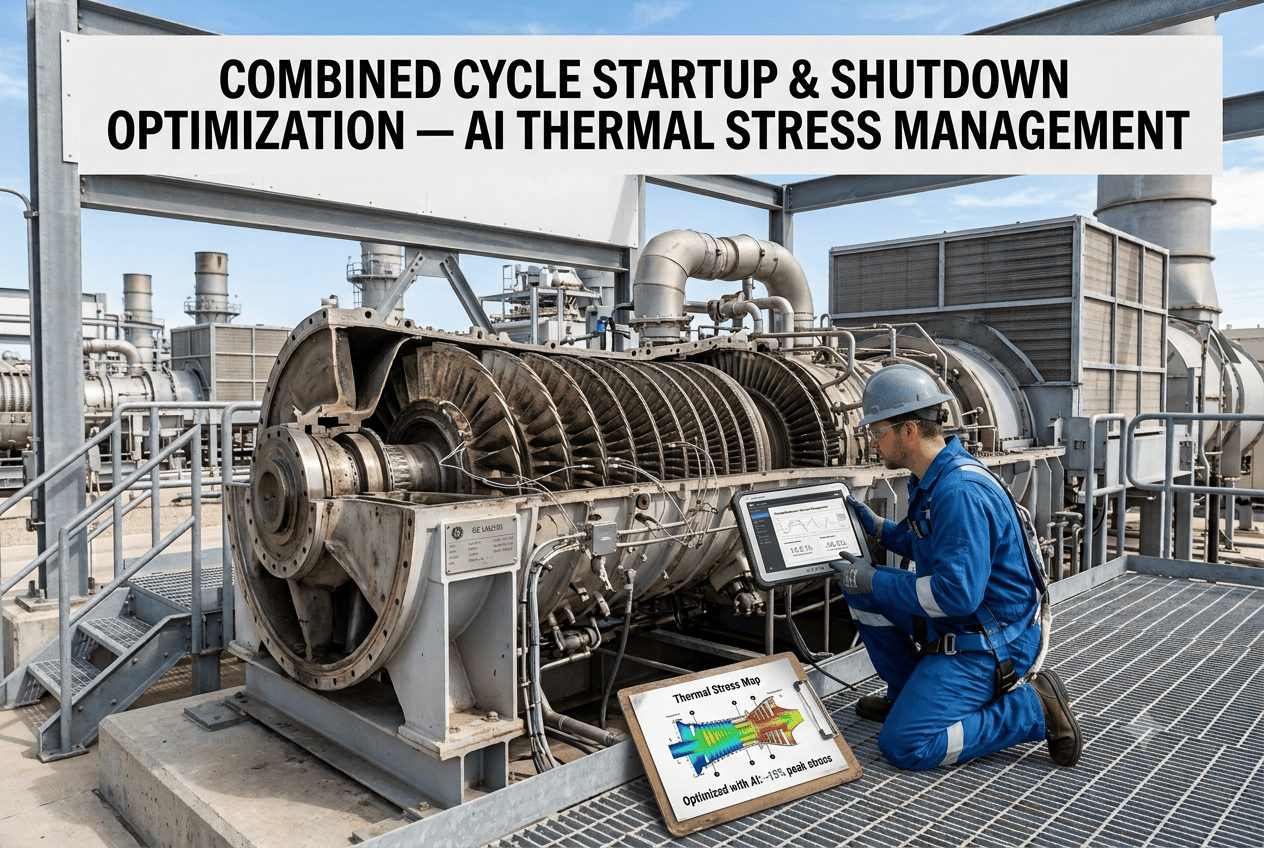
iFactory's AI startup and shutdown optimization calculates the fastest safe ramp path for current metal temperatures, cutting fuel and emissions while respecting every thermal stress limit.
What a Single Startup Actually Costs a Plant
A startup is not one cost, it is three connected costs that compound against each other. Reducing one without regard for the others often just shifts the burden rather than removing it.
Why Startups Cannot Simply Be Rushed
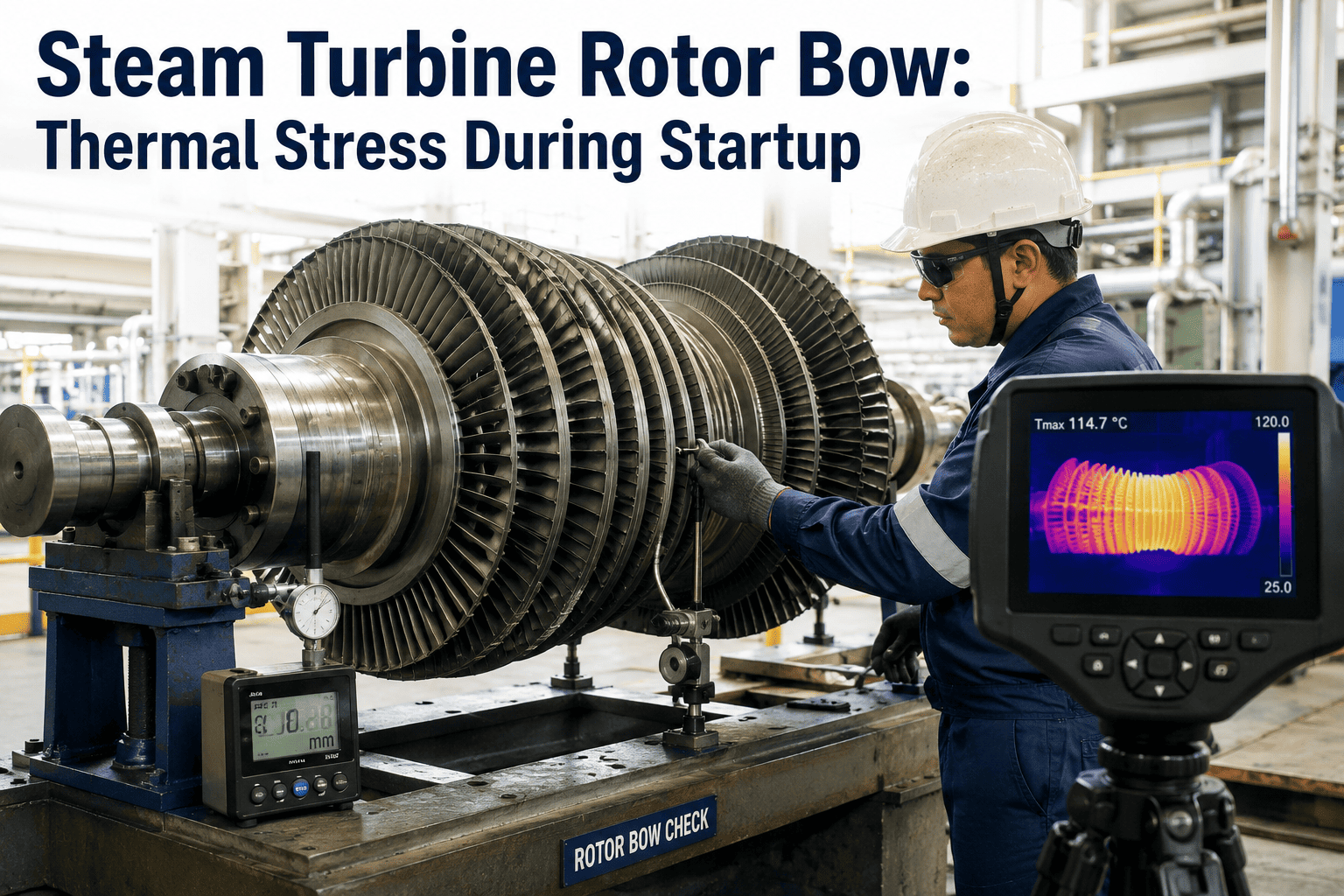
The reason startups are conservative by default is thermal stress, not operator caution alone. Thick-walled components like turbine rotors, headers, and drums must be heated at a rate that keeps thermal gradients within design limits.
Where AI Optimization Finds Margin Inside Fixed Procedures
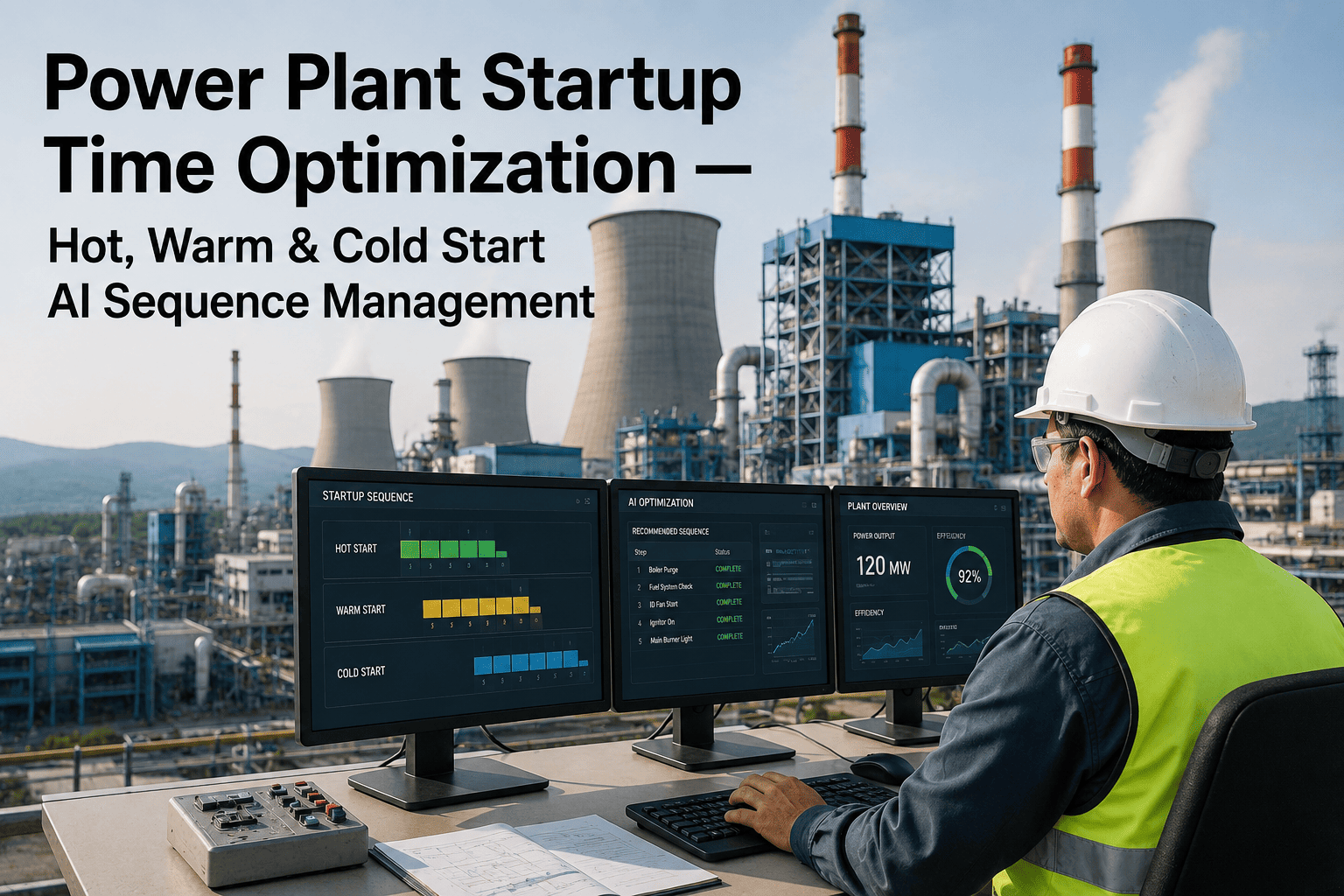
Standard operating procedures are written for the worst plausible case within each start type category. Actual conditions on any given startup are usually more favorable than that worst case, and that gap is where optimization lives.
Working Within NFPA 85 and Safety Interlocks
Optimization only has value if it operates entirely inside the safety envelope defined by NFPA 85 boiler and combustion systems hazards code and the plant's own protective interlocks. No optimization program should ever attempt to bypass or relax these requirements.
Typical Savings by Start Type
| Start Type | Typical Fuel Reduction | Typical Time Reduction | Typical Emission Reduction |
|---|---|---|---|
| Cold Start | 8-15% | 10-20% | 12-22% |
| Warm Start | 10-18% | 15-25% | 15-25% |
| Hot Start | 12-22% | 20-35% | 18-30% |
How Plants Implement Startup Optimization Without Disrupting Operations
Because startups are infrequent, high-consequence events, no plant should deploy optimization broadly without first validating it carefully. A phased implementation keeps risk low while building confidence.
Frequently Asked Questions
Does startup optimization increase the risk of thermal stress damage to turbine or boiler components?
No, properly implemented startup optimization does not increase thermal stress risk because it operates entirely within the same design thermal stress limits that fixed procedures were written to protect, it simply calculates the ramp rate that consumes that available margin more precisely rather than assuming worst-case conditions every time. Fixed procedures are conservative by design because they must work safely across the full range of conditions within a start category, from the coldest plausible cold start to the warmest, but any individual actual startup is rarely at that worst-case boundary. AI-driven optimization uses real-time measured metal temperatures rather than category assumptions, so the calculated ramp rate is always matched to actual current thermal stress margin, which if anything provides a more precise and defensible safety basis than a generic fixed schedule. Book a demo to review the thermal stress methodology in detail.
How does startup optimization interact with NFPA 85 purge and safety interlock requirements?
Startup optimization is designed to work fully inside NFPA 85 boiler and combustion systems hazards code requirements and the plant's existing burner management system interlocks, never around or in place of them, since these interlocks exist to prevent fuel accumulation and explosion risk regardless of how efficiently the rest of the startup is sequenced. The optimization opportunity lies in the sequencing of activities around mandatory purge and interlock steps, such as eliminating unnecessary idle time between auxiliary equipment startup and the point where purge credit conditions are satisfied, rather than in shortening or bypassing the purge itself. Any optimization recommendation that would touch a safety interlock setpoint is explicitly out of scope and would require a full engineering and regulatory review process entirely separate from an operational efficiency program. Contact support to discuss how optimization respects your BMS configuration.
How is a cold, warm, or hot start actually classified for a specific unit?
Start classification is based primarily on measured metal temperature at key thick-walled components, most commonly the high-pressure turbine first-stage metal temperature or the main steam header temperature, rather than purely on offline duration, since offline time is only a proxy for how much a unit has cooled and actual cooling rate varies with ambient conditions, insulation condition, and whether the unit was kept on turning gear or steam blanketed. Typical industry thresholds classify a start as hot above roughly 350 degrees Celsius metal temperature, warm between roughly 150 and 350 degrees, and cold below 150 degrees, though exact thresholds vary by turbine OEM and are defined in the unit-specific startup curves provided with the original equipment. AI-driven optimization uses the actual continuous metal temperature reading rather than a fixed classification threshold, which allows the ramp rate calculation to be precise even for starts that fall near a classification boundary. Book a demo to see start classification applied to your unit's specific curves.
Can startup optimization help plants that cycle frequently for renewable integration?
Yes, and plants cycling frequently to balance renewable generation or follow price signals typically see the largest cumulative benefit from startup optimization, since they are executing far more starts per year than a traditional baseload plant and even a modest per-start improvement compounds quickly across dozens of annual cycles. Frequent cycling also means a larger share of starts fall into the warm start category, where the gap between fixed procedure assumptions and actual favorable conditions tends to be widest, giving optimization the most room to work. Beyond the direct fuel, time, and emission savings on each start, faster and more predictable startup times also improve a unit's competitiveness for cycling dispatch assignments in markets that reward quick, reliable ramping capability. Contact support to model the annual impact for your cycling profile.
What data does a plant need to have in place before implementing startup optimization?
Most plants already have the core instrumentation needed, including turbine metal temperature measurements, main and reheat steam conditions, drum or once-through boiler metal temperatures, and standard combustion and emission monitoring, since these are typically required for existing turbine stress evaluator systems and environmental compliance monitoring. The main additional requirement is historical startup data, ideally covering a range of cold, warm, and hot starts, which is used to validate the thermal and combustion models against the specific unit's actual behavior before any optimization recommendations are put into active use. A structured readiness review at project kickoff confirms instrumentation coverage and historical data availability, and identifies any gaps that need to be closed, though in most cases the gap is smaller than plants initially expect since the required data overlaps heavily with what protection and monitoring systems already collect. Book a demo to complete a readiness review for your unit.
Every Start Costs Fuel, Time, and Emissions. Optimize All Three Together
iFactory calculates the fastest safe startup and shutdown path for your unit's actual condition, inside your existing safety envelope, every single cycle.