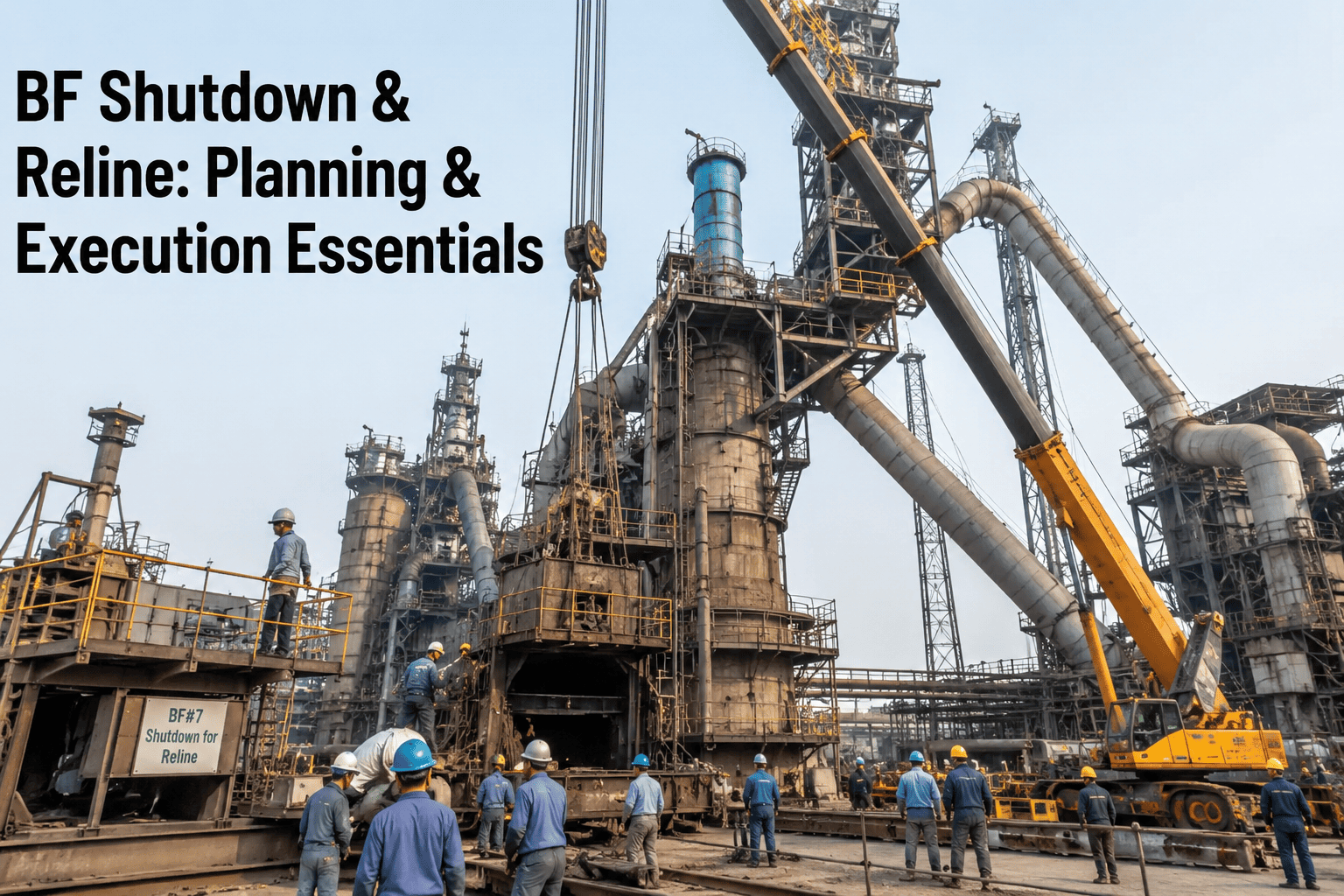
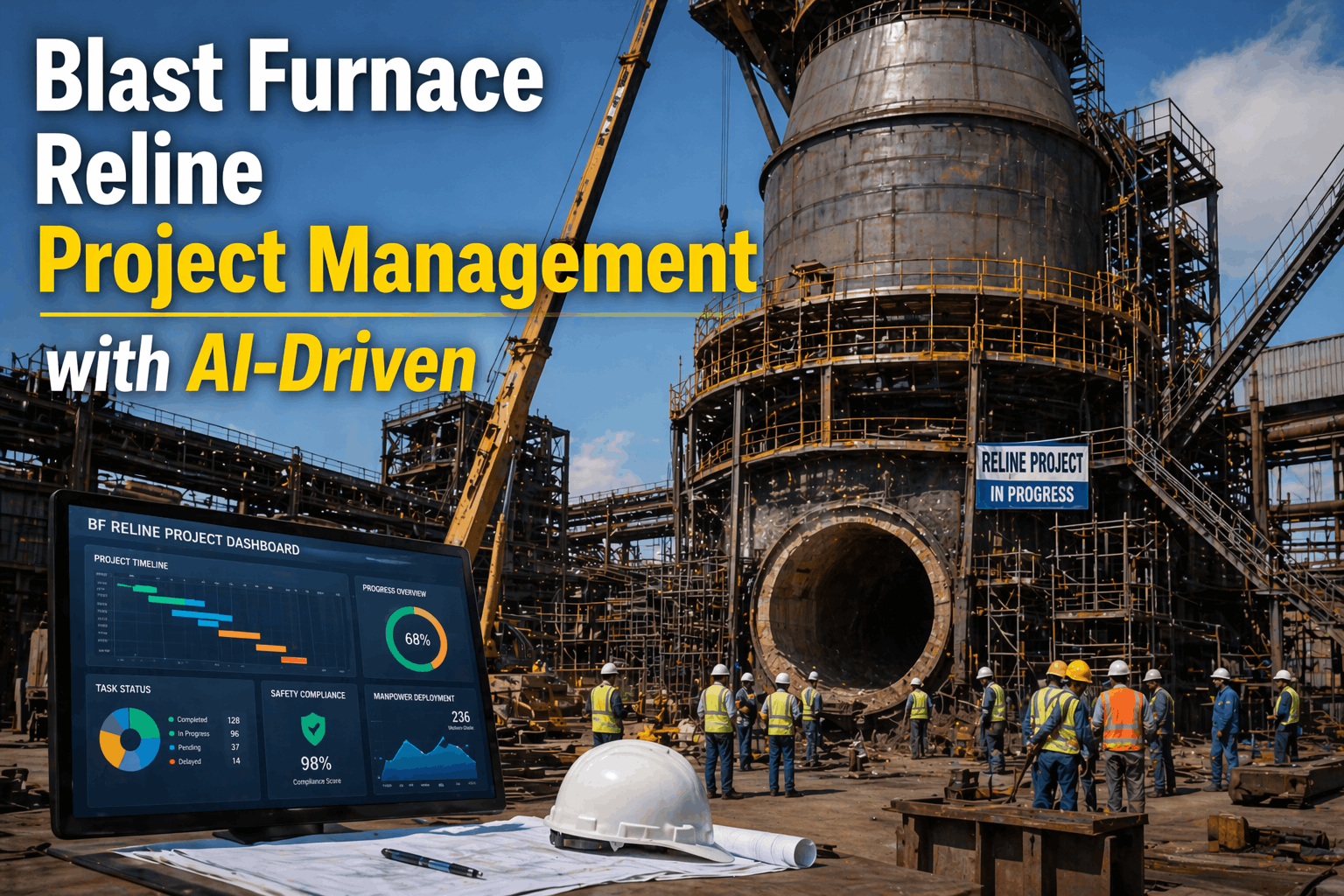
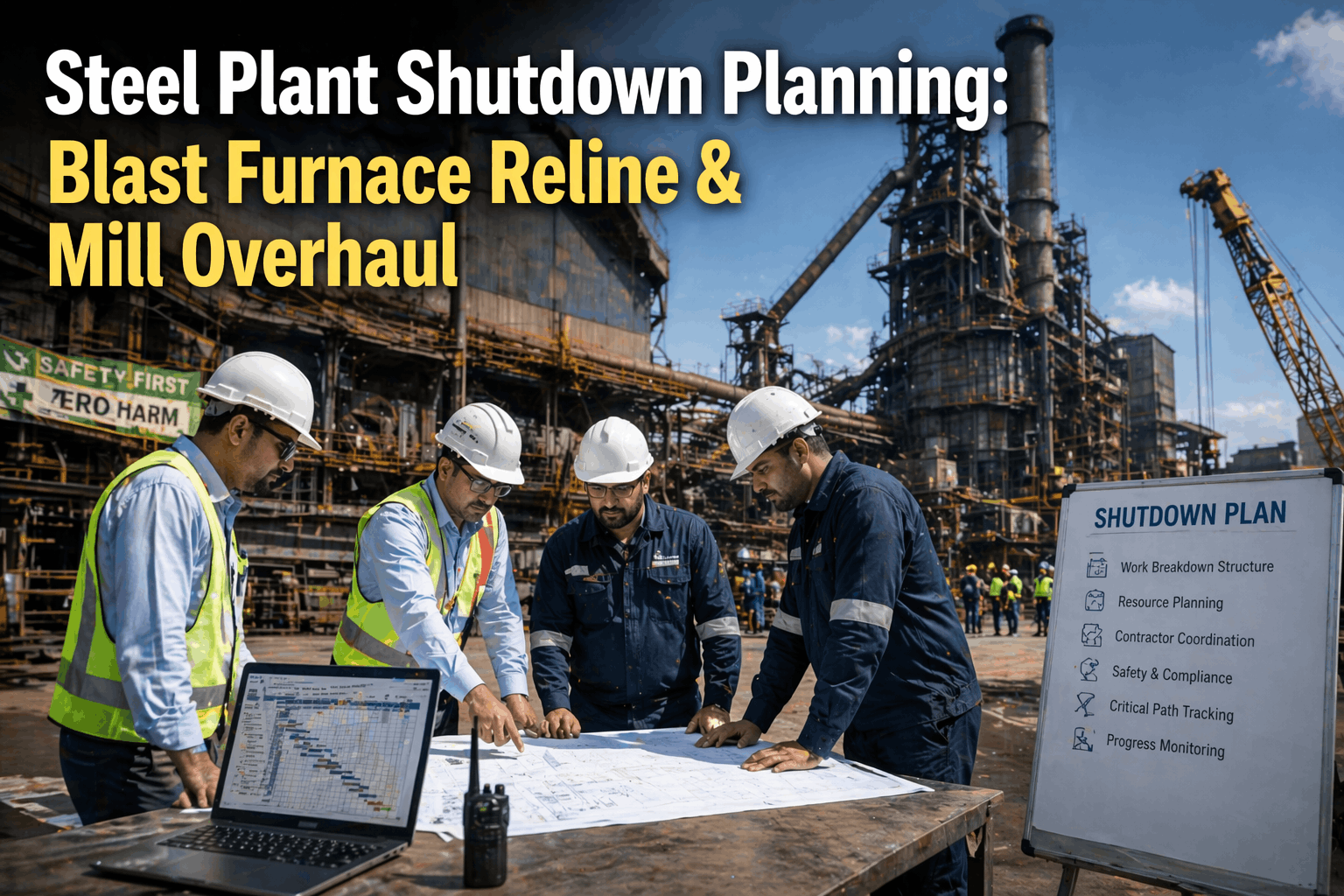
A blast furnace reline is one of the largest single capital projects a steel plant undertakes, and every day the furnace sits down beyond the planned schedule is a day of lost hot metal production that cannot be recovered later. The difference between a reline that finishes on time and one that overruns by weeks almost always traces back to planning depth — how well the blowdown sequence, the scope of work, and the restart procedure were defined and coordinated before the furnace ever went cold. A shutdown that starts with an unclear scope inevitably discovers unplanned work mid-project, and unplanned work during a reline is the single biggest driver of schedule overrun. iFactory helps ironmaking teams plan and track reline execution against schedule, with the workflow detailed at iFactory support.
Blast Furnace · Shutdown & Reline
Blast Furnace Shutdown, Blowdown, and Reline: Planning and Execution That Protects the Schedule
Blowdown sequencing, reline scope definition, and project execution tracking built to minimize shutdown duration and support a safe, on-schedule restart.
Weeks
Typical reline duration for a major scope, varying by furnace size
#1
Cause of schedule overrun: unplanned scope discovered mid-project
Months
Lead time needed for scope definition and long-lead material procurement
Reline Project Phases
From Blowdown Decision to Restart — What Each Phase Actually Involves
Phase 1
Scope Definition & Pre-Planning
Detailed inspection findings from campaign life monitoring feed the reline scope decision — full reline versus targeted repair — well before the blowdown date, alongside long-lead material procurement for refractory and cooling equipment.
Phase 2
Blowdown Sequencing
Controlled reduction of blast, burden, and internal pressure following a defined sequence to safely bring the furnace to a cold, accessible state without damaging equipment or creating a safety hazard from residual gas or heat.
Phase 3
Demolition & Inspection
Removal of worn refractory and, where scope requires, structural components, with inspection findings at this stage sometimes revealing wear beyond what campaign monitoring predicted — the point where schedule risk is highest.
Phase 4
Reline & Reconstruction
Refractory installation, cooling system work, and structural repair executed against a detailed critical path schedule, typically the largest single block of project duration.
Phase 5
Dry-Out & Restart
Controlled heating of new refractory to remove moisture without thermal shock cracking, followed by a defined blow-in sequence to bring the furnace back to stable production.
Scope Risk Areas
Where Reline Scope Most Often Expands Mid-Project
Hidden Shell Damage
Structural shell corrosion or distortion discovered only once refractory is removed, invisible to pre-shutdown inspection methods.
Cooling System Condition
Stave or cooling plate deterioration beyond what was assumed from operating data, requiring additional replacement scope.
Long-Lead Material Delays
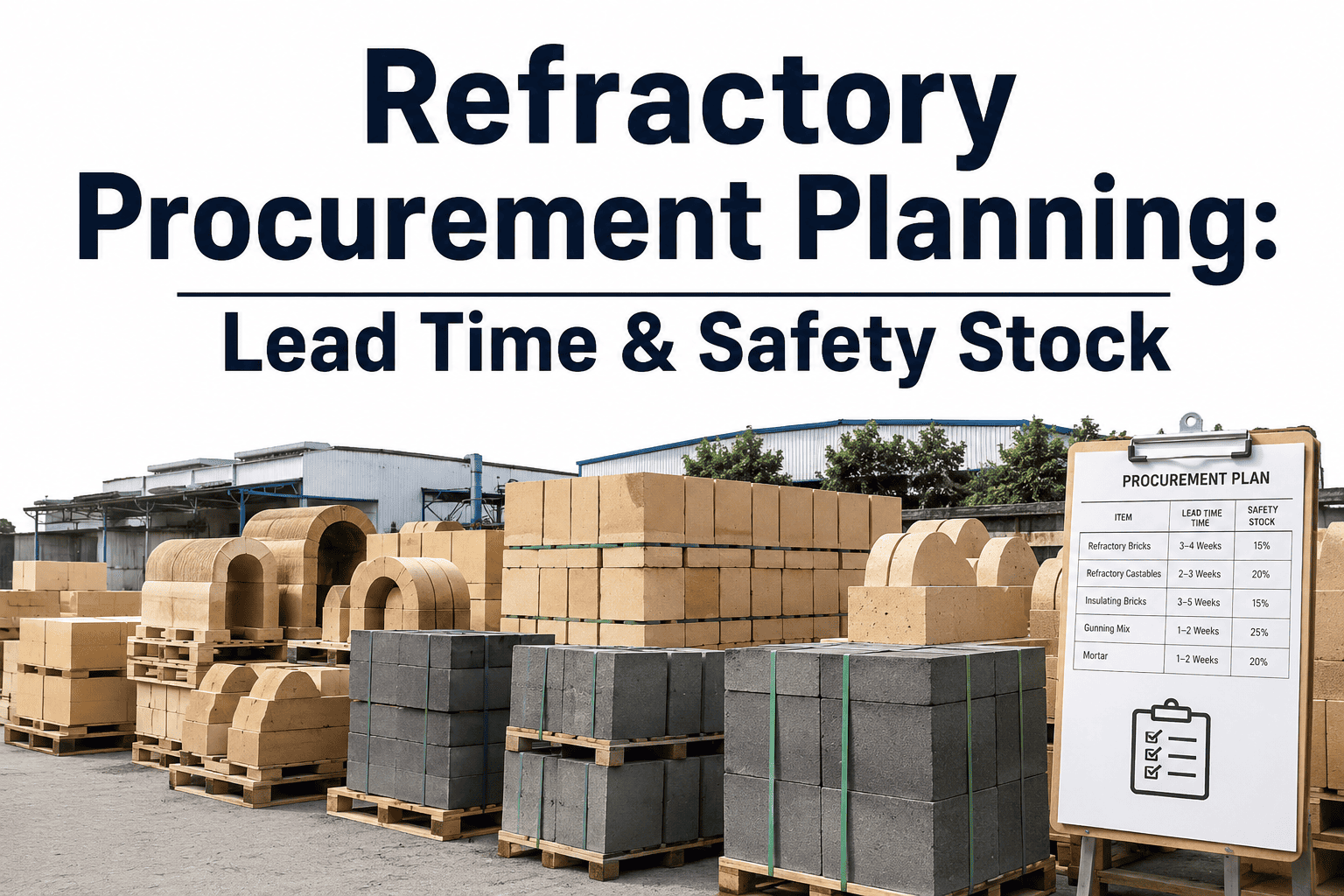
Refractory brick or specialized cooling equipment procurement timelines underestimated relative to the actual blowdown date.
Contractor Coordination Gaps
Multiple specialty contractors working overlapping areas without a clearly sequenced schedule, creating idle time and rework.
Every Extra Day of Reline Duration Is a Day of Hot Metal Production That Doesn't Come Back.
iFactory tracks reline scope, schedule, and contractor progress against the critical path so scope surprises get managed, not discovered too late.
Safe Restart Sequence
Dry-Out and Blow-In: The Steps That Protect New Refractory
Step
Purpose
Risk If Rushed
Controlled Dry-Out Heating
Remove residual moisture from new refractory gradually
Thermal shock cracking, reduced campaign life from day one
Initial Coke-Only Charging
Establish stable internal conditions before full burden
Unstable descent, early gas flow irregularity
Gradual Burden Ramp-Up
Bring the furnace to full production rate incrementally
Thermal and mechanical stress on new lining, hot metal quality instability
Post-Restart Monitoring Window
Confirm new lining and instrumentation performing as designed
Undetected early-campaign defects going unaddressed
Field Example
Cutting Two Weeks Off a Reline Timeline Through Better Scope Coordination
A steel producer planning a scheduled reline had historically experienced schedule overruns of two to three weeks on its previous two campaigns, both traced back to a combination of late-discovered shell damage scope and contractor sequencing conflicts between refractory and cooling system crews working the same access areas.
For the current reline, the team used iFactory to track pre-shutdown inspection findings against the reline scope definition in detail, flag long-lead procurement items against the confirmed blowdown date months in advance, and coordinate contractor schedules against a shared critical path rather than separate contractor-managed timelines. The project finished roughly two weeks ahead of the historical baseline, with the only mid-project scope addition being a minor cooling plate replacement that had already been flagged as a probable risk before blowdown.
2 weeks
Faster completion versus the plant's historical baseline
1 minor item
Only unplanned scope addition, already flagged as probable pre-shutdown
Months ahead
Long-lead procurement flagged against the confirmed blowdown date
Frequently Asked Questions
What Project Teams Ask About BF Shutdown and Reline Planning
How far in advance should reline scope definition begin?
Detailed scope definition typically needs to begin six months to over a year before the planned blowdown date, driven largely by long-lead procurement timelines for refractory brick and specialized cooling equipment rather than the physical work itself. Campaign life monitoring data feeding into the scope decision earlier gives more accurate procurement lead time and reduces the risk of discovering a major unplanned item after materials have already been ordered against an assumed scope.
What's the biggest single driver of reline schedule overrun?
Unplanned scope discovered during demolition and inspection, most commonly hidden shell damage or cooling system deterioration beyond what pre-shutdown data indicated, is consistently the largest driver of overrun. The second most common cause is contractor coordination failure, where multiple specialty crews working overlapping physical areas create idle time and rework rather than a genuine technical scope problem.
Why can't dry-out heating be accelerated to shorten the restart timeline?
New refractory retains significant moisture from installation, and heating it too quickly creates steam pressure inside the brick structure that can cause cracking or spalling, damaging the lining before the furnace has even returned to production. The dry-out heating rate is calculated based on refractory type and thickness, and shortening it to save restart time risks reducing the effective life of the entire new campaign, which is a far larger cost than the days saved.
How is the decision made between a full reline and a targeted repair?
The decision rests primarily on campaign life monitoring data showing whether wear is concentrated in specific zones, such as the hearth or bosh, or distributed broadly across the lining in a way that makes a partial repair impractical relative to the remaining campaign value. A targeted repair can extend a campaign at a fraction of the cost and downtime of a full reline when wear is genuinely localized, but attempting a partial repair when wear is broadly distributed often just defers a full reline at added total cost.
How does iFactory help coordinate a reline project across multiple contractors?
iFactory tracks reline scope items, procurement status, and contractor schedules against a shared critical path, flagging when a scope addition or procurement delay threatens the overall timeline so it can be addressed proactively rather than discovered as a surprise during execution. To see how the scope and schedule tracking maps onto your specific reline plan,
book a demo.
Protect the Schedule Before the Furnace Ever Goes Cold.
Scope definition, blowdown sequencing, contractor coordination, and restart tracking built to minimize the days your furnace is down.