A carding machine running above its rated production speed looks like a productivity win on the shift report, but every increase in throughput past the card's actual capacity for that fibre trades directly against nep removal, fibre individualization, and sliver evenness, and the trade-off rarely shows up until the sliver reaches spinning and produces an unexplained rise in end-breaks. Flat-to-cylinder setting drifts as flat tops wear and card clothing wire dulls, both of which reduce carding action gradually rather than through any single failure point, leaving a card that still runs and still produces sliver while doing progressively less actual fibre separation and nep removal than its setting sheet assumes. Card production rate, flat setting, and wire condition interact closely enough that treating any one of them in isolation — pushing production rate without checking wire condition, for instance — routinely produces a quality outcome worse than any single setting alone would predict. iFactory's carding process analytics platform tracks production rate, flat-to-cylinder setting, and wire condition against actual nep count, sliver evenness, and fibre damage data across every card on the floor, so a card's real output quality is validated continuously rather than assumed from its commissioning specification. Book a free carding optimization assessment.
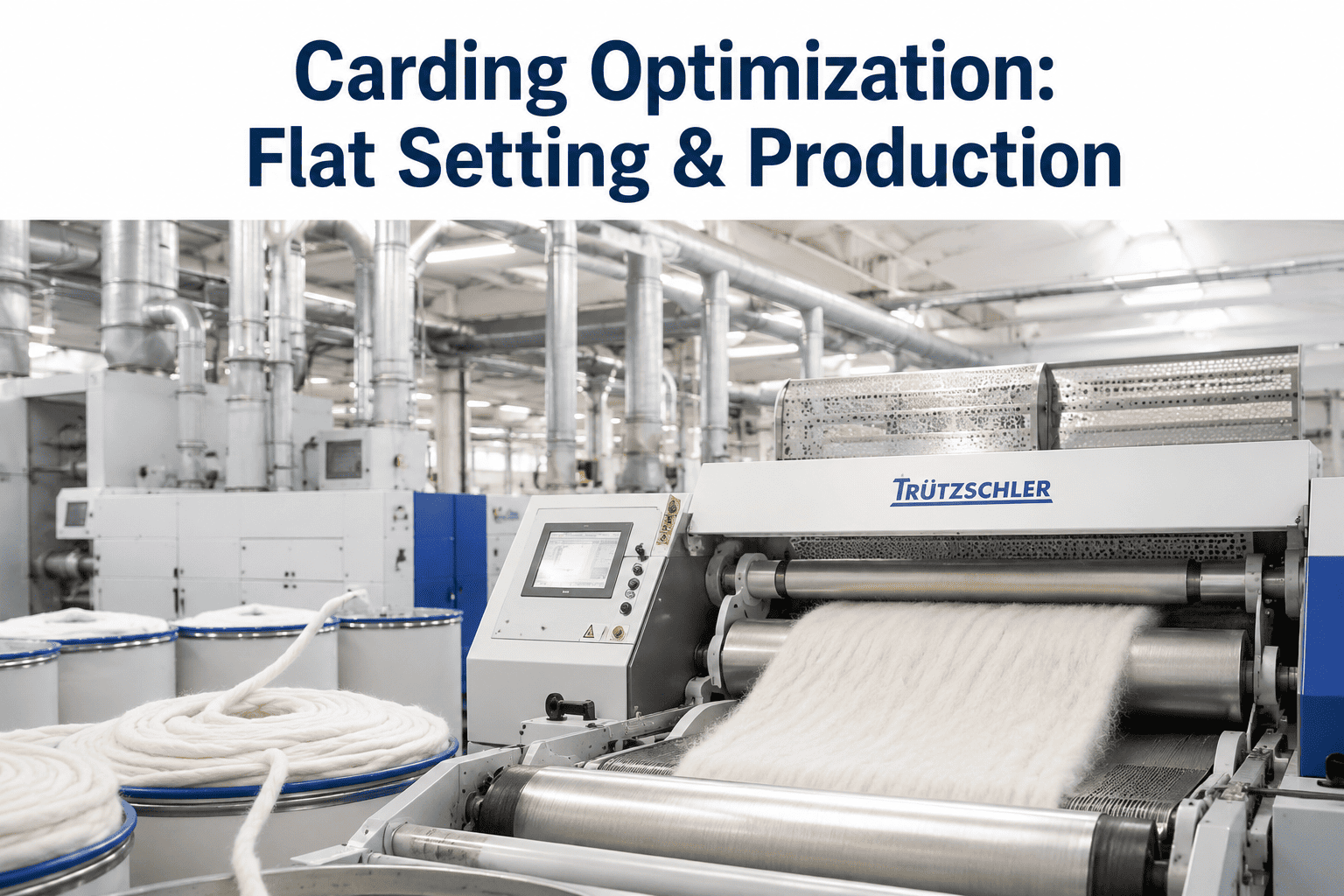
Carding optimization means matching production rate to what current wire condition and fibre quality can actually support, maintaining flat-to-cylinder setting as wire and flat tops wear, and tracking nep count and sliver evenness continuously rather than only at scheduled quality checks. iFactory tracks card production rate, flat setting, and wire sharpness against actual nep and evenness outcomes on every card. Average result: 25% lower nep count and 10% reduction in card-related sliver quality claims.
Card Production Rate: The Ceiling That Moves With Wire Condition
A card's rated production speed assumes card clothing wire in good condition, correctly set flats, and fibre within the quality range the machine was designed for, and every one of those assumptions degrades over time in ways that lower the actual sustainable production rate well before the machine's mechanical top speed is reached. Running a card at its original rated speed after wire has dulled or flats have worn does not simply reduce carding quality proportionally — nep removal efficiency falls off sharply once wire sharpness or flat setting crosses a threshold, meaning a card that looks fine at 90% of a fresh-wire production rate can produce meaningfully worse sliver at the same speed once wire has aged, even though the speed setting itself never changed. Mills that treat production rate as a fixed target set once and left unchanged, rather than a variable that should track current wire and flat condition, are implicitly accepting a quality drift they never explicitly decided to accept.
iFactory tracks production rate, flat setting, and wire sharpness against real nep and evenness data, so speed decisions reflect current machine condition, not the original commissioning specification.
Flat-to-Cylinder Setting: A Small Gap Change With a Large Quality Effect
The gap between the flat tops and the cylinder is one of the most sensitive settings on the entire carding machine, because it directly determines how thoroughly fibre tufts are opened and how effectively neps and short fibre are removed as the fibre passes between the two surfaces. A gap that widens even slightly from flat top wear or thermal expansion during a production shift reduces carding action measurably, letting neps pass through that a correctly set gap would have opened and removed, and because the change is gradual rather than a step change, it rarely triggers any operator attention until the resulting nep count in the sliver becomes a quality complaint. Flat setting also interacts with cylinder speed — a wider gap can sometimes be partially compensated by other settings, but that compensation typically trades one quality dimension for another rather than restoring the original carding action fully, which is why direct gap verification against a known-good reference remains more reliable than inferring flat condition from downstream quality alone.
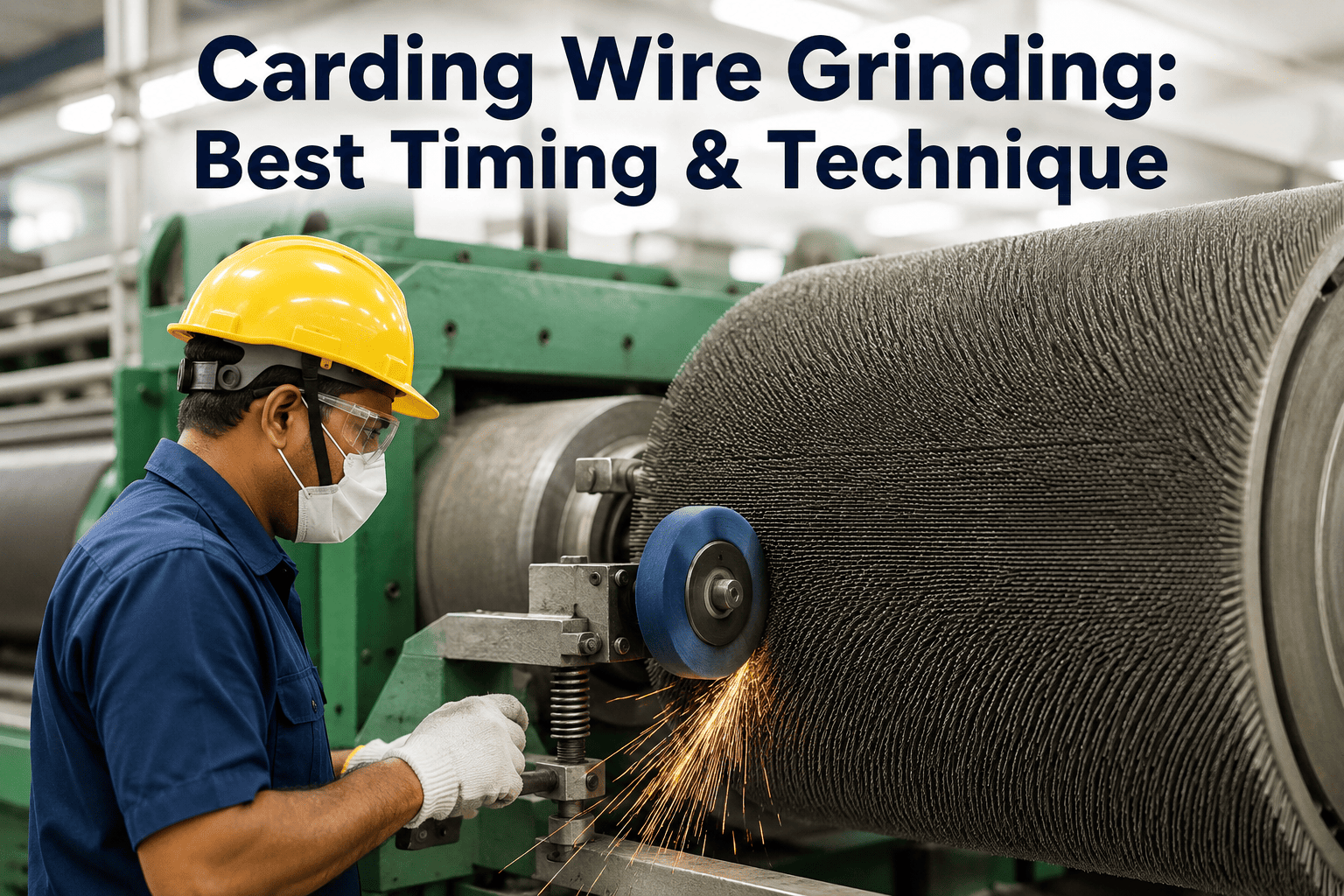
Card Wire Sharpness and Wire Condition Life Cycle
| Wire Condition Stage | Typical Effect on Carding Action | Recommended Response |
|---|---|---|
| New or freshly ground wire | Sharp fibre engagement, high nep removal | Can support full rated production rate |
| Moderate wear, early stage | Slight rise in nep count, still within tolerance | Monitor closely, no rate change yet needed |
| Advanced wear | Nep removal efficiency drops sharply | Reduce production rate or schedule grinding |
| Wire due for replacement | Carding action inadequate at any practical rate | Replace wire before further production |
Wear progression varies with fibre type, production rate, and maintenance history; validate wire condition against your own nep and evenness data rather than a fixed running-hours estimate.
Licker-In Speed and Its Role in Nep Formation Before Cylinder Carding Even Begins
Licker-in speed governs how the incoming fibre tuft is first opened and transferred toward the cylinder, and it is frequently overlooked in nep discussions that focus entirely on the cylinder-flat carding zone, even though a poorly matched licker-in speed can generate neps before the fibre ever reaches that zone. Licker-in speed set too high relative to fibre feed rate causes excessive fibre-to-fibre friction during the initial opening stage, generating neps directly from the opening action itself rather than from any downstream carding deficiency, while speed set too low leaves tufts inadequately opened for the cylinder to process effectively regardless of how well cylinder and flat settings are otherwise tuned. Because licker-in neps and cylinder-flat neps look similar in a standard nep count without more detailed classification, mills chasing a nep complaint often correct flat setting or wire condition first, missing a licker-in speed mismatch that was the actual dominant contributor, which is why a useful carding review separates nep sources by their likely stage of origin rather than treating total nep count as a single undifferentiated number.
iFactory's assessment reviews your current card settings and wire condition against actual nep and evenness data to show where correction would help most.
Frequently Asked Questions
iFactory maps every card's settings and wire condition against actual sliver quality outcomes, so drift is caught before it reaches spinning as an unexplained quality complaint. On-premise ready. First insights within weeks.