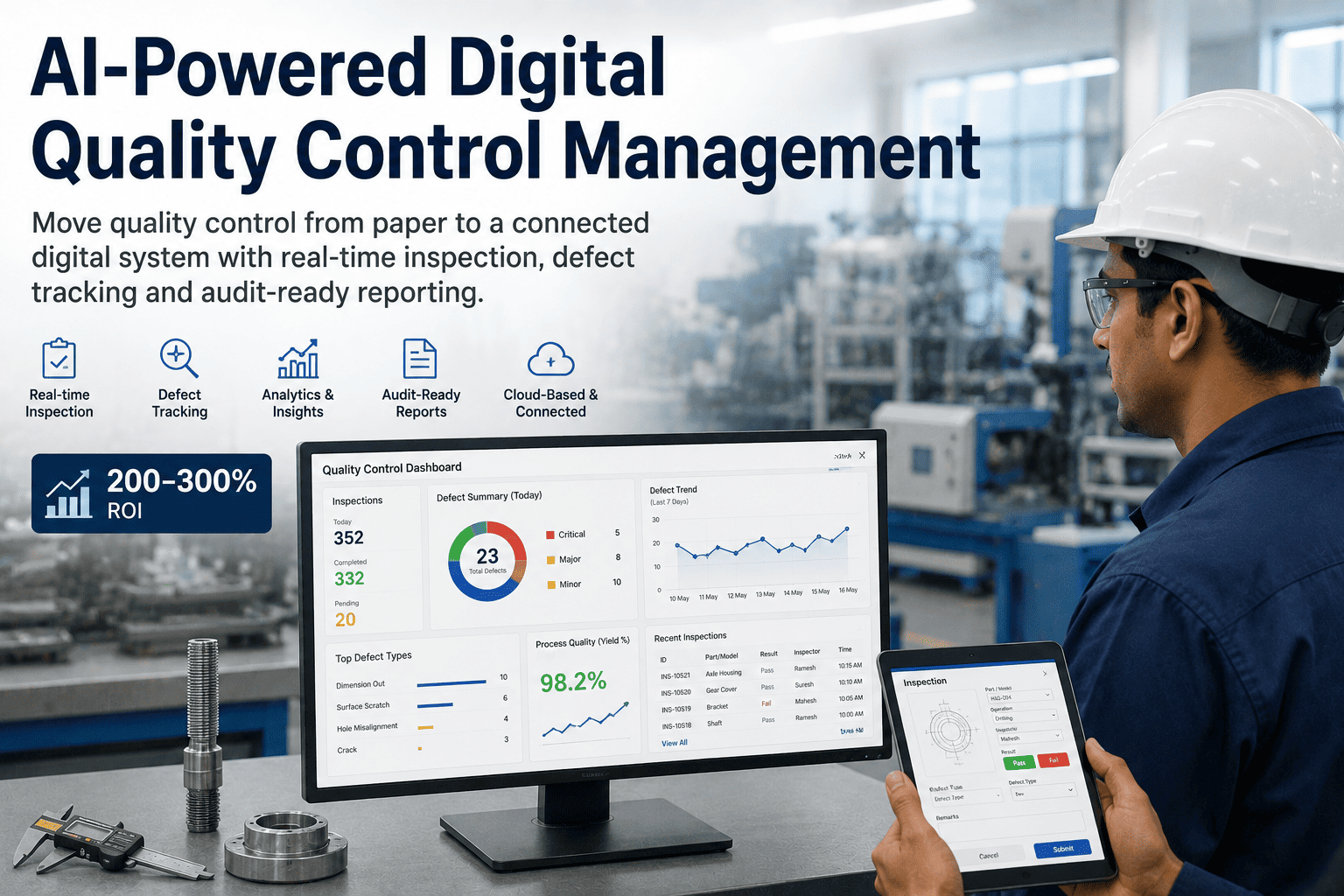
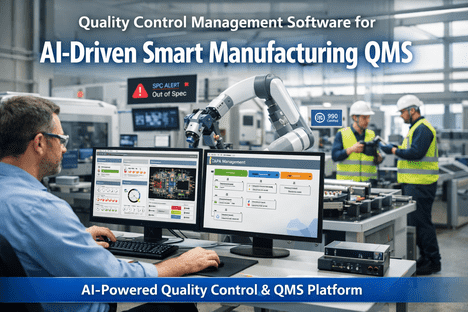
A pharmaceutical manufacturer in New Jersey passed every internal audit for three consecutive years. Their documentation looked impeccable on paper. Then the FDA arrived for an unannounced inspection. Within 48 hours, inspectors issued a Form 483 with nine observations — three of them repeat findings the internal audits had somehow missed. The root cause was not negligence. It was a quality management system built on spreadsheets, shared drives, and tribal knowledge that could not keep pace with regulatory expectations. The CAPA backlog alone contained 47 overdue actions that no one had escalated. Six months and $2.8 million in remediation costs later, the plant was back in compliance. Their competitor across the state had deployed an AI-driven quality management platform eighteen months earlier. Same FDA scrutiny — zero 483 observations. Same products, same standards, radically different outcomes.
iFactory Compliance Intelligence
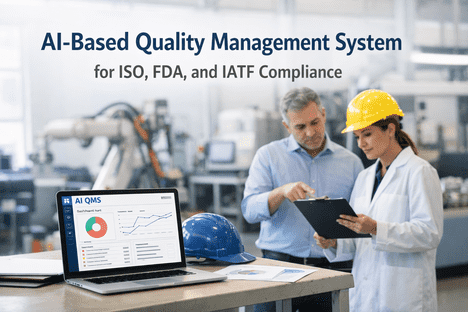
AI-Based Quality Management System for ISO, FDA, and IATF Compliance
How AI-powered QMS platforms are eliminating audit failures, automating compliance documentation, and turning regulatory readiness from a fire drill into a continuous state
75%
Of enterprises adopting AI-enabled QMS by 2026
47%
Of manufacturers cannot locate controlled docs within 2 minutes
90%+
Defect detection accuracy in mature AI QMS
4-6wk
Time to measurable improvement after deployment
The Compliance Problem in Manufacturing Today
Manufacturers operating under ISO 9001, FDA 21 CFR Part 11, and IATF 16949 face a compounding challenge. Regulations are becoming more interconnected, audits more data-intensive, and the consequences of non-compliance more severe. Yet most quality teams still run their QMS on a patchwork of spreadsheets, paper forms, and disconnected software that was never designed for the speed or complexity of modern regulatory environments.
01
Document Control Chaos
47% of manufacturers fail to retrieve controlled documents within the 2-minute window auditors expect. Obsolete revisions circulate on shop floors while current versions sit buried in shared drives nobody checks.
02
CAPA Backlogs That Compound
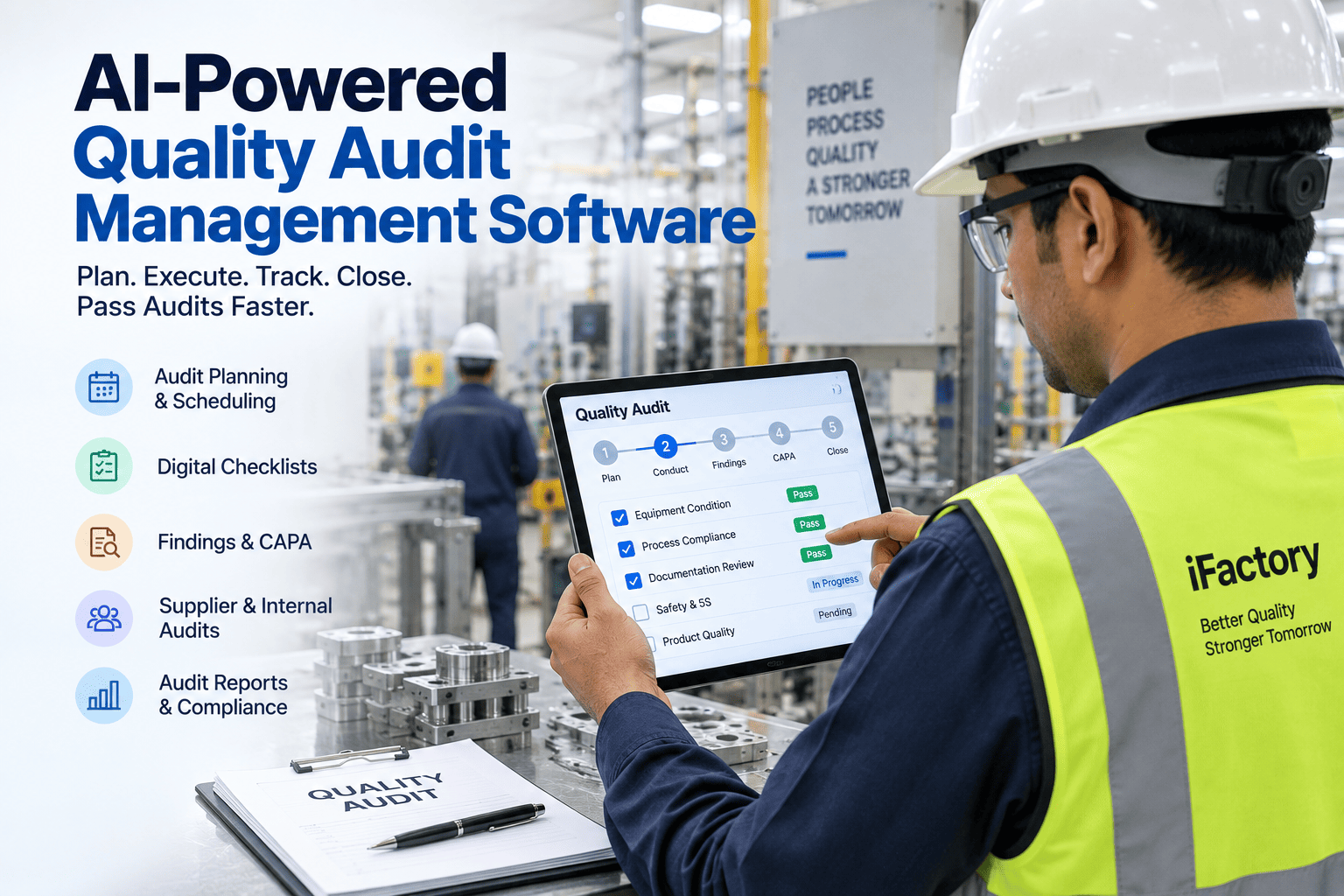
Corrective and preventive actions pile up because manual workflows lack escalation triggers. Overdue CAPAs are the single most cited finding in FDA inspections and ISO surveillance audits.
03
Multi-Standard Complexity
A single facility serving automotive, medical, and general manufacturing customers may need to satisfy ISO 9001, IATF 16949, and FDA 21 CFR Part 11 simultaneously — each with overlapping but distinct clause requirements.
04
Audit Readiness as a Fire Drill
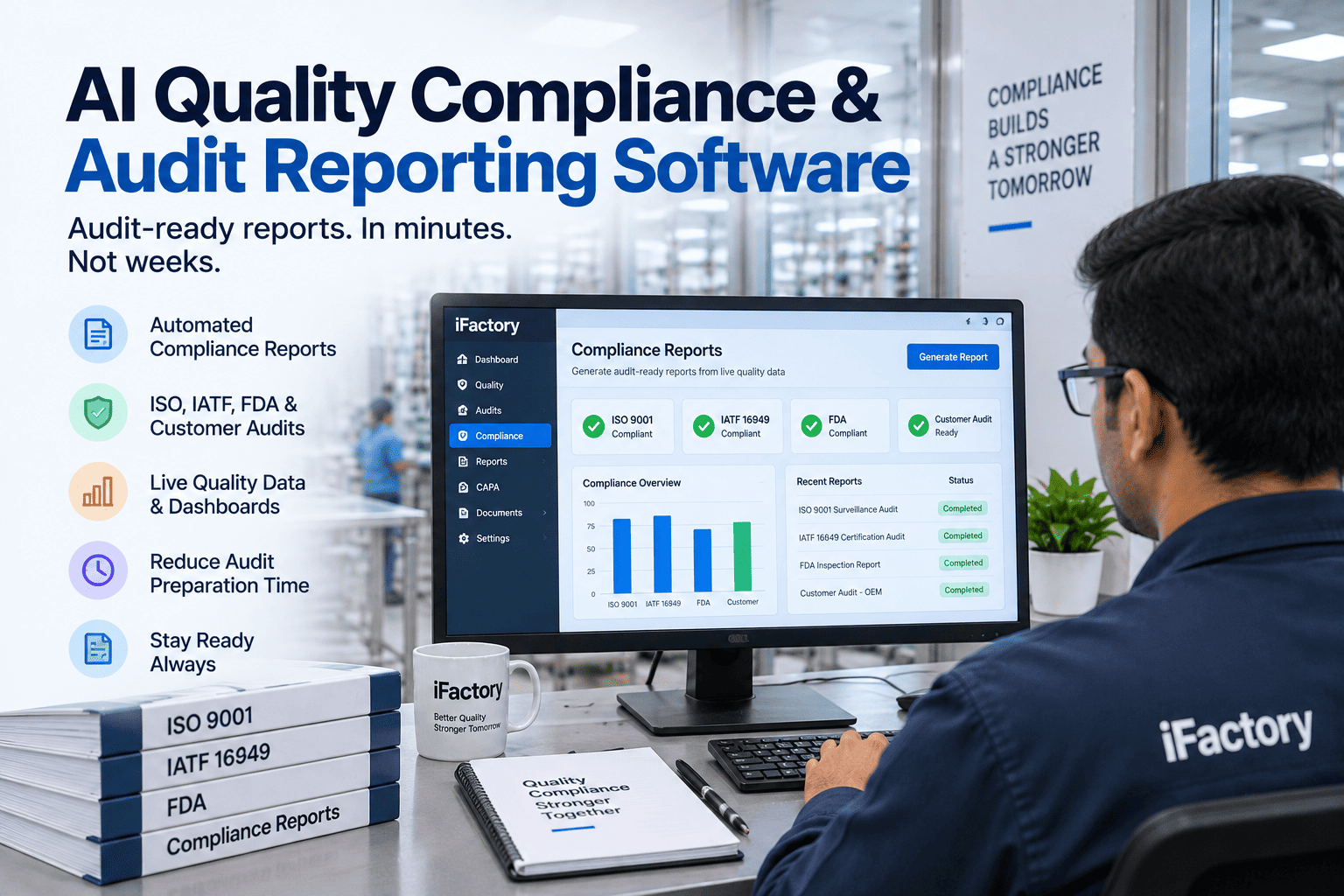
Compliance reports that should take minutes take days to compile. Quality managers spend 30-40% of their time gathering evidence instead of improving processes — and still miss gaps that auditors find.
What the Three Major Standards Actually Require
Before understanding how AI transforms compliance, it helps to see exactly what ISO, FDA, and IATF demand — and where they overlap. The convergence points are precisely where an AI-powered QMS delivers the most value.
ISO 9001:2015
General Manufacturing Quality
Risk-based thinking integrated into all processes
Document control with version management
Internal audit programme with scheduled cadence
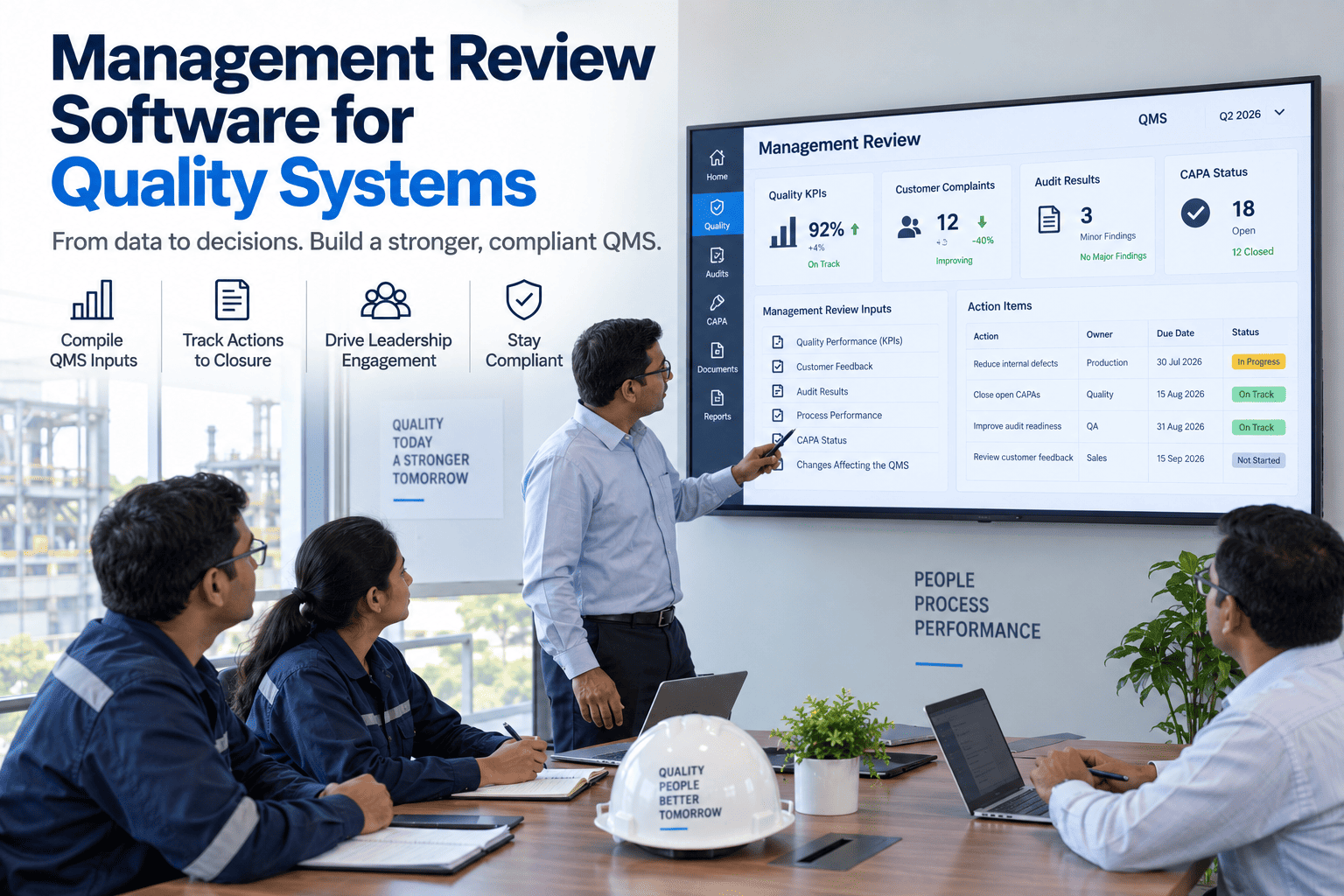
Management review with data-driven inputs
Continual improvement through CAPA
Supplier evaluation and monitoring
FDA 21 CFR Part 11
Medical Devices and Pharma
Validated electronic signatures
Tamper-proof audit trails for all records
Role-based access controls and permissions
Data integrity controls (ALCOA+ principles)
Change control with validation protocols
Complete traceability from raw material to release
IATF 16949
Automotive Supply Chain
APQP phase documentation and control plans
PPAP submission management
8D problem-solving workflows
Layered audit scheduling with defect trending
Customer-specific requirements integration
Warranty analysis and recall procedures
Where All Three Standards Converge
Document Control
CAPA Management
Audit Trail
Risk-Based Decisions
Supplier Quality
Training Records
These six convergence points are exactly where AI-powered QMS delivers the highest ROI — automating what is common across standards while managing what is unique to each.
How AI Transforms Each Compliance Pillar
An AI-powered QMS does not simply digitise paper forms. It fundamentally changes how compliance works — shifting from reactive evidence-gathering to continuous, automated assurance that runs in the background while your team focuses on production.
Want to see how AI closes the compliance gaps your current QMS is missing? Book a free compliance assessment.
The Compliance Maturity Ladder
Most manufacturers believe they are more audit-ready than they actually are. This five-level maturity model helps you honestly assess where your quality management system sits today — and what it takes to reach continuous compliance.
Level 5
Predictive Compliance
AI predicts compliance risks before they materialise. Audits become confirmations, not discoveries. Continuous improvement is data-driven and automatic.
Level 4
Automated Assurance
Digital QMS with automated workflows, real-time dashboards, one-click audit reports. CAPA auto-triggered by threshold breaches. Most iFactory customers operate here.
Level 3
Digital but Disconnected
Some digital tools in place but not integrated. Document control is electronic but CAPA tracking is still a spreadsheet. Audit prep still takes days.
Level 2
Reactive Compliance
Paper-based with some digital elements. Compliance is addressed only before audits. CAPA backlogs grow between audit cycles. Documentation gaps are common.
Level 1
Ad Hoc Quality
No formal QMS structure. Quality depends on individual knowledge. Tribal memory replaces documentation. Audits are existential threats.
What Changes in 2026 — and Why It Matters Now
The regulatory landscape is shifting faster than most quality teams realise. Three major developments in 2026 are raising the bar for compliance readiness, making AI-powered QMS not just a competitive advantage but an operational necessity.
February 2026
FDA QMSR Replaces QSR
The Quality Management System Regulation (QMSR) incorporates ISO 13485:2016 by reference into 21 CFR Part 820. FDA can now inspect management review minutes, internal audit reports, and supplier audit data — records that were previously exempt. Risk-based evidence is required in every process, not just design.
Mid-2026
ISO 9001:2026 Revision Approaches
The Draft International Standard was issued in August 2025. The final publication is expected around September 2026 with new emphasis on digital supply chains, climate action, data integrity, and AI governance. IATF 16949 will update its automotive-specific requirements to reference ISO 9001:2026 clauses directly.
Ongoing 2025-2026
IATF 16949 Modernisation
IATF working groups are integrating cybersecurity requirements (ISO/SAE 21434), explicit controls for AI-assisted inspection and digital twins, enhanced supplier risk management with early-warning systems, and formal acceptance of remote and AI-assisted audit methods.
Real ROI from AI-Powered Quality Management
The business case for AI-driven QMS is no longer theoretical. Manufacturers deploying intelligent quality platforms are reporting measurable financial returns across every compliance and quality metric that matters.
Audit preparation time reduced
85%
CAPA cycle time improvement
75%
Reduction in compliance-related costs
60%
Warranty claims reduction (automotive)
47%
Quality team productivity uplift
25-30%
Want to calculate your specific compliance ROI? Get a customised savings analysis from our engineers.
Frequently Asked Questions
Can a single AI QMS platform handle ISO 9001, IATF 16949, and FDA 21 CFR Part 11 simultaneously?
Yes. Modern AI-powered QMS platforms like iFactory manage multiple quality standards in a single installation with pre-configured templates and compliance mapping that shows which procedures satisfy which standard clauses. This eliminates the duplication and inconsistency that comes from running separate systems for each certification.
How long does it take to see measurable results after implementing an AI QMS?
Most manufacturers see improvements within 4-6 weeks. Digital inspection checklists eliminate paper errors from day one. Real-time monitoring dashboards go live in weeks 5-12. AI defect prediction models mature over months 3-6 as the system learns production patterns. Full ROI is typically realised within 12-24 months.
Does AI replace human decision-making in quality and compliance?
No. Under both IATF 16949 and FDA regulations, final quality and release decisions must be made by authorised personnel. AI provides decision support — pattern recognition, risk scoring, and predictive alerts — but the responsible quality manager makes the final call. This keeps the system fully compliant with all current standards.
What happens with our existing data and legacy systems?
AI QMS platforms integrate with existing ERP, MES, and SCADA systems via standard protocols like OPC-UA, MQTT, and REST APIs. Historical quality data is migrated during implementation, and the AI models use this data as a training foundation. No rip-and-replace is required.
How does the new FDA QMSR (effective February 2026) change what we need from our QMS?
The QMSR incorporates ISO 13485:2016 by reference into federal regulation. FDA can now inspect management review records, internal audit reports, and supplier audit data that were previously exempt. Risk-based evidence is required across all processes. An AI-powered QMS automatically generates and maintains this evidence, ensuring continuous readiness rather than last-minute scrambling.
ISO. FDA. IATF. One Platform.
Stop Preparing for Audits. Start Being Continuously Ready.
iFactory's AI-powered QMS automates document control, CAPA workflows, audit evidence, and compliance reporting across every standard your facility needs to meet. From day one, your quality system works for you — not the other way around.
1-click
Audit-ready reports
100%
Traceability coverage
12-24mo
Full ROI realisation
Zero
483 observations target