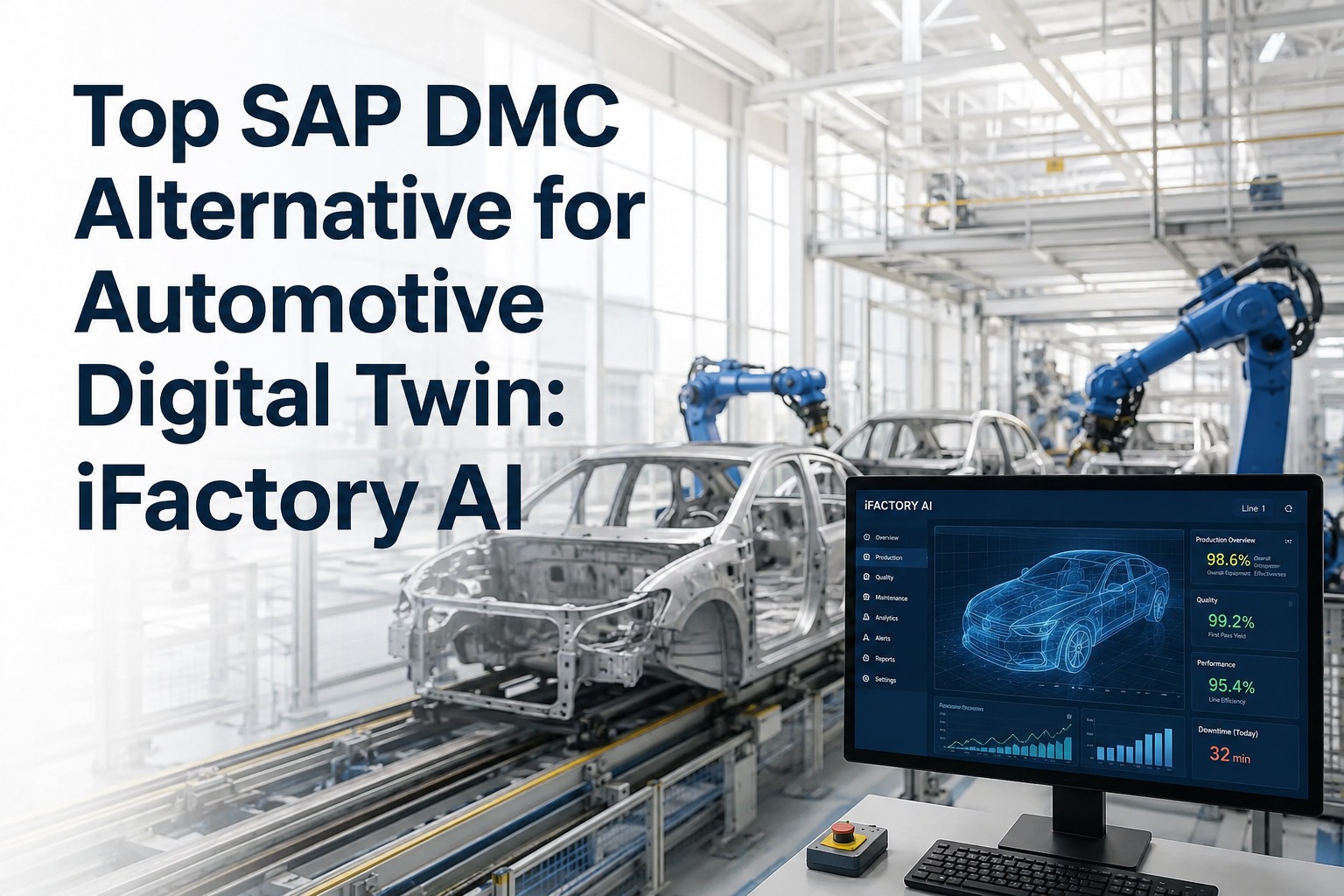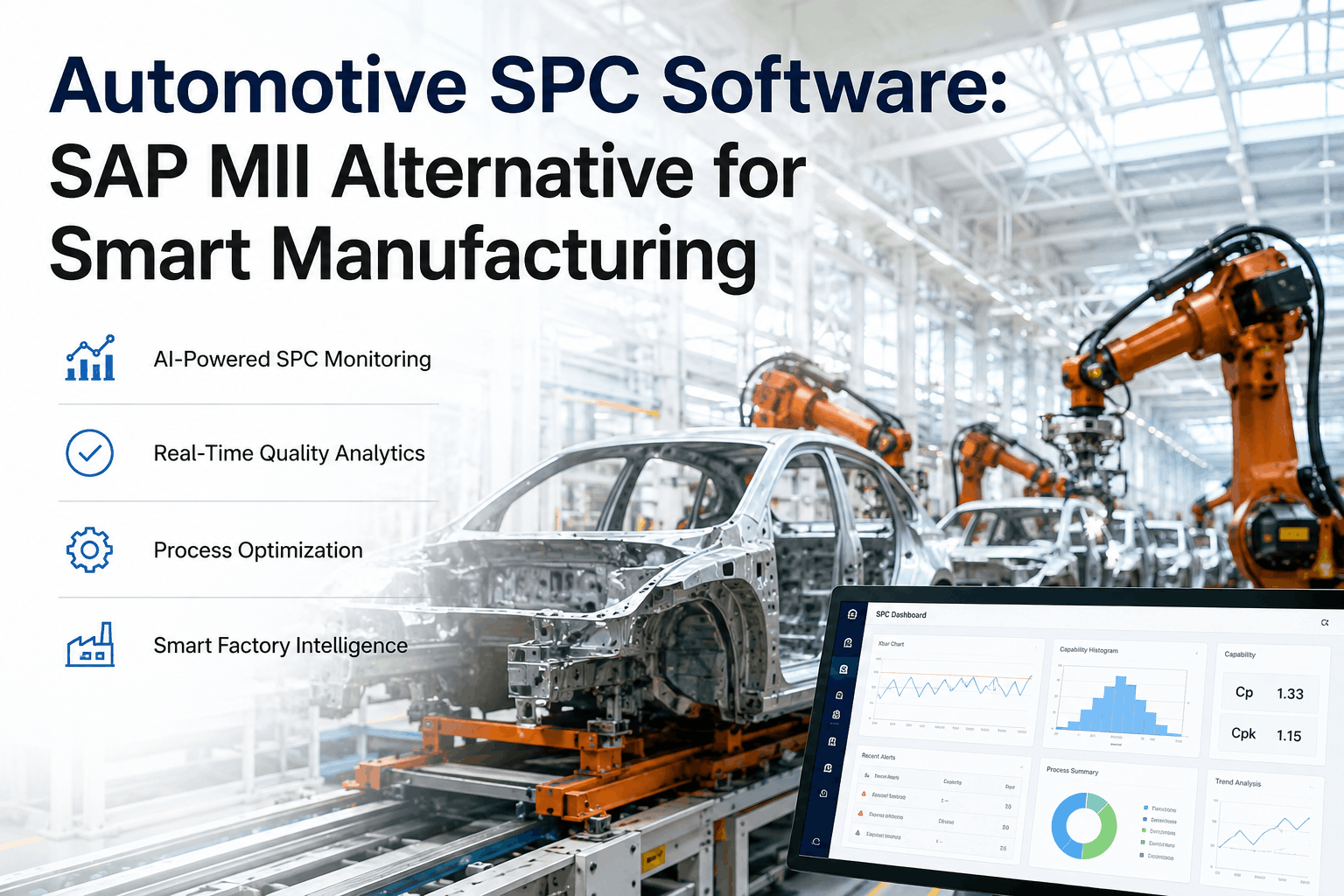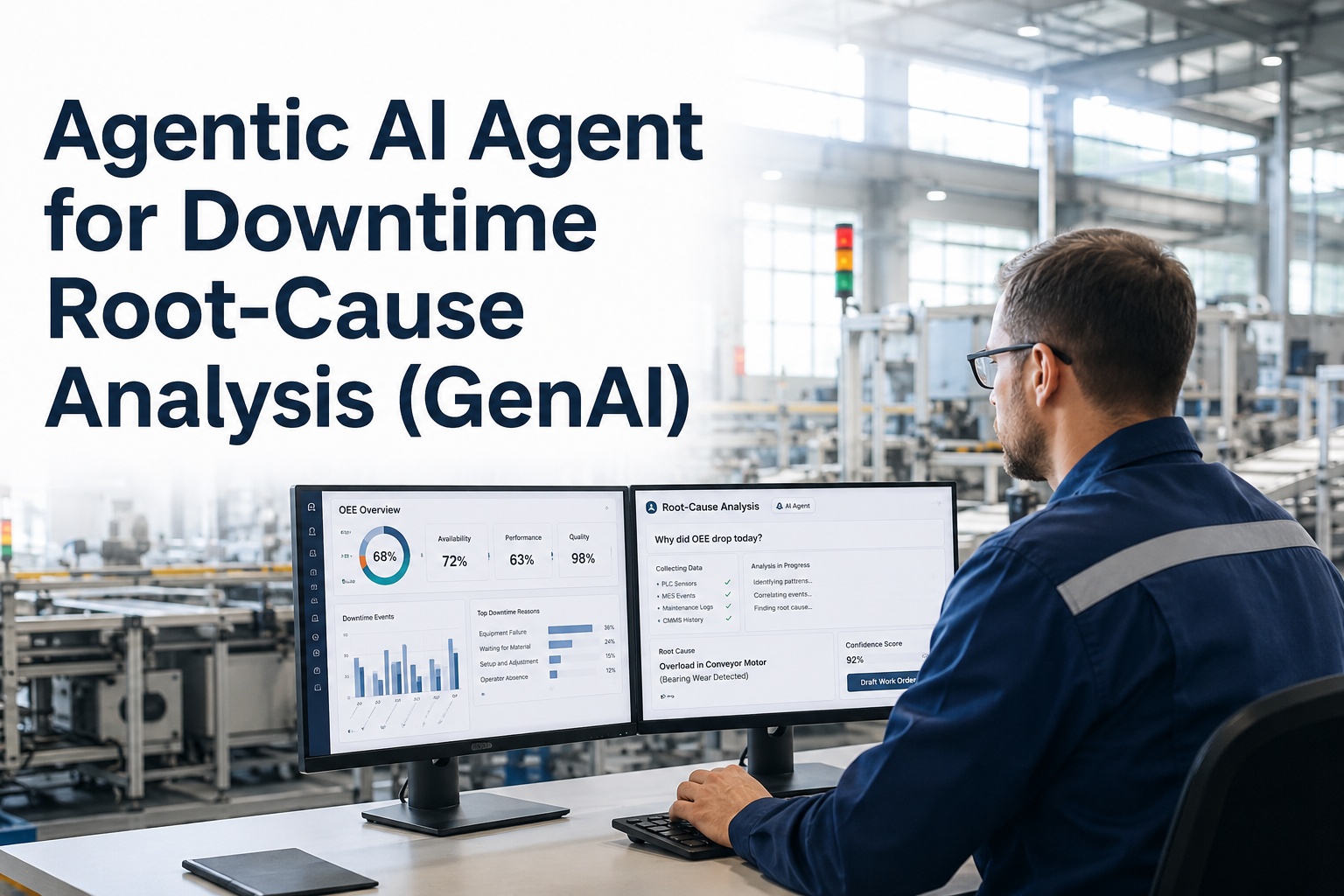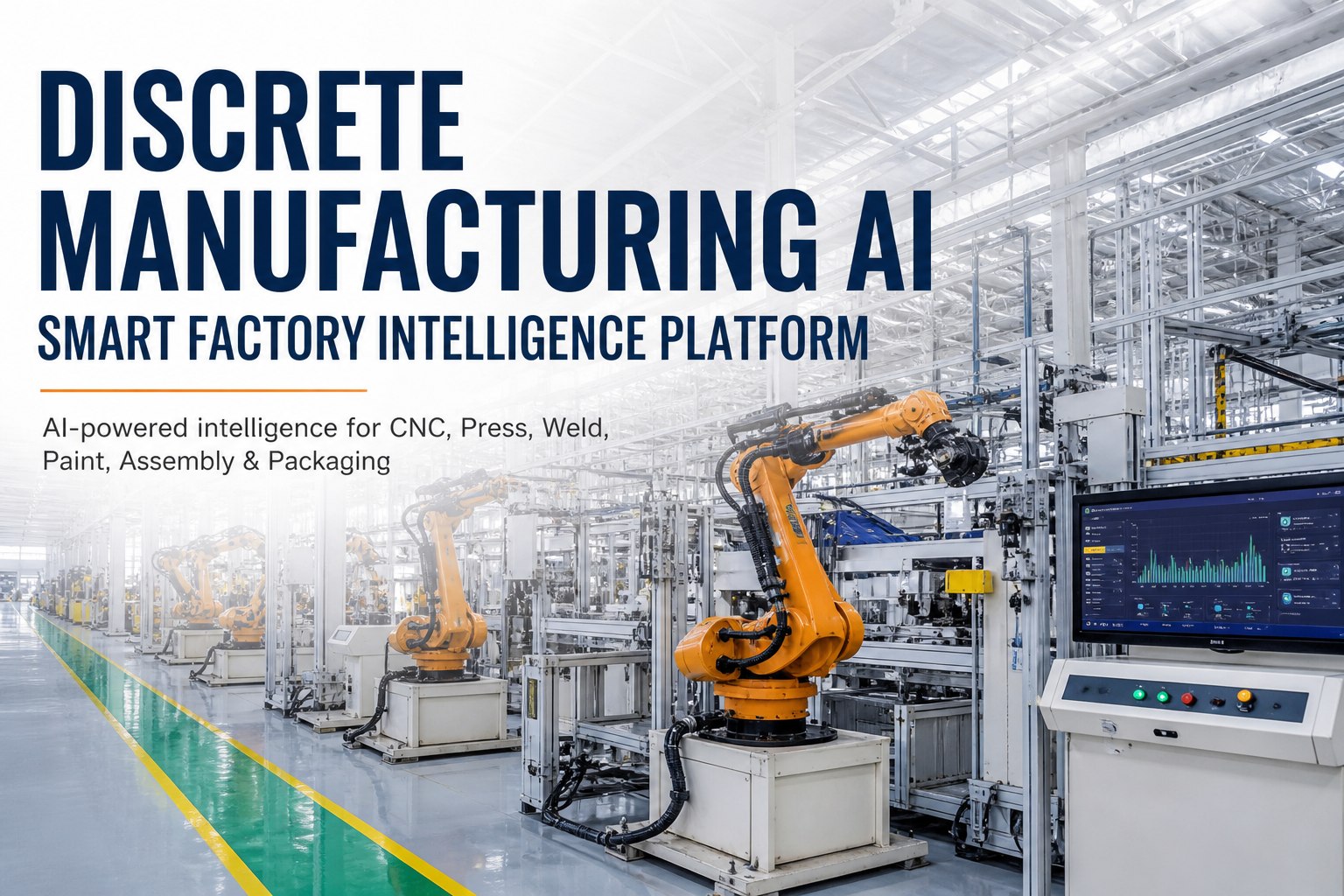
A discrete plant runs on six zones — CNC, press, weld, paint, assembly, packaging — and every zone has the same problem: the machines know more than the people watching them. Vibration that predicts a spindle failure 12 hours out. A tonnage curve that says the die is going to crack tomorrow. A weld bead that tells you the gas mix is drifting. iFactory AI listens to all of it, in every zone, simultaneously — and it acts. Plant copilot LLM, vision QC on every line, predictive maintenance on every motor, RL on every closed loop. McKinsey, Deloitte, and the WEF Lighthouse program now agree on the numbers: 35–50% downtime cut, 20–30% OEE lift, 15–25% operating cost reduction. This page is the platform that delivers them.
Discrete Manufacturing AI —
Smart Factory Intelligence Platform
A plant-wide AI platform for discrete manufacturers. CNC · press · weld · paint · assembly · packaging — one operating layer, six AI model families, a sovereign plant copilot, all running on NVIDIA GB300 / H200 / Jetson silicon inside your fence. Powered by the data your plant already produces.
One Platform. Six Zones. Every Shift.
A discrete plant isn't six independent operations — it's one continuous flow with six failure modes. iFactory mirrors that. Each zone gets specialist AI, but every signal feeds the same plant copilot, the same OEE engine, and the same RCA model. Book a 30-min demo to see your plant rendered live.
Where the AI Actually Lives on the Floor
Each zone has its own physics, its own failure modes, and its own AI. But they all share one historian, one digital twin, and one plant copilot. Below: what runs where, the model behind it, and the KPI it moves.
- Tool wear prediction — LSTM on spindle current & vibration
- Spindle anomaly — CNN on bearing FFT signatures
- Adaptive feed-rate — RL closes the loop on chip load
- Cycle-time variance — XGBoost on G-code + tool history
- Die wear prediction — LSTM on tonnage signatures
- Slug & misfeed detection — CNN vision at the bolster
- Strip-feed alignment — Vision Transformer per stroke
- Tonnage anomaly — XGBoost vs reference profile
- Weld bead vision QC — CNN classifies 12+ defect classes
- Spatter / porosity — Vision Transformer per puddle frame
- Robot trajectory — RL adjusts angle, speed, dwell
- Wire-feed & gas anomaly — LSTM on flow telemetry
- Coating thickness — Vision Transformer + interferometry
- Booth condition tuning — XGBoost on T, RH, airflow
- Defect detection — CNN on runs, sags, orange peel, dirt
- Paint & VOC optimization — RL on flow + atomization
- Step compliance — Vision Transformer on operator pose
- Torque anomaly — LSTM on multi-spindle traces
- Missing-part detection — CNN at gating cameras
- Work-instruction copilot — Plant LLM (Llama 3.1 70B)
- Label OCR + date code — Vision Transformer at high speed
- Carton seal inspection — CNN top & side cameras
- Weight check anomaly — XGBoost vs SKU reference
- Throughput pacing — RL on conveyor & case-packer cadence
McKinsey, Deloitte, WEF — All Saying the Same Thing
When three of the most-quoted research houses on the planet converge on the same range, it stops being a vendor claim and starts being a budget assumption.
Predictive maintenance moving from pilot to plant-wide. McKinsey 2025 · Gartner · Deloitte
WEF Lighthouse plants running real-time digital twins and agentic AI. WEF · McKinsey 2025
Smart-factory programs hitting maintenance, energy, scrap, and inventory at once. Deloitte · McKinsey
Single-line average for industrial manufacturers. Two saved hours = an annual subscription elsewhere. McKinsey · Deloitte
The 2025 McKinsey State of AI report found 88% of organizations now use AI somewhere — but only one-third have scaled it. Discrete manufacturers that scale across all six zones, not just one pilot, are the ones capturing the full 35–50% / 20–30% / 15–25% range. The platform decision is no longer "pilot or wait." It's "scale or fall behind quarterly."
No Single Model Runs a Plant. We Compose Six.
A vision system doesn't predict a bearing failure. A time-series model doesn't read a label. The discrete plant needs all six classes, orchestrated. iFactory ships them pre-trained on manufacturing data — so day one is value, not setup.
Defect detection at speed. Welds, surfaces, missing parts, slug, label.
Pose, motion, complex visual reasoning. Operator compliance, coating uniformity.
Vibration, current, tonnage, torque. Failure horizon 7–30 days ahead.
Closed-loop control. Feed rate, robot path, paint flow, conveyor pacing.
Tabular anomaly. Tonnage, weight, booth condition, weight check, energy.
Llama 3.1 70B, fine-tuned on plant SOPs, work instructions, quality manuals, OEM docs. Operator copilot, RCA, agentic actions.
Agentic AI — When the LLM Stops Talking and Starts Doing
Most "AI assistants" answer questions. The iFactory plant copilot also acts — generating work orders in SAP, locking out machines for safety, rerouting to standby buffers, all with operator approval. The LLM runs on your on-site GB300 node. Nothing leaves the plant.
Three options:
① Replace rollers now — 3-min change, no shift impact
② Reduce wire feed 8% to limp through shift
③ Defer to tonight's PM window
Recommendation: option 1. Want me to raise the work order and reroute?
Six things just happened in 90 seconds — RCA, options ranking, work order, lockout, line rerouting, quality flag — that would have taken a shift lead 25 minutes and three logins. The LLM is hosted on your GB300, retrieving from your historian, MES, and SAP. Sovereign by architecture. Book a live demo to run a scenario on your data.
Three Compute Tiers · Built for the Floor
No single chip runs a discrete plant. Vision at the line needs sub-10 ms. Plant-wide inference needs efficiency. Training and the LLM need horsepower. iFactory composes all three on NVIDIA's manufacturing-grade silicon.
Sub-10 ms vision & control inference, IP54 enclosures, co-located with PLCs.
Multi-line, multi-camera inference. Time-series + vector DB plant memory.
Plant copilot LLM hosting, full vision & PdM retraining, RAG over historian + MES + ERP.
What 35–50% / 20–30% / 15–25% Looks Like in Dollars
Take the McKinsey/Deloitte ranges, apply them to typical discrete-manufacturing P&Ls, and the math gets honest fast. Pick the row closest to your plant.
| Plant Size (Annual Revenue) | Downtime Saved | OEE / Throughput Gain | Cost Reduction | Total Annual Value |
|---|---|---|---|---|
| $50M (single line) | $0.6–0.9M | $1.0–1.5M | $0.4–0.6M | $2.0–3.0M |
| $200M (3–4 lines) | $2.4–3.6M | $4.0–6.0M | $1.5–2.5M | $8–12M |
| $500M (multi-zone, 1 plant) | $6–9M | $10–15M | $3.5–6M | $20–30M |
| $2B (multi-plant) | $24–36M | $40–60M | $15–25M | $80–120M |
Payback typically lands in 6–14 months — the variance is mostly how aggressively you scale across zones in year one. iFactory ships ready-to-run, so deployment time isn't the bottleneck. Get a quote sized to your plant.
Why Discrete Manufacturers Pick iFactory
Pre-trained on millions of welds, stamping cycles, paint defects, assembly poses. Generic AI needs months to learn what a "ringer" or a "burn-through" is. Ours ships knowing.
You don't buy six tools and integrate them. One historian, one OEE engine, one plant copilot — covering CNC, press, weld, paint, assembly, packaging.
Hardware ships, our engineers install, you own everything. One-time CapEx, zero recurring license fees, weights and data never leave your fence.
PO to production in under 90 days, anywhere globally. Power and internet from you; cabling, networking, PLC/SCADA, and training from us.
What Plant Heads Ask Before Going Plant-Wide
No, and you shouldn't. Most customers start with one or two zones — usually weld + assembly, or press + paint — prove the OEE lift in 60–90 days, then scale. The platform is the same; you just turn on more zones over time. Talk to our team about the right zone-1 pick for your plant.
No. iFactory sits beside your existing stack. We read from your historian, MES, and SCADA via OPC-UA / MQTT / direct connectors, and write back through audited conduits. Your DCS and PLCs stay untouched.
Single-purpose tools optimize one zone and ignore the others. A 40% scrap drop at press is wasted if weld can't see the upstream change. iFactory's plant copilot reasons across zones — that's where the 20–30% OEE lift actually comes from.
Usually yes. Most discrete plants already capture 70–80% of what AI needs through PLC tags, vision cameras, and current/vibration on key motors. We do a remote site survey before quoting; if you need supplemental sensors, they're priced into the proposal — no surprises.
Get a Quote. Or Join Webinar.
Send your line list, current OEE, and the zones you'd attack first — we come back with a fixed-price proposal in 5 business days. Or join our live webinar and watch the plant copilot run agentic actions across CNC, weld, and assembly on real plant data.