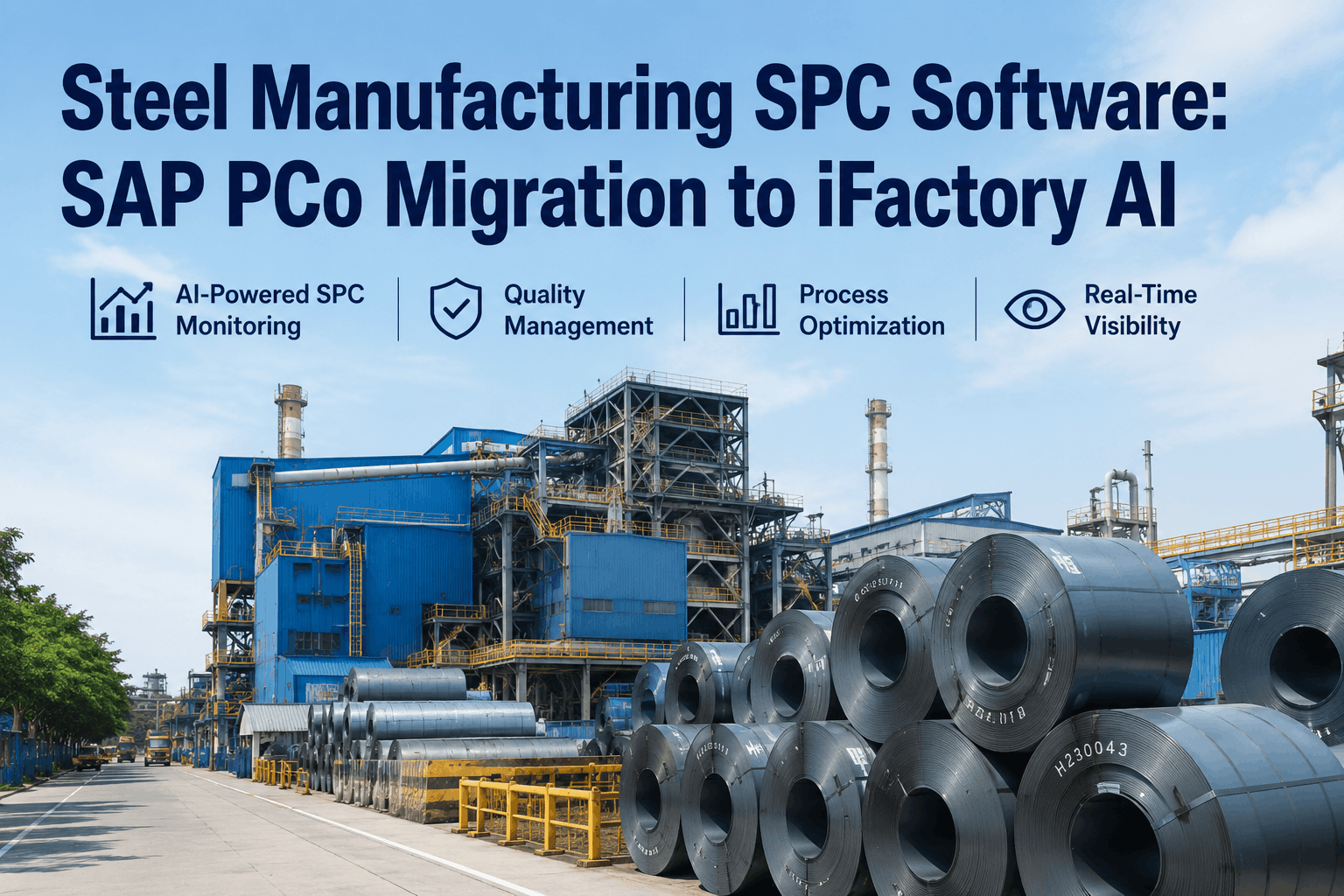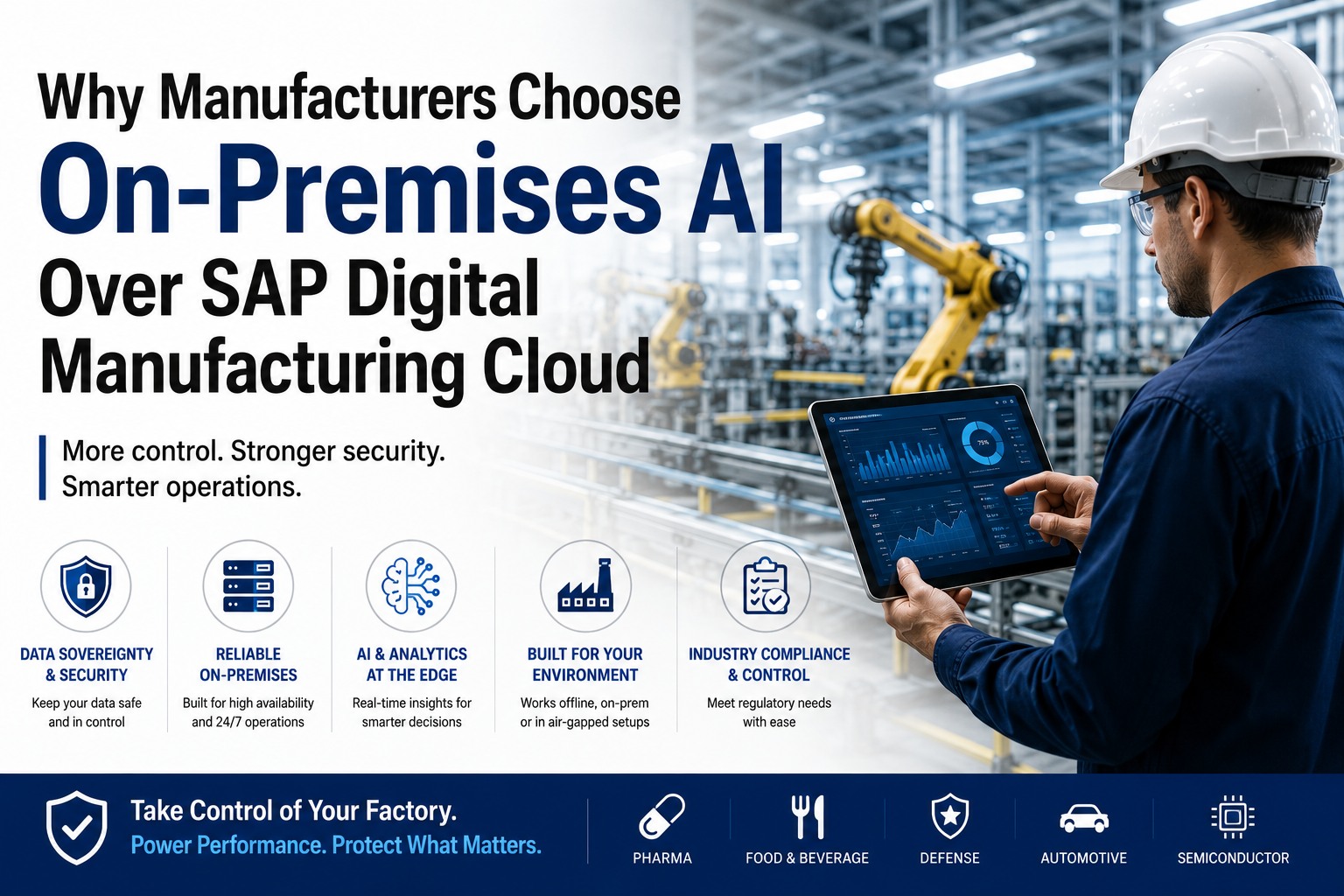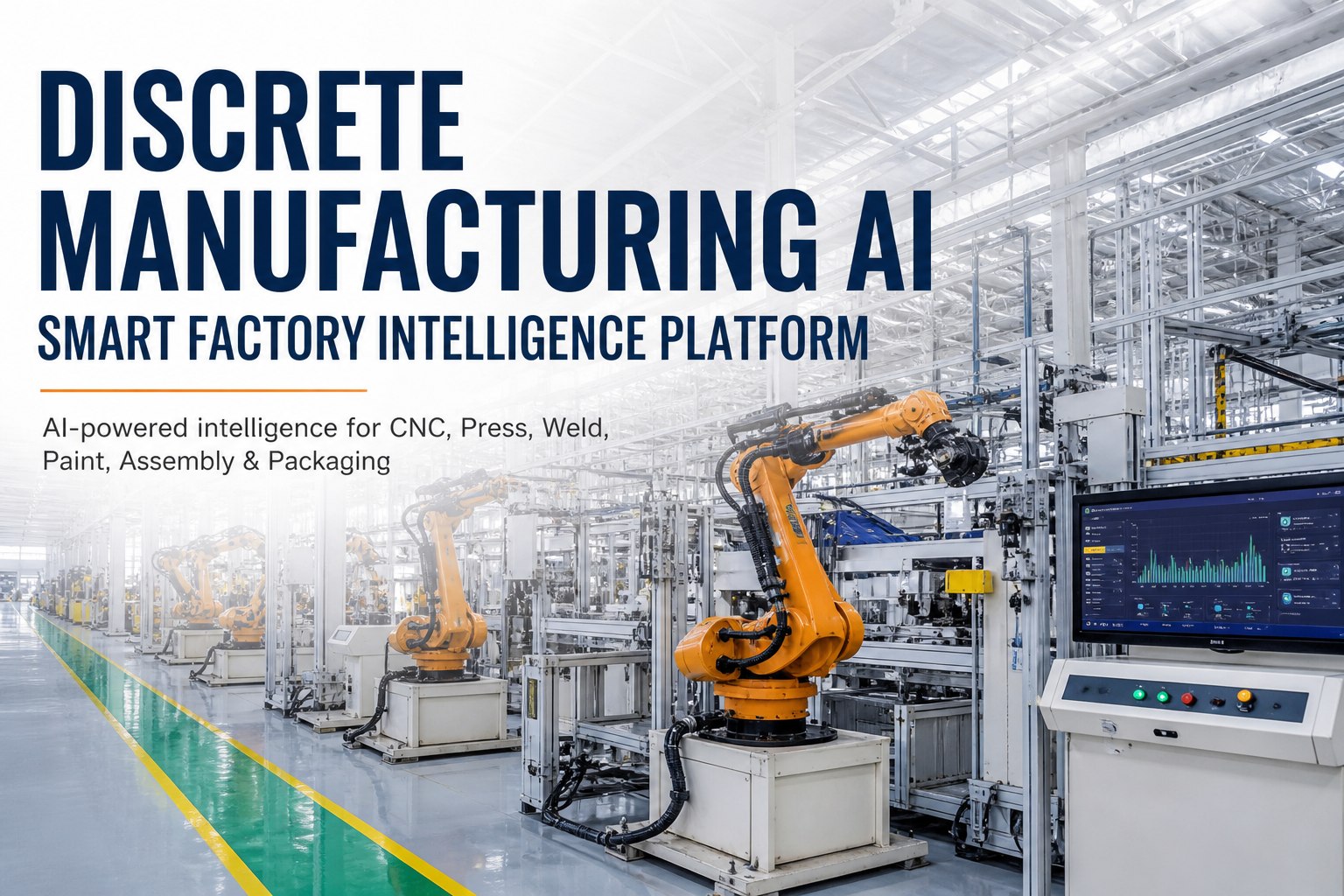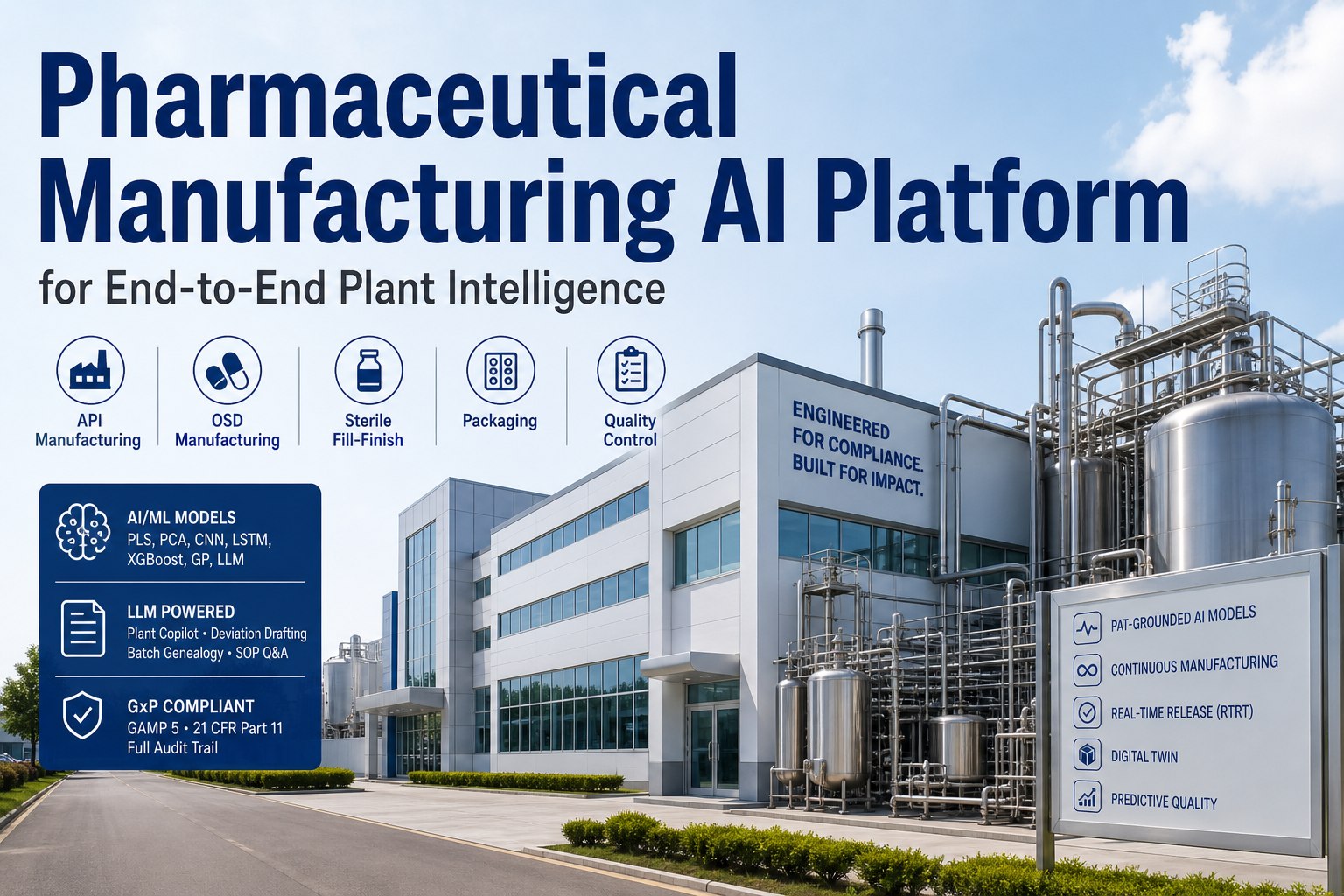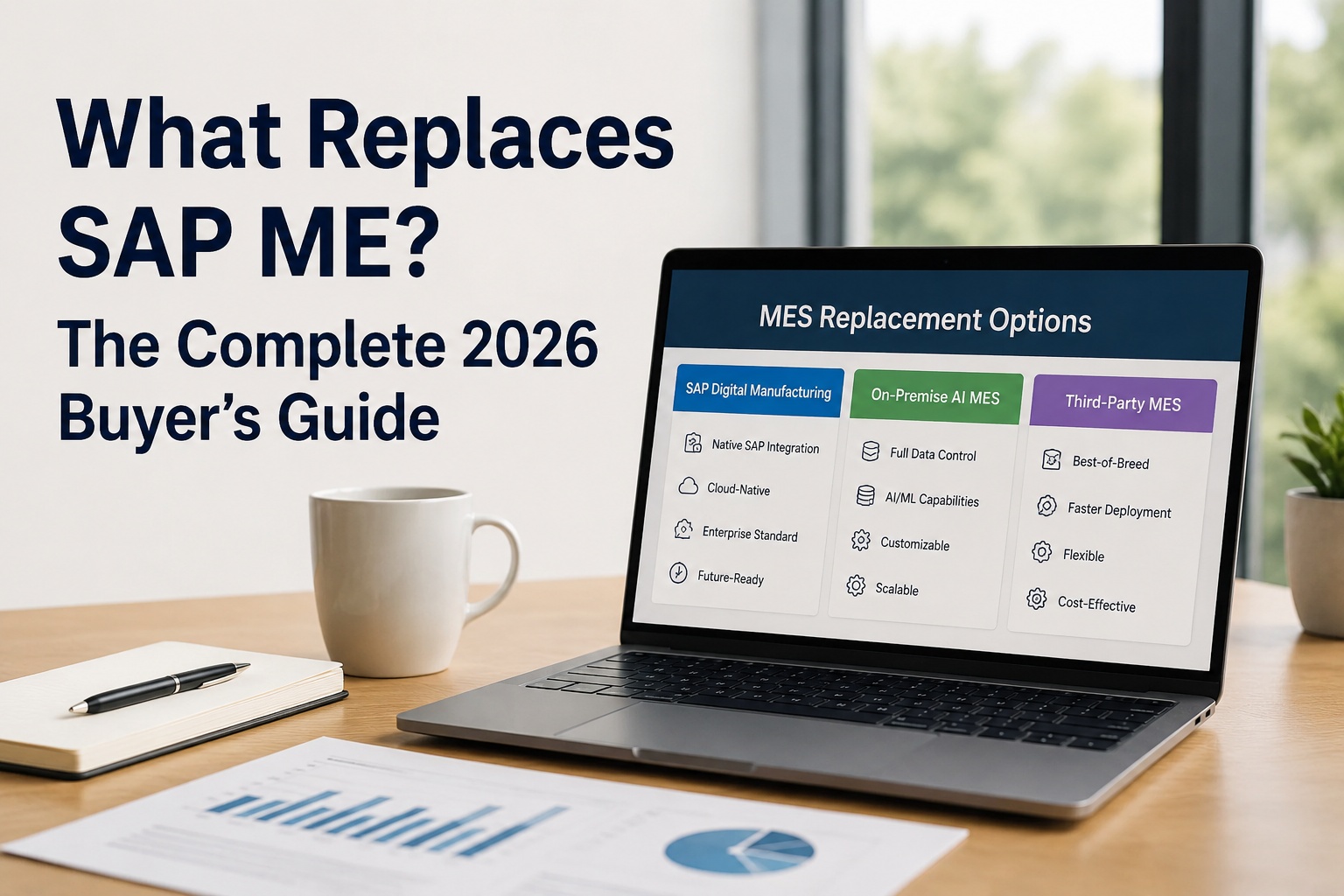
If you're running SAP ME today, you're on the clock — mainstream maintenance ends December 31, 2027, with paid extended support to ~2030. SAP's recommended successor is Digital Manufacturing Cloud (SAP DM), but it's not the only answer, and it isn't always the right one. The 2026 MES market is dominated by six to ten serious platforms, each with a specific industry fit, deployment model, and trade-off profile. Picking blindly is a multi-million-dollar mistake. This buyer's guide cuts through the noise — four real replacement paths, an honest side-by-side, an RFP checklist, and three customer scenarios showing what actually wins. iFactory's role in this picture is specific — we don't replace MES execution; we add the AI layer that none of the MES vendors ship strongly on top of whichever MES you choose, on a pre-configured NVIDIA on-prem appliance OR as fully managed cloud.
What Replaces SAP ME? The Complete 2026 Buyer's Guide
A vendor-neutral comparison of every serious SAP ME replacement — SAP DM Cloud, third-party MES (Plex, Opcenter, Proficy, Apriso), connected-worker platforms (Tulip), and iFactory's AI-native layer on top. Plus an RFP checklist and three real-world use cases.
The First Hard Truth About Replacing SAP ME
MES is one of the most over-promised software categories in manufacturing. Vendor sales processes consistently push organizations toward larger, more complex platforms than they actually need — because MES deals are large and incentives align with selling more. Many discrete manufacturing operations end up with Opcenter or Proficy deployments that take two years to roll out, cost millions, and deliver functionality that Plex or even Tulip would have provided faster. On the flip side, plants with genuine pharmaceutical batch requirements, electronics traceability, or semiconductor complexity that try to use lighter platforms end up rebuilding capabilities they could have purchased — or failing audits because the lighter platform can't generate the required documentation.
The right answer is honest assessment of manufacturing complexity, industry requirements, and what you're actually trying to accomplish. Talk to operators, quality teams, and production managers — not just IT — before you commit. This guide is built around that principle.
Four Replacement Paths — At a Glance
SAP Digital Manufacturing Cloud
- Tightest fit with SAP S/4HANA
- Standard KPIs, dashboards built in
- Drag-drop logic builder, less custom code
- SAP's strategic platform — long-term roadmap
- Cloud-only — no on-prem option
- Custom ME logic must be redesigned
- Frequent cloud updates require re-testing
- Less flexible for non-SAP-centric shops
Third-Party Enterprise MES
- Best-of-breed for specific industries
- Mature, proven across years
- Deeper than SAP DM in vertical capability
- Strong on-prem or hybrid options
- 12–24 month deployment timelines
- High implementation and licensing cost
- Plex is "all or nothing" (replaces ERP too)
- Less integrated with SAP ecosystem
Connected Worker Platform
- Weeks to value, not months
- Operator-friendly, mobile-first
- No-code app building, low IT dependency
- Often paired with traditional MES
- Not a full enterprise MES replacement
- Lighter on production execution depth
- Won't pass audits as standalone in regulated industries
- Cloud-only typically
iFactory AI-Native Platform
- On-prem AND cloud — your choice
- 9-model AI portfolio out of the box
- Adds AI to any MES (or runs standalone with SAP)
- 6–12 week turnkey delivery
- Not a direct MES replacement on its own
- Best paired with SAP DM or a third-party MES
- Newer than 20-year SAP track record
Detailed Side-by-Side Comparison
| Capability | SAP DM Cloud | Enterprise MES (Plex/Opcenter/Proficy) | Tulip / Connected Worker | iFactory |
|---|---|---|---|---|
| Deployment | Cloud-only (BTP) | On-prem, cloud, or hybrid | Cloud-only typically | On-prem AND cloud — pick or hybrid |
| Typical time to deploy | 6–18 months | 12–24 months | 2–8 weeks | 6–12 weeks turnkey |
| Native AI / ML depth | Embedded analytics (DMI) | Varies — Plex Insight strong, others limited | Light ML, Frontline Copilot | Deep — 9-model portfolio (LSTM, GNN, RL, CNN+PINN, autoencoder, LLM fusion) |
| SAP S/4HANA fit | Native — deepest integration | Via integration layer, weaker than SAP | Via connectors | Certified — OData, CDS, ABAP RFC, BTP |
| Customization model | Clean-core, API-only | Deep but expensive to maintain | No-code, fast iteration | Config + open APIs, no clean-core lock |
| Regulated industry fit | Good, evolving for GxP | Excellent — PAS-X, Proficy, Opcenter | GxP-ready (Tulip) but limited depth | Adds compliance evidence trail to any MES |
| Edge / line-side inference | Cloud round-trip | Limited edge AI | Limited | <50ms on-prem with Jetson Thor / IGX Thor |
| Vision & defect inspection | Not core | Limited, often add-on | Not core | CNN+PINN built-in (body shop, paint AOI/AOB, surface) |
| Multi-site fleet benchmarking | SAP DM Cloud native | Apriso strong; others vary | Cloud-tenant scope | Built-in across on-prem + cloud sites |
| Replaces SAP ME as MES? | Yes — SAP's official path | Yes — best for industry-specific needs | Partial — frontline only | No — works alongside any MES |
The RFP Checklist — What to Actually Ask Vendors
MES vendors are skilled at making demo data look better than your data. These are the questions that separate plants getting value from plants stalled at year two.
Industry & manufacturing model
- Reference customers in our exact industry vertical
- Discrete vs process vs hybrid coverage
- Customer-specific requirement (CSR) support if automotive
- GxP / 21 CFR Part 11 / batch genealogy if regulated
- Lot-size-of-one or high-mix support if applicable
Integration with our stack
- SAP S/4HANA certified connectors (not just "supports")
- Historian federation (PI, InSQL, Proficy, PHD, Exaquantum)
- OPC UA, MQTT, Modbus, legacy protocol coverage
- Existing MES coexistence path during migration
- API openness and rate limits
Deployment & data residency
- On-prem option (not just hybrid claim) — and what it costs
- Cloud regions and data residency commitments
- Air-gap and disconnected operation support
- Customer reference for our deployment model
- Update model — forced or controlled cadence
AI & analytics depth
- Production AI models (not just dashboards)
- Vision / defect inspection capabilities native vs add-on
- Edge inference latency for real-time use
- Operator copilot grounded in plant data with citations
- Model retraining, drift detection, audit evidence
Total cost of ownership
- Licensing — per-seat, per-site, per-volume
- Implementation cost as % of license
- Annual maintenance / subscription escalation
- Ongoing customization cost (clean-core impact)
- 3-year and 5-year TCO with sensitivities
Timeline & risk
- Pilot live by week — committed in SOW
- Full plant go-live by month — committed
- Migration support from SAP ME with current customizations
- Reference customer who did same migration path
- Exit terms if it doesn't work
Three Real Use Cases — When Each Path Wins
Vendor neutrality means picking the path that fits the plant, not the path that pays the highest commission. Here are three patterns we see, with honest recommendations.
ITAR-restricted production, deep SAP ME customization, on-prem mandatory
A Tier 1 aerospace supplier running SAP ME for 14 years with deep electronic work instruction and as-built/as-designed traceability for ITAR-controlled programs. Air-gapped operations, no cloud allowed. The corporate standard is SAP S/4HANA on-prem. Their SAP ME has hundreds of custom transactions, including model-based work instructions with serialized configuration management.
Light SAP ME customization, 14 plants, cloud-first IT, SAP S/4HANA standard
A global CPG / food & beverage manufacturer with 14 plants across 6 countries. SAP ME used mostly for batch tracking, OEE, and packaging line throughput. Minimal custom logic. Corporate strategy is cloud-first, "SAP everywhere," and CIO wants a single MES tenant across all plants for benchmarking. Operations team wants AI for predictive maintenance and quality vision but doesn't want a third major platform.
SAP ME for serialization, budget pressure, needs value in weeks not years
A mid-market metal products manufacturer with two plants, ~400 operators. SAP ME used primarily for serialization and traceability under customer-specific requirements. The business case for a 12–24 month MES migration to SAP DM doesn't pencil — license, implementation, training would consume 18 months of their digital budget. The plant manager wants visible value in months, not a multi-year transformation.
The iFactory Layer — Why It's Different From Path 1, 2, or 3
The MES question and the AI question are different problems. SAP DM, Plex, Opcenter, Apriso, and Tulip are all answers to the MES question — "what runs production execution, traceability, and shop-floor workflows?" iFactory is the answer to a different question — "what adds AI capability on top of any of them, on the deployment model that fits our plant?"
iFactory On-Prem Appliance NVIDIA-powered, sub-50ms inference, your perimeter
- Pre-configured NVIDIA AI server — racked, software-loaded, ready to plug in.
- All production data stays inside the plant — defense, regulated, air-gapped friendly.
- Sub-50ms inference at the line for vision, RL scheduling, adaptive robotics.
- Best fit — ITAR / GxP / IEC sites, sensitive IP, customer-specific data residency CSRs.
iFactory Cloud Same stack, fully managed, no hardware
- Fully managed by iFactory — no rack, no facility requirements.
- Fastest deployment — first pipeline live in 2–4 weeks.
- Fleet benchmarking — multi-plant analytics in one tenant.
- Best fit — multi-site OEMs and Tier 1s, greenfield plants, cloud-first IT.
Stop comparing MES platforms in isolation. Ask the right two questions.
What MES is right for our industry and complexity? What AI layer adds the value our MES won't ship with? iFactory's 60-minute buyer's assessment maps your current SAP ME footprint, recommends an MES path (vendor-neutral), and shows where iFactory fits — on-prem, cloud, or hybrid — with concrete cost and 12-week timelines.
Frequently Asked Questions
Does iFactory replace SAP ME?
No — iFactory is not an MES. iFactory is an AI-native industrial platform that integrates with whichever MES you choose (SAP DM, Plex, Opcenter, Proficy, Apriso, Tulip, or your existing SAP ME during extended support). It adds the AI capabilities — predictive maintenance, vision inspection, RL sequencing, operator copilot, multi-site benchmarking — that MES platforms don't ship deeply on their own.
Do I have to buy NVIDIA servers separately?
No. iFactory's on-prem appliance ships fully loaded — pre-configured NVIDIA AI server (DGX, DGX Station, or HGX class depending on plant size), software pre-installed, network gear, cabling, edge devices (Jetson Thor / IGX Thor) for line-side inference. You provide rack space, line power, and Ethernet. For the cloud option, there's no hardware at all.
Should I just stay on SAP ME until 2030?
It's a legitimate strategy for some plants — especially mid-market or specialized operations where a 12–24 month migration doesn't pay back before 2030 anyway. Pay for extended support, use the runway to evaluate options as the market matures, layer iFactory's AI on top now to capture value the MES doesn't deliver. Reassess in 2028. The risk to manage is technical debt and a shrinking pool of SAP ME engineers.
How do I pick between SAP DM and a third-party MES?
If your industry-specific needs are deep (pharma batch records, aerospace as-built, semiconductor traceability), third-party specialists like PAS-X, Solumina, or Critical Manufacturing typically beat SAP DM on functionality. If you're SAP-centric, multi-site, and standardized, SAP DM Cloud is the safer choice with the best S/4HANA integration. The 60-minute buyer's assessment helps clarify which side you're on with concrete criteria.
Can iFactory be deployed before we've picked our MES replacement?
Yes — and many customers do exactly this. iFactory integrates with SAP S/4HANA directly and runs on the data from SAP ME during the extended support period. AI value is captured immediately while the MES decision plays out. When you migrate to SAP DM, third-party MES, or hybrid, iFactory connects to the new MES with minimal rework — the integration layer stays the same, only the upstream source changes.
What about Tulip — is it really an MES?
Tulip is best positioned as a frontline operations and connected-worker platform, not a traditional enterprise MES. It excels at digitizing specific workflows quickly with no-code apps. For operations with full traceability, batch genealogy, or complex production execution needs, Tulip alone won't pass an audit. The pattern that's emerging is Tulip alongside a traditional MES (SAP DM, Opcenter, etc.) — Tulip for frontline operator apps, traditional MES for enterprise production management. iFactory's AI layer works with both.
What's the typical TCO difference between paths?
Highly variable, but rough ranges — SAP DM Cloud — subscription typically $100K–$500K/yr per site plus 1–3x in implementation. Third-party enterprise MES (Plex/Opcenter/Proficy) — license + implementation often $500K–$3M+ per plant, multi-year. Tulip — $40K–$150K/yr per site, low implementation. iFactory — turnkey on-prem appliance $80K–$500K CapEx, or cloud $2K–$50K+/mo OpEx. The right path is the one where total spend matches what's actually moving in the plant.
The right replacement depends on the plant, not the vendor brochure.
SAP DM Cloud, third-party MES, connected-worker platform, or stay on SAP ME with extended support — every path is valid for some plants. iFactory's 60-minute buyer's assessment gives you a vendor-neutral roadmap with the right MES choice, the right deployment model, and the right AI layer on top — concrete costs and 12-week timelines.