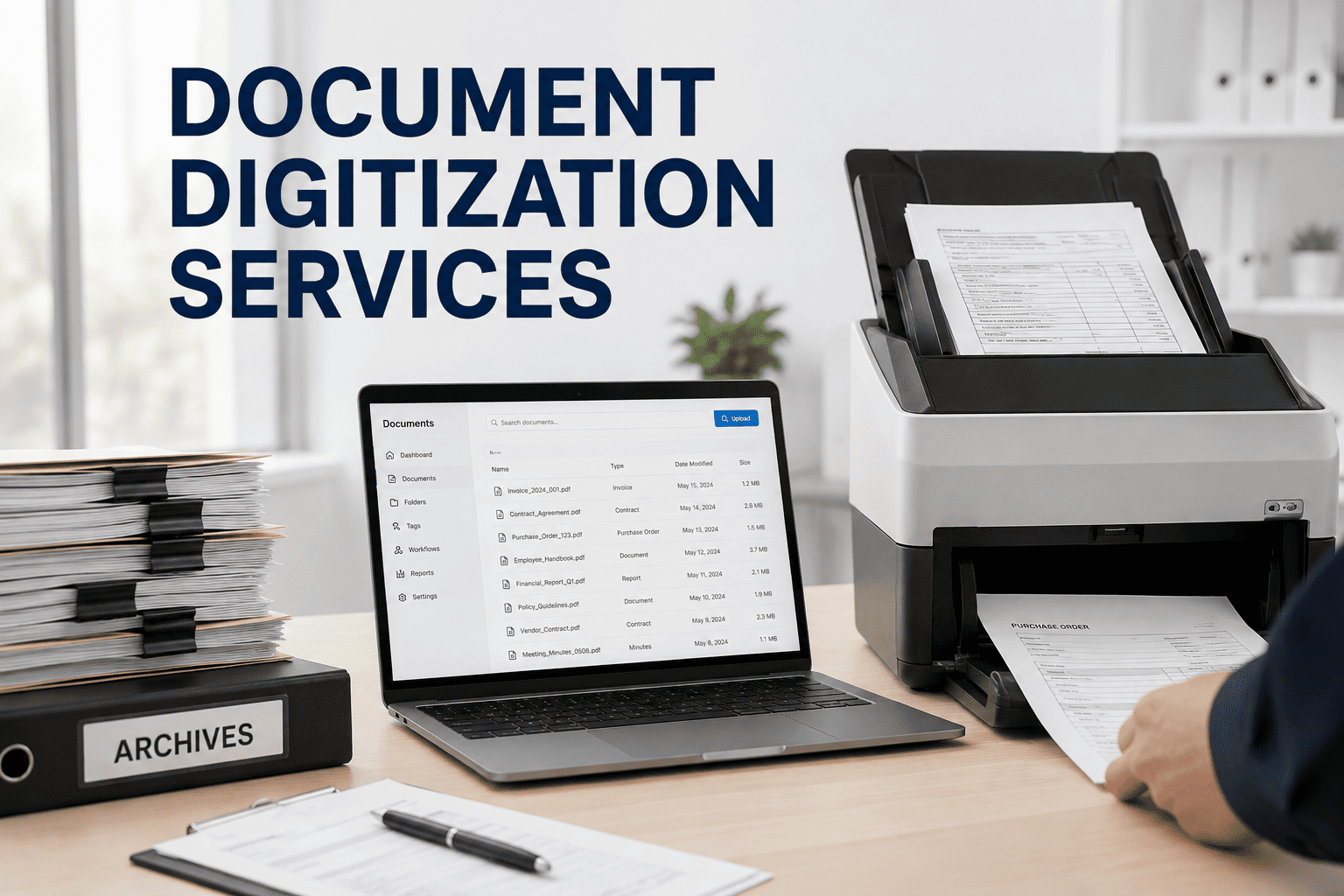
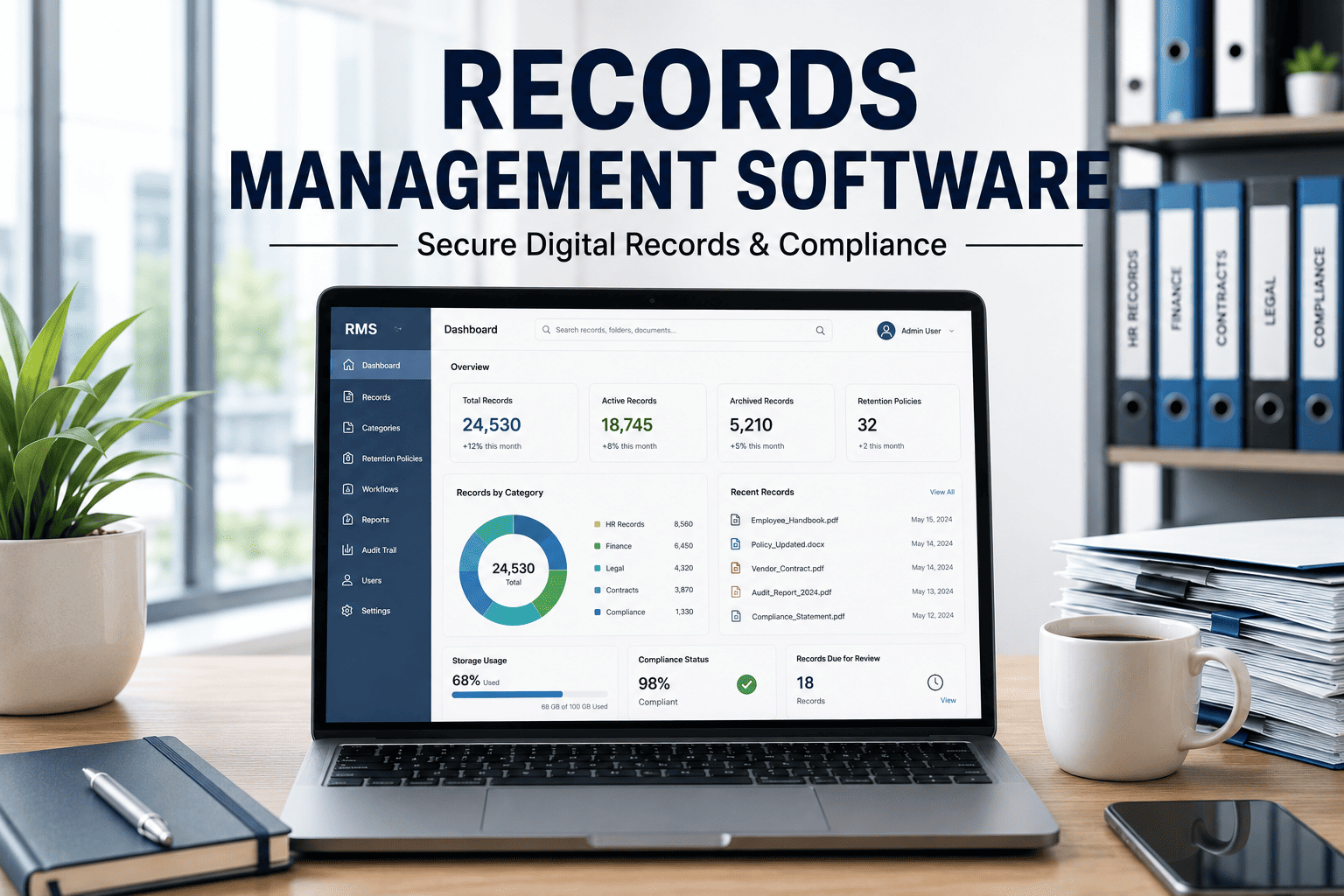
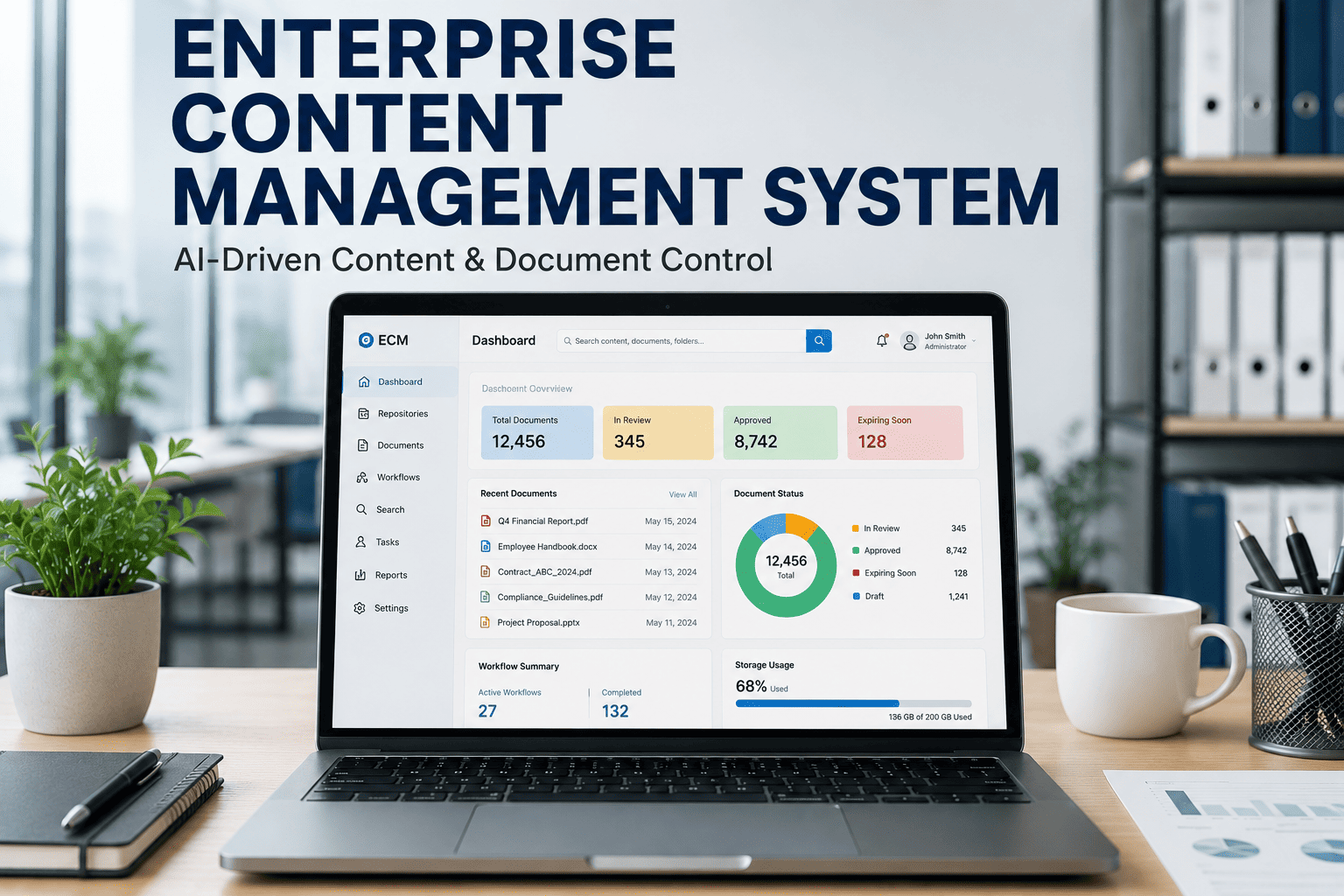
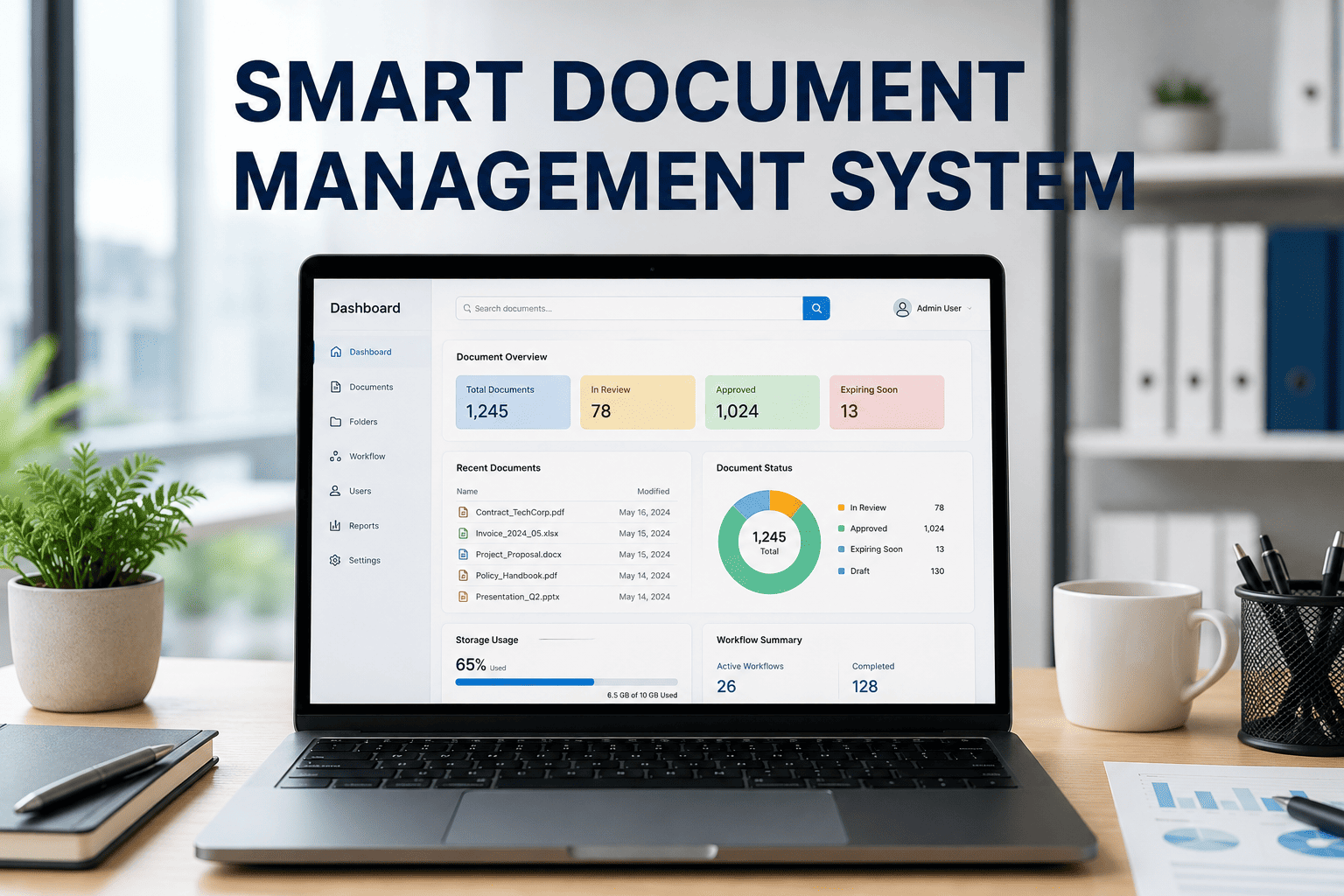
An enterprise records room with 50,000 cubic feet of paper costs about $300,000 to $500,000 a year to keep, before anyone actually retrieves a document from it. Physical storage runs $9 to $13 per square foot annually. Every records employee whose job is walking to a filing cabinet costs about $10,000 a year that IDC benchmarks show can be reclaimed through automation. About 45% of the paper produced in an office is discarded the same day. And when a fire, a flood, or a breach hits — 32% of breached organizations paid regulatory fines in 2025, and the average U.S. breach cost hit $10.22 million per IBM's Cost of a Data Breach — the paper archive is the single most fragile asset the enterprise owns. Document digitization is not about scanning. It is about converting a decades-deep liability into an addressable, searchable, compliance-ready digital asset — with an ROI payback typically hitting inside 12 to 24 months. Modern digitization stacks AI-powered OCR (99%+ accuracy), automated indexing, metadata extraction, and secure cloud storage on top of a professional scanning operation, so the paper doesn't just get converted — it gets turned into searchable, workflow-ready intelligence. A professional document digitization service is built to run exactly that — every box, every page, every legacy archive, transformed and integrated end-to-end.
Document Digitization Services
Convert Paper Records Into Searchable Digital Assets — End to End
High-volume scanning, AI-powered OCR, automated indexing, metadata extraction, and secure cloud delivery — with 12-24 month typical payback and full compliance chain of custody.
$300K+
annual paper storage cost
12-24
month typical payback
$10K
per records employee, automated
$10.22M
US average breach cost, 2025
The Four Costs Paper Actually Carries
The ROI case for digitization is not soft — it stacks four measurable costs that most organizations only ever see in fragments on different budget lines. When you add them up, the annual cost of keeping paper usually exceeds the one-time digitization investment inside two years.
Cost 1
Physical Storage
$9-13/sq ft/yr
Warehouse rent, offsite retrieval fees, climate control. A 50,000 cu ft compliance archive runs $300K-$500K annually.
Cost 2
Retrieval Labor
$10K/employee/yr
Records staff time walking to cabinets, hunting through boxes, refiling. IDC benchmark on labor reclaimed through automation.
Cost 3
Compliance & Breach Risk
$10.22M avg breach
32% of breached organizations paid regulatory fines in 2025. Paper archives have no access log — one wrong hand and evidence disappears.
Cost 4
Business Continuity
Total loss risk
Fire, flood, mold, misfiling. One event can wipe out a decade of records with no backup and no recovery path.
The Six-Stage Digitization Workflow
Professional digitization is not "we scanned it." It's a controlled workflow — the same kind that gets banking records, medical files, and litigation exhibits admissible in court. This is what every page passes through.
01
Assess & Plan
Inventory boxes, sample documents, identify content types, define retention rules, scope backfile vs day-forward.
02
Prepare
Remove staples and clips, unfold, repair damage, sequence documents, apply barcodes and chain-of-custody labels.
03
Scan
Production scanners at 300-600 DPI, color and grayscale, duplex, with real-time image quality control and rescan flags.
04
OCR & Extract
AI-powered OCR with 99%+ accuracy on structured pages. NLP extracts dates, names, amounts, reference numbers automatically.
05
Index & Classify
Documents auto-classified, metadata tagged, filed to the right taxonomy. Human review only on low-confidence exceptions.
06
Deliver & Destroy
Secure delivery to cloud, ECM, or on-prem system. Certified destruction of paper with certificate of destruction issued.
Backfile Conversion vs Day-Forward Scanning — Two Very Different Projects
Most enterprises need both — but they are different animals. Getting the mix right is what separates a digitization program that pays back in 18 months from one that stalls in year three.
Backfile Conversion
"Convert what we already have"
One-time project, weeks to months in duration
Priced per box ($50-$125) with volume discounts (30-50% over 50 boxes)
Off-site production facility for large volumes
Chain-of-custody logging from pickup to delivery
Scan-and-destroy or scan-and-return options
When it fits: legacy archives, closed records, decommissioning file rooms
Day-Forward Scanning
"Never let paper accumulate again"
Ongoing operation, capture at point of creation
Desktop and mailroom scanners, mobile capture
Documents ingested straight to ECM with workflow routing
Prevents new paper backlog forming
Foundation for true paperless operation
When it fits: active records, incoming mail, day-to-day operations
Not sure what mix you need? Book a demo — we'll assess your archive and recommend a phased plan.
What OCR Actually Does — And Where It Needs Help
Modern OCR is not the flatbed scanner of ten years ago. AI-powered engines hit 99%+ accuracy on structured documents, but not every page is structured. Understanding what OCR handles well — and where human review still earns its keep — is what keeps digitization projects honest.
OCR Handles Cleanly
99%+Typed invoices, POs, forms
99%+Multi-column reports and letters
95-99%Tables and structured data
95%+Multi-language content
90%+Neat handwriting on standard forms
Needs Human Review
FlagFaded carbon copies and thermal paper
FlagDamaged, torn, or water-marked pages
FlagComplex mathematical formulas and diagrams
FlagFree-form cursive and shorthand
FlagNon-standard forms with hand-drawn markings
What Digitization Actually Costs
Pricing for digitization is not a mystery — it's driven by volume, complexity, and delivery target. Understanding the components lets you build a realistic project budget instead of accepting a lump-sum quote.
| Line item |
Unit |
Typical range |
| Standard scanning |
per box |
$50 - $125 |
| OCR (searchable text) |
per page |
$0.01 - $0.05 |
| Volume discount |
50+ boxes |
30 - 50% off standard |
| Secure destruction |
per box |
$30 - $100 |
| Metadata / indexing |
per field |
$0.05 - $0.25 |
| Rush turnaround |
surcharge |
25 - 100% |
| Storage during project |
per box / month |
$1 - $3 |
| Chain-of-custody transport |
per trip |
$150 - $500 |
Compliance & Chain of Custody — Non-Negotiables
Digitization touches records that regulators, courts, and auditors will eventually look at. Getting the compliance layer right during the project is the difference between a digital archive that stands up in an audit and one that gets thrown out on procedural grounds.
Chain of Custody
Every box logged from pickup through scan, OCR, index, and delivery. Timestamps, handler IDs, and location at every step.
Secure Facility
SOC 2 Type II production facilities, background-checked staff, CCTV, access-controlled scan floors.
HIPAA / GDPR / SOX
BAAs, DPAs, and compliance frameworks configured before project starts. PHI and PII handling protocols documented.
Certified Destruction
NAID AAA-certified shredding post-scan. Certificate of destruction issued per box, retained per your policy.
Audit Trail
Every scanned document logged with timestamp, operator ID, quality-check pass, and delivery confirmation.
Retention Policy
Retention schedules applied at delivery — records get destroyed on schedule, not held indefinitely by accident.
What Professional Digitization Delivers
Digitization is one of the most well-documented ROI cases in enterprise services. These are the outcomes benchmarked across recent industry reports.
12-24 mo
Typical payback
across all four cost categories
99%+
OCR accuracy
on structured business documents
30-50%
Volume discount
on projects over 50 boxes
Zero
Loss risk
from fire, flood, or misfiling
Want a real ROI number for your archive? Talk to a specialist — we'll size the project against your volume.
Frequently Asked Questions
How long does a digitization project actually take?
It scales with volume and complexity. A 50-box backfile with standard document types (invoices, contracts, HR files) typically runs 3-4 weeks end to end. A 500-box mixed archive can take 8-12 weeks. A 10,000-box enterprise-wide legacy conversion is usually phased over 6-18 months. Day-forward scanning is an ongoing operation with no end date — but its first go-live typically happens within 4-6 weeks of engagement.
What should we scan, and what should we shred?
Not everything needs digitization. Retention schedule drives the decision: records past their legal retention date should generally be destroyed, not converted. Active records and records still within retention are candidates for scanning. Historical records with archival value get scanned to preservation standards. A pre-project inventory usually finds that 20-40% of a legacy archive can be defensibly destroyed instead of scanned — cutting the project cost proportionally.
What happens to the paper after scanning?
Two options. Scan-and-destroy: paper is NAID AAA-certified shredded on-site or at the production facility, with a certificate of destruction issued per box. This is standard for most projects. Scan-and-return: paper is boxed and shipped back, usually for records with regulatory hold requirements or historical originals that must be preserved. The choice is made per document category, not per project.
How is compliance handled during the project itself?
Chain of custody is the backbone. Every box is logged at pickup, tracked through prep, scan, OCR, index, quality-check, and delivery — with timestamps and handler IDs at each step. Production runs in SOC 2 Type II facilities with background-checked staff. For regulated content, BAAs (HIPAA), DPAs (GDPR), and confidentiality agreements are signed before any records leave your site. The audit trail from the digitization phase becomes part of the digital record.
Where do the digitized documents actually go?
Wherever they need to live: your existing ECM (SharePoint, OpenText, Hyland, Doxis, etc.), a new content services platform, cloud storage (AWS, Azure, GCP), or a dedicated records repository. Native connectors handle SAP, Salesforce, Microsoft 365, and most major systems. Metadata and taxonomy are configured before delivery so documents land in the right place with the right tags — not in a dumping-ground folder.
Can we start with a pilot before committing to the full archive?
Yes, and we recommend it. A 5-10 box pilot lets us calibrate OCR to your document types, validate the metadata schema, prove the delivery path into your target system, and give you real per-box economics for scaling. Most enterprise programs start with a pilot inside 2 weeks and scale to full production within 6-8 weeks once results are validated.
Stop paying to store paper.
See Digitization Working on Your Own Boxes
Bring a 5-10 box pilot from any archive — legal, HR, finance, whatever's heaviest. We'll assess it, prep it, scan it, run OCR and indexing, and deliver into your target system with a real per-box economics report — before you commit to the full project.
SOC 2
production facility
NAID AAA
certified destruction