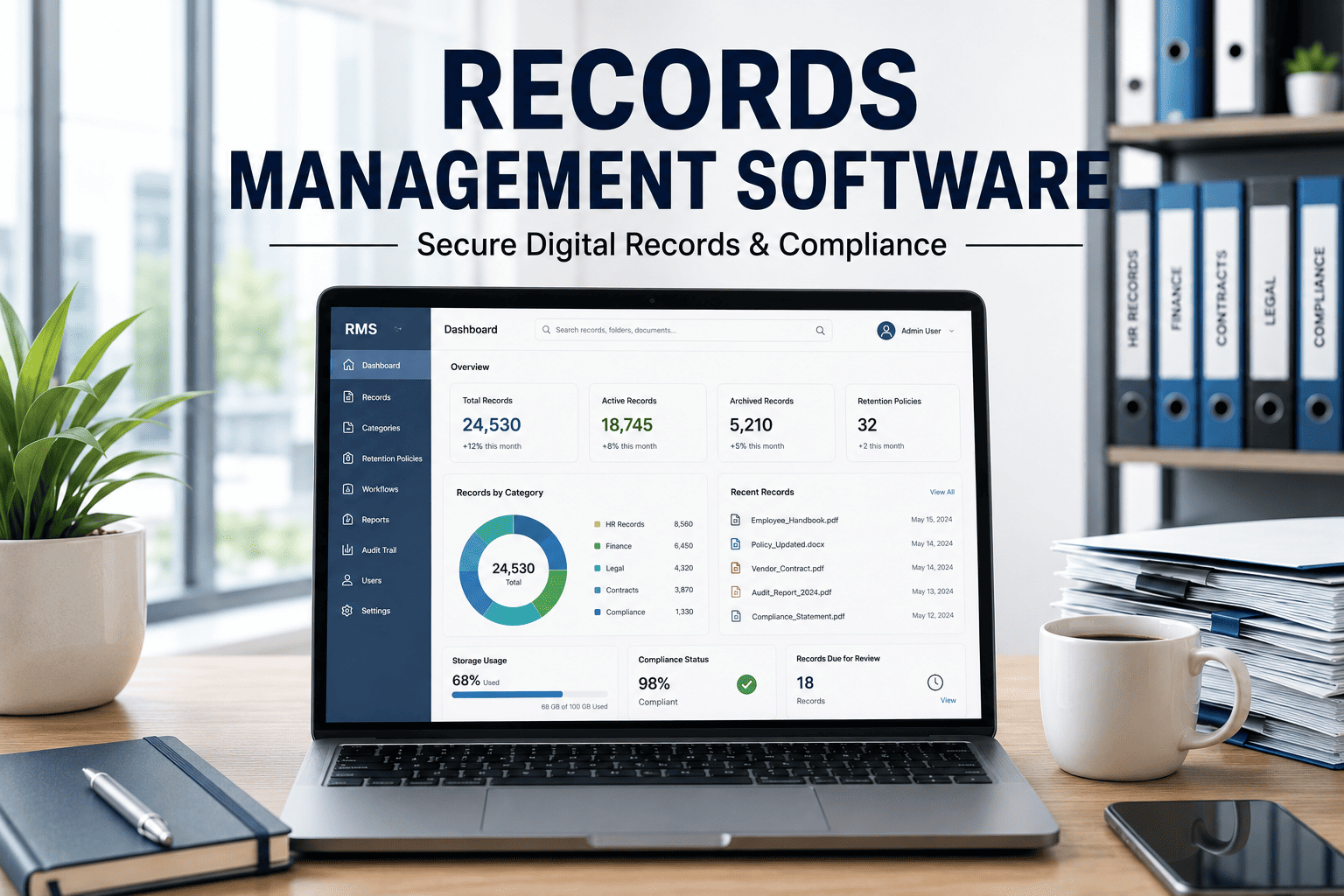
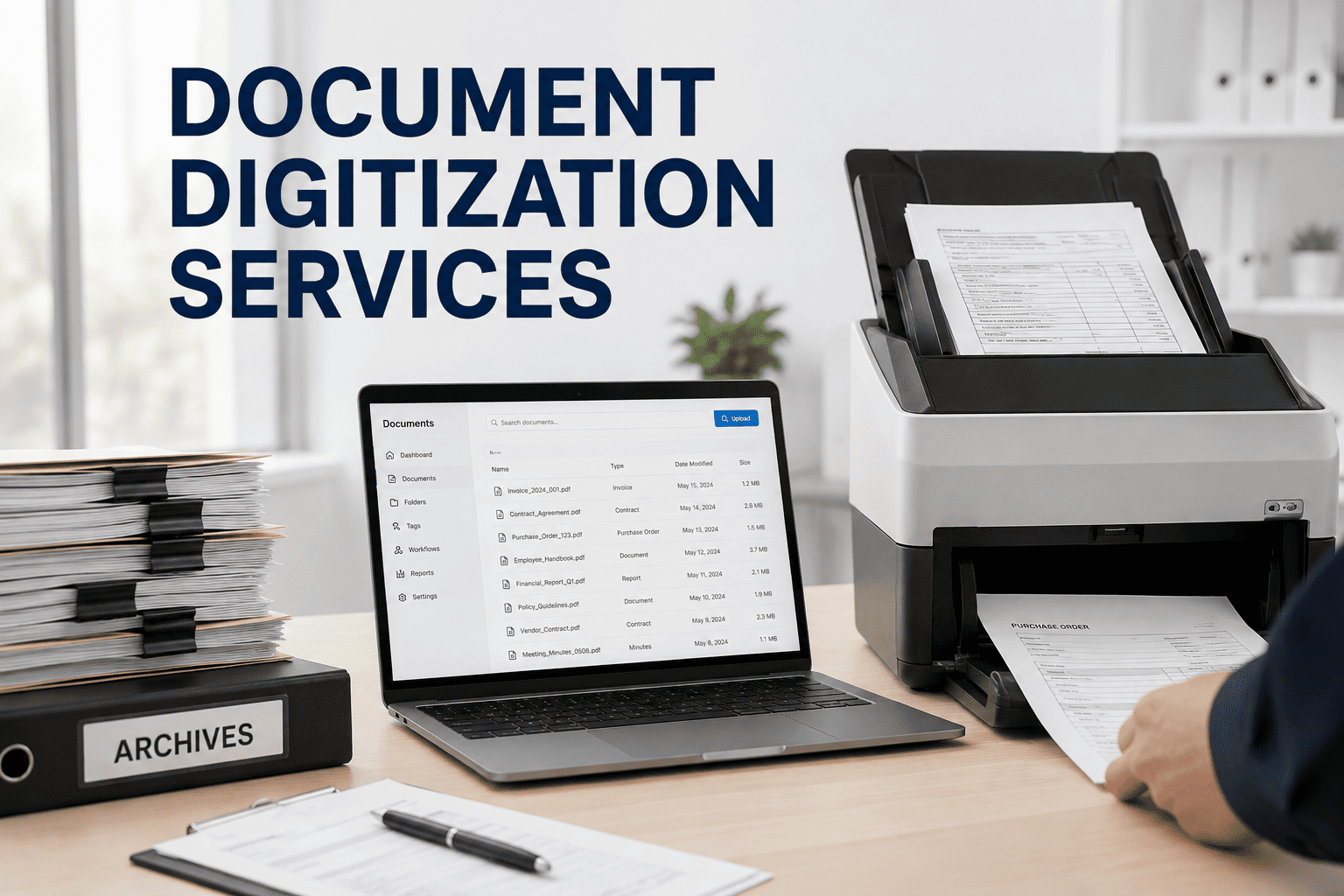
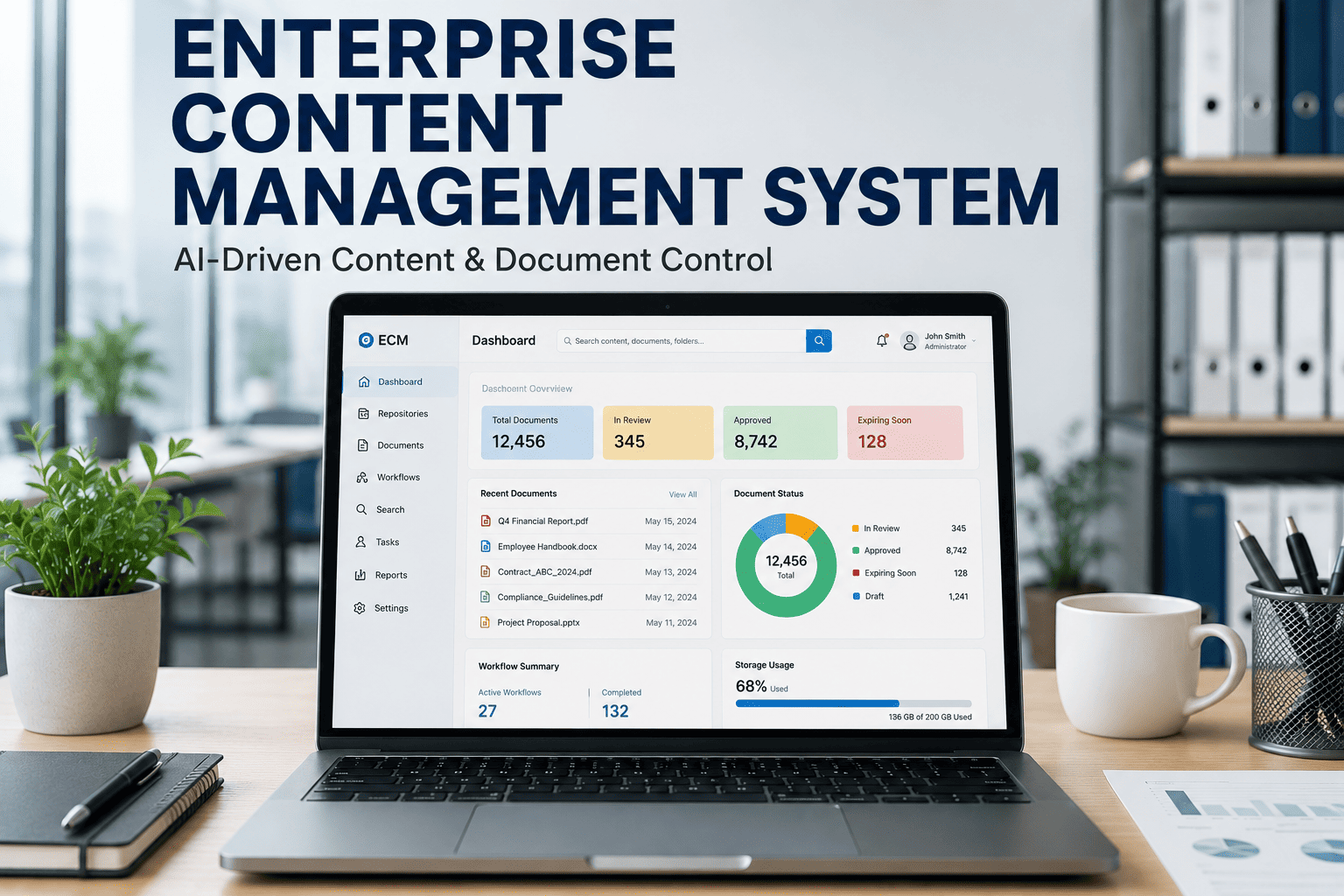
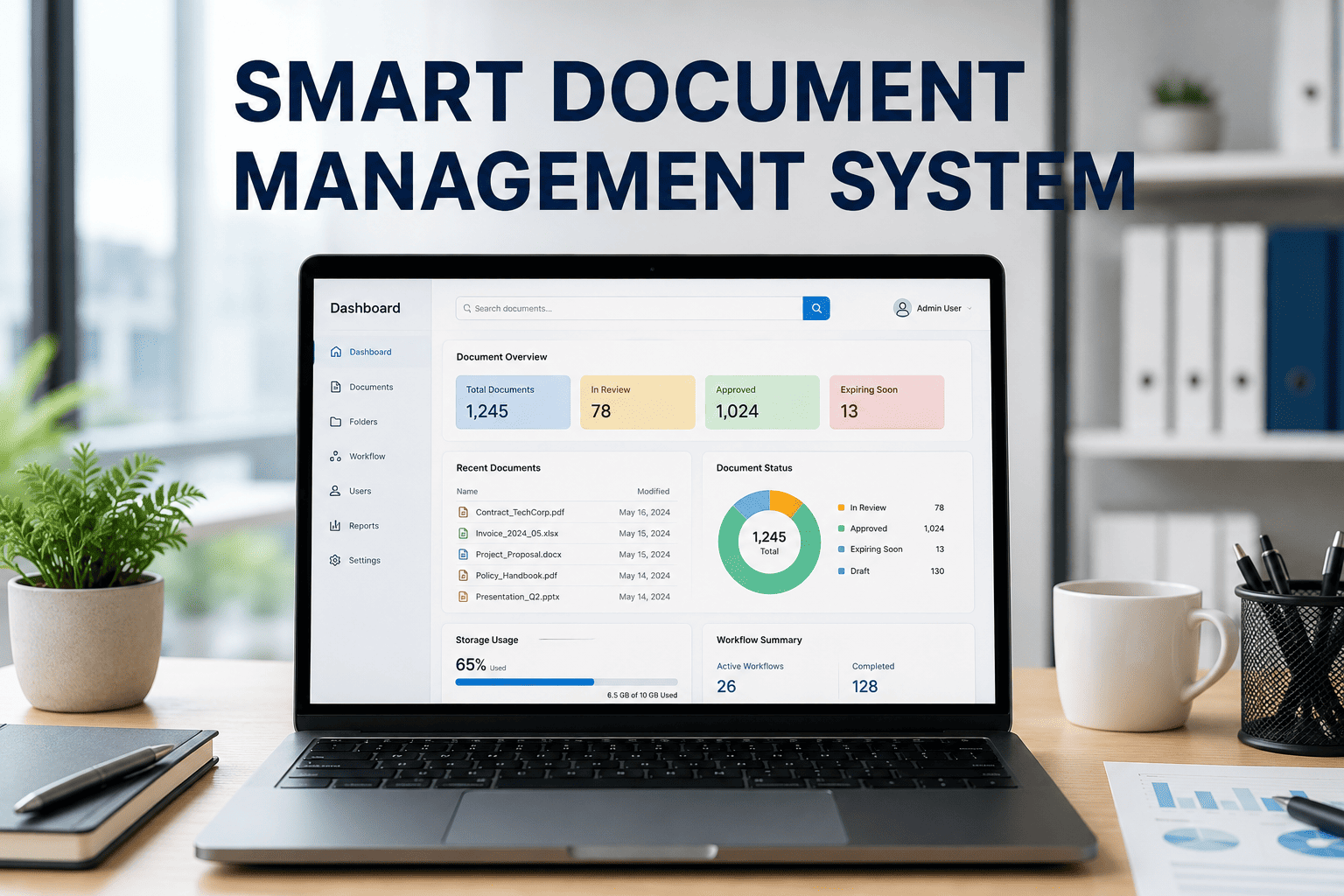
Every enterprise has millions of documents. Not every document is a record. That single distinction — records are the evidence an organization creates in the course of doing business, subject to legal retention obligations — is the difference between a filing system and a records management program. Get it right and the organization can answer an audit, a lawsuit, a regulator, or a public-records request years after the event, with documentation that stands up as authentic, complete, and defensibly retained. Get it wrong and both ends of the retention curve bite. Destroying a record before its legal retention period ends triggers spoliation, sanctions, and adverse inference in court. Holding a record past its retention period adds unnecessary privacy risk, discovery burden, and breach exposure — 32% of breached organizations paid regulatory fines in 2025 per IBM's Cost of a Data Breach, with average US breach cost $10.22 million. Modern records management software runs the entire information lifecycle — capture, classify, retain, dispose — against a retention schedule mapped to every regulation the organization touches. It automates SOX's 7-year retention post-audit, GDPR's right to erasure, HIPAA's medical records windows, ISO 9001 quality records, and industry-specific rules — with defensible destruction, legal holds, and an audit trail that survives contested proceedings. A DoD 5015 and ISO 15489-aligned records management platform is built to run exactly that.
Records Management Software
Retain What You Must. Destroy What You Should. Prove Both.
Automated retention schedules, defensible destruction, legal holds, and audit trails — mapped to ISO 15489, DoD 5015.02, SOX, HIPAA, and GDPR from day one.
ISO 15489
international standard
DoD 5015
US certification
$10.22M
US average breach cost
Records vs Documents — The Distinction Everyone Confuses
Records management is not document management. A document is any file. A record is a document with legal, regulatory, or evidentiary weight — subject to a retention obligation, immutable once declared, and destroyed only through a defensible process. Confusing the two is how organizations end up destroying evidence or hoarding liability.
Documents
Any file the organization creates or receives
Working drafts, meeting notes, internal memos
Convenience copies and duplicates
Editable throughout their useful life
Deleted or updated at user discretion
No retention obligation on their own
Records
Evidence of business activity with legal weight
Contracts executed, filings submitted, decisions taken
Declared as records at the moment of finalization
Immutable — no edits after declaration
Destroyed only through defensible disposition process
Retention period fixed by regulation or policy
The Two-Sided Retention Trap
Every record sits on a curve with two ends, and both are dangerous. Under-retain and you face spoliation. Over-retain and you face discovery burden, privacy exposure, and breach risk. Records management software is built to keep you off both ends at the same time.
UNDER-RETENTION
Destroyed too soon
Spoliation sanctions — up to adverse inference judgment
Regulatory fines for failure to produce mandated records
SOX Section 802: obstruction charges for premature destruction
Loss of qualifying evidence in tax audits and contract disputes
Cannot answer a public-records request
DEFENSIBLE DESTRUCTION
Retained exactly as long as required
Retention schedule enforced automatically per record type
Legal hold overrides disposition during active matters
Certificate of destruction on every disposed record
Audit trail admissible in contested proceedings
Both regulators and courts satisfied
OVER-RETENTION
Kept longer than required
Discovery burden and cost multiplied on every future lawsuit
GDPR / CCPA violations — data held past lawful purpose
Breach exposure grows with volume — every record is a target
Storage cost compounds year over year
Old PII lingering — GDPR right to erasure violated
The Regulatory Retention Landscape
Records retention is not a policy question — it's a regulatory obligation, and every industry stacks multiple regimes at once. Modern records management software ships with retention templates for the major standards and applies the strictest applicable rule automatically.
| Regulation |
Record type |
Retention period |
| SOX (US) |
Audit workpapers, financial statements |
7 years minimum post-audit |
| HIPAA (US) |
Medical records, PHI |
6 years minimum (state may extend) |
| GDPR (EU) |
Personal data |
Only as long as lawful purpose exists |
| FDA 21 CFR Part 11 |
Electronic records, signatures |
Per predicate rule, often lifetime + years |
| IRS (US) |
Tax records, supporting docs |
3-7 years depending on situation |
| ISO 9001 |
Quality records |
Per organization's documented procedure |
| FCRA |
Consumer credit records |
2 years after adverse action |
| OSHA (US) |
Workplace injury records |
5 years past year of record |
| ERISA |
Employee benefit plan records |
6 years after filing |
Want retention templates mapped to your specific regulatory stack? Book a demo — bring your compliance list and we'll pre-configure it.
The Anatomy of a Retention Schedule
A retention schedule is the operational heart of records management. Every record class needs one, and every schedule has the same six elements. If any of them is missing or ambiguous, the schedule can't be enforced defensibly.
01
Record Class
A specific category — "executed customer contracts," "patient encounter records," "employee I-9 forms" — not a folder name.
02
Trigger Event
The moment the retention clock starts — contract termination, patient last visit, employee separation, fiscal year close.
03
Retention Period
Minimum required duration by regulation — 7 years post-audit under SOX, 6 years under HIPAA, per predicate rule for FDA.
04
Legal Authority
The specific statute, regulation, or case law that mandates the period — not "we've always kept it that long."
05
Disposition Action
What happens at end-of-life — secure destruction, transfer to archives, or permanent preservation.
06
Hold Override
Rules that suspend disposition — active litigation, regulatory investigation, audit in progress.
Legal Hold — Where Retention Schedules Get Overridden
When litigation, investigation, or audit hits, the retention schedule pauses. Every record potentially relevant to the matter must be preserved regardless of what its normal disposition date would have been. Legal hold is the workflow that makes this defensible and reversible.
01
Custodian Identification
Legal team identifies who holds potentially relevant records — employees, systems, departments. Scope defined by matter.
02
Preservation Notice
Automated notices sent to custodians. Acknowledgments tracked. Reminder cadence enforced until confirmed.
03
Disposition Suspended
Held records flagged in the system — auto-disposition disabled. Any attempted deletion blocked and logged.
04
Discovery & Production
Held records searchable, reviewable, and exportable in litigation-ready formats with chain of custody intact.
05
Release & Resume
Matter closes, hold released, records resume normal retention schedule — with full history logged.
Standards & Certifications That Matter
Records management software is not a category where "we're compliant" is a claim you can make — it's a category with named international standards, formal certifications, and audit criteria. These are the ones enterprise records programs actually reference.
ISO 15489
International standard for records management. Defines classification, appraisal, retention, and disposition principles. The global reference.
DoD 5015.02
US DoD standard for electronic records management applications. Only 14 vendors globally have achieved certification. Required for federal agencies.
MoReq2010
European modular requirements for records systems. Widely adopted across EU public sector and regulated industries.
ISO 30301
Management system for records — the "how to run a records program" standard, complementing ISO 15489.
VERS (AU)
Victorian Electronic Records Strategy. Australian standard for digital preservation and records authenticity.
NARA GRS
US National Archives General Records Schedules — retention rules for common federal record types, referenced by many private-sector programs.
How Modern Records Management Runs the Loop
From record declaration through defensible destruction, the software runs a controlled workflow. Every state change is logged. Every disposition is authorized. Every audit answer is already prepared.
01
Capture & Declare
Documents ingested from ECM, email, business apps. Declared as records at finalization — immutable from that moment.
02
Classify & Schedule
AI-driven classification assigns each record to its class. Retention schedule applied automatically — trigger, period, disposition.
03
Secure & Access
Encrypted storage, role-based access, immutable audit log on every view, download, and export.
04
Hold & Preserve
Legal holds applied on scope. Disposition suspended. Discovery-ready with chain of custody intact.
05
Dispose & Certify
End of retention triggers review workflow. Approved disposition executes secure destruction with certificate issued.
What Records Management Software Delivers
The value case for records management is not soft. It stacks legal defensibility, breach risk reduction, storage cost cuts, and audit-readiness in one program. These are the outcomes benchmarked across industry deployments.
Zero
Spoliation risk
defensible retention across every record class
Lower
Discovery cost
smaller footprint, better search, faster production
Cut
Breach exposure
records past retention destroyed on schedule
Audit
Ready always
every retention decision logged and defensible
Curious what your current retention picture actually looks like? Talk to a specialist — we'll audit it against your regulatory stack.
Frequently Asked Questions
What's the actual difference between records management and document management?
Document management handles any file — drafts, working documents, convenience copies — that people edit and share throughout their useful life. Records management handles the subset of documents that carry legal, regulatory, or evidentiary weight, which are declared as records at finalization, made immutable, retained per a defensible schedule, and destroyed only through an authorized disposition process. A document management system organizes files. A records management system provides legal-grade evidence.
Do we really need DoD 5015 certification if we're not a federal agency?
Not required, but strongly signaled. DoD 5015.02 is the most rigorous certification in the market — only 14 vendors worldwide meet it. It sets the technical bar for immutability, retention enforcement, legal hold, chain of custody, and audit trail. Non-federal enterprises reference it because it demonstrates the vendor has actually built the controls that survive contested proceedings — not just marketing claims. If you're in a regulated industry, look for DoD 5015 or ISO 15489 conformance.
How is defensible destruction different from just deleting files?
Deletion removes a file. Defensible destruction is a documented process that (1) verifies the record has reached its retention date, (2) confirms no legal holds apply, (3) obtains authorization from the designated custodian, (4) executes secure destruction with cryptographic verification, and (5) logs the entire chain in an immutable audit trail. In court, defensible destruction is evidence that the record was disposed of in the normal course of business per a documented policy — not that it was destroyed to hide something.
How does this integrate with our existing ECM or SharePoint?
Modern records management software runs as a governance layer over your existing content stores — not as a rip-and-replace. Records are declared in place; retention, holds, and audit run through the records management engine while the underlying storage stays where it is. Native connectors handle SharePoint, Microsoft 365, SAP, Salesforce, and most major ECM platforms. This is how enterprises get records-grade governance without moving petabytes.
How do we handle GDPR right-to-erasure alongside SOX 7-year retention?
This is exactly the multi-regulation stack records management software is built to reconcile. The software applies the highest applicable retention (SOX 7 years for financial records) while separately handling GDPR erasure requests on personal data (redacting or removing personal identifiers where the record is otherwise required). Retention templates encode the reconciliation logic — you don't have to manually decide, and the audit trail proves you handled it correctly.
Can we see it running on our own retention schedule?
Yes. Bring your current retention schedule (or your regulatory obligation list) and one sample of records. We'll configure the retention rules, run a legal-hold scenario, execute a defensible destruction on a sample record, and produce the audit trail — exactly as it would appear to a regulator or opposing counsel. Book a demo and we'll walk it live.
Stop keeping everything forever.
See Records Management Applied to Your Own Retention Schedule
Bring your regulatory obligation list and one record class from any high-stakes area — HR files, financial records, medical charts, contracts. We'll configure the retention rules, run a legal-hold scenario, execute defensible destruction on a sample, and produce the audit trail — the exact evidence a regulator or opposing counsel would receive.