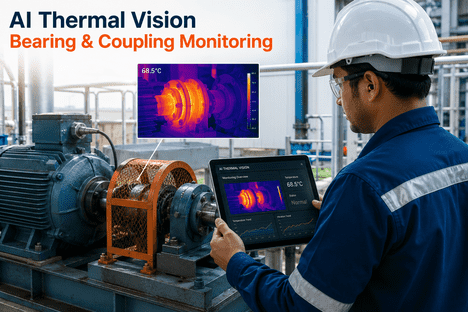
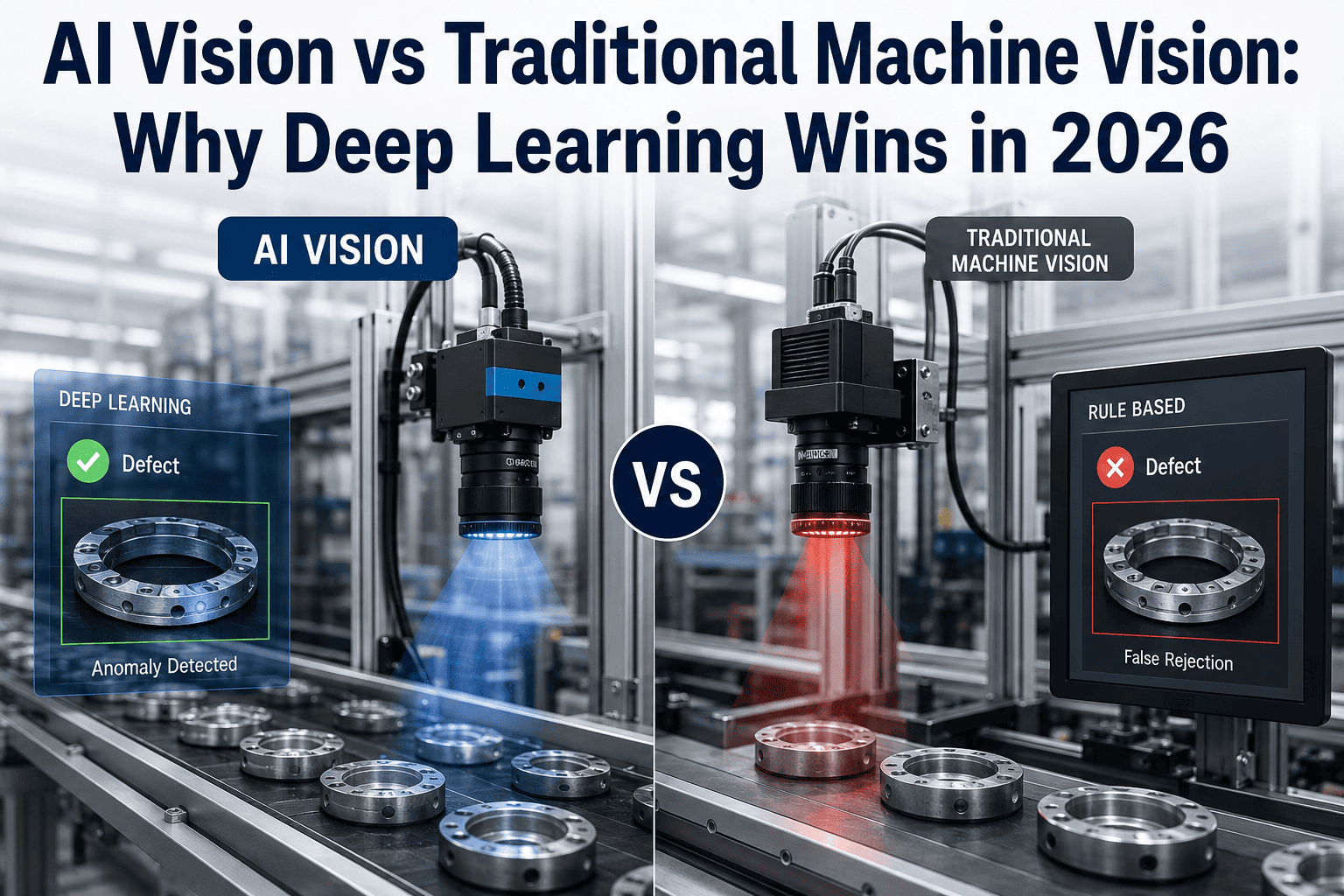
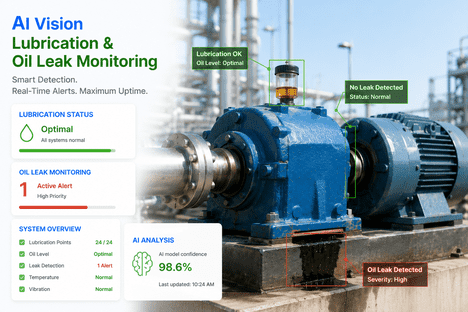
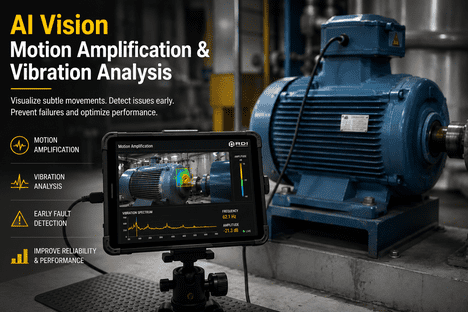
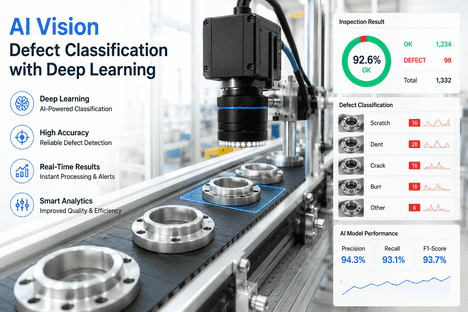
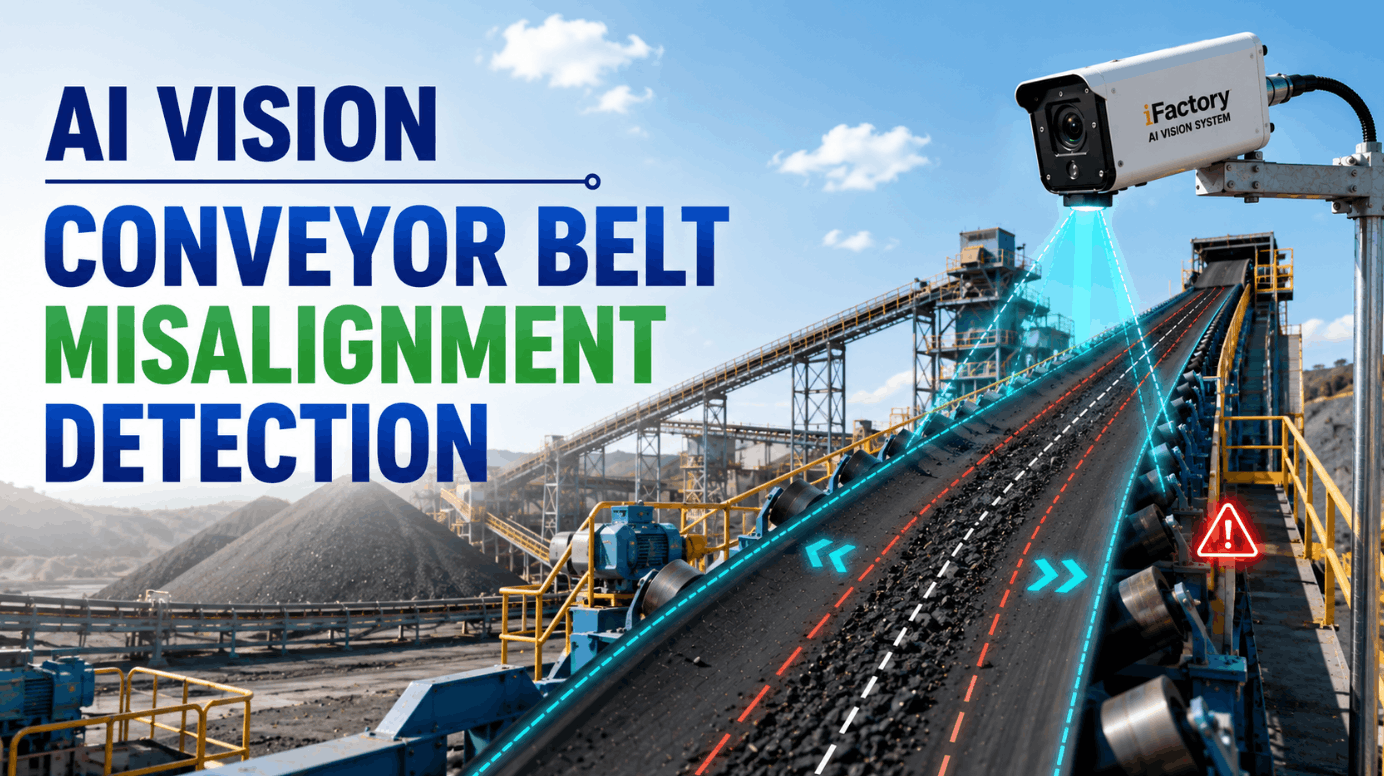
Bearings and couplings are among the most failure-critical components in any rotating equipment train — responsible for load transmission, shaft alignment tolerance, and mechanical energy transfer across industrial motors, pumps, compressors, fans, gearboxes, and conveyor drives. When a bearing begins to overheat from lubrication breakdown, contamination, or overload, or when a coupling develops progressive misalignment from thermal growth or foundation movement, the failure progression is predictable and detectable — but only if the right monitoring technology is watching continuously. AI thermal vision systems purpose-built for rotating equipment surveillance are transforming how maintenance and reliability engineers detect bearing overheating, coupling misalignment, and lubrication failures before they escalate into catastrophic failures and unplanned downtime events. iFactory's AI Vision Camera platform delivers the thermal anomaly detection sensitivity, continuous coverage, and automated inspection documentation that predictive maintenance programs require to move beyond time-based maintenance intervals toward condition-based intervention that prevents failure rather than responding to it. To see how AI thermal vision is deployed for bearing and coupling monitoring in your industry, Book a Demo with iFactory's predictive maintenance vision specialists today.
AI THERMAL VISION · BEARING & COUPLING MONITORING · PREDICTIVE MAINTENANCE
Detect Bearing Overheating and Coupling Misalignment Before Catastrophic Failure
iFactory's AI Vision Camera platform delivers continuous thermal anomaly detection for bearings, couplings, and rotating equipment — purpose-built for reliability engineers who need early warning detection, automated documentation, and real-time alerts that time-based maintenance schedules cannot provide.
Why Bearing and Coupling Failures Demand AI Thermal Vision Monitoring
Bearing failures account for approximately 40–50% of all rotating equipment failures in industrial environments — and the majority of these failures are preceded by thermal signatures detectable well before mechanical damage reaches a catastrophic stage. A bearing developing excessive heat from lubricant film breakdown, contamination ingress, or overload typically progresses through a measurable temperature rise of 10–40°C above ambient baseline over hours or days before the accelerated wear phase that precedes seizure or spalling. Coupling misalignment generates asymmetric thermal patterns across the coupling body and adjacent bearing housings that are visually distinct when observed by a calibrated thermal imaging system trained to recognize them. Traditional condition monitoring approaches — periodic vibration analysis routes, manual temperature gun readings, and fixed thermocouple installations — all share a structural limitation: they observe equipment intermittently and at a single point, missing the spatial thermal distribution patterns and rate-of-change signatures that reveal early-stage faults most accurately. AI thermal vision systems monitor continuously, across the full surface of the bearing housing and coupling assembly, detecting anomalies in the spatial pattern of heat distribution that point sensors fundamentally cannot observe. iFactory's edge-deployed AI Vision Camera platform processes thermal imaging data locally at the monitoring point — generating fault alerts in under 25 milliseconds from anomaly detection to maintenance system notification, without cloud latency in the critical alarm path.
40–50%
of all rotating equipment failures attributed to bearing faults — the highest single failure category in industrial machinery
10–40°C
typical thermal rise above baseline detectable by AI vision before bearing damage enters the accelerated wear phase
24/7
continuous monitoring coverage replacing periodic manual inspection rounds that leave equipment unobserved between routes
<25ms
edge-processed alert response time from anomaly detection to maintenance system notification — no cloud latency
Root Cause Analysis
Why Conventional Bearing Monitoring Misses Early-Stage Faults
The failure modes that cause the most consequential bearing and coupling failures each have detectable precursor signatures — but conventional monitoring programs are architecturally limited in their ability to capture them consistently. iFactory's AI thermal vision platform is designed to address each of these structural monitoring gaps directly, replacing periodic-inspection-dependent programs with continuous, automated surveillance that detects faults at the earliest visual thermal stage.
01
Periodic Inspection Coverage Gaps
Vibration analysis routes and manual temperature measurement programs are conducted on fixed schedules — typically weekly, monthly, or quarterly for non-critical equipment. A bearing that begins overheating between inspection routes can progress from early thermal anomaly to advanced mechanical damage within hours in high-speed or heavily loaded service. AI thermal vision cameras installed at bearing monitoring points observe continuously, capturing the thermal onset signature at its first appearance regardless of when it occurs in the maintenance schedule cycle.
02
Single-Point Sensor Blind Spots
Fixed thermocouple and RTD installations at bearing housings measure temperature at a single contact point — providing no information about the spatial distribution of heat across the bearing housing surface that reveals fault type and severity. A developing defect on the inner race generates a different thermal pattern than outer race damage, contamination-induced overheating, or lubricant film failure — and these patterns are only visible to a thermal imaging system that observes the full surface simultaneously. AI thermal vision cameras capture the complete spatial heat signature that single-point sensors fundamentally cannot detect.
03
Coupling Misalignment Goes Visually Undetected
Coupling misalignment is one of the most common root causes of premature bearing failure and mechanical seal damage in pump and compressor trains — yet it is among the most difficult faults to detect with conventional vibration monitoring until misalignment has reached a severity that has already caused secondary bearing damage. Thermal imaging reveals the asymmetric heat generation pattern characteristic of angular and parallel misalignment at coupling faces and coupling-adjacent bearing housings before the vibration signature becomes dominant — enabling corrective realignment before bearing damage accumulates.
04
Lubrication Failure Detection Delay
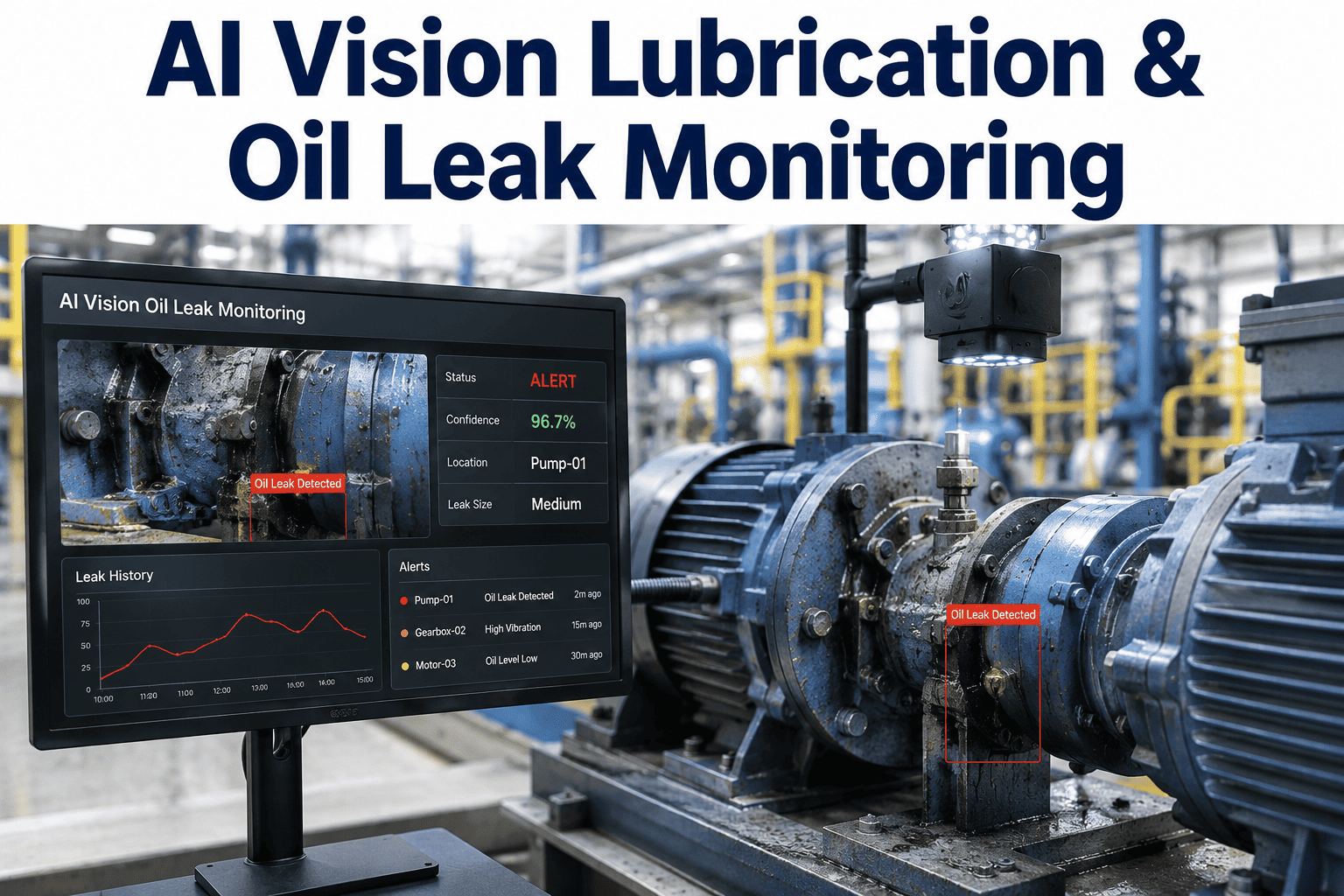
Lubrication breakdown — from lubricant starvation, contamination, incorrect viscosity, or grease hardening in low-speed bearings — is the leading mechanical root cause of bearing overheating. The thermal signature of lubricant film failure appears as a diffuse, progressive temperature rise across the bearing housing surface that begins well before the vibration amplitude changes or the temperature rise crosses the fixed-threshold alarm setpoint of conventional monitoring. AI thermal vision models trained to recognize early-stage lubrication failure patterns detect this signature at an actionable stage, enabling re-lubrication intervention before bearing surface damage initiates.
Platform Capabilities
Five Core AI Thermal Vision Capabilities for Bearing and Coupling Monitoring
iFactory's AI Vision Camera platform for rotating equipment monitoring is built around the specific thermal fault signatures that bearing and coupling failure modes generate — trained on the spatial heat distribution patterns that distinguish each fault type from normal operating thermal variation. Each capability delivers actionable condition data with the documentation completeness that reliability, maintenance, and compliance programs require. Reliability engineers who want to see these capabilities demonstrated on equipment configurations matching their facility can Book a Demo with iFactory's rotating equipment monitoring specialists.
01
Bearing Overheating Detection and Stage Classification
AI thermal vision cameras continuously monitor bearing housing surface temperatures against individually calibrated baselines for each bearing position — detecting temperature exceedances, rate-of-rise signatures, and spatial thermal distribution anomalies that indicate developing bearing faults. The AI model classifies detected anomalies by fault stage severity — Early Warning, Attention Required, and Critical — enabling maintenance teams to prioritize response based on failure urgency rather than treating all alarms as equal. Stage classification is derived from both absolute temperature deviation and the spatial morphology of the thermal anomaly, providing a richer diagnostic signal than threshold-only alerting. Every detection event is logged with thermal image capture, stage classification, confidence score, and timestamp — generating the condition monitoring record that reliability programs require as evidence of monitoring activity and maintenance decision basis.
02
Coupling Misalignment Thermal Pattern Recognition
Flexible couplings in misaligned drive trains generate characteristic asymmetric thermal patterns across the coupling body that AI thermal vision models can recognize and classify as angular misalignment, parallel offset, or combined misalignment before the fault severity reaches the threshold detectable by vibration analysis. The AI model distinguishes coupling misalignment thermal signatures from normal thermal gradients caused by differential thermal expansion during startup and load change — reducing false alert rates that undermine operator confidence in monitoring system credibility. Detection sensitivity is sufficient to identify misalignment conditions that warrant scheduled realignment intervention during the next planned maintenance window, preventing the progressive bearing damage accumulation that undetected misalignment causes over extended operating periods.
03
Lubrication Failure and Re-Lubrication Interval Optimization
Lubricant film breakdown in rolling element bearings produces a distinctive progressive thermal signature — a diffuse, slowly rising temperature across the bearing housing surface — that AI thermal vision systems detect earlier than vibration-based monitoring or fixed-threshold thermocouple alarms. The platform tracks thermal baseline drift over time for each monitored bearing position, identifying the gradual temperature rise pattern that precedes acute lubrication failure and alerting maintenance teams to perform re-lubrication before bearing surface damage initiates. For facilities transitioning from fixed-interval to condition-based lubrication programs, the thermal monitoring data provides the objective condition evidence that justifies lubrication interval extension on well-performing bearing positions while triggering earlier intervention on positions showing thermal deterioration — reducing both lubricant consumption and bearing replacement frequency simultaneously.
04
Motor and Gearbox Bearing Monitoring at High Equipment Density
Electric motor drive-end and non-drive-end bearings, gearbox input and output shaft bearings, and intermediate shaft bearing positions in multi-stage drives present monitoring coverage challenges for portable inspection routes due to equipment density and access constraints. AI thermal vision cameras installed at strategically selected vantage points can monitor multiple bearing positions simultaneously from a single camera location — covering the full bearing population of a motor-gearbox-driven equipment train with a fraction of the fixed sensor hardware that equivalent thermocouple coverage would require. This architecture is particularly valuable in pump halls, compressor rooms, and fan deck environments where equipment density makes comprehensive point-sensor coverage economically impractical.
05
Automated Condition Monitoring Records and CMMS Integration
Every thermal inspection event captured by iFactory's AI Vision Camera is automatically compiled into a structured condition monitoring record — including thermal image with anomaly annotation, fault classification, severity stage, trend data against historical baseline, and recommended maintenance action. Records are pushed to CMMS platforms including SAP PM, IBM Maximo, and Infor EAM in real time, automatically generating maintenance notifications pre-populated with the fault description, equipment tag, severity classification, and thermal evidence image that maintenance planners need to scope corrective work without a separate assessment visit. This eliminates the manual data transcription step between condition monitoring detection and work order creation that delays corrective action in programs relying on manual monitoring routes and paper-based condition reports.
BEARING MONITORING · AI THERMAL VISION · ROTATING EQUIPMENT RELIABILITY
Start an AI Thermal Vision Pilot for Your Most Critical Rotating Equipment
iFactory's AI Vision Camera platform integrates with existing rotating equipment infrastructure to deliver continuous bearing overheating detection, coupling misalignment recognition, and automated CMMS integration — without removing equipment from service during deployment.
Performance Benchmark
AI Thermal Vision vs. Conventional Bearing Monitoring: Performance Comparison
The following benchmark compares bearing and coupling monitoring programs operating under manual inspection, fixed-sensor, and AI thermal vision architectures across industrial rotating equipment environments. Performance data reflects operational outcomes across process, manufacturing, and utility industry deployments.
Bearing & Coupling Monitoring Performance Benchmark — 2026
Industry Applications
AI Thermal Vision Bearing Monitoring Across Industries
The economic case for AI thermal vision bearing and coupling monitoring is strongest in industries where rotating equipment failure consequences are highest — measured by production loss rate, safety impact, repair cost, and downtime duration. iFactory's platform has been deployed across the following industry environments with documented reliability outcomes. Reliability engineers in any of these industries can Book a Demo to discuss equipment-specific monitoring architecture for their facility.
Oil & Gas — Pumps, Compressors, and Rotating Equipment Trains
Oil and gas production, pipeline, and refinery rotating equipment operates at high speeds and loads in environments where manual inspection access is often restricted by hazardous area classifications and process isolation requirements. AI thermal vision cameras mounted at bearing monitoring points provide continuous surveillance of pump and compressor drive-end bearings, coupling assemblies, and gearbox bearing housings — detecting the thermal precursors of bearing failure that manual rounds in ATEX-classified areas cannot observe at the required frequency.
Manufacturing — Motor-Driven Production Equipment
Manufacturing facilities operating high-density motor and drive equipment — conveyor systems, fans, pumps, machining spindles, and process drives — face bearing failure consequences measured in production line downtime that can cost thousands of dollars per hour. AI thermal vision monitoring of drive-end and non-drive-end motor bearings, conveyor drive couplings, and fan bearing assemblies provides the early warning detection that enables planned maintenance intervention during scheduled production downtime rather than emergency response during production.
Power Generation — Turbine Auxiliary and Balance-of-Plant Equipment
Power generation facilities operate large rotating equipment trains — cooling water pumps, forced and induced draft fans, condensate pumps, and boiler feed pumps — whose bearing failures directly threaten unit output availability. AI thermal vision monitoring provides the continuous coverage that complements periodic vibration analysis routes in identifying bearing faults between scheduled monitoring activities, with particular value on high-speed auxiliary equipment where fault progression from detectable anomaly to failure can be rapid.
Water & Wastewater — Pump and Blower Equipment
Water and wastewater treatment facilities operate pump and blower trains whose bearing failures can trigger treatment process disruption with regulatory compliance consequences. AI thermal vision monitoring of pump bearing housings and drive coupling assemblies at lift stations, treatment plants, and distribution facilities provides condition data that time-based maintenance schedules cannot match — enabling condition-triggered bearing replacement that extends mean time between maintenance events while eliminating the unplanned failures that cause compliance exceedance events.
Pulp, Paper & Mining — High-Load, Contamination-Intensive Environments
Pulp, paper, and mining operations subject bearings to the most demanding combination of load, contamination exposure, and speed variation in industrial manufacturing — creating bearing failure rates significantly higher than in cleaner process environments. AI thermal vision monitoring in these environments detects the accelerated lubrication failure signatures caused by contamination ingress and the overload thermal patterns that precede bearing fatigue failure in equipment operating at or above design load limits — providing the early warning needed to schedule bearing replacement before catastrophic failure in equipment with limited spare availability.
Food & Beverage — Hygienic and Washdown Environment Monitoring
Food and beverage processing facilities operate conveyor, pump, and mixer equipment whose bearing failures cause production contamination risk in addition to downtime consequences. Bearing lubrication failures in food-contact zone equipment can introduce lubricant contamination risk to product streams. AI thermal vision monitoring detects lubrication failure signatures before they reach the stage where lubricant integrity becomes a product safety concern — providing an early-warning layer that complements HACCP contamination control programs with objective bearing condition data.
ROI Analysis
Financial Case for AI Thermal Vision Bearing Monitoring
The financial return on AI thermal vision bearing and coupling monitoring investment is built on three simultaneous value streams: avoided catastrophic failure costs, reduced planned maintenance labor through condition-based rather than time-based intervention, and inspection documentation efficiency gains. The following figures reflect iFactory deployment outcomes across rotating equipment monitoring environments.
87%
Unplanned Bearing Failure Reduction — Process Industry Deployments
Process facilities report an average 87% reduction in unplanned bearing failure events post-deployment. In continuous process environments where a single unexpected equipment failure costs $50,000–$500,000 in production loss and emergency repair costs, this reduction delivers full platform ROI within the first avoided failure event at most facilities. Secondary savings from reduced secondary damage — shaft damage, seal failure, and housing damage caused by bearing seizure — add 30–60% to the direct bearing replacement cost avoidance in most bearing failure events.
65%
Maintenance Labor Reduction — Condition-Based vs. Time-Based Programs
Facilities transitioning from fixed-interval bearing replacement to condition-based replacement using AI thermal vision data report an average 65% reduction in planned bearing replacement labor — driven by the elimination of early replacement of bearings that still have substantial remaining service life. The AI thermal monitoring data provides the objective condition evidence that reliability engineers need to justify interval extension to operations and maintenance management without relying on subjective technician assessment or conservative fixed-schedule assumptions.
92%
Lubrication Failure Events Detected Pre-Damage — Chemical & Mining Deployments
In contamination-intensive environments where lubrication failure is the leading bearing failure root cause, facilities using AI thermal vision report 92% of lubrication failure events detected at a stage where re-lubrication intervention prevents bearing surface damage — compared to approximately 35% detection at actionable stage in programs relying on periodic manual routes. Each avoided bearing replacement from early lubrication failure detection represents $800–$8,000 in direct parts and labor cost avoidance, with the highest values in large slow-speed bearings with limited spare availability.
78%
Inspection Documentation Labor Reduction — Regulated Industry Facilities
Facilities subject to ISO 55001 asset management, PSM mechanical integrity, or customer quality audit requirements for maintenance documentation report an average 78% reduction in condition monitoring record assembly labor — from manual route report compilation to automated inspection record generation with thermal image evidence. Automated CMMS integration eliminates the manual work order creation step, reducing the time from fault detection to maintenance scheduling from hours or days to under 10 minutes in facilities with CMMS notification connector active.
Implementation
Deploying AI Thermal Vision Bearing Monitoring: Phased Approach
Deploying AI thermal vision monitoring across a rotating equipment population requires a risk-prioritized implementation sequence that delivers early reliability value on the highest-consequence equipment before expanding to the broader monitored population. The following deployment phases reflect iFactory's validated approach across process industry, manufacturing, and utility rotating equipment environments.
Phase 1
Equipment Criticality Assessment and Monitoring Point Specification (Weeks 1–3)
Conduct a risk-prioritized equipment criticality assessment covering failure consequence, failure mode history, current monitoring coverage gaps, and access feasibility for each equipment type in scope. Identify the highest-consequence bearing positions and coupling assemblies as Phase 1 monitoring targets — typically the equipment whose failure would cause immediate production loss, safety impact, or regulatory compliance consequences. Specify camera positioning, field of view requirements, and thermal sensitivity requirements for each monitoring point. iFactory's engineering team supports this assessment process — reliability engineers can initiate it by scheduling directly at our
Book a Demo page.
Outcome: Equipment criticality ranking, monitoring point specifications, Phase 1 deployment scope defined
Phase 2
Pilot Installation and Baseline Calibration (Weeks 4–10)
Install AI thermal vision cameras at Phase 1 priority bearing and coupling monitoring positions. Capture thermal baseline profiles for each monitored equipment position across representative operating conditions — including startup, normal load, high load, and ambient temperature variation — to establish the reference baselines against which anomalies are detected. Validate alert thresholds and fault classification sensitivity against the facility's acceptable false alert rate. Commission CMMS integration and test automated work order generation workflow. Conduct maintenance team orientation on the monitoring platform, alert response protocol, and condition record review process.
Outcome: Operational AI thermal monitoring on priority equipment, validated baselines, CMMS integration live
Phase 3
Full Equipment Population Rollout and Program Integration (Weeks 11–24)
Expand AI thermal vision monitoring to the remaining equipment population identified in Phase 1 assessment, using the validated configuration template and baseline methodology from the pilot deployment. Activate continuous process verification dashboards for bearing population thermal trending and integrate monitoring data with the facility's reliability management program KPIs. Establish periodic performance review cadence comparing bearing failure rate, maintenance labor hours, and lubrication consumption before and after AI vision deployment to document program ROI for management reporting.
Outcome: Full equipment population coverage, program KPI tracking active, documented ROI baseline established
Frequently Asked Questions
AI Thermal Vision for Bearing and Coupling Monitoring — Frequently Asked Questions
How does AI thermal vision detect bearing overheating differently from a fixed thermocouple?
A fixed thermocouple measures temperature at a single contact point on the bearing housing exterior — providing a single number that can only trigger an alarm when the temperature at that specific point crosses a threshold. AI thermal vision cameras observe the full surface of the bearing housing simultaneously, detecting not just temperature magnitude but the spatial pattern of heat distribution that reveals fault type. Different fault modes — inner race defects, outer race defects, lubrication failure, and contamination overheating — each produce characteristic spatial thermal signatures that AI models are trained to recognize and classify, providing fault type information that point sensors fundamentally cannot deliver.
Can AI thermal vision detect coupling misalignment before vibration analysis confirms it?
Yes — this is one of the most significant advantages of thermal vision over vibration-only monitoring programs. Coupling misalignment generates asymmetric friction heating at the coupling element and differential thermal loading at the coupling-adjacent bearing positions before the misalignment severity reaches the level that produces a dominant vibration signature. AI models trained on coupling misalignment thermal signatures detect this pattern at an earlier stage than vibration analysis, providing a longer lead time for scheduled corrective realignment intervention before secondary bearing damage accumulates.
How does iFactory's platform handle ambient temperature variation that affects bearing baseline temperatures?
iFactory's AI thermal vision platform maintains individual thermal baseline profiles for each monitored bearing position that account for ambient temperature variation, load-dependent operating temperature, and seasonal environmental conditions. Anomaly detection is based on deviation from the current operating condition baseline — not a fixed absolute temperature threshold — which eliminates the false alarms that occur when fixed-threshold systems trigger on normal temperature increases during high-load operation or summer ambient conditions. The platform automatically updates baselines as operating conditions change, maintaining detection sensitivity without requiring manual recalibration by maintenance staff.
What is the typical lead time between AI thermal vision detection and bearing failure in process equipment?
In most industrial bearing failure scenarios, AI thermal vision detects the early warning thermal signature at a stage that provides 24–120 hours of lead time before the bearing reaches the failure stage requiring emergency replacement — depending on operating speed, load, bearing size, and failure mode. This lead time is sufficient for the maintenance team to prepare spare parts, schedule a planned replacement during a convenient production window, and avoid the emergency response costs and secondary damage associated with run-to-failure events. High-speed bearings under heavy loads can progress more rapidly, which is why continuous monitoring rather than periodic inspection is essential for these applications.
How does the AI thermal vision platform integrate with existing CMMS and reliability management systems?
iFactory's platform connects to CMMS platforms including SAP PM, IBM Maximo, Infor EAM, and others via standard API integration — automatically generating maintenance notifications pre-populated with the fault classification, equipment tag, severity level, thermal image evidence, and recommended maintenance action when a bearing or coupling anomaly is detected. Integration does not require replacement of existing CMMS infrastructure. The platform also generates condition monitoring trend reports compatible with ISO 55001 asset management program documentation requirements.
Can iFactory's AI thermal vision cameras operate in hazardous area classified environments?
Yes. iFactory offers ATEX Zone 1/Zone 2 and IECEx-certified enclosure configurations for thermal vision camera deployment in flammable gas and dust classified environments — enabling bearing and coupling monitoring in the refinery, petrochemical, and offshore rotating equipment rooms where hazardous area restrictions most severely limit manual inspection frequency. Camera selection and enclosure specification for hazardous area deployments is confirmed during the equipment criticality and monitoring point assessment conducted in Phase 1 of the deployment process.
AI THERMAL VISION · BEARING & COUPLING MONITORING · PREDICTIVE MAINTENANCE · 2026
Deploy AI Thermal Vision Monitoring on Your Most Critical Bearings and Couplings
iFactory's AI Vision Camera platform delivers continuous bearing overheating detection, coupling misalignment recognition, lubrication failure early warning, and automated CMMS integration — giving reliability engineers the condition data and documentation that predictive maintenance programs require to prevent failures before they happen.