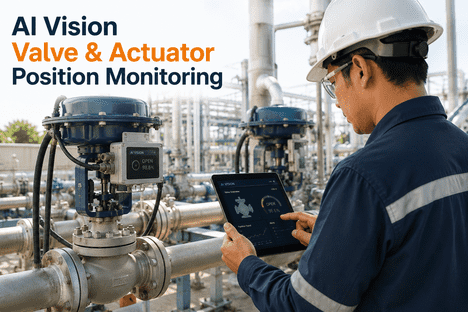
Valve and actuator systems are the critical control points of industrial process infrastructure — managing flow, pressure, temperature, and chemical routing in oil and gas pipelines, chemical processing plants, water treatment facilities, power generation stations, and pharmaceutical manufacturing environments. When a valve fails to open or close correctly, when an actuator develops a fault, or when stem corrosion goes undetected, the consequences range from production loss and unplanned downtime to catastrophic process safety incidents. AI Vision Camera systems purpose-built for process control environments are transforming how industrial operators monitor, verify, and maintain these assets — delivering continuous position verification, early-stage leak detection, stem corrosion identification, and actuator fault recognition at the accuracy and response speed that manual inspection programs and traditional sensor-based monitoring cannot match. If you want to see how AI vision is being deployed for valve and actuator monitoring in your industry, Book a Demo of iFactory's AI Vision Camera platform today.
Why Valve and Actuator Monitoring Demands AI Vision in 2026
Conventional valve monitoring relies on discrete position sensors, pressure transmitters, and periodic manual inspection rounds — each of which carries a category of failure that AI vision directly addresses. Position sensors can report a valve as open or closed while mechanical misalignment means the valve is partially seated. Pressure transmitters detect process deviations after a valve failure has already propagated into the system. Manual inspection rounds occur on fixed schedules that bear no relationship to the actual rate of valve condition degradation — and in environments with hundreds or thousands of valves, complete inspection coverage is structurally impossible at any practical inspection frequency. AI vision camera systems mounted at valve banks and actuator stations monitor continuously, detect visual indicators of developing faults before they become functional failures, and generate the inspection evidence that reliability and safety programs require as objective documentation of monitoring activity. iFactory's platform deploys edge-processing AI directly at the monitoring point — eliminating cloud latency from the detection and alert pipeline, processing every frame locally, and triggering alarms in under 25 milliseconds from fault detection to control system notification.
Core AI Vision Monitoring Capabilities for Valves and Actuators
The fault modes that cause the most consequential valve and actuator failures each have a visual signature that AI vision systems can detect reliably — earlier, more consistently, and with higher documentation completeness than any alternative monitoring method. iFactory's predictive maintenance vision platform is trained on the specific defect categories that valve and actuator reliability engineers identify as highest-priority targets for early detection investment.
Valve Position Verification and Partial-Open Detection
AI vision systems mounted at valve stations continuously verify the actual mechanical position of valve stems, handles, and indicator flags — independently of the electrical position signal from the valve's internal limit switches. In gate valves, ball valves, butterfly valves, and globe valves, the AI model identifies the precise angular position of the valve operator and compares it against the commanded position recorded in the control system. Discrepancies between commanded and actual position — including partial-open conditions, mechanical binding mid-stroke, and indicator flag misalignment — are detected and flagged before they affect process conditions. This independent visual verification layer catches the sensor-confirmed-open, mechanically-stuck-closed failure mode that control systems cannot detect on their own and that manual inspection misses between rounds. iFactory's platform generates a timestamped position verification record for every inspection cycle, providing the documentation that regulatory and customer audit programs require as evidence of monitoring program execution. Book a Demo to see iFactory's valve position verification module in action.
Leak Detection at Valve Packing, Flanges, and Body Joints
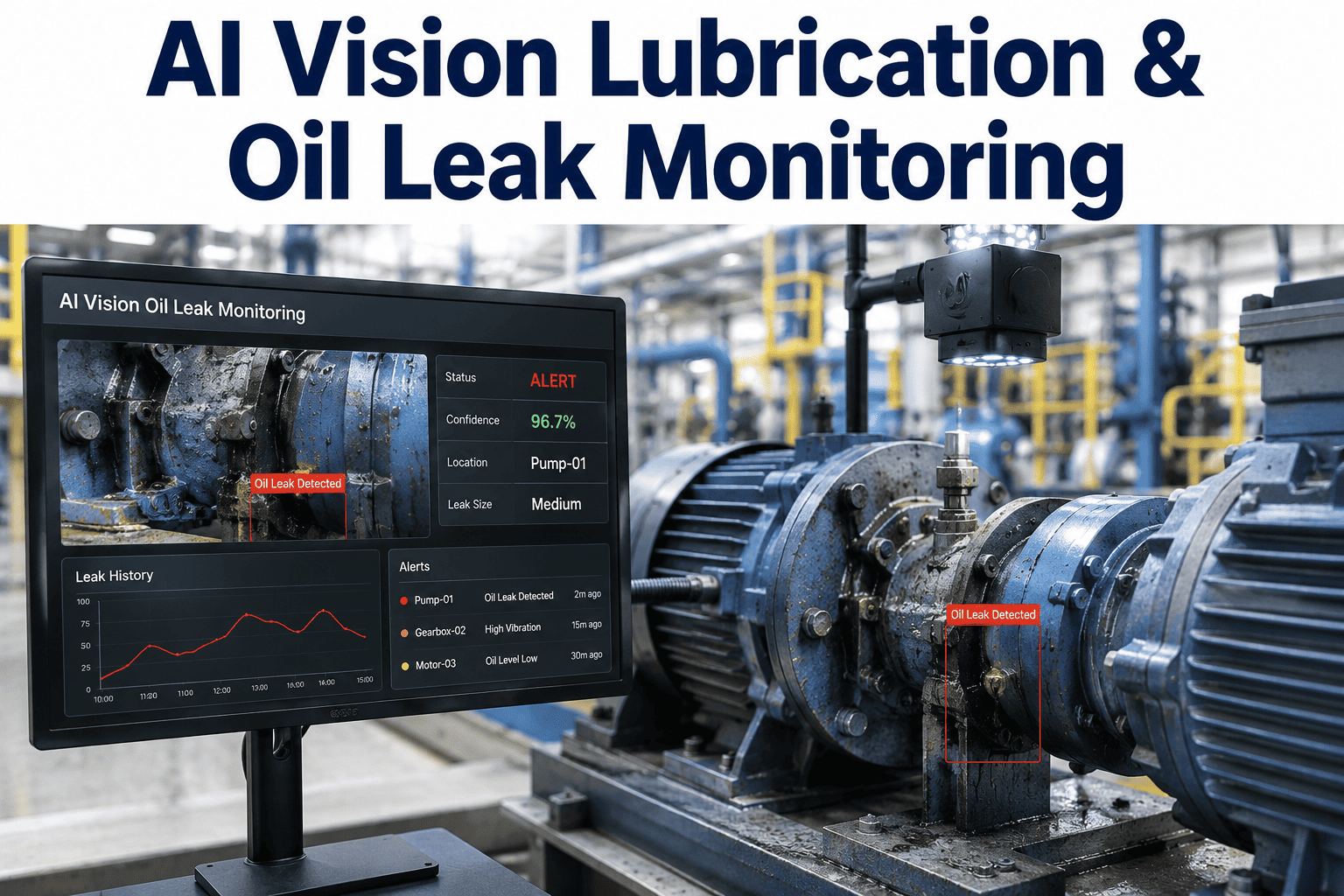
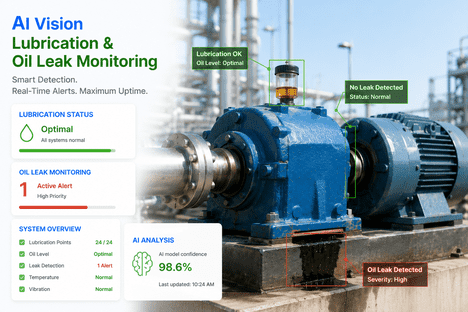
Visual leak signatures — weeping at packing glands, staining at flange faces, crystalline deposits at body joints, and liquid accumulation at valve bonnets — appear on the exterior surface of a valve well before the leak rate reaches a level detectable by process instrumentation. AI vision systems trained on leak signature categories specific to the process media being handled (hydrocarbons, acids, steam, water, gas) detect these early-stage visual indicators at their first appearance and escalate alerts before leak rates grow to reportable or hazardous levels. Detection occurs independently of process pressure or flow instrumentation — meaning leaks at valves in low-differential-pressure service or in small-bore instrument lines that fall below sensor detection thresholds are still captured. iFactory's leak detection models distinguish between active leak indicators and historical staining from previously repaired leaks, reducing false positive rates that make alert fatigue a reliability program risk in high-density valve environments.
Stem Corrosion and Surface Degradation Monitoring
Valve stem corrosion progresses through visually distinguishable stages — from surface discoloration and early pitting to active rust progression, scale formation, and structural metal loss — each with different implications for valve operability and maintenance urgency. AI vision systems continuously monitor stem condition against baseline reference images captured at installation or last maintenance, flagging any visible progression that meets the alert threshold for the valve's service criticality classification. Detection at Stage 1 or Stage 2 corrosion allows predictive maintenance scheduling that prevents stem seizure, packing failure, and the emergency corrective maintenance events that carry the highest labor, production loss, and safety risk costs. The AI model's ability to detect corrosion progression across a large population of valves simultaneously — without requiring maintenance technicians to physically inspect each valve on a fixed schedule — is the primary mechanism through which AI vision generates reliability program ROI in large valve inventory environments. Book a Demo to see iFactory's corrosion progression monitoring for valve stem and body surfaces.
Actuator Fault Detection: Housing Damage, Coupling Wear, and Visible Mechanism Faults
Pneumatic and electric actuators develop visible fault indicators — housing cracks, yoke misalignment, coupling wear at the stem-actuator interface, spring housing damage, and solenoid valve body staining — that precede functional failure and are detectable by AI vision before any process or electrical signal anomaly appears. iFactory's actuator monitoring models are trained on the specific fault morphologies of actuator types common in each target industry: pneumatic diaphragm actuators in chemical and pharmaceutical process applications, electric multi-turn actuators in water and wastewater treatment, and hydraulic actuators in oil and gas production environments. Monitoring covers both the actuator body and its connection to the valve operator — detecting misalignment at the actuator-to-valve coupling that indicates mechanical wear or improper reinstallation after maintenance, which is among the most common root causes of premature actuator failure in facilities with high valve maintenance activity.
Solenoid Valve and Instrument Valve Condition Monitoring
Solenoid valves and small-bore instrument valves — which control pneumatic signal lines, instrument impulse lines, and safety system pilot circuits — are among the most failure-consequential and inspection-difficult valve types in process plants. Their small physical size, high installation density, and safety-critical function make manual inspection inherently limited in coverage depth and frequency. AI vision cameras positioned at instrument valve manifolds and solenoid valve banks monitor for body corrosion, indicator light status, wiring condition, and visible leakage signatures on a continuous basis — providing the monitoring coverage that manual rounds cannot deliver at the frequency that instrument valve reliability requires in safety-instrumented systems subject to IEC 61511 proof-test documentation requirements.
Industry Applications: Where AI Vision Valve Monitoring Delivers the Highest Value
The economic and safety return on AI vision valve monitoring investment is highest in industries where valve failure consequence is greatest, valve inventory is largest, or regulatory documentation requirements impose the highest compliance overhead on manual inspection programs. iFactory's predictive maintenance vision platform has been deployed across the following industry environments with documented reliability and compliance outcomes.
Pipeline Valve Monitoring and Process Safety Evidence
Oil and gas production, pipeline, and refining operations manage valve inventories measured in thousands of units — many in hazardous area classifications, high-pressure service, or safety-instrumented system roles where failure consequence is severe and inspection documentation requirements are defined by API, OSHA PSM, and EPA RMP regulations. AI vision monitoring provides the continuous surveillance that manual rounds cannot deliver across geographically distributed valve stations, and generates the inspection evidence that process safety management audit programs require as documentation of monitoring activity between formal proof tests.
Corrosive Service Valve Condition and Leak Detection
Chemical process plants handling acids, caustics, solvents, and reactive intermediates face accelerated valve corrosion rates, packing compatibility failures, and leak consequence profiles that make early-stage visual detection economically compelling at any reasonable monitoring cost. AI vision systems in chemical plant environments are calibrated for the specific corrosion and leak signatures of the process media handled — distinguishing between the visual characteristics of acid weeping, caustic crystallization, solvent evaporation staining, and water contamination to minimize false alerts while maintaining high sensitivity to genuine developing leaks.
Large Valve Actuator Monitoring and Position Verification
Water and wastewater treatment facilities operate large-bore butterfly and gate valves with electric and pneumatic actuators whose failure consequences include treatment process disruption, regulatory compliance exceedance events, and public health impact. AI vision monitoring of actuator condition and valve position provides an independent verification layer that supplements SCADA position feedback — detecting the actuator coupling failures and stem seizure conditions that cause valves to report a commanded position without actually achieving it, with a documentation trail that satisfies state and federal regulatory inspection programs.
Sanitary Valve Inspection and cGMP Documentation
Pharmaceutical and biotech manufacturing facilities operating under FDA current Good Manufacturing Practice regulations must document inspection activities for process equipment — including the diaphragm valves, ball valves, and sanitary butterfly valves that control product-contact process streams. AI vision monitoring provides the per-inspection timestamped records with objective visual evidence that FDA investigator scrutiny of maintenance and inspection programs requires, eliminating the paper record assembly overhead from manual inspection rounds while improving coverage frequency and consistency across shifts.
Steam and High-Temperature Valve Condition Monitoring
Power generation facilities — thermal, nuclear, and combined-cycle gas — operate high-temperature, high-pressure steam and process valves whose failure modes include valve body erosion, packing blowout under thermal cycling, and stem seizure from oxide buildup that is visually detectable at early stage. AI vision monitoring in power plant environments addresses the inspection access constraints that make manual valve inspection particularly hazardous or impractical in operating units, providing continuous condition data that maintenance planning teams use to optimize outage scope and minimize forced outage risk from unexpected valve failures between scheduled maintenance windows.
Hygienic Valve Monitoring and Compliance Documentation
Food and beverage manufacturers operating under FSMA, GFSI, and customer quality audit requirements must document sanitary equipment inspection activities — including the hygienic valves and actuators that control product-contact process streams in dairy, beverage, and prepared food production environments. AI vision monitoring provides the inspection documentation infrastructure that manual programs struggle to generate at the frequency and objectivity that FSMA preventive controls and GFSI scheme audit programs require, with per-inspection records structured for integration into the facility's existing food safety management system.
The iFactory AI Vision Platform: Built for Process Plant Monitoring Environments
Process plant environments place demands on AI vision hardware and software that general-purpose industrial cameras and cloud-dependent AI platforms cannot meet. iFactory's predictive maintenance vision platform is architected for the specific constraints of valve and actuator monitoring in operating process facilities — where ambient conditions are harsh, network connectivity to cloud infrastructure may be limited or prohibited by cybersecurity policy, and false alarm rates must be controlled tightly to avoid operator alert fatigue that undermines monitoring program effectiveness.
iFactory's edge-deployed AI Vision Camera processes all inspection decisions on local hardware installed at the monitoring point — without cloud connectivity in the detection path, without per-unit inference costs that scale with valve count, and with alarm-to-control-system response latency under 25 milliseconds. The platform supports fixed-mount camera configurations for continuous monitoring of high-priority valve stations and mobile inspection tablet configurations for coverage of distributed valve populations on operator rounds — with both data streams feeding a unified inspection record database that generates the audit-ready documentation that regulatory and customer programs require. Multi-site deployment management allows centralized model library management, alert configuration, and inspection record retrieval across geographically distributed facilities from a single operations interface.
| Monitoring Requirement | Conventional Monitoring Limitation | iFactory AI Vision Capability | Reliability Benefit |
|---|---|---|---|
| Valve Position Verification | Electrical limit switch signal only — no mechanical position confirmation | Visual stem/operator position verification independent of electrical signal | Sensor-Independent Confirmation |
| Early Leak Detection | Process instrumentation detects after leak rate reaches measurable threshold | Visual leak signature detection at Stage 1 — packing weep, flange stain, crystalline deposit | Pre-Threshold Detection |
| Stem Corrosion Monitoring | Manual inspection on fixed schedule — coverage gaps between rounds | Continuous visual corrosion progression monitoring against baseline reference | Predictive Maintenance Scheduling |
| Actuator Fault Detection | Electrical diagnostics detect faults only after functional failure | Visual coupling wear, housing damage, and misalignment detection before failure | Pre-Failure Intervention |
| Inspection Documentation | Manual record assembly — inconsistent, time-consuming, audit-vulnerable | Automated timestamped inspection records per monitoring cycle | Audit-Ready Records |
| Hazardous Area Monitoring | Manual inspection exposure risk in classified areas | Fixed-mount camera monitoring eliminates routine inspection personnel exposure | Reduced HSE Exposure |
ROI Profile: AI Vision Valve and Actuator Monitoring Financial Case
The financial case for AI vision monitoring in valve and actuator programs is built on three value streams that operate simultaneously: downtime cost reduction from early fault detection, inspection labor reallocation enabled by automated monitoring coverage, and regulatory audit preparation cost reduction from automated documentation generation. The following figures reflect iFactory deployment outcomes across process industry environments.
Frequently Asked Questions: AI Vision for Valve and Actuator Monitoring
How does AI vision detect valve position more reliably than existing limit switches?
Electrical limit switches confirm that the valve operator has reached the position that trips the switch — but they cannot detect mechanical misalignment between the operator and the valve stem, partial-stroke conditions where the valve stops short of the commanded position, or indicator flag misalignment that causes the switch to report an incorrect position. AI vision verifies the actual mechanical position of the valve stem, operator, or position indicator directly from the visual image — independently of the electrical signal. This independent visual confirmation catches the class of failures where the control system receives a valid position confirmation signal while the valve is not actually in the commanded position, which is a known failure mode in high-consequence safety-instrumented systems.
Can iFactory's AI vision system operate in hazardous area (ATEX/IECEx) classified environments?
iFactory offers hazardous area rated camera enclosure configurations certified to ATEX Zone 1/Zone 2 and IECEx standards for deployment in flammable gas and dust environments — enabling AI vision monitoring coverage in the classified area valve stations and actuator banks where manual inspection exposure risk is highest and monitoring value is greatest. Hardware selection for hazardous area deployments is confirmed during the initial site assessment process, which identifies zone classification, temperature class, and gas group requirements that determine the specific certified enclosure configuration required for each monitoring point.
How does iFactory's platform handle the large valve populations typical in oil, gas, and chemical facilities?
iFactory's deployment architecture supports both fixed-mount camera configurations for continuous monitoring of the highest-priority valve stations and mobile inspection configurations for systematic coverage of large distributed valve populations. For facilities with valve inventories in the thousands, the prioritization framework identifies the highest-consequence valves — safety-critical, highest-flow, most corrosion-exposed, longest since last maintenance — as the first deployment targets for fixed monitoring, with mobile inspection coverage extending AI vision benefits to the broader inventory progressively. The multi-site management architecture allows centralized model library management and alert monitoring across all deployment points from a single interface. Book a Demo to discuss your facility's valve inventory scale and the appropriate deployment architecture.
What is the typical implementation timeline for AI vision valve monitoring deployment?
A single-area deployment covering the highest-priority valve station or actuator bank in the facility typically reaches operational monitoring status in 6 to 10 weeks from hardware installation — covering imaging environment assessment, baseline reference image capture for each valve in the monitoring area, initial model validation, and live alert commissioning. The timeline for full-facility rollout depends on the number of monitoring points and the complexity of the valve types and service conditions involved, but the phased approach delivers operational monitoring value within the first deployment area before full facility rollout is complete.
How does iFactory's AI vision monitoring integrate with existing CMMS and process control systems?
iFactory's platform generates alert outputs in standard formats compatible with industrial control system integration — including OPC-UA, Modbus TCP, and REST API connectors for DCS and SCADA platforms, and CMMS work order generation connectors for SAP PM, IBM Maximo, and Infor EAM environments. When a valve condition alert is generated, the platform can automatically create a CMMS maintenance notification with the fault classification, confidence level, timestamped visual evidence image, and the valve asset tag — pre-populating the work order with the information maintenance planners need to scope and schedule the corrective task without a manual inspection visit to assess the condition.