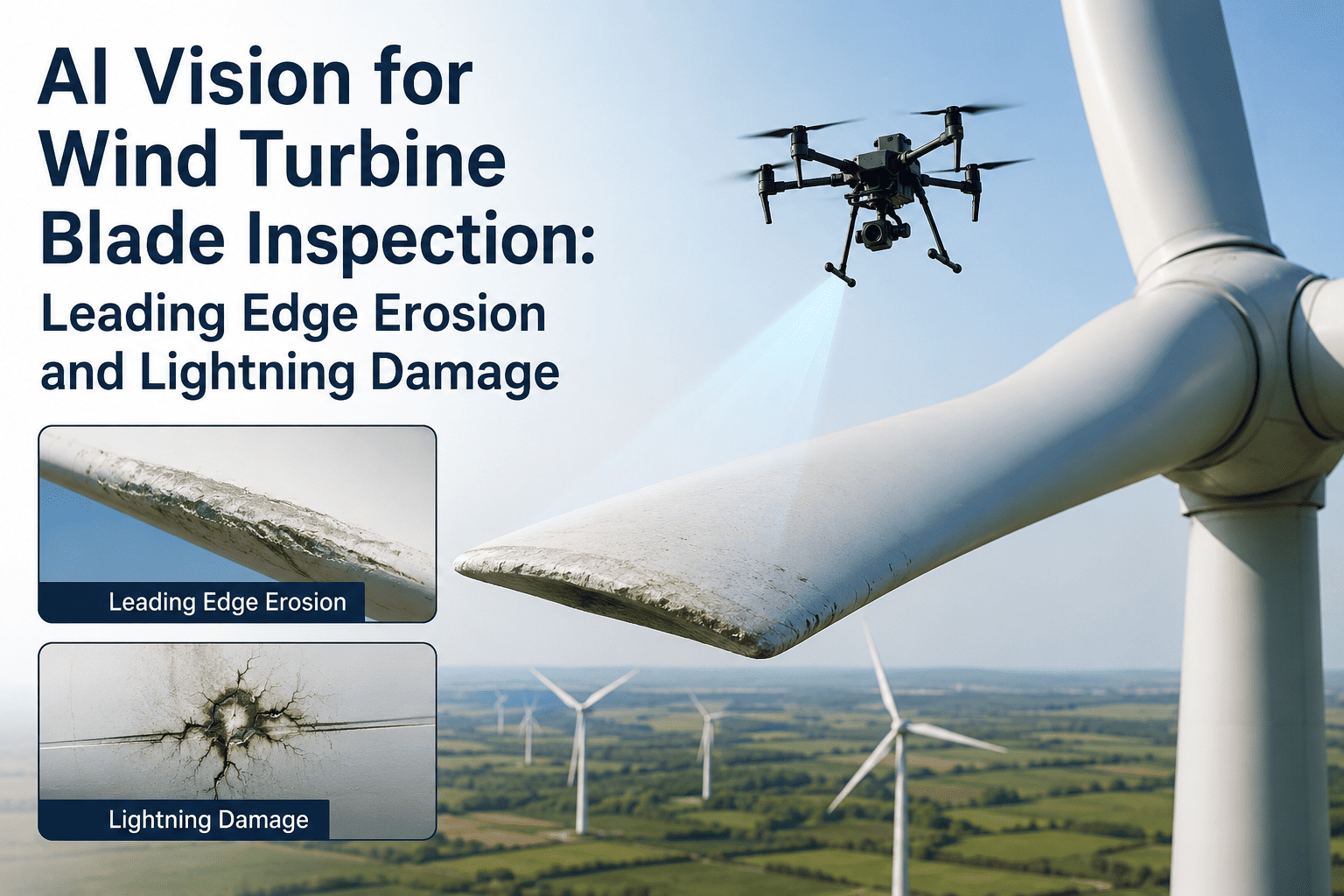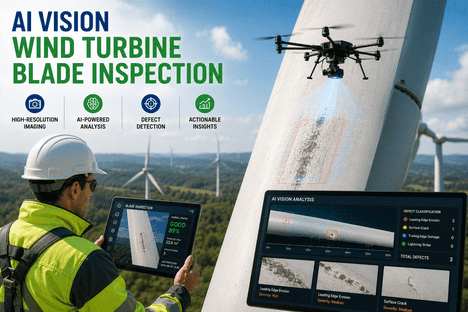
A modern wind turbine blade can stretch over 200 feet, and inspecting every inch of it has traditionally meant rope-access technicians suspended at height, scanning for hairline cracks, leading-edge erosion, lightning strike burns, and delamination that no ground-based telescope can reliably catch. That process is slow, weather-dependent, and inherently risky, and it still misses early-stage damage that only becomes obvious once a repair has grown far more expensive. iFactory's AI Vision Camera replaces that climb with deep learning models trained specifically on blade defect imagery — processing drone-captured photos and video to flag cracks, erosion, lightning damage, and delamination automatically, at a fraction of the time and cost of a manual survey. Wind farm operators ready to cut inspection downtime can Book a Demo to see the platform classify real blade imagery from an operating fleet.
Catch Blade Damage Before It Becomes a Crane Mobilization
iFactory's AI Vision Camera turns drone inspection imagery into automated crack, erosion, and delamination detection — cutting inspection time and unplanned downtime across your fleet.
Why Wind Turbine Blades Need Continuous AI Vision Inspection
Blade surfaces degrade through a small set of well-documented failure modes, and each one carries a distinct visual signature: leading-edge erosion that wears away protective coating, lightning strike burns that scorch the surface and can travel internally, hairline cracks that propagate along the blade body, delamination between composite layers, and corrosion or surface staining from long-term salt and sand exposure. Annual onshore output can fall measurably over the first decade of operation from this accumulated wear, yet most farms still inspect on a fixed calendar rather than by actual blade condition. iFactory's AI Vision Camera processes drone-captured optical and thermal imagery through models trained on these specific defect classes, surfacing damage long before it progresses to a structural repair or forced turbine stoppage.
Crack Detection
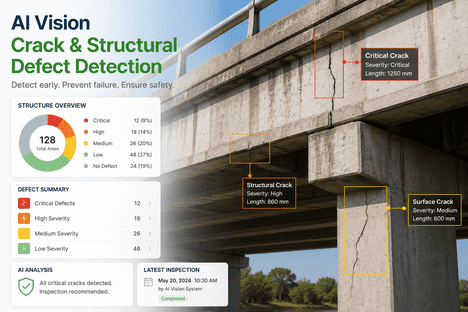
Deep learning models trained on millions of annotated blade images identify hairline surface cracks and deeper structural cracking that can propagate along the blade body if left unrepaired.
Leading-Edge Erosion
Vision models track the gradual wear of protective coating along the leading edge — a degradation pattern that reduces aerodynamic efficiency well before it becomes visible from the ground.
Lightning Strike Damage
AI Vision Camera identifies the characteristic burn marks and discoloration of a lightning strike, including damage that may extend beneath the surface and threaten structural integrity.
Delamination
Separation between composite layers is flagged from surface deformation and texture irregularities — a defect type that, left undetected, compounds into significant repair scope.
Corrosion & Surface Staining
Pitting damage and surface roughness from long-term salt spray or sand exposure are tracked across every blade, common in coastal and offshore wind farm environments.
Coating & Paint Defects
Peeling paint, scratches, and protective coating breakdown are classified separately from structural defects, so cleaning and repair crews can be prioritized correctly.
Manual Blade Survey vs. AI Vision Drone Inspection
Moving from rope-access or telescope-based visual surveys to AI-processed drone imagery changes the speed, cost, and consistency of blade defect detection across a fleet. Book a Demo to see how this compares for your turbine count.
| Inspection Factor | Manual / Rope-Access Survey | AI Vision Drone Inspection | Improvement |
|---|---|---|---|
| Time per Turbine | Half a day to a full day, weather dependent | Under 15 minutes of flight time | Same-day fleet coverage |
| Defect Detection Consistency | Varies by inspector fatigue and lighting conditions | Consistent model output across every image | Removes inspector variability |
| Worker Safety Exposure | Technicians suspended at height for hours | No personnel required at height | Eliminates at-height risk |
| Report Turnaround | Days to compile findings manually | Automated, georeferenced defect report within hours | Faster repair scheduling |
| O&M Cost Impact | Higher cost per turbine for full rope crews | Lower cost per MW inspected at fleet scale | Reduced inspection spend |
From Drone Footage to Prioritized Repair: How AI Vision Camera Processes Blade Imagery
iFactory ingests drone imagery in standard radiometric and optical formats from your existing inspection contractor or in-house drone team — no new flight hardware is required. Maintenance teams adopting this workflow typically see georeferenced defect reports generated within hours of dataset upload.
Drone Image & Video Ingestion
High-resolution optical and thermal imagery captured during a standard drone flight is uploaded directly to the platform — accepting footage from existing inspection contractors without requiring a change in flight procedure.
Deep Learning Defect Classification
Models trained on annotated blade damage datasets scan every frame for cracks, erosion, lightning damage, delamination, corrosion, and coating defects — distinguishing genuine structural concerns from surface staining or shadow artifacts.
Georeferenced Fault Mapping
Every detected defect is mapped to its exact blade location and turbine ID, building a per-blade damage history that lets reliability teams track whether existing damage is stable or progressing between inspection cycles.
Automated Work Order & Fleet Prioritization
Findings are ranked by severity and synced into your CMMS or O&M scheduling system, so the blades with active structural risk are scheduled for repair ahead of cosmetic or low-priority surface issues.
Reduce Inspection Cost and Downtime Across Your Fleet
iFactory connects to your existing drone inspection workflow — no new hardware required. Start a turnkey AI vision pilot and get a quote tailored to your turbine count.
Frequently Asked Questions
Q: What blade defects can AI vision actually detect?
AI Vision Camera detects surface and structural cracks, leading-edge erosion, lightning strike burns, delamination between composite layers, corrosion and pitting, and coating or paint defects — classifying each separately so repair priority reflects actual structural risk.
Q: Do we need to change our drone inspection process?
No. iFactory ingests drone imagery from your existing inspection contractor or in-house team in standard radiometric and optical formats — your flight workflow stays the same, and the platform replaces the manual review step that follows.
Q: How accurate is AI defect detection compared to a human inspector?
Models trained on large annotated blade damage datasets are designed to match or exceed manual inspection accuracy, particularly on subtle or early-stage damage that is easy for a fatigued or time-pressured human reviewer to miss.
Q: Can the platform track how a defect changes over time?
Yes — every defect is georeferenced to a specific blade location, so successive inspection cycles build a comparable damage history that shows whether existing damage is stable or progressing.
Q: How quickly can we get a quote for our wind farm?
Most wind farm operators receive a turnkey pilot quote within days of an initial consultation, scoped to fleet size, blade access conditions, and existing drone inspection arrangements.
Start a Turnkey AI Vision Pilot on Your Wind Farm
Speak with an iFactory wind energy specialist today. Get a fleet-specific assessment of blade inspection coverage and a clear deployment roadmap — no obligation, no pressure.