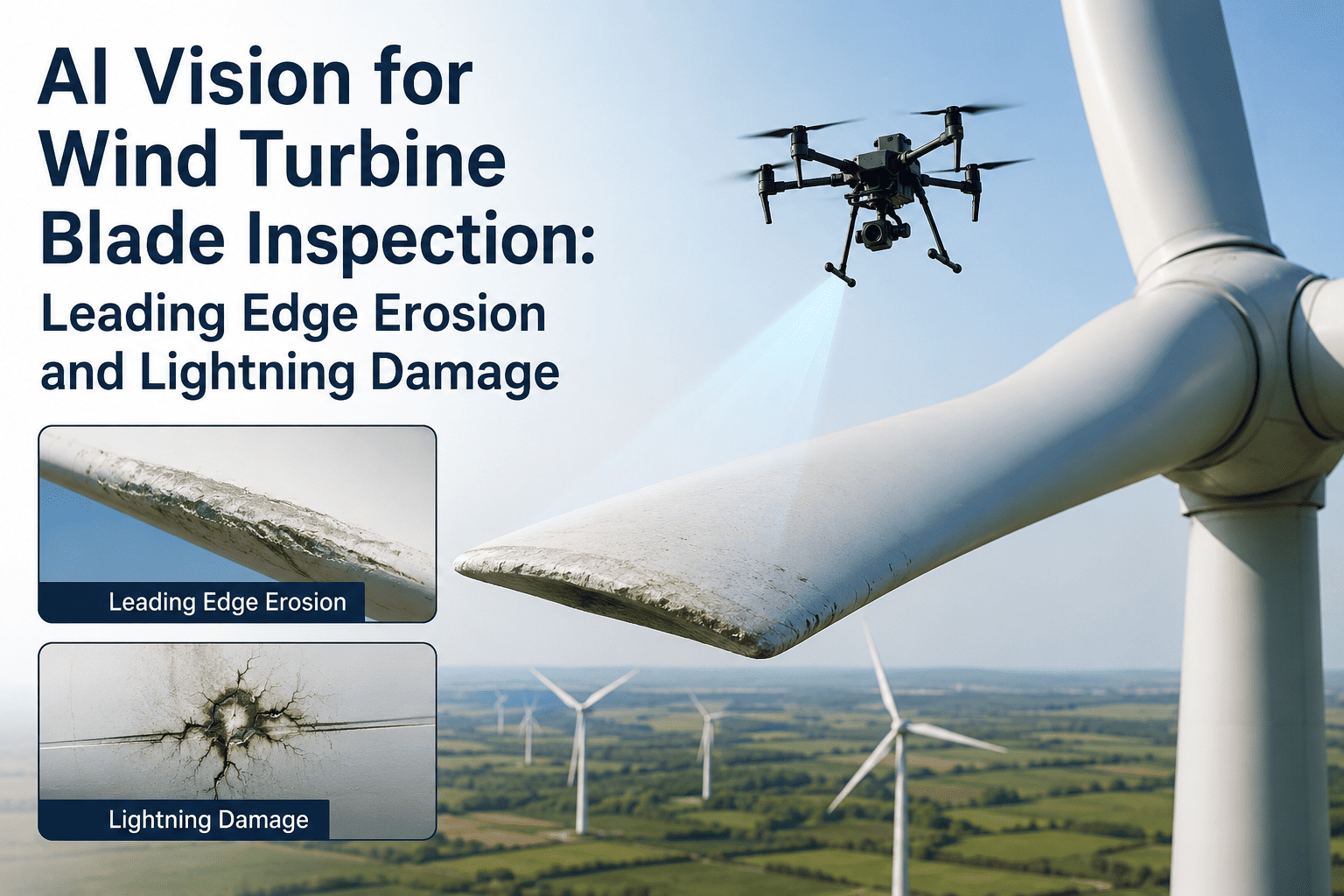
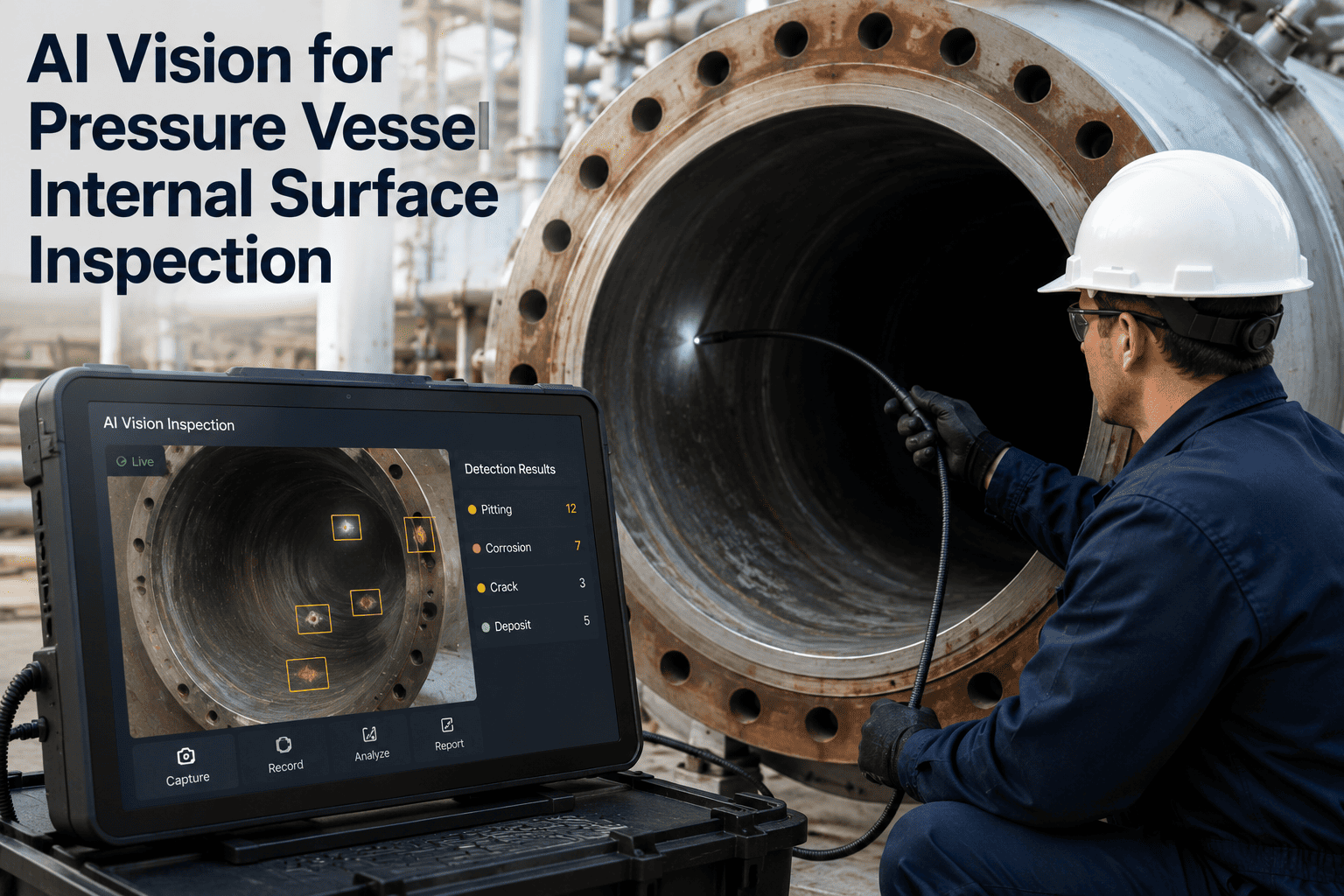
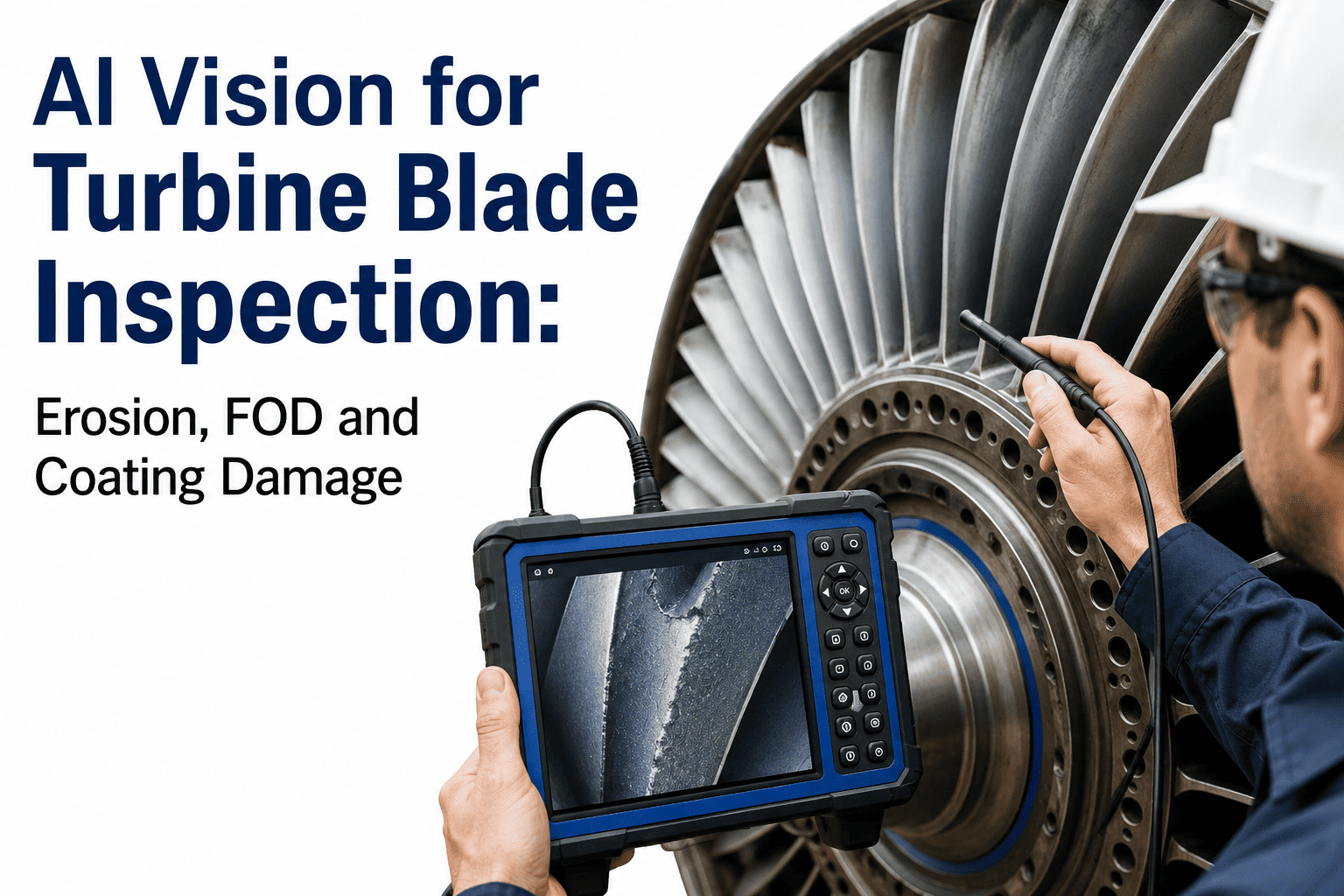
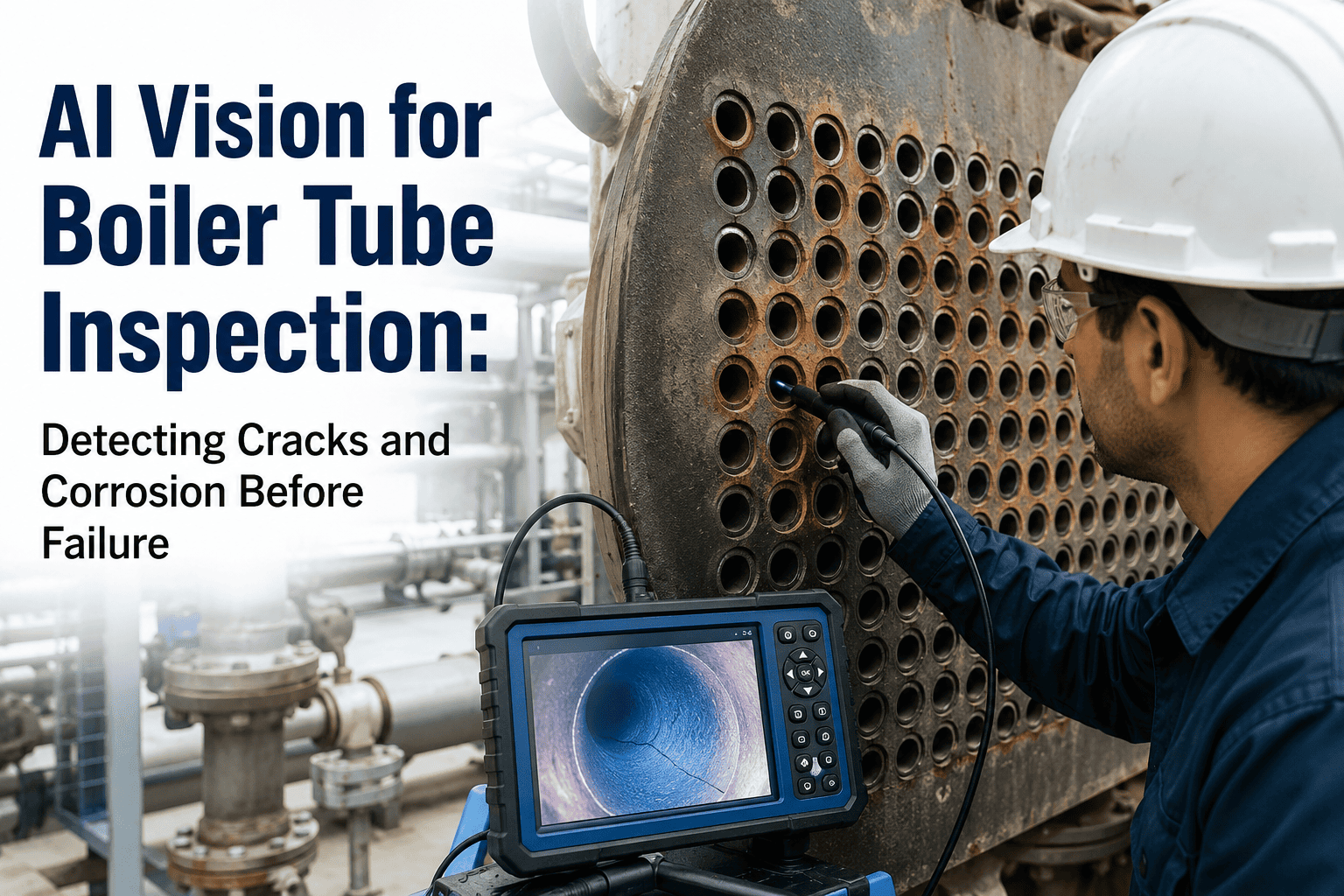
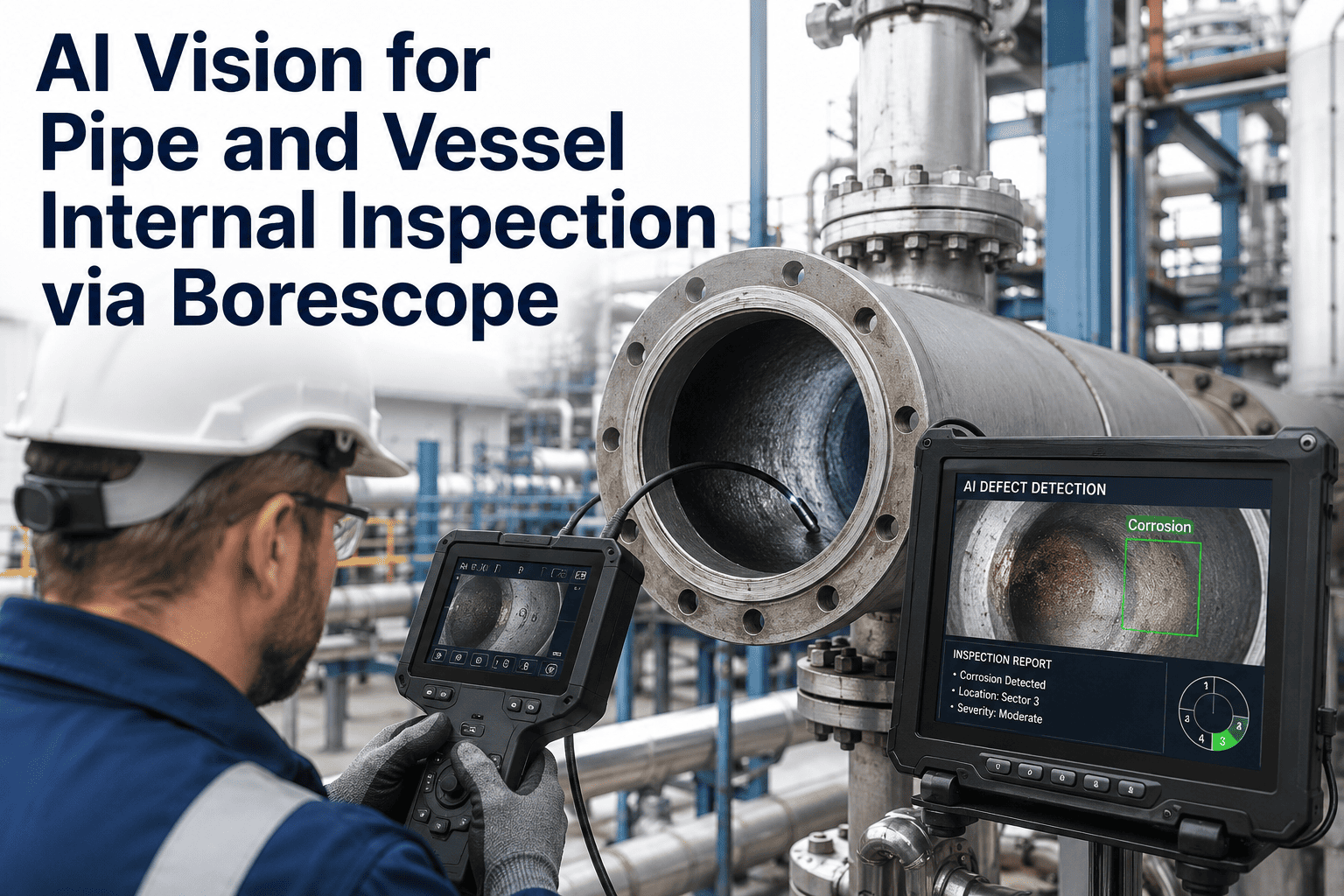
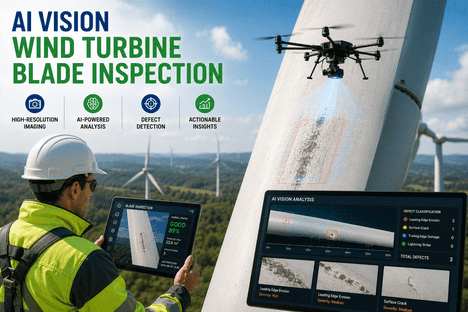
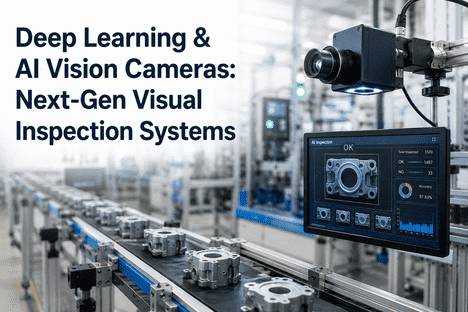
Turbine blades endure operating conditions that no other engineered component experiences simultaneously: temperatures exceeding 1,300°C, centrifugal stresses equivalent to 10,000 times the blade's own weight, hot gas path corrosion from combustion products, and erosion from steam or gas flow impingement that removes material at rates measurable across a single outage interval. Boiler tubes face continuous thermal cycling, fireside corrosion from combustion gases, waterside pitting from dissolved oxygen events, and creep deformation from sustained high-temperature operation that accumulates over years before manifesting as a visible surface feature. Research consistently shows that 70 percent of severe turbine damage originates from cracks that were detectable early but missed during manual borescope inspections — not because the cracks were invisible, but because the inspection methodology provided insufficient resolution, coverage, or detection sensitivity to intercept them at the 50 to 200 micron scale where intervention cost is lowest and repair is still possible. Traditional periodic inspection programmes — borescope visual checks, dye penetrant testing on accessible surfaces, ultrasonic spot thickness measurements — provide inspection coverage measured in low single-digit percentages of total blade and tube population per outage, with detection thresholds limited by human visual acuity and the optical performance of handheld inspection instruments. iFactory's AI vision camera platform changes this equation by applying deep learning defect classification to high-resolution borescope and industrial camera imagery — detecting surface cracks from 50 microns, thermal barrier coating delamination, erosion pit depth progression, weld seam anomalies on pressure vessel bodies, and corrosion patch extent on boiler tube surfaces with classification accuracy that exceeds human inspection at every resolution level and coverage rate. Book a Demo to see iFactory's turbine blade and boiler inspection AI applied to your plant's specific component types and outage inspection programme.
AI Vision Boiler and Turbine Blade Inspection: Catching 50-Micron Cracks Before They Become Forced Outages
A technical guide to deploying AI vision defect detection for turbine blade surfaces, boiler tube integrity, and pressure vessel weld inspection — covering crack detection at sub-100 micron resolution, erosion pattern quantification, thermal barrier coating assessment, and automated CMMS work order generation from inspection findings.
Deploy AI Vision Inspection That Catches Turbine Cracks and Boiler Tube Defects at Outage Speed
Connect with an iFactory power plant inspection specialist to configure AI vision defect detection for your turbine blades, boiler tubes, and pressure vessel welds — covering crack detection from 50 microns, erosion quantification, and automated CMMS integration from inspection findings.
Six Inspection Failure Modes That AI Vision Eliminates in Boiler and Turbine Inspection
Understanding the specific failure modes of conventional turbine and boiler inspection methodologies is the starting point for designing an AI vision deployment that addresses them systematically. Each of the following failure modes has a documented failure mechanism that manual inspection cannot overcome regardless of inspector skill — and each is addressed directly by iFactory's AI vision camera platform. Facilities ready to close these inspection gaps can Book a Demo to see detection performance data against their specific component types.
Sub-100 Micron Crack Missed by Borescope Visual
Standard borescope visual inspection resolves surface features at approximately 200 to 500 microns under optimal lighting and standoff conditions. Cracks propagating at 50 to 150 microns — the stage where targeted repair is feasible without blade replacement — are systematically invisible to standard borescope review. AI vision processing of the same borescope imagery detects these cracks by recognising the shadow contrast gradients and surface geometry discontinuities that human visual processing at borescope resolution cannot distinguish from surface roughness.
Thermal Barrier Coating Delamination Underestimated
TBC delamination on turbine blades presents as subtle surface discolouration and micro-topography changes before progressing to spallation. Manual visual inspection consistently underestimates TBC damage extent because the discolouration boundary that marks the delamination front is not visually crisp. AI segmentation models trained on TBC degradation imagery map delamination extent precisely, quantify the affected area as a percentage of total blade surface, and track progression between outages — enabling blade life decisions based on measured degradation rate rather than conservative time-based replacement schedules.
Boiler Tube Corrosion Coverage at 5–10% Spot Check Rate
Manual boiler tube inspection achieves 5 to 10 percent tube population coverage per outage — a rate determined by the time constraint of the maintenance window, not by the actual tube population's defect risk profile. Tubes with developing fireside corrosion, waterside pitting, or creep deformation in the uninspected 90 to 95 percent of the population remain undiscovered until the next inspection cycle or until tube failure causes a forced shutdown. AI vision deployed during boiler cool-down through camera-equipped crawlers achieves 100 percent tube coverage with consistent sensitivity across the full inspection area.
Erosion Quantification Based on Inspector Judgement
Inspector characterisation of erosion severity as mild, moderate, or severe is a subjective assessment that varies between inspectors, between outages, and between sites — making trend comparison across inspection cycles unreliable for maintenance planning purposes. AI vision quantifies erosion pit depth, extent, and location coordinates objectively, producing a numerical severity score that is directly comparable across outage intervals. This enables erosion rate calculation per operating hour — the maintenance planning metric that determines whether erosion will reach the actionable threshold before the next planned outage.
Pressure Vessel Weld Defects Between Inspection Intervals
Pressure vessel weld inspection under ASME and EN standards is conducted at defined inspection intervals that are calibrated to typical degradation rates. Welds in areas of elevated thermal cycling, external corrosion, or mechanical stress can develop surface-breaking defects between inspection intervals — defects that accumulate to a safety-critical size before the next scheduled inspection brings a qualified inspector to the location. Continuous AI vision monitoring of accessible weld seams provides the between-interval detection capability that scheduled inspection alone cannot provide.
Inspection Findings Disconnected from CMMS Planning
Borescope inspection reports generated during outages typically exist as PDF documents that are manually reviewed by maintenance planners who then create CMMS work orders for defects requiring repair. This manual transcription step introduces delays of two to five days between inspection completion and work order creation, and loses the quantitative defect data — crack length, erosion depth, coating loss area — that would enable priority-ranked repair scheduling based on measured severity. iFactory generates structured CMMS work orders directly from AI defect classification events with quantitative severity data attached.
Pre-Deployment Checklist: Four Prerequisites Before Configuring AI Vision for Turbine and Boiler Inspection
Before configuring AI vision inspection models for turbine blades and boiler components, verify that these four organisational and technical prerequisites are in place — their absence during deployment configuration creates model accuracy problems that are more expensive to correct after go-live than before.
Confirm that defect acceptance criteria — maximum allowable crack length, erosion depth threshold, TBC loss area limit, weld indication size — are documented for each component type the AI vision system will inspect. AI defect classification models are calibrated to your acceptance criteria during configuration; acceptance criteria defined after model training require recalibration that adds weeks to the deployment timeline.
Collect borescope images, endoscope photographs, and surface inspection records from previous outages — ideally including confirmed defect examples and confirmed accept examples for each defect type. iFactory's pre-trained turbine and boiler defect models achieve higher initial accuracy when fine-tuned on facility-specific imagery rather than relying solely on the pre-training dataset, which may not reflect the specific combustion chemistry and operating history of your components.
Verify that every turbine blade row, boiler tube section, and pressure vessel weld zone to be inspected by the AI vision system has a corresponding CMMS asset record with location identifier, component type, material specification, and inspection history. AI defect findings linked to incomplete CMMS records cannot generate properly attributed work orders — the most common reason inspection data fails to drive maintenance action in the first deployment quarter.
Define the camera access points, standoff distances, and illumination positions for each inspection location during the outage window before hardware procurement. Turbine blade AI vision inspection through existing borescope ports requires different optical configurations than crawler-based boiler tube surface scanning — and both require lighting and standoff specifications to be locked before the camera system is ordered to achieve the spatial resolution needed for sub-100 micron crack detection.
Phase-by-Phase AI Vision Deployment for Boiler and Turbine Inspection
iFactory's power plant inspection deployment follows a six-phase sequence that builds detection capability progressively — beginning with the highest-consequence defect types and expanding coverage as model accuracy is validated against outage inspection findings. This phased approach allows maintenance teams to confirm AI detection performance against known defects before extending the system to components where no prior AI inspection baseline exists. Maintenance managers ready to see how this sequence applies to their specific plant outage schedule can Book a Demo for a facility-specific deployment walkthrough.
Turbine Blade Surface Crack and Coating Inspection
Configure AI vision models for turbine blade inspection through existing borescope access ports using high-resolution endoscope cameras with structured illumination. Models detect surface-breaking cracks from 50 microns, thermal barrier coating delamination extent and progression, leading edge erosion depth, and cooling hole blockage status. Each blade is mapped to its row and position in the CMMS asset register, and defect findings are exported as a per-blade severity report with attached annotated imagery.
Boiler Tube Waterwall and Superheater Inspection
Deploy camera-equipped inspection systems through boiler access hatches during cool-down to image waterwall, superheater, and economiser tube surfaces for fireside corrosion, fly ash erosion, external oxide scale thickness, and circumferential cracking. AI models map corrosion and erosion extent across the full tube field — converting the 5 to 10 percent spot-check coverage of manual inspection to 100 percent tube population coverage with consistent detection sensitivity across every scan line.
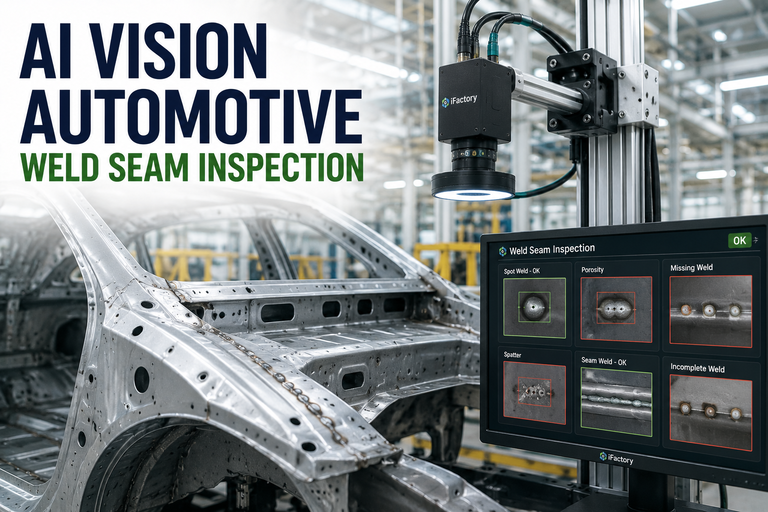
Pressure Vessel Weld Seam Inspection
Configure AI vision inspection for pressure vessel weld seams on boiler drums, headers, and steam piping using high-resolution area-scan cameras with raking illumination that maximises contrast on surface-breaking weld defects including cracks, undercut, porosity, and heat-affected zone cracking. AI classification distinguishes genuine surface defects from weld surface roughness and spatter marks with false positive rates below 2 percent — the threshold at which maintenance planners trust AI findings without systematic manual verification of every flagged indication.
Combustion Liner and Transition Piece Inspection
Extend AI vision inspection to gas turbine combustion liners and transition pieces — components that experience the most severe thermal cycling in the hot gas path and develop cracking, distortion, and oxidation damage at rates that frequently exceed OEM-assumed inspection intervals. AI models trained on combustion liner damage patterns detect circumferential cracks, panel distortion, and thermal fatigue crack networks at detection sensitivities below the threshold that borescope visual inspection achieves consistently during time-constrained outage access windows.
Cross-Outage Defect Trending and Remaining Life Estimation
Activate the cross-outage comparison capability that compares AI defect classification results between inspection intervals — measuring crack growth rate in microns per thousand operating hours, erosion progression depth per outage, and TBC loss area per equivalent operating hour. These measured degradation rates feed into remaining useful life models that project when each defect will reach its acceptance criterion threshold, enabling maintenance planning decisions based on calculated remaining life rather than conservative time-based replacement intervals that may retire serviceable components prematurely.
CMMS Integration and Automated Work Order Generation
Configure the REST API connection between iFactory's AI inspection database and the plant CMMS — mapping each defect classification tier to the corresponding work order priority level, repair procedure reference, required materials, and assigned trade qualification in the CMMS configuration. Every AI defect finding above its configured severity threshold generates a structured CMMS work order automatically with the blade or tube position, defect type, measured severity, and annotated inspection image attached — eliminating the manual transcription delay between inspection finding and maintenance action dispatch.
AI Vision vs. Manual Inspection: Boiler and Turbine Performance Comparison
How AI-powered inspection changes the performance metrics that matter for boiler and turbine inspection programme effectiveness in 2026 — across detection sensitivity, coverage rate, defect quantification accuracy, and inspection-to-action time.
How iFactory's AI Engine Enhances Boiler and Turbine Inspection Outcomes
Configuring AI vision inspection for power plant components with a built-in deep learning analytics engine is fundamentally different from deploying rule-based image processing. The AI layer changes what is detectable, quantifiable, and predictable from the same inspection access that existing borescope and camera programmes already use — without requiring additional outage time or new access configurations. Maintenance engineers ready to understand how AI transforms their turbine and boiler inspection ROI can Book a Demo to see iFactory's defect detection models demonstrated on representative turbine blade and boiler tube imagery from their component generation and operating history.
Sub-50 Micron Crack Detection from Standard Borescope Imagery
iFactory's AI defect detection models process the same borescope image data that inspection engineers currently review manually — and detect surface crack signatures at resolutions below human visual perception. The model recognises the characteristic shadow gradient discontinuities at crack edges, the subsurface reflectance difference between intact and cracked material, and the geometric regularity of thermal fatigue crack networks that distinguish true cracks from surface roughness features. This transforms existing borescope inspection capability without requiring higher-resolution cameras or additional access ports — the AI upgrade is a software layer on the current inspection infrastructure.
Thermal Barrier Coating Loss Quantification and Progression Tracking
AI segmentation models map TBC delamination and spallation extent across turbine blade surfaces with pixel-level precision — generating a percentage coating loss figure for each blade that is directly comparable between outage intervals. When the same blade is inspected at consecutive outages, the AI system measures the change in coating loss area and calculates the degradation rate that projects when the blade will reach its minimum acceptable TBC coverage threshold. This progression data enables maintenance planners to defer blade replacement on components degrading slowly and advance replacement on components degrading faster than the OEM-assumed schedule — recovering blade life value while protecting against under-maintained failures.
Erosion Pit Depth Estimation and Rate Calculation
AI vision models use structured light photogrammetry and shadow depth estimation on high-resolution turbine blade and boiler tube imagery to estimate erosion pit depth without requiring contact measurement. The depth estimate, combined with the pit diameter and density across the affected surface area, produces an erosion severity index that is quantitatively comparable between inspection intervals. Erosion rate calculation per thousand equivalent operating hours — the metric that maintenance planners need to determine whether erosion will reach the repair threshold before the next planned outage — is generated automatically from two consecutive inspection datasets without manual measurement or calculation.
Boiler Tube Waterside Pitting and Corrosion Mapping
Internal boiler tube surface inspection using AI vision on camera-equipped inspection probes maps pitting density, corrosion patch extent, and magnetite layer thickness across the inspected tube population — identifying tubes with accelerated waterside corrosion that indicate water chemistry excursions, dissolved oxygen events, or flow-accelerated corrosion conditions that standard quarterly water chemistry sampling may not have captured at the event time. Tube-by-tube risk classification from AI inspection findings enables selective tube replacement targeting the highest-risk 5 to 10 percent of the population rather than blanket section replacement based on location and age.
Automated Regulatory Inspection Documentation Generation
Every AI inspection finding — crack classification, coating loss measurement, erosion severity index, weld indication record — is automatically written to an immutable inspection record with component ID, inspection date, image file reference, AI model version, severity classification, and inspector qualification acknowledgement. iFactory generates pre-formatted inspection reports compliant with ASME Section XI, EN 13445, and plant-specific inspection and test plan requirements on demand — eliminating the manual documentation assembly that consumes engineering time in the days following an outage inspection and ensuring that findings are available for outage risk review meetings within hours of inspection completion.
Regulatory and Standards Compliance Supported by iFactory Boiler and Turbine Inspection
A correctly deployed iFactory AI vision inspection programme generates the documented inspection evidence required for these regulatory frameworks automatically — delivering audit-ready inspection records from every outage without manual assembly effort.
| Compliance Standard | Inspection Documentation Requirement | iFactory AI Inspection Output |
|---|---|---|
| ASME Section XI (In-Service Inspection) | Periodic inspection of pressure vessel welds and boiler components with documented findings and disposition records | Per-weld inspection records with defect classification, indication size, location coordinate, and accept/reject disposition exportable in ASME Section XI report format. |
| EN 13445 (Pressure Vessels) | In-service inspection documentation with defect sizing, classification, and fitness-for-service assessment records | Defect size measurements, crack length records, and surface condition assessments per component with full image evidence chain for fitness-for-service assessment support. |
| ISO 55001 (Asset Management) | Asset condition monitoring records with lifecycle cost attribution and degradation trend documentation | Cross-outage defect progression records, remaining useful life projections, and component-level maintenance cost attribution for asset lifecycle decision support. |
| NERC CIP / Grid Reliability Standards | Generator and power plant equipment maintenance records with compliance evidence for grid reliability audits | Turbine and boiler inspection completion records with AI-documented findings, corrective action work orders, and repair verification evidence for grid operator compliance reporting. |
| Plant-Specific Inspection and Test Plans | Hold point inspection evidence for turbine, boiler, and pressure vessel components per plant-approved ITP | ITP hold point inspection records generated automatically at configured severity thresholds — with AI inspection evidence attached to ITP sign-off records without manual documentation preparation. |
"We were finding turbine blade cracks at the 400 to 500 micron stage during our quarterly combustion inspections — by which point the repair options were limited and the risk of an unplanned hot section inspection between outages was real. After deploying iFactory's AI vision processing on our borescope imagery, we started finding the same crack families at 60 to 80 microns — a stage where targeted blend repair is still the right answer and blade replacement is avoidable. In the first two outage cycles after deployment, we avoided four blade replacements that the previous inspection programme would have triggered, recovering approximately $2.4M in blade replacement cost and outage extension time. The AI did not change our inspection access or our outage frequency — it changed what we could see with the access we already had."
Boiler and Turbine AI Vision Inspection: Frequently Asked Questions
Q: What is the minimum crack size iFactory's AI vision system can detect on turbine blade surfaces?
iFactory's turbine blade inspection models detect surface-breaking cracks from 50 microns width on blade surfaces imaged with high-resolution borescope or endoscope cameras at appropriate standoff distance and illumination angle. The 50-micron threshold applies to images captured with the resolution and lighting specifications established during the deployment configuration assessment — cameras achieving lower spatial resolution will have a higher minimum detectable crack size. The configuration assessment conducted before hardware procurement defines the exact camera and illumination specification needed to achieve 50-micron detection for your specific blade geometry and surface condition.
Q: Does iFactory's AI inspection work with existing borescope and endoscope equipment, or does it require new cameras?
iFactory's AI defect detection models process imagery from standard industrial borescope and endoscope cameras — the same equipment inspection teams already use for manual visual inspection. The AI operates as a software processing layer applied to the image data captured during the borescope inspection, rather than requiring dedicated inspection hardware. Where existing camera resolution is insufficient to achieve target crack detection sensitivity, iFactory identifies the specific upgrade required during the pre-deployment configuration assessment — in most cases, a borescope camera upgrade rather than a complete system replacement.
Q: How does iFactory's AI system distinguish genuine surface cracks on boiler tubes from inspection artefacts and surface roughness?
iFactory's boiler tube inspection models are trained on large datasets of boiler tube imagery including confirmed defect examples, surface roughness features, scale deposits, welding marks, and other non-defect surface features that share visual characteristics with genuine defects. The models are fine-tuned during deployment on imagery from your specific tube material, surface condition, and inspection lighting configuration — building facility-specific discrimination between true defects and artefacts. False positive rates below 3 percent are achieved after fine-tuning in standard deployment configurations, at which level maintenance planners report sufficient confidence in AI findings to dispatch repair work orders without systematic manual verification of every flagged indication. Book a Demo to see false positive rate validation data for your tube material type.
Q: How does cross-outage defect trending work, and what data does it require from previous inspections?
Cross-outage trending compares AI defect classification findings from consecutive outage inspections for the same component — measuring the change in crack length, coating loss area, erosion pit depth, or corrosion patch extent between inspection intervals. To enable trending from the first AI-assisted outage, iFactory requires either AI-processed imagery from a previous inspection or manual measurement records for the defects already documented on each component. Where no previous measurements exist, the first AI-assisted outage establishes the baseline, and trending becomes available from the second AI-assisted outage onward. Components with two or more AI inspection datasets receive remaining useful life projections as a standard output of the cross-outage analysis.
Q: What ROI timeline should power plant operators expect from deploying iFactory AI vision turbine and boiler inspection?
Power plant operators typically achieve positive ROI from AI vision turbine and boiler inspection within the first two to three outage cycles — primarily through avoided blade replacement costs from earlier crack detection enabling blend repair rather than replacement, reduced boiler tube failure rate from 100 percent inspection coverage identifying deteriorating tubes before failure, and outage extension cost avoidance from defects discovered during the outage that were not anticipated in the pre-outage maintenance scope. A single avoided turbine blade replacement valued at $180,000 to $600,000 per blade set frequently recovers the system deployment cost within the first inspection application. The $2.4M cost avoidance reported in four avoided blade replacements at one combined cycle fleet is representative of the value scale achievable in the first deployment year.
Q: How does iFactory's AI inspection integrate with the plant CMMS and outage management workflows?
iFactory's AI inspection platform integrates with plant CMMS systems via REST API — automatically generating structured work orders from defect findings above configured severity thresholds within minutes of inspection completion. Each work order contains the component CMMS ID, defect type, severity classification, measured defect dimensions, annotated inspection image, recommended repair procedure reference, and required materials. This eliminates the manual transcription step between inspection report and CMMS work order creation that typically delays repair dispatch by two to five days in conventional outage inspection workflows. Integration is supported for all major CMMS platforms including SAP PM, IBM Maximo, Infor EAM, and plant-specific maintenance management systems.
Q: Can iFactory's AI inspection be used for both gas turbines and steam turbines, and are the detection models different for each?
iFactory maintains separate detection models for gas turbine and steam turbine blade inspection — because the defect types, surface conditions, and material characteristics differ significantly between the two applications. Gas turbine blades require models trained for TBC delamination, oxidation layer characterisation, and thermal fatigue crack patterns in nickel superalloy surfaces. Steam turbine blade inspection models focus on water droplet erosion, stress corrosion cracking in blade root regions, and surface pitting in wet steam path stages. Both model types are included in the power plant inspection package, and the deployment configuration assessment determines which models are activated for each inspection location in your specific plant configuration.
Q: What is the typical configuration timeline for iFactory AI vision turbine and boiler inspection deployment?
A complete AI vision inspection configuration covering turbine blade inspection, boiler tube surveying, and pressure vessel weld inspection for a single power plant unit typically takes four to eight weeks from initial site assessment to validated outage inspection capability — including component-specific model configuration, CMMS integration, and first-outage shadow mode validation against manual inspection findings. The timeline depends primarily on the availability of historical inspection imagery for model fine-tuning and the complexity of the CMMS integration architecture. Facilities with clean inspection image archives and a well-structured CMMS asset register consistently complete at the lower end of this range.
Conclusion: AI Vision Changes What Is Detectable — Not Just What Is Recorded
The gap between the inspection outcome a power plant achieves with conventional borescope visual inspection and the outcome it achieves with AI vision processing of the same imagery is not a marginal improvement — it is the difference between intercepting a turbine blade crack at 50 microns where blend repair is the right answer, and discovering it at 500 microns where blade replacement is mandatory and an unplanned hot section inspection between outages is a real risk. The 70 percent of severe turbine damage that originates from early-stage cracks missed during manual inspection is not an indictment of inspector skill — it is a statement about the physical limits of human visual detection at borescope resolution in a time-constrained outage environment. AI vision does not change the outage schedule or the inspection access; it changes the detection threshold for the existing inspection infrastructure. For power plant operators who want to recover the turbine and boiler component life that early defect detection enables, iFactory's AI vision inspection platform is the technology layer that makes it achievable within the outage programmes they already run. Book a Demo to start your deployment configuration for the next planned outage.
Ready to Deploy AI Vision Inspection for Your Next Turbine or Boiler Outage?
Speak with an iFactory power plant inspection specialist today. Get a configuration plan for your specific turbine type, boiler configuration, and outage schedule — and deploy AI defect detection that changes what is detectable from the inspection access you already have.