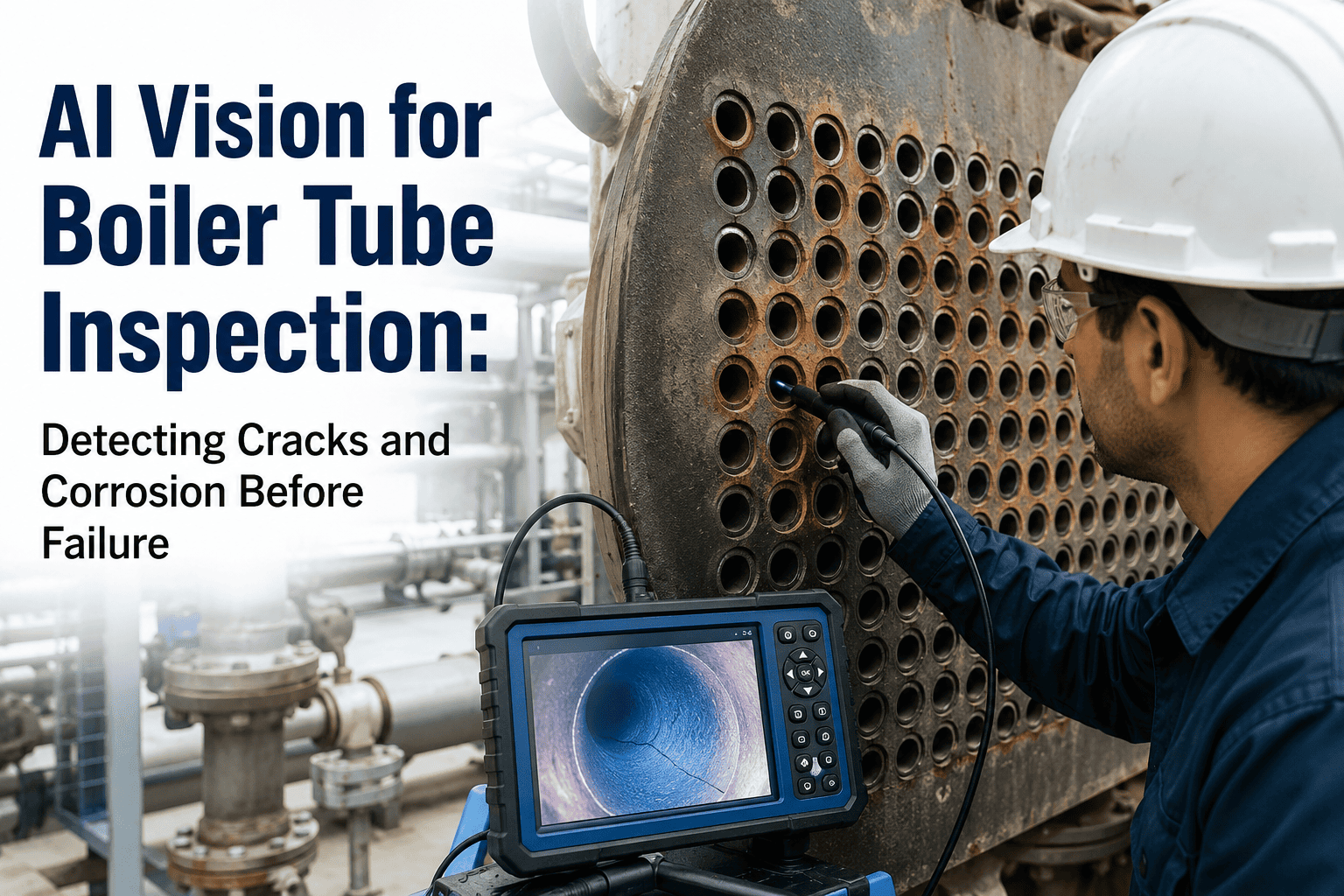
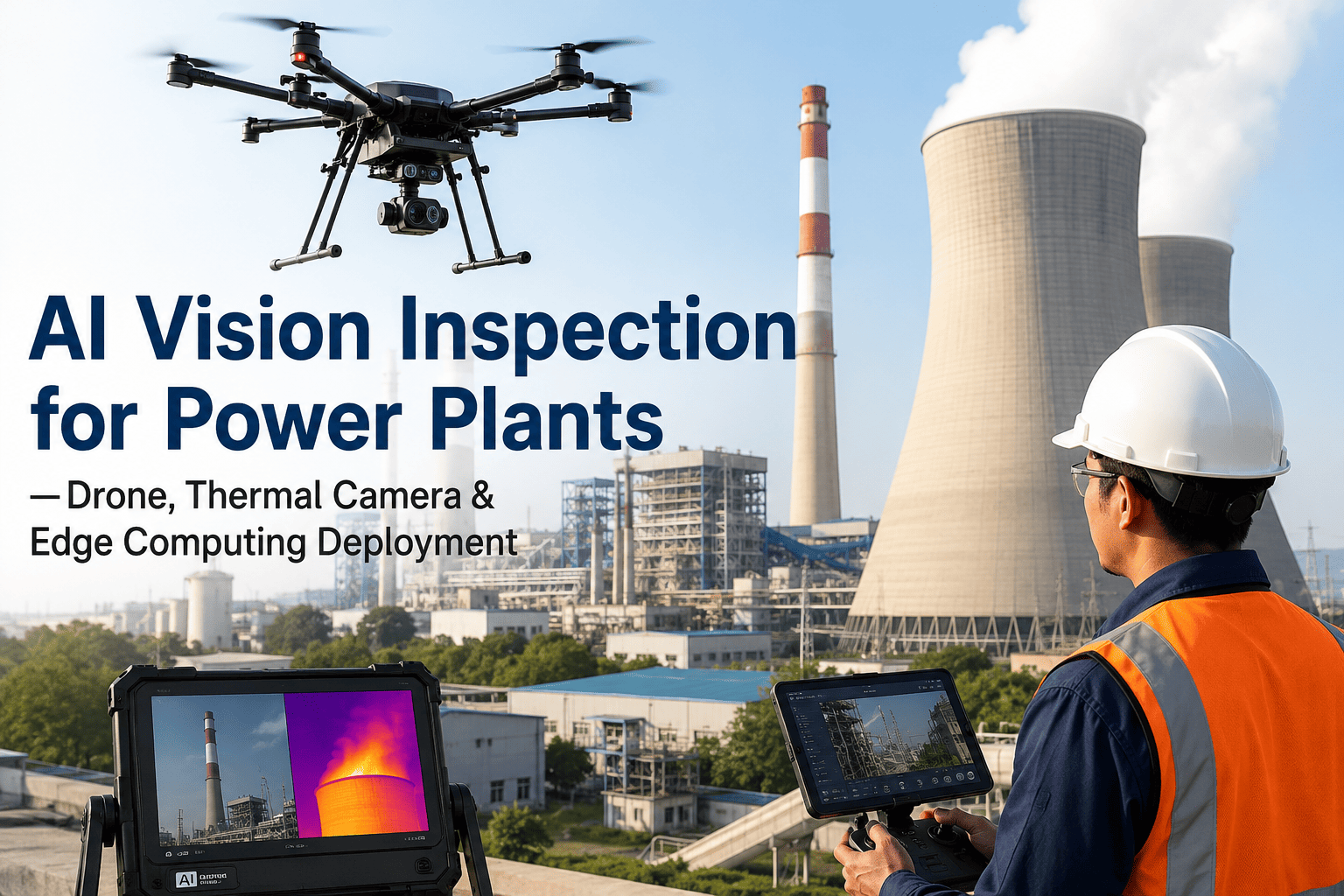
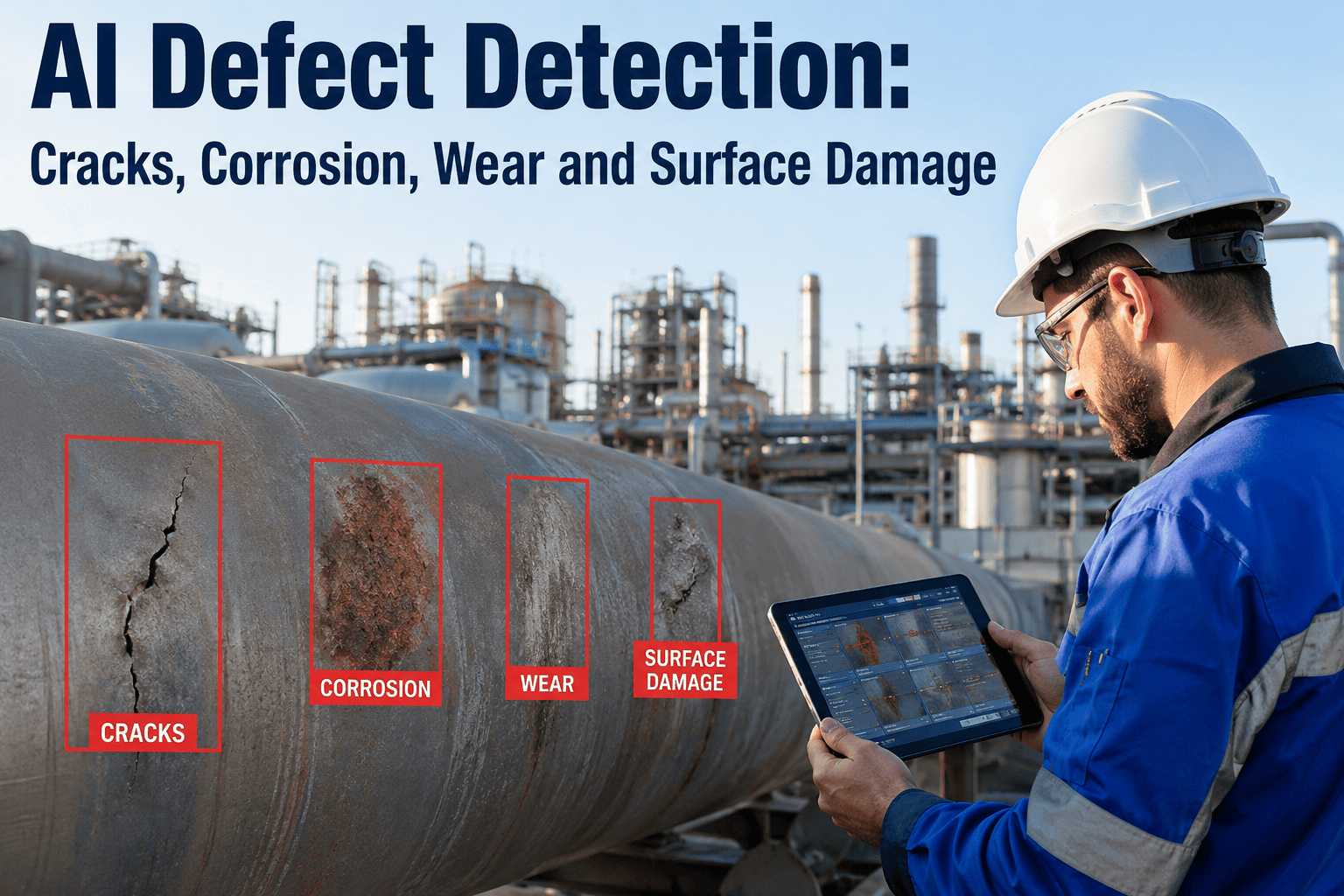
When a waterwall tube ruptures at 3 AM on a coal-fired unit, the plant loses roughly $125,000 per hour of generation, and the emergency crew spends 72 to 120 hours locating spare tubes, cutting out the failed section, welding in the replacement, and refilling and pressure-testing before the boiler can be brought back online. What makes this so painful is that the failure signature was almost certainly visible during the last scheduled inspection — a patch of pitting corrosion, a hairline fatigue crack at a weld heat-affected zone, or an area of wall thinning where fly ash has been eroding the tube for months. Human borescope inspectors, working through cramped access ports in a hot, poorly-lit furnace, physically cannot review every square centimeter of tube surface across a 500 MW unit that carries more than 50,000 linear feet of tube. AI-enhanced borescope vision changes the math: the same footage a human would skim for three hours per outage is processed frame-by-frame by a deep learning model that flags every defect, grades severity, and maps location to a specific tube coordinate. You can book a demo to see how iFactory's AI vision inspects boiler tubes at industrial resolution.
BOILER TUBE AI VISION · EDGE INFERENCE · NVIDIA JETSON · POWER PLANT RELIABILITY
Detect Cracks, Corrosion, and Wall Thinning Weeks Before Your Next Forced Outage
iFactory's AI-enhanced borescope and crawler cameras run on-premise on NVIDIA Jetson Orin AGX hardware, inspecting every tube surface at sub-millimeter resolution and grading defects the second the frame is captured. No cloud, no lag, no missed hairline cracks buried in three hours of walkthrough footage.
52%
Forced Outages
Share of thermal plant forced outages caused by boiler tube failures per NETL data
$125K
Lost Revenue Per Hour
Typical lost generation revenue during a forced boiler outage on a mid-size unit
67%
Outage Hours Cut
Average reduction in boiler-related forced outage hours after AI monitoring deployment
THE 52 PERCENT PROBLEM
Why Boiler Tube Failures Outrank Every Other Cause of Forced Outages
The National Energy Technology Laboratory has tracked forced outage causes across the North American thermal fleet for decades, and one number keeps rising to the top of the list: boiler tube failures account for the majority of every unplanned shutdown. The rest of the causes combined do not equal what tubes contribute on their own. That is why plants that eliminate tube surprises change their entire annual availability profile.
Forced Outage Causes in Thermal Power Plants
52% Boiler Tubes
15% BOP
13% Turbine
12% Generator
8% Other
Boiler Tubes
Balance of Plant
Steam Turbine
Generator
Human Error and Other
$2M to $10M
Repair cost per major tube leak incident depending on scope, duration, and section affected
72 to 120 hrs
Typical forced outage duration from rupture detection through pressure test and restart
5 to 10 percent
Share of total tube surface area covered by conventional manual spot-check inspections
$5 billion+ per year
Estimated annual global cost imposed on electric power industries by boiler tube failures
THE DEGRADATION TIMELINE
The Signature Is Always There Weeks in Advance — AI Catches It, Humans Miss It
Boiler tube failures do not happen overnight. Every rupture is preceded by a measurable degradation pattern that unfolds over weeks or months of operation. The timeline below shows what is actually happening on the tube surface at each stage of the run-up to failure, what an AI vision model detects at that point, and why the same signature is routinely missed during human borescope walkthroughs.
Day -90
Early Surface Chemistry Shift
Protective magnetite layer begins to break down under caustic attack or waterside deposits. Surface color and texture shift subtly across a few square centimeters. Wall thickness has not measurably changed yet.
AI vision: Segments and classifies texture shift against baseline reference frames from previous outage.
Human eye: Change is below the threshold of naked-eye borescope review in a poorly lit furnace.
Day -60
Pitting and Localized Wastage
Discrete pits form on the fireside surface as oxygen or acid dew-point corrosion attacks the base metal. Individual pits may be under 1 millimeter in diameter but cluster densely in specific tube rows.
AI vision: Counts pits per square centimeter, tracks cluster growth rate, flags density anomalies.
Human eye: Individual pits blur together on a walkthrough; density is impossible to quantify by sight.
Day -30
Measurable Wall Thinning
Cumulative erosion or corrosion has removed 20 to 30 percent of the original wall thickness in the affected zone. Fly ash streams have carved recognizable erosion grooves near soot blower zones.
AI vision: Photogrammetric depth estimation quantifies wall loss against as-built dimensions.
Human eye: Thinning is not visible from surface until it exceeds 40 to 50 percent of wall thickness.
Day -7
Hairline Crack Initiation
Thermal fatigue cycles or overheating cause micro-crack initiation at weld heat-affected zones or bend intrados. Crack widths are on the order of 20 to 50 micrometers at initiation.
AI vision: Sub-pixel edge detection identifies cracks under the resolution limit of human review.
Human eye: Cracks this fine are invisible without magnification and dedicated dye penetrant testing.
Day 0
Through-Wall Rupture
Crack propagates through the remaining wall, or a pinhole opens at a wastage site. Steam release triggers pressure alarms and an emergency shutdown sequence. Every hour offline costs $125,000 in lost generation.
AI vision: Would have flagged this location as high-severity on Day -90 outage report.
Human eye: This is the first day the failure becomes obvious — steam plume in the furnace.
FAILURE ZONES
Four Tube Sections, Four Distinct Failure Physics — AI Models Trained Per Zone
A boiler is not one homogenous asset. Waterwall, superheater, reheater, and economizer sections operate at different temperatures, pressures, and gas velocities, and each fails through a different dominant mechanism. iFactory deploys separate AI vision profiles calibrated to the defect signatures characteristic of each zone rather than applying a generic model across the entire unit.
Waterwall Tubes
40 percent of tube failures
Operating Environment
Radiant section, direct flame exposure, 300 to 400 degrees C metal temperature, saturated water and steam mixture on the internal side, high heat flux zones near burners.
Dominant Failure Modes
Hydrogen damage and caustic gouging from waterside deposits, fireside corrosion near burners, thermal fatigue at bend sections, mechanical impact damage from soot blower misalignment.
AI Vision Focus
Fireside surface texture classification, wall thickness estimation from photogrammetric depth cues, crack detection at tube-to-tube membrane welds where thermal stress concentrates.
Superheater Tubes
30 percent of tube failures
Operating Environment
High-temperature convective section, 540 degrees C outlet steam temperature or higher, dry steam on the internal side, low-alloy chrome-moly steel tube material.
Dominant Failure Modes
Long-term overheating and creep rupture, short-term overheating from steam flow blockage, oxide scale spallation, high-temperature oxidation, weld failures at pendant supports.
AI Vision Focus
Bulge and swelling detection using geometric baseline comparison, oxide scale coverage grading, microstructural degradation inference from external surface pattern analysis.
Reheater Tubes
15 percent of tube failures
Operating Environment
Intermediate-temperature convective section, thermal cycling with plant load changes, larger tube diameters, lower internal pressure than superheater tubes.
Dominant Failure Modes
Thermal fatigue from load-following cycles, stress cracks at tube bends and weld heat-affected zones, fly ash erosion on external surface, dissimilar metal weld failures.
AI Vision Focus
Crack initiation detection at bend intrados, cycle-driven damage mapping across pendant loops, erosion groove profiling on windward tube faces.
Economizer Tubes
15 percent of tube failures
Operating Environment
Lowest gas temperature zone, feedwater preheating, exposed to acidic flue gas condensate near cold end, plain carbon steel construction, tightly packed tube bundles.
Dominant Failure Modes
Fly ash erosion at gas velocities above 18 meters per second, sulfuric acid dew-point corrosion, oxygen pitting from feedwater dissolved oxygen, pinhole leaks propagating to rupture.
AI Vision Focus
External surface erosion pattern mapping, pit density quantification, cold-end acid attack signature classification, remaining life estimation from thickness trend.
EIGHT FAILURE MECHANISMS
The Complete Set of Boiler Tube Defect Signatures AI Vision Learns to Recognize
Klein and Rice ranked the ten dominant mechanisms of boiler tube ruptures based on decades of field failure data. iFactory's vision models are trained on annotated image datasets covering each of these signatures, allowing the system to classify not just that a defect exists but which failure mechanism is driving it — critical information for root cause investigation and remaining life estimation.
Long-Term Overheating and Creep
23.4 percent
Time-dependent plastic deformation under sustained high metal temperature. AI detects the characteristic bulging, swelling, and thick-lipped fissure geometry that precedes creep rupture.
Thermal and Corrosion Fatigue
13.9 percent
Cyclic stress from start-stop cycles opens micro-cracks at weld toes and bend intrados. AI detects sub-pixel crack signatures that are below the threshold of naked-eye borescope review.
Fly Ash Erosion
12.0 percent
Abrasive ash particles carve smooth erosion grooves on external tube surfaces at high gas velocity zones. AI segments erosion grooves and profiles wall loss from geometric distortion.
Hydrogen Damage
10.6 percent
Waterside deposits generate atomic hydrogen that migrates into the steel and forms methane blisters. AI detects the fine-mesh cracking pattern and localized swelling that indicate hydrogen attack.
Root pass defects, incomplete fusion, and heat-affected zone cracking. AI is trained on high-resolution weld imagery to grade weld cap profile and flag anomalies against acceptance criteria.
Short-Term Overheating
8.8 percent
Steam flow blockage or startup misfiring produces rapid metal temperature excursion and thin-lipped burst. AI detects the ductile rupture signature and residual bulging in adjacent tubes.
Erosion Corrosion
6.5 percent
Flow-accelerated corrosion strips the protective oxide layer in high-velocity zones, exposing fresh metal to continued attack. AI identifies the horseshoe and orange-peel surface morphology.
Oxygen Pitting
5.6 percent
Dissolved oxygen in feedwater creates discrete deep pits, often at layup periods when the boiler is offline. AI quantifies pit density and depth distribution across tube surfaces.
See Every Failure Mechanism Detected During a Live Inspection
iFactory's AI vision pipeline classifies each of these failure modes with location and severity grading, delivering the defect map your reliability team needs to plan targeted repairs before the next campaign starts.
THE VISION PIPELINE
How AI-Enhanced Borescope Inspection Actually Works Inside the Boiler
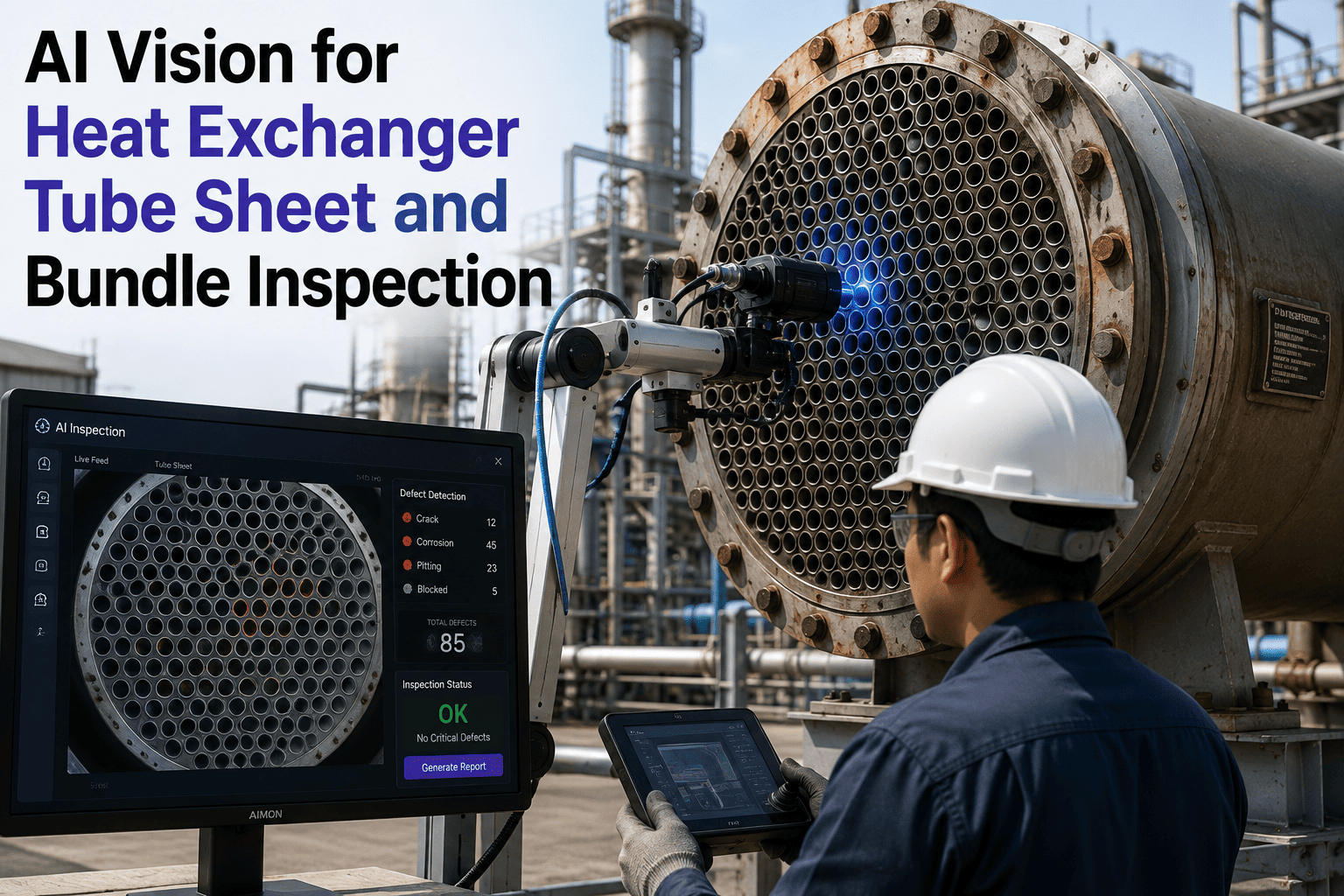
The physical inspection tool looks familiar — a borescope camera or a small crawler robot inserted through a manway or inspection port. What changes is everything that happens after the frame is captured. Instead of a human reviewer scrubbing through footage after the outage, the video stream is processed in real time by a deep learning pipeline running on ruggedized edge hardware installed adjacent to the boiler.
01
Sub-Millimeter Image Capture
Borescope or crawler camera captures 4K frames at 60 frames per second with structured illumination that eliminates shadow zones on curved tube surfaces. Every square centimeter of accessible tube is imaged at pixel densities that resolve features under 100 micrometers.
02
Edge Inference on Jetson Orin AGX
Each frame is processed on the NVIDIA Jetson Orin AGX unit stationed at the plant, running a deep learning model trained on tens of thousands of annotated boiler tube defect images. Latency from capture to classification stays under 40 milliseconds per frame.
03
Multi-Class Defect Segmentation
The model segments each defect from the background tube surface and assigns it to one of the failure mode classes: pitting, hairline crack, wall thinning, bulge, weld anomaly, or scale spallation. Confidence scores are logged with every detection.
04
Location Mapping and Severity Grading
Each detected defect is mapped to a tube coordinate using odometry from the crawler or reference markers from the borescope path. Severity is graded against ASME BPVC and plant-specific acceptance criteria to produce a work-order-ready defect list.
05
Report Generation and CMMS Handoff
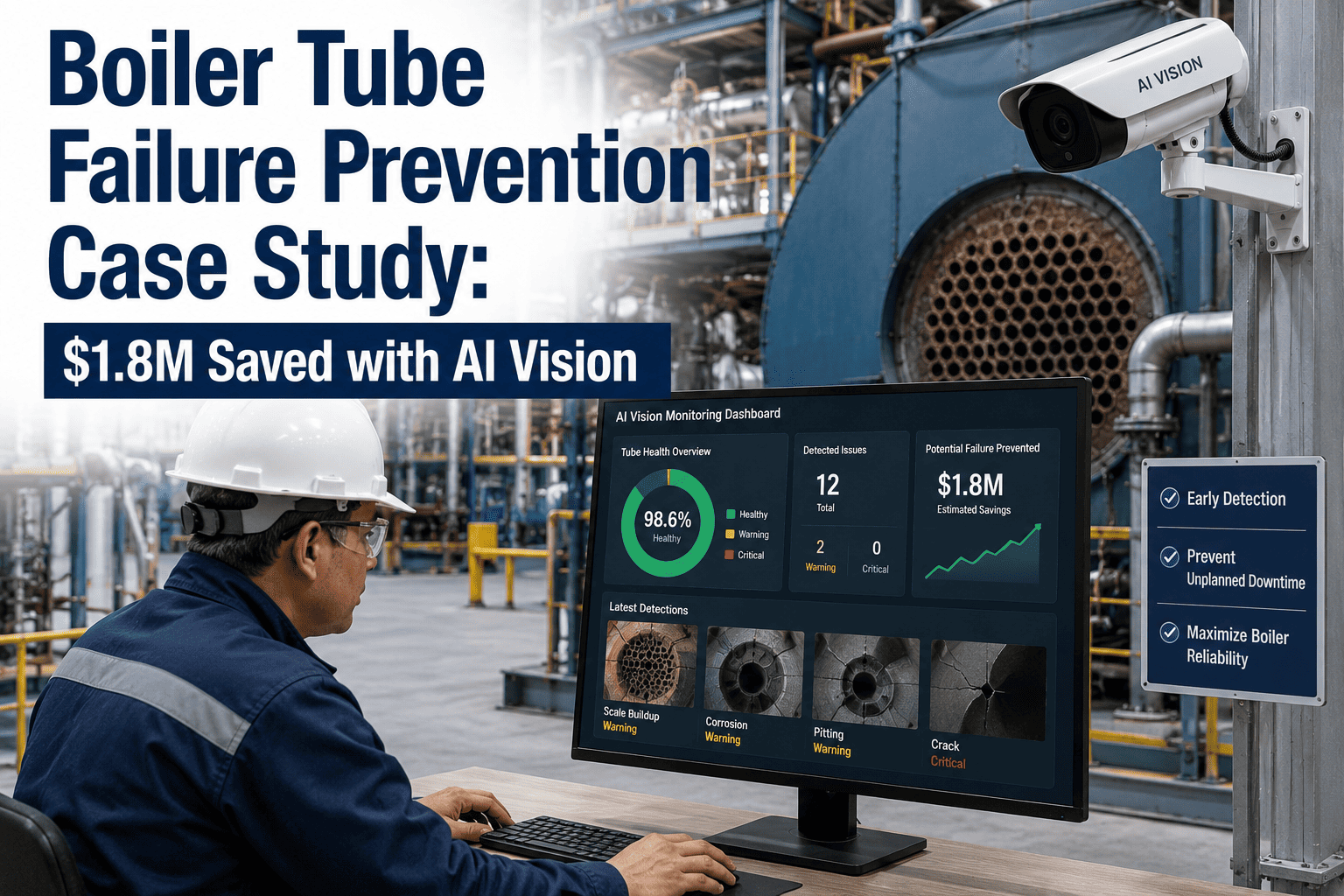
Structured inspection report generated on-premise with defect thumbnails, coordinates, severity grades, and trend comparison against previous outage. Data flows into the plant CMMS as prioritized work orders before the boiler is even at atmospheric pressure.
DETECTION COMPARISON
Where Manual Borescope Review Falls Short and AI Vision Closes the Gap
Manual borescope inspection is not bad work — it is the constraint that matters. A human reviewer cannot maintain sub-millimeter attention across three hours of footage per outage across dozens of camera runs. The table below contrasts what a trained inspector can realistically achieve during a scheduled outage window versus what an AI vision pipeline delivers on the same source footage.
| Defect Type |
Manual Borescope Review |
iFactory AI Vision |
| Hairline Fatigue Cracks under 100 microns |
Below the practical resolution limit of naked-eye video review in low-light furnace conditions |
Sub-pixel edge detection combined with dye penetrant overlay training detects consistently |
| Pitting Density Quantification |
Presence noted qualitatively as light or heavy pitting, no quantitative pit count per unit area |
Counts individual pits per square centimeter and tracks cluster expansion outage over outage |
| Wall Thinning below 40 percent |
Not detectable from surface visual until thinning exceeds 40 to 50 percent of wall thickness |
Photogrammetric depth estimation quantifies thinning to within a few percent of original wall |
| Fly Ash Erosion Grooves |
Visible when severe but groove depth and width are estimated rather than measured |
Segments each groove, profiles depth from illumination shadow analysis, estimates remaining life |
| Coverage Per Outage Window |
Typical spot-check coverage of 5 to 10 percent of accessible tube surface area |
100 percent of accessible tube surface reviewed at capture speed with no reviewer fatigue drop |
| Report Turnaround |
Post-outage analysis takes 1 to 3 weeks, often arriving after repair decisions have been made |
Structured defect report available before the boiler returns to atmospheric pressure |
| Inter-Outage Trending |
Difficult to correlate current findings with prior outage due to inconsistent tube coordinates |
Every defect referenced to fixed tube coordinates, producing per-tube degradation trend line |
EDGE HARDWARE
Ruggedized Edge Vision Hardware Built for the Reality of Boiler Access Ports
Standard consumer inspection cameras cannot survive the ambient heat, particulate contamination, and cramped access conditions found around utility boilers. iFactory's inspection hardware is engineered from the ground up for this environment, with turnkey packages that include cameras, illumination, edge processing units, and cabling in a single certified enclosure. Deployment from site survey to first live inspection typically completes in 6 to 12 weeks.
NVIDIA Jetson Orin AGX Edge Compute
Delivers the compute density required to run multi-class deep learning models on 4K video streams in real time. All inference happens on-premise adjacent to the boiler with no image data transmitted to external cloud servers, satisfying plant cyber and NERC CIP requirements.
Sapphire-Windowed Borescope Cameras
Continuously rated for exposure to residual heat and particulate around inspection ports. Structured LED illumination eliminates the shadow zones on curved tube surfaces that hide micro-defects during passive borescope review.
Crawler Robot for Internal Tube Runs
Designed for tube internal diameters from 25 to 100 millimeters, navigating bends up to 90 degrees. Onboard cameras capture internal surface imagery inaccessible to external borescope inspection, catching waterside corrosion and hydrogen damage at the source.
IP65 Enclosure and MIL-STD-810 Chassis
Sealed against boilerhouse dust and mist ingress, vibration-tested to industrial standards, operable in cabinet-free installations near the unit. Removes the requirement for climate-controlled control rooms adjacent to the inspection station.
Zero-Cloud On-Premise Architecture
All model training, inference, and data storage happen inside the plant network. Model updates are delivered by secure local network transfer following utility change-management protocols, meeting the strict data residency and network isolation policies of NERC-registered generators.
DEPLOYMENT OUTCOMES
Measured Impact of AI Boiler Tube Vision on Real Utility Deployments
The figures below reflect aggregated performance data from iFactory AI vision deployments at coal-fired and combined-cycle facilities, measured across multiple outage cycles following live cutover. Individual plant results vary based on unit vintage, baseline inspection maturity, and dominant failure modes.
67 percent
Boiler-Related Forced Outage Hours Cut
Average reduction in tube-driven forced outage hours across deployments in the first 18 months, based on EPRI benchmarks for AI monitoring in thermal generation.
100 percent
Accessible Tube Surface Reviewed
Coverage of accessible waterwall, superheater, reheater, and economizer surfaces per outage compared to 5 to 10 percent under manual spot-check protocols.
Under 14 months
Payback Period for the System
Typical payback for plants with annual boiler-related repair spend above the four-hundred-thousand-dollar threshold, driven by avoided forced outages and targeted repair scoping.
Weeks in Advance
Warning Before Functional Failure
Typical lead time between AI first flagging a high-severity defect and the point at which the same defect would have caused a leak or rupture under continued operation.
FREQUENTLY ASKED QUESTIONS
Questions Plant Reliability and Inspection Teams Ask About AI Boiler Vision
Does the AI vision system require a plant to shut down for installation, or can it be deployed during a normal scheduled outage window?
Installation is designed to fit inside a normal planned outage window. The site survey and optical design phase happens during operation, then the physical hardware install — camera mounts, illumination rigs, edge compute cabinet, and cabling — is completed within a five-to-seven-day window that maps onto existing outage schedules. First live inspection typically happens during the same outage in which the hardware is installed, so the plant does not lose any additional availability to bring the system online. Full turnkey deployment from initial site survey through first live inspection report generally completes in 6 to 12 weeks.
Book a demo to walk through the deployment timeline for your specific unit.
How does the system handle the transition between the low-temperature economizer end and the high-temperature superheater section?
Each boiler section is inspected using a dedicated AI model that is trained on the specific defect signatures characteristic of that section. The economizer model is calibrated for oxygen pitting, sulfuric acid dew-point attack, and fly ash erosion patterns typical of the cold end. The superheater model is calibrated for creep bulging, oxide scale spallation, and long-term overheating signatures. Switching between sections is a configuration change on the edge device, not a hardware swap, and takes seconds. The result is that each inspection run applies the right defect classifier to the right surface without a plant engineer having to interpret raw model outputs.
Contact support to discuss the model portfolio for your unit configuration.
Can the AI models detect internal defects like hydrogen damage or caustic gouging on the waterside surface, or only external fireside defects?
Both. External inspection uses borescope cameras and structured illumination looking at the fireside surface, catching creep bulges, fireside corrosion, and erosion. Internal inspection uses a small crawler robot that navigates the internal tube diameter and captures waterside imagery, catching hydrogen damage blistering, caustic gouging near deposits, and oxygen pitting from feedwater chemistry excursions. The two inspection modalities feed into the same defect database and are correlated per tube coordinate, so a plant reliability engineer sees the complete degradation picture on a single tube from both sides.
Book a demo to see the correlated fireside-waterside defect view in action.
What happens if a plant has already invested in ultrasonic thickness measurement contractors and wants to keep that program running?
AI vision is designed to complement rather than replace ultrasonic thickness measurement programs. UT measurements provide precise thickness data at discrete inspection points and are the accepted method for remaining life calculations under ASME BPVC. AI vision provides continuous 100 percent surface coverage, catching defects between UT measurement points and prioritizing which locations warrant follow-up UT inspection. Plants that keep their existing UT program running use AI vision to guide inspection resource allocation, typically reducing the total number of UT points needed by 40 to 50 percent while improving overall confidence in the tube condition assessment.
Contact support to discuss how the system integrates with your existing NDT contractor relationships.
How much historical data does the model need to be effective at a specific plant, and how are false positives managed during the initial period?
The base AI models are pre-trained on tens of thousands of annotated boiler tube defect images collected across the industry, so the system delivers usable defect detection from the first inspection run without waiting for plant-specific training data. During the first two outage cycles the system runs in an augmented mode where flagged defects are reviewed alongside the traditional inspection team, and any classifications the plant team disagrees with are logged as feedback that improves subsequent runs. Typical false positive rate drops from around 6 to 8 percent on the first run to under 2 percent after two full outage cycles as the model calibrates to the specific tube materials, surface conditions, and lighting geometry at that unit.
Book a demo to review calibration data from comparable units.
Stop Letting Boiler Tube Defects Take Your Unit Offline Without Warning
iFactory's AI vision inspects every accessible square centimeter of tube surface, grades defects at the point of capture, and delivers a work-order-ready degradation map before the boiler comes back up. Book a demo to see the pipeline running on a live boiler inspection dataset.