Power plants run some of the most inaccessible, hazardous infrastructure in industrial operations — 250-foot chimneys, cooling towers with fill structures buried inside wet-deck stacks, boiler internals that reach full pressure within hours of a planned outage window closing, and rooftop equipment that only a rope-access crew or a scaffold contractor can reach. VP Operations teams have historically accepted a simple trade-off: inspect these assets less often than engineering judgment says you should, because the cost and risk of getting a person up there is too high to do it on a tight cycle. Drone-based visual inspection, thermal cameras, and on-site edge computing have quietly removed that trade-off over the past two years, and the plants moving first are not doing it for novelty — they are doing it because the payback period on avoided scaffolding, avoided forced outages, and earlier defect detection is now measured in months. This page walks through how AI vision inspection actually works across a power plant campus, what it costs to get wrong, and how to see it running on your own asset data.
Why Scaffold-Access Inspection Is the Wrong Default for 2026
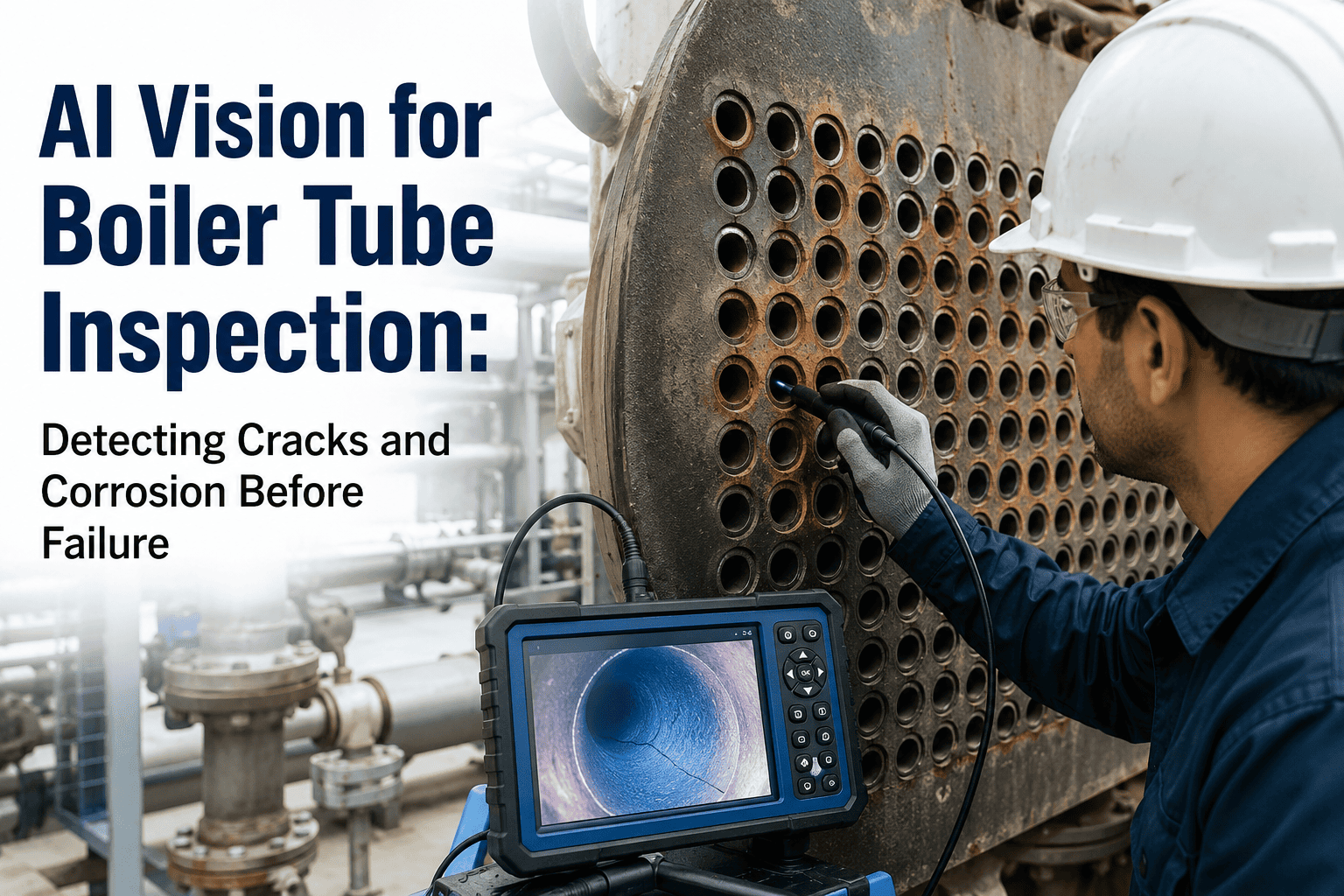
Traditional power plant inspection depends on getting a qualified person physically close enough to a defect to see it — which usually means scaffolding around a boiler, rope access down a stack, or a lift truck at a cooling tower fan deck. Every one of those access methods carries a lead time measured in days, a cost measured in tens of thousands of dollars, and a safety exposure that no operations leader wants on their incident log. The result is an inspection cycle set by access difficulty rather than by what the asset actually needs, which means early-stage corrosion, fill collapse, and refractory failure are frequently caught only after they have already become a forced outage. Drone-based visual and thermal inspection changes the constraint entirely: a boiler internal survey that once needed ten days of scaffolding and rope-access crews can be flown in under two, and a stack or cooling tower survey that once required a lift can be completed from the ground or from inside the structure with zero work-at-height exposure.
Three Layers: Drone Capture, Thermal Sensing, and Edge Computing
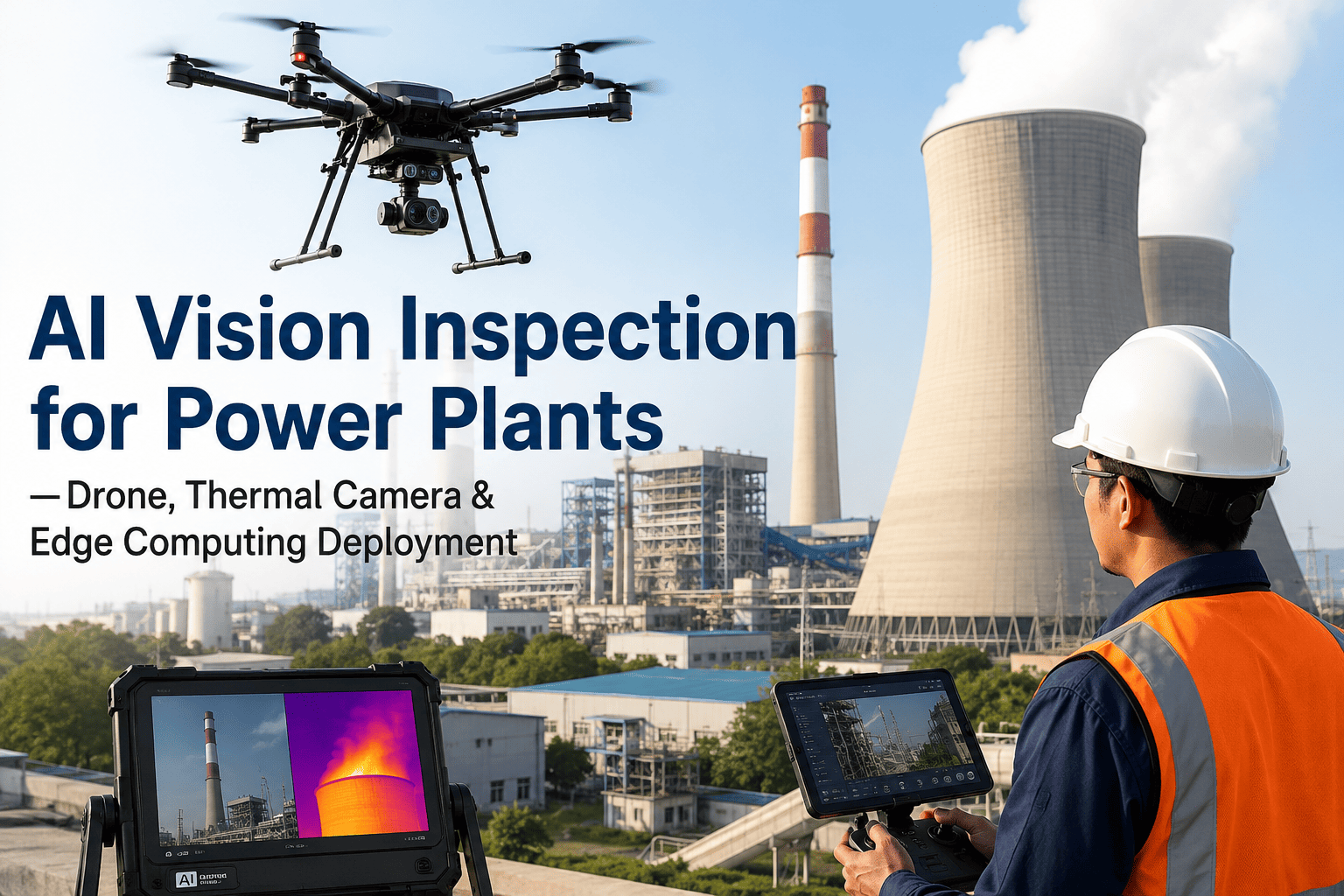
An AI vision inspection program is not a single piece of hardware — it is three layers working together, and each layer solves a different part of the problem. The drone or confined-space UAV is the access layer: it gets a camera and sensor package into places a person cannot safely or economically reach, whether that is the inside of a boiler, the underside of a cooling tower fan deck, or the top of a 200-foot stack. The thermal camera is the detection layer: many of the defects that matter most in power generation — hot spots in switchgear, lagging degradation on high-temperature pipework, refractory failure behind boiler casing — are invisible to a standard camera but obvious on a thermal image. The edge computing layer is what turns raw footage into an answer without a multi-day review bottleneck: inference runs on-site, on hardware positioned at the plant, so a defect classification is available in seconds rather than after footage is uploaded, queued, and reviewed by an engineer days later.
Drone / UAV Capture
Confined-space drones fly boiler internals, ductwork, and tank interiors; standard UAVs survey stacks, cooling towers, and rooftops from outside. Visual, thermal, and in some programs LiDAR data is captured in a single flight pass.
Thermal & Multi-Sensor Imaging
High-resolution thermal payloads map surface temperature across switchgear, pipework, and boiler casing, surfacing degradation patterns that are undetectable to the naked eye until failure is already underway.
Edge Computing Inference
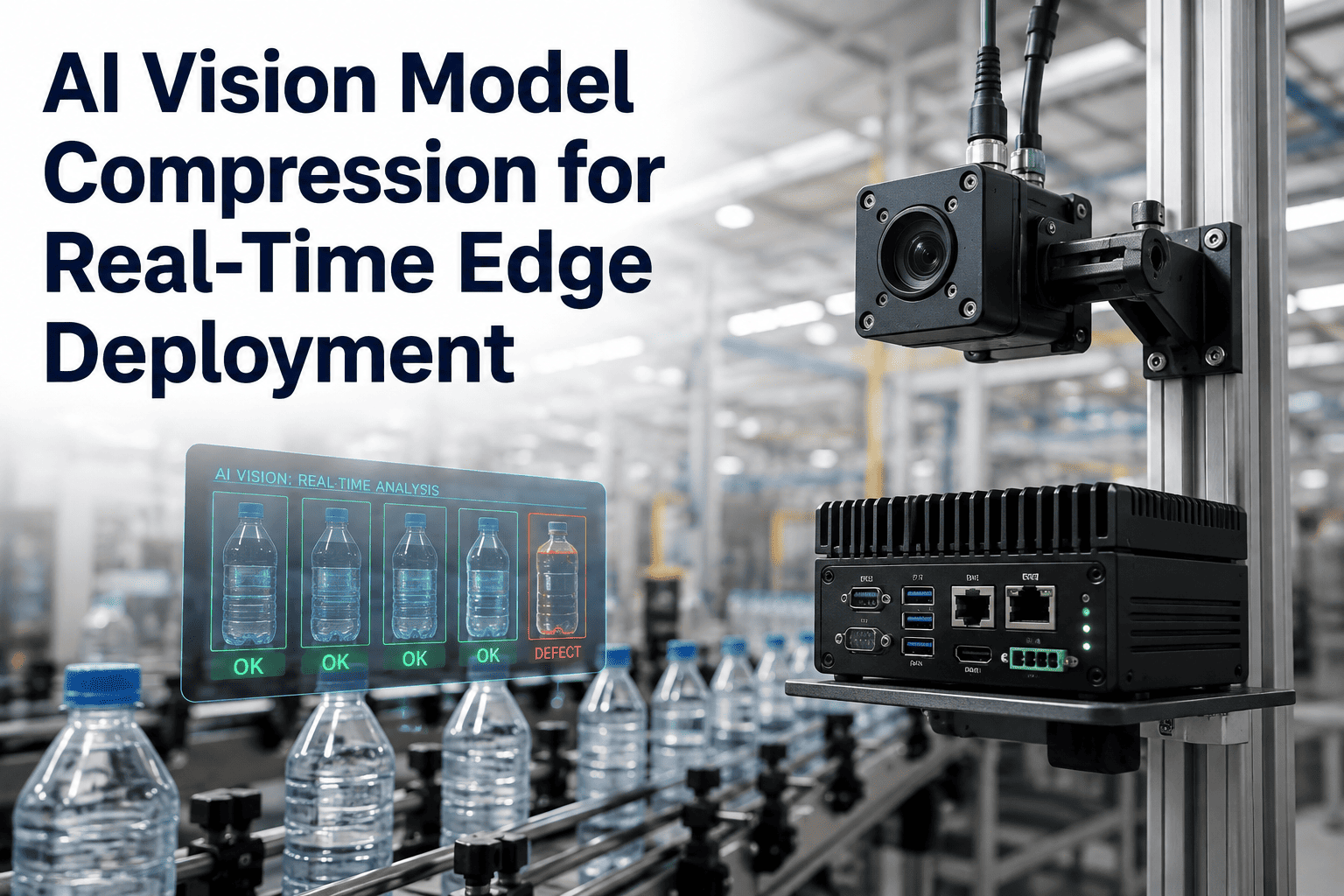
Vision models run on hardware at the plant rather than in a distant data center, cutting the review cycle from days to minutes and keeping sensitive infrastructure imagery on-site rather than in transit.
Automated Work Order Routing
Classified defects are written directly to the asset record with severity, location, and image evidence attached — no manual report-to-work-order handoff required.
What Gets Inspected Across a Power Plant Campus
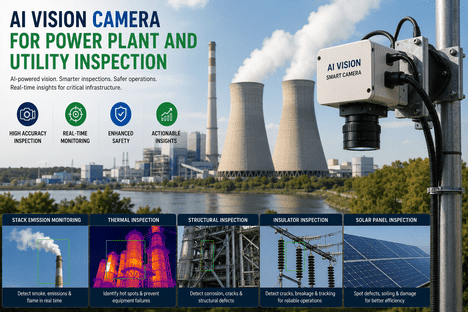
Every major structure on a power plant site has its own defect signatures, its own access difficulty, and its own consequence profile if an issue goes undetected. A vision inspection program that treats every asset class the same way misses most of the value — the models and flight profiles need to be built around what actually fails on each structure type.
Boilers and Rooftop Equipment
Internal drone survey identifies refractory failure behind casing, tube wall degradation, and lagging breakdown without scaffolding. Rooftop equipment — large surface areas with high working-at-height risk — is surveyed on the same flight profile that most facilities never scaffold for because the risk-to-value ratio has historically been poor.
Cooling Towers
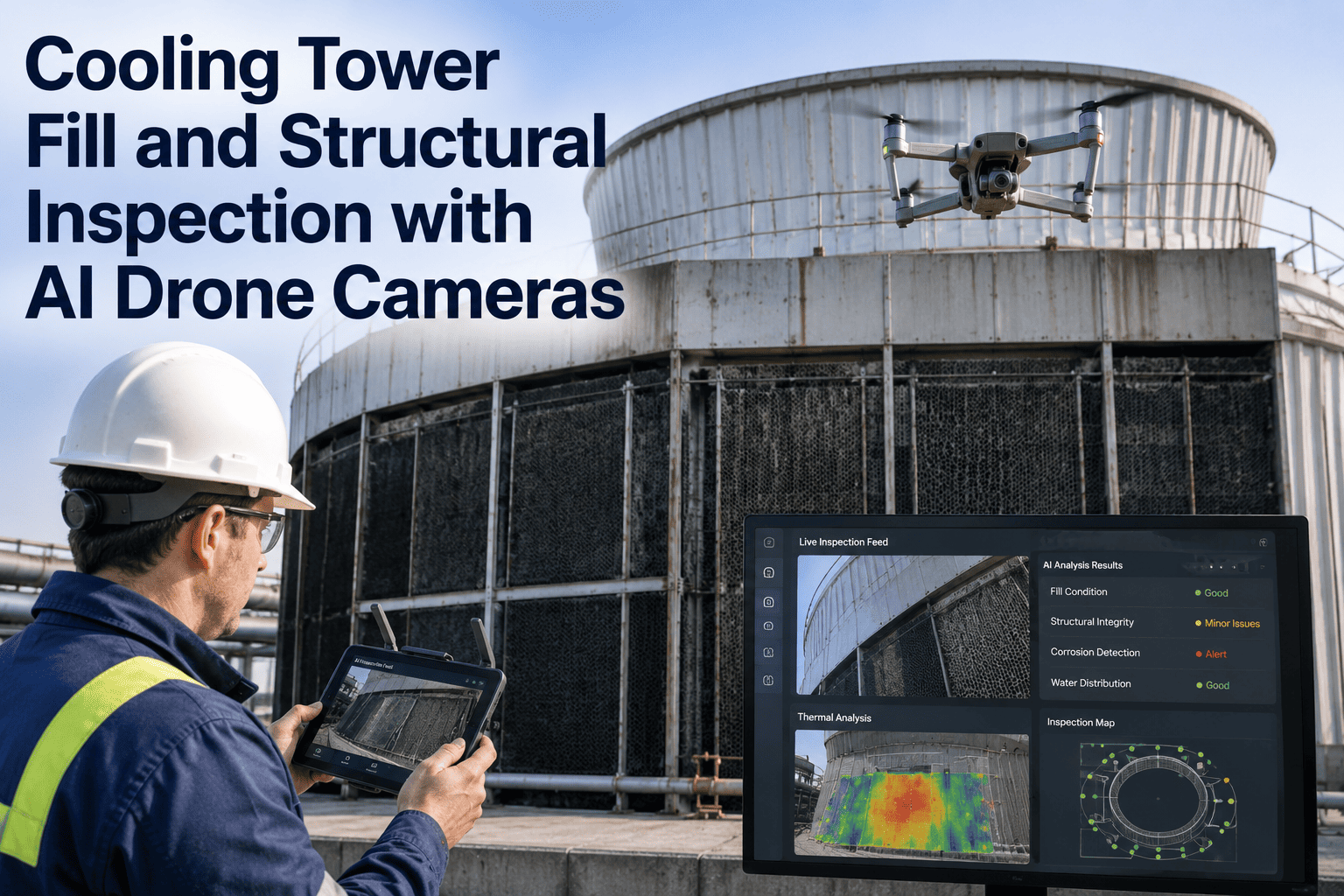
Per-cell aerial and internal imaging classifies drift eliminator damage, fill media collapse and blockage, structural column cracking, basin wall delamination, and fan deck deterioration — enabling targeted repairs on individual cells instead of a full tower shutdown.
Stacks and Chimneys
Concrete and steel stacks are among the most inspection-intensive and expensive-to-repair structures on-site. Vision models trained on stack-specific defect signatures detect surface corrosion at each stage, concrete spalling with area quantification, liner delamination, and expansion joint cracking.
Electrical & Transmission Infrastructure
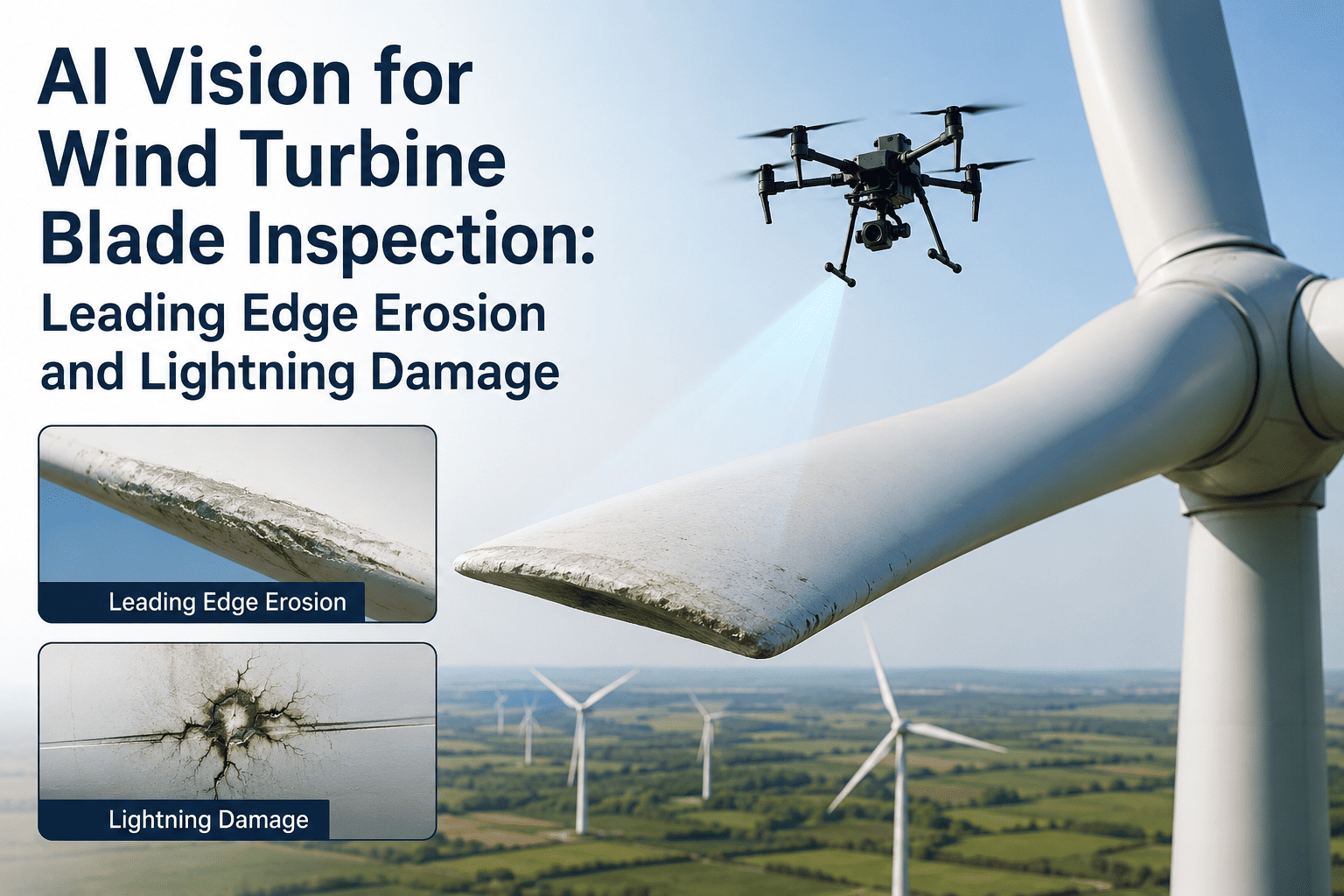
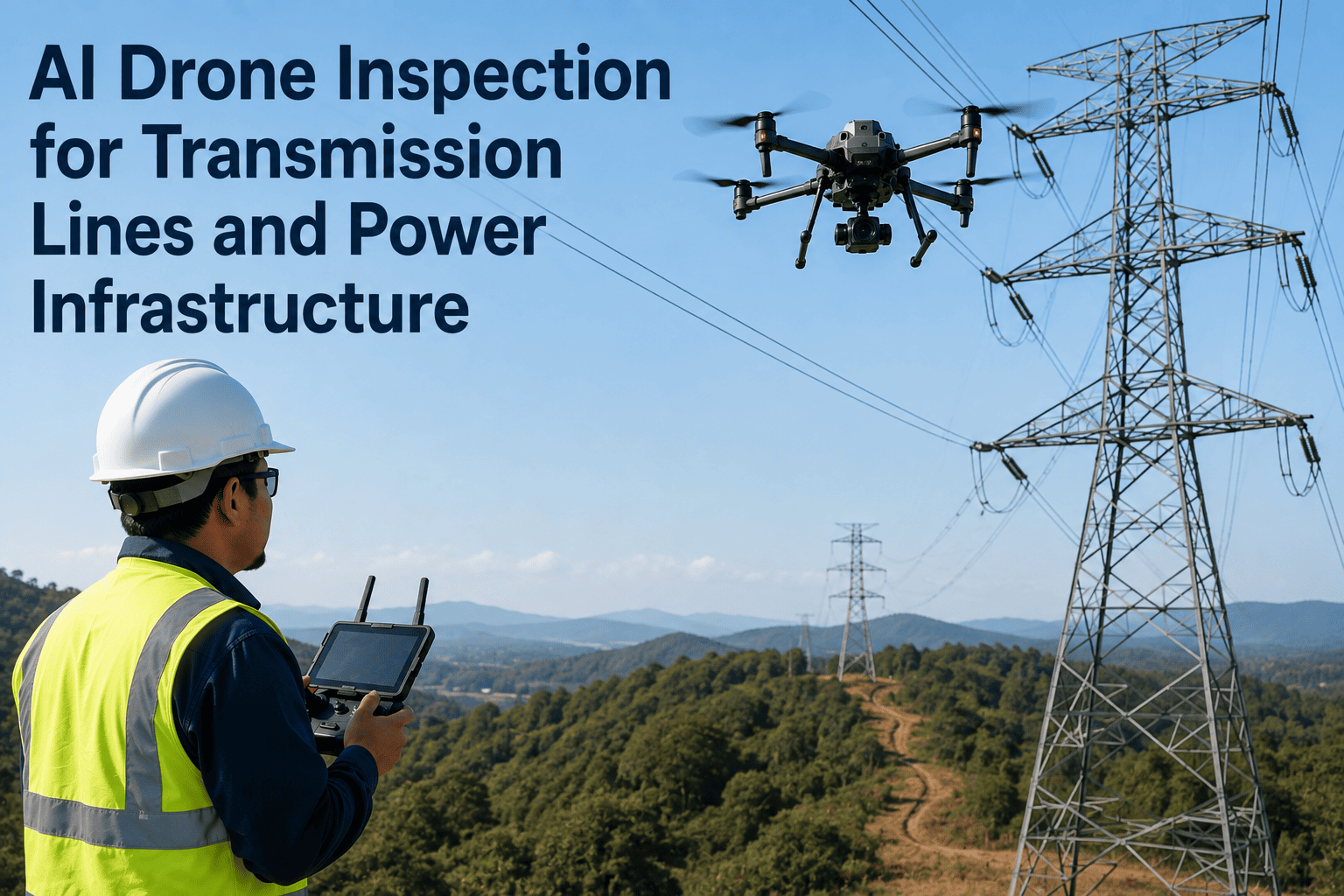
Thermal imaging identifies hot spots in switchgear panels and substation equipment before they progress to failure, while visual surveys of transmission structures catch connector degradation and structural issues that ground-level inspection routinely misses.
Scaffold-and-Report vs. Drone-and-Edge-AI
The difference between the two inspection models is not just speed — it is what happens to the data after it is captured, and how long a defect sits undetected between the moment it starts developing and the moment someone acts on it.
| Dimension | Scaffold / Rope-Access Model | Drone + Edge AI Model |
|---|---|---|
| Boiler internal survey | 10+ days, scaffolding required, outage extension risk | Under 2 days, no scaffolding, minimal outage impact |
| Cooling tower fill inspection | Full shutdown often required for physical access | Per-cell imaging enables targeted, partial-cell repairs |
| Defect detection timing | Often found only after measurable performance loss | 8 to 14 weeks lead time ahead of performance degradation |
| Review and reporting cycle | Days between capture and engineer review | Minutes, via on-site edge inference |
| Work order creation | Manual, email-based handoff between teams | Automated, defect-to-work-order with image evidence |
| Personnel work-at-height exposure | Required for nearly every inspection cycle | Eliminated for routine survey work |
Why Inference Has to Happen On-Site, Not in the Cloud
Cloud-based AI vision review introduces round-trip delay that quality and safety-critical inspection cannot absorb — imagery has to leave the plant, reach a remote server, get processed, and return an answer, which typically adds one to two seconds per decision point at minimum, and far longer once footage is queued for engineer review rather than automated classification. Industry-wide, roughly 80 percent of AI inference is projected to run locally at the edge by the end of 2026, and industrial inspection is one of the clearest reasons why: a hot spot on a switchgear panel or a developing crack on a stack liner needs a decision before the next flight pass, not after a data round trip. Running inference on hardware physically located at the plant also keeps sensitive infrastructure imagery on-site rather than in transit across the public internet, which matters for facilities operating under strict data-handling and critical-infrastructure security requirements.
Immediate Classification
Defect detection happens in seconds during the flight, not days later during a report review cycle — giving crews the chance to re-fly a section immediately if coverage was incomplete.
No Connectivity Dependency
Inference runs whether or not the plant network connection is stable, which matters for facilities in remote locations or with limited bandwidth to a central data center.
Data Stays On-Site
Infrastructure imagery is processed locally rather than transmitted to third-party cloud servers, aligning with the data-handling expectations of critical energy infrastructure operators.
Lower Bandwidth Cost
Only classified findings and flagged imagery need to move off-site, rather than raw video from every flight, cutting the bandwidth and storage cost of a full inspection program.
How iFactory Deploys AI Vision Inspection at a Power Plant
A turnkey deployment means the plant does not have to assemble drone hardware, thermal payloads, edge computing infrastructure, and vision models separately and then figure out how they talk to each other. iFactory's approach starts with an asset-class assessment of the specific structures on your site, deploys NVIDIA-based edge hardware sized to the plant's inspection volume, and connects classified findings directly into existing maintenance workflows so operations teams get action items rather than raw footage to review.
Site & Asset Assessment
Engineers review your stack, cooling tower, boiler, and electrical infrastructure to define flight profiles, sensor packages, and defect-detection priorities specific to your asset mix.
Hardware Deployment
NVIDIA-based edge computing nodes are installed on-site, sized to the plant's inspection volume and configured for the specific vision models your asset classes require.
Flight Program & Data Capture
Drone survey cycles are scheduled around outage windows and routine patrol schedules, capturing visual, thermal, and where needed LiDAR data across every priority asset.
Live Integration & Rollout
Classified findings route automatically into work order and asset management systems within a 6 to 12 week deployment window, with your maintenance teams trained on the review dashboard.
What This Looks Like in Practice
A thermal power generation operator running four cooling towers used a drone-based fill-structure survey to inspect roughly 16,000 individual points across the towers in a single campaign, cataloging defects with local coordinates and severity ratings rather than relying on a general condition estimate. On the boiler side, internal drone inspection replaced a rope-access survey that had previously required scaffolding erection and extended a planned outage — the drone survey was completed within the existing outage window, with defect findings available for maintenance planning before the unit was even back on load. The pattern across these programs is consistent: the value is not just in avoiding the cost of scaffolding, it is in catching degradation early enough that repairs happen on a planned schedule instead of as an emergency response to a forced outage.
The boiler survey that used to mean ten days of scaffolding and a rope-access crew now takes under two days with no work-at-height exposure at all, and the findings are in the maintenance system before the crew has even packed up the drone.
Frequently Asked Questions
See Your Own Boiler, Stack, or Cooling Tower Data Run Through the Model
iFactory connects drone-captured visual and thermal imagery to on-site edge computing and automated work order generation — turning inspection flights into maintenance action within minutes instead of days, without scaffolding, rope access, or a forced outage extension.