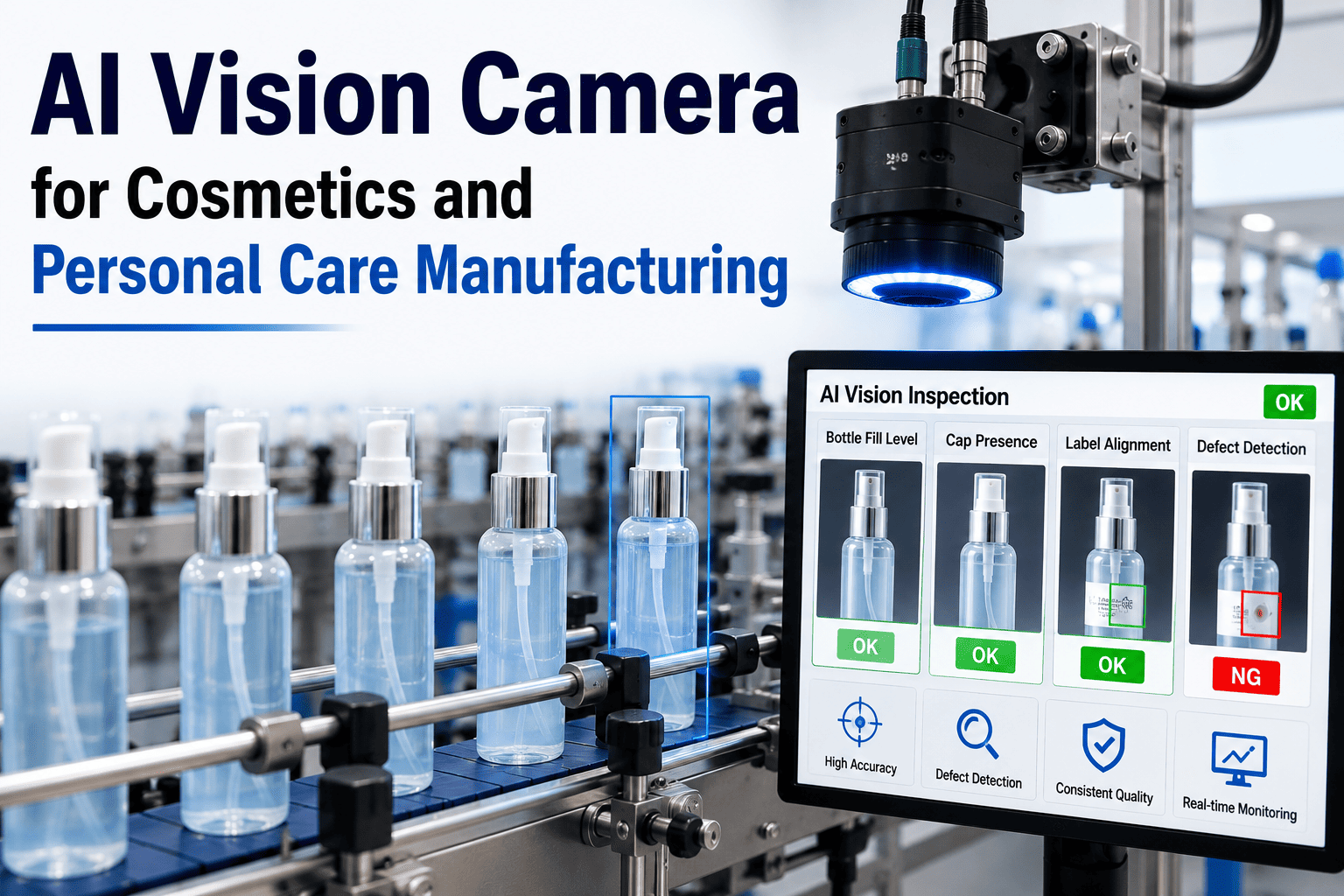
A cosmetics or personal care product only gets one first impression, and it happens on the shelf before a single word of marketing reaches the customer. A lipstick cap sitting crooked, a label glued on a few degrees off center, a fill level that looks noticeably short in a clear glass jar — a shopper doesn't read that as a minor production variance, they read it as a brand that doesn't care about quality. Modern cosmetic lines run thousands of units an hour across dozens of SKUs and shade variants, and a large share of consumer complaints in this category trace back to exactly these visible packaging defects rather than the formulation inside. Book a demo to see AI vision catch these defects on your own product line.
AI Vision Camera · Cosmetics & Personal Care
Every Unit Should Look Like the One in Your Brand Photography
AI vision cameras check fill volume, cap alignment, label quality, print accuracy, and shade consistency on every single unit — protecting the brand consistency your packaging design team worked so hard to define.
100%
of units inspected, every SKU, every shift
6+
defect categories checked in a single pass
1000s/hr
unit throughput on modern cosmetic lines
Why "Close Enough" Doesn't Work on a Cosmetics Shelf
Cosmetics and personal care buyers are shopping on appearance before they're shopping on anything else. A defect that would be invisible on a bulk commodity product is the first thing a beauty customer notices — and the first thing that erodes trust in a premium brand.
Visible Defects Read as Brand Failure
A crooked label or an under-filled jar doesn't register to a shopper as a production line variance — it registers as evidence the product wasn't cared for, which is exactly the wrong message for a beauty or skincare brand to send.
Manual Sampling Can't Cover Every SKU and Shade
A line running dozens of shade variants and pack sizes in a single shift means a manual inspector is splitting attention across products that all look different — exactly the condition under which small defects slip through.
Rule-Based Vision Misses What Doesn't Fit the Rule
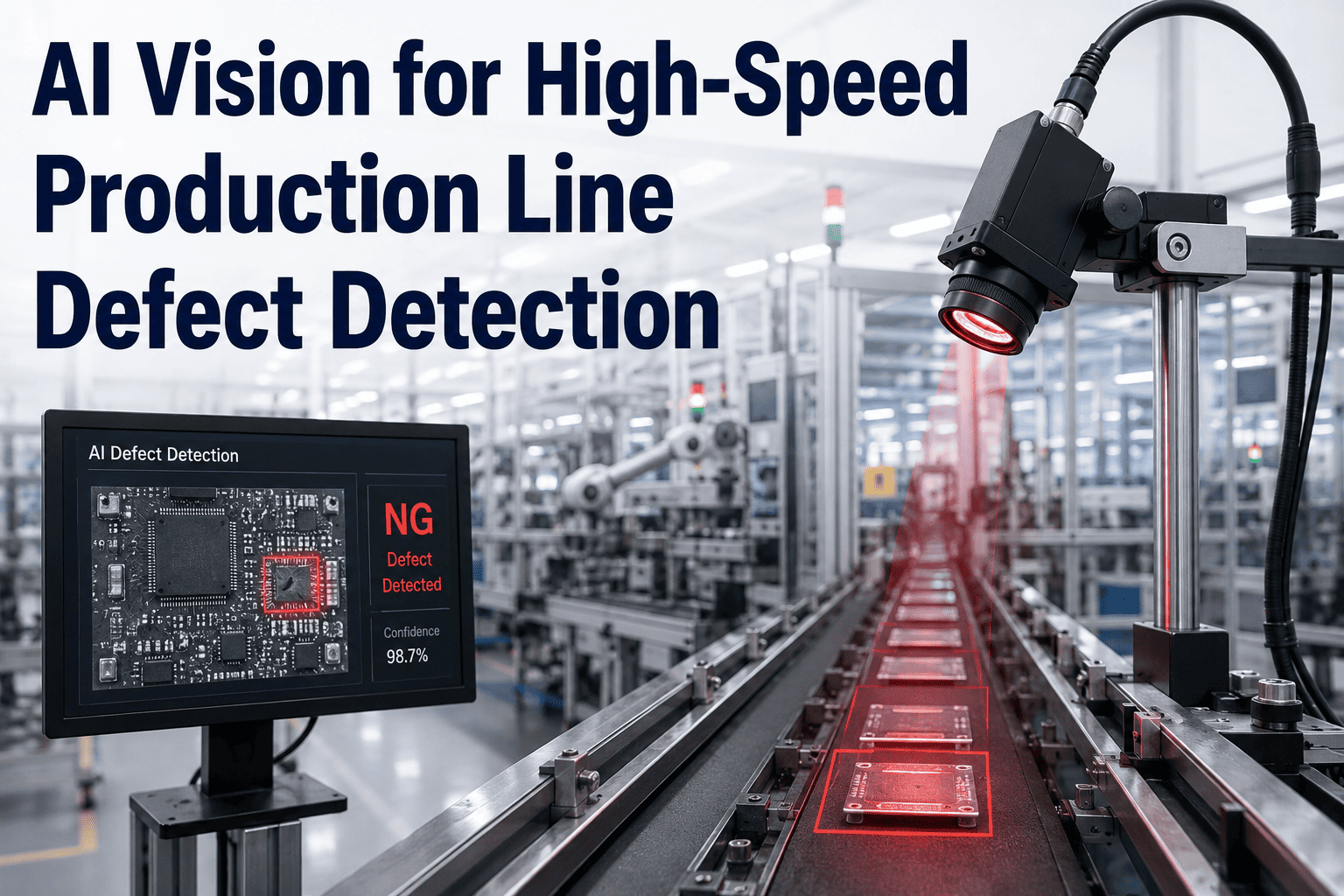
Conventional fixed-rule vision systems are built to catch defects they were explicitly programmed for. Bubbles under a label, subtle color degradation, or an overprint variance are easy for a human eye to catch and very hard to hard-code — which is exactly the gap deep learning closes.
The Quality Checklist AI Vision Runs on Every Unit
Six defect categories, checked in parallel, on every unit that passes the camera — not a sampled few. Each swatch below represents a category the system is trained to catch.
Label Placement & Alignment
Skewed, wrinkled, bubbled, or off-center labels are flagged against a tolerance far tighter than the human eye reliably holds across a shift.
Print & Coding Accuracy
Batch codes, expiry dates, and regulatory print are read with OCR and checked against the active production order — catching a coding-system drift before it reaches a full pallet.
Cap & Closure Fit
Missing, cocked, or improperly seated caps and pumps are caught before packout — the defect class most directly tied to leaks and returns.
Fill Volume Consistency
Every jar, tube, and bottle is measured against fill spec, so a visibly short fill in a clear container never reaches a customer's hands.
Surface & Cosmetic Defects
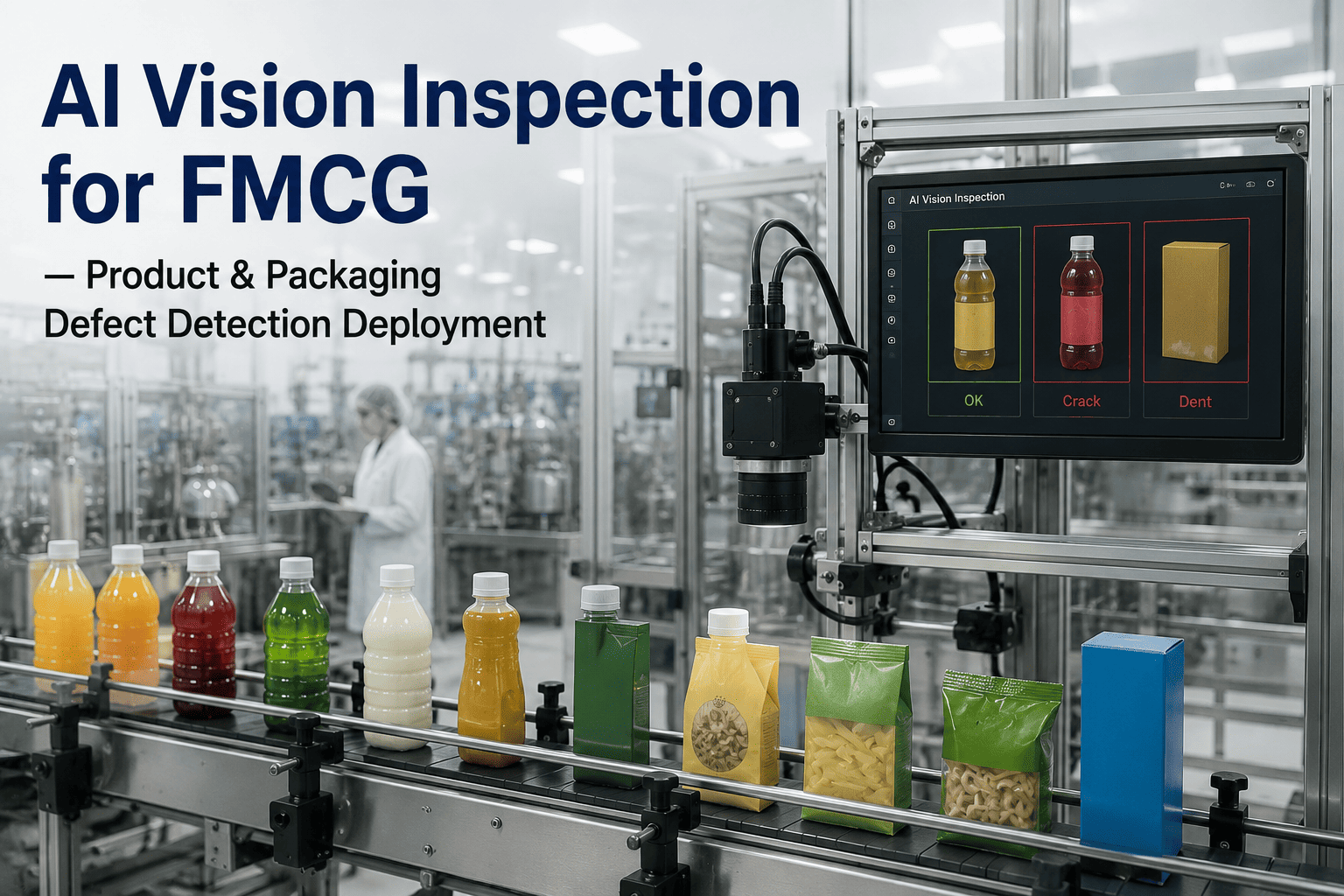
Scratches, scuffs, cracks, and molding defects on the container itself are identified even on textured, reflective, or curved surfaces that trip up conventional vision.
Shade & Color Consistency
Foundation, lipstick, and pigment shades are measured against a reference standard, catching batch-to-batch color drift before it becomes a customer-facing mismatch complaint.
Deep Learning vs. Rule-Based Vision on Cosmetic Packaging
What Defect Patterns Tell You Beyond the Reject Bin
Every rejected unit is a data point, and the patterns across thousands of them point straight at root cause — long before a manual quality review would have connected the dots.
Recurring Cap Defects
A rising trend of cocked or loose caps on one line usually points to mechanical wear at the capping head — a maintenance signal months before a complaint would surface it.
Repeated Label Placement Issues
Consistent label skew in the same direction typically traces back to an applicator calibration drift, not a batch of bad labels.
Print Quality Trends
A gradual decline in print sharpness across a shift often flags a coding system due for maintenance before it starts producing unreadable batch codes.
Bring Your Shade Range to a Live Walkthrough
See AI vision run fill, cap, label, and shade-matching checks on your own packaging samples — including the SKUs and shade variants that give your current inspection process the most trouble.
How It Fits Alongside Your Filling and Packaging Line
1
Camera at Fill & Cap Station
Mounted at existing checkpoints, no line redesign
2
AI Model Inspects Each Unit
Fill, cap, label, print, shade checked in parallel
3
Pass, Reject, or Review
Automated divert for clear failures, queue for edge cases
4
Quality Data Logged
Image and result tied to SKU, shade, and lot automatically
Before and After: Brand Consistency at Scale
Manual Sampling
Units inspectedA sampled fraction per batch
Shade consistency checksVisual, subjective
Root-cause visibilityReactive, after complaints
iFactory AI Vision
Units inspectedEvery unit, every SKU
Shade consistency checksReference-calibrated, objective
Root-cause visibilityProactive, pattern-flagged
Frequently Asked Questions
Protect the Brand Consistency Your Packaging Was Designed to Deliver
Every unit that leaves your line is a piece of brand communication. Make sure it looks like the one your design team approved — every shade, every SKU, every shift.
Fill Volume
Cap Fit
Label Quality
Shade Match