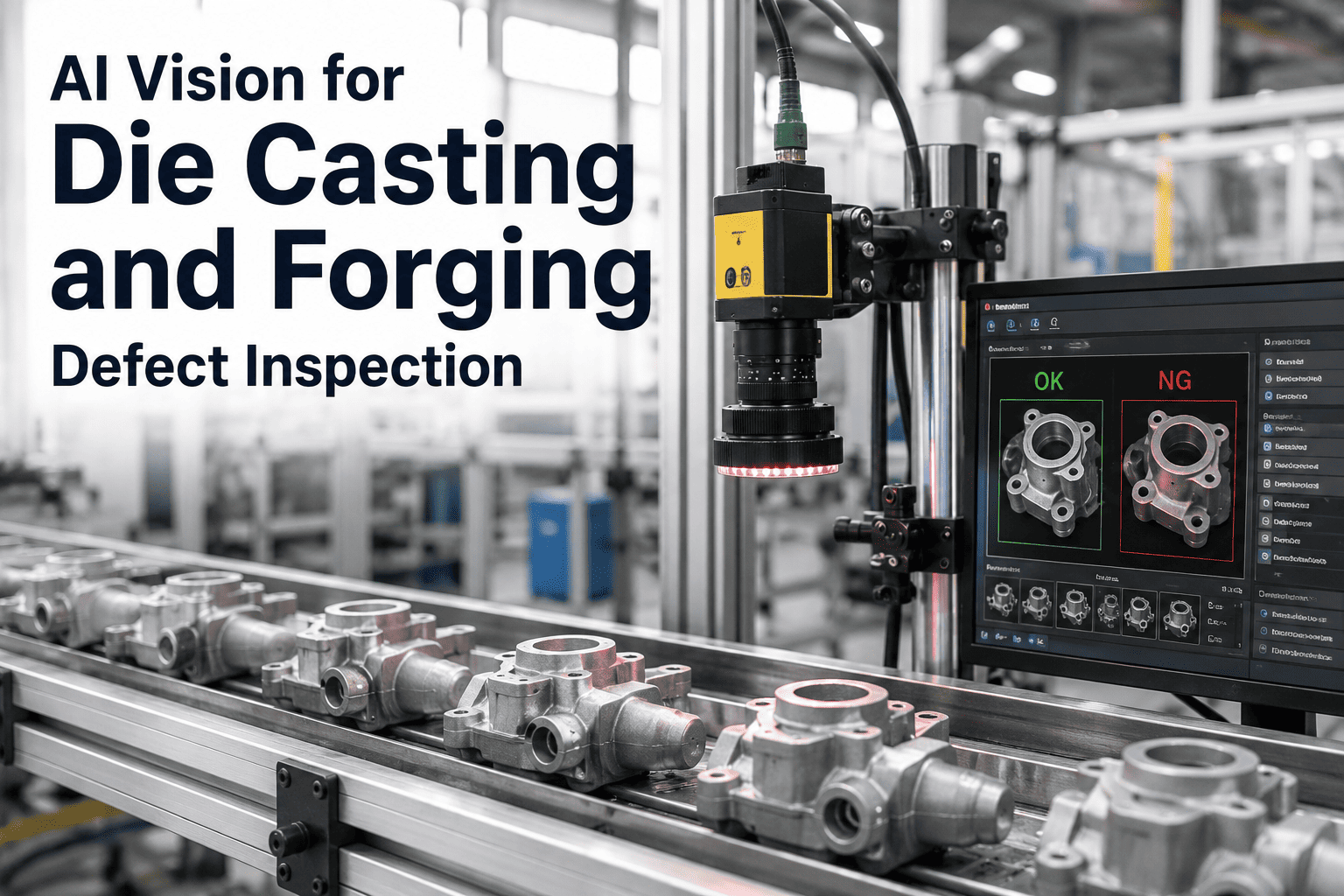
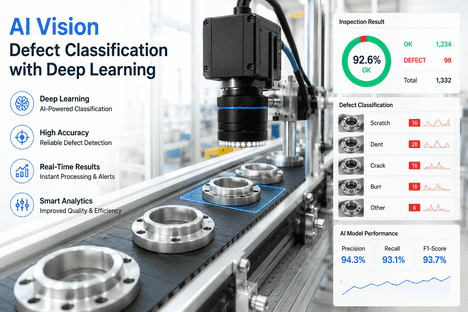
Casting and forging remain among the most demanding manufacturing processes in Indian metalworking, where porosity, cold shuts, cracks, shrinkage, and surface inclusions directly determine scrap rates, rework costs, and customer acceptance. Traditional manual visual inspection — even when conducted by experienced quality teams — captures only 40–55% of surface defects on complex castings and forgings, with detection rates falling sharply for sub-millimetre anomalies and internal voids that become visible only after machining. The iFactory AI Vision Camera addresses this inspection gap through continuous, non-contact industrial computer vision that detects, classifies, and records casting and forging defects at sub-second resolution — without requiring any modification to existing production lines or foundry equipment. For foundries and forge shops operating under PLI production targets or OEM qualification requirements, deploying AI-powered vision inspection is no longer a quality enhancement — it is a production prerequisite.
Eliminate Casting & Forging Defect Escape with AI Vision
iFactory's AI Vision Camera detects porosity, cold shuts, cracks, and surface defects on castings and forgings in real time — feeding inspection data directly into your quality management workflow without manual intervention.
Why Traditional Visual Inspection Falls Short in Metal Casting and Forging
Metal casting and forging processes produce a characteristic set of defects that are difficult to detect through conventional means. Porosity — subsurface gas pockets that compromise pressure integrity — is virtually invisible until machining exposes internal cavities. Cold shuts, where molten metal streams fail to fuse completely, create planar weaknesses that escape visual detection on as-cast surfaces. Heat treatment cracks, forging laps, and shrinkage cavities share visual characteristics with legitimate surface texture variations, leading to high false-positive rates (and unnecessary rework) or missed defects that reach customers. In Indian foundries operating across the automotive, capital goods, and defence supply chains, the cost of defect escape extends beyond scrap value: rejected batches trigger PLI incentive clawbacks, OEM requalification audits, and contractual penalties that can exceed the production value of the defective parts themselves. The iFactory AI Vision Camera, integrated into your existing production line within two weeks, delivers 91–96% anomaly detection accuracy on casting and forging surfaces — transforming inspection from a bottleneck into a competitive advantage. Book a Demo to see how AI vision inspection works on your casting and forging parts.
How AI Vision Detects Casting and Forging Defects
The iFactory AI Vision Camera combines high-resolution industrial cameras, edge-based deep learning inference, and thermal imaging to create a multi-modal inspection capability purpose-built for the metal casting and forging environment. Unlike general-purpose machine vision systems that require extensive programming for each new part geometry, iFactory's ML models learn normal surface appearance from your production parts and flag deviations — porosity, cracks, cold shuts, inclusions, shrinkage, and dimensional anomalies — without requiring defect-labelled training data. The system operates at full production line speed, inspecting 100% of parts at line rate, and generates timestamped inspection records linked to batch IDs and furnace/cast numbers for complete traceability. For foundries participating in PLI schemes or supplying international OEMs, this continuous, audit-ready inspection record satisfies the quality documentation requirements that manual sampling cannot support. Book a Demo and receive a site-specific AI vision inspection assessment for your foundry or forge shop.
Real-Time Surface Defect Detection
iFactory AI Vision Cameras continuously inspect casting and forging surfaces as parts move through the production line, identifying porosity, cracks, cold shuts, inclusions, shrinkage cavities, and forging laps at sub-second latency. Detection thresholds are calibrated per part family, reducing false positives while maintaining sensitivity to critical defect types.
Automated Defect Classification & Severity Grading
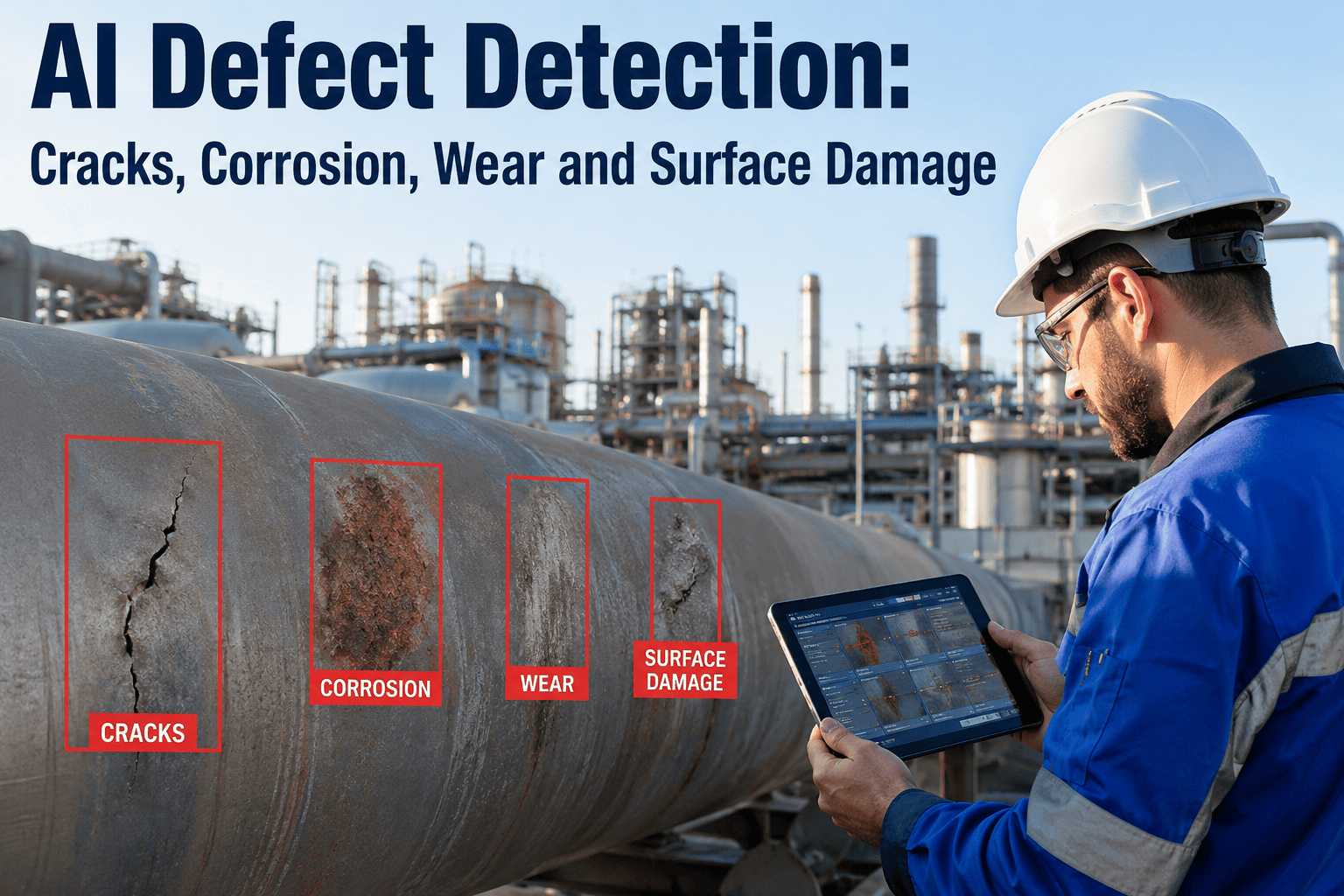
Each detected anomaly is classified by defect type — porosity, cold shut, crack, shrinkage, inclusion — and assigned a severity grade based on size, depth estimate, and location relative to critical part surfaces. This enables intelligent dispositioning: accept, rework, or scrap, without requiring human review for routine defect types.
Process Anomaly Trending & Root Cause Identification
Beyond part-level inspection, iFactory aggregates defect data across production shifts to identify process drift before it generates mass defects. A rising trend in porosity on a specific casting line, for instance, triggers an alert indicating potential sand moisture or venting issues — enabling process correction before a batch of defective parts is produced.
PLI & OEM Compliance Documentation
Every inspection result is recorded with batch ID, furnace/cast number, part serial number, and timestamped visual evidence. For foundries and forge shops operating under PLI schemes or supplying automotive, defence, and capital goods OEMs, this immutable inspection history satisfies quality audit documentation requirements without manual report preparation.
Casting & Forging Inspection: Manual vs. AI Vision Approach
Foundries and forge shops transitioning from manual visual inspection to AI-driven vision inspection under Budget 2026's manufacturing modernisation framework see measurable improvements across every critical quality KPI.
| Inspection KPI | Manual Visual Inspection | AI-Powered Vision Inspection | Improvement |
|---|---|---|---|
| Defect Detection Accuracy | 40–55% | 91–96% | ~2x improvement |
| Inspection Coverage | Sampling (5–20% of parts) | 100% inline inspection | Full coverage |
| Scrap & Rework Cost (% of production value) | 4.5–7.2% | 1.8–3.1% | ~55% reduction |
| Defect Escape Rate (ppm) | 2,500–5,000 ppm | 150–400 ppm | ~92% reduction |
| Inspection Cycle Time per Part | 30–90 seconds | 0.5–2 seconds | ~97% faster |
| PLI / OEM Audit Readiness | Manual, batch-level | Automated, continuous | Always audit-ready |
Casting and Forging Defect Detection Across Metalworking Sectors
iFactory's AI Vision Camera addresses defect detection requirements across the full spectrum of Indian metal casting and forging operations — from automotive component foundries to capital goods forge shops and defence-grade casting facilities.
| Metal Sector | Typical Parts | Key Defects Detected | Inspection Priority |
|---|---|---|---|
| Automotive Castings | Engine blocks, cylinder heads, brake components, suspension arms | Porosity, cold shuts, shrinkage cavities, slag inclusions | Zero-defect delivery to OEM assembly lines; PLI production continuity |
| Steel & Alloy Forgings | Crankshafts, connecting rods, gears, flanges, shafts | Forging laps, heat treatment cracks, surface inclusions, dimensional deviation | 100% critical-part inspection; OEM PPAP documentation |
| Investment Castings | Turbine blades, medical implants, aerospace components | Micro-porosity, surface pitting, ceramic inclusion, wall thickness variation | High-resolution vision for sub-mm defect detection; batch traceability |
| Die Casting (Aluminium & Zinc) | Housing, brackets, transmission cases, electronic enclosures | Gas porosity, die solder, flow lines, flash, cold fills | High-speed inline inspection at cycle time; real-time process feedback |
| Heavy Castings & Forgings | Mill rolls, press frames, marine components, wind turbine hubs | Macro-shrinkage, hot tears, forging bursts, surface cracking | Large-part scanning; thermal anomaly detection; NDT-grade documentation |
From Manual Inspection to AI Vision: A 5-Week Deployment Path for Foundries and Forge Shops
Indian foundries and forge shops that act on the current manufacturing modernisation policy signals can complete their AI vision inspection deployment within a single quarter — no production line shutdown, no conveyor modification, and integration with the part handling systems already present on the floor. iFactory's structured five-week deployment programme is specifically designed for the operational realities of Indian metalworking facilities, with ROI evidence typically visible within the first three weeks of full operation. Contact an iFactory specialist for a site-specific AI vision inspection ROI estimate based on your part types, production volumes, and current defect rates.
AI Vision Camera Installation & Production Line Integration
iFactory AI Vision Cameras are mounted over existing inspection stations or production line conveyors and connected to your plant network. No operational shutdown is required. Integration covers all target part families — castings, forgings, and machined components across the facility.
AI Baseline Learning & Defect Fingerprinting
ML models establish unique visual and thermal fingerprints for each part family, learning normal surface appearance across acceptable process variation. Initial anomaly detection thresholds are validated against known good and defective parts from your quality records. First defect alerts are reviewed with your QC team to confirm accuracy and calibrate severity thresholds.
Automated Defect Detection & Dispositioning Live
First actionable defect detection and classification results are automatically generated. 100% inline inspection is operational with automated accept/rework/scrap decisions for established defect types. ROI evidence — measured in reduced scrap, lower rework labour, and avoided defect escapes — begins accumulating from this point.
Full Analytics, Process Trend Dashboards & Team Handover
The complete iFactory platform is operational — including defect trend dashboards, process drift alerts, PLI-ready inspection records, and executive reporting. Your quality and production teams are fully trained and autonomous. Audit-ready documentation for OEM PPAP submissions and government incentive programmes is live from day one of full deployment.
"We were inspecting approximately 12% of our aluminium die-cast parts through manual visual sampling and still seeing 3,200 ppm defect escape rate to our automotive customers. iFactory's AI Vision Camera gave us 100% inline inspection coverage with automated reject decisions at line speed. In the first three months, our defect escape rate dropped to under 200 ppm, scrap and rework costs fell by 52%, and we passed our first OEM PPAP audit with zero non-conformances. The system paid for itself within the first quarter of operation."
AI Vision for Casting and Forging: Common Questions
Q: Can AI vision detect subsurface defects like internal porosity in castings?
iFactory's AI Vision Camera primarily detects surface and near-surface defects through visible-light and thermal imaging. Internal porosity, subsurface shrinkage, and deep inclusions require X-ray or ultrasonic NDT methods. However, iFactory's thermal imaging capability can detect certain subsurface anomalies where thermal conductivity differences reveal hidden voids or density variations — particularly in thin-wall castings and heat-treated components.
Q: How does the system handle varying lighting conditions on the foundry floor?
iFactory AI Vision Cameras include integrated industrial-grade illumination and adaptive exposure control specifically designed for the challenging lighting environment of foundries and forge shops — including ambient heat radiation, casting flash, and reflective metal surfaces. ML models are trained across realistic lighting variations to maintain consistent detection performance regardless of shift, season, or ambient conditions.
Q: What defect types can the iFactory AI Vision Camera detect on castings and forgings?
The system detects and classifies the full range of common casting and forging surface defects: porosity and gas holes, cold shuts and misruns, hot tears and cracks, shrinkage cavities, slag and dross inclusions, forging laps and folds, heat treatment cracks, surface pitting, flash and parting line anomalies, and dimensional deviations. Defect classification accuracy depends on part complexity, surface finish, and the visual distinctiveness of each defect type — typically achieving 91–96% overall detection accuracy.
Q: Does the system require defect-labelled images for training?
No. iFactory's unsupervised anomaly detection approach learns normal surface appearance exclusively from good parts. Defect-labelled images are not required for initial deployment, though providing a small set of known defect examples accelerates severity calibration. This zero-defect-training requirement is particularly valuable for foundries where defective parts are rare and labelling them is impractical at production scale.
Q: Can iFactory integrate with existing foundry MES and ERP systems?
Yes. iFactory's platform integrates with leading MES, ERP, and quality management systems through standard APIs and OPC-UA connectivity. Inspection results — including timestamps, defect classifications, severity grades, and image evidence — flow automatically into your existing production and quality data infrastructure without manual data entry or duplicate record keeping.
AI Vision Inspection Is the New Baseline for Indian Casting and Forging Quality
The policy environment created by Union Budget 2026–27 — with PLI incentive structures, the National Mission on Manufacturing's 25% GDP target, and the SME Growth Fund for operational scaling — has made automated quality inspection a competitive requirement for Indian foundries and forge shops serving domestic and export markets. Manual visual inspection, with its 40–55% detection accuracy and sampling-based coverage, is no longer adequate for facilities targeting zero-defect delivery, PLI production continuity, or international OEM qualification. iFactory's AI Vision Camera delivers the continuous, 100% inline inspection capability that the current manufacturing policy framework demands — deployable within five weeks, operational without production interruption, and capable of generating the audit-ready quality documentation that PLI programmes and OEM PPAP submissions require. For Indian metal casting and forging facilities serious about capturing the current policy-driven growth opportunity, the window to establish an AI vision inspection baseline is now. Book a Demo with an iFactory specialist and receive a site-specific AI vision inspection ROI estimate benchmarked against your part types, production volumes, and quality targets.
Ready to Deploy AI Vision Inspection in Your Foundry or Forge Shop?
Connect with an iFactory specialist today. Get a site-specific AI vision inspection ROI estimate, a deployment readiness assessment, and a clear five-week implementation roadmap for your facility — no obligation, no pressure.