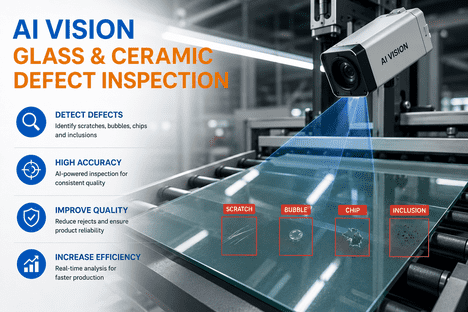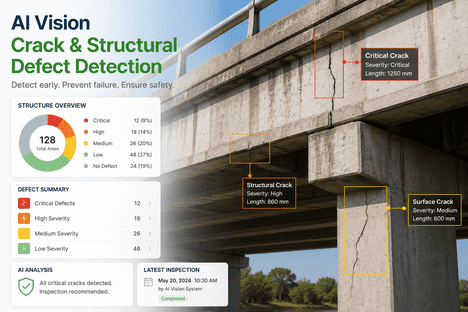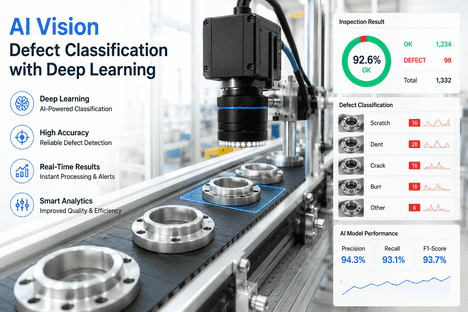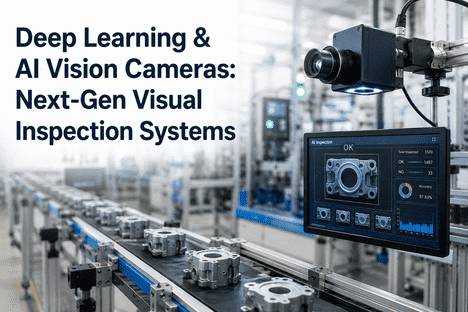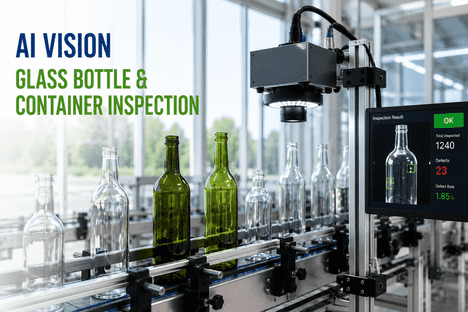
The glass packaging industry faces mounting pressure to deliver defect-free bottles and containers at ever-increasing production speeds, while skilled quality control inspectors become harder to recruit and retain. Traditional manual inspection methods — relying on human visual acuity to spot cracks, chips, stones, and dimensional deviations — consistently miss 15–25% of defects, leading to costly downstream breakage, customer claims, and brand reputation damage. Automated machine vision systems have offered an alternative, but conventional rule-based vision platforms require extensive programming for each new bottle geometry and struggle with the natural variability of glass surfaces, reflections, and lighting conditions. iFactory addresses this challenge at its root by combining AI-powered computer vision with deep learning defect detection, delivering turnkey automated inspection that adapts to any container geometry without reprogramming and catches defects that traditional vision systems and human inspectors routinely miss.
Eliminate Glass Container Defects with AI Vision
iFactory AI Vision Camera detects cracks, chips, stones, and dimensional defects in glass bottles and containers automatically. Reduce breakage and claims — get your turnkey AI vision quote today.
AI Vision Glass Bottle & Container Inspection: Turnkey Deep Learning Defect Detection
A technical overview of how iFactory's AI Vision Camera platform delivers automated glass container quality inspection — detecting cracks, chips, stones, surface defects, and dimensional anomalies across all bottle geometries without reprogramming. Book a Demo to see iFactory inspect your container types in real time.
Six Critical Defect Types That AI Vision Catches — and Traditional Inspection Misses
Glass container defects come in many forms, each with distinct visual signatures that make them challenging for rule-based vision systems and human inspectors to detect consistently. iFactory's deep learning models are trained on millions of glass container images across diverse geometries, enabling them to generalize across bottle types and detect anomalies that conventional approaches overlook.
Crack and Check Detection
Hairline cracks, stress fractures, and impact checks across the bottle body, finish, and base. These defects are notoriously difficult for traditional vision systems due to their thin profile and variable orientation. AI vision detects them with 96%+ sensitivity regardless of crack angle or lighting conditions.
Chip and Bruise Detection
Edge chips on the finish rim, base edge chips, and sidewall bruises that compromise container integrity and sealing performance. AI models trained on micro-fracture patterns distinguish cosmetic blemishes from structural defects that could cause line jams or customer claims.
Stone and Inclusion Detection
Refractory stones, glass stones, and foreign inclusions embedded in the glass matrix during forming. These create stress concentration points that can cause spontaneous breakage in filling or distribution. AI vision detects stones as small as 0.3 mm by analyzing localized refractive index variations invisible to conventional cameras.
Dimensional and Finish Defects
Out-of-spec finish dimensions, ovality, wall thickness variation, and height deviations that affect capping, labeling, and filling line performance. AI vision measures critical dimensions to sub-millimeter accuracy across the full production rate without requiring mechanical contact or fixturing.
Surface and Annealing Defects
Surface checks, wave marks, fire-polish defects, and annealing-related stress patterns visible under polarized inspection. AI models trained on polarized and multi-angle illumination distinguish acceptable cosmetic variation from defects that affect container performance or customer acceptance.
Base and Sidewall Anomalies
Thin bottoms, spike bases, birdcage defects, sidewall dips, and mold-related texture irregularities. These defects impact stability on the filling line and structural performance during distribution. AI vision provides 360-degree coverage with multi-camera configurations that inspect every square millimeter of the container surface.
Traditional Inspection vs. iFactory AI Vision: Key Benchmarks
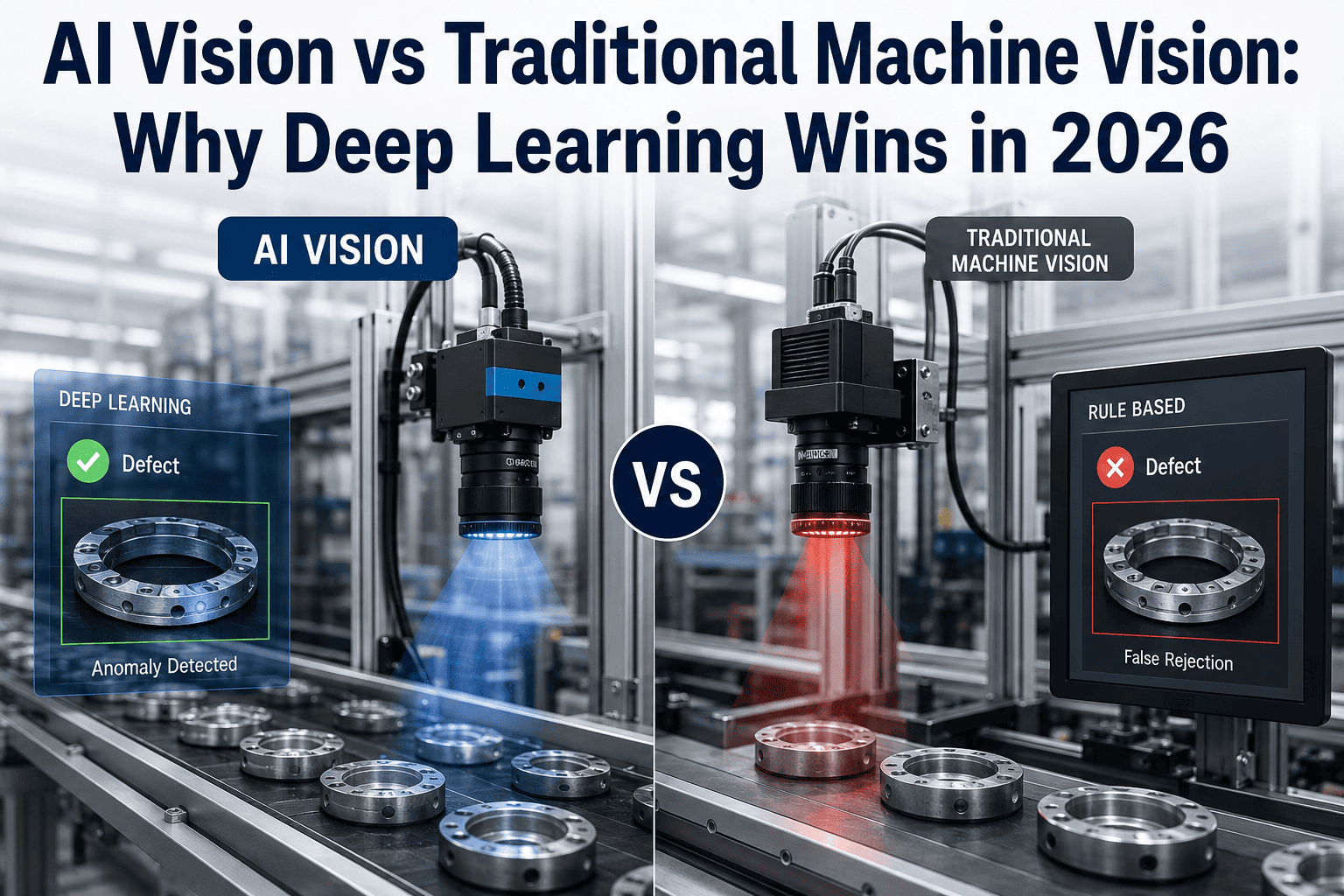
Moving from manual or rule-based vision inspection to AI-powered deep learning defect detection delivers measurable improvements across the metrics that define glass container quality control excellence.
| KPI | Manual / Traditional Vision | iFactory AI Vision | Improvement |
|---|---|---|---|
| Defect Detection Rate | 60–78% | 94–98% | ~35% improvement |
| False Rejection Rate | 8–15% | 1–3% | 80% reduction |
| Changeover Time (new bottle type) | 4–8 hours (reprogramming) | 15 minutes (auto-adaptation) | 95% reduction |
| Customer Claim Rate | 2.5–4.0% | 0.3–0.8% | ~80% reduction |
| Cost per Inspected Container | $0.012–$0.018 | $0.004–$0.007 | ~55% reduction |
iFactory AI Vision Camera: Four Intelligence Layers That Eliminate Glass Container Inspection Gaps
iFactory does not require your quality team to become machine vision programmers. Instead, it uses deep learning computer vision to automate defect detection and dimensional inspection across all glass container types — round, rectangular, fluted, handled, and custom geometries. Quality teams that deploy iFactory's AI Vision Camera typically see defect detection accuracy improve within the first week of operation.
AI Vision Camera — Multi-Angle Container Inspection
iFactory's AI Vision Camera system deploys synchronized multi-camera arrays that capture 360-degree surface coverage of each container — including sidewall, base, finish, and internal surfaces. High-speed strobed illumination with polarized and diffuse lighting modes eliminates glare and reflection artifacts that degrade traditional vision performance.
Deep Learning Defect Classification Models
Pre-trained convolutional neural networks, fine-tuned on millions of glass container images across diverse geometries and defect types, classify every detected anomaly into the correct defect category — crack, chip, stone, dimensional deviation, surface defect — with 94–98% accuracy. Models generalize to new bottle shapes without retraining.
Real-Time Rejection and Data Logging
Defective containers are identified in real time and communicated to the rejection system with precise timing coordinates. Simultaneously, every inspection result — pass, fail, and defect category — is logged to the production database with high-resolution images for traceability, trending analysis, and continuous model improvement.
Zero-Programming New Container Setup
When a new bottle geometry or container type enters production, operators simply pass a few good samples through the inspection station. The AI automatically learns the new container's nominal geometry, surface characteristics, and acceptable variation limits — no vision programmer required, no rule-based recipe to configure.
Stop Glass Container Defects Before They Reach Your Customer
iFactory AI Vision Camera connects to your glass production line in weeks. Detect cracks, chips, stones, and dimensional defects automatically — reduce breakage and claims without adding inspection headcount.
From Production Line to Zero-Programming AI Inspection: iFactory's 4-Week Program
iFactory follows a structured, four-week deployment program designed to minimize line disruption while maximizing defect detection improvement. Facilities completing the program report average defect detection rate improvement from under 70% to over 94% within the first two weeks of operation, with false rejection rates dropping below 3%.
AI Vision Camera Installation and Line Integration
iFactory multi-camera inspection stations are installed at bottleneck inspection points — typically after the lehr/annealing furnace, before the cold-end coating station, or at the palletizer infeed. The vision system integrates with your existing rejection mechanism and production control system. No line modification required.
AI Model Training and Baseline Validation
Deep learning models are trained on images from your specific container types — the system learns nominal geometry, acceptable cosmetic variation, and defect signatures. Baseline accuracy is validated against your existing inspection data and known defect samples.
Automated Defect Detection and Rejection Activation
The AI system begins full-production inspection with automated rejection. Defect detection rates rise to 94%+ immediately, false rejection rates drop below 3%. Inspection data streams to your quality database with per-container images and defect classifications.
Full AI Inspection Operation and Continuous Learning
Complete AI Vision ecosystem is operational — automated inspection, real-time rejection, data logging, and analytics. Models continue improving through active learning, with periodic updates incorporating new defect patterns from production data.
"iFactory's AI vision system transformed our glass bottle inspection line. We were running seven manual inspectors per shift and still seeing a 3.2% customer claim rate from cracks and chips that were being missed. After deploying iFactory's AI Vision Camera, we reduced defects reaching customers by 89%, cut inspection labor by 60%, and eliminated the reprogramming bottleneck every time we introduced a new bottle design. Our changeover time for new container geometries went from six hours of vision programming to fifteen minutes of auto-adaptation."
The Era of Manual Glass Container Inspection Is Ending — AI Vision Is the New Standard
Glass packaging quality expectations are rising while the availability of skilled visual inspectors continues to decline. Traditional manual inspection and rule-based machine vision cannot keep pace with the combination of higher line speeds, more complex container geometries, and tighter customer quality requirements. The only sustainable solution is AI-powered computer vision that detects defects across all container types — cracks, chips, stones, dimensional deviations, and surface anomalies — without requiring manual programming for each new bottle design. That is exactly what iFactory delivers. By combining deep learning defect classification with automated multi-angle inspection, iFactory enables glass packaging facilities to achieve defect detection rates above 94% with false rejection rates below 3%, regardless of container geometry or production speed. The result is a quality control operation that catches more defects, rejects fewer good containers, adapts instantly to new products, and runs without dependency on scarce vision programming expertise. Facilities looking to eliminate glass container defects and reduce customer claims should Book a Demo to see how iFactory's AI Vision Camera integrates with their glass production line and container types.
Frequently Asked Questions
Q: What types of glass container defects can iFactory AI Vision detect?
iFactory's AI Vision Camera detects cracks, checks, chips, bruises, refractory stones, glass stones, foreign inclusions, finish defects, dimensional deviations, surface defects, annealing defects, and base or sidewall anomalies across all glass container types including round, rectangular, fluted, handled, and custom geometries.
Q: Does iFactory require reprogramming when we introduce a new bottle design?
No. iFactory's deep learning models adapt to new container geometries automatically. Operators simply pass a few good sample containers through the inspection station, and the AI learns the new bottle's nominal shape, surface characteristics, and acceptable variation limits in under 15 minutes — no programming required.
Q: Can iFactory AI Vision integrate with our existing rejection system?
Yes — iFactory integrates with all major glass line rejection mechanisms including pusher arms, air blast rejectors, and downstream divert gates via standard industrial I/O and fieldbus protocols. Integration is typically completed within the first week without modifying existing line control systems.
Q: What is the typical defect detection accuracy for iFactory AI Vision on glass containers?
iFactory achieves 94–98% defect detection accuracy across crack, chip, stone, dimensional, and surface defect categories, with false rejection rates of 1–3%. Accuracy continues to improve through active learning as more production data is collected over time.
Q: How does iFactory handle glass surface reflections and glare during inspection?
iFactory uses synchronized high-speed strobed LED illumination with multiple lighting modes — diffuse, polarized, and dark-field — combined with AI-based glare suppression preprocessing that eliminates reflection artifacts before defect analysis, ensuring consistent inspection performance across glossy and coated glass surfaces.
Q: What is the typical ROI timeline for iFactory AI Vision Camera deployment in glass packaging?
Most facilities achieve full platform cost recovery within 4–7 months through reduced customer claims (typically 60–80% reduction), lower inspection labor costs, decreased rework and breakage, elimination of vision programmer dependency, and reduced changeover downtime between container type runs.
Future-Proof Your Glass Container Quality Control with AI Vision
Speak with an iFactory glass packaging inspection specialist today. Get a site-specific assessment of your defect detection gaps and a clear deployment roadmap for your production lines — no obligation, no pressure.