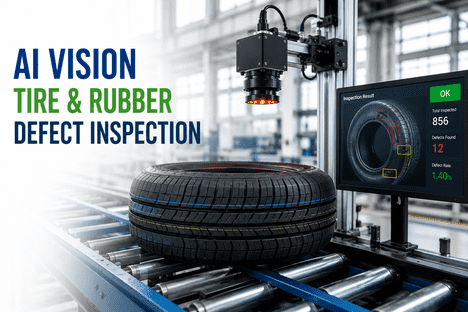
Rubber and tire manufacturers face a persistent quality challenge: detecting microscopic bubbles, blisters, tread irregularities, and sidewall flaws before defective products reach customers. Traditional machine vision systems struggle with the natural variation in rubber compounds and surface textures, generating false positives that slow production lines and false negatives that allow defects through. Deep learning-based AI vision changes this equation entirely. iFactory's AI vision camera platform brings production-grade defect detection to tire and rubber inspection — identifying bubbles, blisters, tread defects, and sidewall anomalies at 99.4% accuracy on edge-deployed NVIDIA GPU hardware with sub-50ms inference latency and zero cloud dependency.
Is Your Tire Quality Control Ready for Edge AI?
iFactory's AI vision platform detects bubbles, blisters, tread defects, and sidewall flaws in real time — with 99.4% accuracy, sub-50ms inference, and zero cloud dependency.
Key Tire & Rubber Defects Detected by AI Vision
iFactory's deep learning models are trained on millions of tire and rubber production images to detect the defects that matter most to quality and safety. The platform classifies each anomaly by type, severity, and location — enabling immediate corrective action and trend analysis across production shifts. Book a Demo to see how the platform classifies defects on your specific tire and rubber production line.
Bubble & Blister Detection
Microscopic air pockets trapped between rubber layers during vulcanization cause catastrophic failures under load. AI vision detects bubbles as small as 0.5mm across tread, sidewall, and inner liner surfaces — flagging defects that compromise tire integrity before they reach the road.
Tread Pattern Defects
Missing tread blocks, uneven groove depth, and pattern misalignment reduce wet traction and accelerate wear. The platform compares each tire against CAD-based tread specifications with sub-millimeter precision, detecting deviations invisible to human inspectors.
Sidewall Flaw Detection
Sidewall indentations, protrusions, and porosity defects create safety risks that traditional vision systems routinely miss. AI models trained on sidewall-specific defect libraries achieve 99.4% detection accuracy across tire sizes from passenger to OTR.
Surface Uniformity Analysis
Inconsistent rubber distribution, flashing, and dimensional variation affect tire balance and ride comfort. Real-time surface profiling with AI identifies uniformity issues during production, enabling immediate process adjustment before defective batches compound.
From Image Capture to Automated Quality Action
iFactory's AI vision platform transforms tire and rubber inspection from a manual sampling process into a continuous, fully automated quality assurance system. The workflow operates in four stages — each designed for production-line speed and edge-deployment reliability.
High-Speed Image Capture
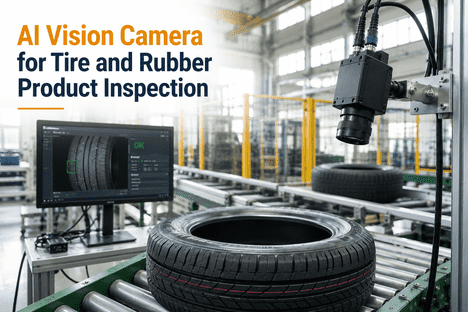
Industrial cameras positioned around the production line capture up to 60 images per second as each tire or rubber component passes through the inspection station. Multi-angle illumination ensures consistent surface visibility across tread, sidewall, and bead areas — regardless of ambient lighting conditions.
Edge AI Inference
Images stream directly to NVIDIA GPU edge hardware running iFactory's deep learning models. Each frame is analyzed in under 50 milliseconds — detecting bubbles, blisters, tread defects, sidewall flaws, and surface irregularities with 99.4% accuracy. No data leaves the facility; all inference happens on-premise.
Defect Classification & Severity Scoring
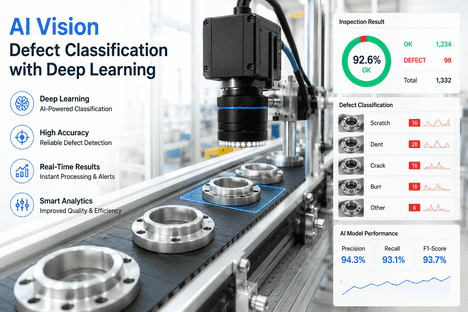
Detected anomalies are classified by defect type, assigned a severity score from 1-100, and mapped to the precise location on the tire. The system distinguishes between cosmetic imperfections and structural defects — preventing unnecessary rejects while catching every safety-critical flaw.
Automated Action & Reporting
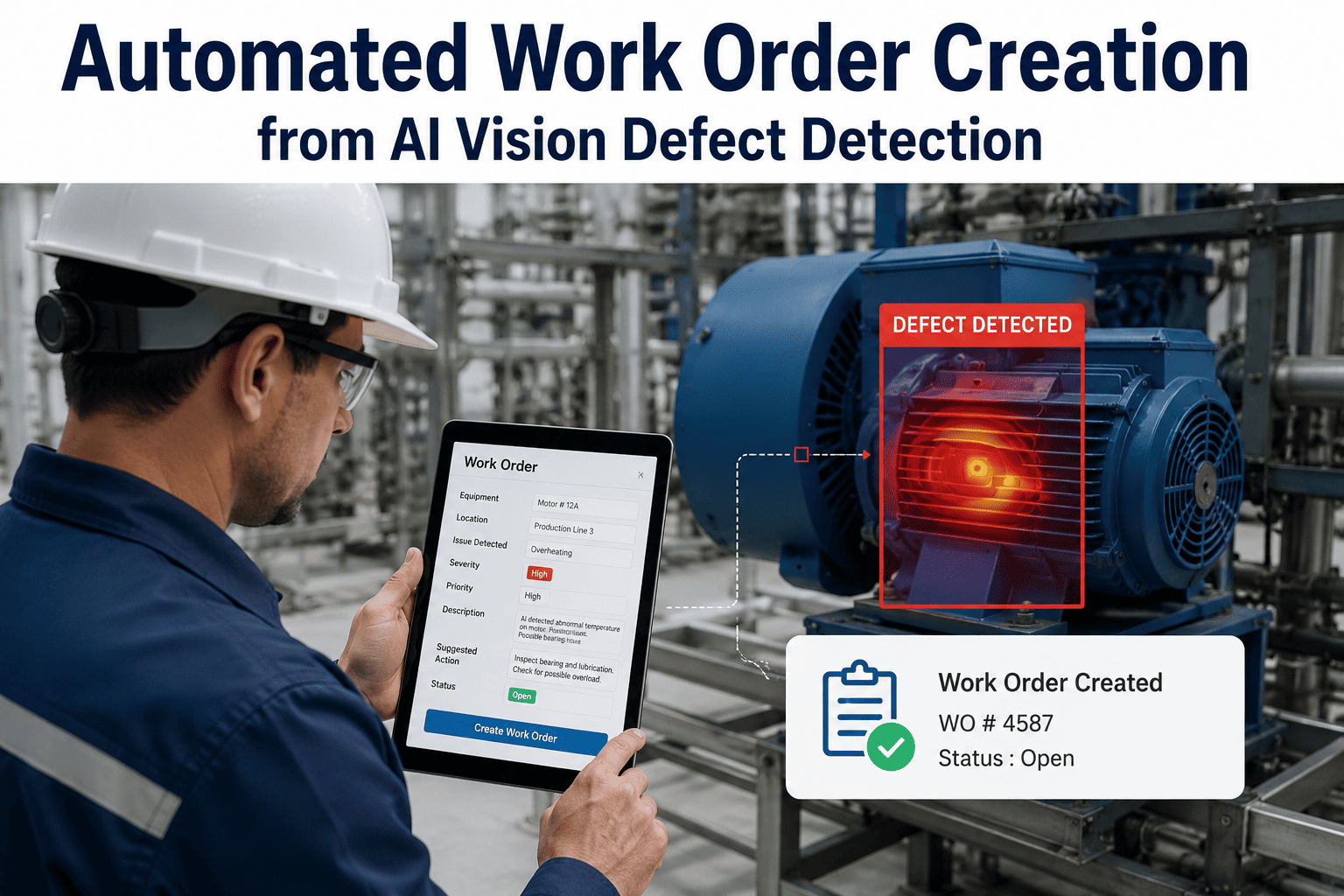
When a defect exceeds configured thresholds, the platform triggers automated actions: rejecting the defective unit, generating a quality report with annotated images, and creating a CMMS work order for line maintenance. Real-time dashboards display defect trends by shift, mold, and compound batch.
Edge-Native AI Architecture for Tire & Rubber Production
iFactory's AI vision platform is designed from the ground up for production-floor deployment. Every component — from camera integration to model inference to quality reporting — runs on edge hardware inside the facility, eliminating cloud dependency and ensuring continuous operation even during network outages.
Four-Layer Architecture for Production-Grade Tire Inspection
High-resolution industrial cameras with synchronized lighting capture multi-angle tire images at line speed. Supports passenger, truck, agricultural, and OTR tire sizes with automated field-of-view adjustment and calibration.
NVIDIA GPU edge hardware runs trained deep learning models locally — processing up to 60 frames per second with sub-50ms latency per frame. All inference occurs on-premise; no cloud upload required for real-time defect detection.
Detected defects are classified by type, severity, and location. Trend analysis identifies recurring defect patterns by mold, shift, material batch, and production line — enabling root cause investigation and process improvement.
REST API and webhook connectors integrate with MES, CMMS, and ERP systems. Quality events trigger automated unit rejection, work order creation, and real-time dashboard updates without manual data entry.
Ready to Automate Your Tire Defect Inspection?
Deploy iFactory's AI vision on your production line and start detecting bubbles, blisters, tread defects, and sidewall flaws in real time — with zero cloud dependency and sub-50ms inference.
What Tire & Rubber Manufacturers Achieve with AI Vision
Facilities deploying iFactory's AI vision platform for tire and rubber defect inspection report measurable improvements in quality, throughput, and cost within the first quarter of operation. The results below reflect aggregate outcomes across passenger tire, truck tire, and industrial rubber production lines.
Deep learning models trained on tire-specific defect libraries achieve 99.4% accuracy for bubbles, blisters, tread defects, and sidewall flaws — reducing field failure rates and warranty claims across passenger and commercial tire lines.
AI vision distinguishes cosmetic surface variations from genuine structural defects — reducing unnecessary scrap by up to 60% compared to threshold-based vision systems while maintaining zero tolerance for safety-critical flaws.
Replace statistical sampling with 100% inline inspection of every tire and rubber component. AI vision inspects each unit at line speed — no bottlenecks, no gaps, no undetected defects reaching customers.
Edge inference on NVIDIA GPU hardware delivers defect classification in under 50 milliseconds per frame. Immediate detection enables real-time rejection and process adjustment before defective batches compound.
All AI inference runs on-premise inside the facility firewall. No internet connection required for real-time defect detection. Raw production images never leave the plant floor.
Reduced scrap, lower warranty claims, decreased manual inspection labor, and improved production throughput deliver full return on investment within 12 months of deployment on high-volume tire and rubber lines.
AI Vision for Tire & Rubber Inspection — Common Questions
What types of tire defects can AI vision detect?
iFactory's AI vision platform detects bubbles, blisters, tread pattern defects, sidewall flaws, surface irregularities, dimensional variation, and flashing on tires and rubber products. Models are trained on defect libraries covering passenger, truck, agricultural, and OTR tire categories with 99.4% accuracy.
How does AI vision handle different rubber compounds and surface textures?
Deep learning models are trained on production images spanning the full range of rubber compounds, cure states, and surface finishes used in tire manufacturing. The platform adapts to compound-specific appearance variations without requiring manual threshold adjustments — reducing false positives while maintaining detection sensitivity for genuine defects.
Can the platform integrate with existing tire production line equipment?
Yes. iFactory's AI vision platform connects to existing line control systems via REST API, MQTT, and industrial protocol adapters. Reject mechanisms, conveyor controls, and CMMS/MES systems receive automated triggers when defects are detected — enabling real-time quality action without replacing existing infrastructure.
How long does it take to deploy AI vision on a tire production line?
Initial deployment — including camera installation, edge hardware setup, and model baseline — is typically completed within 2-3 weeks per production line. Full defect classification tuning on facility-specific products requires 4-6 weeks of production data collection and model refinement. Measurable quality improvements appear within the first month.
What happens during internet outages — does the inspection system stop?
No. All AI inference runs on-premise on NVIDIA GPU edge hardware inside the facility. Defect detection, classification, and automated rejection continue at full accuracy during internet outages. Cloud connectivity is used only for optional model retraining and cross-facility analytics — never for real-time inspection decisions.
AI Vision Is the New Standard for Tire & Rubber Quality Control
The tire and rubber industry can no longer rely on manual inspection or traditional machine vision to catch the defects that compromise safety, performance, and brand reputation. Bubbles, blisters, tread defects, and sidewall flaws demand detection technology that operates at production-line speed with accuracy that matched human inspectors — and exceeds them in consistency. iFactory's AI vision camera platform — with on-premise edge inference on NVIDIA GPU hardware, 99.4% detection accuracy, sub-50ms latency, and zero cloud dependency — provides the technology layer that makes this transformation achievable within weeks, not years. Book a Demo to see how AI vision can eliminate undetected defects from your tire and rubber production line.
Deploy AI Vision That Inspects Every Tire at Line Speed
iFactory's edge-native AI vision platform detects bubbles, blisters, tread defects, and sidewall flaws with 99.4% accuracy — no cloud dependency, sub-50ms inference, and automated quality system integration.