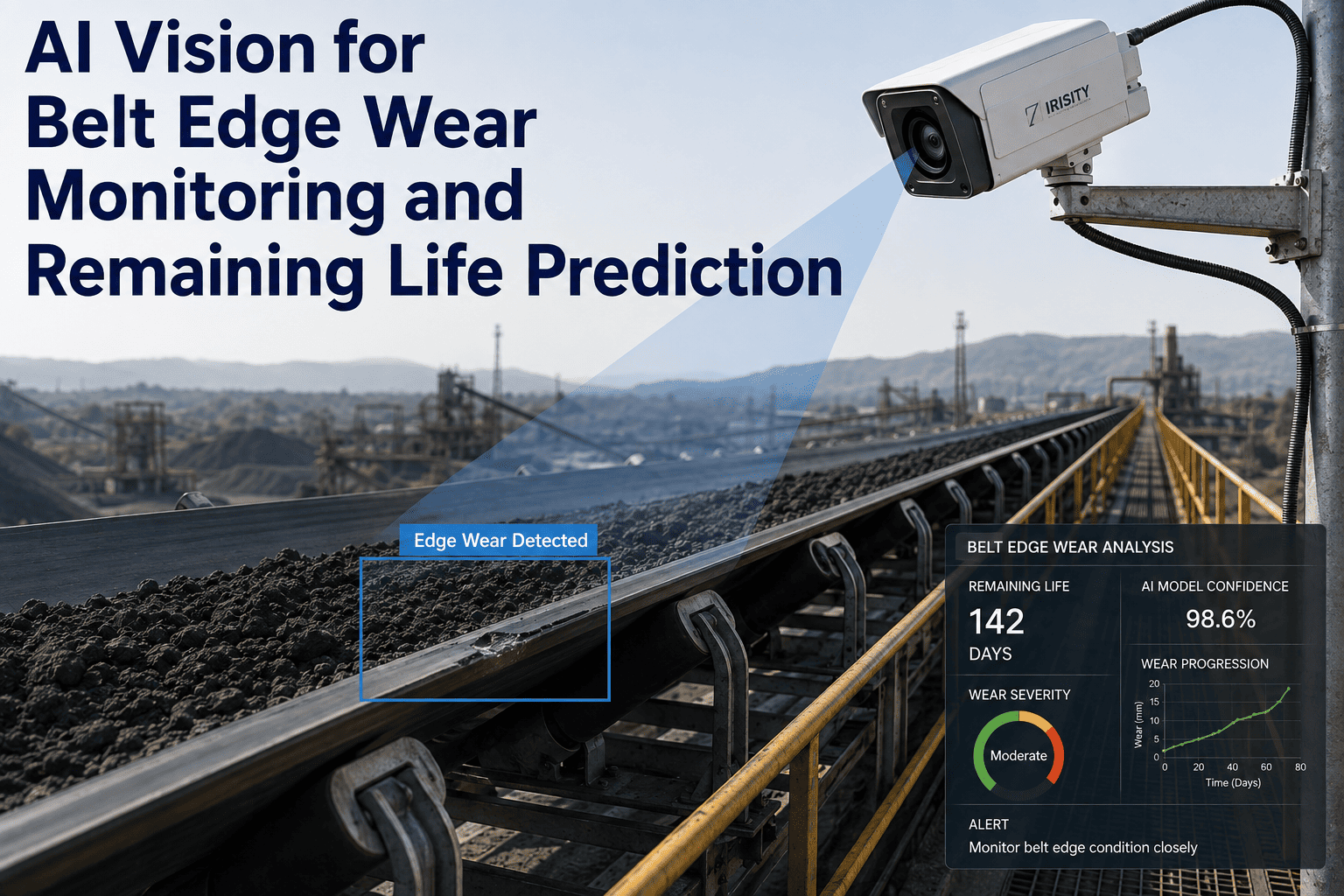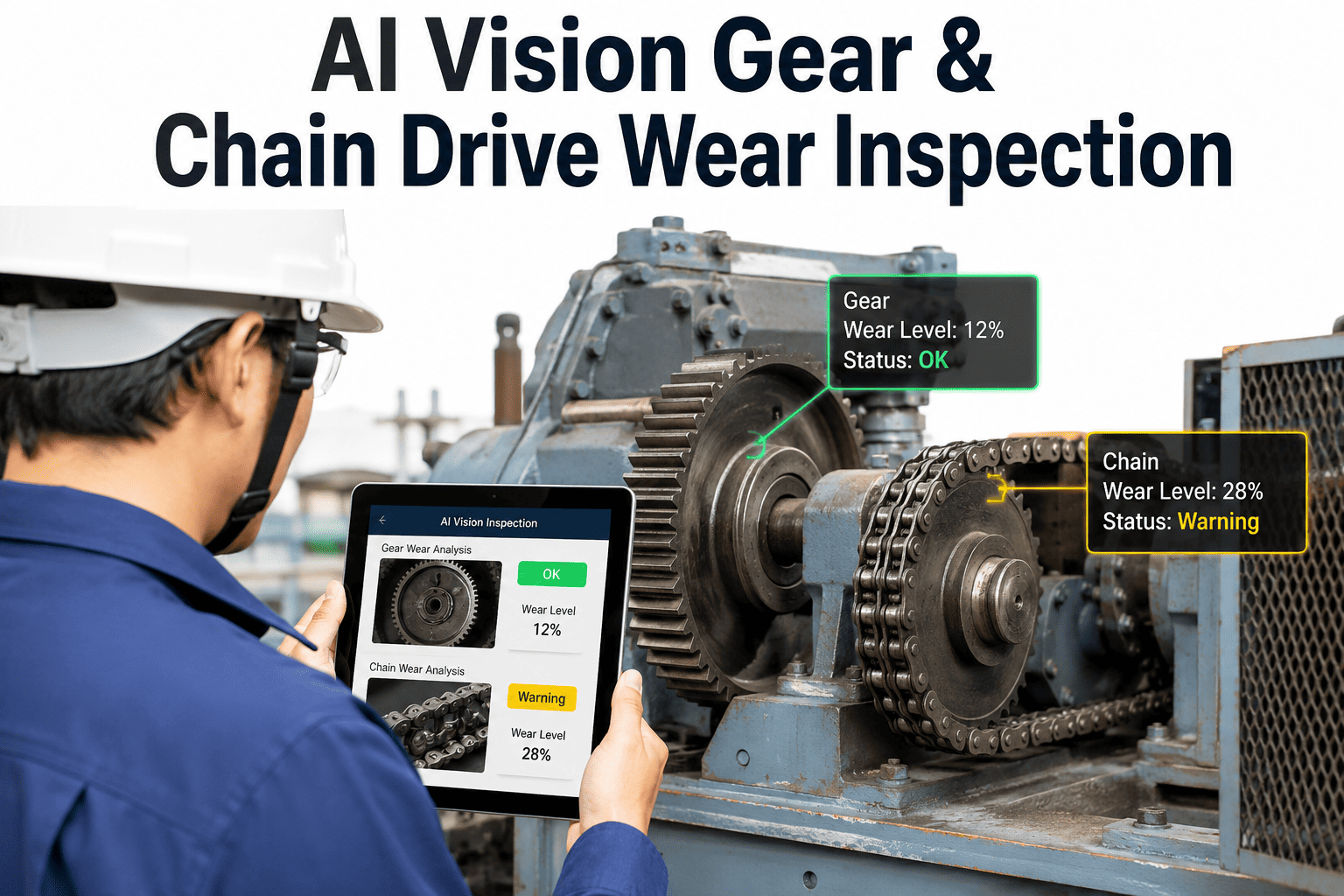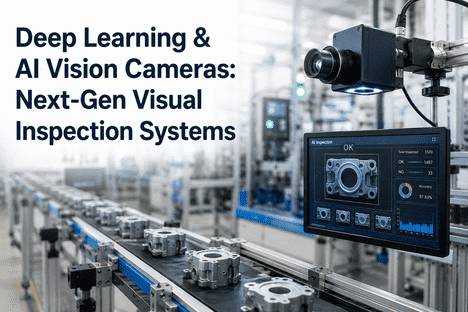
Gear tooth wear and chain elongation are among the most common yet most underdetected causes of drive system failures in industrial operations. By the time conventional inspection methods surface the problem, wear has already progressed to the point of accelerated degradation — triggering unplanned shutdowns, secondary component damage, and costly emergency replacements. iFactory's AI Vision Camera applies deep learning-based visual inspection to gear and chain drive systems continuously, detecting tooth wear patterns, chain elongation, misalignment, and lubrication deficiencies at resolutions and speeds no manual inspection program can match. Deployed directly at the drive assembly, the system delivers real-time alerts and automatically generates CMMS work orders — connecting detection to corrective action without manual intervention. Reliability and procurement teams evaluating AI-driven drive inspection programs are encouraged to Book a Demo with iFactory to assess how visual AI monitoring extends gear and chain drive life across their facility.
Why Gear and Chain Drive Inspection Demands AI Vision in 2026
Gear and chain drive systems are critical motion transfer components in conveyors, gearboxes, packaging lines, press systems, and material handling equipment across virtually every industrial sector. Traditional inspection approaches — periodic manual checks, scheduled replacement at fixed intervals, or vibration-based monitoring — fail to catch early-stage surface fatigue, micro-pitting on gear teeth, or progressive chain elongation before these conditions accelerate into full drive failure. AI vision inspection closes this gap by applying computer vision and deep learning models trained on drive wear failure modes to continuously analyze the physical condition of gear surfaces and chain assemblies during normal operation. iFactory's AI Vision Camera platform delivers this capability as a turnkey deployment — connecting to existing CMMS infrastructure and generating prioritized maintenance actions from every detected condition. Maintenance managers evaluating AI inspection solutions can Book a Demo to see how iFactory performs on real gear and chain drive assets in their environment.
The economic case for AI vision drive inspection is straightforward. A single unplanned gearbox failure in a continuous production environment can cost tens of thousands in lost throughput, emergency labor, and expedited parts procurement — in addition to the repair cost itself. AI vision inspection converts this unpredictable failure cost into a planned maintenance expense, typically at a fraction of the price. Beyond cost avoidance, predictive drive inspection also eliminates the over-maintenance pattern common in calendar-based programs, where components are replaced on schedule regardless of actual condition — consuming budget and technician time that condition-based maintenance makes available for higher-value reliability activities.
What iFactory AI Vision Detects in Gear and Chain Drive Systems
Effective drive inspection requires detection across multiple concurrent failure modes — tooth surface degradation, dimensional changes, alignment deviation, and lubrication condition — that each follow different degradation timelines and demand different corrective actions. iFactory's deep learning vision models are trained to identify and classify all of these conditions simultaneously, providing maintenance teams with a complete picture of drive health rather than a single-parameter alarm.
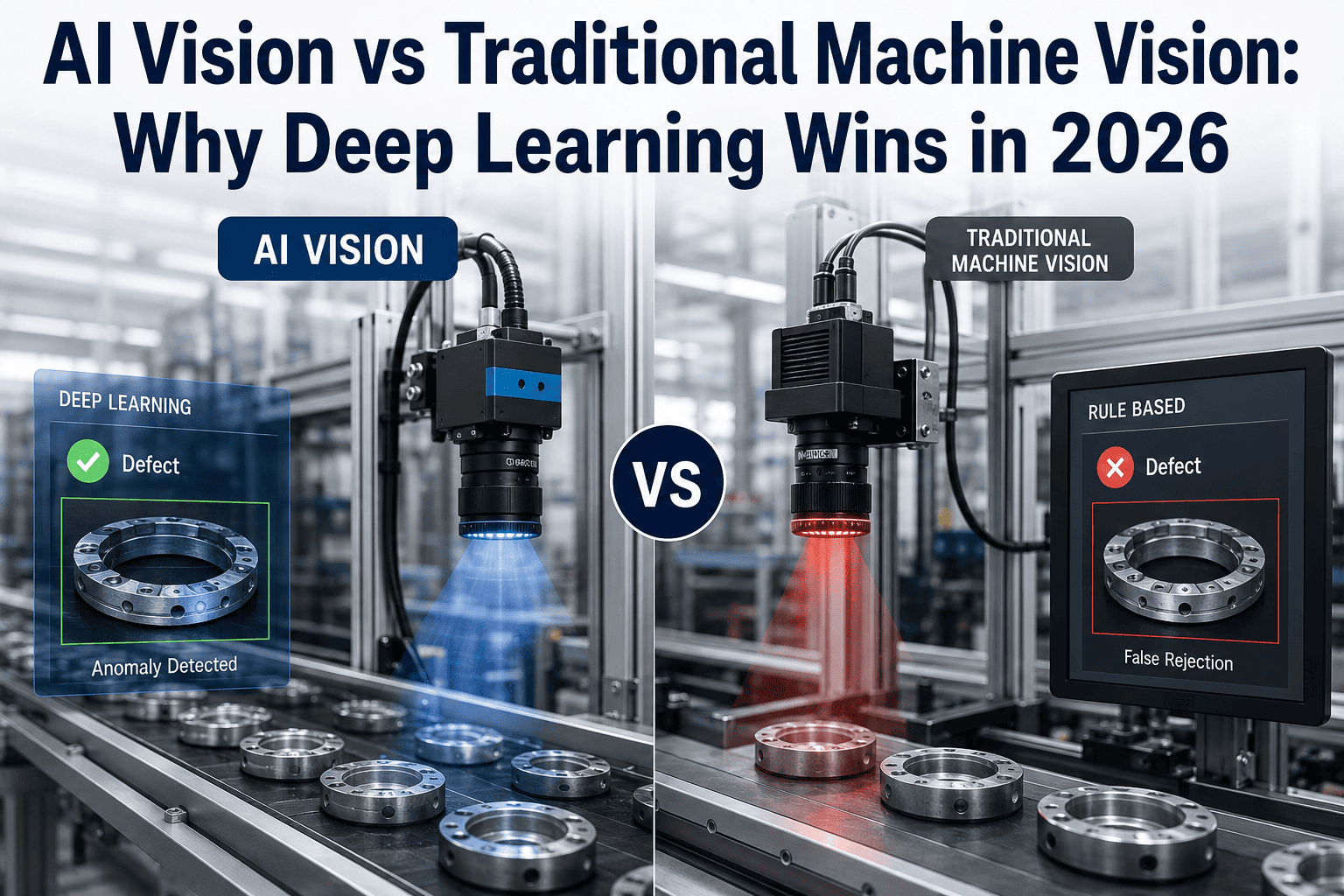
AI Vision vs. Traditional Drive Inspection: Performance Comparison
The gap between AI vision inspection and conventional drive monitoring methods is measurable across detection speed, coverage, accuracy, and total maintenance cost impact. The following comparison reflects performance outcomes from iFactory deployments in cross-industry drive inspection programs.
| Inspection Dimension | Traditional Inspection Methods | iFactory AI Vision | Operational Impact |
|---|---|---|---|
| Gear Tooth Wear Detection | Periodic manual inspection — early-stage pitting missed between rounds | Continuous visual analysis — micro-pitting detected at onset | 2–4 week advance warning before failure |
| Chain Elongation | Manual measurement at fixed intervals — elongation discovered after sprocket damage begins | Continuous pitch measurement via vision — replacement triggered at threshold | Sprocket life extended by 30–50% |
| Misalignment Detection | Laser alignment tool required — checked during planned shutdowns only | Visual pattern detection during operation — no shutdown required | Misalignment corrected before wear damage |
| Lubrication Monitoring | Fixed-interval re-lubrication regardless of actual condition | Condition-triggered lubrication alerts based on visual surface analysis | 40% reduction in lubricant waste |
| Work Order Creation | Manual — relies on inspector availability and data entry accuracy | Automated — generated from AI detection with visual evidence attached | Zero-delay detection-to-action cycle |
How iFactory AI Vision Integrates Into Your Drive Maintenance Workflow
iFactory's AI Vision Camera is positioned at the gear or chain drive assembly — fixed-mount deployment with no modification to existing equipment. The edge AI processor mounted with the camera analyzes visual frames continuously against drive-specific baseline models established during commissioning. When the deep learning model identifies a wear condition, dimensional deviation, or lubrication anomaly, it generates a structured detection event that flows directly into iFactory's EAM platform as a prioritized work order. That work order carries the asset ID, detected condition classification, severity level, supporting visual evidence, and recommended corrective action — giving the assigned technician everything needed to execute the repair correctly on the first visit. Facilities with complex drive systems covering multiple conveyor lines, gearbox stages, or high-cycle indexing equipment can scale AI vision coverage across all critical assets from a single platform dashboard, with no additional software licensing required per asset. Reliability teams ready to evaluate AI vision inspection on their specific drive inventory can Book a Demo to see the platform configured for their equipment types.