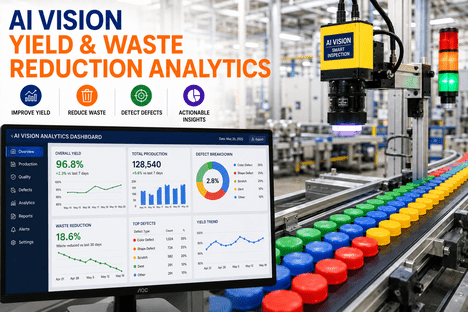
Every percentage point of scrap or rework is margin that disappears before a product ever reaches a customer — and in most factories, the defects driving that loss are discovered only after the material, labor, and machine time behind them have already been spent. First Pass Yield, the share of units that complete production correctly on the first attempt without rework or scrap, is one of the clearest signals of process health a plant has, yet most quality teams only see it as a lagging number on a weekly report rather than a real-time signal they can act on. AI vision yield and waste reduction analytics changes this by treating every inspection not just as a pass-or-fail decision, but as a data point that traces defects back to their actual source — the tool, the station, the shift, the process parameter — so the corrective action happens upstream, before the next hundred units are already scrapped.
Stop Discovering Scrap After the Material Is Already Spent
iFactory's AI vision platform connects every inspection result back to its process source — turning defect data into closed-loop corrections that lift first-pass yield instead of just logging another rejected unit.
Why First Pass Yield Stays Low Even When Inspection Catches Every Defect
A plant can run a perfectly accurate inspection station and still have a stagnant yield problem, because catching a defect is not the same as preventing the next one. Traditional quality control treats inspection as a final checkpoint: a part is machined, assembled, or filled, and only then does an inspector or a rule-based system check whether it is good. If a defect was introduced at the very first step in that sequence but isn't caught until the last, the organization has already spent the labor, machine time, and material on a unit that was destined for the scrap bin from the start. The inspection result is accurate, but it arrives too late to do anything except confirm the loss. The actual yield problem is almost always upstream — a worn tool, a drifting process parameter, a misaligned fixture — and a pass-or-fail signal alone does nothing to point a process engineer toward that root cause. Improving first pass yield requires inspection data that is structured for root-cause analysis from the moment it is captured, not reconstructed afterward from defect counts and inspector notes.
Yield Gains Compound Fast
A small percentage gain in first pass yield translates into a proportionally larger reduction in total manufacturing cost, because every avoided scrap unit also avoids the labor and machine time already sunk into it.
Rework Consumes Capacity
Scrap, rework, and workaround activity quietly consumes a portion of plant capacity that never shows up as finished, sellable output — capacity that AI vision analytics can recover by addressing root causes instead of symptoms.
Defects Traced to Cause
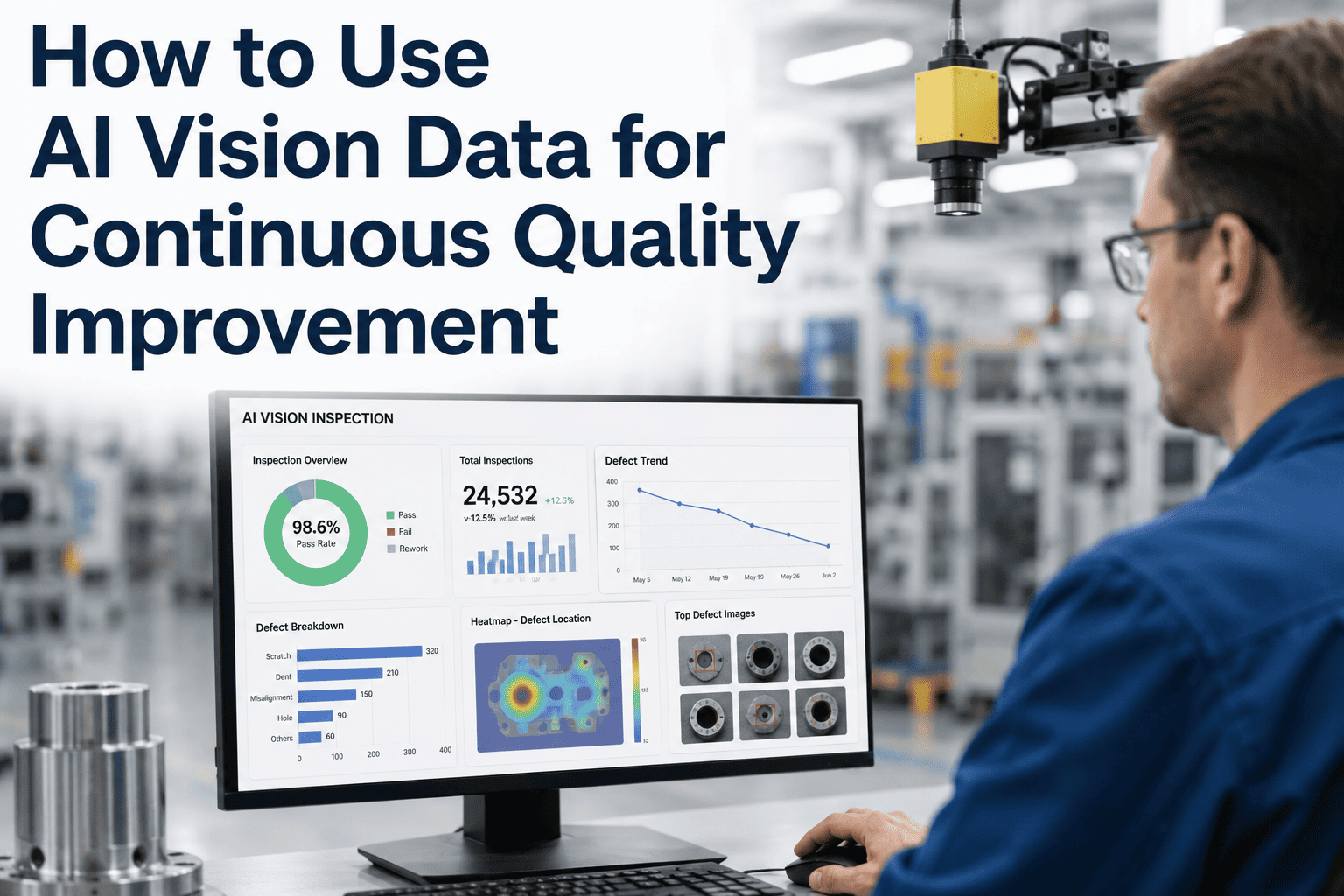
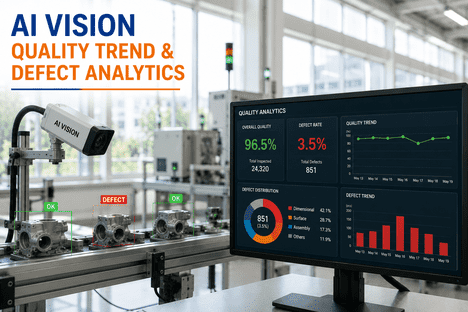
Every inspection result is tagged to the station, tool, shift, and process parameters active at the moment of capture — turning a defect count into a root-cause map instead of an undifferentiated reject pile.
Process Adjusts Automatically
When defect trends move toward a known failure signature, the platform can signal an upstream process adjustment before parts actually drift out of specification — preventing the next batch of scrap rather than just detecting it.
How iFactory's AI Vision Platform Turns Inspection Data Into Yield Improvement
Reducing scrap and lifting first pass yield requires more than detecting defects accurately — it requires structuring every inspection event so it can be traced back to the conditions that produced it and fed forward into a corrective action. iFactory's AI vision platform is built around this loop rather than treating defect detection as an isolated endpoint. Book a Demo to see how this process analytics layer maps to your current scrap and rework profile.
| Analytics Capability | Description | Process Integration | Yield Outcome |
|---|---|---|---|
| Defect Source Tagging | Every detected defect is linked to the station, tool, shift, and timestamp where it occurred | Captured automatically at the moment of inspection, no manual logging | Root cause identified in hours instead of weeks of manual correlation |
| Defect Pareto & Trend Analysis | Defect types are ranked by frequency and cost impact, with drift trends tracked over time | Live dashboards updated continuously as production runs | Improvement effort focused on the highest-cost defect categories first |
| Process Parameter Correlation | Defect rate spikes are correlated against process variables such as speed, temperature, and pressure | Integrated with PLC and SCADA data streams alongside vision results | Process drift identified before it produces a full batch of scrap |
| Closed-Loop Process Signaling | When a defect trend approaches a known failure signature, an adjustment signal is generated for the upstream process | API-based signaling to PLC or process control systems | Corrective action taken before parts actually drift out of specification |
| First Pass Yield Reporting | Continuous calculation of FPY by line, shift, and SKU using actual inspection outcomes | Synced with MES and ERP systems for unified reporting | Yield performance visible in real time rather than reconstructed weekly |
From Defect Detection to Closed-Loop Process Correction
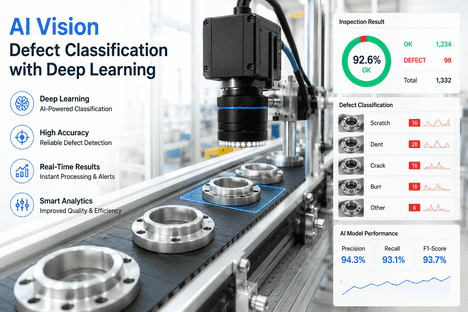
Catching a defective unit and preventing the next one are two different problems, and most vision systems only solve the first. iFactory's AI Vision Camera is built to solve both by treating every inspection as process telemetry, not just a pass-fail gate. As units move through the line, the platform inspects every one at full speed and classifies any defect by type, severity, and exact location — but it doesn't stop at logging the result. That classification is correlated against the process conditions active at the same moment, so when a particular defect signature starts trending upward, the system can flag the likely upstream cause — a capping head drifting out of torque tolerance, an adhesive heater running outside its set range, a fixture that has worked loose — before the defect rate climbs high enough to turn into a full reject batch. This is the difference between detection and prevention: a vision system that only flags bad parts after they're made will always be reacting to scrap that has already happened, while a system that feeds defect trends back into process control closes the loop and stops the scrap before it accumulates. Manufacturing and quality teams evaluating where their current scrap is actually coming from can Book a Demo and see this closed-loop analysis running against their own defect data.
AI Vision Yield and Waste Reduction — Frequently Asked Questions
What is First Pass Yield and why does it matter more than a simple defect count?
First Pass Yield is the percentage of units that complete production correctly on the first attempt, without requiring rework, repair, or scrap. A raw defect count tells you how many bad units were made; FPY tells you what share of your total production capacity is actually generating sellable output on the first try. A low FPY signals that a meaningful portion of labor, machine time, and material is being consumed by what amounts to a hidden, non-value-adding second factory running inside your real one.
How does AI vision identify the actual source of a defect, rather than just flagging the defective unit?
Every inspection event captured by iFactory's AI vision platform is tagged with the station, tool, shift, and timestamp at the moment of capture, and that tag is correlated against process parameters from connected PLC and SCADA systems. Instead of a defect existing as an isolated rejected unit, it becomes a data point in a pattern — so when the same defect signature starts appearing repeatedly from one station or one shift, the source becomes visible in the trend data rather than requiring a manual investigation to reconstruct after the fact.
What does "closed-loop" process feedback actually mean in practice?
Closed-loop feedback means the system does not stop at reporting that a defect occurred — it signals the upstream process to adjust before the defect trend produces a full batch of scrap. For example, if vision data shows a drift toward an upper tolerance limit on a critical dimension, the platform can signal the relevant process control system to adjust before parts actually move out of specification. This shifts the value of the inspection data from documentation after the fact to prevention before the next unit is made.
Does adding AI vision yield analytics replace existing SPC charts and MES quality modules?
No — it strengthens them by supplying the granular, unit-level defect data that SPC charts and periodic quality reports typically lack. Standard SPC and MES quality logs often only catch quality drift after it has already accumulated across many units, because the data points feeding them are sampled or aggregated. AI vision inspects every unit and feeds that complete dataset into the same MES and ERP systems, giving existing process control tools a far higher-resolution signal to work from rather than replacing them.
How quickly can a facility expect to see measurable yield improvement after deployment?
Most facilities see measurable reductions in scrap and rework within the first few months of deployment, since the highest-cost defect categories are typically the easiest to identify once full-unit inspection data starts flowing into pareto and trend analysis. The deeper closed-loop process correction benefits — where the system anticipates drift before it produces out-of-spec parts — build over a longer window as the platform accumulates enough defect-to-process correlation data to signal corrections with confidence.
Turn Every Inspection Into a Signal That Improves the Next Batch, Not Just a Record of the Last One
iFactory connects full-unit AI vision inspection, defect source attribution, and closed-loop process signaling — converting scrap data into the upstream corrections that actually move your first pass yield.