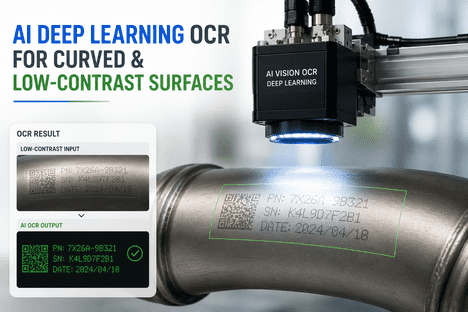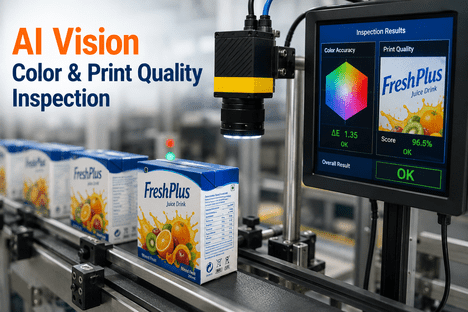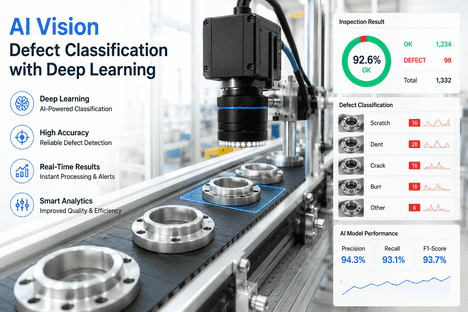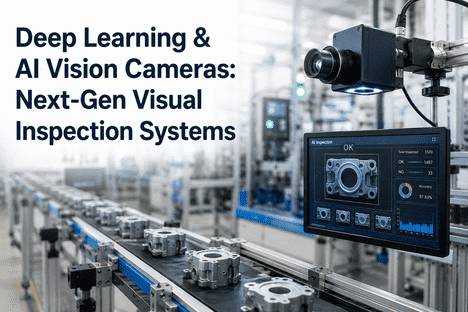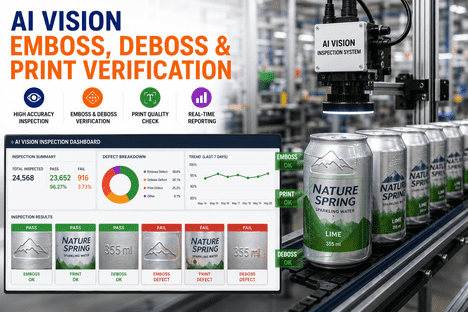
Embossed, debossed, and low-contrast printed marks are among the most difficult surfaces for conventional machine vision systems to reliably inspect. When a brand logo is raised 0.3mm on matte packaging, when a date code is debossed into a dark polymer cap, or when a compliance mark is printed in clear lacquer on a metallic substrate, the visual signal is weak, variable, and highly sensitive to lighting angle and surface finish variation. Traditional rule-based vision systems fail precisely here — where contrast is low, mark geometry is subtle, and defect thresholds must be calibrated for each product variant. iFactory's AI Vision OCR Inspection platform is engineered to operate in exactly these conditions. Deploying deep learning models trained on your specific mark types, substrates, and lighting environments, iFactory detects missing, incomplete, misaligned, and malformed embossed, debossed, and printed marks at production line speeds — with verification accuracy that holds across surface color variation, gloss differences, and ambient light changes. The result is a fully automated mark quality gate that eliminates the subjectivity of manual inspection and the brittleness of legacy rule-based systems, delivering consistent code and brand accuracy verification across every unit produced.
Is Your Line Catching Every Emboss, Deboss and Print Defect?
iFactory's AI Vision OCR Inspection platform verifies raised marks, debossed codes, and low-contrast print on any substrate — at full production line speed, with no manual inspection dependency.
Why Emboss, Deboss and Low-Contrast Print Verification Demands AI Vision
Embossed and debossed marks are structurally different from printed marks — their visibility is entirely dependent on incident light angle, surface reflectivity, and mark depth consistency. A shallow emboss on cream-colored HDPE packaging may produce less than 2% luminance contrast under standard diffuse lighting, making it effectively invisible to pixel-intensity-based detection logic. Printed marks in UV-cured clear varnish on foil laminates present similar challenges: no color contrast at all, only specular reflection variation at specific viewing angles. Legacy machine vision systems solve these problems with narrow band lighting rigs calibrated for one product at a time — setups that break the moment a substrate batch changes gloss level or a packaging vendor switches resin grade. iFactory's AI Vision Camera platform uses convolutional neural networks trained on surface-specific datasets to detect mark presence, completeness, and correctness independent of these lighting and material variables. The model learns what a valid emboss looks like under your facility's actual lighting conditions — and flags deviations that a human inspector or a rule-based system would miss. Book a Demo to see how iFactory handles your specific mark types and substrate combinations.
Emboss & Raised Mark Detection
Deep learning models detect raised logos, compliance marks, and tactile codes on plastics, metals, glass, and paperboard — including shallow emboss profiles with sub-millimeter depth variation that produce less than 5% contrast under diffuse illumination.
Deboss & Recessed Code Verification
iFactory inspects debossed date codes, batch numbers, and brand identifiers on polymer caps, metal closures, and molded components — verifying character completeness, correct content, and acceptable depth without requiring shadow-enhancement lighting fixtures.
Low-Contrast Print Inspection
Vision OCR Inspection reads printed text, barcodes, and 2D codes in clear varnish, UV lacquer, matte-on-matte, and foil-on-foil print scenarios — where pixel-intensity thresholding fails and human inspectors experience significant fatigue-related miss rates within hours.
Multi-Substrate Adaptability
A single trained model handles mark verification across multiple packaging variants — different substrate colors, gloss levels, and surface textures — without requiring separate lighting rigs or recalibration when switching between SKUs or packaging suppliers.
Six Emboss, Deboss and Print Defects That AI Vision Catches Where Other Systems Fail
Understanding which specific defect types escape conventional inspection is critical for evaluating where AI vision delivers the most immediate quality impact. The defects below represent the most commercially significant failure modes in emboss, deboss, and low-contrast print verification — and the ones most frequently responsible for customer complaints, regulatory non-compliance, and brand damage.
Incomplete or Partial Emboss Fill
Mold wear, insufficient cavity pressure, or resin viscosity variation causes embossed marks to partially fill — producing characters or logos that appear complete at a glance but are missing strokes, serifs, or closure points when examined closely. These partial fills fail brand standards and can render compliance marks unreadable under regulatory audit. iFactory detects emboss incompleteness at the character-stroke level with 97%+ sensitivity across polymer, metal, and paperboard substrates.
Missing or Transposed Deboss Characters
Date code and batch number debossing errors — missing digits, transposed characters, or incorrect content from die misalignment — create traceability failures that can trigger regulatory action or product recalls. Manual inspection of dark deboss on dark substrates at production speeds produces miss rates of 15–40% for single character errors. iFactory's Vision OCR Inspection verifies debossed character content against expected format patterns, catching transpositions and omissions that human inspectors routinely miss under production conditions.
Varnish and Lacquer Print Registration Failure
Clear UV varnish overprint on foil and metallic substrates has near-zero color contrast. Misregistration of 0.5mm or more renders barcodes unscannable and makes compliance text illegible — but the defect is invisible under standard inspection lighting. iFactory's AI model uses specular reflection patterns rather than color contrast to detect print registration, reading clear varnish marks on challenging substrates that defeat conventional camera-and-threshold inspection approaches.
Emboss Depth Inconsistency Across a Production Run
Gradual mold wear produces embossed marks that become progressively shallower across a production run without triggering any single obvious rejection event. The defect is cumulative — individual units look marginal rather than clearly defective — until customer complaints or audit failures reveal a systematic quality drift. iFactory tracks emboss depth consistency over time, flagging gradual degradation trends that indicate tooling maintenance is required before outright defect rates spike.
Matte-on-Matte Print Omission
Matte ink on matte substrate packaging — common in premium cosmetics, pharmaceutical, and food applications — produces essentially zero specular contrast. Print omissions are invisible to human inspectors at line speed and undetectable by conventional vision systems without expensive structured lighting that complicates line integration. iFactory's neural OCR models are trained specifically on matte surface print scenarios, detecting text and mark omissions reliably without requiring substrate-specific lighting modifications.
Brand Mark Misalignment on Embossed Packaging
Logo emboss misalignment caused by tooling shift, substrate curl, or positioning variation during pressing produces marks that are present and complete but incorrectly positioned relative to package geometry. These units fail brand presentation standards even when the mark itself is structurally intact. iFactory performs positional verification as part of each emboss inspection cycle, confirming mark location within defined tolerances against the registered product layout template. Book a Demo to see iFactory's positional verification in action on your packaging format.
How iFactory Vision OCR Inspection Works on Low-Contrast and Surface-Relief Marks
iFactory's AI Vision OCR Inspection system is not a general-purpose camera system adapted for marking verification — it is a purpose-built industrial inspection platform designed specifically for the optical challenges that emboss, deboss, and low-contrast print present. The architecture combines controlled multi-angle illumination, deep learning inference on NVIDIA edge GPU hardware, and OCR models trained on surface-specific datasets to deliver production-grade verification accuracy on marks that other systems cannot reliably read.
Four Technical Layers Behind iFactory's Emboss and Print Verification
iFactory cameras capture images under multiple controlled illumination angles in rapid sequence — raking light that enhances surface relief, diffuse light for color/print detection, and coaxial light for specular surface inspection. The AI model receives all illumination channels simultaneously, allowing it to synthesize a composite view that reveals mark features invisible in any single lighting condition.
Neural network models are trained on images captured from your actual production line — your specific emboss depth, your substrate material, your lighting environment. This site-specific training is what enables the AI to distinguish a valid shallow emboss from a mark with missing fill on substrates where contrast values overlap. Training completes within 3–4 weeks of baseline image collection.
iFactory's OCR engine reads embossed and debossed alphanumeric content — date codes, batch numbers, serial marks — and verifies character content against expected format rules and permitted value ranges. Outputs include verified text string, confidence score per character, and a pass/fail classification with annotated failure evidence for each defect type detected.
All inference runs on NVIDIA GPU edge hardware inside the facility, delivering sub-50ms classification latency at full production line speeds. No production data leaves the plant. The system operates continuously during internet outages with no performance degradation — critical for high-consequence quality gates where inspection downtime directly halts production.
Manual Inspection vs. iFactory AI Vision: Emboss and Print Verification Benchmarks
The performance gap between manual visual inspection and AI vision in low-contrast marking applications is not marginal — it is structural. Human inspectors cannot sustain consistent attention across high-throughput lines or maintain sensitivity to subtle emboss defects that require comparing current units against a trained mental reference standard. AI vision eliminates both failure modes. Book a Demo to benchmark iFactory's detection rates against your current inspection approach.
Human inspectors miss 25–40% of subtle emboss and low-contrast print defects under sustained production conditions. iFactory AI Vision maintains 97–99% detection sensitivity across full-shift operation with no fatigue-related degradation.
Manual emboss inspection is speed-limited by the cognitive load of evaluating low-contrast marks. iFactory AI Vision inspects at full production line speed with sub-50ms inference latency per unit — eliminating the throughput penalty of manual quality gates.
Manual inspection of low-contrast marks produces high false rejection rates as inspectors apply conservative acceptance criteria to ambiguous units. iFactory's trained models distinguish genuine defects from acceptable surface variation, reducing unnecessary rework and scrap costs by up to 85%.
Inspection quality in manual emboss verification degrades measurably after 90 minutes of sustained attention. iFactory delivers identical detection performance across all three shifts with no fatigue effect, no inter-inspector calibration drift, and no sensitivity variation based on inspector experience level.
Reading debossed date codes and batch numbers on dark polymer surfaces produces character-level error rates of 8–15% in manual inspection under production lighting conditions. iFactory Vision OCR achieves 97–99% character accuracy on the same substrates with verified content checking against expected format patterns.
Manual inspection produces no timestamped record of individual unit results. iFactory generates a complete audit trail with annotated inspection images, classification results, and confidence scores for every unit — enabling traceability for regulatory compliance, customer dispute resolution, and quality trend analysis.
Deploy AI Vision That Catches Every Emboss, Deboss and Print Defect Your Current System Misses
iFactory's Vision OCR Inspection platform — purpose-built for low-contrast and surface-relief mark verification on any substrate — integrates with your production line in weeks with no infrastructure overhaul required.
Low-Contrast Mark Verification Is a Solved Problem — With the Right AI Vision Architecture
Embossed, debossed, and low-contrast printed marks have historically represented a genuine blind spot in automated quality inspection — not because the defects are inherently undetectable, but because the optical variability of these surfaces exceeds what rule-based systems and manual inspection can reliably handle at production throughput. iFactory's AI Vision OCR Inspection platform resolves this directly by combining multi-angle illumination capture, substrate-specific model training, and deep learning OCR that reads surface relief and low-contrast print the way an expert inspector would — but at production line speed, across every shift, on every unit. The commercial impact is measurable: detection rates that exceed manual inspection by 25–40 percentage points, false reject rates under 1%, complete audit trails for every unit, and a training timeline that puts full production accuracy online within four weeks of deployment. For any operation where emboss completeness, deboss code accuracy, or low-contrast print quality has a compliance, brand, or traceability dimension — the case for AI vision is unambiguous. Book a Demo to see how iFactory's platform performs on your specific mark types, substrates, and production line conditions.
AI Vision Emboss, Deboss and Print Verification — Common Questions Answered
Can iFactory AI Vision detect embossed marks with very shallow depth profiles?
Yes — iFactory's deep learning models are trained specifically on your substrate and emboss depth combination, learning to distinguish valid shallow emboss from missing or incomplete fill in conditions where luminance contrast is less than 5%. The multi-angle illumination capture system enhances surface relief geometry beyond what standard diffuse lighting reveals, enabling detection of emboss depths as shallow as 0.2mm on polymer and metallic substrates.
How does iFactory verify debossed date codes and batch numbers for content accuracy?
iFactory's Vision OCR engine reads debossed alphanumeric content and verifies it against configurable format rules — expected date patterns, valid batch number ranges, or exact character strings. Each character is classified individually with a confidence score, and any transposition, omission, or out-of-range value triggers a rejection event with annotated image evidence showing the specific character-level failure.
What substrates does iFactory's emboss and print verification support?
iFactory's AI Vision platform has been deployed for emboss and low-contrast print verification on HDPE, PP, PET, and PVC polymers; aluminum and steel closures and cans; glass and ceramic surfaces; foil laminate and metallic paperboard packaging; and matte-coated pharmaceutical cartons. A single trained model handles multiple packaging variants with different gloss levels and substrate colors without requiring separate lighting configurations per SKU.
How long does iFactory model training take for a new emboss or print application?
Visual baseline collection and initial model training typically completes within 3–4 weeks of camera installation. The system begins generating validated inspection results in week four, with detection accuracy continuing to improve as additional production data accumulates. By day 60, most deployments reach 97–99% detection accuracy on their primary defect types.
Does iFactory AI Vision generate audit trail records for compliance purposes?
Yes — iFactory generates a complete, timestamped inspection record for every unit processed, including the captured image under each illumination channel, the AI classification result, the OCR character string if applicable, the confidence score, and the pass/fail decision with annotated failure evidence. These records are stored locally on edge hardware and can be exported to quality management systems, ERP platforms, or regulatory document archives via standard API integration.