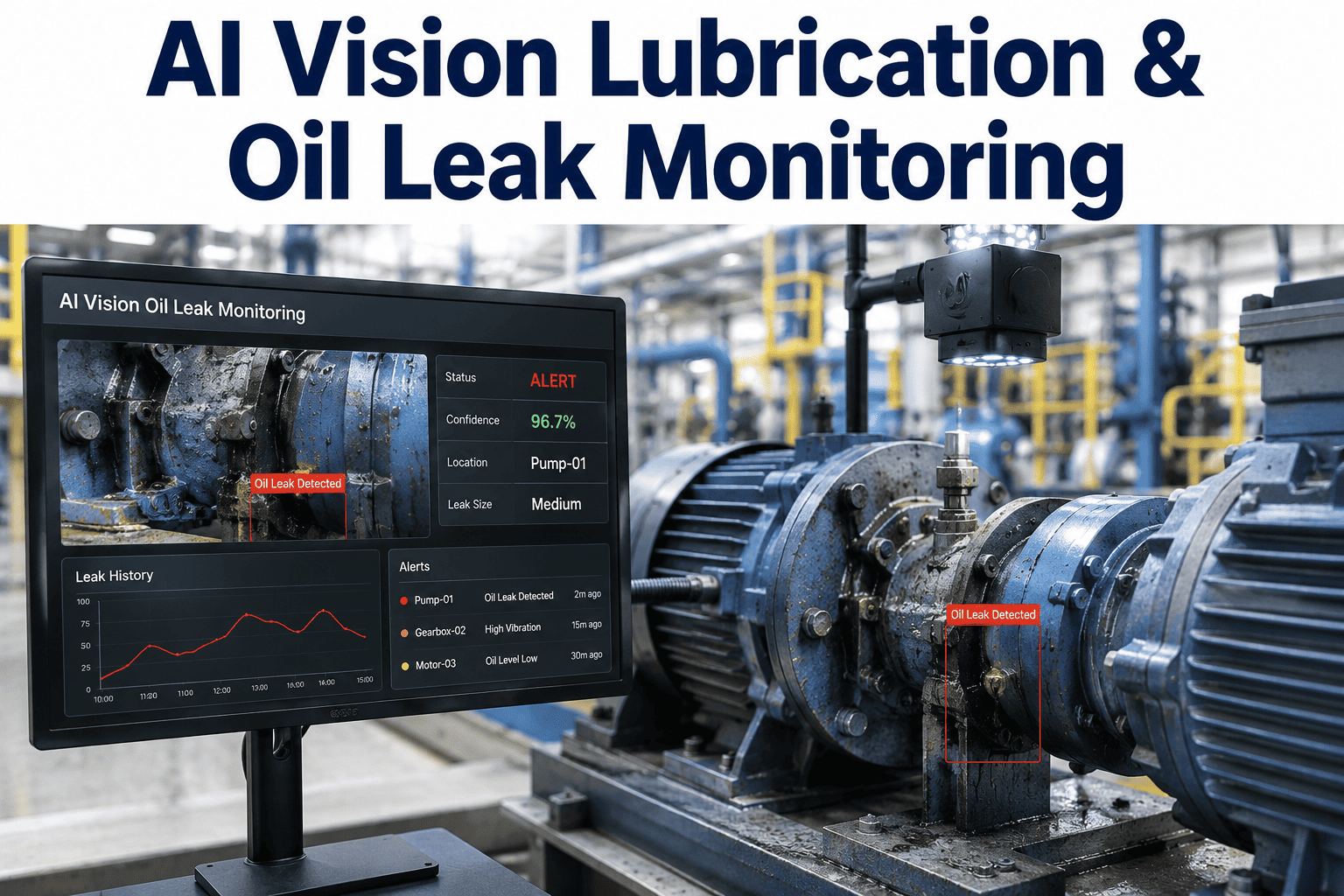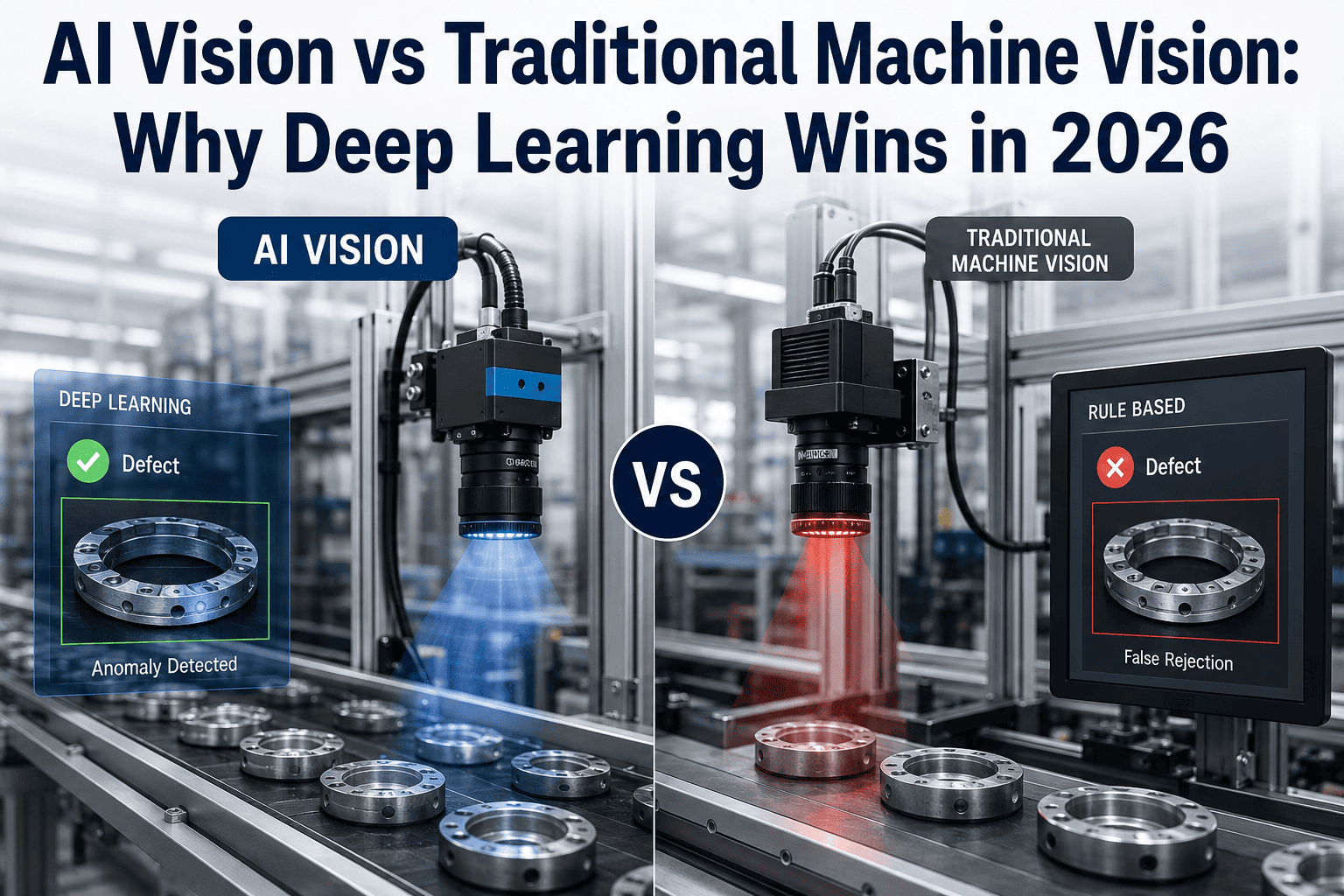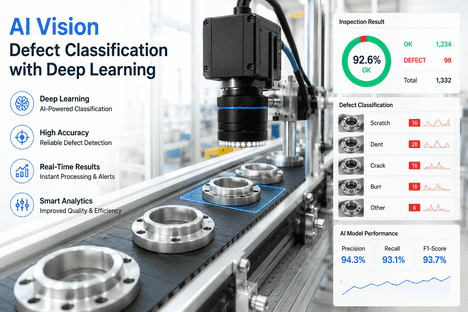
Lubrication failure is the single largest driver of unplanned industrial equipment breakdowns — responsible for an estimated 70% of bearing and gearbox failures across manufacturing, energy, food processing, and heavy industry. Oil leaks, low lubricant levels, and grease buildup on rotating equipment are visual conditions that develop gradually, announce themselves through detectable surface signals, and remain invisible to manual inspection programs that cannot monitor equipment continuously across every production shift. AI Vision Camera systems purpose-built for predictive maintenance monitoring are the technology infrastructure that cross-industry manufacturers are deploying in 2026 to close this gap — detecting oil leak formation, lubricant depletion indicators, and grease accumulation patterns in real time, at the equipment level, before bearing and gearbox failures reach the point of unplanned downtime or catastrophic asset loss. If you want to see how iFactory's AI Vision Camera platform detects lubrication and leak conditions before they escalate into equipment failures, you can Book a Demo of iFactory's Predictive Maintenance Vision system today.
Why Lubrication Failure Remains the Leading Cause of Rotating Equipment Breakdown
Bearings and gearboxes fail for a narrow set of reasons — and inadequate lubrication, whether from oil leaks, lubricant depletion, or grease degradation and buildup, accounts for the majority of those failures across every industry sector that operates rotating machinery. The challenge is not that these conditions are undetectable. Oil leaks produce visible fluid accumulation, surface staining, and wet seal-area signatures. Low lubrication conditions produce surface dryness, discoloration, and heat signatures at bearing housings. Grease over-lubrication and buildup produce contamination patterns at seal faces, housing joints, and relief ports that are visually distinct from normal operating conditions. The challenge is that manual inspection cannot monitor these conditions continuously, cannot detect the early-stage signals that precede failure by weeks, and cannot generate the timestamped evidence record that maintenance programs require to move from reactive repair to true predictive intervention. AI vision camera monitoring closes each of these gaps simultaneously.
Five Lubrication and Leak Conditions That AI Vision Detects Before Manual Inspection Can
The lubrication and leak condition signatures that precede bearing and gearbox failure are visually detectable — but only by a monitoring system that is present at the equipment continuously, trained to recognize the specific visual patterns associated with each failure mode, and capable of alerting maintenance teams with enough lead time for planned intervention. iFactory's AI Vision Camera platform identifies the following five condition categories as the highest-priority targets for predictive maintenance vision deployment across cross-industry rotating equipment environments.
Oil Leak Detection at Seals, Housings, and Joints
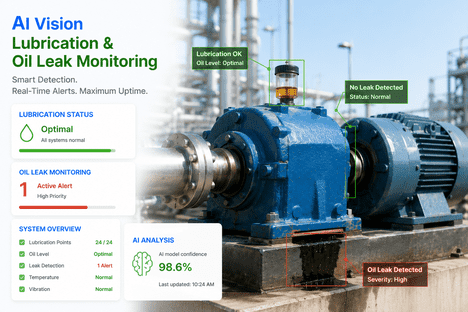
Oil leaks at bearing housing seals, gearbox housing joints, drain plug areas, and inspection port gaskets are the most common lubrication-related failure precursor in industrial rotating equipment. AI vision cameras trained on equipment-specific imaging detect leak formation at its earliest stage — before fluid loss reaches a level that compromises lubrication film thickness or contaminates adjacent components. iFactory's platform identifies oil accumulation patterns, surface staining progression, and wet-zone formation at configured monitoring points, generating timestamped alerts that direct maintenance technicians to the specific leak location with actionable condition data before any manual inspection round would have detected the same signal. Book a Demo to see iFactory's oil leak detection configuration for bearing and gearbox monitoring.
Low Lubrication Level Indicators on Sight Glasses and Oil Windows
Sight glasses, oil level windows, and dipstick indicator zones on gearboxes and bearing housings provide direct visual evidence of lubricant depletion — but only when a qualified observer is present to interpret them. AI vision cameras positioned at sight glass monitoring points continuously evaluate oil level position against manufacturer-specified MIN–MAX bands, detecting low-level conditions in real time across every production shift without relying on periodic manual walkthrough inspection. The platform generates condition alerts when oil levels approach the minimum threshold, enabling lubricant replenishment or leak source investigation to occur within the available intervention window — before lubricant starvation begins causing progressive bearing surface damage.
Grease Buildup and Contamination at Bearing Relief Ports
Excessive grease accumulation at bearing relief ports, housing faces, and seal areas indicates over-lubrication, seal degradation, or grease hardening — each of which represents a distinct failure mode with a different maintenance response. AI vision monitoring of grease condition at relief port locations detects color changes, volume accumulation, and texture pattern changes that signal grease degradation before the bearing's protective film is compromised. Over-lubrication conditions — which generate heat through churning losses and can accelerate seal failure — are equally detectable through the characteristic grease purge patterns that AI vision models distinguish from normal relief port weeping at correct fill volumes.
Oil Colour and Clarity Changes Through Sight Glass Monitoring
Lubricant condition degradation — whether from water contamination producing a milky appearance, oxidation producing darkening, or coolant ingress producing glycol contamination signatures — generates oil colour and clarity changes that are visible through gearbox sight glasses before the lubricant's protective properties are fully compromised. iFactory's vision models trained on site-specific sight glass imaging establish baseline oil appearance profiles and detect deviations that indicate contamination events or lubricant breakdown, enabling condition-based oil change scheduling that extends lubricant service life where oil is in good condition and accelerates intervention where contamination events require immediate response.
Progressive Surface Staining and Fluid Trail Formation Around Equipment
Oil leaks that are too small to pool visibly often leave progressive surface staining trails on equipment housings, mounting frames, and floor surfaces that indicate active leak sources developing at bearing housing joints or shaft seal interfaces. AI vision monitoring configured to detect stain area growth and fluid trail formation at equipment-specific monitoring zones identifies these slow-leak conditions before the fluid loss volume reaches a level detectable through oil level checks — providing the earliest possible intervention trigger for seal inspection, tightening, or replacement that prevents the slow leak from developing into a significant lubrication loss event.
AI Vision Lubrication Monitoring Applications Across Industrial Sectors
The value of continuous AI vision lubrication monitoring is not limited to any single industry or equipment type. Every industrial sector that operates rotating machinery — bearings, gearboxes, conveyors, pumps, fans, compressors, and drive systems — faces the same fundamental challenge: lubrication condition changes develop between manual inspection intervals, and the signals that precede failure are visually present at the equipment long before the failure event itself. The following sector-specific application profiles reflect the highest-priority lubrication and leak monitoring deployment scenarios across iFactory's cross-industry customer base.
Conveyor and Drive System Leak Detection for HACCP Compliance
Food and beverage manufacturers face a dual lubrication monitoring requirement: equipment reliability and food safety compliance. Oil leaks from conveyor drive systems, mixer gearboxes, and filling line bearings represent both a maintenance failure risk and a HACCP contamination event. iFactory's AI vision monitoring detects leak formation at conveyor drive housings and chain lubrication zones before fluid contacts food contact surfaces — providing the documented evidence of lubrication condition monitoring that HACCP and SQF audit programs increasingly require as part of equipment maintenance verification.
Gearbox and Rolling Mill Bearing Monitoring
Heavy industry gearboxes in steel mills, rolling operations, and mining equipment operate under extreme load conditions where lubrication failure consequences include catastrophic gearbox seizure and extended production line shutdowns. iFactory's AI vision monitoring at gearbox sight glasses, housing seals, and bearing inspection zones provides continuous condition data across all production shifts — detecting oil level decline, seal weep development, and housing joint leak formation at the earliest visible stage and directing maintenance intervention before progressive damage accelerates to rebuild-level failure.
Press, Transfer Line, and Assembly Equipment Lubrication
Automotive manufacturing press lines, transfer machines, and robotic assembly equipment operate on production schedules that make unplanned downtime extremely costly. iFactory's AI vision lubrication monitoring deployed at hydraulic power unit sight glasses, press drive gearboxes, and conveyor bearing housings detects developing leak and lubrication depletion conditions during production — enabling maintenance teams to schedule targeted interventions during planned downtime windows rather than responding to equipment failures that stop production lines.
Turbine, Generator, and Pump Lubrication System Monitoring
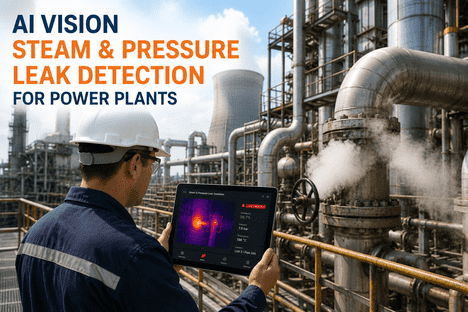
Power generation equipment operates under continuous duty cycles where lubrication system integrity is a direct reliability and safety requirement. AI vision monitoring at lube oil system sight glasses, pump seal areas, and turbine bearing housing inspection points detects lubricant condition changes, seal leak formation, and oil level deviations in real time — providing the continuous lubrication system condition visibility that interval-based manual inspection cannot achieve on equipment that cannot be stopped for inspection access.
High-Humidity and Corrosive Environment Leak Monitoring
Paper, pulp, and chemical processing facilities operate in high-humidity, corrosive environments where bearing and gearbox seal integrity degrades more rapidly than in standard industrial conditions, and where oil leaks introduce contamination risks to process streams. iFactory's AI vision cameras configured for harsh environment deployment monitor seal integrity, oil accumulation patterns, and grease condition at drive equipment in process areas — providing condition data from locations where manual inspection access is restricted, infrequent, or subject to environmental exposure constraints.
Gearbox and Main Bearing Lubrication Monitoring at Height
Wind turbine gearboxes and main bearings are among the most expensive rotating equipment assets in industrial operation — with gearbox replacement costs exceeding $300,000 per unit. AI vision cameras deployed within nacelle environments monitor gearbox sight glass oil levels, internal seal leak indicators, and grease condition at main bearing points continuously — providing the early-warning condition data that enables planned gearbox interventions at maintenance windows rather than emergency crane mobilizations following undetected lubrication failures.
The iFactory AI Vision Platform: Purpose-Built for Predictive Maintenance Lubrication Monitoring
Lubrication and leak monitoring places specific technical requirements on an AI vision system that differ from quality inspection applications. The monitoring points are often in constrained locations, the condition changes are gradual rather than binary, and the value is generated by continuous presence rather than per-unit inspection. iFactory's AI Vision Camera platform is architected for precisely these requirements — with edge-deployed processing that operates without cloud dependency in the alert signal path, multi-point monitoring configurations that cover multiple equipment zones from a single deployment, and condition trend logging that builds the historical evidence base that predictive maintenance programs require.
iFactory's edge-deployed AI Vision Camera processes every monitoring frame on local hardware with detection latency under 25 milliseconds — generating condition alerts without cloud connectivity in the alert path, without wireless dependency for time-critical notifications, and without per-frame inference costs that scale with continuous monitoring duty cycles. The platform's condition trend logging architecture records timestamped condition assessments at each monitoring point, building the historical dataset that maintenance teams use to establish baseline-to-failure progression timelines for each equipment type and site. Multi-point monitoring configurations support up to 20 simultaneous equipment monitoring zones per deployment, enabling a single iFactory installation to cover a production floor's complete bearing and gearbox lubrication monitoring requirement without per-point infrastructure multiplication.
| Monitoring Requirement | Manual Inspection Limitation | iFactory AI Vision Capability | Maintenance Benefit |
|---|---|---|---|
| Oil Leak Detection at Seals | Detected only during scheduled walkthrough rounds | Continuous leak formation monitoring with timestamped alerts | 24/7 Leak Detection |
| Low Lube Level at Sight Glass | Level checked only at manual inspection frequency | Real-time MIN–MAX band monitoring with threshold alerts | Depletion Prevention |
| Grease Buildup at Relief Ports | Over-lubrication detected after seal damage begins | Grease accumulation pattern detection before seal impact | Seal Life Extension |
| Oil Colour / Contamination | Requires lab sample — delayed result, periodic only | Sight glass colour deviation detection for contamination events | Early Contamination Alert |
| Progressive Surface Staining | Visible only after significant fluid accumulation | Stain area growth detection at earliest visible formation stage | Slow Leak Identification |
| Maintenance Evidence Records | Manual log entries — incomplete, retrospective | Automated timestamped condition log for every monitoring point | Audit-Ready History |
ROI of AI Vision Lubrication Monitoring: The Financial Case
The financial return from AI vision lubrication and leak monitoring is generated through three compounding value streams: avoided equipment failure costs, maintenance labor efficiency, and lubricant consumption optimization through condition-based change intervals. Because the per-event cost of an undetected gearbox or bearing failure is high — and because lubrication conditions develop between manual inspection rounds that AI vision monitoring covers continuously — the return on deployment typically materializes within the first equipment failure event avoided.
Frequently Asked Questions: AI Vision Lubrication and Oil Leak Monitoring
What visual conditions does iFactory's AI vision system detect for lubrication and leak monitoring?
iFactory's AI Vision Camera platform detects oil leak formation at bearing housing seals, gearbox joints, and drain plug areas; low lubricant level conditions at sight glasses and oil level windows; grease accumulation and colour change at bearing relief ports; oil colour and clarity deviation through gearbox sight glasses indicating contamination or lubricant degradation; and progressive surface staining that indicates active slow-leak sources developing at shaft seal or housing joint interfaces. Each condition type uses AI models trained on site-specific imaging of the monitored equipment to minimize false alerts while detecting genuine condition changes at their earliest visible stage.
How is iFactory's AI vision monitoring different from vibration or temperature-based condition monitoring?
Vibration and temperature sensors detect the mechanical and thermal consequences of lubrication failure — conditions that develop after the lubrication-related damage has already begun. AI vision monitoring detects the visual precursors of lubrication failure — the oil leak, the low level, the contaminated oil — before the mechanical damage sequence has started. The two approaches are complementary: AI vision provides the earliest possible warning from the lubrication condition itself, while vibration and temperature monitoring confirms the mechanical response if condition changes progress. For facilities already operating vibration or temperature monitoring programs, iFactory's AI vision layer adds the upstream lubrication condition visibility that those sensor types cannot provide.
How long does it take to deploy iFactory's AI vision lubrication monitoring at a production facility?
A single-facility deployment covering the primary bearing and gearbox monitoring points for the highest-priority equipment in the plant typically reaches validated monitoring operation in 4 to 8 weeks from hardware installation — covering imaging environment assessment, baseline condition model development for each monitoring point, alert threshold calibration, and live condition alerting commissioning. The timeline is shorter than quality inspection deployments because lubrication monitoring models require fewer defect class categories and can be validated against known-good baseline conditions rather than requiring defect sample collection. Priority equipment can be brought online first, with additional monitoring points added progressively as the model library expands.
Can iFactory's AI vision monitoring operate in harsh industrial environments — high humidity, dust, heat, and vibration?
Yes — iFactory's AI Vision Camera hardware configurations for industrial monitoring environments are rated for IP65 and higher ingress protection, operating temperature ranges covering typical industrial plant conditions, and vibration-resistant mounting hardware designed for proximity to rotating equipment. Camera selection, lens configuration, and lighting design are specified for each monitoring location during the site assessment phase to ensure image quality in ambient conditions that include dust, steam, condensation, and variable lighting. For extreme environments — high-temperature furnace areas, outdoor installations, and wash-down zones — iFactory's engineering team specifies appropriate enclosure and environmental protection configurations during the initial deployment design.
How does iFactory's AI vision platform generate the maintenance evidence records that reliability programs require?
iFactory's platform generates timestamped condition log entries for each monitoring point at configurable assessment intervals, building a continuous condition history that records normal, alert, and alarm condition states with the date, time, and AI model confidence level for each assessment. When condition alerts are generated, the platform captures and stores the image evidence that triggered the alert — providing maintenance teams with the visual documentation of the condition at detection time that supports root cause analysis, repair verification, and maintenance program audit evidence. Alert records and condition histories are exportable in standard formats for integration with CMMS and maintenance management systems. Book a Demo to see iFactory's condition history and maintenance evidence record architecture for lubrication monitoring deployments.
What is the starting point for deploying AI vision lubrication monitoring — how do we begin?
The most effective starting point is a targeted pilot deployment on the two or three highest-consequence equipment assets in the facility — typically the gearboxes and bearing assemblies where a failure event would cause the longest production stoppage or highest repair cost. iFactory's turnkey AI vision pilot program covers site assessment, imaging environment specification, hardware installation, model development and validation, and live condition monitoring commissioning within a defined pilot scope that demonstrates condition detection performance on real equipment before full-facility deployment commitment. Book a Demo to discuss the turnkey pilot program structure for your facility's priority lubrication monitoring requirements.