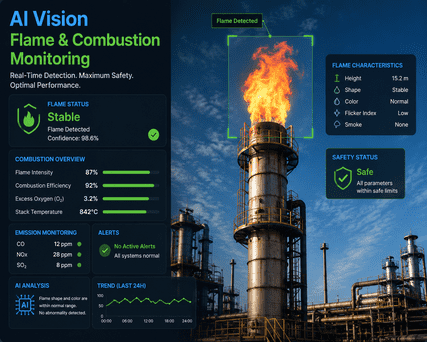
Flame stability and burner health are critical to operational safety, fuel efficiency, and emissions compliance across industrial furnaces, boilers, incinerators, and process heaters. Traditional monitoring approaches rely on manual visual rounds and simplistic flame rod or UV sensors that detect only flame presence or absence — missing the subtle visual cues such as color shifts, flicker pattern changes, and luminosity variations that precede combustion upsets, burner damage, or hazardous conditions. iFactory AI Vision Camera changes this paradigm by applying deep learning computer vision to continuous flame and combustion monitoring, detecting anomalies that human observers and conventional sensors cannot perceive, and automatically logging findings into your CMMS as structured, prioritized work orders.
See Flame Anomalies Before They Become Failures
iFactory AI Vision Camera continuously monitors flame color, shape, flicker frequency, and burner condition — delivering real-time anomaly detection and automated CMMS work orders without requiring manual inspection rounds.
AI Vision for Flame and Combustion Monitoring: Beyond Presence Detection to Predictive Insight
A technical analysis of how deep learning computer vision replaces manual flame inspection and limited-spectrum sensors with continuous, automated combustion monitoring — enabling earlier anomaly detection, optimized fuel efficiency, and seamless CMMS integration across furnaces, boilers, and process heaters.
Six Limitations of Conventional Flame Detection That AI Vision Solves
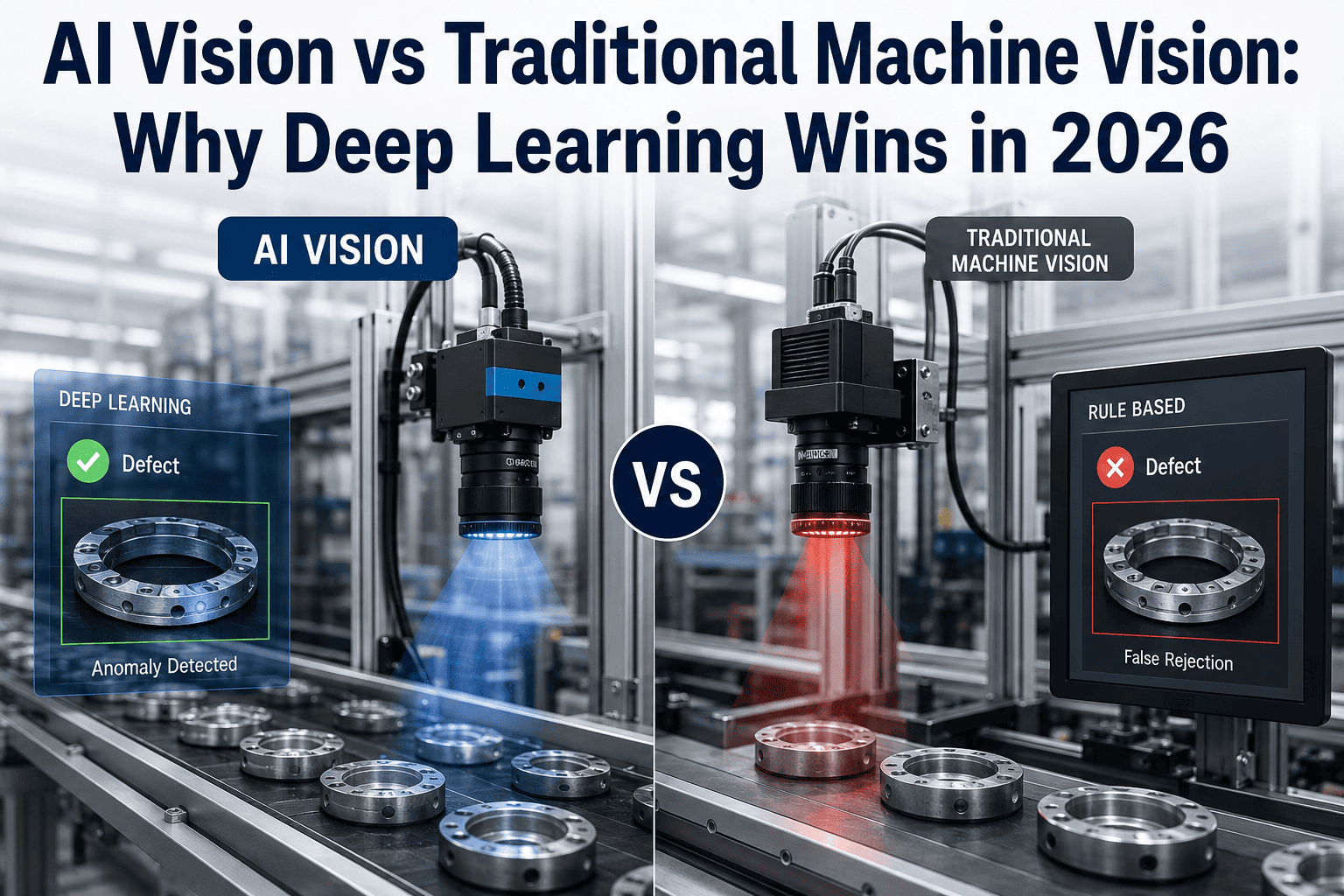
Traditional flame monitoring technologies — UV/IR scanners, thermocouples, and manual visual inspections — provide only binary presence/absence signals or infrequent spot checks. These approaches miss the continuous visual intelligence needed for predictive combustion management. iFactory AI Vision Camera technology eliminates these gaps with continuous, automated visual analysis across all burner and furnace asset classes.
Binary-Only Flame Confirmation
UV and IR scanners report only flame on/off status. They cannot detect flame quality degradation, color shifts indicating incomplete combustion, or flicker pattern changes that precede blowout — missing the early warning window entirely.
Manual Inspection Gaps
Visual burner inspections are periodic by nature — typically once per shift at best. Flame conditions can deteriorate in minutes. Between inspection rounds, developing combustion problems go undetected until they cause emissions exceedances, efficiency loss, or unsafe conditions.
No Objective Measurement Baseline
Manual inspection relies on subjective operator judgment of flame appearance. Different technicians describe the same flame differently, producing inconsistent data that cannot feed predictive models or support reliable trend analysis across shifts.
Delayed Combustion Upset Detection
Conventional sensors detect combustion problems only after they manifest as measurable process deviations — excess oxygen, CO breakthrough, or temperature excursions. By this point, efficiency has already degraded and emissions limits may have been exceeded.
No Burner Deterioration Trending
Burner face erosion, flame holder damage, and fuel nozzle degradation develop gradually over weeks and months. Without continuous visual monitoring, deterioration goes unnoticed until it causes a combustion excursion or forced outage.
No Integration with CMMS Workflows
Flame and burner observations from manual rounds rarely make it into the CMMS in structured, actionable form. Data lives in logbooks or operator memory — invisible to maintenance planning, reliability engineering, and continuous improvement initiatives.
Conventional Flame Monitoring vs. iFactory AI Vision: Key Benchmarks
Transitioning from periodic manual inspection and binary flame sensors to continuous AI vision-based combustion monitoring produces measurable improvements across the metrics that define burner reliability, fuel efficiency, and maintenance effectiveness.
| KPI | Conventional Monitoring | iFactory AI Vision | Improvement |
|---|---|---|---|
| Flame Anomaly Detection Rate | ~40% (manual rounds) | 93–98% (continuous AI) | ~2.4x improvement |
| Detection Lead Time Before Upset | 0–15 minutes | 4–72 hours | 10–100x earlier |
| Fuel Efficiency Optimization | No visual feedback | Continuous flame color analysis | 3–7% fuel savings |
| Burner Deterioration Detection | Visible only at outage | Trended continuously | Weeks of early warning |
| Data Capture Accuracy | ~50% (manual logs) | 94–97% (AI-automated) | ~2x improvement |
| Unplanned Combustion Downtime | 3–6 events/year | 0–1 events/year | 75–90% reduction |
Deploy AI Vision on Your Furnaces and Burners
iFactory AI Vision Camera connects to your existing CMMS and combustion assets in weeks — no infrastructure overhaul, no burner shutdown required. Start detecting flame anomalies before they become failures.
iFactory AI Vision Camera: Four Intelligence Layers That Eliminate the Gaps in Conventional Flame Monitoring
iFactory does not replace your existing flame safety system — it augments it with continuous visual intelligence that traditional sensors cannot provide. The AI Vision Camera analyzes flame characteristics in real time, detecting anomalies as they develop and automating the data flow into your CMMS. Facilities that Book a Demo typically see combustion anomaly detection improve within the first week of deployment.
AI Vision Camera — Continuous Flame and Combustion Monitoring
iFactory's AI Vision Camera continuously captures and analyzes visual data from burner flames, furnace interiors, and combustion zones — monitoring flame color spectrum, flicker frequency, flame shape and stability, luminosity levels, and burner face condition. The system detects developing anomalies that human observers and conventional sensors miss, logging observations directly into the CMMS with timestamped photographic evidence.
Deep Learning Flame Anomaly Detection and Classification
The system learns the normal visual signature of each burner — baseline flame color distribution, acceptable flicker range, stable shape parameters — and builds a unique combustion fingerprint. Any deviation from the expected visual state is classified by anomaly type: fuel-rich pockets, air starvation, flame impingement, burner deterioration, or pre-blowout instability — each generating a structured data packet for your CMMS.
Automated CMMS Work Order Generation with Combustion-Specific Taxonomy
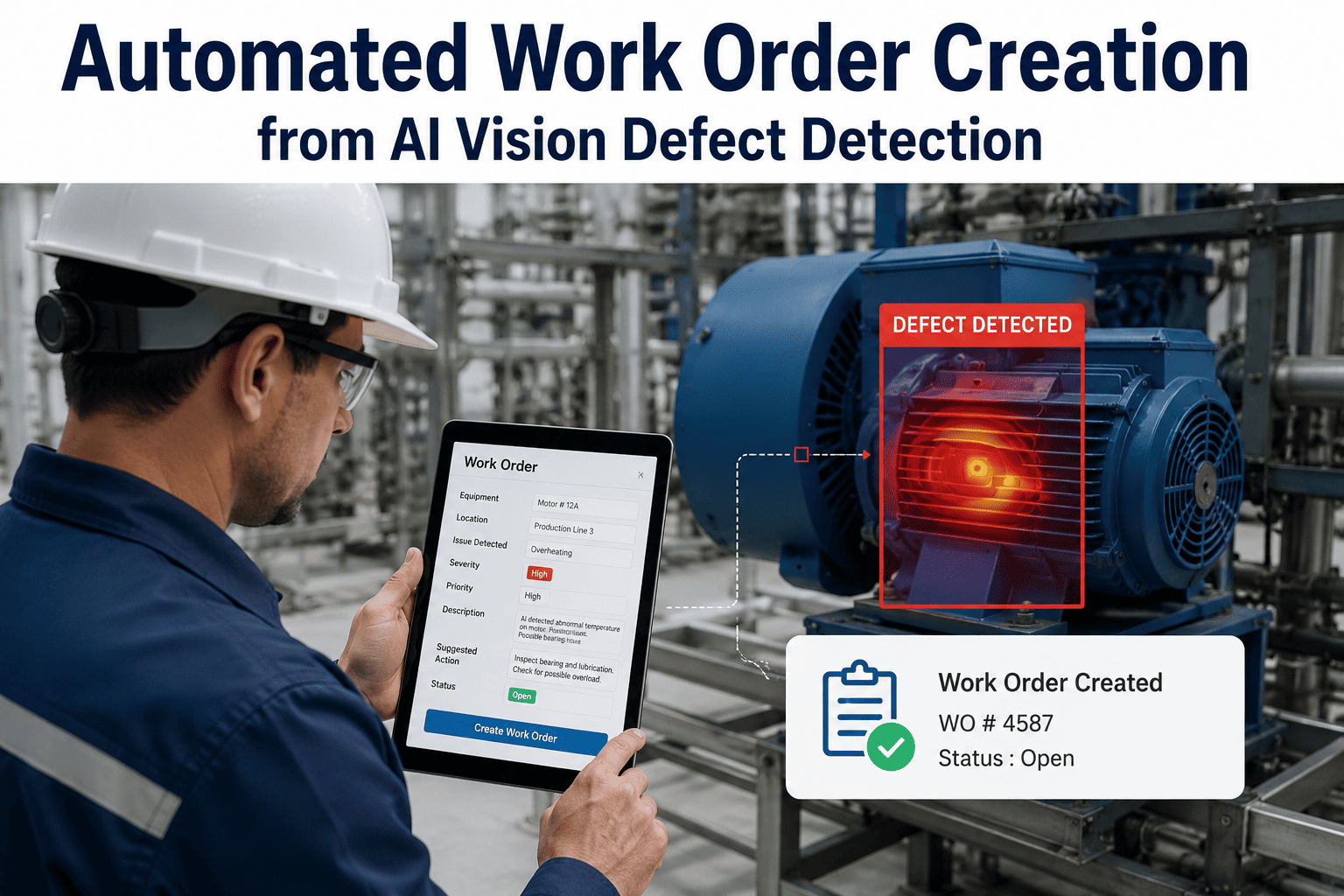
Flame and burner anomalies detected by the AI camera are automatically translated into standardized CMMS work orders with correct priority levels, asset IDs, combustion failure mode codes, and recommended corrective actions. The system follows your existing maintenance taxonomy — delivering structured work orders ready for assignment without any manual interpretation step.
Combustion Optimization and Trend Analytics
Beyond anomaly detection, iFactory provides continuous trending of flame characteristics — color temperature correlation, flicker frequency stability, and burner face condition over time. This data feeds both CMMS-based reliability analysis and operator dashboards for real-time combustion optimization, enabling fuel efficiency improvements of 3–7% through visual feedback-driven trim adjustments.
From Camera Installation to Combustion Intelligence: iFactory's 5-Week Deployment Program
iFactory follows a structured five-week deployment program designed to integrate AI vision monitoring into your combustion assets without disrupting operations. Facilities completing the program report average flame anomaly detection improvement from under 40% to over 95% within the first month of operation.
AI Vision Camera Installation and CMMS Integration
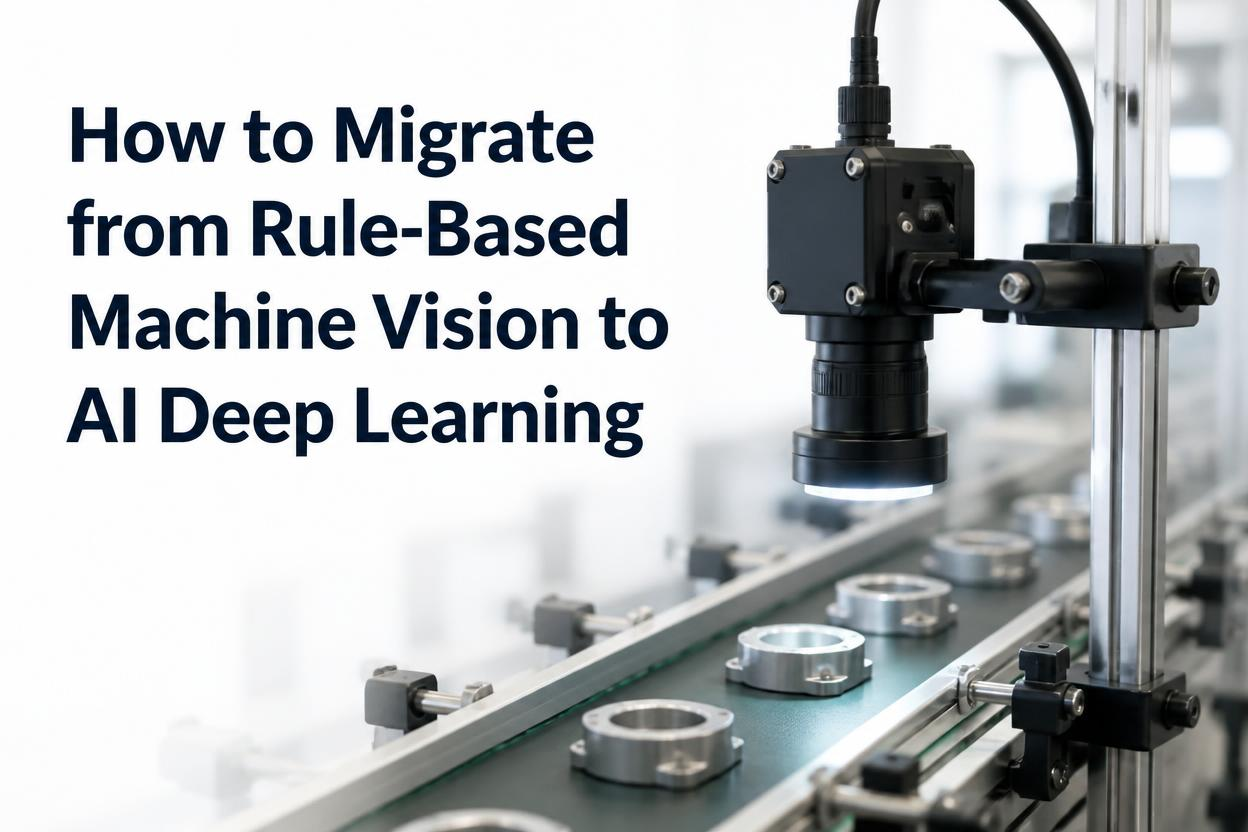
iFactory AI Vision Cameras are installed at priority burner and furnace locations — boiler burners, process heaters, thermal oxidizers, and fired heaters. The cameras integrate with your existing CMMS via standard API connectors. No operational shutdown or burner outage is required.
Combustion Fingerprinting and Baseline Establishment
Deep learning models learn the normal visual signature of each burner — flame color distribution, flicker frequency range, shape parameters, and luminosity baselines. Initial anomaly detection models are validated against your operations team's known combustion states and historical event data.
Automated Combustion Anomaly Work Orders Activate
The system begins generating structured CMMS work orders from detected flame and burner anomalies. Your maintenance team receives prioritized, pre-populated work orders with asset IDs, combustion failure codes, and photographic evidence — enabling immediate targeted response to developing combustion issues.
Full Combustion Intelligence Operation
Complete AI Vision ecosystem is operational — including continuous flame monitoring, anomaly detection and classification, automated work order generation, and combustion optimization trend dashboards. Your team is fully trained and capable of maintaining expert-level combustion monitoring accuracy without manual inspection rounds.
"iFactory's AI Vision Camera transformed how we monitor our fired heaters and process burners. We had been relying on twice-per-shift operator rounds and UV scanners that only told us if the flame was on or off. Within four weeks of deploying iFactory cameras on our crude heater and reformer furnace, we detected two developing burner face deterioration events that our existing systems missed completely — preventing what would have been unplanned outages costing an estimated $340,000 in lost production. The continuous flame color and flicker analysis alone has improved our fuel gas efficiency by 4.2%."
Conventional Flame Monitoring Is No Longer Enough — AI Vision Is the New Standard
Binary flame sensors and periodic manual inspections were designed for an era when continuous visual intelligence was not economically feasible. That era has ended. iFactory AI Vision Camera delivers continuous, automated flame and combustion monitoring that detects developing anomalies hours or days before they cause efficiency loss, emissions exceedances, or unplanned outages — and feeds that intelligence directly into your CMMS as structured, actionable work orders. The result is a combustion monitoring program that never misses a shift, never forgets a reading, and never relies on subjective operator judgment. Facilities looking to eliminate the blind spots in their combustion monitoring should Book a Demo to see how iFactory AI Vision Camera integrates with their existing burners, furnaces, and CMMS infrastructure.
Frequently Asked Questions
Q: How is AI vision flame monitoring different from conventional UV/IR flame scanners?
Conventional UV and IR scanners detect only flame presence or absence — a binary on/off signal. AI vision monitoring continuously analyzes flame color, flicker frequency, shape, luminosity, and stability — detecting quality degradation, developing instability, and burner deterioration that binary sensors cannot perceive. iFactory AI Vision cameras provide rich visual data that enables predictive maintenance rather than simple trip detection.
Q: Can iFactory AI Vision Camera operate in high-temperature furnace environments?
Yes — iFactory AI Vision Cameras are designed for harsh industrial environments including furnace and boiler sight ports. Cameras feature hardened enclosures with active cooling, high-temperature rated optics, and flame-filtered imaging that provides clear visual data even through combustion zone glare. Edge processing ensures continuous operation in extreme thermal conditions.
Q: Does iFactory integrate with our existing burner management system and CMMS?
Yes — iFactory AI Vision Camera operates alongside your existing burner management system as a continuous monitoring layer. It does not replace safety-rated flame trip systems. CMMS integration is via standard API connectors including SAP, IBM Maximo, Infor, Fiix, and custom-built platforms, typically completed within one to two weeks.
Q: How quickly does the AI learn our burners' normal visual signatures?
The combustion fingerprinting process completes within the first 21 days of operation, after which the system begins generating validated anomaly alerts and automated work orders. Accuracy continues to improve with additional data, reaching 93–98% classification accuracy within the first 60 days across multiple burner types and firing conditions.
Q: What is the typical ROI timeline for AI vision combustion monitoring?
Most facilities achieve full platform cost recovery within 4–6 months through combined savings from prevented unplanned outages, reduced fuel consumption (3–7% efficiency gain), lower emissions compliance risk, and reduced manual inspection labor. Fuel efficiency improvements alone typically deliver measurable ROI within the first quarter of deployment.
Q: Can iFactory detect multiple burner flames from a single camera?
Yes — iFactory AI Vision Camera can monitor multiple burner flames within a single field of view, with individual burner analysis and anomaly classification for each flame. The system supports multi-burner furnace configurations, process heater cabinets, and boiler burner arrays — assigning separate visual fingerprints and anomaly thresholds to each burner position.
Eliminate the Blind Spots in Your Combustion Monitoring
Speak with an iFactory combustion monitoring specialist today. Get a site-specific assessment of your flame monitoring gaps and a clear deployment roadmap — no obligation, no pressure.