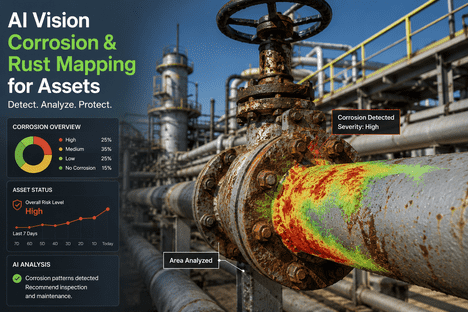
Corrosion is the most pervasive form of asset degradation across every industry that operates metal structures, equipment, pipelines, and civil infrastructure — and it is also the most preventable. The global cost of corrosion is estimated at $2.5 trillion annually, equivalent to 3.4% of global GDP, with NACE International research indicating that between 15 and 35% of those costs could be eliminated through timely detection and proactive maintenance intervention. The fundamental barrier to earlier intervention is not the absence of corrosion data — it is the absence of a systematic, continuous method for detecting corrosion onset, mapping its spatial distribution, and quantifying its progression rate before structural integrity thresholds are breached. AI Vision Camera systems purpose-built for corrosion and rust mapping are the technology infrastructure that cross-industry asset operators are deploying in 2026 to close this gap — delivering pixel-level corrosion detection, surface area quantification, and progression-rate trending that transforms corrosion management from periodic visual inspection to continuous, evidence-based asset integrity monitoring. Organizations looking to eliminate unplanned corrosion-related failures can Book a Demo of iFactory's AI Vision corrosion mapping platform today.
Map, Quantify, and Track Corrosion Progression on Structures and Equipment — Automatically
iFactory's AI Vision Camera platform detects rust onset, maps corrosion surface area, and tracks progression rates on metal assets across manufacturing, energy, infrastructure, and maritime environments — enabling maintenance prioritization before structural thresholds are reached.
Why Traditional Corrosion Inspection Cannot Meet the Scale and Frequency Requirements of Modern Asset Management
Corrosion develops continuously on exposed metal surfaces — but the manual inspection programs that most asset operators rely on observe that development only at scheduled intervals, often quarterly or annually. In the time between inspection rounds, corrosion that began as a surface coating breakdown can progress to pitting, structural section loss, and load-bearing capacity reduction. The inspection gap is not a resource problem that additional inspectors can close: the scale of industrial assets, the access constraints of elevated structures and confined spaces, and the subjectivity of human visual assessment against varying surface conditions collectively make interval-based manual inspection structurally incapable of detecting corrosion at the spatial resolution and temporal frequency that asset integrity management requires.
AI Vision camera systems address each of these limitations simultaneously. High-resolution imaging at fixed monitoring points or drone-integrated camera platforms covers asset surfaces at spatial resolutions that resolve sub-centimeter corrosion features. Deep learning models trained specifically on corrosion morphology — surface rust, pitting, coating delamination, weld area degradation, and galvanic corrosion patterns — detect and classify corrosion conditions that human visual inspection misses against complex surface backgrounds. Automated surface area quantification converts detected corrosion pixels into measurable coverage percentages and absolute area figures that maintenance planning requires. And time-series comparison of successive inspection records generates progression rate data that enables maintenance engineers to project structural threshold breach timelines and prioritize intervention against measured risk rather than schedule-based assumptions.
| Inspection Approach | Detection Resolution | Coverage Rate | Quantification Capability | Progression Tracking |
|---|---|---|---|---|
| Manual Visual Inspection | Human-eye limited, subjective | Accessible surfaces only | Qualitative rating only | None — point-in-time record |
| Periodic Photographic Survey | Camera resolution, manual review | Time-limited, incomplete | Manual estimation, inconsistent | Laborious manual comparison |
| Drone Visual Survey (Manual Review) | High resolution, human-reviewed | Full surface access | Manual, slow post-processing | Requires dedicated analyst effort |
| iFactory AI Vision Corrosion Mapping | Sub-cm pixel-level detection | Full surface — fixed + drone | Automated area % + m² output | Automated rate trending per zone |
Six Corrosion and Surface Degradation Conditions That iFactory AI Vision Detects and Maps
Corrosion does not present as a single visual condition. Different corrosion mechanisms — general surface oxidation, localized pitting, coating delamination, weld-zone degradation, galvanic attack, and crevice corrosion — each produce distinct surface signatures that require specific detection model architectures to identify reliably against variable surface finishes, lighting conditions, and contamination backgrounds. iFactory's AI vision corrosion mapping platform deploys detection models trained across all primary corrosion morphology types, providing comprehensive surface degradation coverage within a single inspection pass.
General Surface Rust
Widespread iron oxide formation on uncoated or coating-failed carbon steel surfaces. AI vision models detect rust coverage onset at the earliest visible stage — before penetration depth becomes structurally significant — and quantify affected surface area as a percentage and absolute measurement for maintenance prioritization.
Pitting Corrosion
Localized pit formation at coating defects, weld heat-affected zones, and surface contamination sites. Pitting is the highest-consequence corrosion form because it concentrates section loss in small areas and can progress to through-wall penetration with minimal visible surface indication detectable to manual inspection.
Coating Delamination
Protective coating separation, blistering, and edge-lifting that exposes base metal to corrosive environments. AI vision mapping identifies delamination boundary progression, distinguishing active coating failure from stable coating degradation to support targeted recoating maintenance before substrate corrosion initiates.
Weld Zone Degradation
Preferential corrosion at weld beads, heat-affected zones, and fillet weld toes — locations of elevated stress concentration, microstructural change, and coating discontinuity. Weld zone corrosion mapping provides the structural inspection evidence that structural engineers require for fitness-for-service assessments on pressure vessels, structural steel, and piping systems.
Galvanic Corrosion at Dissimilar Metal Joints
Accelerated corrosion at contact zones between dissimilar metals — common at pipe flanges, structural connections, and equipment mounting interfaces. Galvanic attack patterns are visually distinct and detectable by AI vision models trained on the characteristic surface morphology of electrochemical corrosion cells at mixed-metal interfaces.
Crevice and Under-Deposit Corrosion Indicators
Surface staining, deposit accumulation, and discoloration patterns at crevice zones — gasket faces, lap joints, and under-insulation areas — that indicate active crevice corrosion cells not directly visible. AI vision detection of surface indicator patterns around crevice locations directs targeted non-destructive examination at the highest-risk concealed corrosion zones.
How iFactory AI Vision Corrosion Mapping Works: From Image Capture to Maintenance Priority Output
The value of AI vision corrosion mapping is not in detection alone — it is in the complete workflow from image acquisition through corrosion quantification, spatial mapping, progression rate analysis, and maintenance priority output that converts visual data into actionable maintenance intelligence. iFactory's corrosion mapping platform is designed as an end-to-end workflow system, not a detection tool requiring manual post-processing to generate usable outputs.
For facilities ready to move from manual inspection records to AI-generated corrosion maps with automated maintenance prioritization, Book a Demo to see iFactory's corrosion mapping workflow demonstrated on representative asset imagery.
AI Vision Corrosion Mapping Applications Across Industrial Asset Classes
Corrosion affects every industry that operates metal assets in service environments involving moisture, temperature cycling, chemical exposure, or marine atmosphere. The specific corrosion mechanisms, asset geometry, access constraints, and maintenance consequence profiles vary by sector — but the fundamental requirement for continuous, quantified, spatially-resolved corrosion detection is consistent across all of them. iFactory's AI vision corrosion mapping platform is deployed across the following industrial sectors and asset classes.
Storage Tank, Pressure Vessel, and Piping Corrosion Mapping
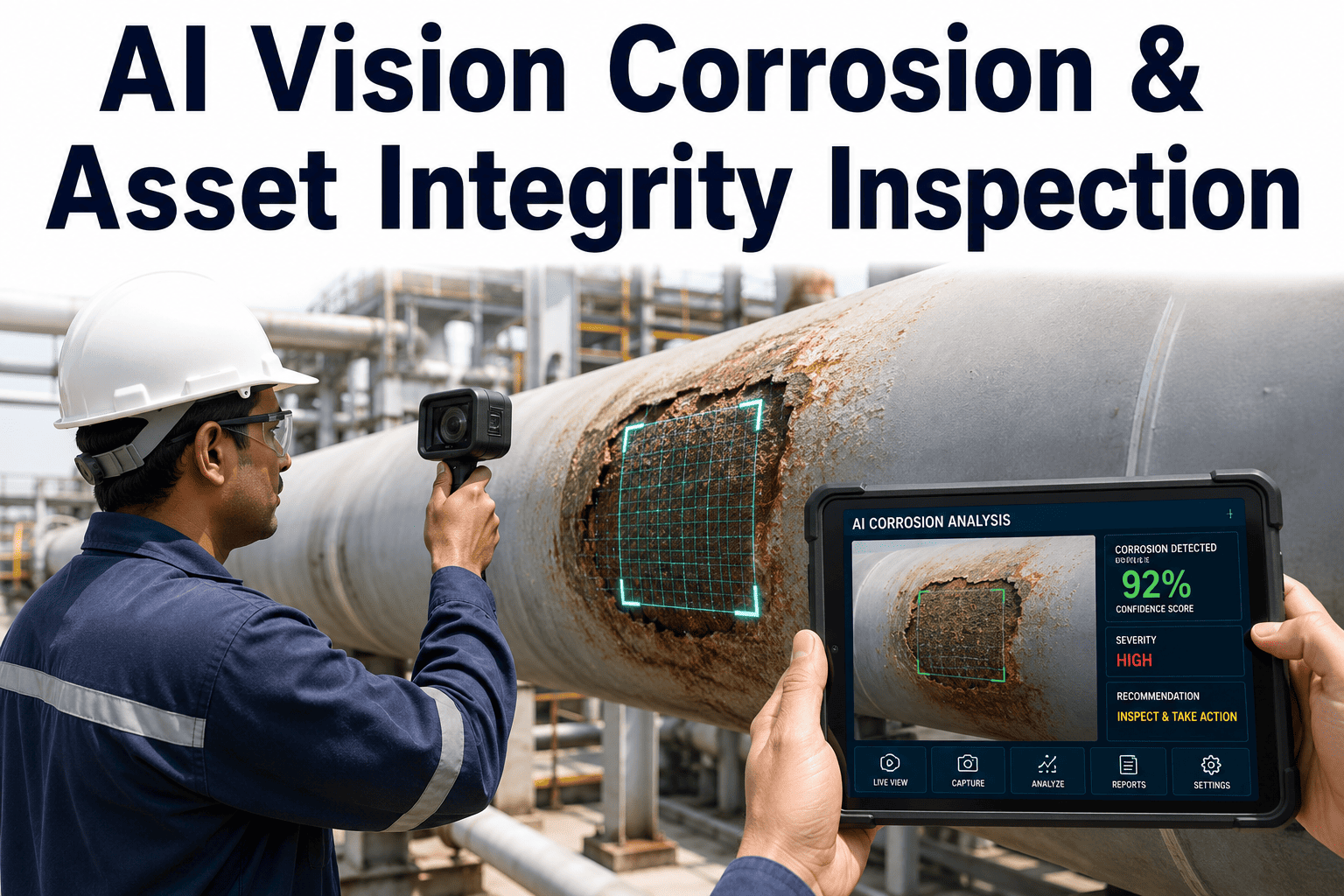
Above-ground storage tanks, pressure vessels, and process piping in petrochemical facilities face aggressive corrosion from process fluids, atmospheric exposure, and under-insulation conditions. iFactory's AI vision mapping provides external corrosion survey coverage at the frequency and resolution that API 653, API 510, and API 570 inspection programs require — generating the quantified condition records that risk-based inspection methodologies need for remaining life calculation and inspection interval justification.
Structural Steel and Bridge Deck Corrosion Assessment
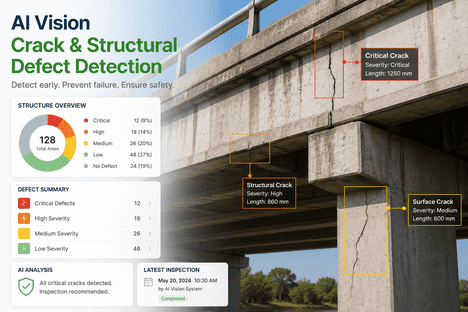
Bridge structural steel, bearing plates, expansion joints, and deck undersides are among the most corrosion-vulnerable components in civil infrastructure — and among the most access-constrained for manual inspection. Drone-integrated AI vision corrosion mapping surveys bridge structural steel at inspection intervals determined by condition rather than calendar, generating spatial corrosion maps that AASHTO and state DOT bridge inspection programs can use for maintenance prioritization and service life planning.
Boiler, Condenser, and Structural Steel Monitoring
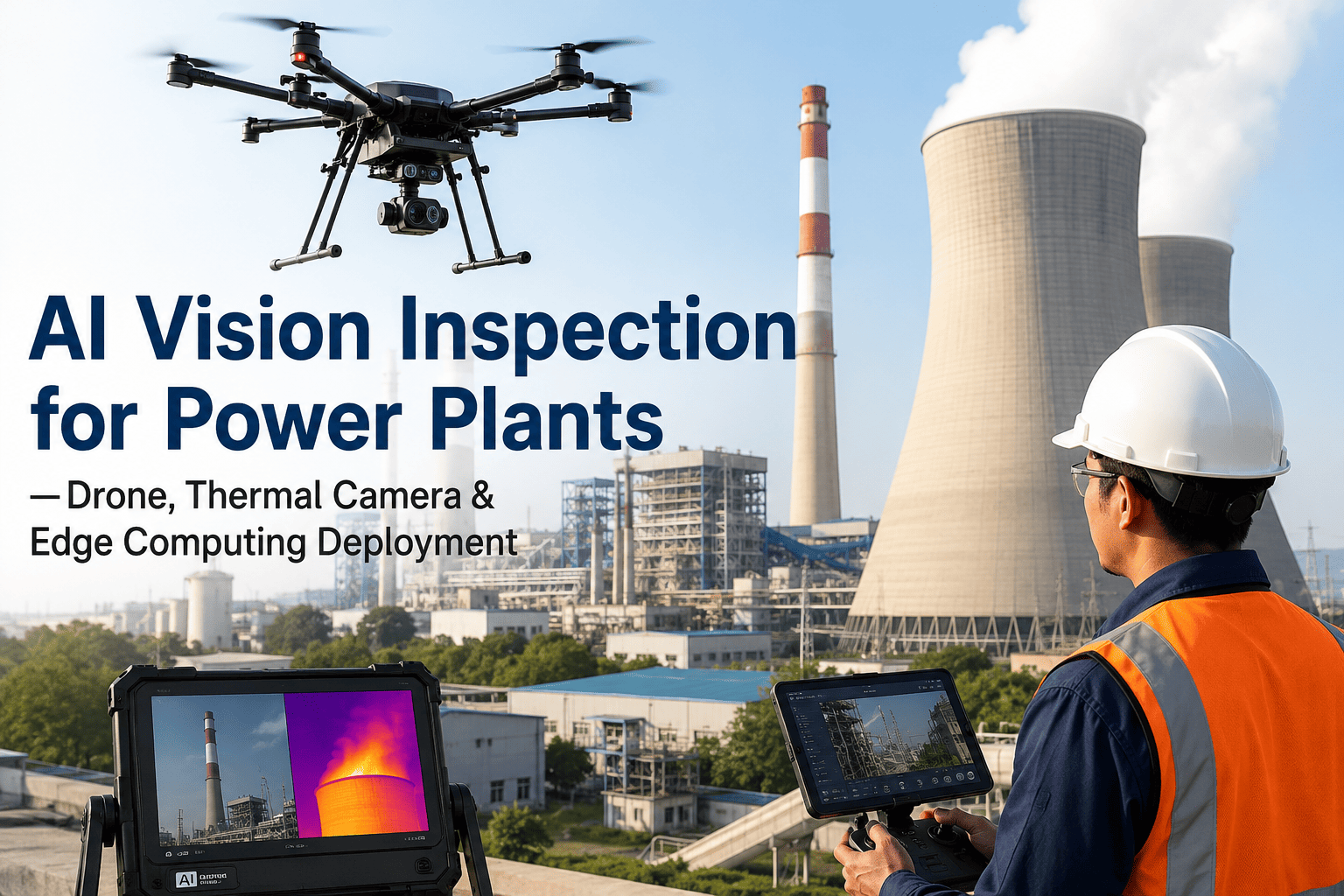
Power generation facilities operate high-consequence metal assets — boilers, cooling towers, condenser structures, and transmission infrastructure — in environments combining moisture, thermal cycling, and chemical exposure that accelerate corrosion rates above atmospheric baselines. iFactory's AI vision monitoring at fixed camera positions provides inter-outage corrosion progression data that maintenance planning teams use to optimize coating and repair scope ahead of planned maintenance outages.
Hull, Deck, and Offshore Structure Rust Mapping
Marine environments are the most aggressive corrosion context for metal structures — combining salt spray, immersion cycling, and biological fouling that drives coating degradation and steel corrosion at rates multiples higher than inland atmospheric exposure. iFactory's drone-integrated AI vision hull surveys and fixed-camera offshore platform monitoring provide the continuous corrosion condition data that class society surveys and ISM Code maintenance programs increasingly expect as documented evidence of structural condition between dry-dock inspection intervals.
Plant Structural Steel and Equipment Corrosion Monitoring
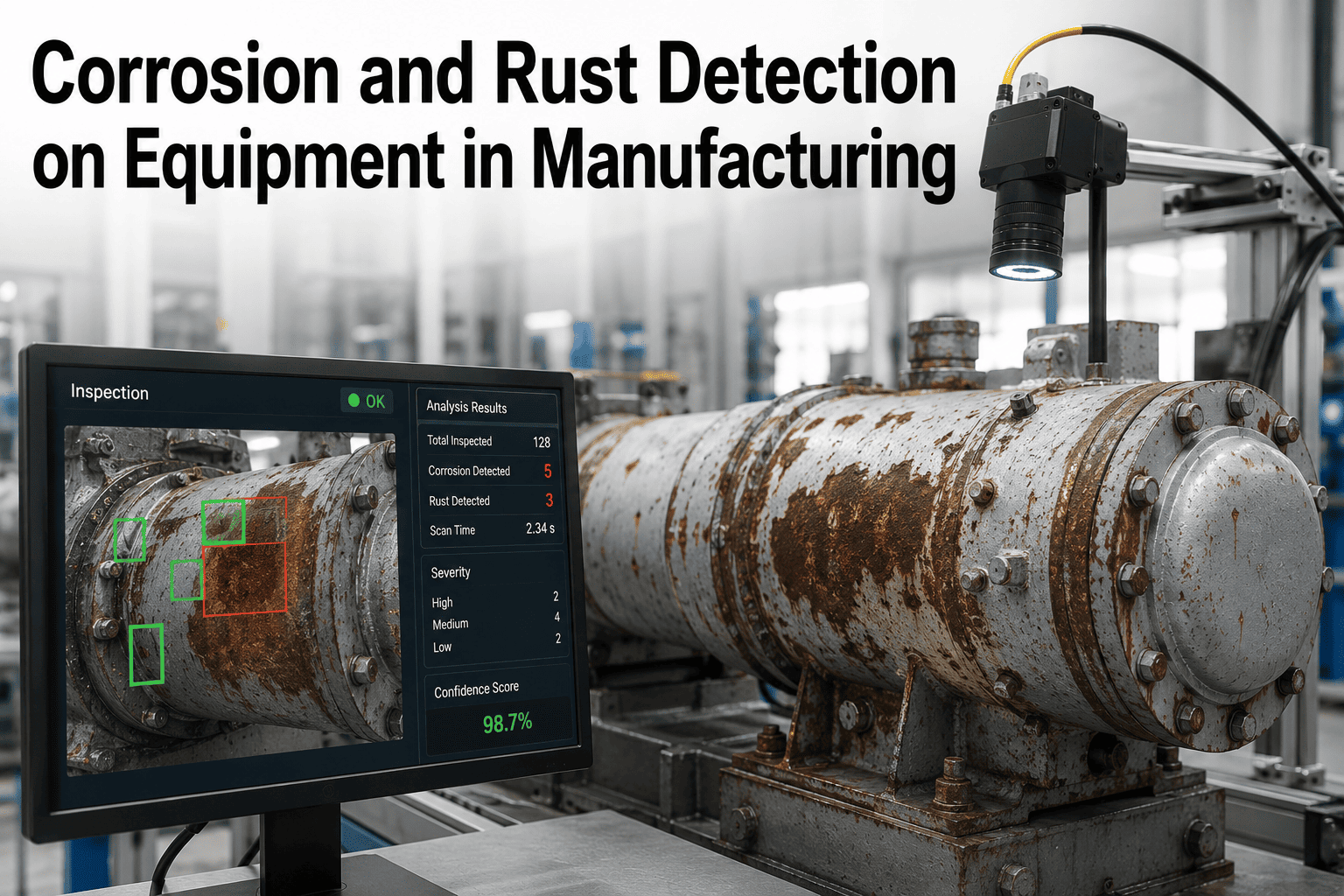
Manufacturing facility structural steel, equipment frames, conveyor structures, and outdoor storage systems face ongoing corrosion from process environments involving humidity, chemical mist, and temperature variation. iFactory's AI vision monitoring deployed at plant structural monitoring points detects corrosion onset on facility assets before section loss reaches structural significance — enabling planned coating maintenance rather than emergency structural repair during production operation.
Wind Turbine Tower and Solar Frame Corrosion Assessment
Wind turbine towers, offshore foundation structures, and utility-scale solar mounting frames represent high-value, geographically distributed metal assets with access constraints that make manual inspection programs costly and infrequent. Drone-integrated AI vision corrosion mapping surveys these assets at operationally acceptable intervals — generating the coating condition and structural integrity records that O&M operators use for maintenance budget planning and asset life extension decisions.
Get a Turnkey AI Vision Corrosion Mapping Quote for Your Asset Portfolio
iFactory's AI Vision Camera platform is configured for your specific asset types, surface access constraints, and inspection frequency requirements — delivering automated corrosion detection, surface area quantification, and maintenance prioritization from the first survey.
iFactory AI Vision Platform: Built for Cross-Industry Corrosion Mapping Requirements
Corrosion mapping places specific technical demands on an AI vision platform that differ from quality inspection or process monitoring applications. The targets are continuous surface features rather than discrete defects, the detection requirement spans multiple morphologically distinct corrosion types, and the output must be quantified and spatially georeferenced rather than simply pass/fail classified. iFactory's platform architecture addresses each of these requirements explicitly.
iFactory's edge-deployed AI Vision Camera system processes corrosion detection and segmentation on local hardware — delivering pixel-level surface analysis without cloud latency, without connectivity dependency in remote survey workflows, and without per-image inference costs that scale with large asset surface areas. The platform's semantic segmentation architecture maps corrosion coverage at the pixel level rather than bounding-box detection, providing the spatially continuous coverage data that surface area quantification and zone mapping require. Multi-survey comparison generates time-series progression maps that show corrosion front advancement, severity escalation, and treatment effectiveness — giving maintenance engineers the data to move from reactive repair scheduling to risk-ranked, evidence-based maintenance planning. For drone-integrated survey workflows, iFactory's platform processes recorded survey footage in automated batch mode, generating complete corrosion maps from drone inspection videos without manual frame-by-frame review.
| Asset Integrity Requirement | Manual Inspection Gap | iFactory AI Vision Capability | Maintenance Benefit |
|---|---|---|---|
| Sub-cm Corrosion Onset Detection | Human vision misses early-stage features | Pixel-level segmentation at millimeter scale | Earliest Intervention Trigger |
| Surface Area Quantification | Qualitative rating — no absolute measurement | Automated m² and coverage % output per zone | Maintenance Scope Definition |
| Progression Rate Trending | No baseline comparison — each survey standalone | Time-series corrosion front advancement maps | Threshold Breach Projection |
| Maintenance Priority Ranking | Engineer judgment — inconsistent, subjective | Risk-scored maintenance queue by zone | Budget Allocation by Risk |
| Drone Survey Processing | Manual video review — slow, incomplete | Automated batch processing of drone footage | Full Coverage — No Analyst Backlog |
| Inspection Documentation | Hand-written report, photo catalog manual | Auto-generated corrosion map reports per survey | Audit-Ready Asset Records |
The Financial Case for AI Vision Corrosion Mapping: Avoided Failure, Optimized Maintenance, Extended Asset Life
The return on AI vision corrosion mapping investment is generated through three compounding value streams: avoided structural failure events and their associated repair, downtime, and liability costs; maintenance expenditure optimization through targeted intervention based on measured condition rather than conservative blanket recoating schedules; and asset service life extension through early detection that prevents corrosion from progressing to structural section loss requiring component replacement. Because the per-event cost of an undetected corrosion failure on a storage tank, bridge structure, or pressure vessel is high — and because early-stage corrosion treatment costs a fraction of late-stage repair — the return on detection investment is structurally favorable at every inspection frequency.
AI Vision Corrosion and Rust Mapping — Frequently Asked Questions
Deploy AI Vision Corrosion Mapping Across Your Asset Portfolio — Start with a Turnkey Pilot
iFactory's AI Vision Camera platform delivers automated corrosion detection, surface area quantification, and maintenance priority scoring for metal structures and equipment across oil and gas, civil infrastructure, maritime, power generation, manufacturing, and renewable energy environments.