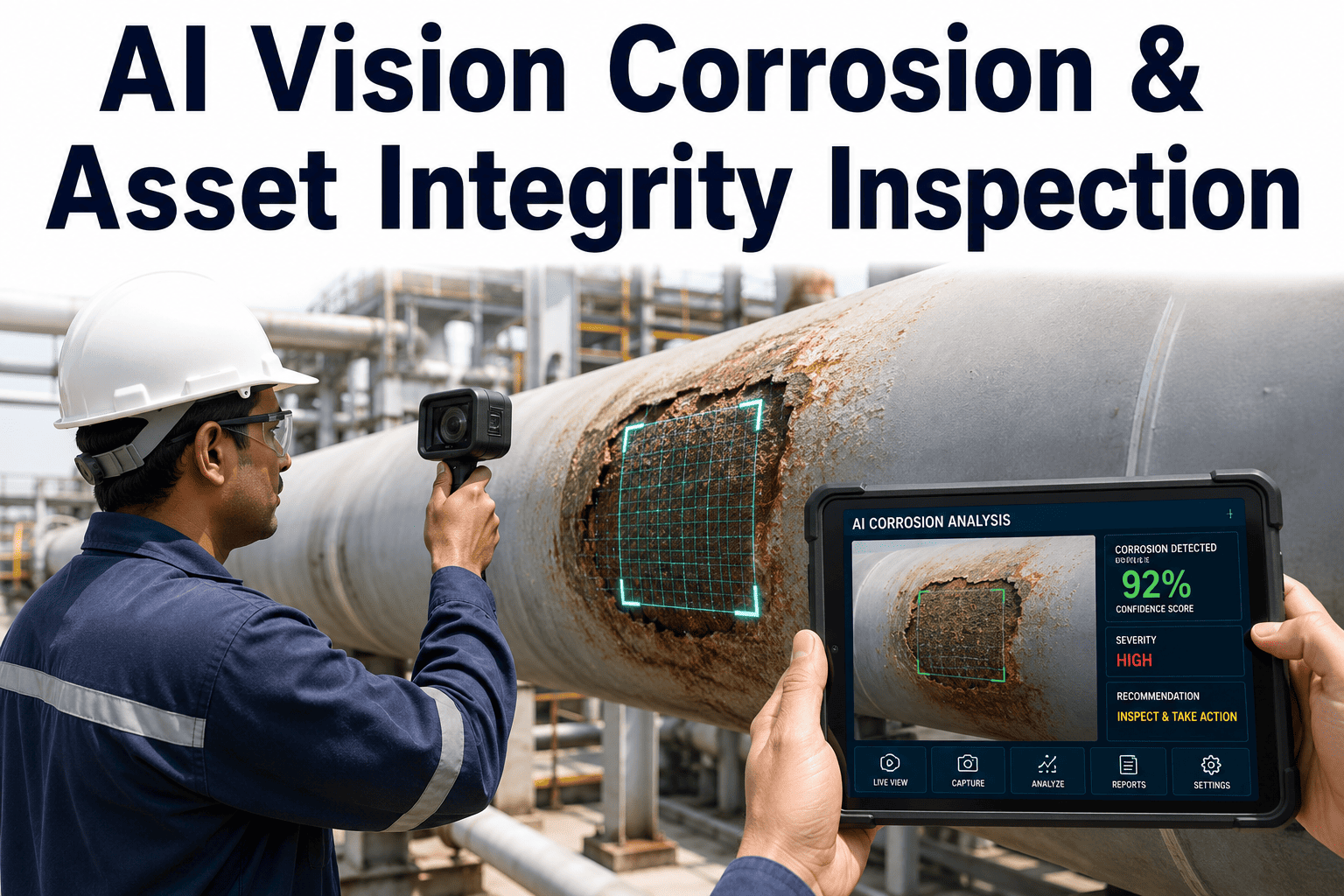
Corrosion never announces itself. A tank wall thins, a pipe develops a pit, a coating starts to blister, and the process fluid inside keeps flowing exactly as it did the day before, right up until the wall gives way. Scheduled visual walkdowns and periodic ultrasonic thickness surveys catch these conditions only at the interval they happen to fall on, while the corrosion itself never pauses between inspections. AI vision inspection changes that math by scoring tanks, piping, and pressure vessels continuously, tracking pitting, coating failure, and surface degradation as trends rather than as a single snapshot once or twice a year. Reliability teams evaluating this approach can contact support to walk through it against their own asset register.
CHEMICAL PLANT · CORROSION & ASSET INTEGRITY
Every Asset, Scored, Every Day
AI vision that watches tanks, piping, and pressure vessels continuously, catching pitting, coating failure, and wall degradation while a targeted repair is still cheaper than an emergency one.
The Gap Between Inspections Is Where Failures Happen
Corrosion accounts for a substantial share of unplanned failures across chemical and process industries, and the pattern behind nearly every one of them is the same. An asset gets inspected, passes, and then sits unmonitored for weeks or months while pitting, wall thinning, or coating breakdown continues underneath the surface. In high-humidity zones, acidic process areas, and high-temperature sections, degradation rates can reach several millimeters per year, meaning a defect that was minor at the last inspection can approach a critical threshold well before the next one is scheduled.
By the time a calendar-based inspection identifies advanced thinning, the intervention window has often already closed, leaving a choice between an expensive emergency repair or an unplanned shutdown. Continuous vision monitoring closes that gap by watching the asset every day instead of twice a year.
Where Corrosion Concentrates Across A Chemical Plant
Storage Tanks
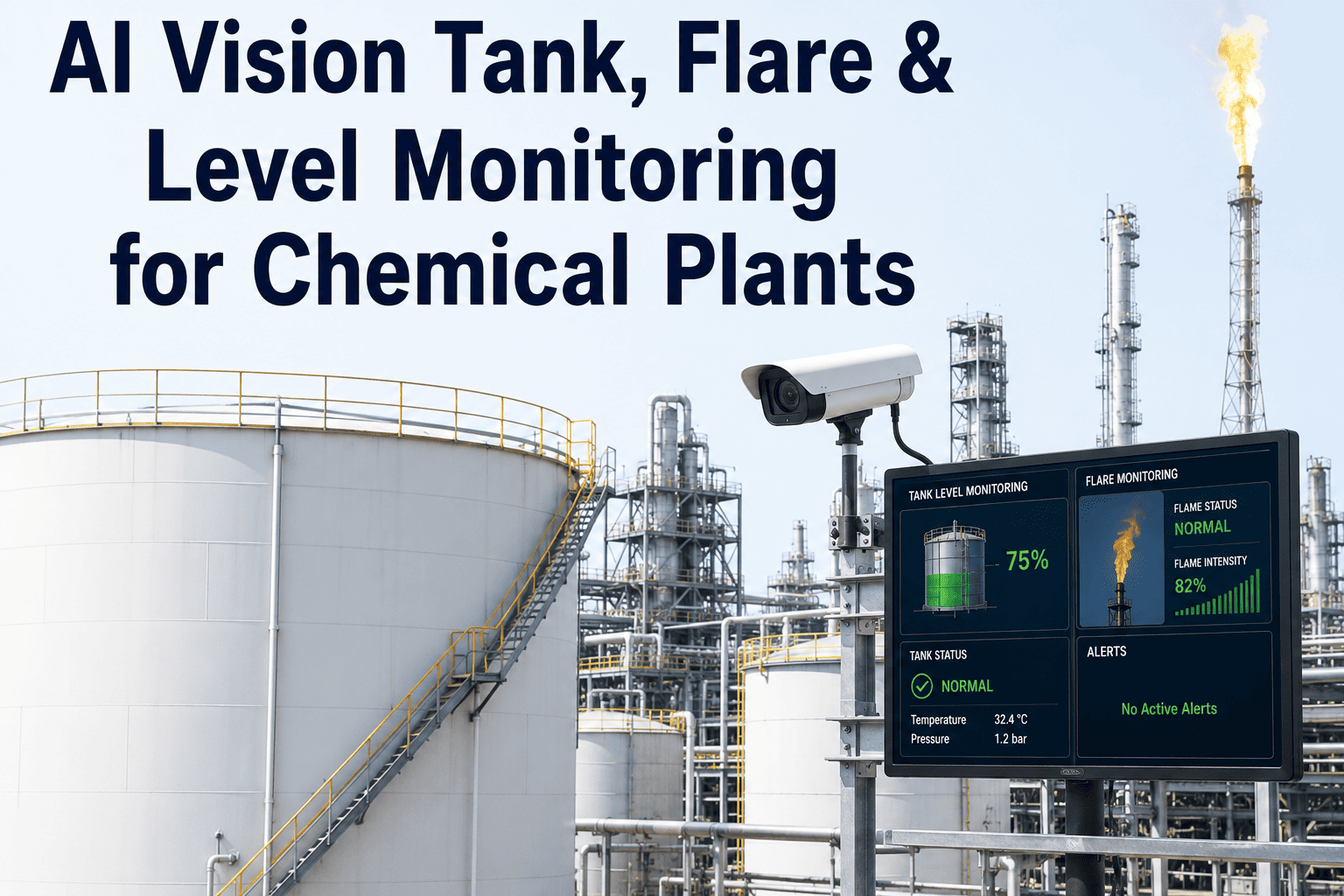
Floor and shell corrosion from product contact, condensation, and coating breakdown near weld seams and nozzles
Process Piping
Wall thinning at elbows, tees, and flow-disturbance points where erosion-corrosion accelerates fastest
Pressure Vessels
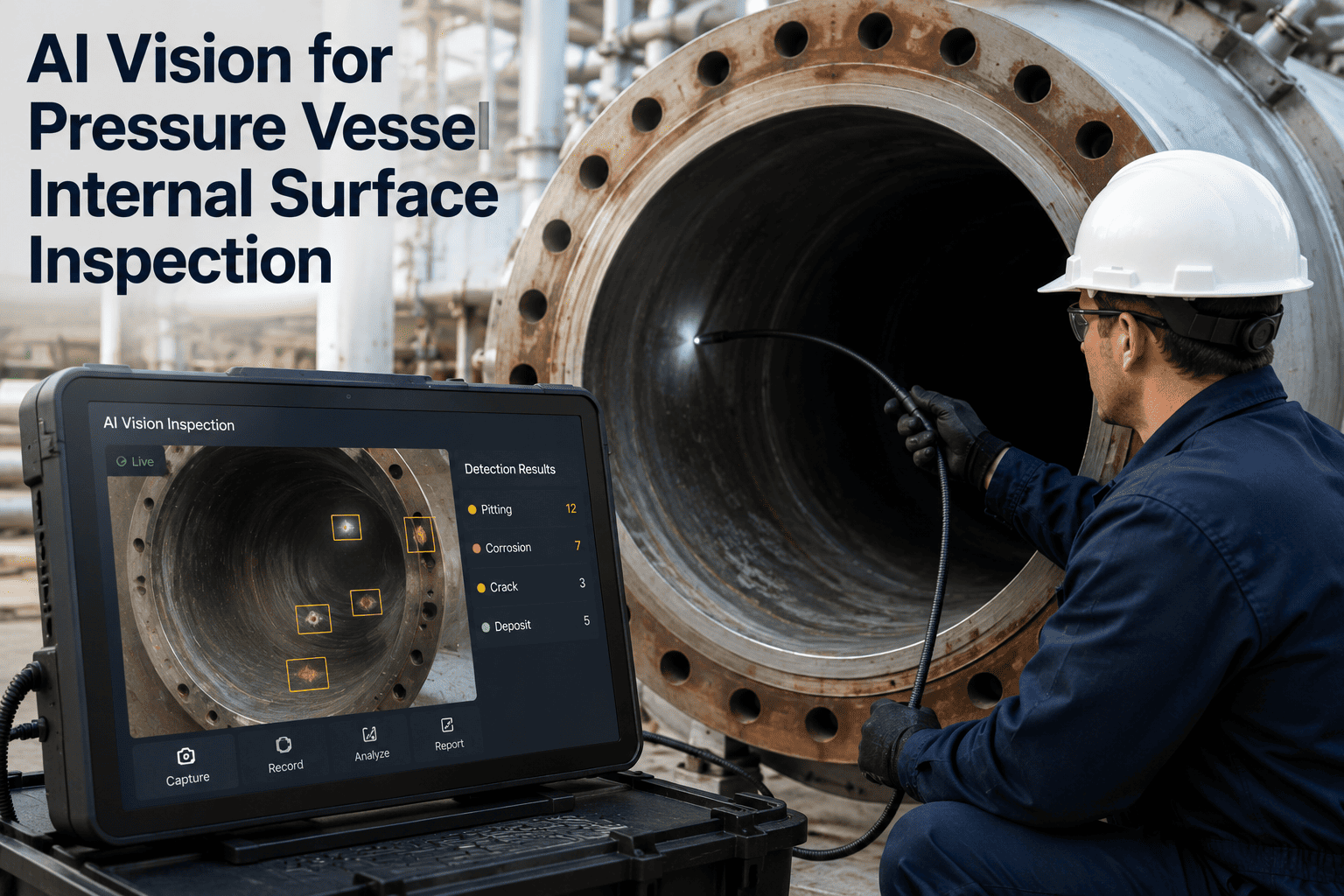
Internal pitting and external coating failure around nozzles, supports, and insulation-covered sections
Heat Exchanger Bundles
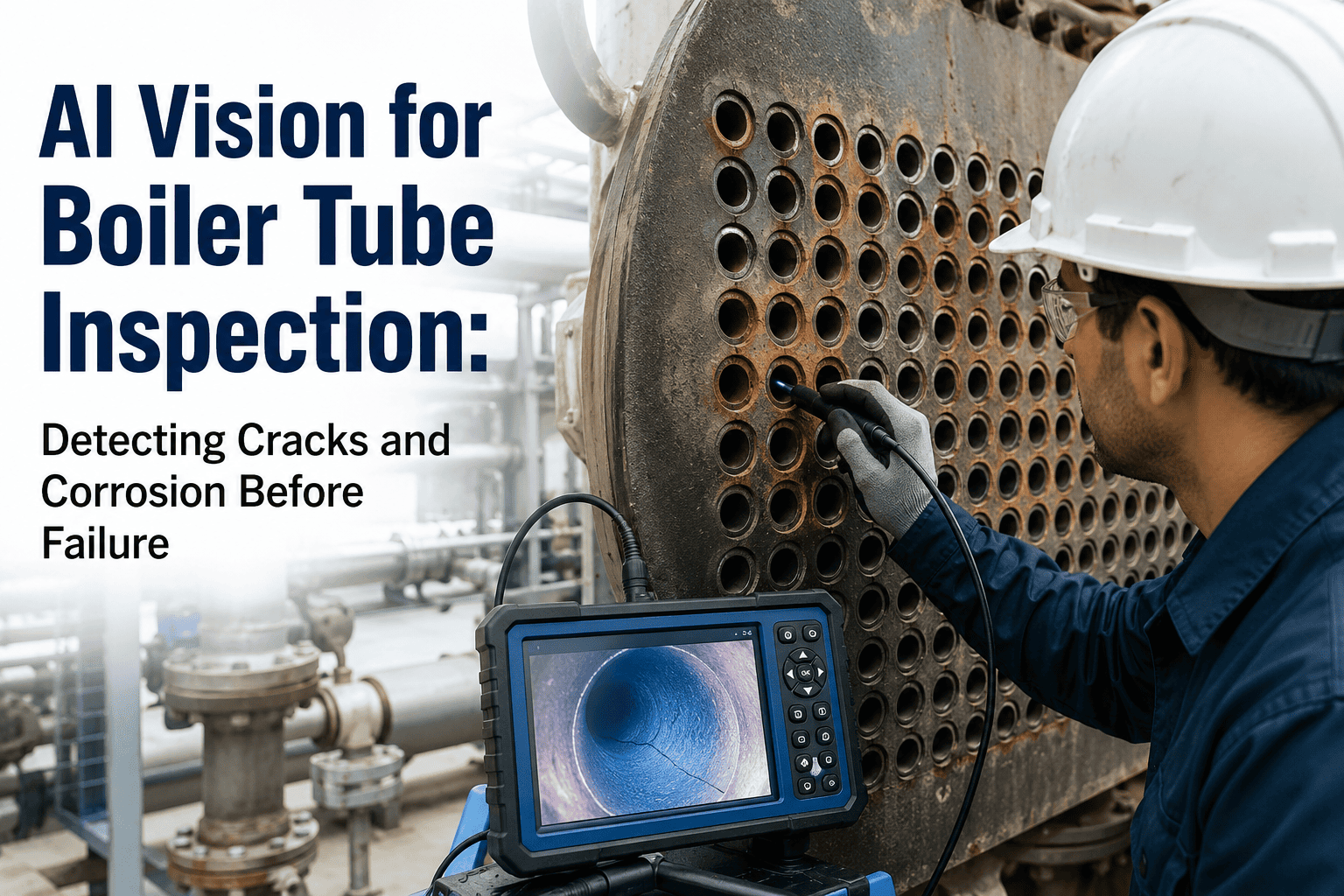
Tube-side and shell-side degradation driven by process fluid chemistry and temperature cycling
CONTINUOUS ASSET INTEGRITY
See Your Own Assets Scored Live
Walk through how vision-based scoring would rank your tanks, piping, and pressure vessels by inspection priority today.
From First Pit To Structural Concern
Corrosion progresses through recognizable stages, and vision-based monitoring is built to catch it as early in that progression as possible, when a targeted repair is still the cheapest option on the table.
Precursor Pitting
Early-stage surface pitting begins, often only a few pixels across in an image and invisible during a quick walk-by glance.
Coating Breakdown
Protective coating blisters, cracks, or peels near welds and nozzles, exposing bare metal to accelerated attack.
Active Wall Thinning
Measurable wall loss develops at the exposed area, tracked as a percentage change against the asset's baseline thickness.
Threshold Breach
Corrosion approaches the minimum safe wall thickness, triggering escalation for scheduled repair before failure risk rises.
Vision Monitoring Compared To Traditional Inspection
A Priority List, Not Just A Photo Log
The real value of continuous monitoring is not the image itself, it is the ranking. Every scored asset gets placed on a priority list based on severity and rate of change, so reliability teams know exactly which tank or pipe segment needs attention this week instead of reviewing every asset with equal urgency.
High Priority
Accelerating Pitting
Corroded area growing week over week, scheduled for near-term inspection
Medium Priority
Coating Failure
Bare metal exposed but corrosion rate still stable, monitored closely
Low Priority
Stable Surface
No measurable change against baseline, reviewed on standard cadence
Built To Track Change, Not Just Capture A Snapshot
A single photo of a corroded surface tells you what it looks like today. What actually predicts failure is how that surface is changing over time. Vision models compare each new image against a historical baseline of the same asset, calculating corroded surface percentage and flagging measurable growth in pit depth, coating loss, or discoloration before it reaches a structurally meaningful threshold.
Deployment typically runs on turnkey NVIDIA edge hardware for on-site processing, connecting to existing DCS, SCADA, or CMMS systems where possible rather than requiring a full instrumentation overhaul. A short data audit in the first one to two weeks identifies any sensor or camera coverage gaps, and a full rollout across an asset register generally completes within a six to twelve week deployment roadmap.
What Reliability Engineers Are Saying
We used to find pitting the same way everyone does, during the scheduled turnaround, usually further along than anyone wanted. Now we get a ranked list every week showing which vessels are actually changing. We caught a bundle that was accelerating and fixed it during a planned stop instead of an emergency one.
Reliability Engineer, Chemical Processing Facility
VISION DEFECT DETECTION
Turn Photos Into A Priority List
See how graded severity scoring would rank your current tanks, piping, and pressure vessels this week.
Frequently Asked Questions
Can vision inspection actually catch corrosion before it is visible to the eye?
Yes, though the mechanism is comparison rather than single-image magic. The model holds a historical baseline image of each asset and compares every new capture against it, so a change in surface texture, color, or coating condition that would be too subtle for a person to notice on a single visit becomes clear as a measurable trend across weeks of images. This is why continuous coverage matters more than image resolution alone, since the earliest stage of corrosion is defined by change over time, not by how sharp any one photo is.
Does this replace ultrasonic thickness testing entirely?
No, vision monitoring and ultrasonic thickness testing serve complementary roles rather than replacing one another. Vision coverage continuously tracks surface-level indicators like coating condition, pitting growth, and discoloration across a wide area, which is exactly the gap between scheduled UT surveys. When vision monitoring flags an accelerating trend, that finding is used to prioritize where and when the next UT measurement should happen, making thickness testing more targeted rather than eliminating it.
How does the system avoid flooding our team with false alerts?
Graded severity classification replaces simple threshold alarms, meaning the system does not fire an alert every time a pixel value shifts slightly due to lighting or weather. Instead, findings are scored by actual rate of change against the asset's own baseline, and only genuine accelerating trends surface as high-priority items. Plants moving from legacy threshold-based systems to this kind of graded scoring typically see actionable alert volume drop sharply while the actual corrosion catch rate improves.
What if we already have cameras or sensors installed on some assets?
Existing camera and sensor infrastructure is used wherever possible rather than replaced, since most plants already have partial coverage on higher-risk assets. Integration typically connects directly with DCS, SCADA, or CMMS platforms through standard protocols, and a short audit in the first one to two weeks identifies any specific coverage gaps. Additional cameras or sensors are recommended only for those identified gaps, not as a blanket hardware overhaul. Teams can review their current setup through
support before committing to anything new.
How long before we see a working priority list across our asset register?
A pilot on the highest-risk assets, typically the tanks and piping segments already flagged as concerns in past inspections, is usually generating a working priority list within two to three weeks of baseline images being captured. Full deployment across an entire asset register generally follows a six to twelve week roadmap, scaled by asset count and any camera or sensor gaps identified during the initial audit. Reliability leads can
book a demo to see a rollout timeline scoped to their own asset register.
AI VISION CORROSION & ASSET INTEGRITY
Stop Waiting For The Next Scheduled Inspection
Get a walkthrough of continuous vision monitoring scored against your own tanks, piping, and pressure vessels.