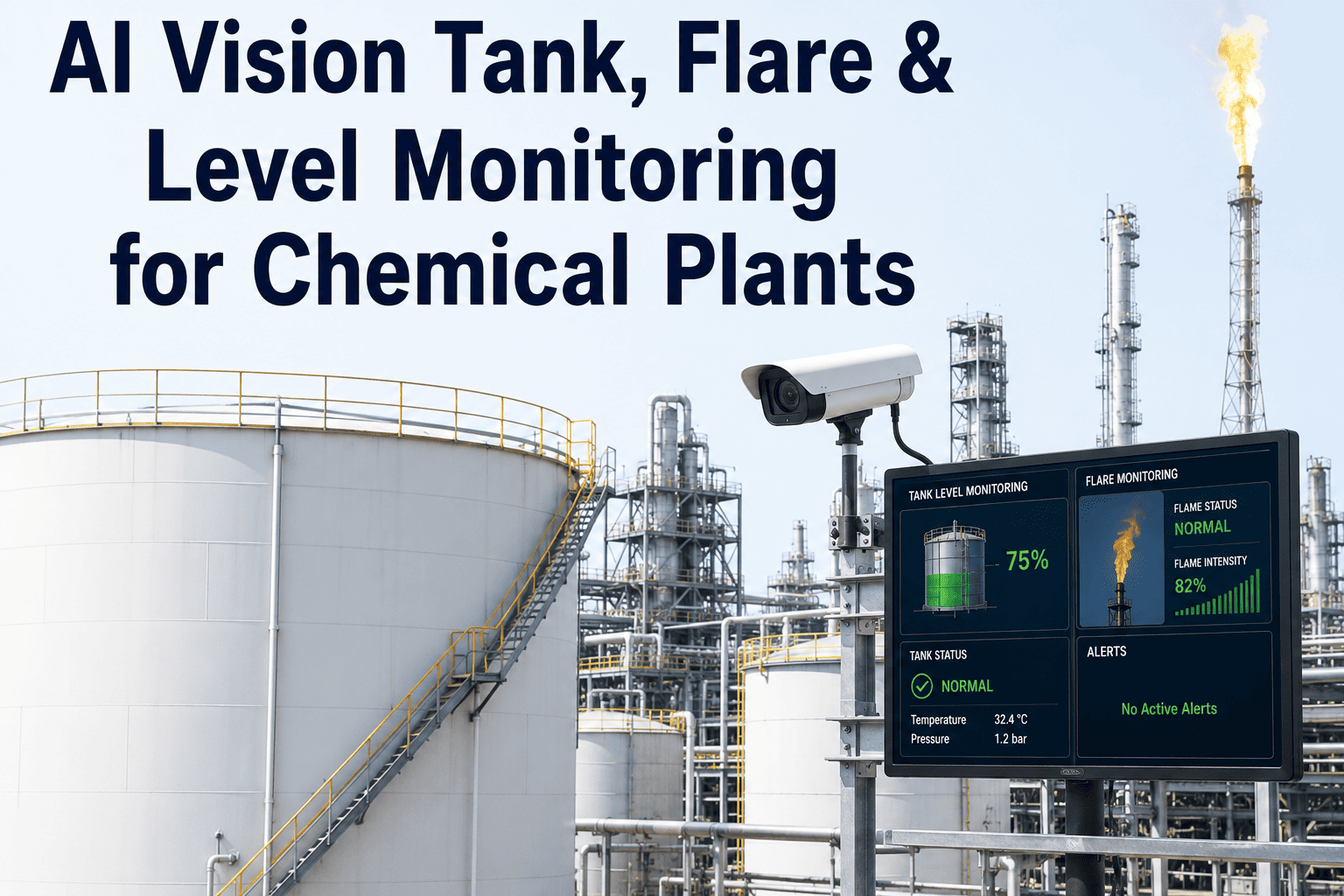
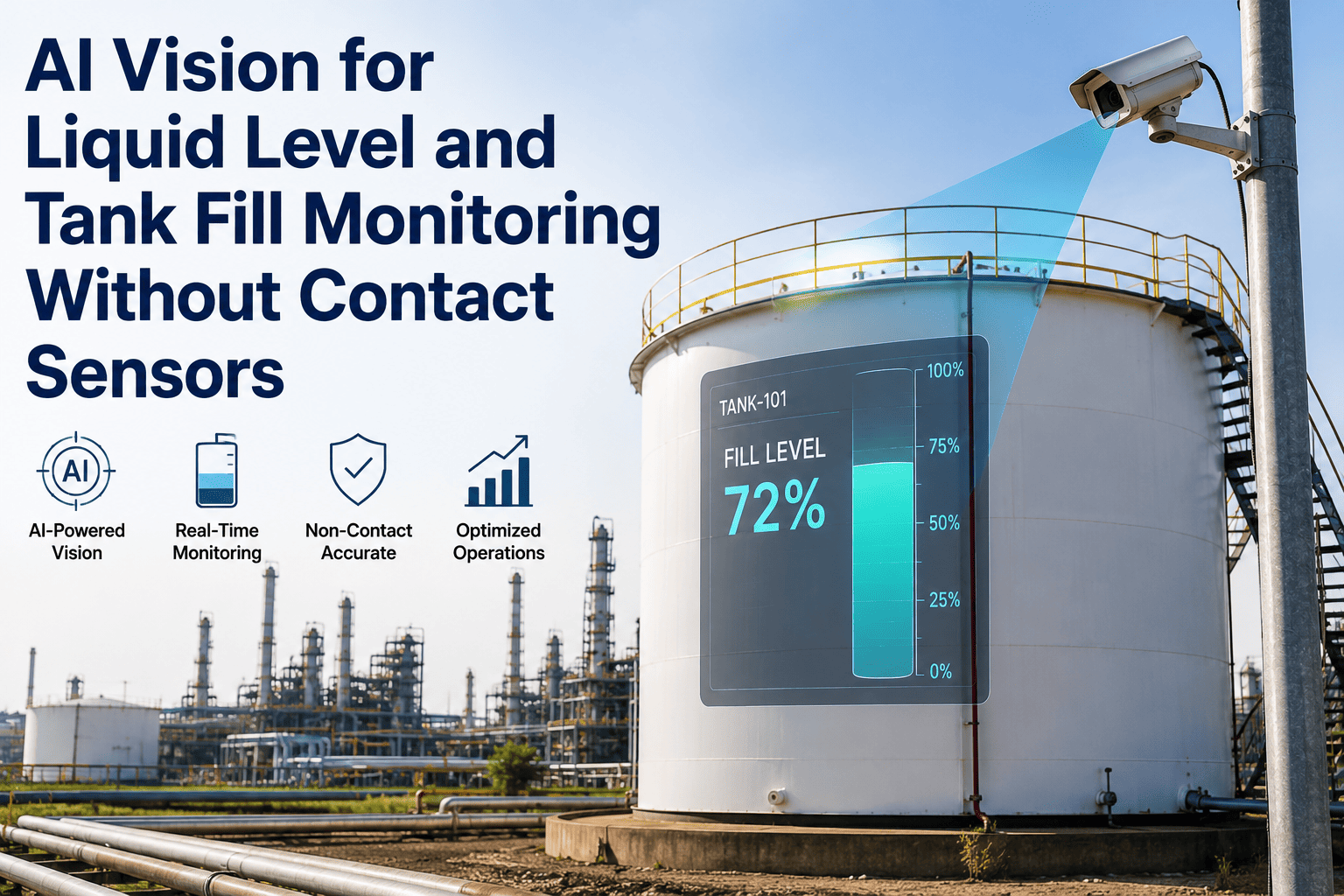
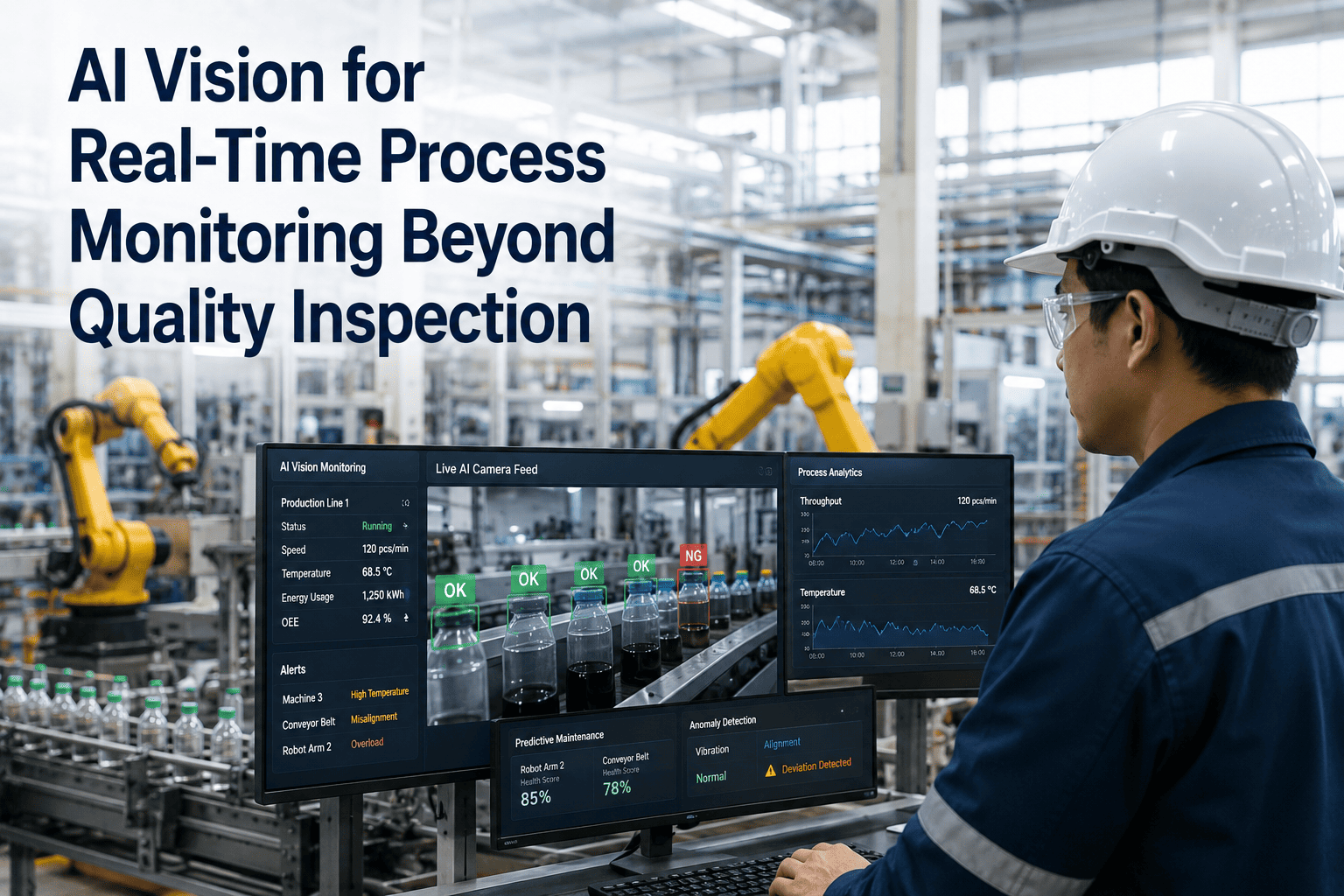
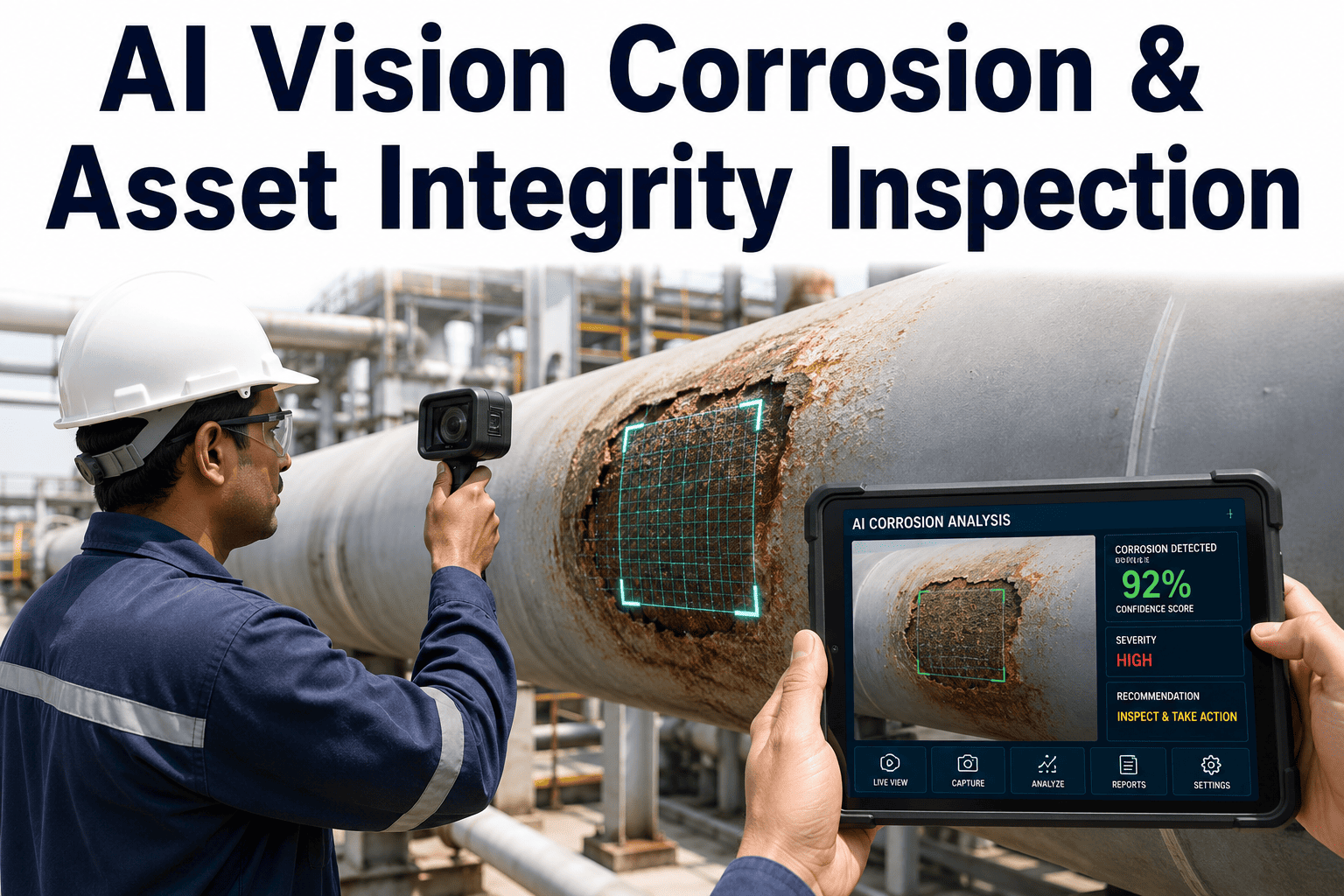
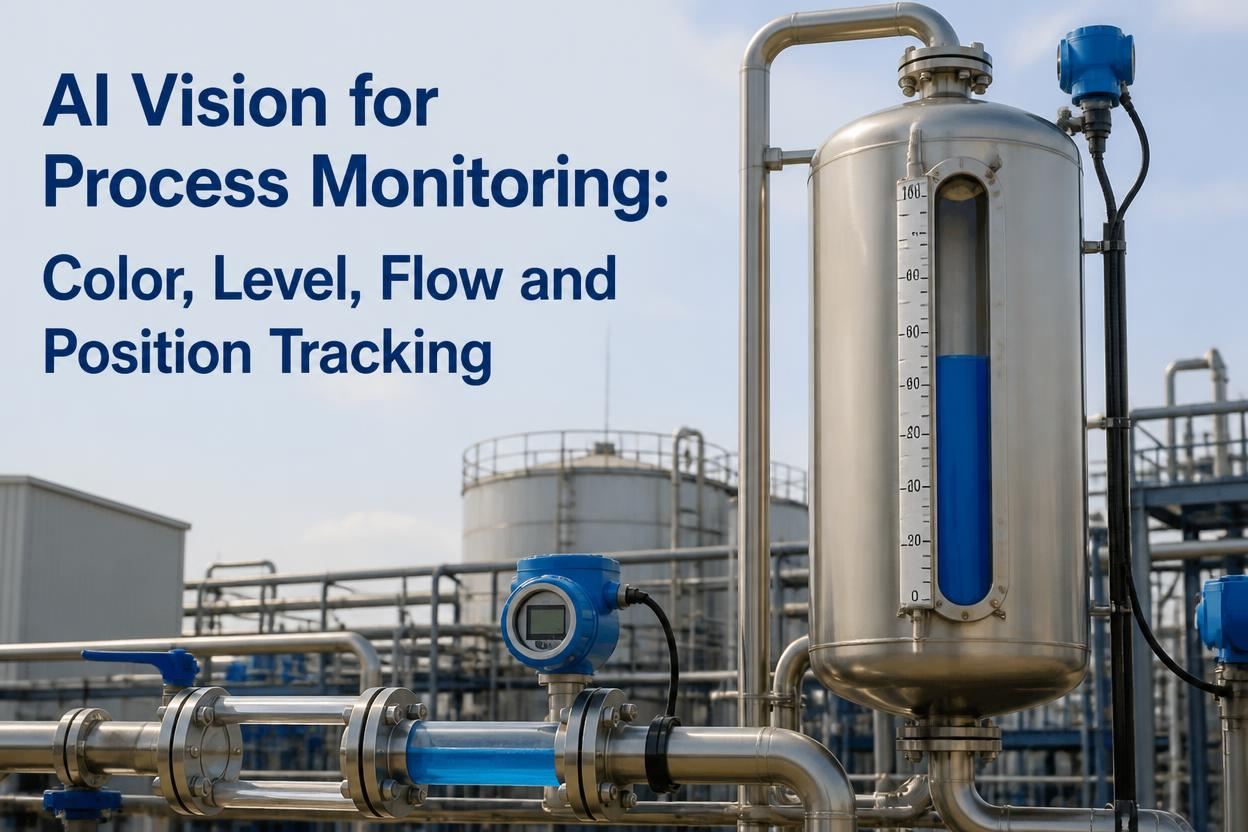
Somewhere in every chemical plant, a technician is walking a fixed round right now, climbing a tank ladder to read a level gauge, glancing at a flare stack to check the flame looks normal, and writing both down on a clipboard before moving to the next stop. That round happens on a schedule, usually every two to four hours, which means for the time between rounds nobody is watching. A level creeping toward overfill, a flare losing its pilot flame, or a process reading drifting out of range can go unnoticed for the length of an entire round, in zones where the margin for error is measured in minutes, not hours. AI vision monitoring watches every one of those points continuously, using the cameras already installed across the site rather than adding new hardware to hazardous areas. Plant safety and operations teams can book a demo to see it running against their own tank farm and flare layout.
CHEMICAL PLANT · TANK, FLARE & LEVEL MONITORING
Nobody Should Have To Wait For The Next Round
AI vision that reads tank levels, watches flare status, and flags process anomalies continuously, cutting manual rounds through hazardous zones without losing coverage between them.
The Round Is The Gap
Manual rounds exist because someone has to check the gauges, and for decades that has meant a person walking the same route on a fixed interval. The problem is not the round itself, it is everything that happens between one round and the next. A tank level that was fine at the last check can approach overfill an hour later. A flare that was burning cleanly can lose its pilot flame and start venting unburned hydrocarbon. A pressure reading that looked normal can begin drifting toward an unsafe range, and the drift itself, not any single reading, is often the real warning sign.
Continuous AI vision closes that gap by watching the same gauges, tanks, and flare stacks every minute instead of every few hours, using the plant's existing camera network rather than requiring new instrumentation in classified hazardous zones.
Manual Round
Gauge checked once every 2 to 4 hours
Technician enters hazardous zone to read levels
Drift between readings goes unnoticed
Flare status confirmed visually, by eye, in passing
AI Vision Monitoring
Gauge and level read continuously, every minute
Camera-based, no additional zone entry required
Drift flagged as a trend before it becomes critical
Flame presence, color, and pattern tracked continuously
Three Things Being Watched At Once
TANK LEVEL
Reads Levels Like A Person Would
Vision models read analog and digital level gauges directly from camera footage, tracking rate of change and flagging levels approaching high or low limits well before an overfill or run-dry condition develops.
FLARE STATUS
Watches Flame, Not Just Temperature
Dedicated flare monitoring tracks flame size, color, and pattern continuously, catching pilot flame loss or abnormal smoke that a single-point sensor could miss entirely.
PROCESS ANOMALY
Flags What Doesn't Match Normal
Valve positions, pressure gauge readings, and equipment states are compared against expected operating patterns, surfacing deviations that a quick visual check would likely miss.
Detection Speed Changes Everything
Every incident in a hazardous zone follows an escalation path, and the technology in place determines which stage it gets caught at. Traditional point sensors and scheduled rounds tend to catch problems only once they are already visible or measurable at close range. Continuous vision coverage is built to catch the same event multiple stages earlier.
Manual Round Detection
Up to 4 hrs
Fixed Point Sensor
Minutes
Continuous AI Vision
Under 5 sec
Typical time from an anomaly developing to it being flagged, by detection method.
Fewer Rounds Through Classified Zones
Every manual round through a tank farm, flare area, or process unit is also an exposure event, putting a person near flammable materials, elevated structures, or confined spaces on a fixed schedule regardless of whether anything unusual is actually happening that day. Reducing round frequency without losing coverage is one of the more direct safety gains available to a plant, since it removes routine exposure while continuous monitoring keeps watching everything the round used to check.
FEWER ROUNDS, MORE COVERAGE
Cut Routine Exposure Without Losing Visibility
See how much manual round frequency your team could safely reduce once continuous coverage is in place.
Runs On The Cameras You Already Have
Most hazardous-zone monitoring deployments do not start with a blank site. Existing fixed and PTZ cameras covering tank farms, loading racks, and process units are connected directly into the vision detection layer, so most sites do not need a full camera installation project to get started. Any coverage gaps, typically at elevated flare structures or hard-to-reach pipe racks, are identified during a short site walkdown and addressed with targeted additions rather than a blanket hardware overhaul. Processing runs on turnkey NVIDIA edge hardware sized to camera count, keeping detection local to the plant network, and a full rollout across a tank farm and flare system typically completes within a six to twelve week deployment roadmap.
What Plant Operations Leads Are Saying
Our rounds were every two hours on the tank farm, rain or shine, whether anything was happening or not. Now the cameras watch continuously and the round schedule is built around what actually needs a person there. Our team spends less time walking the same route and more time on the things that actually need hands.
Operations Lead, Chemical Processing Plant
Frequently Asked Questions
Can this read our existing analog gauges, or do we need digital ones installed first?
Vision models are trained to read analog dial gauges, digital displays, and sight-glass level indicators directly from camera footage, so existing analog instrumentation does not need to be replaced before deployment. The model is calibrated against your specific gauge types and mounting positions during setup, since lighting angle and gauge style both affect reading accuracy. Where a gauge is genuinely too worn or poorly lit to read reliably, that specific instrument is flagged during the initial site walkdown rather than assumed to work by default.
How does flare monitoring tell the difference between normal flaring and an actual problem?
The system tracks flame size, color, and pattern continuously against a baseline of normal flaring behavior for that specific stack, rather than triggering on any single frame that looks unusual. Pilot flame loss, abnormal smoke density, or a flame pattern that deviates meaningfully from the established baseline are what actually generate an alert, which keeps normal flaring variation from being flagged constantly. This distinction matters most in regulated environments where flaring itself is expected and permitted, but a genuine malfunction still needs to be caught quickly.
Do we need new cameras installed in our hazardous zones for this to work?
In most deployments, existing fixed and PTZ cameras already covering tank farms, loading areas, and process units are connected directly into the detection system, so a full new camera installation is rarely the starting point. A short site walkdown identifies any genuine coverage gaps, most often at elevated flare structures or areas with limited existing camera reach, and only those specific gaps get targeted additions. Any new camera housings used in classified hazardous areas are rated appropriately for that zone. Teams can review their current camera coverage through
support before scoping anything new.
Will this actually let us reduce how often technicians do manual rounds?
Most plants reduce round frequency gradually rather than eliminating rounds outright on day one, running continuous vision coverage alongside the existing schedule during an initial validation period. Once the system demonstrates it reliably catches the same conditions a round would have caught, and often earlier, plants typically shift routine rounds to a reduced frequency while keeping periodic checks for physical conditions a camera cannot assess, such as unusual odors or sounds. The exact reduction depends on zone classification and site-specific safety procedures.
How long does it take to get this running across a full tank farm and flare system?
A pilot covering one tank farm section and the primary flare stack, using existing camera infrastructure, is typically live within two to three weeks once the site walkdown and calibration are complete. Full deployment across an entire tank farm, flare system, and process unit gauge network generally follows a six to twelve week roadmap, scaled by camera count and any coverage gaps identified early on. Plant teams can
book a demo to see a rollout timeline scoped to their own site layout.
AI VISION TANK, FLARE & LEVEL MONITORING
Stop Waiting For The Next Round To Find Out
Get a walkthrough of continuous vision monitoring running against your own tanks, flare stack, and process gauges.