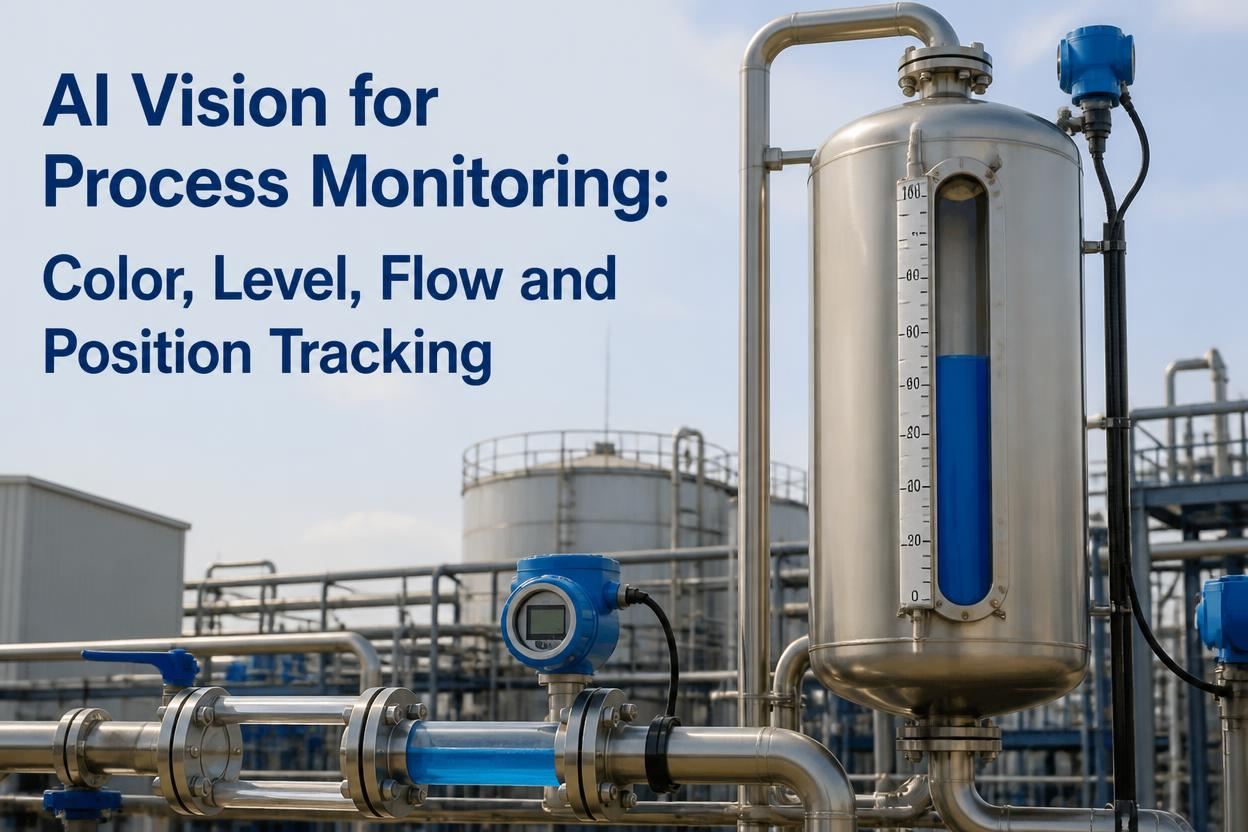
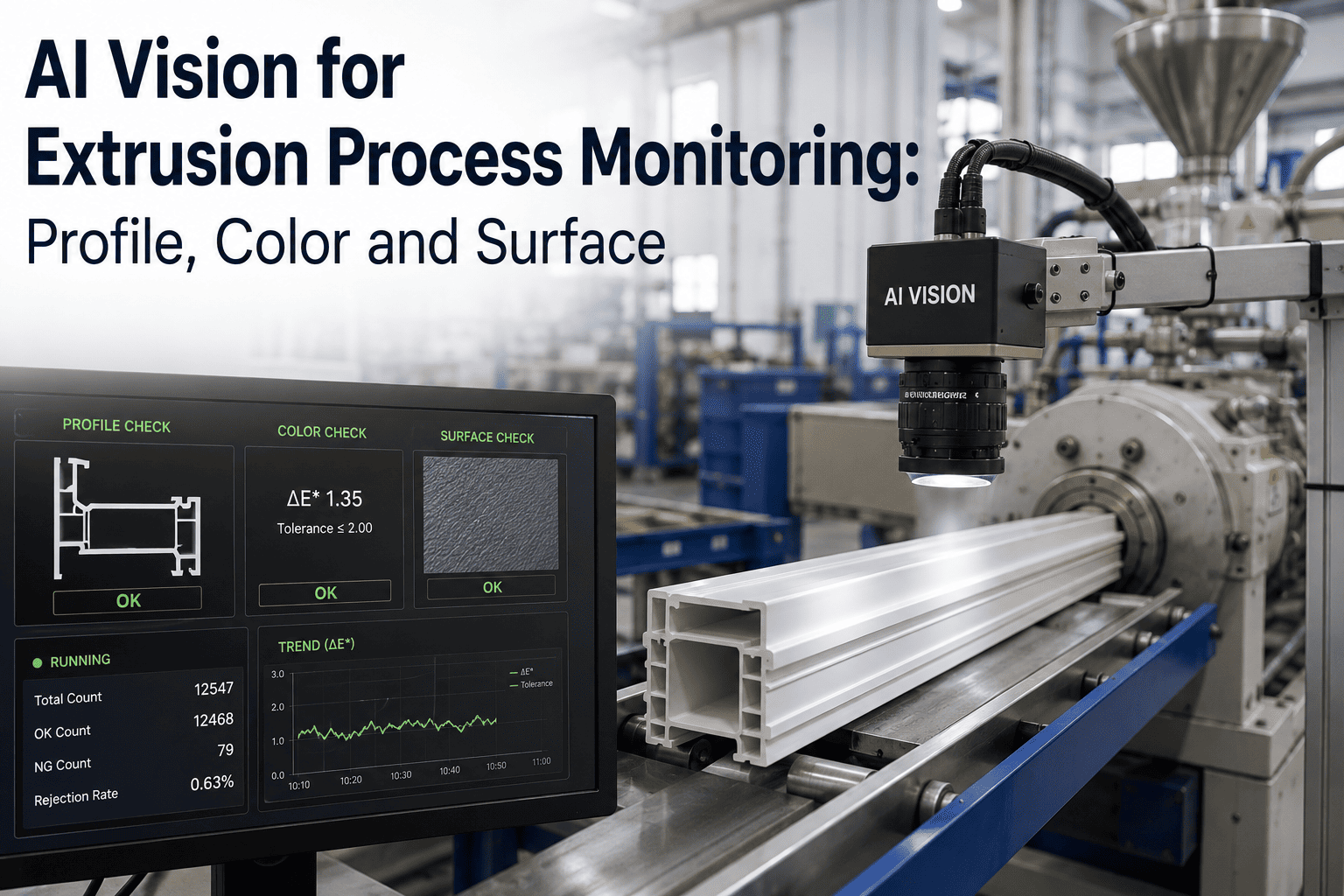
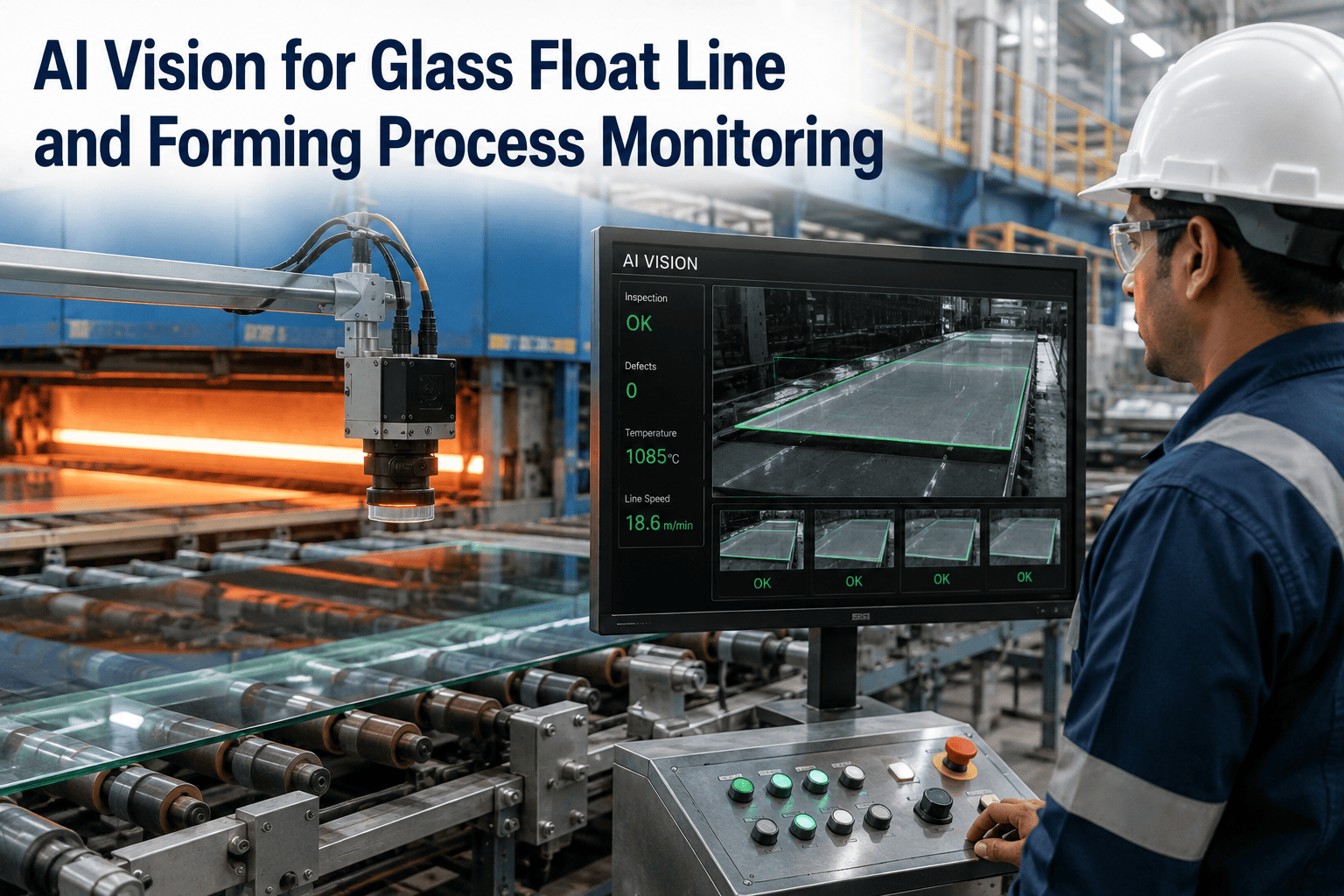
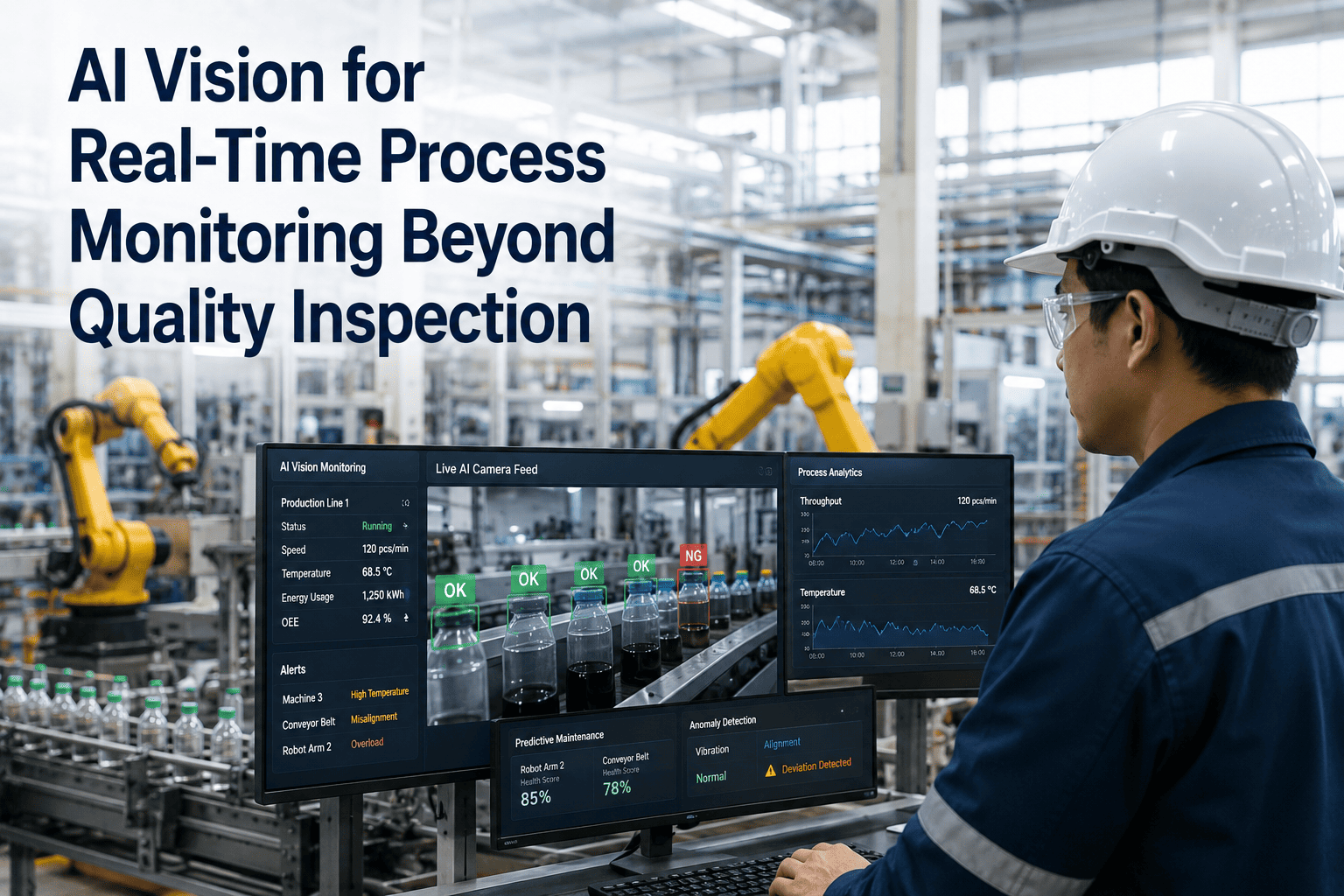
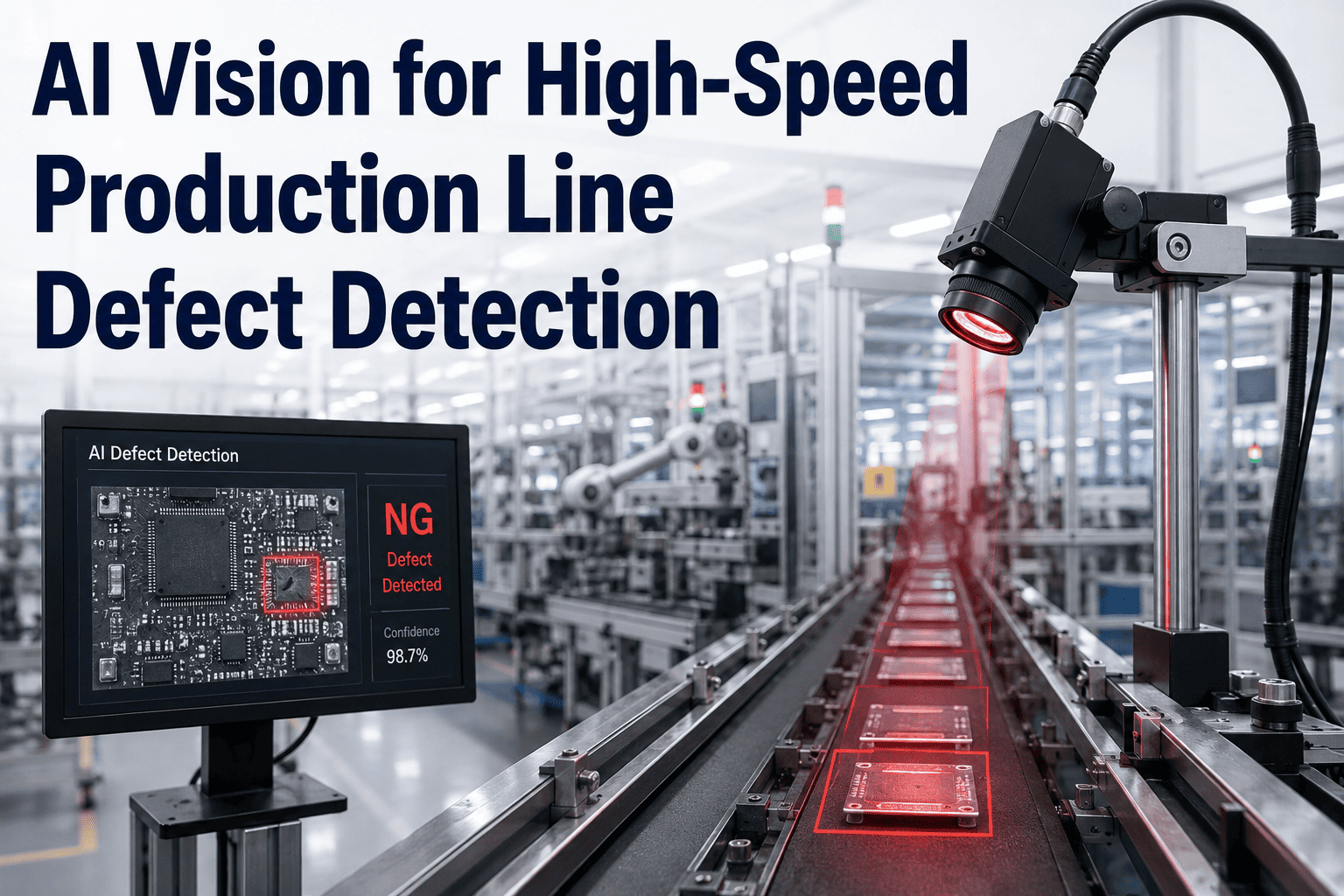
Process control in most manufacturing plants still depends on physical contact sensors installed at fixed points: float switches for tank levels, flow meters clamped to pipes, and proximity sensors for position tracking. Each sensor requires installation, calibration, periodic maintenance, and replacement when it degrades, and each one measures only the single point where it touches the process. A camera mounted above the same process can see the liquid color in a tank, the fill level from above, the material flow pattern on a conveyor, and the position of every product on the line simultaneously, all without making physical contact with anything. iFactory's AI vision platform converts those visual observations into real-time process parameter data that integrates directly with your control system, and you can book a demo to see it monitoring your process parameters from a single camera position.
PROCESS MONITORING · AI VISION · NON-CONTACT · REAL-TIME CONTROL
One Camera, Four Process Parameters, Zero Contact With Your Product
iFactory's AI vision platform monitors liquid color, tank fill level, material flow consistency, and product position from fixed camera positions, converting visual observations into structured process data without physical sensors.
01
Color Monitoring
Liquid, powder, and surface color consistency tracked against reference standards in real time
02
Level Monitoring
Tank and vessel fill levels measured visually from above or through sight glasses without immersion
03
Flow Monitoring
Material flow rate and consistency on conveyors and chutes tracked by visual speed and density analysis
04
Position Tracking
Product location, orientation, and spacing on conveyors measured without physical proximity switches
THE SENSOR PROBLEM
Why Contact Sensors Create Blind Spots That Visual Monitoring Fills
Every physical sensor installed on a process line measures one parameter at one point. When the process changes anywhere outside that point, the sensor cannot see it. The limitations below explain why plants using only contact sensors frequently miss process deviations that a camera would catch immediately.
SP
Single-Point Measurement
A float switch tells you the level at one height. It cannot tell you whether the liquid surface is sloping, foaming, or has a different level on the opposite side of the tank that the switch cannot reach.
IN
Installation Intrusion
Flow meters require cutting into pipes, level sensors require tank penetration, and proximity sensors require mounting brackets on the conveyor frame. Each installation creates a potential leak point and a maintenance burden.
CD
Calibration Drift
Contact sensors drift out of calibration over time due to material buildup, mechanical wear, and environmental exposure. A color sensor coated with process residue reports the color of the coating, not the product.
OC
One Parameter Per Sensor
Measuring color, level, flow, and position on the same process requires four separate sensor installations, four separate calibrations, and four separate maintenance schedules for what a single camera can observe simultaneously.
COLOR MONITORING
How AI Tracks Color Consistency Without Touching the Product
Color is one of the most common quality indicators in food, chemical, pharmaceutical, and coatings manufacturing, yet traditional color sensors require close proximity and clean optics to function. AI vision monitors color from a distance, through glass, and across the full surface area of the product rather than a single spot.
REFERENCE STANDARD
Target Hue: 42 | Saturation: 78% | Lightness: 62%
0.5%
Color Measurement Repeatability
AI vision achieves sub-one-percent repeatability on color measurements, matching or exceeding dedicated color spectrophotometers at a fraction of the cost per measurement point.
100%
Surface Area Coverage
Unlike spot sensors that measure a single point, AI vision samples the entire visible surface and reports the average, minimum, and maximum color values across the full area.
Delta E
Industry-Standard Output Format
Color deviation is reported in Delta E units compatible with existing quality specifications, so teams can adopt visual monitoring without rewriting their color tolerance standards.
LEVEL MONITORING
Measuring Tank Fill Levels Visually From Above Without Any Tank Penetration
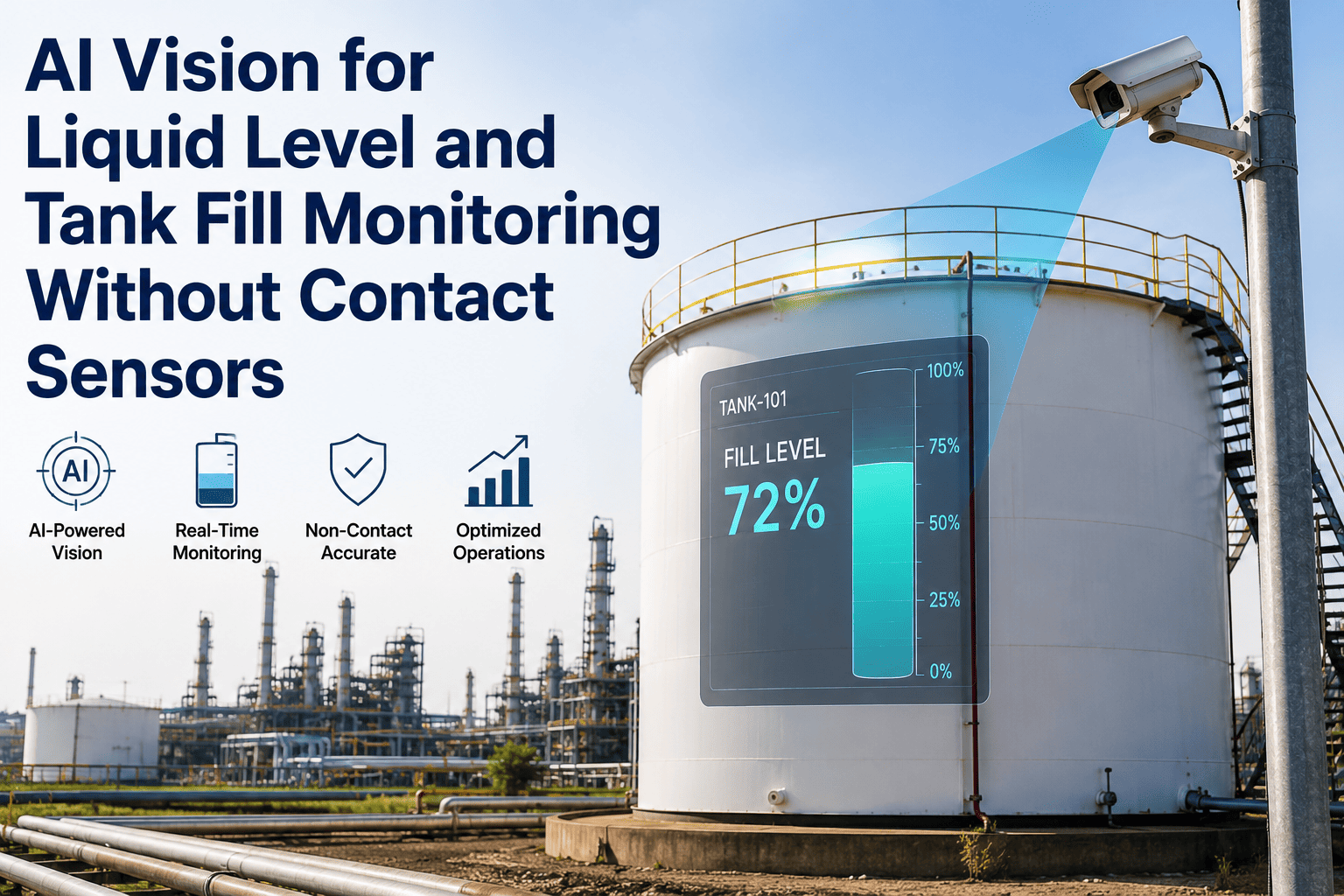
Visual level monitoring eliminates the need for float switches, ultrasonic transducers, or pressure transmitters that require physical installation inside or on the wall of the vessel. A camera mounted above the tank measures the fill level by identifying the liquid surface boundary within the image frame.
1
No tank penetration required; camera mounts externally on existing structure
2
Works with opaque, translucent, and foaming liquids where ultrasonic fails
3
Detects surface anomalies like foam layers, vortex formation, and uneven fill
4
Accuracy within 1-2 percent of actual level for standard tank geometries
FLOW MONITORING
Tracking Material Flow Rate and Consistency Without Interrupting the Process
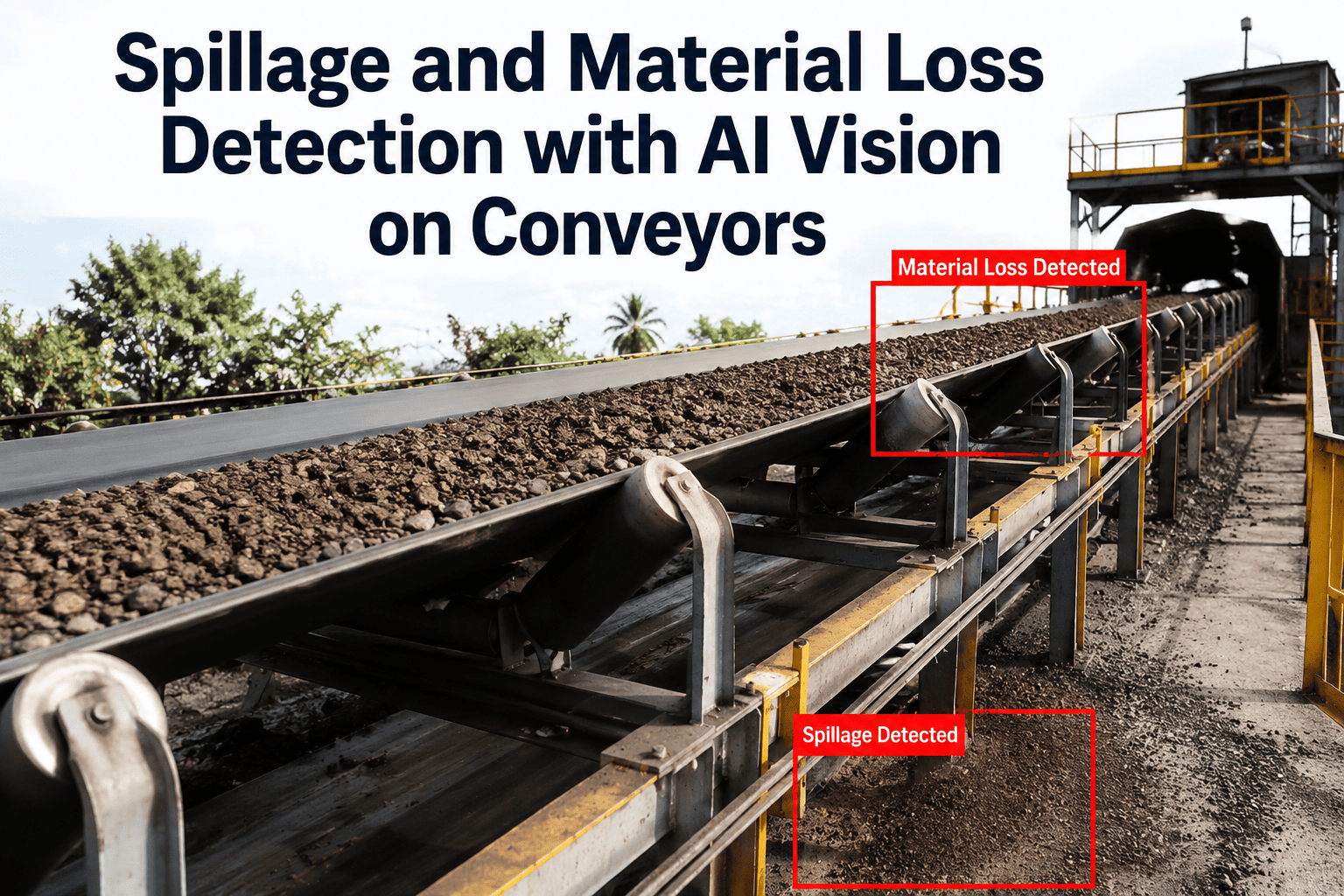
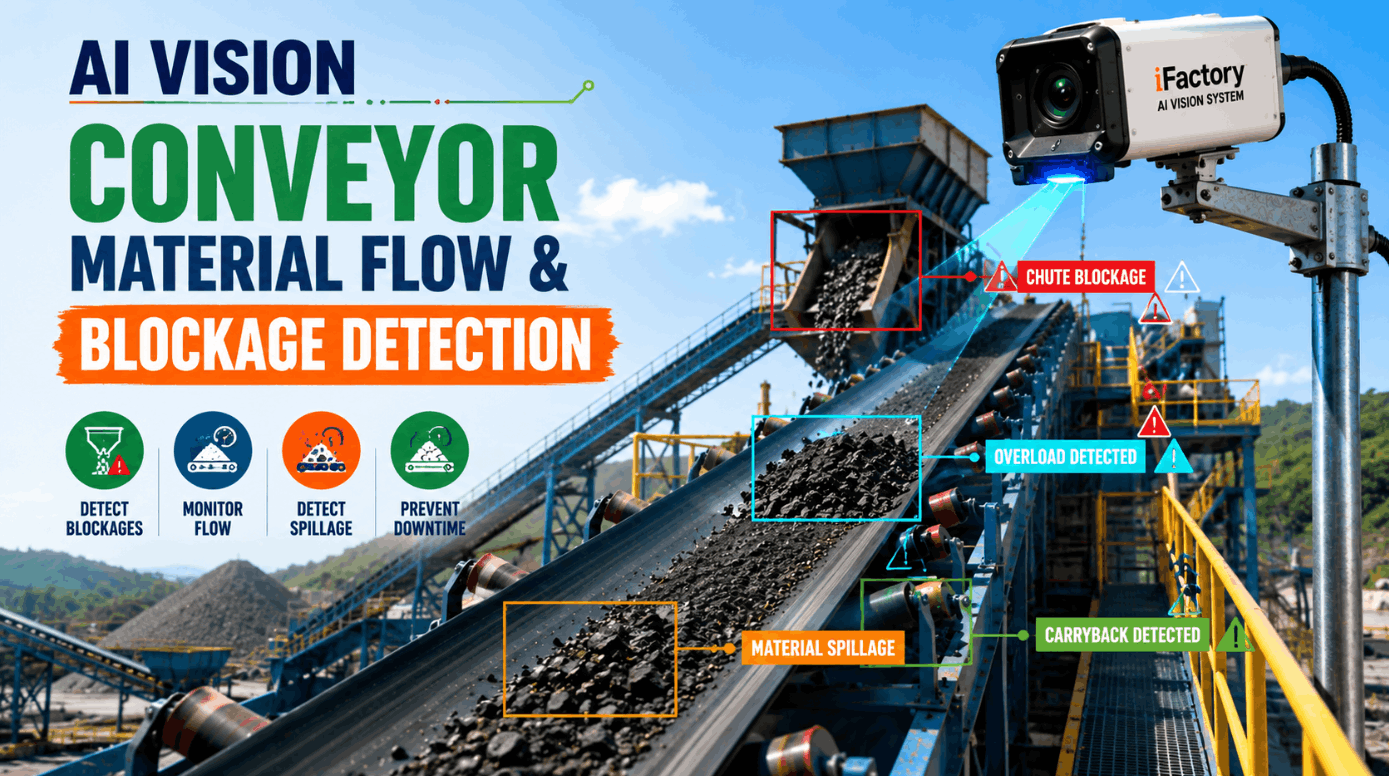
Flow meters measure volume or mass passing through a fixed point, but they cannot see whether the material is distributed evenly across the conveyor width, whether the flow is intermittent, or whether the material characteristics like particle size or moisture content have changed. AI vision captures all of these from above the flow stream.
OPTIMAL FLOW
Uniform width, consistent speed, even density distribution across full conveyor width
Flow Index: 96%
THIN FLOW
Reduced material width indicating underfeeding, blockage upstream, or material shortage in hopper
Flow Index: 58%
UNEVEN DISTRIBUTION
Material concentrated on one side indicating misaligned chute, worn spreader, or conveyor tracking issue
Flow Index: 71%
INTERMITTENT FLOW
Gaps in material stream indicating surging, bridging in hopper, or inconsistent discharge from feeder
Flow Index: 43%
Stop Installing Sensors on Processes That a Camera Can See From Five Feet Away
iFactory's AI vision platform monitors color, level, flow, and position from fixed camera positions, converting visual observations into structured process data that feeds your control system without a single contact point on your process line. Book a demo to see visual process monitoring on your equipment.
POSITION TRACKING
Knowing Where Every Product Is on the Line Without a Single Proximity Switch
Conveyor-based position tracking typically relies on proximity switches or photoelectric sensors mounted at fixed points along the conveyor frame. Each sensor detects presence at one location, but cannot track product position between sensors or detect spacing errors, orientation problems, or overlapping products.
HEAD TO HEAD
Contact Sensor vs AI Vision Process Monitoring — Full Capability Comparison
The table below compares the two approaches across the operational dimensions that determine which monitoring method is appropriate for each process parameter in your facility.
MEASURED OUTCOMES
Results From AI Visual Process Monitoring Deployments in Manufacturing
These figures reflect measured outcomes from facilities where iFactory's AI vision platform replaced or supplemented contact sensors for process monitoring, each tracked over a minimum six-month period.
64%
Reduction
Sensor Installation and Maintenance Costs
Facilities that replaced multiple contact sensor types with visual monitoring eliminated the recurring costs of sensor replacement, calibration labor, and process downtime for sensor maintenance.
3.1x
More Anomalies
Detected Per Month Compared to Contact Sensors
Visual monitoring detected over three times the number of process anomalies because cameras see the full process area rather than a single point, catching issues that point sensors cannot reach.
92%
Accuracy
On Level Measurements vs Reference Standards
AI vision level measurements matched manual reference measurements within two percent across a range of tank sizes, liquid types, and lighting conditions in active production environments.
$180K
Annual Savings
Per Line From Sensor Elimination and Reduced Downtime
Combined savings from eliminated sensor hardware, reduced maintenance labor, avoided process interruptions for sensor replacement, and earlier anomaly detection on a single monitored production line.
FREQUENTLY ASKED QUESTIONS
Questions From Process Engineers About AI Visual Process Monitoring
How accurately can AI vision measure tank fill levels compared to ultrasonic or radar level transmitters?
AI vision typically achieves one to two percent accuracy on standard cylindrical and rectangular tanks when the camera has a clear view of the liquid surface. This is sufficient for most process monitoring and control applications, though it may not match the sub-millimeter accuracy of radar transmitters used in custody transfer applications. The advantage is that visual level monitoring requires no tank penetration and can detect surface anomalies like foaming or vortexing that traditional level sensors cannot see.
Book a demo to see level measurement accuracy on your specific tank geometry.
What happens to visual monitoring accuracy when lighting conditions change during the day or between shifts?
iFactory's AI models are trained to handle normal lighting variation including ambient light changes, and the platform supports both passive and active lighting configurations depending on the criticality of the measurement. For high-precision color monitoring, fixed LED lighting is recommended to eliminate ambient variation entirely. For level and position tracking, the AI normalizes for reasonable lighting changes and flags conditions where lighting has degraded beyond the model's operating range so that maintenance can address the lighting before accuracy is affected.
Contact our support team to discuss lighting requirements for your process areas.
Can the visual process data be sent directly to our PLC or DCS for closed-loop control?
Yes. iFactory's platform outputs structured process parameter data through standard industrial communication protocols that integrate with PLCs, DCS systems, and SCADA platforms. The data can be used for closed-loop control where the response time requirements are compatible with image processing latency, which is typically under 200 milliseconds for standard process monitoring applications. For safety-critical shutdown functions, iFactory recommends using visual monitoring as a supplementary input alongside dedicated safety-rated sensors.
Book a demo to discuss integration with your control system.
How does the system handle transparent or highly reflective liquids for color and level monitoring?
Transparent liquids require camera positioning that captures the liquid surface at an angle where reflection or background contrast makes the surface boundary visible, and iFactory's deployment team selects the optimal camera angle and lighting configuration during the assessment phase. Highly reflective liquids like some metallic coatings or polished surfaces are monitored using polarized lighting that eliminates specular reflections while preserving the color information in the diffuse reflection component. Each process condition is evaluated individually during the pilot phase to confirm that the visual approach can deliver the required measurement reliability.
Contact our support team to discuss your specific liquid and surface characteristics.
Does visual flow monitoring work for bulk solids and granular materials, or only for liquids?
Visual flow monitoring works effectively for bulk solids, granular materials, powders, and aggregates on conveyors and in chutes, and in many ways it is more effective for solids than for liquids because the material boundaries are typically more defined and easier to detect visually. The AI tracks material width, height, speed, and distribution patterns across the conveyor to calculate a flow index that correlates with volumetric flow rate. For applications requiring precise mass flow measurement, visual monitoring can be combined with a single point weigh scale to provide both flow consistency monitoring and mass calibration.
Book a demo to see flow monitoring on your specific material type.
Your Process Is Already Visible — You Just Need the AI to Read What It Sees
iFactory's AI vision platform turns the visual information that is already available above your process into structured, real-time parameter data for color, level, flow, and position without installing a single contact sensor. Book a demo to see your process parameters measured visually from a camera.