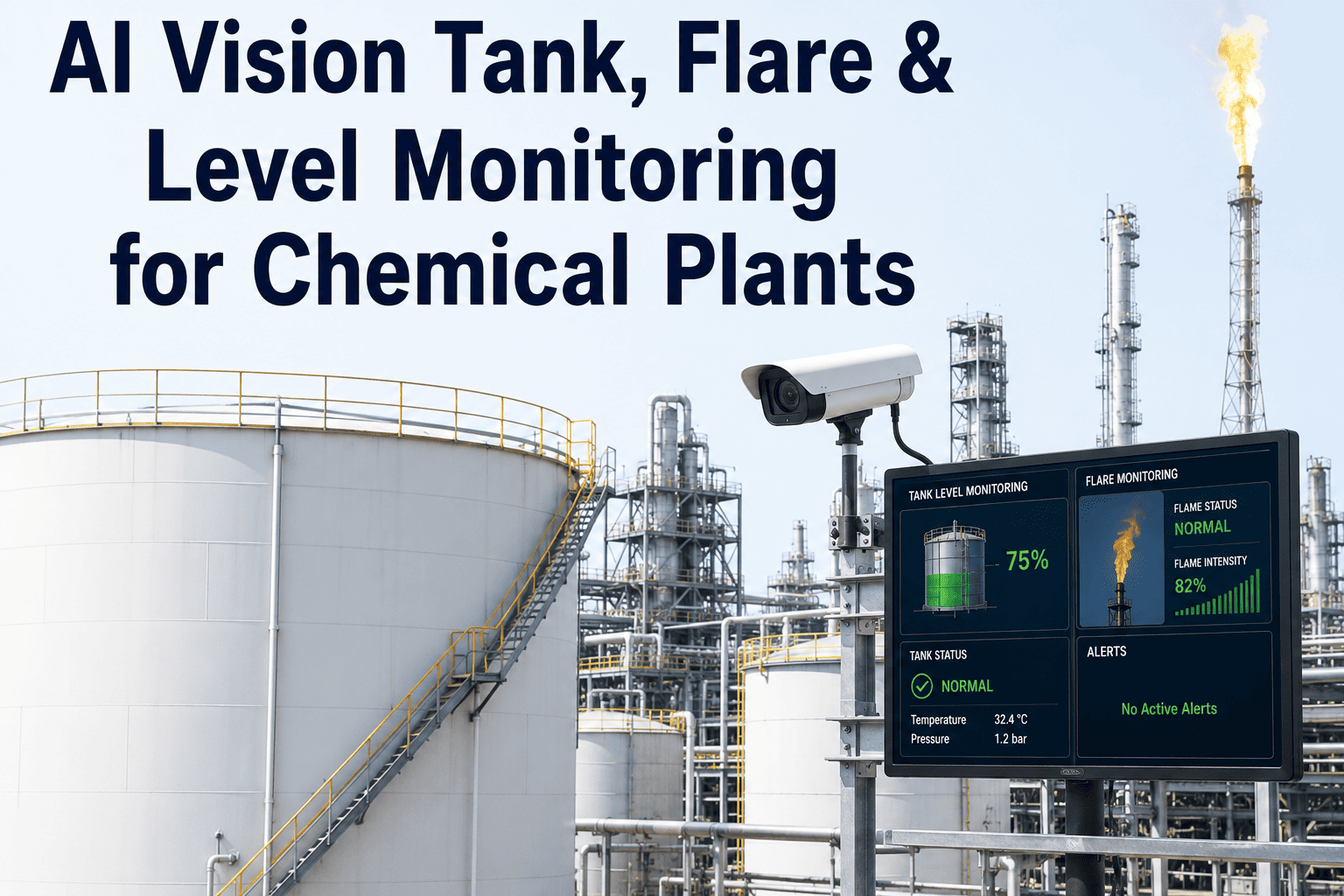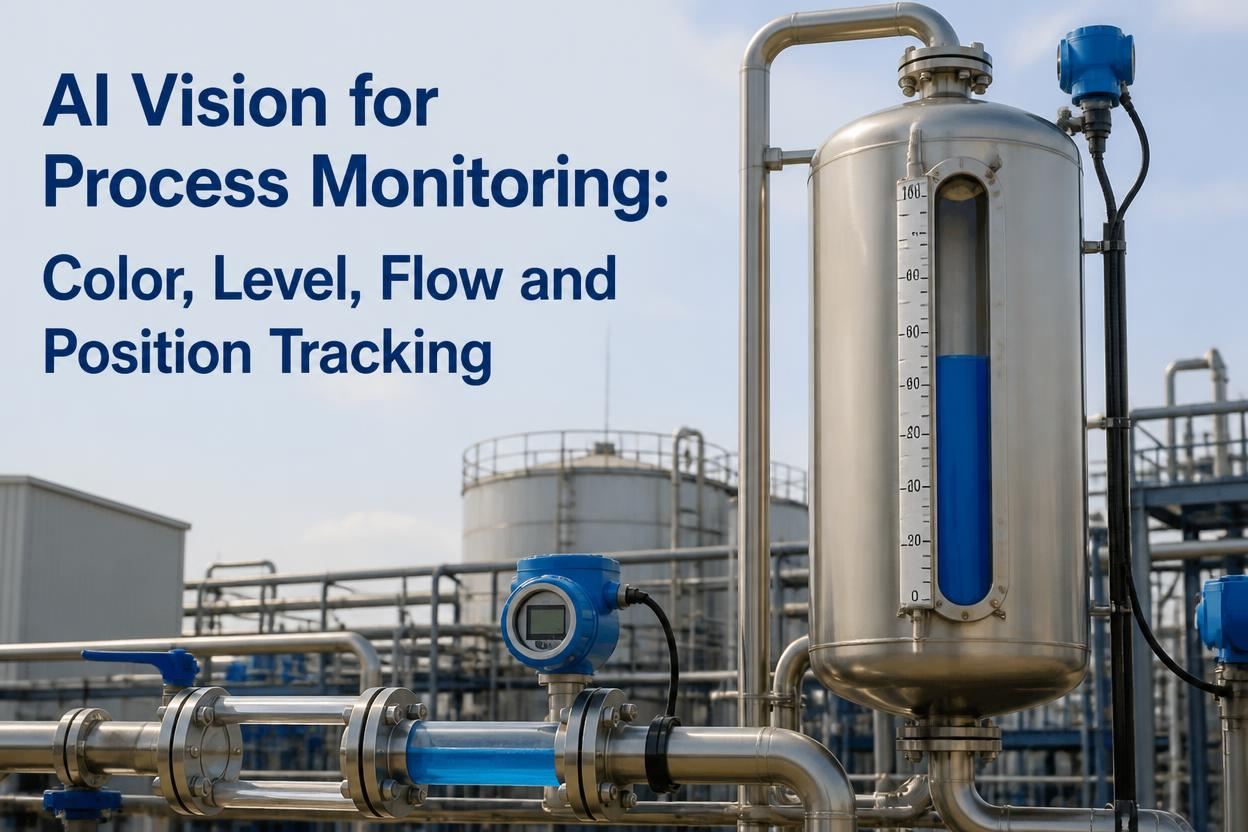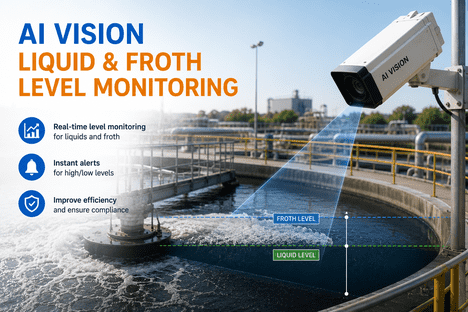
AI vision liquid and froth level monitoring gives process operators a continuous, accurate view of tank levels, foam dynamics, and flotation cell froth conditions that conventional point sensors and operator visual checks consistently struggle to capture. Froth and foam present a measurement problem that liquid-only sensors were never designed to solve: the surface is not a flat, stable interface but an actively changing layer of bubbles whose thickness, texture, and stability carry process information that a single distance reading cannot convey. In flotation circuits, the froth layer's depth and bubble structure are direct indicators of mineral recovery performance. In fermentation, brewing, and chemical reactor operations, foam height determines whether a vessel is operating safely below its overflow point or approaching a containment failure. iFactory's AI vision measurement platform replaces point-based level sensing and manual visual checks with continuous camera-based analysis that measures liquid level, froth depth, and foam texture simultaneously — feeding accurate, real-time data into process control systems so operators can stabilize output and prevent overflow before it happens rather than reacting once it already has.
Why Froth and Foam Defeat Conventional Level Sensors
Ultrasonic, radar, and capacitance level sensors were engineered around the assumption of a stable liquid surface with a clean acoustic or electromagnetic reflection point. Froth and foam break this assumption fundamentally. A froth layer is not a single surface but a column of air-liquid interfaces stacked through the bubble structure, scattering ultrasonic and radar signals in ways that produce noisy, unreliable readings or force the sensor to report the top of the foam as if it were the liquid level itself — a measurement that tells an operator almost nothing useful about how much actual liquid is in the vessel or how the froth layer is behaving. In flotation cells specifically, the froth layer is not a nuisance to be measured around but the very zone where mineral separation happens — its depth, bubble size distribution, and collapse rate are leading indicators of concentrate grade and recovery rate that a simple level number cannot capture at all. Manual visual monitoring by an operator, while capable of reading these qualitative cues, cannot do so continuously across every cell or vessel in a circuit, and introduces the inconsistency that comes from different operators interpreting froth appearance differently across shifts. iFactory's AI vision camera platform solves this by analyzing the full visual structure of the froth or foam layer continuously, extracting depth, texture, bubble size, and stability metrics that go far beyond what a point sensor can report — and doing so with the same consistency at 3am as at midday. Process engineers managing froth-critical operations can Book a Demo with iFactory's engineering team to see this measurement approach applied to their specific process.
What iFactory's Vision Measurement Platform Tracks
iFactory's platform applies tailored visual measurement models to the specific liquid, foam, or froth behavior relevant to each process type — recognizing that the measurement priorities for a flotation cell, a fermentation vessel, and a storage tank are fundamentally different even though all three involve a liquid surface that conventional sensors struggle to characterize accurately.
Core Monitoring Applications
iFactory's vision measurement technology is deployed across a range of liquid and froth-critical process applications, each requiring a different combination of depth measurement, texture analysis, and trend tracking to deliver actionable process data.
Flotation Cell Froth Depth and Texture Monitoring
In mineral processing flotation circuits, froth depth and bubble characteristics directly correlate with concentrate grade and recovery performance. iFactory's vision system continuously measures froth depth across the cell surface, tracks bubble size distribution and froth velocity, and identifies the visual texture changes — froth becoming watery, sluggish, or collapsing — that indicate a process upset before metallurgical sampling would confirm a grade or recovery deviation. This continuous froth characterization gives flotation operators the real-time feedback needed to adjust reagent dosing and air flow proactively, rather than reacting to assay results that arrive after the process condition has already shifted.
Fermentation and Bioreactor Foam Height Monitoring
Fermentation and bioreactor processes generate foam as a natural byproduct of microbial activity and aeration, and foam height management is critical both for process yield and for preventing the vessel overflow and contamination risk that uncontrolled foam can cause. iFactory's vision system tracks foam height continuously and feeds this data into antifoam dosing control loops, enabling tighter, more responsive foam management than fixed-interval dosing schedules or single-point foam sensors that only detect foam once it reaches a fixed trigger height — by which point the dosing response is already playing catch-up to a foam event that has already developed.
Storage Tank and Process Vessel Liquid Level Monitoring
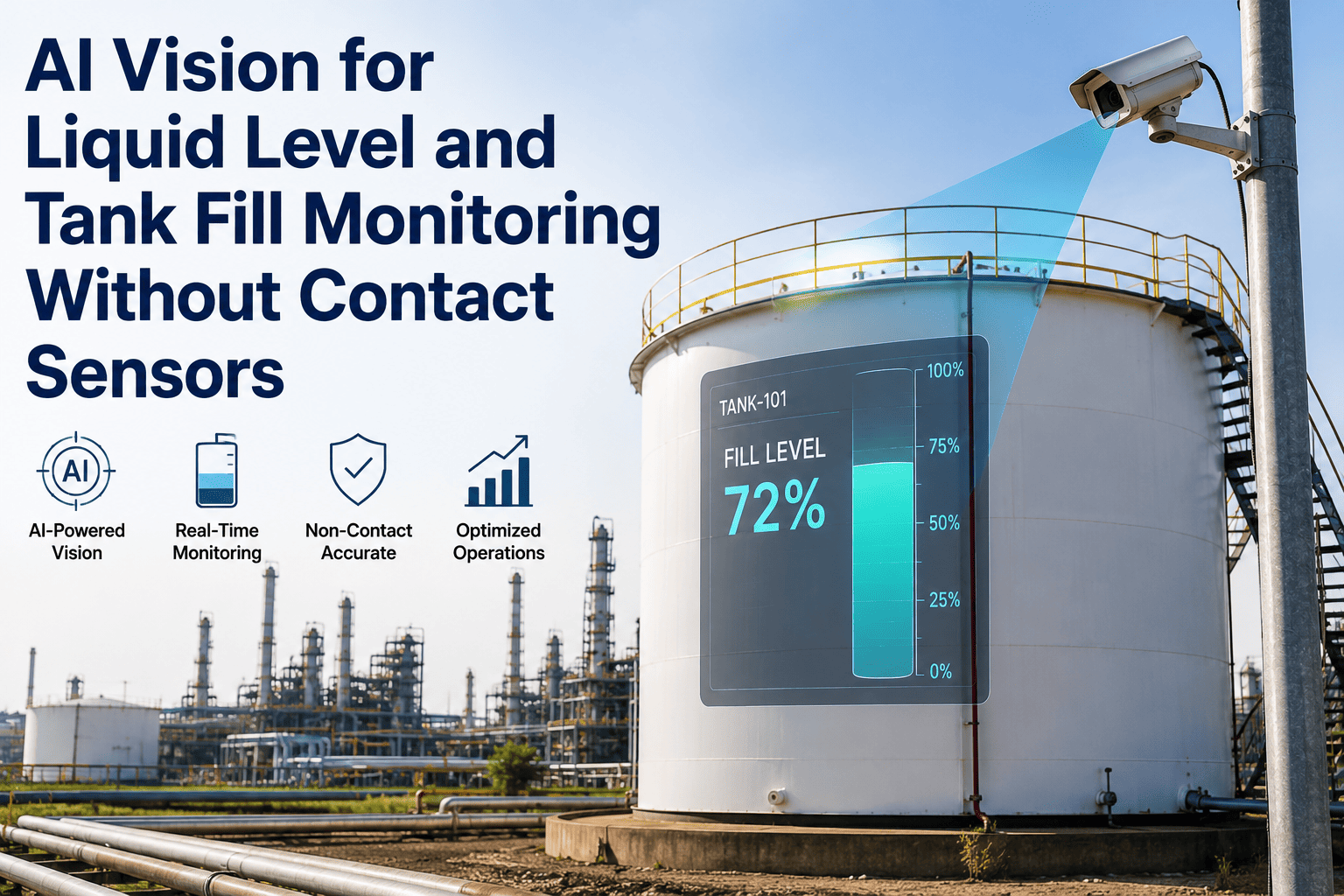
For storage tanks and process vessels handling liquids prone to foaming, sloshing, or surface turbulence during filling, iFactory's vision system provides accurate liquid level measurement by analyzing the full surface rather than relying on a single point reading that can be thrown off by surface disturbance. This is particularly valuable in tanks receiving high-velocity fill streams, viscous or foam-prone liquids, and vessels where ultrasonic or radar signals are degraded by vapor, condensation, or internal tank structure that creates reflection interference for conventional sensors.
Overflow Risk Prediction and Early Warning
Beyond static level reporting, iFactory's platform tracks the rate of level rise across both liquid and foam layers, projecting time-to-overflow when fill or foam generation rates exceed normal operating patterns. This predictive capability gives operators a meaningful response window — minutes rather than seconds — to adjust fill rate, increase antifoam dosing, or initiate manual intervention before the vessel reaches a critical level, converting what would otherwise be a reactive overflow response into a planned, controlled adjustment.
From Visual Measurement to Process Control Action
Level and froth measurement data delivers its full value only when connected to the control systems and workflows that act on it. iFactory's platform is built to feed directly into process control loops, alerting workflows, and maintenance systems rather than producing a number that still requires manual interpretation before any action follows.
Real-Time DCS and PLC Integration
iFactory's vision measurement output integrates with existing distributed control systems and PLCs via OPC-UA and Modbus connections, feeding liquid level and froth depth values directly into the same control loops that already manage reagent dosing, fill valves, and antifoam systems. This allows facilities to upgrade their measurement input without replacing the underlying control architecture, closing the loop between accurate visual measurement and automated process response.
Froth Stability and Process Upset Alerting
When froth texture or depth deviates from the established normal operating envelope — indicating a reagent imbalance, air flow issue, or feed composition change — iFactory's platform generates an immediate alert to the process control room, giving operators the early signal needed to investigate and correct the underlying cause before the deviation propagates into a measurable grade or recovery loss downstream.
Overflow Prevention Alerts and Automated Interlocks
For vessels where overflow risk carries safety, environmental, or product loss consequences, iFactory's platform supports automated interlock triggers — pausing fill operations, increasing antifoam dosing, or activating overflow containment systems automatically when the projected time-to-overflow drops below a configured safety margin, rather than relying solely on an operator to notice and respond to a rising level in time.
CMMS Work Order Generation for Sensor and Equipment Issues
When the vision system identifies a pattern consistent with mechanical issues — a fill valve not closing fully, an aeration system delivering inconsistent air flow, or a foam condition that correlates with a specific equipment fault — iFactory automatically generates a maintenance work order in the connected CMMS with the visual evidence and trend data attached, directing maintenance attention to the underlying equipment cause rather than leaving the team to treat each recurrence as an isolated process event.
When iFactory's AI vision measurement platform is integrated with process control and maintenance systems, the result is a closed-loop architecture where every froth depth reading, foam height measurement, and liquid level trend automatically informs the systems that act on that data. Flotation circuits maintain tighter froth depth control, directly supporting metallurgical performance. Fermentation and bioreactor operations dose antifoam proactively rather than reactively. Storage and process vessels receive accurate fill-level data even under turbulent or foam-prone conditions. Facilities operating this closed-loop architecture consistently report fewer overflow incidents, more stable process performance, and a measurable reduction in the manual checks that previously consumed operator time across every shift. To explore how this integration applies to your specific process, Book a Demo with iFactory's platform team.
AI Vision Measurement Versus Conventional Level Sensing Methods
Choosing the right measurement approach for a froth- or foam-prone process requires understanding where conventional sensors reliably perform and where they consistently fail under real operating conditions.
| Measurement Method | Froth/Foam Surface Reliability | Texture & Bubble Data | Maintenance Burden |
|---|---|---|---|
| Ultrasonic Level Sensors | Poor — signal scatter from bubble structure | None — single distance value only | Regular cleaning and recalibration |
| Radar Level Sensors | Moderate — improved but still affected by foam density | None — single distance value only | Periodic calibration and antenna maintenance |
| Manual Visual Observation | Subjective — varies by operator and shift | Qualitative only, not continuously logged | High labor cost, inconsistent coverage |
| iFactory AI Vision Measurement | High — full-surface optical analysis of froth structure | Quantified depth, texture, bubble size, stability trend | Minimal — periodic lens cleaning only |
Industries and Applications
Liquid and froth level monitoring delivers measurable process control value across every industry where foam, froth, or surface turbulence complicates accurate measurement. In mining and mineral processing, flotation circuit froth depth and texture monitoring across copper, gold, and base metal operations directly supports metallurgical recovery and grade control objectives. In brewing, fermentation, and food and beverage processing, foam height monitoring on fermentation tanks and filling lines protects yield and prevents the overflow events that cause both product loss and sanitation cleanup burden. In pharmaceutical and biotechnology manufacturing, bioreactor foam control supports the tight process parameter management that regulated production environments require, with the visual data trail supporting batch record documentation. In pulp and paper, wastewater treatment, and chemical processing, foam and froth monitoring on process tanks and clarifiers supports both operational stability and the environmental compliance obligations tied to tank overflow and containment events. In oil and gas and petrochemical operations, level monitoring on separator vessels and storage tanks handling foam-prone hydrocarbons supports both production optimization and the safety margin management that prevents overfill incidents.
Frequently Asked Questions: AI Vision Liquid and Froth Level Monitoring
iFactory's deep learning models are trained specifically to analyze froth as a dynamic visual structure rather than treating it as a single static surface. The system tracks depth, bubble size distribution, texture, and rate of change continuously, applying time-averaged trend analysis alongside instantaneous readings to distinguish normal froth fluctuation from genuine process deviations. This approach is fundamentally different from point sensors, which attempt to find a single reflective surface and struggle when that surface is constantly moving and irregular.
Yes — iFactory's vision measurement output integrates with existing distributed control systems and PLCs through OPC-UA and Modbus connections, feeding level and froth measurement values directly into the same control architecture already managing dosing, fill valves, and other process actuators. This integration is configured during deployment to match the facility's existing tag structure and control logic, allowing the upgraded measurement capability to feed into established control loops without requiring a broader control system replacement.
Deployment typically requires a camera mounting position with line of sight to the monitored surface — above the flotation cell froth zone or at the tank crown for liquid level applications — along with appropriate environmental protection for the operating conditions, including humidity, dust, or corrosive atmosphere considerations specific to the process. Installation is generally completed without requiring a full process shutdown. iFactory's engineering team conducts a site assessment to determine optimal camera placement and configuration, and most single-vessel deployments are completed within two to four weeks from site survey to live monitoring.
iFactory's platform tracks both the current level reading and the rate of change over time for both liquid and foam layers, generating a projected time-to-overflow estimate when the rate of rise exceeds normal operating patterns. This predictive capability is what allows the platform to support automated interlock actions and early operator alerts with a meaningful response window, rather than only confirming that an overflow condition has been reached at the moment it occurs.
Froth depth and texture are leading indicators of flotation cell performance that change well before a metallurgical assay would confirm a grade or recovery shift. Continuous monitoring of froth depth, bubble size, and froth velocity gives operators the real-time feedback needed to adjust air flow and reagent dosing proactively, closing a control loop that has traditionally depended on delayed assay results or inconsistent manual visual checks across shifts. Facilities that integrate this data into their process control system typically report tighter froth depth stability and a reduction in the metallurgical variability that comes from reactive, delayed adjustment cycles.