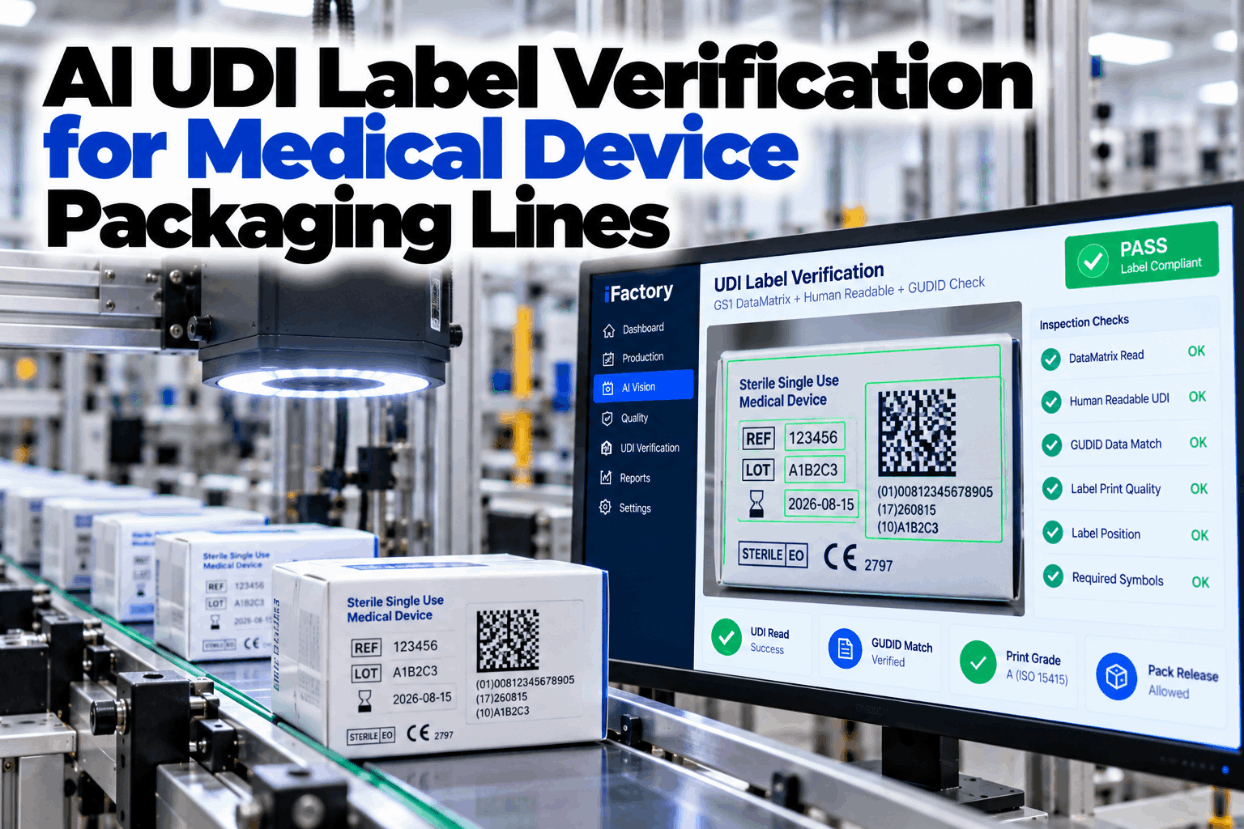
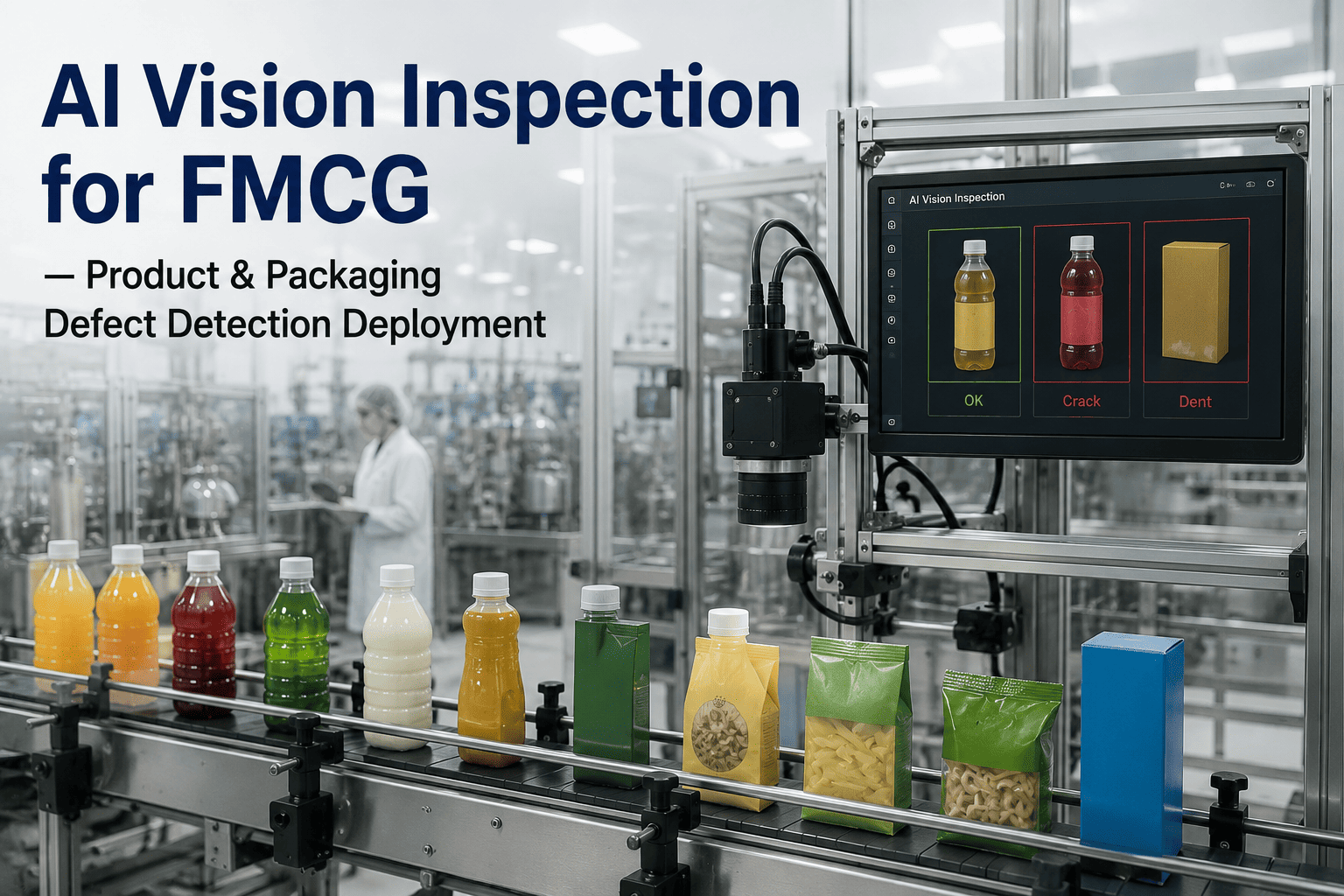
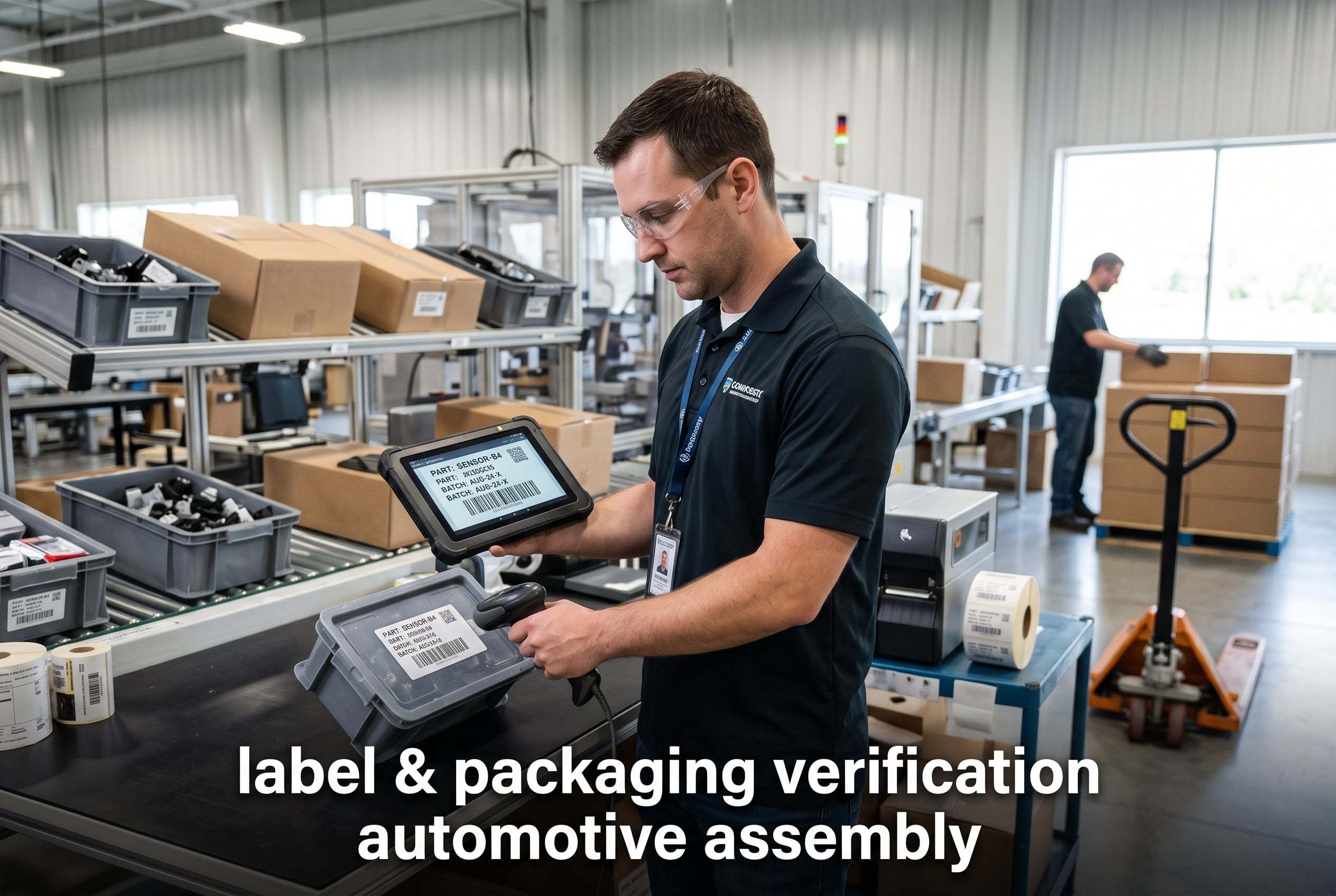
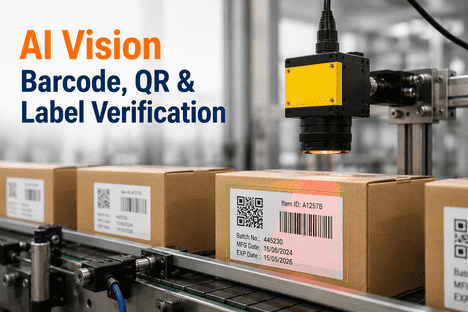
AI vision chemical drum and label inspection is eliminating one of the highest-risk quality failure points in chemical manufacturing: the outbound shipment of drums, IBCs, and containers that carry incorrect, damaged, or non-compliant labeling into a supply chain where a single mislabeled hazardous chemical can result in a regulatory penalty, a customer incident, or a full product recall. Chemical packaging lines operate at speeds that make manual label verification statistically unreliable — a trained inspector reviewing drums on a live filling line will miss label defects, incorrect GHS pictograms, incomplete hazard statements, and fill level deviations at a rate that quality teams consistently underestimate until a non-conformance event forces a post-mortem audit. iFactory's AI vision camera platform deploys deep learning defect detection models that inspect every drum on the line for label placement accuracy, GHS pictogram presence and correctness, OCR-verified product identifier and UN number content, seal and cap integrity, container surface defects, and fill level compliance — at full line speed, with zero inspection fatigue, and with a complete image-evidence record of every unit that passed or was rejected. The result is a chemical packaging operation where no non-compliant drum leaves the facility undetected and where the inspection data generated on every run provides the process intelligence needed to eliminate recurring label and packaging defects at their source.
The Compliance Stakes of Chemical Drum and Label Inspection
Chemical drums and containers shipped with incorrect, incomplete, or damaged GHS labels create regulatory exposure under OSHA's Hazard Communication Standard, ADR/IMDG transport regulations, and the UN Globally Harmonized System requirements that govern hazardous materials labeling in every major export market. A GHS-compliant chemical label must carry six required elements on every shipped container: the product identifier, signal word, GHS hazard pictograms, hazard statements, precautionary statements, and supplier identification. Missing a single pictogram, printing an incorrect signal word, or shipping a drum with a label that has separated during filling and capping exposes the manufacturer to OSHA citation risk, carrier rejection at the dock, customer facility non-acceptance, and in severe cases, liability for downstream handling incidents where an operator could not correctly identify the hazard. Beyond the regulatory risk, label errors on chemical drums trigger costly recall scenarios — retrieving distributed hazardous material from customer sites, reprocessing or relabeling drums in the field, and managing the documentation burden of a voluntary or mandatory recall event. AI vision inspection on chemical packaging lines functions as the final compliance gate before drums enter the shipping stream, providing the only inspection method that verifies every required label element on every unit at line speed without the fatigue, distraction, and inconsistency that make manual inspection an inadequate substitute for systematic machine verification.
AI Vision Inspection Functions on Chemical Drum Packaging Lines
iFactory's vision defect detection platform addresses the complete scope of drum and container inspection requirements on chemical packaging lines — from container integrity before filling through label verification and final cap and seal confirmation at line exit. Each inspection function runs as a dedicated model instance on the edge AI processor, enabling simultaneous multi-point inspection that covers the entire drum in a single pass as it moves through the camera field of view.
| Inspection Function | What the AI Detects | Compliance Standard | Rejection Trigger |
|---|---|---|---|
| GHS Pictogram Verification | Presence, position, and correct identity of all required hazard pictograms | GHS / OSHA HazCom / ADR | Missing, wrong, or illegible pictogram |
| OCR Label Content Verification | Product name, UN number, signal word, lot code, batch ID against master spec | GHS / UN TDG / REACH | Mismatch vs. product database, missing field |
| Label Placement and Adhesion | Label position within tolerance, edge lift, bubble, wrinkle, rotation angle | GHS / ISO 11014 / SDS | Position out of spec, adhesion failure detected |
| Fill Level Measurement | Liquid level vs. specification band using visual surface detection | Net content regulations / DOT | Underfill or overfill beyond tolerance band |
| Drum and Container Integrity | Dents, cracks, deformation, corrosion, puncture on drum body and chime | DOT 49 CFR / IMDG / ADR | Any structural defect on container surface |
| Cap and Closure Inspection | Cap presence, seating angle, tamper-evident ring integrity, bung plug position | DOT / IMDG transport regs | Unseated cap, missing closure, broken seal ring |
| Barcode and QR Code Grade | Symbol presence, readability grade per GS1/ISO standards, data content match | GS1 / supply chain traceability | Unreadable code, data mismatch, print quality below grade |
| Label Print Quality | Smear, void, streak, color density deviation on label print surface | Internal QC / GHS legibility req. | Print quality degradation affecting hazard legibility |
Each inspection decision is made independently by the model for each drum, with the confidence score, rejection reason, and reference image saved to the unit's inspection record. When iFactory's vision system triggers a rejection, the drum is flagged for diversion to a dedicated rework station with the specific defect category and image evidence accessible to the line supervisor immediately — eliminating the ambiguity that makes manual rework decisions inconsistent.
GHS Label Verification: Why Pictogram and Signal Word Accuracy Requires Machine Vision
GHS-compliant chemical labels require precise application of up to nine standardized hazard pictograms — each a black symbol on a white background within a red diamond border — selected specifically for the hazard classification of the product in the drum. A drum of a flammable corrosive substance requires both the GHS02 flame pictogram and the GHS05 corrosion pictogram; applying only one, or substituting the wrong symbol, creates a label that presents an incomplete hazard communication to every handler who encounters the drum in transit, at the customer dock, and during use. Human inspectors reviewing GHS labels on a moving drum line cannot reliably distinguish between correct and incorrect pictograms at speed — the symbols are visually similar at a glance, and a fatigued inspector late in a shift will not catch a GHS07 harmful substance pictogram on a drum that should carry the GHS06 acute toxicity skull and crossbones. iFactory's pictogram verification model is trained on the complete GHS pictogram library and verifies each required symbol against the product specification stored in the master database — checking not just that a pictogram is present, but that the specific symbol matches the hazard classification of the product being filled, that the red diamond border is intact and fully printed, and that the pictogram size meets the GHS minimum visibility requirement. Signal word verification is handled simultaneously by the OCR model, confirming that "Danger" or "Warning" appears as specified for the product's hazard category and that the word is printed legibly and positioned correctly on the label face. Facilities that want to see GHS pictogram verification running on their specific drum formats can Book a Demo with iFactory's chemical packaging inspection team.
Fill Level Inspection on Chemical Drum Lines
Fill level accuracy on chemical packaging lines is simultaneously a regulatory compliance requirement, a product quality control point, and a direct cost variable. Underfilled drums shipped to customers trigger non-conformance claims, short-ship penalties, and in regulated markets, net content violations that carry their own enforcement consequences. Overfilled drums consume product margin, create headspace pressure issues for certain chemical formulations, and may exceed UN-approved fill limits for regulated hazardous materials where maximum fill percentage is defined by the transport classification. Traditional fill level verification on drum lines uses load cells or flow meter totalization — instrument-based measurements that verify the fill quantity but cannot detect the secondary visual indicators of filling problems: foam layers that create false readings, partial crystallization at the fill neck, contamination in the liquid surface visible from above, or settling of suspension products that produces an incorrect apparent level despite accurate weight. iFactory's fill level vision model measures the liquid surface position optically using calibrated camera geometry, delivering a visual fill level measurement that is independent of and complementary to gravimetric fill control. The vision measurement detects surface anomalies that weight-based systems cannot see, flags drums where the fill appearance deviates from the specification band even when the fill weight is within tolerance, and provides a photographic record of the fill level on every drum that serves as evidence in any downstream quantity dispute.
Container Integrity Detection for Hazardous Chemical Drums
Drums and IBCs carrying hazardous chemicals are subject to UN packaging performance standards and DOT 49 CFR requirements that specify the structural integrity conditions a container must meet for transport classification. A drum with a dent that compromises the chime seal area, a crack in the drum body from a handling impact, or a deformed closure bung seat is a non-conforming container under transport regulations — yet these defects frequently escape detection on manual inspection lines where inspectors are focused on label content and cannot consistently evaluate the full drum surface area on every unit passing the inspection station. iFactory's container integrity detection model analyzes the full visible drum surface in each camera pass, identifying surface deformation, impact damage, corrosion patterns, weld line anomalies on metal drums, and closure area defects that indicate a compromised seal. The model is trained separately for the container types common in chemical packaging — HDPE drums, steel drums, UN-rated plastic IBCs, and composite packaging — with detection thresholds calibrated to the transport regulation requirements applicable to each container type. Drums flagged for container integrity defects are diverted before labeling and filling where detection occurs at the incoming container inspection station, or before palletizing and wrapping where the inspection is positioned at the post-fill line exit. Chemical manufacturers who need to demonstrate container inspection compliance to transport authorities or customer quality auditors can use the iFactory inspection record as primary evidence that every outbound container met structural integrity standards at time of shipment.
Inspection Performance Outcomes on Chemical Drum Packaging Lines
Chemical packaging operations that deploy iFactory's AI vision inspection report consistent improvement in label compliance rates, non-conformance escape rates, and the operational efficiency of the quality control function on drum packaging lines. The performance gains are driven by the shift from periodic manual sampling to 100% automated inspection — a fundamental change in coverage that eliminates the statistical gap where defects can occur between sampling intervals and reach the shipping dock undetected.
The most significant operational benefit of AI vision drum inspection for chemical manufacturers is the elimination of the compliance uncertainty that exists when manual inspection is the final verification step before product enters the shipping stream. When every drum has a machine-verified inspection record — with image evidence of each label element confirmed, fill level documented, and container integrity assessed — the quality manager signing the certificate of conformity for an outbound shipment has objective evidence to support that attestation rather than a statistical inference from a sampling program. For chemical exporters shipping to EU markets under REACH and CLP regulation, to US markets under OSHA HazCom, or to regulated end-use industries such as pharmaceutical, aerospace, and food-grade manufacturing, this documented inspection evidence is increasingly a customer requirement rather than an internal quality enhancement. Facilities seeking to understand how AI inspection records integrate with their existing quality documentation systems can Book a Demo with iFactory's chemical inspection team to review the documentation architecture specific to their regulatory environment.
Edge AI Deployment on Chemical Packaging Lines
Chemical packaging environments present specific deployment challenges that iFactory's edge AI architecture is designed to address: harsh ambient conditions including chemical vapors, high humidity, and temperature variation; line speeds that require sub-50-millisecond inspection decisions to enable in-line rejection without drum accumulation; and the data security and network isolation requirements of chemical manufacturing facilities operating under CFATS and cybersecurity frameworks that restrict cloud connectivity for operational technology systems. Processing on the edge — on the iFactory unit mounted at the inspection station on the line — ensures that rejection decisions are made locally, with alert latency measured in milliseconds rather than the seconds that round-trip cloud processing would introduce. The edge processor stores a rolling inspection image archive locally, enabling immediate retrieval of any drum's inspection record without dependence on external connectivity. For chemical packaging lines running multiple SKUs and product types, iFactory's model management interface supports rapid changeover between product inspection profiles — loading the correct label template, GHS pictogram set, fill level specification, and container type parameters for the next production run in under 60 seconds without requiring engineering intervention or model retraining. Integration with SCADA, MES, and ERP systems is supported via OPC-UA and REST API, enabling inspection data — yield rates, defect category distributions, batch non-conformance counts — to flow into the plant's existing production management and quality documentation systems automatically.
Frequently Asked Questions: AI Vision Chemical Drum and Label Inspection
Can the AI vision system verify GHS pictograms for multiple different chemical products on the same packaging line?
Yes. iFactory's inspection platform supports multi-SKU operation through a product profile database that stores the specific GHS pictogram set, signal word, UN number, and label layout specification for each product running on the line. At changeover, the operator selects the incoming product profile and the system loads the correct inspection template — including which pictograms are required, their expected positions on the label, and the OCR field content specifications for that product's regulatory label. The verification model then checks each drum against the active product profile rather than a generic label standard, ensuring that a correctly labeled drum of one product is not rejected against the requirements of a different SKU. Profile changeover takes under 60 seconds and does not require engineering support or model retraining, supporting the high-frequency SKU changeover schedules typical of chemical contract manufacturers and toll formulators running multiple products per shift.
How does the system handle drums where labels are partially obscured during inspection due to drum rotation or handling position?
iFactory's drum inspection deployment uses a multi-camera configuration that provides full circumferential coverage of the drum surface as it moves through the inspection zone, with cameras positioned to capture the label face regardless of drum rotation angle within the normal handling variation on the conveyor. For drum lines with consistent orientation control — where the label face is maintained toward the inspection camera by a positioning guide — a single-camera configuration with high-resolution wide-angle coverage is typically sufficient. In either configuration, the model is trained to handle partial edge occlusion, label overlap with handling bands, and the perspective distortion that occurs at the edges of the camera field of view. Drums that pass through the inspection zone in a position where the label is genuinely fully obscured — for example, a drum that has tipped against an adjacent container — are flagged as inspection-incomplete rather than passed, triggering a manual verification check rather than being released on an ambiguous inspection result.
What inspection record format does iFactory generate for regulatory audit and customer quality documentation purposes?
Each drum that passes through the iFactory inspection system generates a unit inspection record containing: the drum serial number or batch identifier, timestamp, inspection outcome (pass/reject), defect categories detected if applicable, and a reference image showing the drum state at inspection. Batch-level summary reports aggregate the pass rate, defect distribution, and any rejected units with their specific rejection reasons for the production run. Records are stored locally on the edge processor and can be exported in CSV, PDF, or JSON format for integration with quality management systems, ERP batch records, and customer-facing certificate of conformity documentation. For facilities operating under ISO 9001, ISO 14001, or chemical-specific quality standards, the inspection record format is structured to satisfy the documented evidence requirements of those standards without requiring separate manual record creation. Facilities that want to review the specific documentation architecture before deployment can Book a Demo and walk through record structure with the iFactory chemical inspection team.
Can fill level inspection on chemical drums detect surface conditions like foam, crystallization, or phase separation in addition to level measurement?
The fill level vision model evaluates the entire visible liquid surface in the drum, not just the position of the liquid boundary. Surface texture analysis identifies foam layers, which create a false apparent level above the actual liquid surface and which in certain chemical formulations can indicate filling or mixing process anomalies requiring investigation. Crystallization or precipitate formation at the fill neck is detected as a surface texture deviation from the baseline normal fill appearance. Phase separation — visible as a distinct color or texture boundary within the liquid column in transparent or semi-transparent containers — is flagged as an anomaly that may indicate incorrect product formulation or temperature exposure during filling. These additional surface condition detections are configured as separate alert categories from fill level rejection, allowing quality teams to triage fill level deviations from process condition anomalies and route them to the appropriate corrective response — level correction at the filler versus process investigation for a formulation or temperature issue.
How long does deployment and line commissioning take for a chemical drum inspection project?
A standard chemical drum packaging line deployment covering label verification, GHS pictogram checking, fill level inspection, and container integrity assessment typically takes four to six weeks from site survey to live inspection. The timeline includes inspection station camera and lighting design for the specific drum format and line layout, edge unit installation and network commissioning, model calibration on production-representative drum samples across the full SKU range, integration testing with the line's reject mechanism and production data systems, and operator and quality team training. Lines with more complex requirements — multiple container types, high SKU count with many different pictogram combinations, or integration with existing quality management systems — may require six to ten weeks. iFactory recommends a phased go-live approach that begins with pass-through monitoring before activating automatic rejection, allowing the quality team to validate detection performance against production before committing to hard-reject operation. Book a Demo to discuss your specific line configuration and get a deployment timeline estimate from the iFactory engineering team.