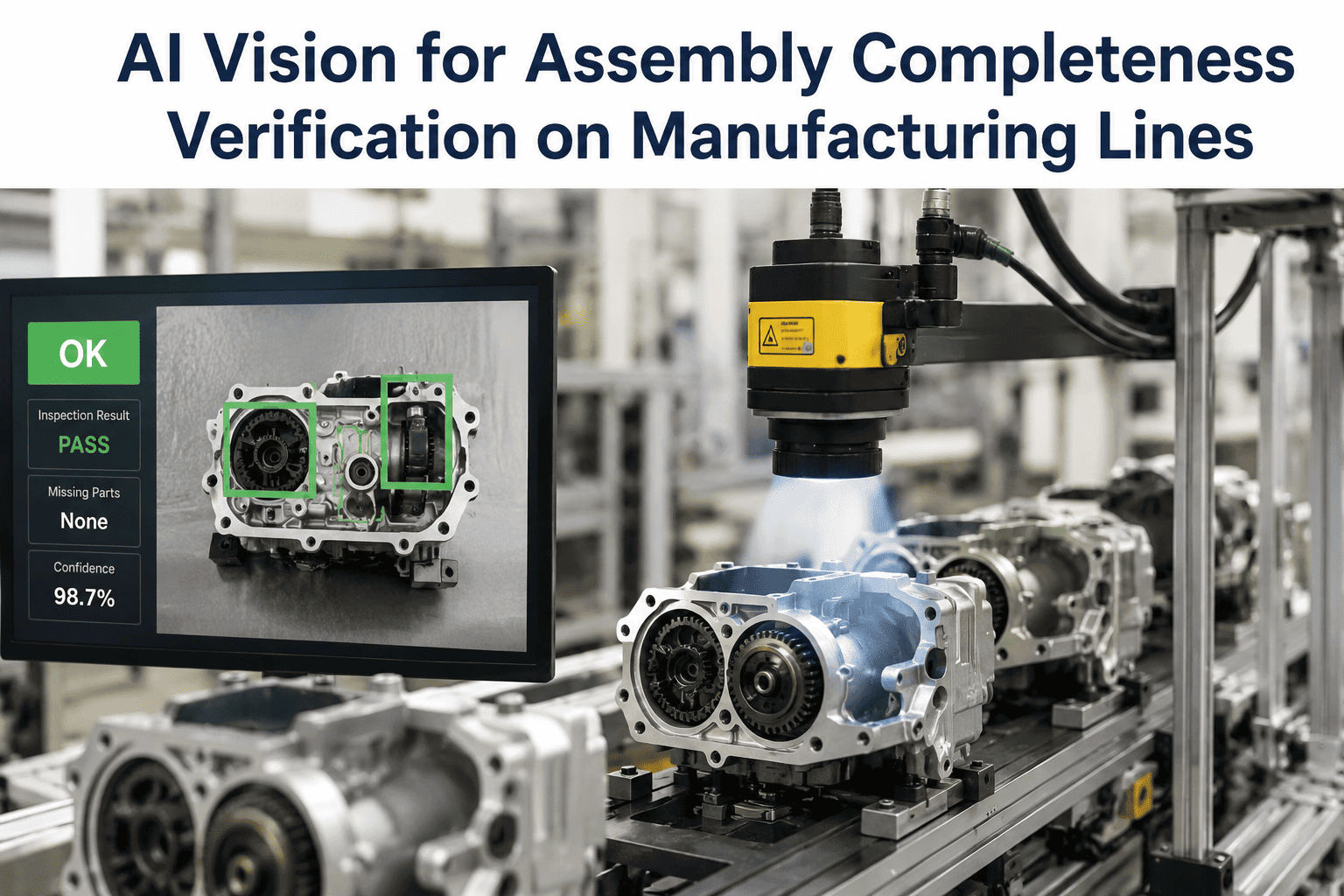
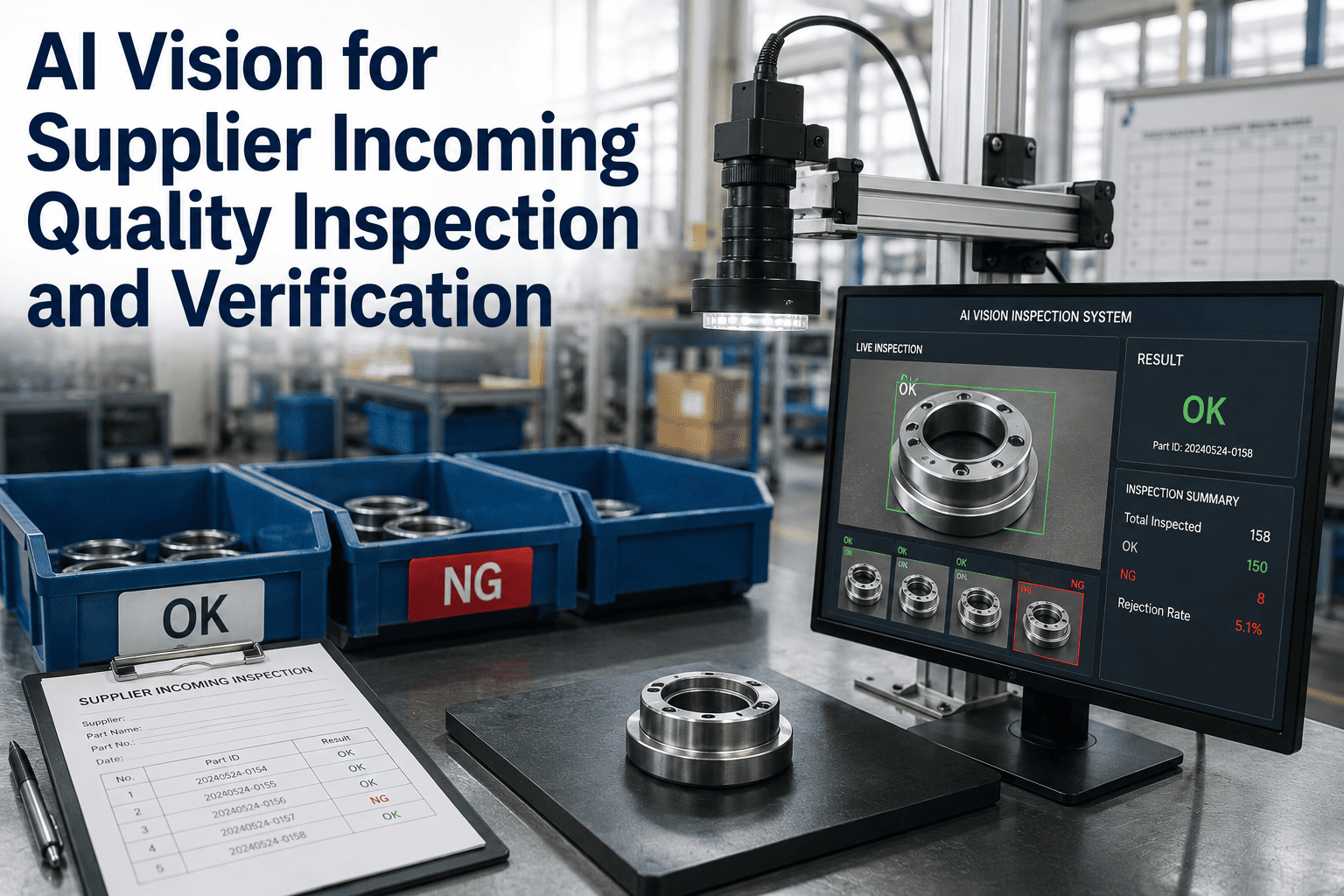
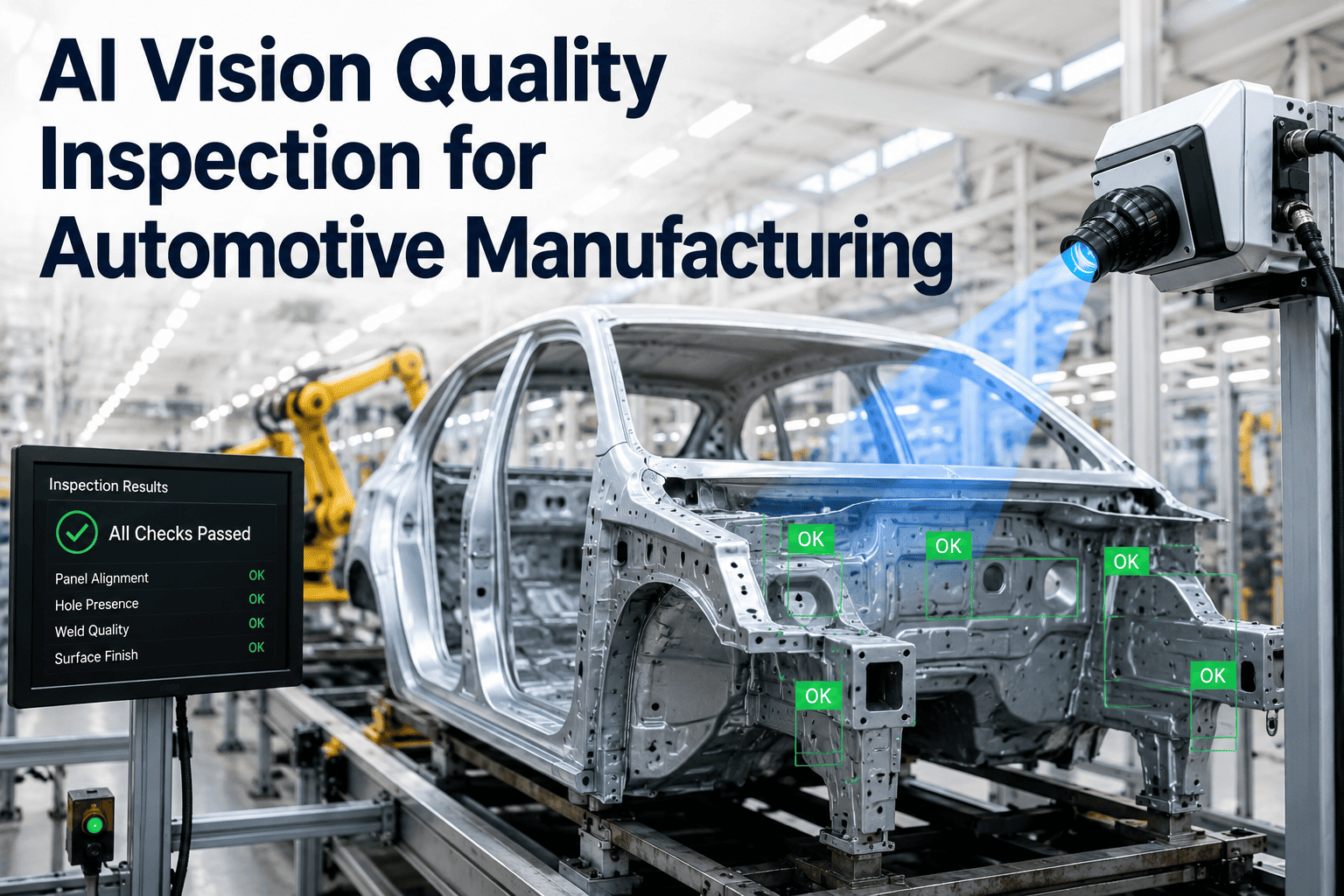
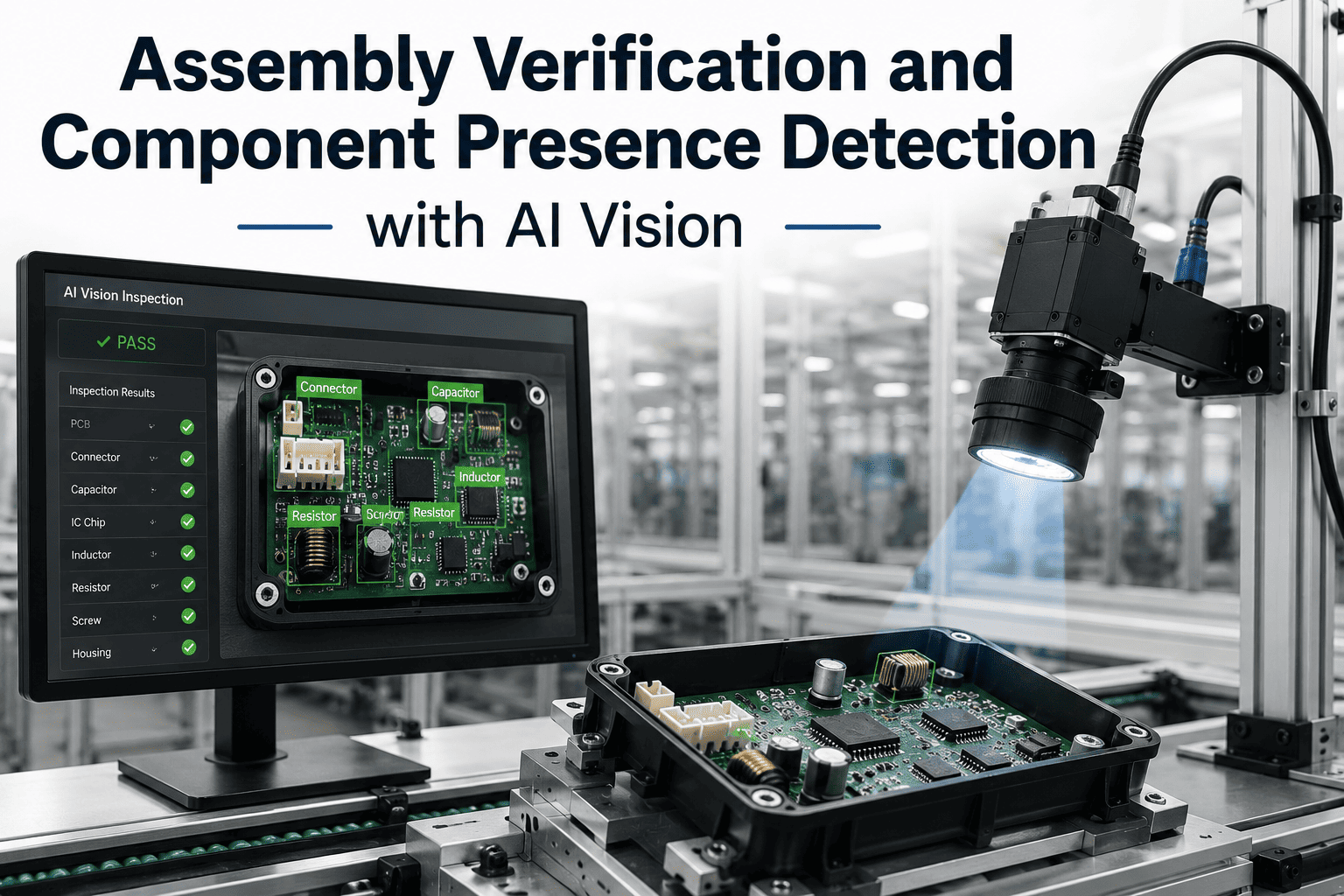
A missing clip costs about fifty dollars to catch and fix at the station where it was supposed to go in. Let that same clip ride downstream to a customer and the bill climbs past five thousand dollars once you count the warranty claim, the dealer rework, the expedited replacement part, and the support ticket. That hundred-times multiplier is not a rounding error — it is the entire economic case for verifying assembly completeness at the point of assembly instead of hoping final test catches what a human eye missed on a fast-moving line. Multi-camera AI stations now check that every component is present, correctly oriented, and properly fastened before the unit ever leaves the station, and the rest of this page walks through exactly how that changes a plant's defect economics — contact support to see what it would catch on your line.
PRODUCTION QC · ASSEMBLY VERIFICATION · AI VISION
Every Incomplete Assembly That Reaches a Customer Started as a Five-Second Miss on Your Line
Multi-camera AI stations verify component presence, orientation, and fastening on every unit at full line speed — catching what sampling inspection and a rushed operator glance were always going to miss.
THE 1:10:100 RULE, IN REAL DOLLARS
The Same Defect Gets More Expensive the Further It Travels
A missing fastener caught at the assembly station is a five-second fix. The same fastener caught at final test means partial disassembly. Caught by a customer, it means a warranty claim, a service call, and a damaged relationship. The multiplier is not theoretical — it shows up in the invoice every time.
Caught at Assembly Station
$8 – $22
Caught at Final Test
$110 – $380
Reaches the Customer
$340 – $5,000+
WHY SAMPLING AND SPOT CHECKS LET THIS THROUGH
0.5% Defect Rate Sounds Small — Until You Run the Line for a Month
A plant building 20,000 units a day with a defect rate of just half a percent is sending 100 incomplete assemblies out the door every single day. That is not a hypothetical edge case — it is the arithmetic of any high-volume line where inspection is sampled rather than universal. A human inspector checking every tenth unit, or scanning a station for a few seconds per cycle, is structurally unable to catch a miss that happens on unit 47 when they only looked at units 40 and 50. The defect is not rare. It is simply invisible to a sampling process, which is exactly the gap a 100%-coverage AI vision station is built to close.
Missing Fastener
Bolt, clip, or rivet skipped entirely. Passes a visual glance because the surrounding assembly looks complete at a distance.
Wrong Orientation
Component installed backwards or rotated. Matches the nominal outline in a quick look but fails under operating load.
Incomplete Fastening
Snap-fit not fully seated, connector not locked. Looks engaged from the outside while the engagement indicator sits short of locked.
Wrong Variant Installed
Correct-looking part from the wrong supplier or product line. Fits the assembly but does not match the bill of materials spec.
Stop Sending 100 Incomplete Units Out the Door Every Day
See how 100%-coverage AI verification compares against your current sampling rate on your own assembly sequence.
WHAT A MULTI-CAMERA VERIFICATION STATION ACTUALLY CHECKS
Three Questions, Answered on Every Single Unit
01
Is Every Component Present?
Each camera angle is matched against the unit's bill of materials, confirming every required part — down to small components like clips, washers, and connectors — is physically installed before the unit advances.
Is It Oriented Correctly?
Asymmetric parts, directional connectors, and components with a correct-only-one-way fit are checked against their expected rotation and position, catching a part that is present but installed backwards.
Is It Fully Seated and Fastened?
Rather than inferring engagement from proximity, the system looks for the actual confirmation signals — a flush surface, a locked tab position, or the dimensional change between a partial and a full seat.
FROM CAMERA TRIGGER TO PRODUCTION DECISION
What Happens in the Under-Two-Second Window a Unit Spends at the Station
A vision station is only as useful as what happens after the image is captured. A camera that flags a reject without recording the defect type, the unit's serial number, the station ID, and the timestamp in a format your MES or CMMS can use is a gate, not a quality system — it stops one bad unit without ever building the pattern data that prevents the next hundred.
1
Trigger and capture. A sensor or conveyor position encoder fires the camera array as the unit reaches the station, capturing multiple angles under consistent structured lighting.
2
Model comparison. Each image is checked against the trained model for that assembly step — presence, orientation, and fastening confirmation evaluated together, not as separate passes.
3
Pass or hold decision. Conforming units continue down the line automatically. A flagged unit is held or diverted before it reaches the next assembly step, not after.
4
Record and route. Defect type, severity, serial number, and station ID are logged and pushed to the maintenance and quality systems your team already uses, building traceable history instead of a one-off reject.
WHAT THIS ACTUALLY SAVES A PLANT
The Numbers Behind the Business Case
Plants that move from sampled inspection to full-coverage AI verification are not chasing a marginal improvement — they are closing a gap that was costing millions annually in ways that never showed up as a single line item. Escaped defects across a typical production line run $400,000 to $2.1 million a year in warranty claims, rework, and customer returns, and assembly completeness misses are consistently among the largest contributors because they are so easy for a human glance to miss and so expensive once they reach a customer.
| Metric | Sampled Manual Inspection | AI Vision Verification |
|---|
| Units inspected | Typically 10–20% via spot checks | 100% of units at full line speed |
| Defect caught at | Often final test or later | At the assembly station itself |
| Cost per caught defect | $110–$380 at final test | $8–$22 at the source station |
| Consistency | Varies with fatigue, shift, lighting | Same trained model, every unit, every shift |
| Traceability | Manual log entry, if logged at all | Automatic — serial number, defect type, timestamp |
FREQUENTLY ASKED QUESTIONS
What Plant and Quality Teams Ask Before Deploying AI Assembly Verification
Can this actually keep up with our line speed, or does it slow the station down?
Multi-camera stations capture and process images in well under two seconds per unit, which is built to match conveyor cycle times rather than force a line to slow down for inspection. Structured lighting and short exposure times prevent motion blur at typical assembly speeds, so the verification step adds to the existing station dwell time instead of creating a new bottleneck.
Book a demo to see cycle time impact modeled against your actual line speed.
How does the system tell the difference between a part that is present but wrong versus genuinely missing?
The model is trained against your specific bill of materials and component library, so it recognizes not just whether something occupies the expected location but whether that something matches the correct part variant, color, or supplier signature for that build. This catches a substituted or incorrect component just as reliably as a fully missing one, which a simple presence sensor cannot do.
Contact support to review variant detection for your product mix.
Do we need to replace our existing MES or CMMS to use this?
No — verification results are structured with defect type, unit serial number, station ID, and timestamp already attached, so they are built to feed into the maintenance and quality systems your plant already runs rather than requiring a replacement platform. The goal is connecting detection to the production decisions your team is already making, not adding another disconnected dashboard.
Book a session to scope integration with your current systems.
What does it take to set this up on a new assembly station?
Deployment starts with mapping the station's assembly sequence and bill of materials, then training the model against sample units covering both correct builds and known defect patterns before it goes live on the line. Most stations are running in production well within weeks rather than months, and the model continues improving as it sees more real production variation.
Talk to support about a deployment timeline for your station.
Will this replace our quality inspectors entirely?
Most plants redeploy inspectors toward root-cause investigation and process improvement rather than eliminating the role, since the AI station handles the repetitive per-unit check that fatigue makes unreliable for a human to sustain across a full shift. The freed-up time is usually where plants see quality teams add the most value — working the pattern data the vision system generates instead of staring at every single unit.
Book a demo to discuss how this fits your current QC staffing model.
CATCH IT AT THE STATION, NOT AT THE CUSTOMER
See What a Multi-Camera Verification Station Would Catch on Your Line
From component presence to orientation to fastening confirmation — verified on every unit, logged automatically, before the defect has a chance to travel downstream.