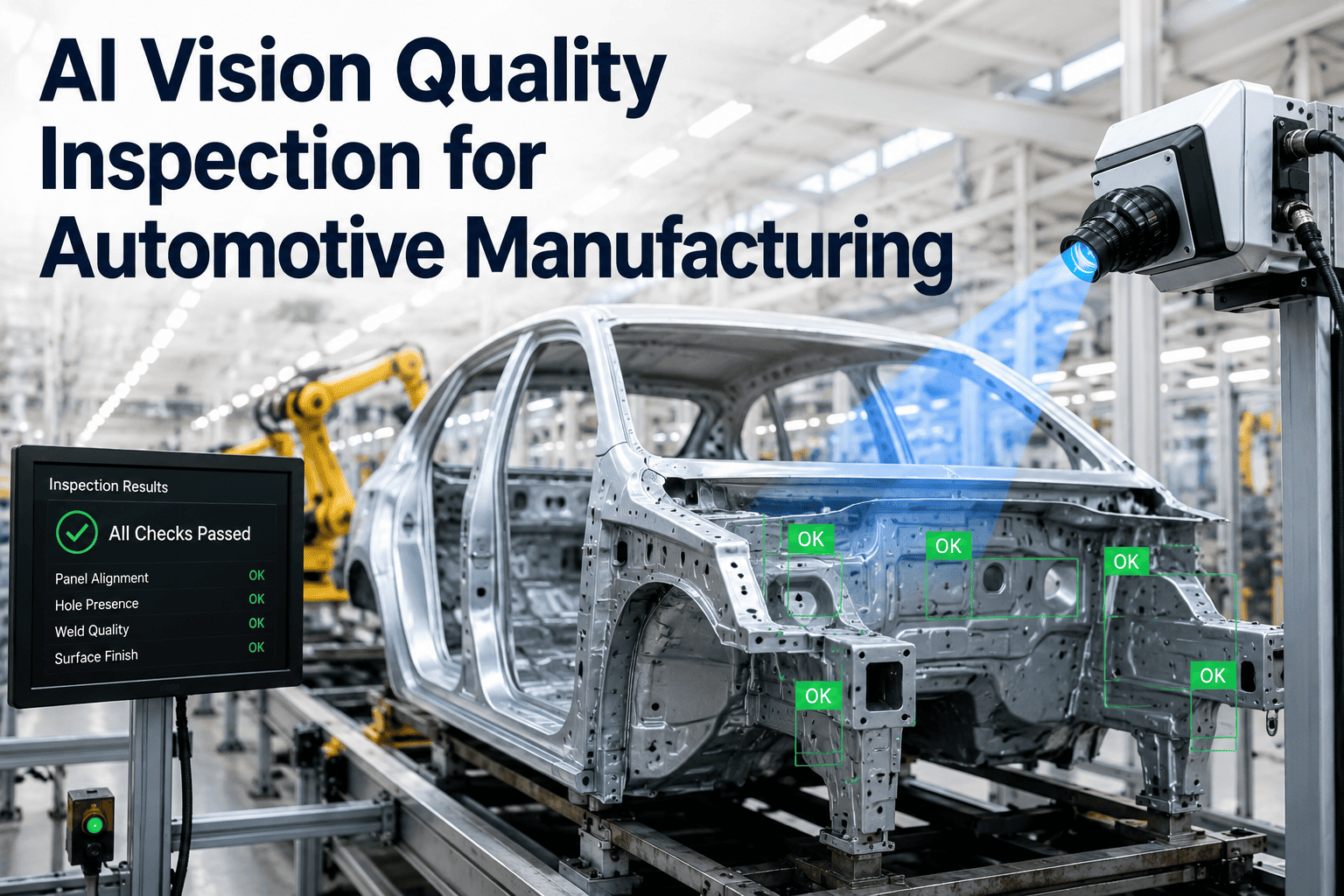
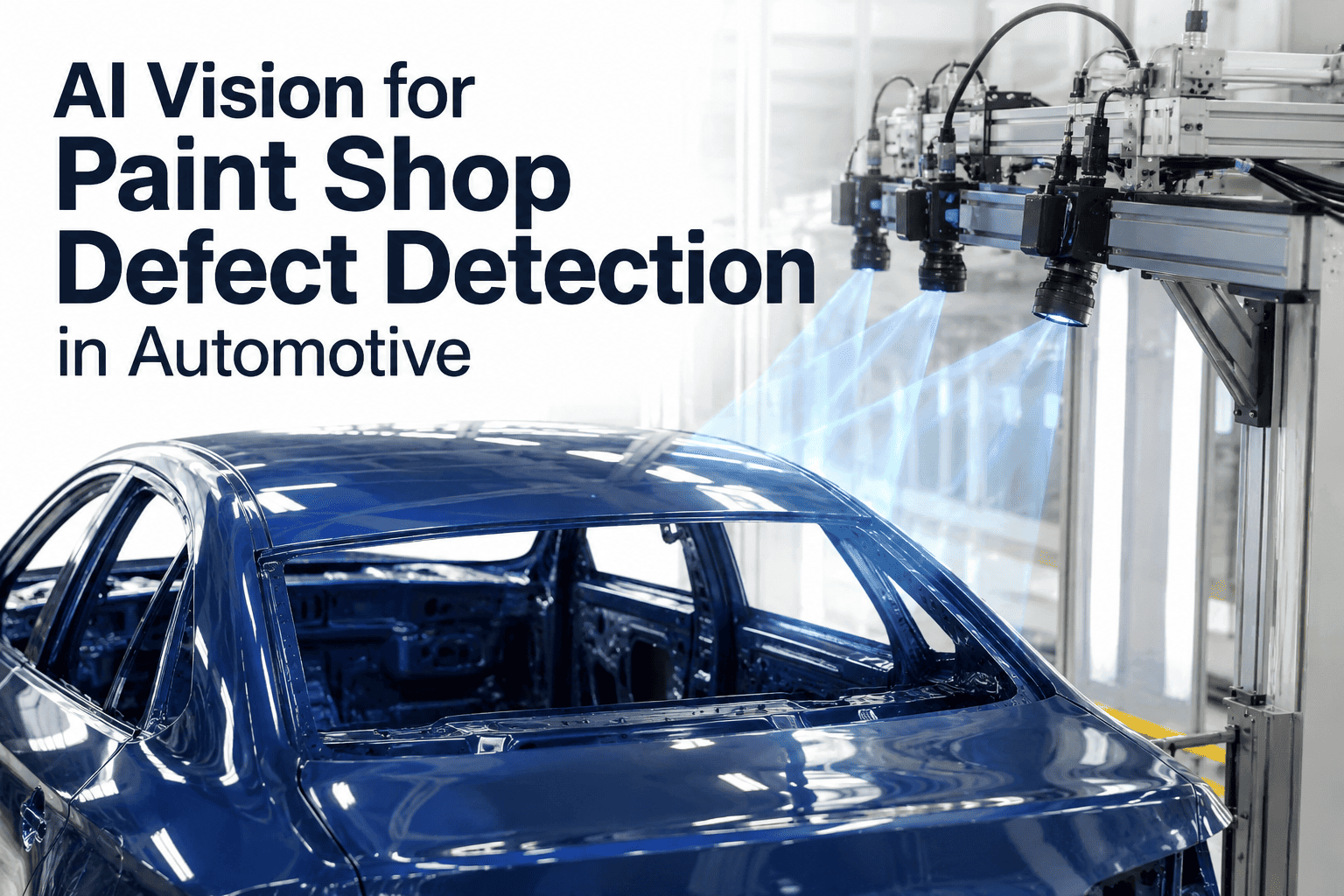
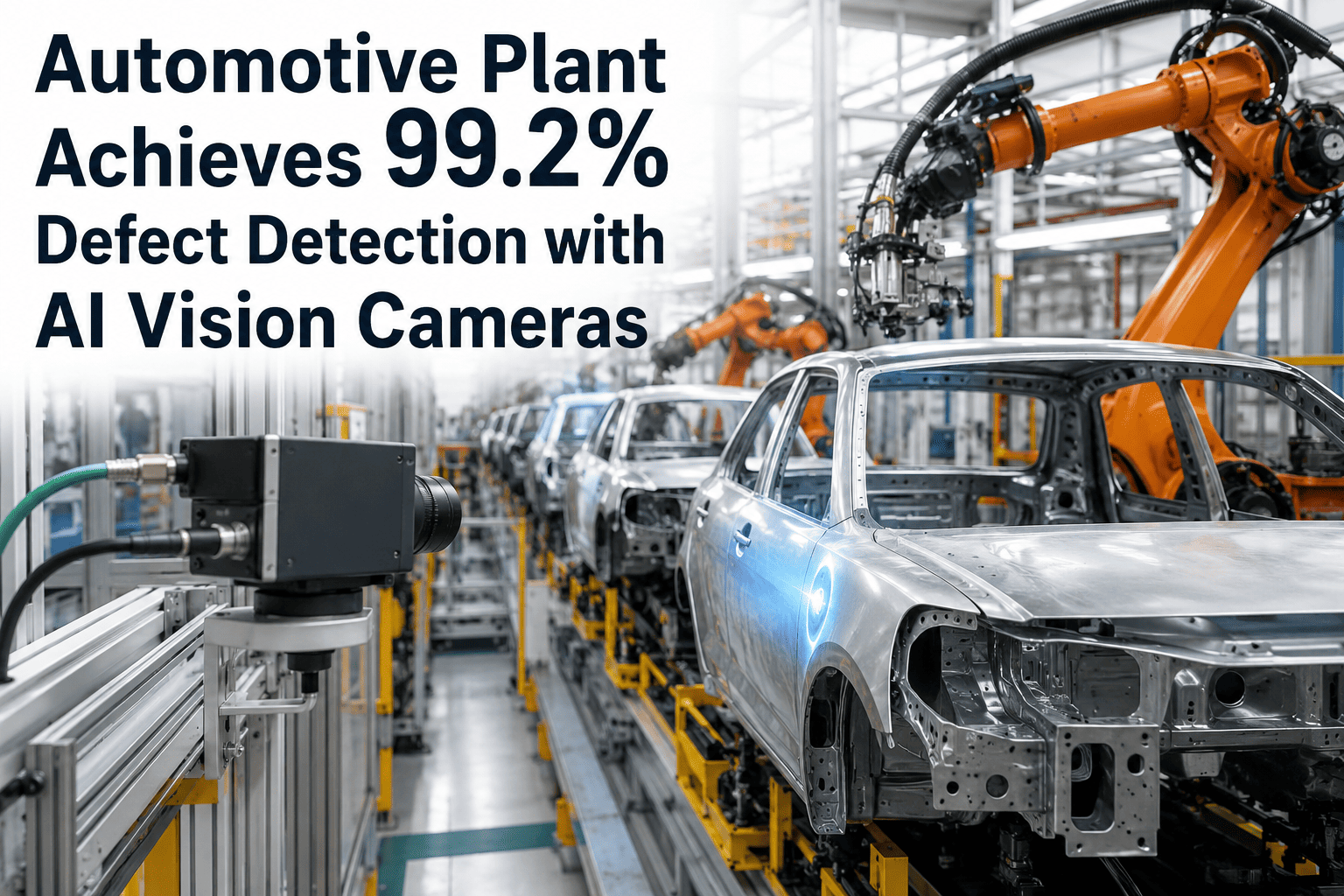
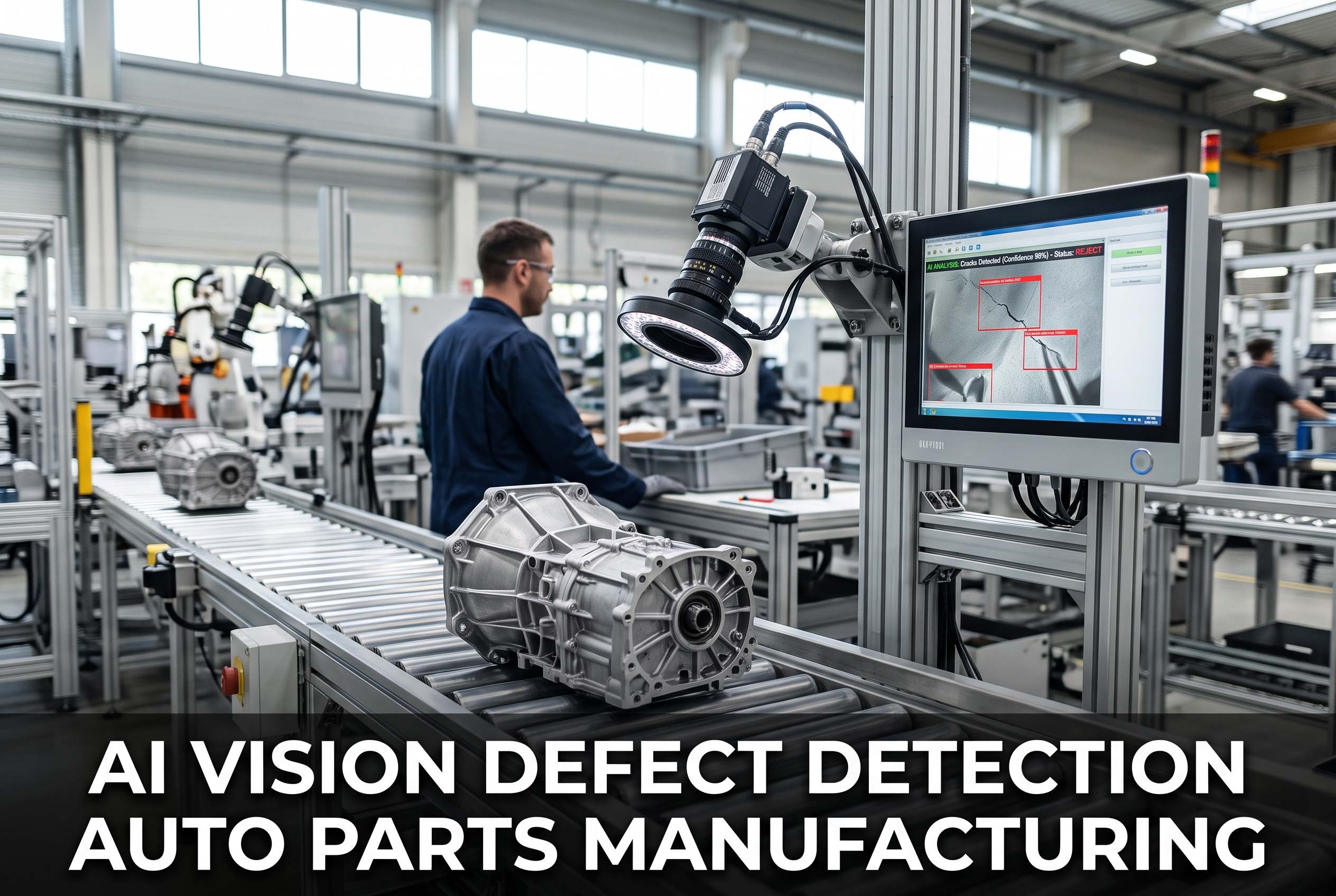
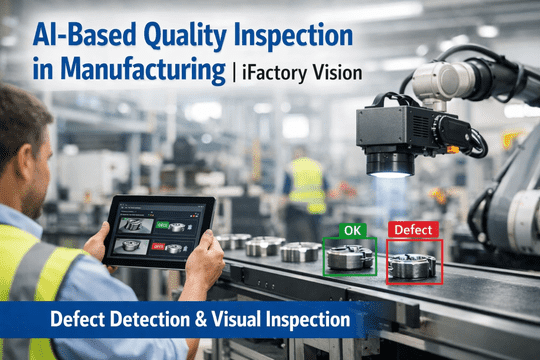
Automotive quality standards have tightened to the point where a single missed defect on a body panel or welded joint can trigger a line stoppage, a PPAP failure, or a warranty claim that costs exponentially more than the part itself. Legacy rule-based machine vision systems were built for repetitive, high-contrast tasks like verifying the presence of a barcode, but they cannot reliably inspect for complex surface defects, subtle weld profiles, or cosmetic blemishes across the massive variety of colors, finishes, and lighting conditions on a modern vehicle line. The result is that plants still rely on human visual inspection at critical checkpoints, which introduces the exact variability and fatigue-driven escapes that the quality system was supposed to eliminate. On-premise AI vision solves this by running deep learning models directly on ruggedized edge hardware at the station, inspecting every part at line speed without sending images to the cloud. You can book a demo to see how iFactory's edge AI handles automotive inspection at your line speeds.
AUTOMOTIVE AI VISION · ON-PREMISE EDGE AI · ZERO CLOUD · NVIDIA JETSON
On-Premise AI Vision That Inspects Every Part at Automotive Line Speed
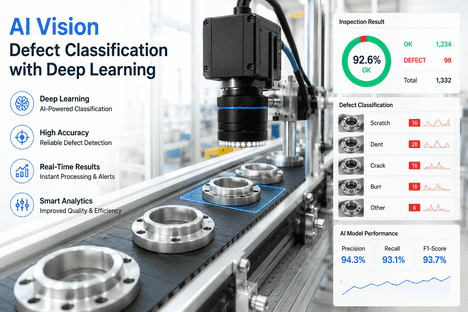
iFactory deploys ruggedized AI inspection cameras running on NVIDIA Jetson Orin AGX hardware directly on your plant floor, delivering 99.4% accuracy and 4.6K inferences per hour without sending a single image to the cloud.
System Performance Specifications
Defect Detection Accuracy
THE COST OF ESCAPES
A Single Escaped Defect Costs More Than the Entire AI Inspection System
In automotive manufacturing, quality failures do not stay localized. A missed dent on a body-in-white panel gets painted over, passes through assembly, and is only caught at the final audit or by the dealer, at which point the cost of rework or warranty replacement has multiplied by orders of magnitude. The financial cascade below shows how costs accumulate when a defect slips past a manual or legacy inspection point.
Detected at Station
$15
Rework or scrap at the point of origin, minimal line disruption, no downstream labor wasted on a defective part.
Detected Before Paint
$120
Labor to remove part from fixture, transport to rework area, repair defect, and reintroduce to line before paint booth entry.
Detected After Paint
$850
Paint strip, body repair, full repaint cycle, and re-inspection. Paint booth capacity is lost during the rework window.
Detected at Final Audit
$4,200
Full teardown of assembled components in the affected area, body repair, repaint, and complete re-assembly with new fasteners and trim.
Escaped to Customer
$12,000+
Dealership repair, loaner vehicle, warranty administration, customer satisfaction index penalty, and potential brand damage.
PRODUCTION LINE COVERAGE
AI Inspection Mapped to the Four Critical Automotive Production Stages
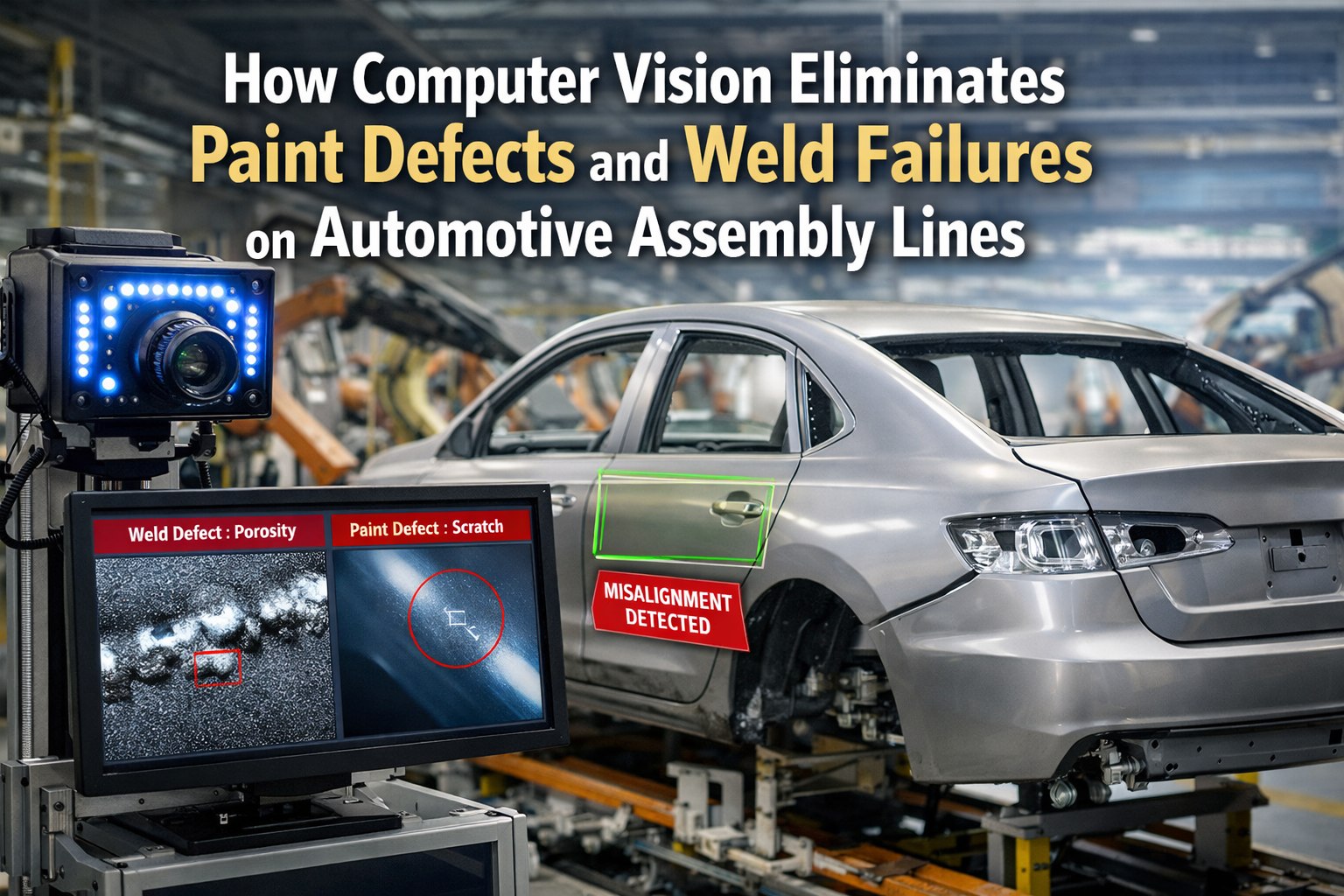
Automotive plants are not monolithic. Each production stage presents a unique set of defect types, surface conditions, and line speeds that require specialized AI models. iFactory deploys distinct inspection profiles calibrated for the specific visual challenges of each zone.
Body-in-White
Weld porosity and spatter
Missing spot welds
Panel misalignment and gaps
Indentations and dents
Sealer application errors
Challenge
Highly reflective bare metal, complex geometries, variable ambient light from overhead cranes
Paint Shop
Runs and sags
Orange peel texture
Dirt inclusions and fibers
Fish eyes and craters
Color mismatch and blush
Challenge
Glossy curved surfaces cause specular reflections, identical defects look different under varying paint colors
General Assembly
Missing fasteners and clips
Incorrect part installed
Connector not seated
Wire routing errors
Trim alignment and fit
Challenge
Cluttered visual background, partially obscured components, high mix of options and configurations
End of Line
Exterior panel gaps and flushness
Paint swirl marks and scratches
Missing badges or trim
Tire and wheel spec mismatch
Interior cosmetic defects
Challenge
Must inspect entire vehicle rapidly, varying ambient light conditions near dock doors, high SKU variety
ON-PREMISE ARCHITECTURE
Edge Hardware Built for the Harsh Reality of US Auto Plant Floors
Automotive IT security policies at most US OEMs and Tier 1 suppliers explicitly prohibit sending production images to external cloud servers. iFactory's architecture is designed from the ground up to operate entirely on-premise, with no cloud dependency for inference, data storage, or model training updates.
NVIDIA Jetson Orin AGX
Edge processing unit delivers the compute power required for complex deep learning models without relying on a network connection to a data center.
IP65 Rated Enclosures
Sealed against dust, coolant mist, and low-pressure water jets common in body shops and paint booth environments, ensuring continuous operation without climate-controlled cabinets.
MIL-STD-810 Tested
Validated for vibration, shock, and temperature extremes found on stamping press floors and next to welding robots where consumer-grade hardware fails.
Zero Cloud Inference
All image processing and defect classification happens locally on the edge device. No production data leaves the plant network, satisfying strict OEM cybersecurity requirements.
See On-Premise AI Inspection Running at Automotive Line Speeds
iFactory's edge AI inspects parts without cloud dependency, meeting the strict IT requirements of US auto plants. Book a demo to review the hardware and accuracy data.
AI VS LEGACY VISION
Why Legacy Rule-Based Vision Cannot Keep Up with Modern Automotive Quality Demands
Traditional machine vision relies on rigid rules like pixel counting, edge detection, and template matching. These tools work for binary pass/fail checks on identical parts but fail when faced with natural variation in surface texture, lighting shifts, or complex defect types that do not have a fixed geometric pattern. The table below contrasts the capabilities of legacy systems with iFactory's deep learning approach.
TURNKEY DEPLOYMENT
From Site Survey to Live Production in Six to Twelve Weeks
Automotive plants cannot afford prolonged line disruptions for technology pilots. iFactory's deployment process is designed to integrate with existing line schedules, using planned downtime for physical installation and running validation in shadow mode alongside current inspection methods until accuracy is proven.
Weeks 1-2
Site Survey and Optical Design
Engineering team maps lighting conditions, camera sight lines, and part presentation geometry at the target station. Optical plans are finalized to ensure the camera captures the critical surfaces without interfering with tooling or operator movement.
Weeks 3-5
Hardware Install and Data Collection
IP65 enclosures, cameras, and NVIDIA Jetson Orin AGX units are mounted during scheduled downtime. The system captures baseline images of good parts and any available defect examples to begin building the training dataset specific to this station.
Weeks 6-9
Model Training and Shadow Mode
Deep learning models are trained on the collected data and deployed to the edge device. The system runs in shadow mode, inspecting every part and logging results without stopping the line, while engineers compare AI decisions against manual inspection results.
Weeks 10-12
Validation and Live Cutover
Once the model achieves the agreed accuracy threshold during shadow mode, the system is switched to live mode where it actively flags defects. Operator training is completed, and the handoff to the plant quality team is executed with documented validation reports.
MEASURED OUTCOMES
Performance Metrics from Automotive AI Vision Deployments
The figures below represent aggregated results from iFactory AI vision deployments at automotive manufacturing facilities, measured over multiple production shifts following the completion of the validation phase and live cutover.
99.4%
Sustained Defect Detection Accuracy
Percentage of true defects correctly identified and flagged by the AI model across body, paint, and assembly inspections combined.
84%
Reduction in False Rejects vs Legacy Vision
AI models learned to accept natural process variation that legacy rule-based systems incorrectly flagged as out-of-spec, significantly reducing unnecessary rework loops.
4,600
Inferences Per Hour on Edge Hardware
Processing throughput achieved on the NVIDIA Jetson Orin AGX, easily supporting the fastest takt times in modern automotive final assembly and body shops.
92%
Reduction in Downstream Escapes
Fewer defective parts reached subsequent production stages or final audit because AI inspection caught defects at the point of origin with higher consistency than manual checks.
FREQUENTLY ASKED QUESTIONS
Questions Automotive Quality and IT Teams Ask About Edge AI Inspection
How does on-premise AI vision satisfy OEM cybersecurity requirements for US auto plants?
iFactory's architecture processes all images and runs all defect classification models locally on the NVIDIA Jetson Orin AGX edge device installed at the station. No production images, metadata, or model inference results are transmitted to the external cloud at any point. Model updates, when required, are delivered via secure local network transfer or encrypted physical media that aligns with typical plant IT change management protocols. This zero-cloud approach is specifically designed to meet the stringent data residency and network isolation policies enforced by major US automotive OEMs and their Tier 1 suppliers.
Book a demo to review the security architecture.
Can the AI model handle the transition between high-gloss black paint and matte finish on the same production line?
Yes, deep learning models are trained on images spanning all paint colors and finish types that run through the station, so the model learns to isolate the defect features from the underlying surface reflectivity. High-gloss black presents the most challenging visual environment due to specular reflections, but the model uses these reflections as contextual cues rather than noise, allowing it to detect subsurface defects like sanding marks or primer contamination that are invisible under diffuse lighting. The key is capturing a representative training dataset that includes the full range of finishes during the initial data collection phase.
Contact support to discuss your specific paint shop configuration.
What happens when a new vehicle model or part revision is introduced to the line?
When a new model or significant part revision enters production, the AI model requires a targeted retraining cycle using images of the new geometry, surface finish, and any new defect modes associated with the revised part. iFactory manages this retraining process, typically requiring one to two weeks of data collection on the new part followed by a shadow mode validation period before the updated model goes live. Because the underlying edge hardware and optical setup usually remain unchanged, the transition time is significantly shorter than the initial deployment, and the existing model continues to inspect legacy models running on the same line without interruption.
Book a demo to learn about the model update process.
How does the system perform in the high-vibration environment near stamping presses or welding robots?
The entire edge hardware suite, including the NVIDIA Jetson Orin AGX unit, cameras, and lighting enclosures, is tested to MIL-STD-810 standards for vibration and shock. Camera mounting hardware is designed with industrial vibration isolation to prevent image blur during exposure, and the lighting system uses solid-state LEDs that are inherently immune to vibration-induced filament failure. In welding environments, optical filters are applied to camera lenses to block the intense infrared and ultraviolet flashes from arc welding that would otherwise saturate the image sensor.
Contact support to discuss your specific environmental challenges.
Does the system replace our existing PLC-based quality controls or integrate with them?
The AI vision system integrates with existing plant PLC and SCADA infrastructure rather than replacing it. When the AI model detects a defect, it sends a discrete pass/fail signal to the PLC over standard industrial protocols, which then triggers the existing line control actions such as part diversion, Andon light activation, or line stop. This means the plant electrical and controls teams do not have to reprogram their quality response logic, and the AI system functions as an upgraded sensor that provides a more accurate inspection signal than the photoeyes or simple cameras it replaces.
Book a demo to see the PLC integration workflow.
Upgrade Your Automotive Quality Inspection Without Touching the Cloud
iFactory's on-premise AI vision delivers 99.4% accuracy on the plant floor, meeting US auto OEM IT requirements while catching the defects legacy systems miss. Book a demo.