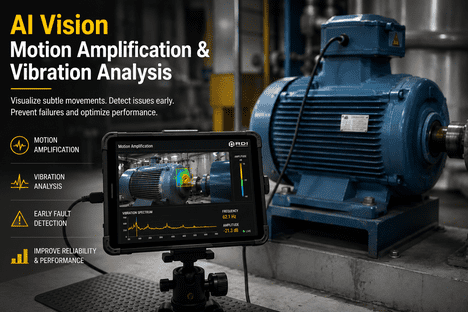
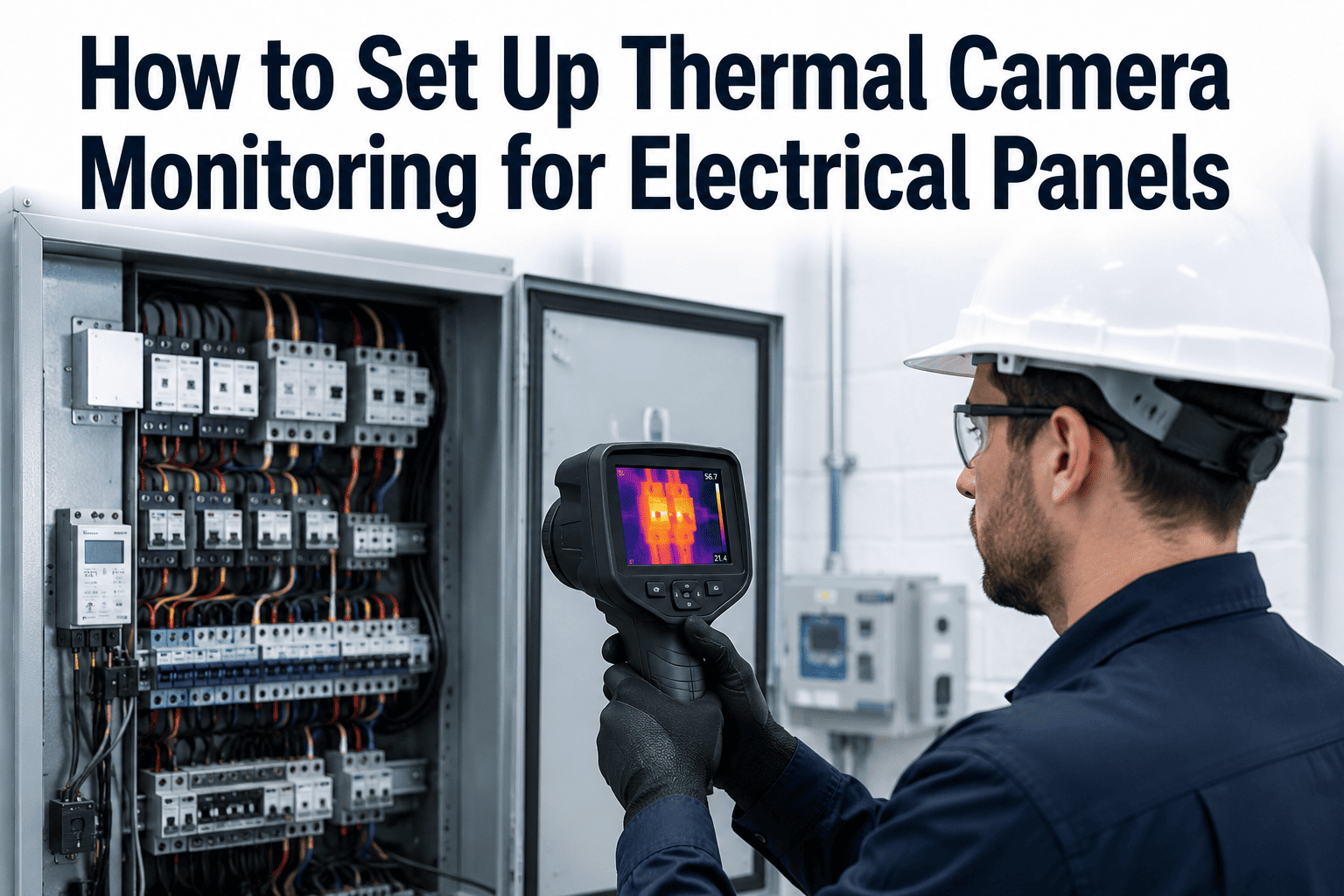
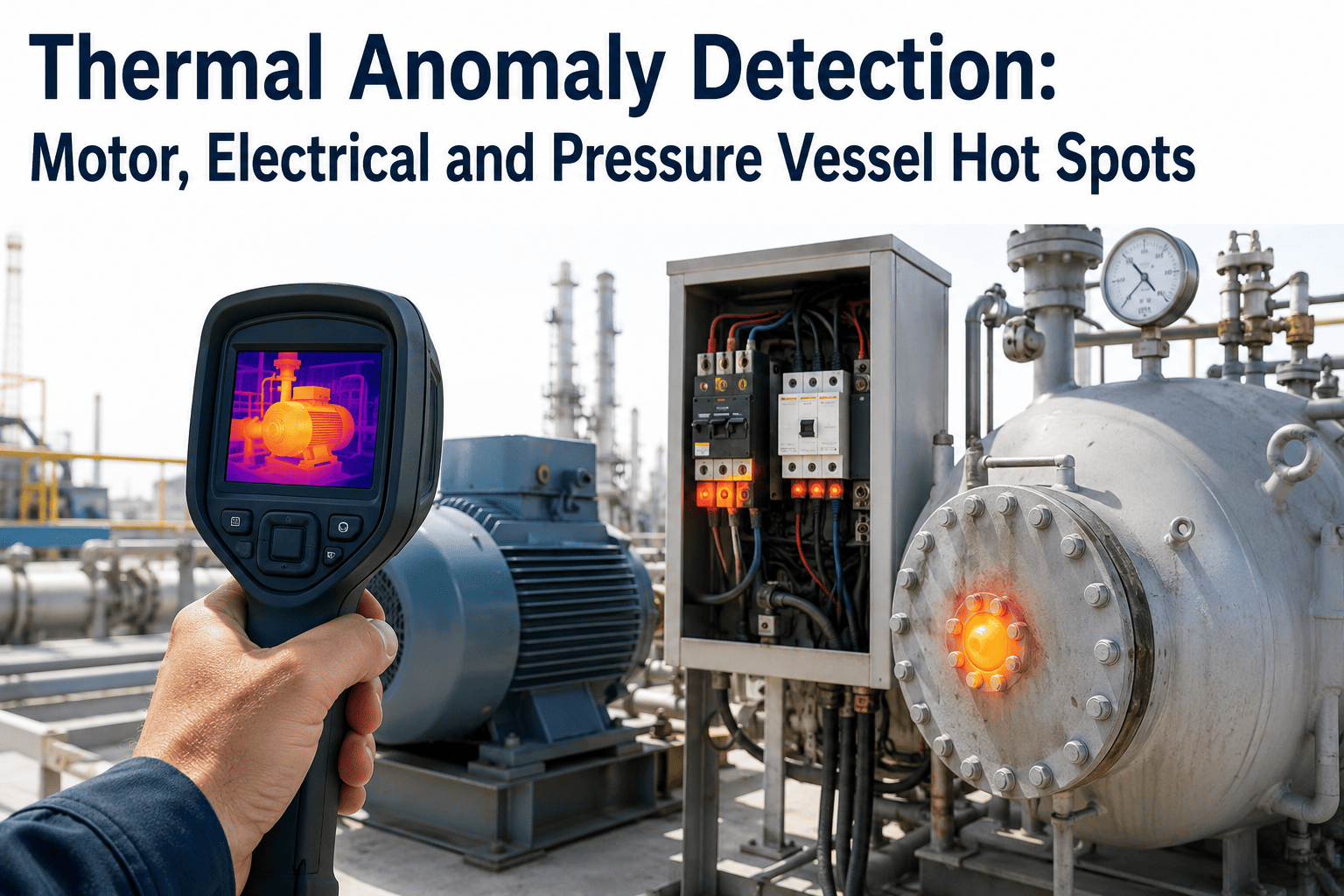
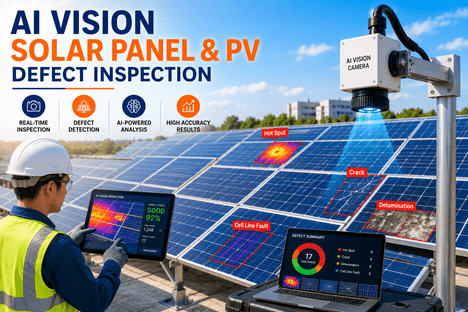
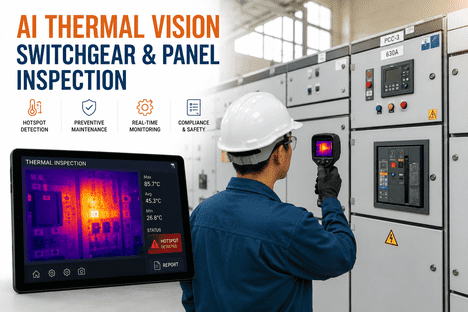
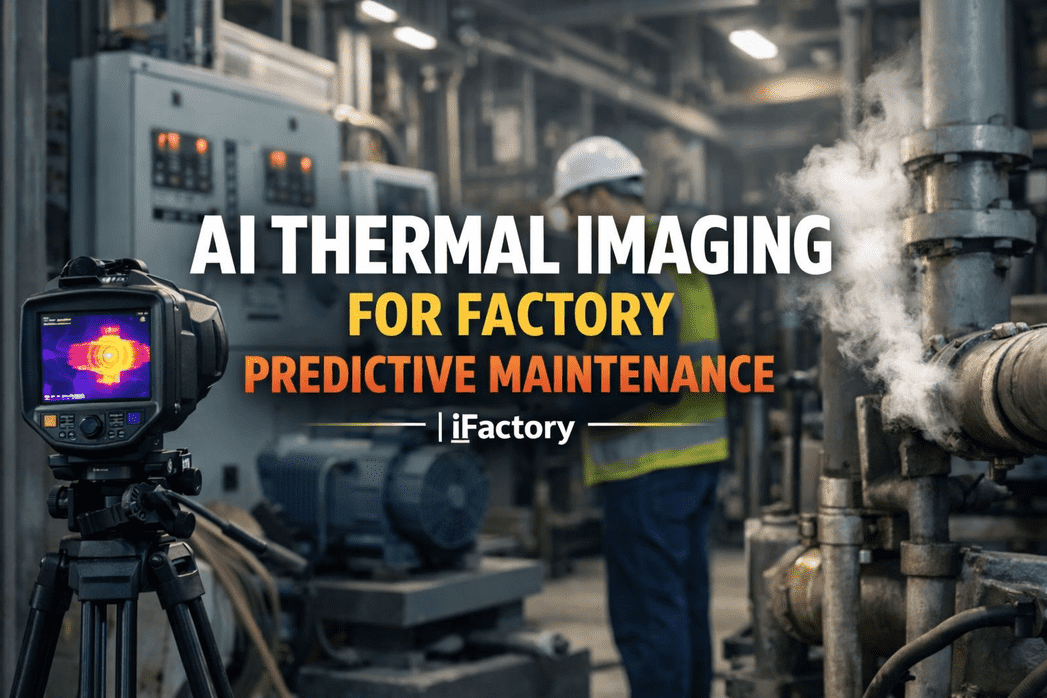
AI thermal vision equipment anomaly monitoring is redefining how maintenance and reliability teams detect overheating motors, failing bearings, overloaded electrical panels, and thermal hotspots in rotating and static equipment before those conditions progress to failure events. Conventional maintenance programs rely on periodic thermography surveys — a qualified technician with a thermal camera walking a route on a quarterly or monthly schedule, capturing spot readings at critical assets and logging findings for engineering review. This approach misses the developing thermal anomalies that emerge and escalate between survey visits, and it provides no detection capability during the off-shift hours when unattended equipment failures cause the most unrecoverable damage. iFactory's AI-powered predictive maintenance vision platform deploys thermal imaging continuously across production and facility environments, with deep learning models that classify temperature distribution patterns, rising hotspot signatures, asymmetric thermal behavior in rotating equipment, and electrical insulation degradation — automatically generating predictive maintenance work orders the moment a thermal anomaly exceeds configured risk thresholds, without waiting for a human to review the next thermography report.
iFactory Platform — AI Thermal Vision · Predictive Maintenance
Detect Equipment Overheating Before It Becomes a Failure Event.
iFactory's AI thermal vision platform continuously monitors motors, bearings, electrical panels, and process equipment — detecting thermal anomalies in real time and triggering predictive maintenance work orders automatically before failures occur.
70%
Earlier thermal anomaly detection by AI vision versus periodic manual thermography surveys
40-60%
Reduction in unplanned equipment failures within 12 months of AI thermal monitoring deployment
24/7
Continuous thermal monitoring coverage including unoccupied hours and overnight shifts
95%+
Thermal anomaly classification accuracy achieved by iFactory's deep learning models in production environments
Why Periodic Thermography Surveys Leave Critical Detection Gaps
The Physics of Thermal Failure That Scheduled Inspections Cannot Cover
Thermal degradation in industrial equipment follows a predictable but non-linear progression. A motor bearing developing lubrication film breakdown generates a rising temperature signature weeks before it reaches the threshold that causes bearing seizure — but the rate of rise accelerates as the condition worsens, meaning the most critical detection window is also the period when temperature change is fastest and most likely to fall between scheduled survey visits. A quarterly thermography program provides four detection opportunities per year. An AI thermal vision platform provides continuous detection across every hour of every day — catching the accelerating thermal anomaly in the window when corrective maintenance is still planned and controlled, rather than reactive and emergency. Electrical panel thermal anomalies present an even more pronounced detection gap problem: connections that develop resistance heating from loose terminals, corroded contact surfaces, or overloaded circuits generate thermal signatures that can escalate from detectable to dangerous in hours rather than weeks. Quarterly or even monthly manual thermography surveys are structurally unable to catch these fast-developing electrical fire precursors in time. iFactory's AI vision camera platform deploys thermal monitoring continuously on electrical distribution panels, switchgear, motor control centers, and UPS systems — detecting connection resistance heating, phase imbalance signatures, and bus bar hotspots the moment they develop. Reliability engineers who want to see this detection architecture applied to their specific equipment portfolio regularly choose to Book a Demo with iFactory's engineering team.
What iFactory's AI Thermal Vision System Detects
Equipment Categories and Thermal Anomaly Signatures Covered by the Platform
01
Motor Overheating and Winding Insulation Degradation
Electric motors account for the majority of thermal-failure-related unplanned downtime in manufacturing and process industries. iFactory's thermal vision models identify overheating from winding insulation breakdown, cooling fan failure, blocked ventilation, and overloading — each of which produces a characteristic thermal signature across the motor frame and end bells. Asymmetric temperature distribution between stator winding phases is detected as a specific anomaly pattern, enabling early identification of winding degradation that single-point thermal sensors positioned at motor housings routinely miss. Work orders are automatically generated with the thermal image, motor identification, anomaly classification, and recommended corrective action attached — ready for technician assignment without any manual review step.
02
Bearing Thermal Monitoring and Lubrication Film Detection
Bearing failures are the leading cause of motor and rotating equipment downtime across virtually every industry. Lubrication film breakdown, contamination, and fatigue progression all generate rising thermal signatures at bearing housings before vibration analysis detects any deviation. iFactory's AI models monitor bearing housing temperature distribution patterns continuously, distinguishing normal warm-up signatures during start cycles from genuine developing failure signatures that require maintenance intervention. The platform's ability to compare current thermal patterns against an asset-specific baseline — rather than generic temperature thresholds — enables earlier detection of bearing degradation in equipment that operates at elevated temperatures as a normal condition.
03
Electrical Panel, Switchgear, and MCC Monitoring
Electrical distribution infrastructure is responsible for a disproportionate share of industrial fire events and unplanned production shutdowns — and the thermal anomalies that precede these events are consistently detectable by infrared monitoring days or weeks before failure. iFactory's platform provides continuous thermal monitoring of electrical panels, switchgear enclosures, motor control centers, transformers, and UPS systems — detecting resistance heating at connection points, phase imbalance across three-phase circuits, bus bar hot spots from overloading, and insulation degradation signatures that indicate approaching arc flash risk. Each detected anomaly is classified by severity and routed to the appropriate response workflow — immediate electrical isolation for high-severity findings, scheduled inspection for developing conditions.
04
Process Equipment and Heat Exchanger Fouling Detection
Process equipment thermal performance degradation — heat exchanger fouling, insulation damage on steam lines, refractory degradation in furnaces, and vessel wall thinning from corrosion — produces systematic thermal signature changes that AI vision models can detect and trend over time. iFactory's platform monitors process equipment thermal profiles continuously, identifying developing fouling conditions before they produce measurable yield or efficiency losses, and detecting insulation failures and refractory hotspots that represent both energy waste and structural risk. Trending capability tracks thermal performance of specific equipment components over weeks and months — enabling condition-based maintenance scheduling against actual equipment health rather than calendar-based replacement intervals.
05
Conveyor, Drive Train, and Mechanical Transmission Monitoring
Conveyor systems, gearboxes, belt drives, chain drives, and coupling assemblies generate characteristic thermal signatures when developing misalignment, wear, or lubrication deficiencies — signatures that are difficult to detect with vibration analysis alone but clearly visible in continuous thermal monitoring. iFactory detects asymmetric heating across drive components that indicates misalignment, abnormal friction heating in coupling and belt contact zones, and gearbox housing hotspots from oil breakdown or internal component wear. These detections trigger planned corrective maintenance during scheduled downtime windows — preventing the unplanned production stoppages that occur when conveyor and drive failures are not caught before they progress to mechanical breakdown.
How iFactory's AI Thermal Vision Platform Works
From Sensor Integration to Predictive Work Order — The Complete Detection and Response Architecture
Step 01
Thermal Camera Deployment and Baseline Calibration
iFactory's edge AI processing units connect to radiometric thermal cameras positioned at strategic monitoring locations across the facility — motor banks, electrical rooms, bearing access points, process equipment, and conveyor drives. During the initial calibration period, the AI models establish asset-specific thermal baselines for each monitored equipment item across normal operating load ranges, ambient temperature conditions, and production cycle variations. This asset-specific baseline is the foundation that enables detection of genuine developing anomalies while suppressing the false alerts that fixed-threshold thermal monitoring systems generate from normal operating variability.
Step 02
Continuous Thermal Pattern Analysis and Anomaly Classification
The AI model continuously analyzes thermal image streams from every monitored camera position, comparing current thermal distribution patterns against the established baseline for each asset. When a deviation is detected, the model classifies the anomaly against its training library of thermal failure signatures — identifying the specific failure mode (bearing overheating, connection resistance, winding asymmetry, fouling) rather than simply flagging an elevated temperature reading. This classification provides maintenance teams with actionable diagnostic information rather than a raw temperature alarm that requires separate investigation before corrective action can be planned.
Step 03
Confidence Scoring and Alert Severity Grading
Each thermal anomaly detection is assigned a confidence score and severity grade based on the magnitude of deviation from baseline, the rate of temperature change, and the specific failure signature pattern matched by the AI model. High-confidence, high-severity detections — such as an electrical connection reaching temperatures above 50°C above baseline on a critical panel — trigger immediate escalation alerts to the maintenance supervisor and electrical safety team. Lower-severity developing conditions trigger scheduled inspection work orders that allow maintenance planning to schedule investigation during the next available planned window without emergency mobilization.
Step 04
Automated Work Order Generation and CMMS Integration
When iFactory's AI thermal vision system classifies an anomaly above the configured action threshold, a predictive maintenance work order is automatically created in the connected CMMS — populated with the asset identification, thermal anomaly classification, severity grade, the thermal image at detection, the temperature delta from baseline, and the recommended corrective action based on the failure mode identified. The work order is created without any manual intervention and appears in the maintenance planner's queue ready for assignment and scheduling. iFactory integrates with major CMMS platforms through OPC-UA and REST API connections, routing predictive work orders into existing maintenance workflows without requiring a parallel tracking system.
Step 05
Trend Monitoring and Predictive Failure Timeline Estimation
Beyond single-event anomaly detection, iFactory's platform tracks thermal trends for each monitored asset over time — plotting the progression of thermal conditions against historical patterns for similar equipment and failure modes. This trending capability provides reliability engineers with estimated time-to-failure projections that enable maintenance scheduling to be optimized around production windows rather than forced by imminent failure. Assets with steadily rising thermal signatures can be scheduled for intervention at the next planned shutdown rather than at the point of emergency — converting what would have been an unplanned failure event into a planned corrective maintenance activity with no production impact. Reliability teams building this capability regularly
Book a Demo to see how iFactory's thermal trend analytics apply to their specific equipment fleet.
iFactory Thermal Anomaly Detection Across Equipment Categories
Detection Coverage, Failure Modes, and Automated Response Per Asset Class
| Equipment Category |
Thermal Failure Modes Detected |
Detection Advantage vs. Periodic Survey |
Automated Response |
| Electric Motors |
Winding insulation breakdown, cooling failure, phase imbalance, overloading |
Continuous monitoring catches accelerating temperature rise between survey visits |
Predictive work order with thermal image and failure mode classification |
| Bearings |
Lubrication film breakdown, contamination, fatigue, misalignment heating |
Asset-specific baseline detects bearing degradation in normally hot equipment |
Scheduled bearing inspection or replacement work order with condition context |
| Electrical Panels and MCC |
Connection resistance heating, phase imbalance, bus bar overload, insulation degradation |
Hours-to-days earlier detection of fast-developing electrical fire precursors |
Severity-graded alert: immediate isolation or scheduled inspection work order |
| Process Equipment |
Heat exchanger fouling, insulation damage, refractory hotspots, vessel wall thinning |
Weeks-earlier detection of fouling impact on thermal performance profiles |
Condition-based cleaning or inspection work order with performance trend data |
| Conveyors and Drive Trains |
Misalignment friction heating, belt wear, gearbox oil breakdown, coupling asymmetry |
Catches drive train thermal anomalies that vibration analysis misses at early stages |
Planned corrective work order scheduled for next available production window |
Deployment Across Industries and Environments
Where iFactory AI Thermal Vision Delivers the Highest Predictive Maintenance Value
Thermal anomaly monitoring provides its highest value in environments where equipment failure consequences are greatest — high-value asset loss, production downtime, fire risk, or safety system failure. iFactory's platform is deployed across a wide range of industries where these conditions prevail, with thermal detection models and response configurations adapted to the specific equipment portfolio and failure mode profile of each environment. In semiconductor and electronics manufacturing, thermal monitoring covers process chamber components, power supply units, and cooling system equipment where thermal failures produce immediate yield loss and contamination risk in addition to equipment damage. In food and beverage processing, motor and drive thermal monitoring prevents the unplanned line stops that cause product loss and scheduling disruption, while refrigeration system thermal monitoring catches developing compressor and heat exchanger failures before they threaten cold chain integrity. In automotive and heavy manufacturing, thermal monitoring of press drives, CNC spindles, welding equipment power supplies, and conveyor systems prevents the cascading downtime events that occur when a thermal failure on one production line element stops an entire assembly sequence. In utilities and power generation, transformer thermal monitoring, switchgear monitoring, and generator winding temperature tracking are critical safety and reliability functions that continuous AI thermal vision performs at a fraction of the cost of dedicated wired sensor systems. Facilities evaluating AI thermal vision deployment can Book a Demo with iFactory's engineering team for a site-specific equipment coverage assessment and thermal camera placement review.
Edge AI Processing — No Cloud Dependency
iFactory's thermal anomaly detection runs entirely on edge AI processing units deployed within the facility OT network. Thermal image analysis, anomaly classification, and work order generation occur locally with millisecond latency — no cloud connectivity required for real-time detection. This architecture ensures detection performance is unaffected by network interruptions and keeps sensitive equipment health data within the facility perimeter, meeting OT cybersecurity requirements for critical infrastructure environments.
Asset-Specific Baseline Intelligence
Generic temperature threshold systems generate excessive false alerts in equipment that normally operates at elevated temperatures. iFactory's AI models establish individual thermal baseline profiles for each monitored asset across its full operating range — distinguishing genuine developing anomalies from normal operating temperature variability. This asset-specific intelligence is the primary driver of detection accuracy above 95% and false alarm rates low enough to maintain maintenance team engagement with system alerts.
CMMS Integration and Auto Work Orders
Every thermal anomaly that crosses the configured action threshold generates a complete, structured predictive maintenance work order in the connected CMMS without manual intervention. Work orders include asset identification, anomaly classification, severity grade, thermal image, temperature delta from baseline, and recommended corrective action — providing maintenance planners with everything needed to assign, schedule, and execute corrective work without additional investigation. Integration supports Maximo, SAP PM, Fiix, eMaint, and other platforms via REST API.
Multi-Spectral and Visible Camera Integration
iFactory's platform supports simultaneous thermal and visible-spectrum camera feeds at the same monitoring position, combining thermal anomaly detection with visual context that helps technicians understand the physical state of equipment at the time of detection. Visible-spectrum images captured at the moment of thermal alert provide the spatial reference that thermal images alone cannot convey in complex equipment environments — improving first-time-fix rates by ensuring technicians arrive at the equipment with full visual and thermal diagnostic context before they begin work.
"We had a motor control center that failed and took down a full production line for 18 hours — a complete power supply fault that our quarterly thermography survey had not flagged because the resistance heating at the affected connection point was still below the threshold our thermographer was using. After deploying iFactory's continuous thermal monitoring, we caught a similar developing connection resistance issue on a different panel within three weeks — at a temperature delta that our manual survey would have classified as within normal range. The work order was in the planner's queue before the shift supervisor even knew there was a developing problem. That catch alone paid for the first year of the platform."
Reliability Engineering Manager
Discrete Manufacturing Operations, North America
Frequently Asked Questions: AI Thermal Vision Equipment Monitoring
How does iFactory's AI thermal vision detect anomalies in equipment that normally runs hot?
iFactory's AI models establish individual thermal baseline profiles for each monitored asset across its full operating load range and normal ambient temperature conditions. Anomaly detection is based on deviation from this asset-specific baseline — not on fixed absolute temperature thresholds. A motor that normally runs at 75°C will trigger an alert when its thermal pattern deviates from its baseline in a way that is consistent with a developing failure signature, rather than at a generic threshold that would either generate constant false alerts or miss genuine degradation in a normally hot-running piece of equipment. This baseline intelligence is established during an initial calibration period following deployment and is continuously updated as the AI model accumulates more operating history for each asset.
Can iFactory's platform work with existing thermal cameras already installed in the facility?
In many facility deployments, iFactory's edge AI processing units can be connected to existing radiometric thermal cameras — provided the cameras meet minimum resolution, frame rate, and radiometric accuracy specifications for the detection models being deployed. iFactory's engineering team reviews existing camera specifications and placement geometry during the deployment scoping process to identify which existing cameras are suitable for AI integration and which positions would benefit from new camera installations to achieve adequate coverage of the target equipment. Facilities with thermal cameras already installed for safety or process monitoring purposes often achieve meaningful deployment cost reductions by integrating those assets into the iFactory platform rather than replacing them.
Which CMMS platforms does iFactory integrate with for predictive work order generation?
iFactory generates predictive maintenance work orders through REST API integration with major CMMS platforms including IBM Maximo, SAP Plant Maintenance, Infor EAM, Fiix, eMaint, Limble, and others. The integration is configured during deployment to match the work order data fields, asset hierarchy structure, and assignment workflows of the facility's existing CMMS. For facilities without a CMMS or with a system that does not support API integration, iFactory's own work order module can receive and track predictive maintenance tasks directly within the platform. Mobile notification delivery to maintenance planners and technicians is supported through SMS, email, and in-app channels regardless of which work order system is used.
How is iFactory's AI thermal monitoring different from installing fixed point temperature sensors?
Fixed-point temperature sensors measure a single location on an equipment surface — typically the highest-temperature zone identified during an initial survey. This approach misses thermal anomalies that develop at different locations as the failure mode progresses, and it cannot detect the spatial distribution patterns that distinguish different failure modes from each other. AI thermal vision cameras capture the full thermal image of the monitored equipment and analyze the complete temperature distribution pattern simultaneously — detecting asymmetric heating between motor phases, localized hotspots at connection points within a panel, and the specific spatial signatures that correspond to bearing degradation, misalignment, and insulation failure. The diagnostic value of full thermal image analysis substantially exceeds what single-point sensors can provide, at a monitoring cost that is lower per asset when cameras cover multiple equipment items simultaneously.
How long does deployment of iFactory AI thermal vision monitoring take?
Deployment timelines depend on the number of equipment monitoring zones, the status of existing camera infrastructure, and the extent of CMMS integration required. For facilities with suitable existing thermal camera coverage, edge AI unit installation and software configuration can be completed in two to four weeks. For greenfield thermal camera installations, timelines extend to four to eight weeks including camera selection, placement design, installation, and cabling. The AI model calibration period — during which the system establishes asset-specific thermal baselines — typically requires two to four weeks of live operation across the full range of normal equipment operating conditions before detection thresholds are finalized. iFactory's engineering team manages the full deployment process and provides commissioning support through the calibration period to ensure detection performance meets specifications before formal production handover.
iFactory AI Thermal Vision · Predictive Maintenance · Cross-Industry
Stop Equipment Failures Before They Start — With Continuous AI Thermal Monitoring.
iFactory's AI thermal vision platform detects overheating motors, failing bearings, electrical panel hotspots, and process equipment thermal anomalies in real time — automatically generating predictive maintenance work orders before failures occur and production stops.