AI vision for warehouse and logistics monitoring is transforming how distribution centers, 3PLs, and fulfillment operations control shipment accuracy, damage claims, inventory visibility, and loading dock compliance at a scale that manual inspection and handheld scanning programs structurally cannot reach. In 2026, warehouses processing thousands of pallet and parcel movements per shift are discovering that trigger-based human scanning introduces transcription errors, missed inspections, and retrospective documentation gaps that only surface when a mis-shipment reaches the customer or an inventory discrepancy emerges during a cycle count — at which point the cost of correction multiplies far beyond what automated prevention would have required. Research confirms that among consumers who receive a damaged shipment, 51% will not repurchase, and 85% report negative brand perception after a single damaged delivery — making the financial case for AI vision damage detection at the point of packing and loading a straightforward calculation for any operation managing outbound freight volume at scale. iFactory's AI vision camera platform deploys object detection models trained on warehouse-specific freight conditions across receiving docks, conveyor lines, pick-and-pack stations, and outbound loading zones — automatically verifying pallet condition, detecting package damage, confirming load manifests, and logging every freight movement event with timestamped visual evidence that eliminates documentation gaps and supports carrier dispute resolution without manual report compilation.
Why Manual Warehouse Inspection Cannot Scale to Modern Logistics Demands
The structural problem with manual pallet inspection and handheld-scan receiving workflows is not that the people performing them are careless — it is that the physical requirements of the job exceed what human-speed inspection can reliably deliver at high freight volumes. A manual pallet inspection takes 30 to 60 seconds per pallet when performed thoroughly; an AI vision analysis completes the same assessment in under five seconds with full multi-angle image capture, defect classification, and timestamped documentation generated automatically. At a distribution center processing 400 pallet movements per shift, the throughput math eliminates thorough manual inspection as an operational reality — and the documentation gaps that result are precisely where OS&D (Over, Short, and Damaged) claims originate, carrier disputes persist without resolution, and inventory discrepancies accumulate into quarterly losses that no cycle count can fully explain. Gartner has projected that by 2027, half of all warehouse-operating companies will have shifted to AI-powered vision systems for receiving and shipment verification. Organizations moving to AI vision earlier than competitors gain the inventory accuracy, claims reduction, and dock throughput advantages first — while those waiting encounter the market expectation that visual documentation will exist for every freight event.
Six Core AI Vision Capabilities Across the Warehouse and Logistics Workflow
iFactory's AI vision object detection platform covers the complete freight journey through a warehouse or distribution center — from inbound truck arrival through storage, pick-and-pack, and outbound load verification. Each capability operates via edge-deployed deep learning models that process visual data locally with sub-50ms inference latency, with zero cloud dependency for core detection functions. Logistics managers ready to see all six capabilities demonstrated on their specific facility layout and freight types can Book a Demo with iFactory's warehouse vision integration team.
Pallet Inspection and Structural Damage Detection
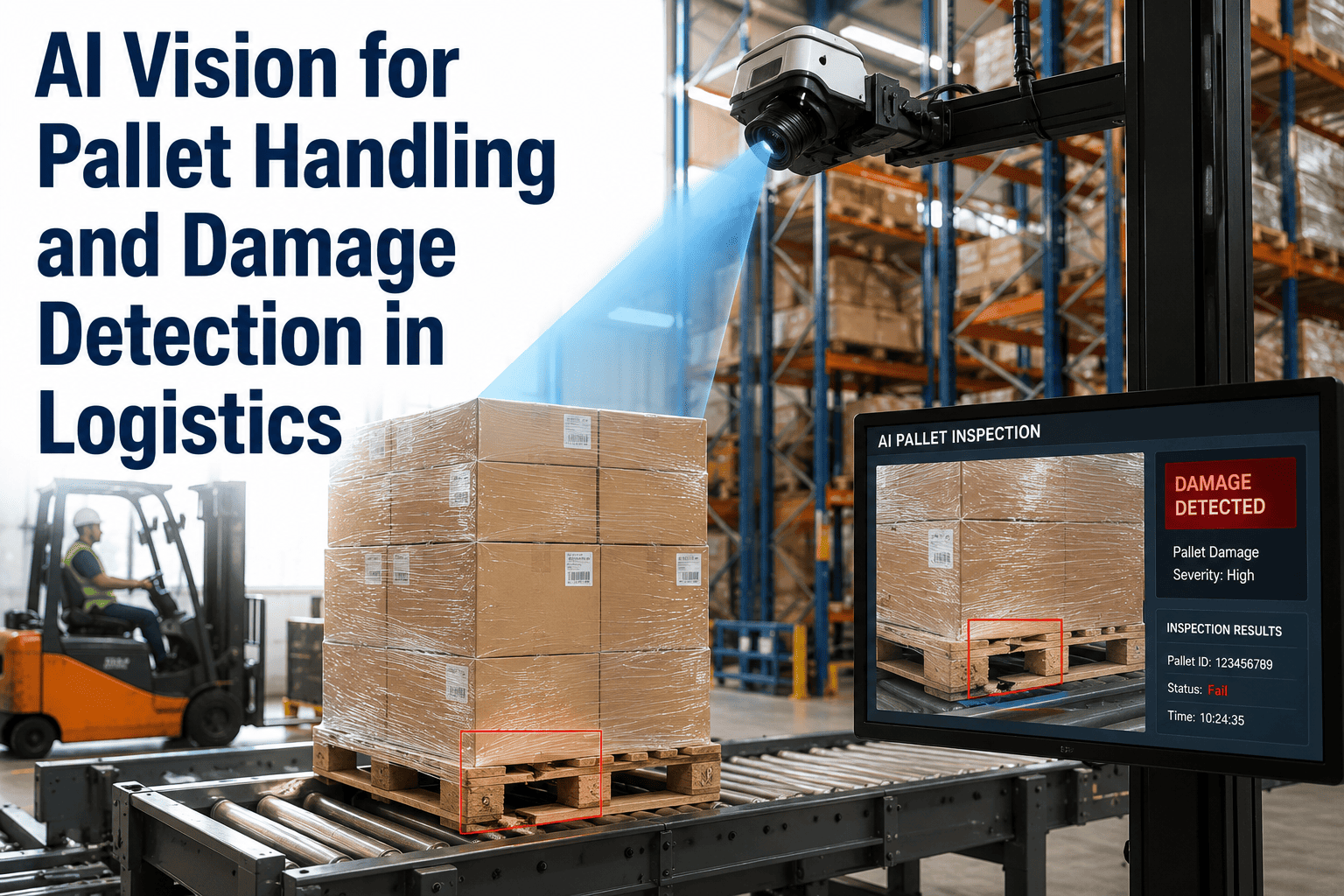
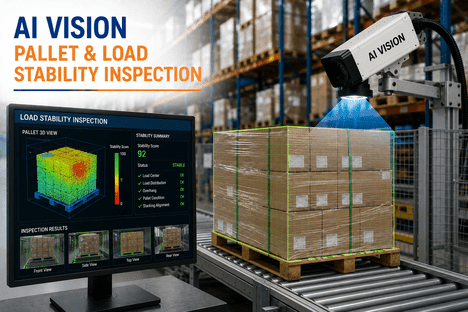
iFactory's AI vision cameras inspect every inbound and outbound pallet for structural defects — broken boards, missing blocks, cracked stringers, tilted or unstable loads, and wrap integrity failures — from multiple angles simultaneously using cameras positioned at dock entry points and conveyor transfer stations. The deep learning model classifies pallet condition in real time, generating a pass or hold decision with the supporting defect image logged against the pallet identifier, carrier, and arrival timestamp. Pallets flagged for damage are automatically routed to a hold zone in the WMS before they enter the storage aisle, preventing damaged goods from traveling further into the fulfillment workflow and ensuring that carrier liability is documented at the point of arrival rather than discovered during later handling. This documentation creates defensible visual evidence for OS&D claims that resolves carrier disputes in days rather than weeks of manual investigation.
Package and Parcel Damage Detection on Conveyors
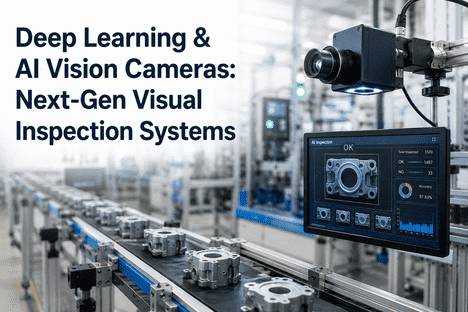
AI vision cameras positioned above conveyor lines and sortation belts inspect every parcel at line speed — detecting crushed corners, torn packaging, compromised seals, water damage staining, and label defacement without interrupting throughput or requiring manual diversion for inspection. The system processes image frames at conveyor speeds up to several hundred packages per minute, classifying damage type and severity against configurable acceptance thresholds and automatically triggering divert decisions to exception lanes where damaged parcels can be repacked, relabeled, or held for shipper notification. Every detection event generates a timestamped record with the defect image and package identifier attached — creating the documentation chain that eliminates the "damage occurred in transit" dispute that arises when outbound parcels leave the facility without documented condition evidence.
Loading Dock Monitoring and Outbound Load Verification
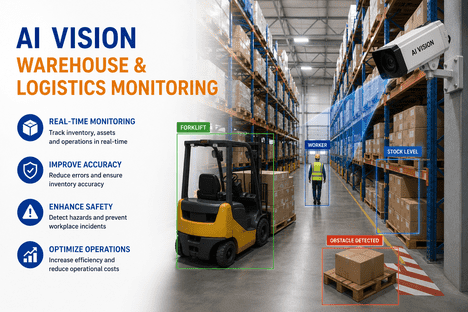
AI vision cameras deployed at dock doors and staging zones continuously monitor loading and unloading activity, capturing a timestamped visual record of every freight movement event during the loading process. The system verifies that outbound loads match the planned manifest — flagging sequencing deviations, missing pallets, or unauthorized freight additions before the dock door closes and the truck departs. Truck arrival and departure are logged automatically via license plate recognition, creating a complete dock activity record that includes carrier identification, dwell time, load completeness status, and the visual evidence of each pallet loaded. Safety monitoring runs in parallel, detecting PPE violations, pedestrian-forklift proximity events, and unauthorized zone access with push alerts to the shift supervisor — covering both operational compliance and safety management from the same camera infrastructure simultaneously.
Shipment Verification Against ASN and Purchase Orders
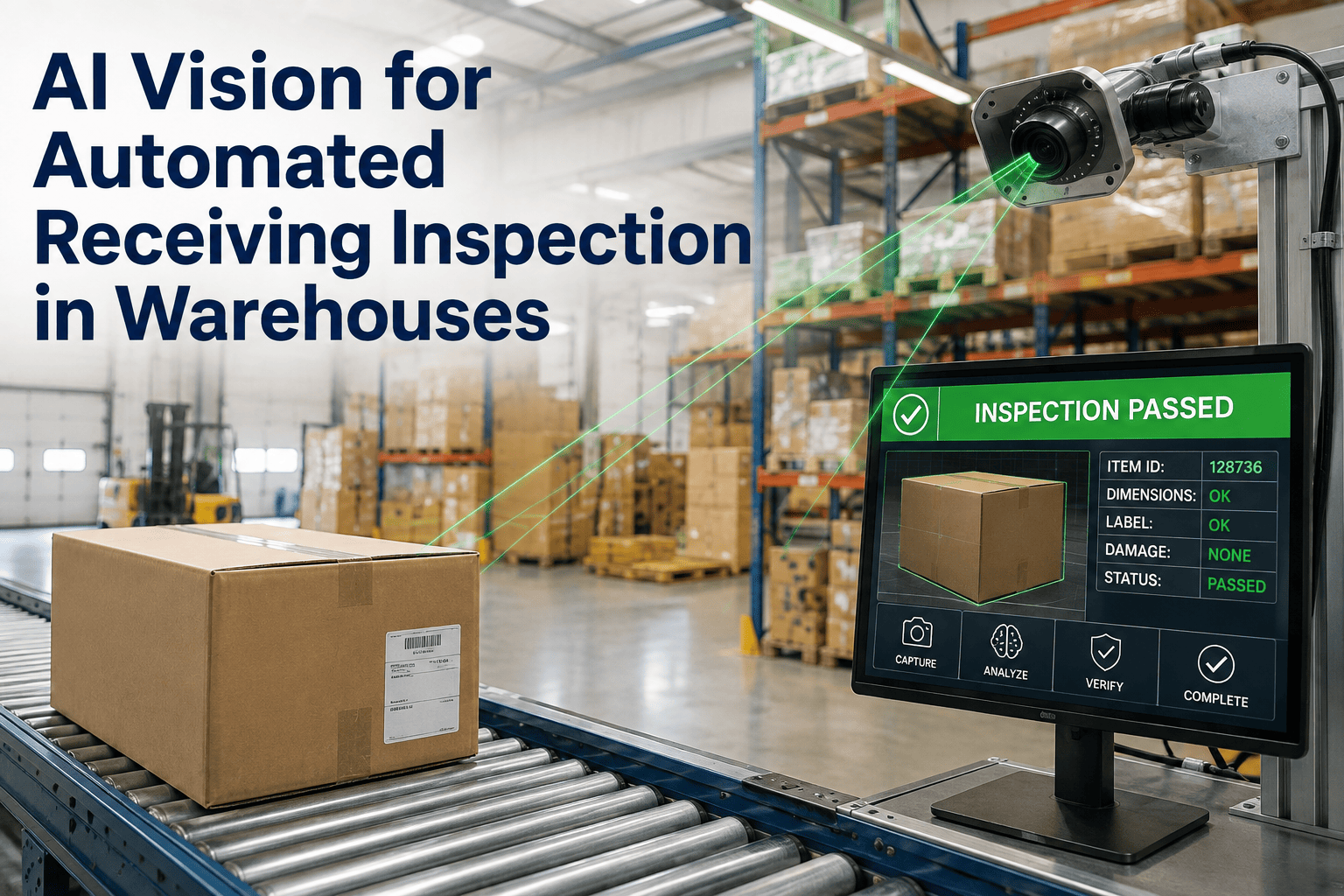
At inbound receiving, iFactory's AI vision cameras decode barcodes, QR codes, and shipping labels from multiple angles simultaneously as freight moves through the dock entry — matching item identifiers against the Advanced Shipping Notice and purchase order records in the WMS without requiring workers to stop and aim handheld scanners at individual units. Quantity discrepancies, unexpected SKUs, and mis-labeled cases are flagged immediately upon detection, allowing receiving teams to resolve exceptions at the dock before goods are put away into storage locations where tracing the discrepancy becomes a multi-hour inventory investigation. When both shipper and receiver facilities use AI vision dock systems, shipment verification occurs at both ends with matching documentation — creating objective evidence that resolves quantity disputes based on visual records rather than conflicting manual counts.
Inventory Flow Tracking and Visual Cycle Counting
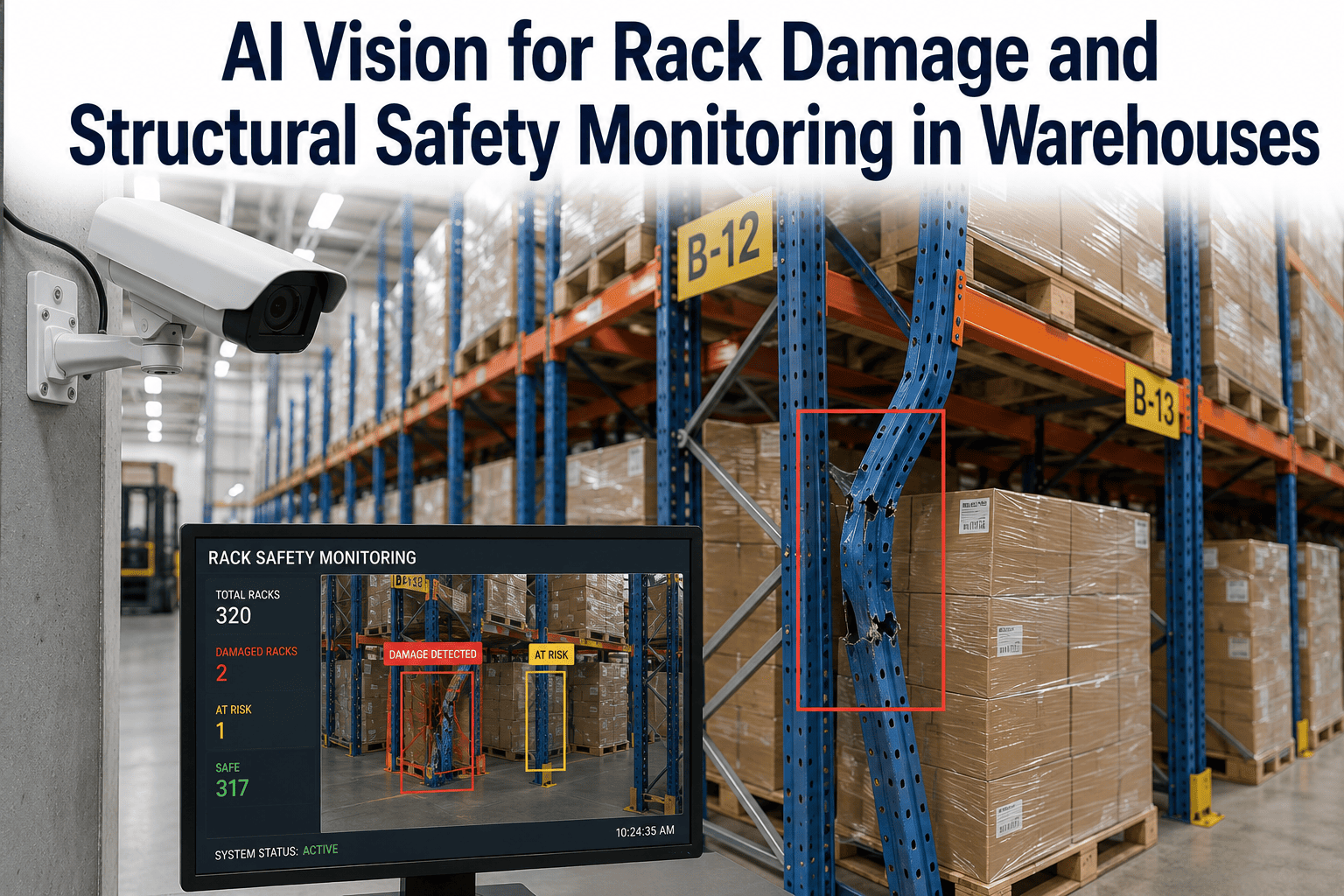
Overhead and aisle-mounted AI vision cameras monitor inventory movement across storage zones, providing continuous visibility into stock locations, occupancy levels, and movement patterns without requiring RFID tags or barcode scanning contact. The system performs visual cycle counting by comparing camera-captured inventory positions against WMS location records, identifying location discrepancies, misplaced pallets, and phantom inventory conditions in real time between formal audit cycles. Space utilization heatmaps derived from visual occupancy data enable warehouse managers to optimize slotting based on actual velocity patterns rather than assumptions — reducing travel distance for high-frequency picks and identifying dead stock accumulation zones before they consume premium storage locations. Inventory level alerts notify replenishment teams when fast-moving zones fall below threshold quantities, preventing pick-line stockouts without requiring manual zone walks to assess stock availability.
Pick-and-Pack Verification and Label Compliance Checking
AI vision cameras at pack stations validate that the correct product, correct quantity, and correct label are assembled into every outbound order before the carton is sealed — catching pick errors, label mismatches, and missing documentation at the last controllable point in the fulfillment process before shipment. Label compliance checking verifies that carrier labels, hazmat documentation, and customer-specific labeling requirements are correctly applied and legible before the package enters the outbound sortation stream. The system flags non-compliant packages for correction before they reach the dock — eliminating the downstream carrier surcharges, customer chargebacks, and return processing costs that mislabeled shipments generate at destination. Every verification event is logged and linked to the order record, creating a complete pick-to-ship audit trail for each outbound shipment without any manual documentation entry from pack station operators.
AI Vision vs. Manual Warehouse Inspection: Performance Benchmark 2026
The following comparison reflects operational outcomes across warehouse and distribution operations transitioning from manual inspection and handheld scanning workflows to AI vision-enabled monitoring architectures. The performance data covers receiving accuracy, damage claim rates, dock throughput, and inventory accuracy across facilities ranging from single-site regional DCs to multi-site national distribution networks.
| Operational Metric | Manual Inspection Program | Semi-Automated (Handheld + Spot Check) | AI Vision (iFactory) | Vision Advantage |
|---|---|---|---|---|
| Pallet Inspection Coverage Per Shift | 15–30% of received pallets | 40–60% sampled inspection | 100% automated — every pallet | Full coverage guaranteed |
| Damage Detection Accuracy | 70–80% (fatigue-dependent) | 82–90% (spot check limited) | 95–99% consistent visual detection | Highest accuracy at scale |
| Receiving Cycle Time Per Pallet | 30–60 seconds manual inspection | 15–25 seconds semi-automated | Under 5 seconds — full AI scan | 10× throughput improvement |
| OS&D Claim Documentation | Manual — incident reports only | Partial — photo when noticed | Automatic — every damage event | Complete audit trail always |
| Shipment Verification vs. ASN | Manual count — error-prone | Handheld scan — single angle | Multi-angle auto-decode vs. PO | Instant exception flagging |
| Inventory Location Accuracy | 92–96% between cycle counts | 95–97% with regular scanning | 99%+ continuous visual tracking | Real-time location certainty |
| Dock Safety Compliance Monitoring | Periodic supervisor walk-through | CCTV review after incidents | Real-time PPE and proximity alerts | Proactive live safety response |
Edge AI Architecture: Why Connectivity-Independent Processing Matters in Warehouse Environments
Distribution centers and logistics facilities depend on operational continuity that cloud-dependent AI vision systems cannot guarantee. Network outages, peak traffic saturation on shared facility WiFi during high-volume shifts, and the latency introduced by cloud inference round-trips — particularly for high-speed conveyor and sortation applications — all represent single points of failure that interrupt the quality monitoring function at exactly the moments it is most critical. iFactory's AI vision platform processes all object detection inference at edge hardware units deployed on-premise, with sub-50ms inference latency and zero cloud dependency for core detection operations. Vision data is processed, classified, and acted upon locally — conveyor divert signals, dock alerts, WMS exception triggers, and safety notifications all respond in real time without waiting for cloud confirmation. The platform integrates with any ONVIF-compatible or RTSP-capable camera already installed in the facility, eliminating the need to replace existing infrastructure as a prerequisite for deployment. WMS integration uses standard REST API connectors that support Manhattan Associates, Blue Yonder, Oracle WMS, SAP EWM, and other major warehouse management systems — pushing AI vision detection data into existing WMS workflows for exception handling, inventory updates, and audit trail generation without requiring middleware customization or system replacement. Logistics operations managers who want to see iFactory's edge architecture demonstrated against their specific WMS platform and camera infrastructure can Book a Demo for a technical integration walkthrough.
iFactory's AI vision platform generates a systematic supplier quality record from every inbound receiving inspection — correlating damage patterns, quantity discrepancies, and label non-compliance events with specific carrier identifiers, origin facilities, and material lot numbers. Over time, this dataset produces supplier quality scorecards that purchasing and procurement teams use to negotiate carrier contracts, challenge chronic damage rates with objective visual evidence, and prioritize inbound inspection resources on the freight streams that have historically produced the highest exception rates. When AI vision detects a pattern of seal failures traceable to a specific packaging film lot, the system automatically generates a supplier quality notification, flags the affected batch in the material ledger, and triggers a hold on remaining stock from that lot — converting a reactive claims process into a proactive supplier management program. Logistics managers who want to see this supplier quality intelligence capability applied to their carrier network can Book a Demo with iFactory's logistics integration specialists.
Deploying AI Vision Across a Warehouse or DC: Three-Phase Implementation
A production-grade AI vision deployment across a warehouse or distribution center follows a phased approach that prioritizes the highest-impact monitoring zones first, validates performance against measurable outcome metrics, and scales progressively to full facility coverage using the proven configuration from the initial deployment phase.
Install AI vision cameras at inbound dock doors and receiving lane entry points — the highest-priority monitoring zone because damage and quantity discrepancies discovered at inbound receiving cost a fraction of those discovered after goods have been put away, picked, or shipped. Activate pallet damage detection, shipment verification against ASN, and label compliance checking as the initial capability set. Integrate with the facility WMS to enable automatic exception flagging and hold routing for non-conforming freight. Validate detection accuracy against the existing manual receiving log for four weeks before removing manual inspection from the pilot lanes. Document damage detection rates, exception volume, and dock throughput metrics to establish the ROI baseline for full facility expansion approval.
Expand AI vision monitoring to conveyor lines for parcel damage detection during sortation, pick-and-pack stations for order verification before carton sealing, and outbound dock doors for load manifest verification before truck departure. Activate the supplier quality intelligence layer to begin accumulating carrier and origin-level quality scorecards from the inbound inspection data stream. Configure automated work order routing for damage events requiring repacking, relabeling, or hold disposition — connecting AI vision detection directly to the facility's maintenance and QA response workflows without manual exception reporting. Begin generating the outbound visual audit trail that provides documentation for customer claims and carrier disputes from the load verification camera record.
Deploy overhead and aisle-mounted cameras across storage zones to activate continuous inventory location tracking, visual cycle counting, and space utilization monitoring. Establish live operational dashboards for warehouse managers, dock supervisors, and inventory control teams showing real-time exception queues, dock activity logs, inventory accuracy scores, and damage rate trends by carrier and freight lane. Activate the safety monitoring layer across all camera zones — PPE compliance tracking, pedestrian-forklift proximity detection, and unauthorized zone access alerts — using the same camera infrastructure already deployed for inventory and quality monitoring without additional hardware investment. Commission quarterly model review sessions to incorporate new product types, packaging changes, and seasonal freight patterns into the detection model to maintain accuracy as the facility's product portfolio evolves.
Frequently Asked Questions: AI Vision for Warehouse and Logistics Monitoring
Can iFactory's AI vision system work with our existing warehouse cameras?
Yes. iFactory's platform integrates with any ONVIF-compatible or RTSP-capable IP camera already installed in the facility, eliminating the need to replace existing camera infrastructure as a prerequisite for AI vision deployment. Edge AI processing hardware is deployed on-premise alongside the existing camera network, adding the deep learning inference layer without requiring a camera hardware refresh. For zones where coverage gaps exist or where higher-resolution imaging is needed for label verification or barcode decode accuracy, iFactory recommends supplementary camera positions during the Phase 1 site assessment — but in most facilities, the majority of existing cameras are immediately usable for AI vision monitoring without replacement.
Which WMS platforms does iFactory's AI vision system integrate with?
iFactory's platform uses REST API connectors that support Manhattan Associates WMS, Blue Yonder (JDA), Oracle WMS Cloud, SAP Extended Warehouse Management, Infor WMS, and other major warehouse management systems. Integration pushes AI vision detection events — damage flags, quantity exceptions, hold notifications, and inventory location updates — directly into WMS exception workflows and inventory records without requiring manual data entry or middleware customization. Integration configuration is completed during the Phase 1 deployment and does not require WMS replacement or major system modification on the customer side.
How does AI vision damage detection reduce OS&D claims?
AI vision eliminates OS&D claims in two ways. First, it detects damage at inbound receiving before it enters the facility — creating timestamped photographic evidence that documents carrier-caused damage at the point of arrival rather than discovering it during later handling when liability is contested. Second, it documents outbound pallet and parcel condition at load verification before the truck departs — providing visual proof that goods left the facility in good condition when a customer or consignee subsequently files a damage claim. The combination of inbound and outbound visual documentation eliminates the he-said-she-said dispute dynamic that prolongs OS&D claim resolution, replacing contested liability with objective timestamped photographic evidence that resolves most claims in days rather than weeks.
What ROI timeline should warehouse operators expect from AI vision deployment?
Warehouse and logistics operations typically recover AI vision investment within three to nine months through three primary value streams: OS&D claims reduction through complete damage documentation at dock and outbound verification, QA labor reallocation as automated inspection replaces dedicated manual inspection personnel at receiving and pack stations, and inventory accuracy improvement that reduces the write-off and expediting costs generated by location discrepancies discovered between formal cycle counts. Facilities with historically high carrier damage rates or elevated customer complaint volumes related to mis-shipments often achieve payback within the first three to four months based on claims cost avoidance alone.
Can iFactory's system handle the speed requirements of high-volume sortation conveyors?
Yes. iFactory's edge AI processing achieves sub-50ms inference latency, enabling detection at high-speed conveyor and sortation line speeds without introducing throughput bottlenecks or requiring conveyor speed reduction for inspection. The platform uses high-frame-rate industrial cameras with appropriate shutter speeds for motion capture at line speed — ensuring sharp image capture of parcels and packages in transit without motion blur that would degrade barcode decode accuracy or damage detection performance. For specific conveyor speed requirements outside standard parameters, iFactory's technical team conducts a site assessment during Phase 1 deployment to confirm the camera and processing configuration needed for the customer's specific throughput environment.