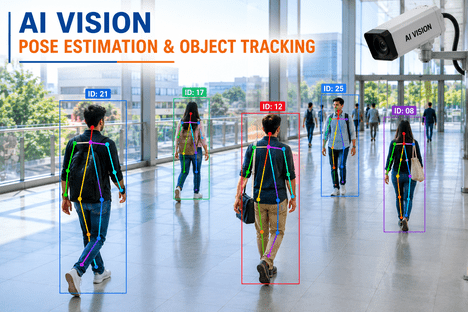
Tracking the precise location, movement, and orientation of objects, parts, and people across a production floor or facility has historically required manual time studies, fixed photoelectric sensors, or RFID tags applied to every tracked item. AI vision pose estimation and object tracking replaces these constraints with a camera-based system that continuously localizes multiple objects in real time, estimates their keypoints and orientation, and follows their movement frame by frame without any physical tagging. In 2026, as manufacturers, logistics operators, and process plants push for tighter cycle-time visibility and end-to-end traceability, vision-based tracking has moved from research labs into everyday production environments. iFactory's AI-driven EAM platform brings pose estimation and multi-object tracking directly into existing camera infrastructure, turning raw video into structured movement data that feeds cycle-time analysis, traceability records, and process optimization workflows. Operations and quality teams evaluating vision-based tracking programs are encouraged to Book a Demo with iFactory to see how a 6-week pilot can validate tracking accuracy on your own production line.
Track Every Part, Product, and Person With Vision-Based Precision
iFactory's Vision Object Detection feature combines pose estimation and multi-object tracking to deliver real-time cycle-time analysis, traceability, and process visibility from cameras you already own.
What AI Vision Pose Estimation Adds Beyond Basic Object Detection
Standard object detection draws a bounding box around an item and identifies what it is, but it stops there — it cannot describe how the object is oriented, which way a part is facing, or how a worker's joints are positioned during a task. Pose estimation goes a level deeper by predicting the precise location of keypoints associated with an object or person, building a structural map of body joints or part features rather than a flat rectangle. This distinction matters on a production floor: a bounding box can tell you a tote is present at a station, but only pose estimation can tell you whether the tote is correctly oriented on a fixture, whether an operator's hands are positioned correctly during an assembly step, or whether a part has rotated out of tolerance as it moves down a line. iFactory's Vision Object Detection feature applies deep learning–based pose models on top of multi-object tracking, so every detected item carries both an identity and a continuously updated position, orientation, and trajectory.
Beyond Bounding Boxes
Pose estimation maps specific keypoints on a part or person rather than a coarse box, enabling orientation checks, motion analysis, and fine-grained process validation that object detection alone cannot provide.
Continuous Identity
Multi-object tracking assigns a persistent ID to each detected item as it moves through the camera's field of view, even across occlusions, so the same part or person is followed consistently from entry to exit.
Real-Time Throughput
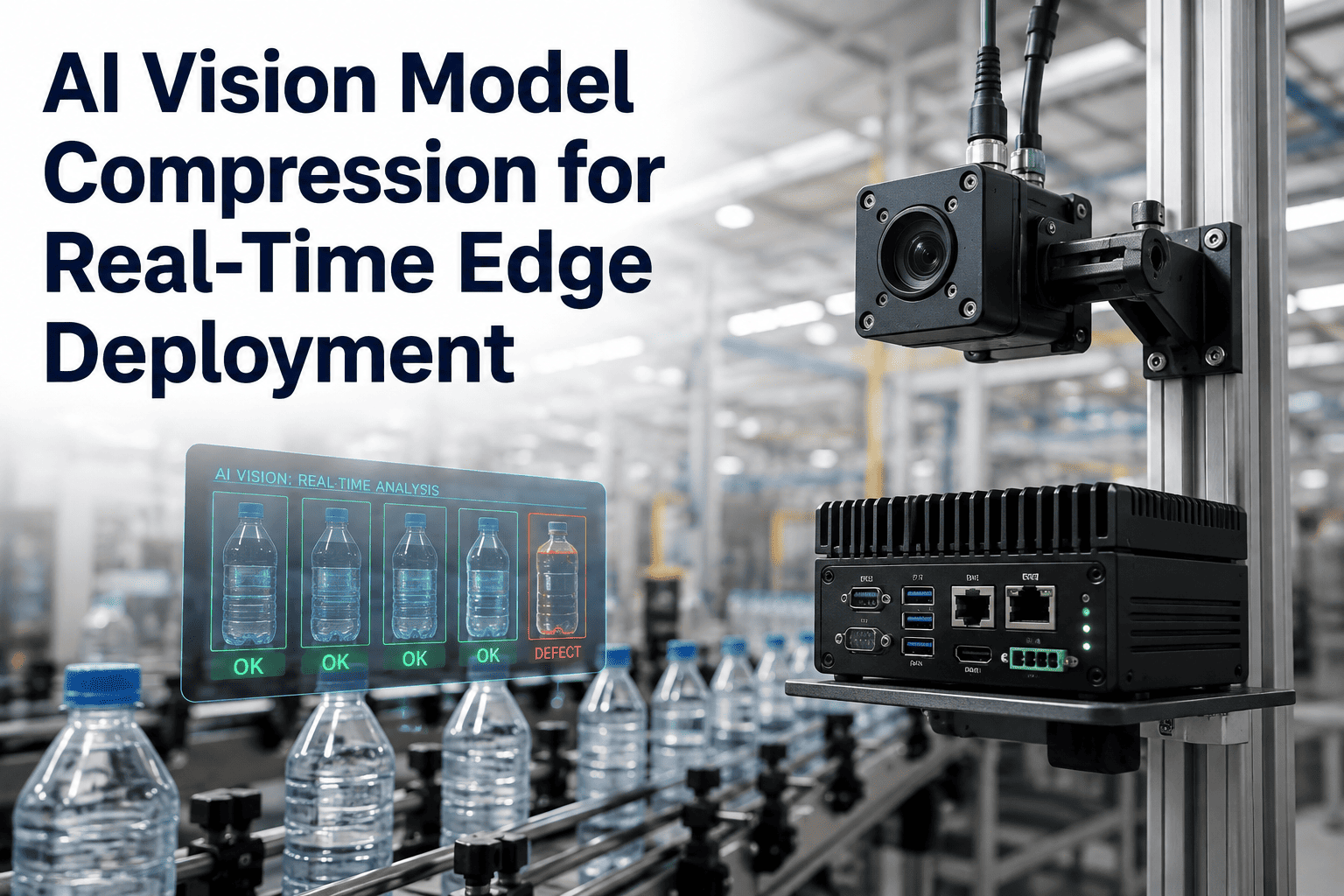
Edge-deployed detection and tracking models process video locally at low latency, allowing cycle-time and dwell-time data to be captured continuously without disrupting line speed or sending footage offsite.
No Physical Tagging
Because tracking is camera-based, parts, totes, and people do not require RFID tags, barcodes, or manual marking to be followed through a process — reducing setup cost and tracking gaps caused by missing tags.
How Pose Estimation and Object Tracking Apply Across Operations
Because pose estimation and multi-object tracking work on any tracked entity — a part, a tool, a vehicle, or a person — the same underlying technology supports a wide range of operational use cases without requiring separate hardware for each. The table below outlines how iFactory's Vision Object Detection feature applies pose estimation and tracking to common cross-industry scenarios, and what each use case delivers operationally.
| Use Case | What Is Tracked | Tracking Method | Operational Value |
|---|---|---|---|
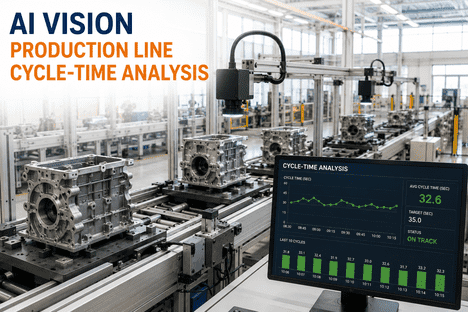
| Cycle-Time Analysis | Parts, sub-assemblies, or tools moving through a workstation | Multi-object tracking with timestamped entry/exit detection | Accurate, non-invasive cycle-time data without manual stopwatch studies |
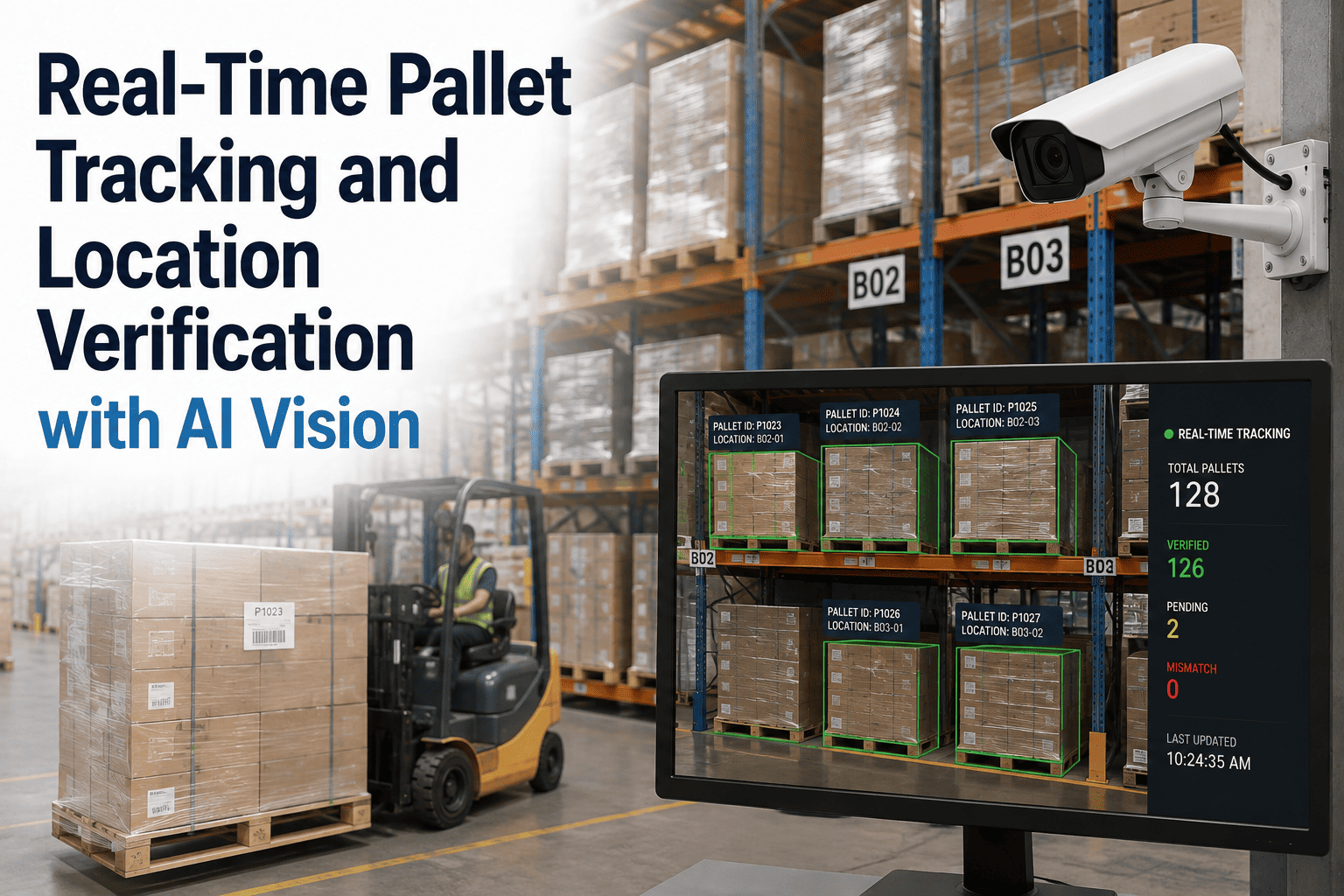
| Part & Product Traceability | Individual units, totes, or pallets across multiple stations | Persistent object ID maintained across camera handoffs | Continuous location history for every tracked unit without physical tags |
| Worker Motion & Ergonomics | Operator body keypoints during manual tasks | Human pose estimation with joint-position keypoint mapping | Identifies repetitive strain risk and process deviation in manual work |
| Process Step Verification | Part orientation and position relative to a fixture or jig | Object pose estimation comparing detected orientation to expected pose | Flags misaligned or incorrectly placed parts before the next step |
| Bottleneck & Flow Analysis | Movement patterns of multiple objects or people across a zone | Multi-object tracking aggregated into flow and dwell-time analytics | Surfaces congestion points and idle time for process optimization |
How iFactory's AI Vision Camera Powers Pose Estimation and Tracking
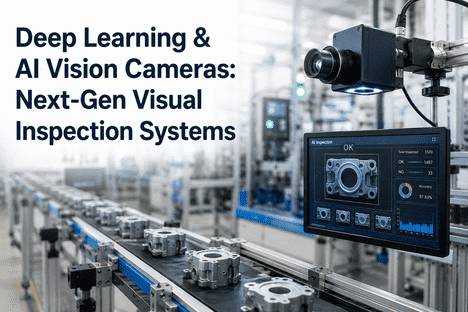
Pose estimation and object tracking only deliver value when the underlying detection pipeline is fast, accurate, and connected to the systems that act on the data. iFactory's AI Vision Camera runs deep learning detection and tracking models on-premise, processing multi-spectral camera feeds at low latency so that object identities, keypoints, and trajectories are generated continuously as items move through a facility. Rather than treating tracking as a standalone analytics exercise, iFactory's Vision Object Detection feature connects tracked positions and cycle-time events directly into the broader EAM platform — so a part that dwells too long at a station, a tool that never returns to its crib, or a worker whose movement pattern deviates from the standard process can trigger an alert or feed into a process optimization dashboard automatically. This closes the loop between raw visual tracking and the operational decisions that depend on it, without requiring a separate tracking system bolted onto existing cameras. Many teams start with a focused, time-boxed pilot to validate tracking accuracy on a specific line or zone before scaling further. To see how a 6-week pilot can be scoped for your facility, Book a Demo with the iFactory team.
AI Vision Pose Estimation & Object Tracking — Frequently Asked Questions
What is pose estimation in AI vision tracking?
Pose estimation is a computer vision task that detects and tracks the position and orientation of keypoints on an object or person, providing a more detailed understanding than a simple bounding box and enabling precise motion and orientation analysis.
How is object tracking different from object detection?
Object detection identifies and localizes items in a single frame, while object tracking maintains a persistent identity for each detected item across consecutive frames, allowing the same part, tool, or person to be followed continuously through a process.
Can AI vision tracking measure cycle time without manual stopwatch studies?
Yes — by detecting when a tracked object enters and exits a defined zone, multi-object tracking generates accurate, timestamped cycle-time data continuously and non-invasively, removing the need for manual timing methods.
Does pose estimation and object tracking require tagging parts with RFID or barcodes?
No — because tracking is camera-based, iFactory's Vision Object Detection feature follows parts, tools, and people using visual identification alone, eliminating the cost and gaps associated with physical tagging.
What does iFactory's 6-week pilot for vision tracking involve?
The pilot installs cameras on a defined line or zone, trains detection and pose models on the specific parts or movements being tracked, and validates tracking accuracy and cycle-time data against ground truth before any wider rollout.
Turn Your Camera Feeds Into Continuous Tracking and Cycle-Time Intelligence
iFactory's Vision Object Detection feature combines pose estimation and multi-object tracking to give operations, quality, and reliability teams real-time visibility into parts, people, and process flow — starting with a 6-week pilot.