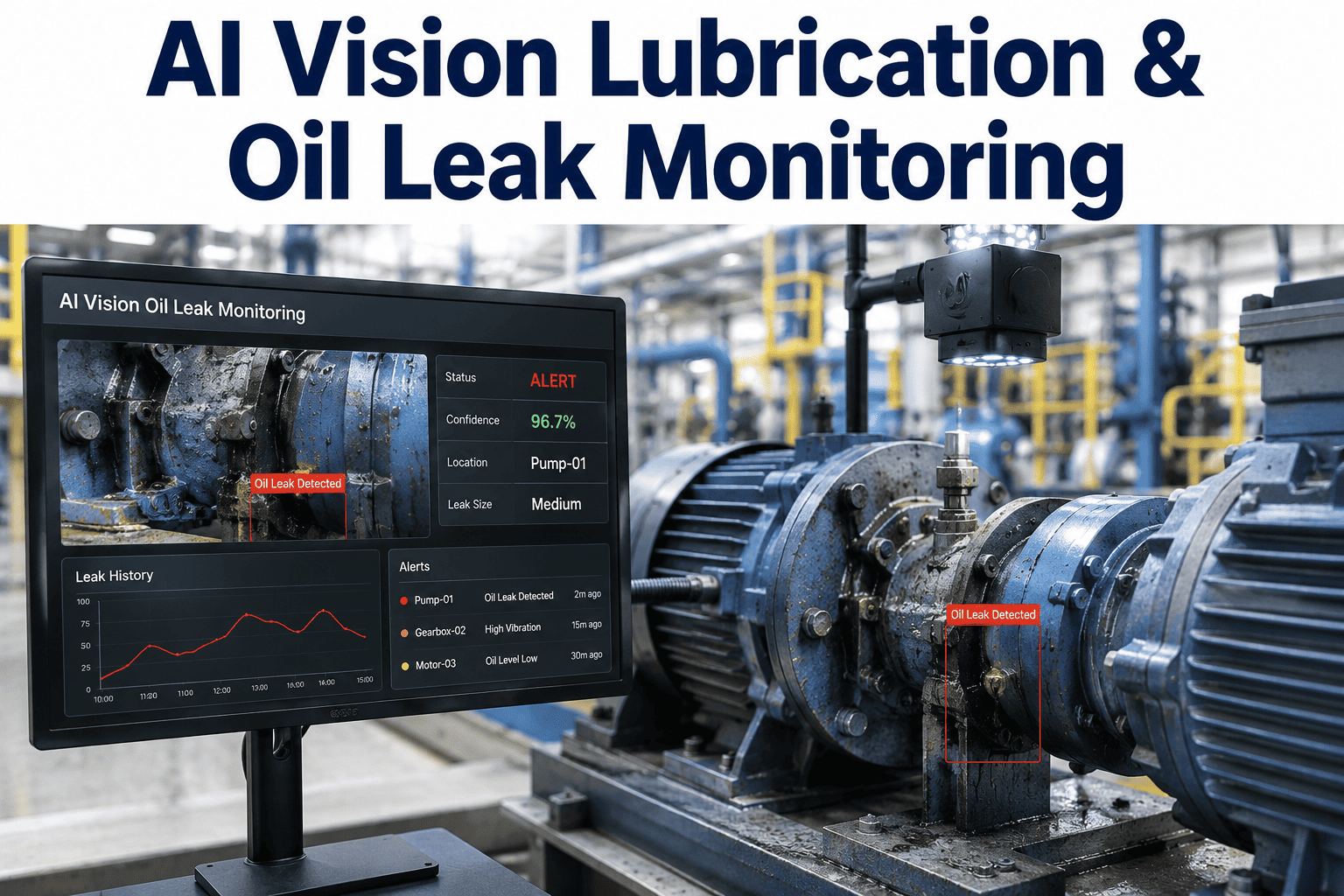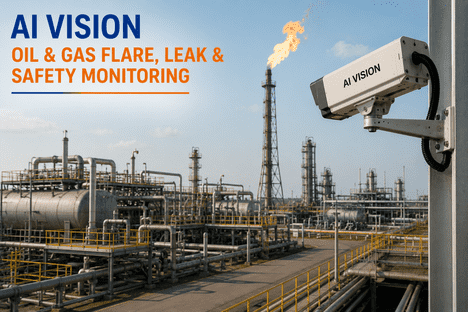
Flares, fugitive emissions, and safety violations in upstream and downstream oil and gas facilities have traditionally been monitored through periodic walkdowns, handheld optical gas imaging surveys, and single-point flame sensors — methods that report what happened during a brief inspection window and miss everything that occurs between visits. A flare tip can degrade into incomplete combustion for days before a routine check catches it, and a fugitive methane leak from a flange or valve packing can persist for weeks between quarterly leak detection and repair surveys. AI vision process and safety monitoring closes this gap by applying continuous computer vision analysis to existing camera and optical gas imaging infrastructure, detecting combustion anomalies, gas plumes, and safety violations as they emerge rather than after the fact. In 2026, with methane regulations tightening and emission reduction commitments under increasing scrutiny, this shift from periodic survey to continuous monitoring is becoming standard practice across upstream and downstream operations. iFactory's AI-driven EAM platform brings this capability to flare stacks, process equipment, and facility-wide safety zones through its Vision Anomaly Detection feature. Operations, HSE, and reliability teams evaluating continuous monitoring programs are encouraged to Book a Demo with iFactory to get a quote scoped to your facility.
Monitor Flares, Detect Leaks, and Enforce Safety Continuously
iFactory's Vision Anomaly Detection feature watches flare stacks, process equipment, and safety zones around the clock, helping reduce emissions and risk across upstream and downstream facilities.
Why Periodic Surveys Leave Gaps That AI Vision Closes
Traditional flare and leak monitoring relies on manual walkdowns and handheld optical gas imaging surveys performed on a quarterly or annual schedule, with single-point flame sensors providing the only continuous signal at the flare itself. Between those scheduled visits, a flare tip can develop incomplete combustion from an improper steam-to-gas ratio, a pilot can fail, or a flange connection can begin leaking methane and volatile organic compounds — all invisible until the next survey or until the emission is large enough to trigger a separate alarm. AI vision changes this by continuously analyzing video and optical gas imaging feeds already pointed at flares, process equipment, and facility zones, applying models trained to recognize the visual precursors to flare failure and the thermal signature of a gas plume rather than waiting for a smoke notice or an exceeded threshold. This shifts monitoring from a snapshot taken a few times a year to a continuous record of facility condition.
Flare Health, Continuously
Smoke opacity and flame structure are analyzed continuously to detect incomplete combustion, pilot failure, or flashback risk before a visible emission event occurs.
Fugitive Emission Detection
Optical gas imaging feeds are analyzed continuously for methane and VOC plumes from flanges, valves, and connections, replacing quarterly survey snapshots with around-the-clock visibility.
Safety Zone Monitoring
PPE compliance, restricted-zone intrusion, and unsafe behavior are monitored continuously across facility zones, catching violations as they occur rather than during a periodic audit.
Existing Infrastructure
Detection runs on camera and OGI infrastructure already installed at the facility, applying computer vision analysis on top of existing feeds rather than requiring new sensor networks.
What Vision Anomaly Detection Monitors Across the Facility
A continuous monitoring program typically spans several categories of risk across an upstream or downstream facility, each requiring a different detection approach. The table below outlines the main categories iFactory's Vision Anomaly Detection feature addresses. Book a Demo to see how this maps to your specific assets and facility layout.
| Monitoring Category | What Is Detected | Detection Method | Why It Matters |
|---|---|---|---|
| Flare Stack Health | Incomplete combustion, smoke opacity, pilot failure, flame-out | Continuous visual combustion analytics on flare-facing cameras | Catches the precursors to a flare failure, not just the visible smoke event |
| Fugitive Emissions | Methane and VOC plumes from flanges, valves, and seals | Continuous analysis of optical gas imaging camera feeds | Replaces quarterly LDAR survey snapshots with continuous detection |
| Thermal Anomalies | Overheating compressors, electrical panels, and pressure vessels | Infrared imaging correlated with equipment baseline temperature | Surfaces equipment degradation before a thermal failure event |
| PPE & Safety Compliance | Missing hard hats, vests, or gloves; restricted-zone intrusion | Continuous visual detection across monitored facility zones | Provides an objective, continuous record of safety compliance |
| Pipeline & Asset Condition | Corrosion, structural cracks, and leak indicators | Visual and thermal inspection of pipeline and structural assets | Supports earlier intervention on slow-developing integrity issues |
How iFactory's AI Vision Camera Connects Detection to Action
Detecting a flare anomaly or a gas plume only delivers value if it leads to a timely response, which is why iFactory's AI Vision Camera processes flare, thermal, and gas imaging feeds with on-premise edge inference and connects every detection directly into a structured response. When the system identifies a combustion anomaly, a fugitive emission, or a safety violation, it logs the event with annotated visual evidence and can automatically generate a work order for the responsible equipment or notify the relevant team, rather than leaving the finding in a static report. For emissions specifically, this continuous detection record supports the documentation that leak detection and repair programs and emissions reporting frameworks require, replacing manual log compilation with a verifiable, timestamped history tied to the asset and location involved. Many facilities begin with a focused pilot on one flare or a defined zone before expanding monitoring coverage further. Book a Demo to get a quote scoped to your upstream or downstream facility.
AI Vision Flare, Leak & Safety Monitoring — Frequently Asked Questions
How does AI vision detect flare combustion problems?
AI vision applies continuous combustion analytics to flare-facing camera footage, analyzing smoke opacity and flame structure to detect incomplete combustion, pilot failure, or flashback risk before the issue becomes a visible emission event.
Can AI vision detect methane and VOC leaks that are invisible to the eye?
Yes — by continuously analyzing optical gas imaging camera feeds, AI vision detects gas plumes that are invisible in standard light, identifying fugitive emissions from flanges, valves, and connections without requiring a manual survey to be in progress.
Does this replace existing leak detection and repair survey requirements?
Continuous AI vision monitoring complements LDAR programs by providing detection between scheduled surveys, generating a timestamped record that supports the documentation and repair-timeline tracking those programs require.
What safety violations can AI vision detect across a facility?
AI vision continuously monitors for missing PPE such as hard hats, vests, and gloves, as well as restricted-zone intrusion and other unsafe behaviors, providing an objective, continuous record of safety compliance across monitored zones.
Does AI vision monitoring require new cameras or OGI equipment?
In most cases no — iFactory's Vision Anomaly Detection feature applies computer vision models to camera and optical gas imaging infrastructure already installed at the facility, rather than requiring new hardware at every monitoring point.
Turn Flare, Emissions, and Safety Monitoring Into a Continuous Record
iFactory's Vision Anomaly Detection feature monitors flares, detects gas leaks, and enforces safety continuously across upstream and downstream facilities, helping reduce emissions and risk.