Manufacturing quality inspection systems built on computer vision face a fundamental obstacle that has nothing to do with camera resolution or model architecture. Defects in real production are statistically rare — most stable lines produce fewer than one defective part per hundred — which means the training datasets available to teams building these systems contain hundreds or thousands of good-part images for every single defect example. This imbalance cripples model accuracy long before deployment, and collecting more real defect samples is not always practical when a process runs well. Generative AI offers a different path by synthesizing realistic defect images that fill the data gap without waiting for production failures. Talk to iFactory support about building synthetic datasets for your inspection models.
Generative AI · Synthetic Data · Computer Vision Training
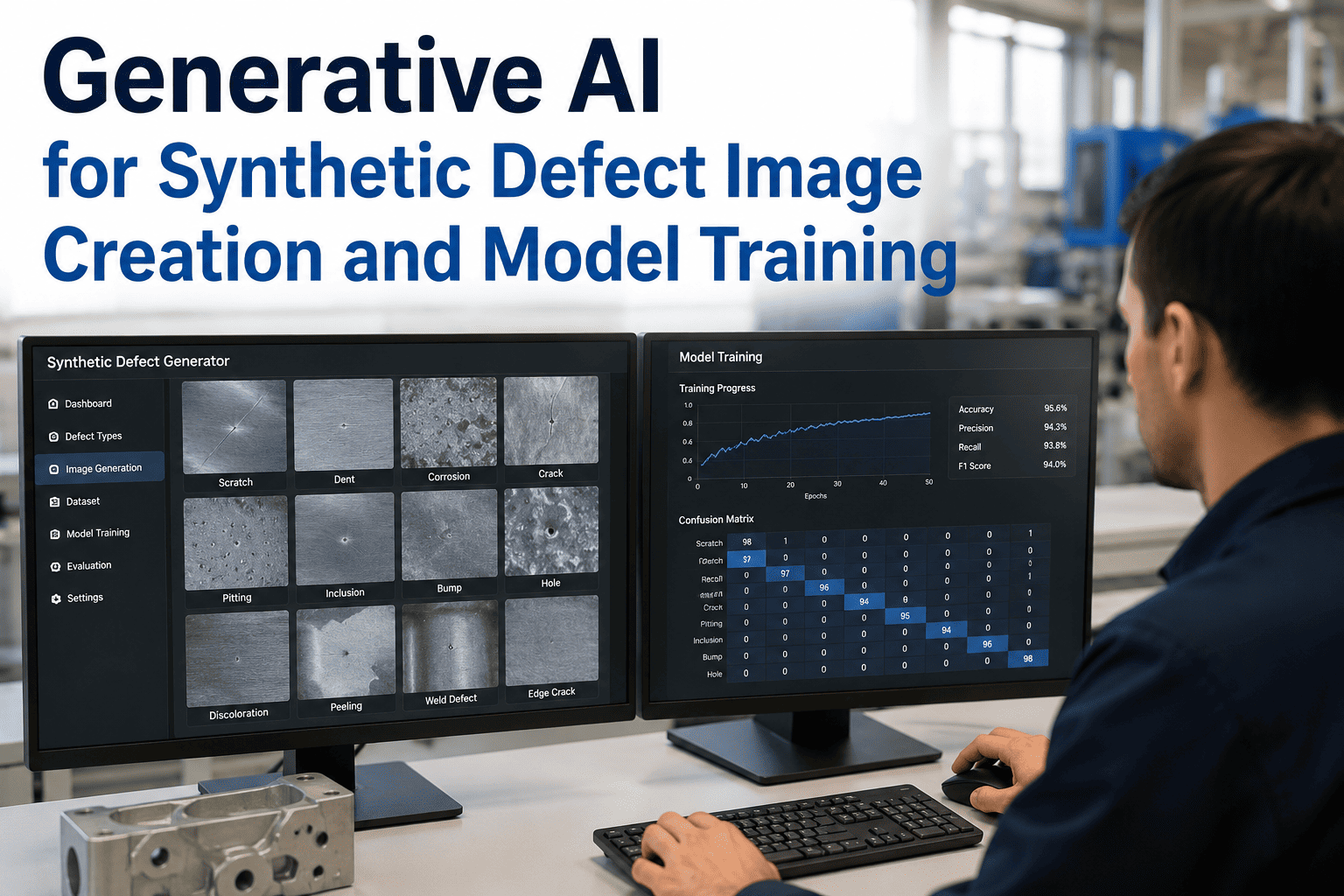
Generative AI for Synthetic Defect Image Creation and Model Training
GANs, diffusion models, and digital twin rendering now produce defect images realistic enough to train production-grade inspection models — solving the data scarcity problem that has limited computer vision deployment in manufacturing for years.
<1%
Typical defect rate in a stable manufacturing process, making real defect images inherently scarce
10,000:1
Ratio of normal to defect images in most unfiltered production camera datasets
94% vs 71%
Detection accuracy with synthetic-augmented training compared to real-only data on rare defect classes
The Data Scarcity Problem
The Defect Data Imbalance That Breaks Most Inspection Models Before Deployment
Every computer vision model for defect detection is only as good as the data it was trained on. In most manufacturing environments, the process is designed to produce good parts, and it does — which means the camera system that feeds the training pipeline captures an overwhelming majority of defect-free images. When a defect category appears fewer than fifty times in a dataset of fifty thousand images, the model learns to optimize for overall accuracy by essentially ignoring the defect class, because predicting good for everything gives a 99% success rate without ever learning what a scratch, dent, crack, or contamination actually looks like.
Collecting more real defect data means either waiting for more defects to occur naturally — which defeats the purpose of catching them early — or intentionally introducing defects into the process, which is expensive, risky, and often infeasible for high-value or safety-critical components. The result is that most teams deploy inspection models that are fundamentally undertrained on the exact conditions they were built to detect, and the failure only becomes visible when those rare defects reach downstream stations or customers.
Generation Methods
Three Generative AI Approaches to Synthetic Defect Image Production
01
GAN-Based Generation
Generative Adversarial Networks use two competing neural networks — a generator that creates images and a discriminator that evaluates them — to produce synthetic defect samples statistically indistinguishable from real defects. StyleGAN and CycleGAN architectures have been applied to manufacturing surfaces to generate scratches, porosity, corrosion patterns, and surface contamination on otherwise pristine part images. The key advantage is speed: once trained, a GAN can produce thousands of defect variations in minutes. The limitation is that GANs can sometimes introduce repeating textures or unrealistic edge patterns that a model may learn to rely on rather than learning actual defect features.
02
Diffusion Model Synthesis
Diffusion models work by gradually adding noise to a real image and then learning to reverse that process, generating new images from pure noise. When fine-tuned on a small set of real defect images, diffusion models produce highly diverse and photorealistic defect samples with fewer artifacts than GANs. The trade-off is computational cost: generating a single synthetic defect image with a diffusion model takes significantly longer than with a GAN, and the infrastructure requirements are higher. For teams that need maximum realism over maximum speed — particularly for surface defects where texture fidelity matters — diffusion models are becoming the preferred approach.
03
Digital Twin Rendering
Platforms like NVIDIA Omniverse create physically accurate 3D simulations of the manufacturing environment, including part geometry, materials, lighting conditions, and camera optics. Defects are introduced as 3D modifications to the digital twin — a scratch is a groove in the mesh, corrosion is a material property change — and the rendering engine produces images that are photorealistic by construction because they are generated through the same physics that produce real camera images. This approach has the highest setup cost but produces the most controllable and explainable synthetic data, because every parameter of every defect is known and adjustable.
Method Comparison
GANs vs Diffusion Models vs Digital Twin Rendering — Side by Side
Attribute
GANs
Diffusion Models
Digital Twin Rendering
Image Realism
High, with occasional artifacts in texture edges
Very high, fewer visible artifacts
Photorealistic by physical construction
Output Diversity
Moderate, risk of mode collapse
High, highly varied outputs per class
Very high, fully parametric control
Setup Time
Days to train on existing data
Days to fine-tune a pretrained model
Weeks to build the 3D environment
Generation Speed
Fast, thousands of images per minute
Slow, seconds per image
Medium, depends on scene complexity
Domain Gap Risk
Moderate, model may learn GAN artifacts
Low, fewer artifacts to learn from
Very low, physics-based rendering
Best Suited For
Rapid iteration and large-volume datasets
High-fidelity surface defect training
Full system validation and explainability
Field Deployment
Synthetic Data Trained an Inspection Model That Real Data Alone Could Not
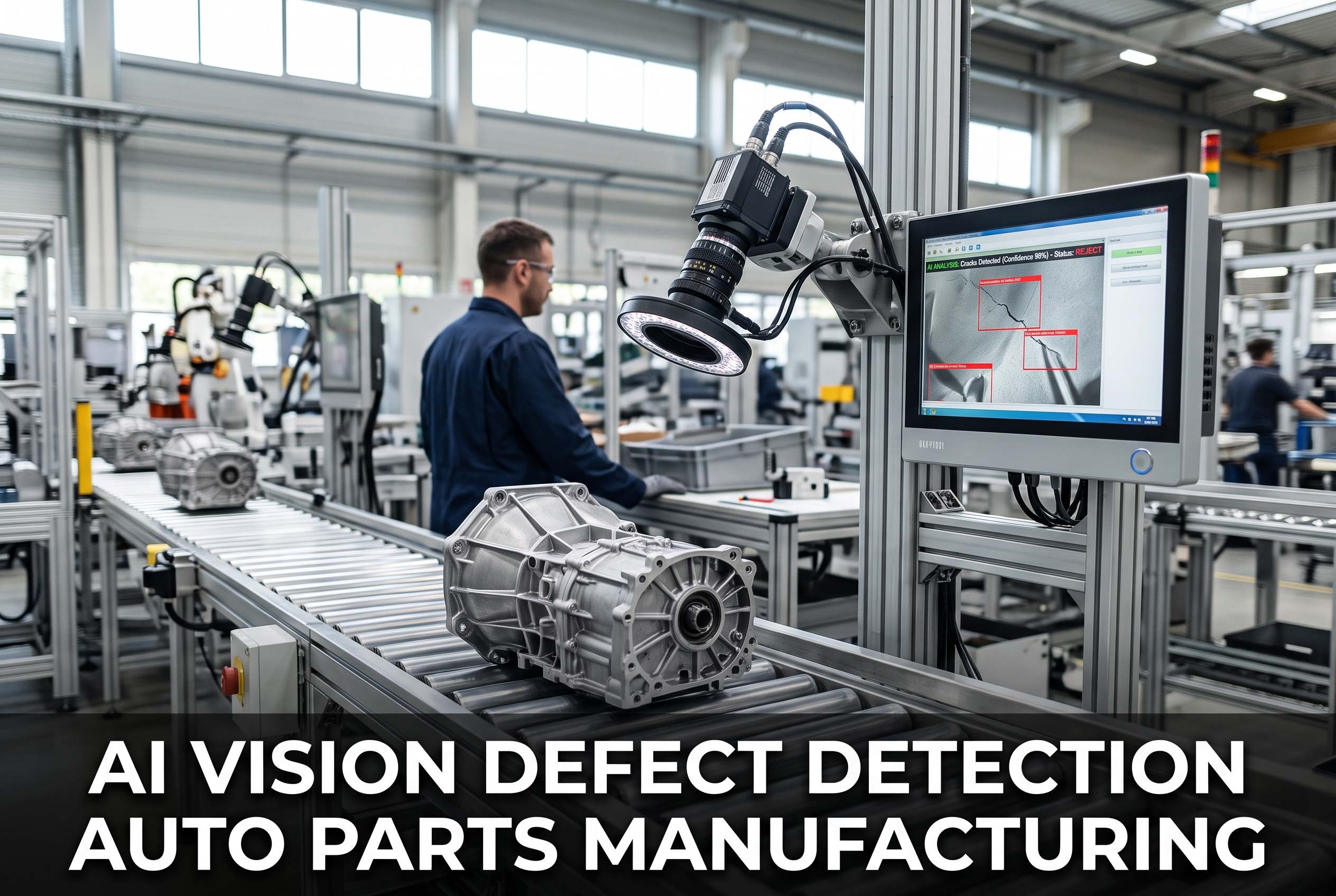
At a high-volume powertrain manufacturing facility, a Deloitte-engaged team faced a classification problem where certain surface defect categories appeared in fewer than 30 images across a production history of over 200,000 captured parts. The conventional approach — training on available real data — produced a model that achieved 71% detection accuracy on the rarest defect classes while maintaining 98% accuracy on normal parts. The team then built a synthetic data pipeline using a combination of GAN-generated defect overlays and 3D-rendered defect simulations based on NVIDIA Omniverse. The synthetic-augmented dataset expanded the rare defect classes from 30 images to over 3,000 unique examples, and the retrained model achieved 94% detection accuracy on those same rare classes without any loss in normal-part classification performance.
30
Real defect images available for the rarest class
3,000+
Synthetic defect images generated to augment training
94%
Detection accuracy after synthetic data augmentation
0%
Loss in normal-part classification accuracy
Implementation Pipeline
From Zero Defect Images to a Deployed Inspection Model in Seven Steps
1
Catalog Existing Defects
Document every known defect type with whatever real images and expert descriptions are available, even if the count per type is low.
2
Select Generation Method
Choose GANs for speed and volume, diffusion models for surface realism, or digital twin rendering for full system fidelity based on the defect types and available compute infrastructure.
3
Generate Synthetic Images
Produce a sufficient volume of synthetic defect examples for each class, varying defect size, position, orientation, and severity to match the expected production distribution.
4
Validate Realism
Have domain experts review synthetic samples alongside real samples in a blind evaluation, and use statistical tests to measure the distributional similarity between synthetic and real image features.
5
Blend With Real Data
Combine synthetic and real images into a single training set at a ratio that preserves the real data statistical properties while supplementing the underrepresented defect classes.
6
Train and Evaluate
Train the inspection model on the blended dataset and evaluate on a held-out set of real defect images that were never used in training or synthetic data generation.
7
Deploy and Monitor
Put the model into production and continuously track its performance against the real defect detection rate, updating the synthetic dataset as new defect types emerge.
Your Defect Dataset Does Not Have to Wait for Real Production Failures to Grow.
iFactory integrates synthetic defect data generation directly into the inspection model training pipeline — from GAN-based rapid augmentation to NVIDIA Omniverse digital twin rendering.
Measured Outcomes
What Teams Measure After Introducing Synthetic Defect Data Into Training
3–6 Wks
Faster Time to Production-Ready Model
Teams using synthetic data report reaching deployment-grade accuracy weeks earlier than teams waiting for sufficient real defect accumulation in production.
20–30%
Improvement in Rare Defect Detection
Detection rates on defect classes with fewer than 50 real examples typically improve by this margin when synthetic augmentation is introduced into the training pipeline.
Per Class
Independent Synthetic Dataset
Each defect category gets its own generated dataset rather than a single generic augmentation applied uniformly across all classes, preserving class-specific features.
Continuous
Dataset Evolution as New Defects Appear
As new defect types emerge in production, the synthetic generation pipeline produces training data for them immediately rather than waiting for statistical significance.
Frequently Asked Questions
Synthetic Defect Data for Manufacturing Inspection — What Teams Ask First
Can a model trained on synthetic defect images actually perform well on real production data?
Yes, but the synthetic images must be sufficiently realistic and statistically representative of the real defect distribution. Models trained exclusively on low-quality synthetic data can develop a domain gap where they learn features of the synthetic generation process rather than the actual defect characteristics. The most effective approach, validated across multiple manufacturing deployments, is to blend synthetic images with whatever real defect data exists, using the synthetic data to supplement underrepresented classes rather than replace real data entirely. Blind evaluation by domain experts and statistical distribution testing against real images are essential validation steps before synthetic data enters the training pipeline.
Contact support to discuss validation approaches for your defect types.
How long does it take to set up a synthetic defect data generation pipeline?
The timeline depends on the method selected and the complexity of the defect types. GAN-based pipelines can begin producing usable synthetic images within a few days of training on a small real dataset. Diffusion model fine-tuning requires a similar initial period but longer per-image generation time. Digital twin rendering environments, such as those built on NVIDIA Omniverse, typically require several weeks to accurately model the part geometry, materials, lighting, and camera setup before any synthetic images can be generated. For most manufacturing teams starting with GAN or diffusion approaches, the first batch of validated synthetic defect images is available within one to two weeks.
Book a Demo to see a timeline estimate for your specific use case.
What types of manufacturing defects can generative AI realistically simulate?
Surface-level defects including scratches, dents, cracks, corrosion, discoloration, and contamination are the most straightforward to simulate because they are primarily visual and can be represented as texture or geometric modifications to a base image. Structural defects like internal porosity, delamination, or subsurface cracks are more challenging because they may require non-visual sensing modalities such as X-ray or ultrasonic imaging, though synthetic data generation is being extended to these domains as well. The most successful applications to date have been in automotive surface inspection, electronics PCB defect detection, and metal casting quality control, where the defect appearance is well-characterized and visually distinct from the base material.
Contact support about defect types relevant to your process.
How does iFactory integrate synthetic defect data into an existing inspection workflow?
iFactory connects to the plant's existing camera infrastructure and image storage to access the real production data that forms the baseline for synthetic generation. The synthetic data pipeline runs alongside real data collection, generating defect augmentations that are automatically validated against the real dataset's statistical properties before being blended into model training. The trained model is deployed back through the same iFactory platform that manages the inspection system, so there is no separate toolchain or manual data transfer step required. Teams can track the performance impact of synthetic data addition directly in the iFactory dashboard, comparing detection rates before and after augmentation on the same real defect events.
Book a Demo to see the integration workflow.
Is synthetic defect data accepted in regulated manufacturing environments?
Acceptance varies by industry and regulatory body, but the trend is moving toward validation-based acceptance rather than source-based rejection. In automotive manufacturing, synthetic data is increasingly used for model development with the requirement that final model validation is performed exclusively on real production data. In aerospace and medical device manufacturing, the bar is higher and synthetic data is typically used for pre-training or augmentation with explicit documentation of the generation methodology and validation results. The key principle that regulators consistently emphasize is that the model's performance must be demonstrated on real data regardless of what data was used during training.
Contact support to discuss regulatory considerations for your industry.
Your Inspection Model Is Only as Good as the Defect Data It Learned From. Generative AI Fixes That.
Synthetic defect image generation, validation, and model training — integrated into iFactory and configured to your defect types in as little as two weeks.