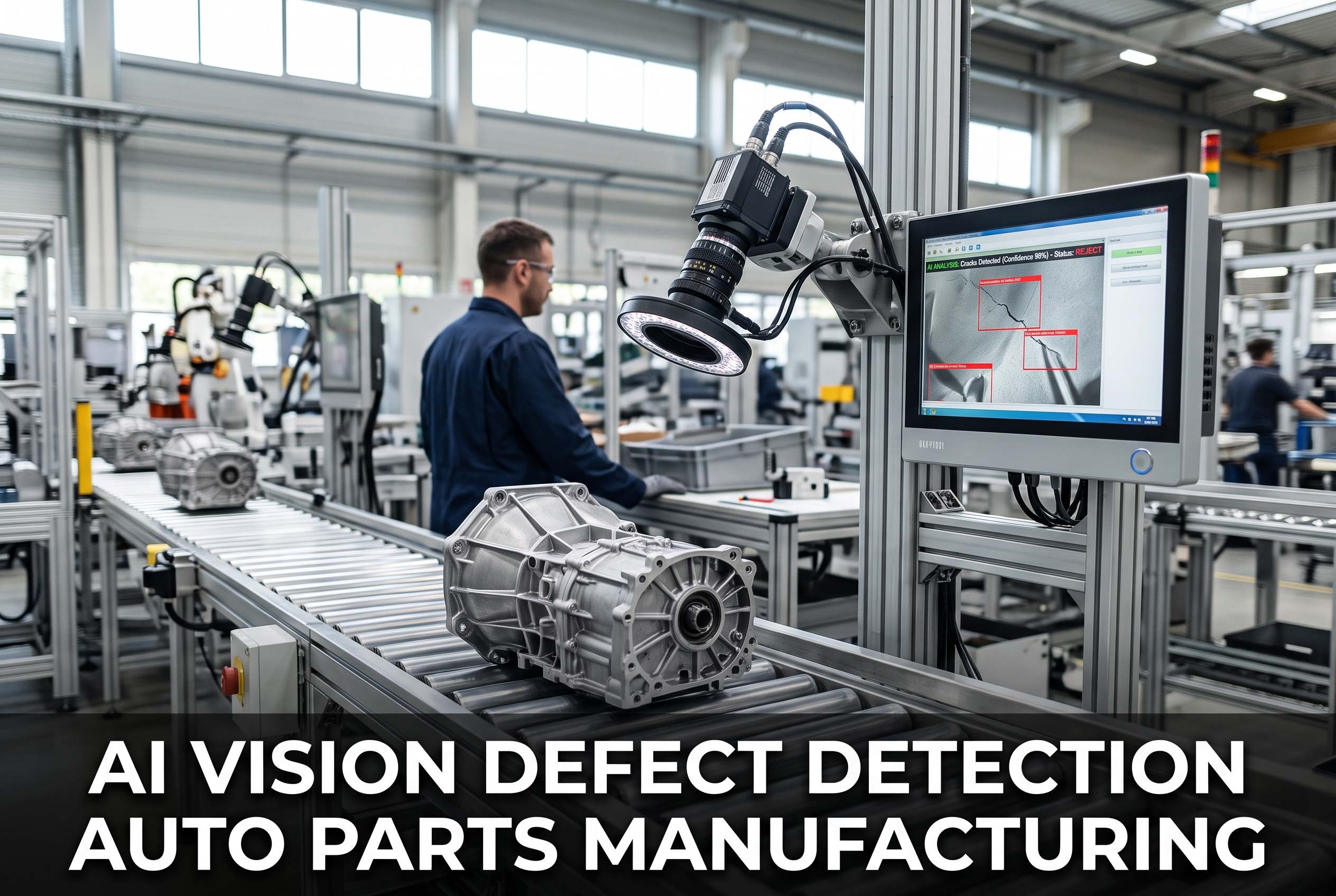
The third-shift stamping supervisor walks past the press exit conveyor and grabs a bracket every fifty parts, checking for burrs with a fingernail and glancing at the hole pattern. Two cells down, a machining center is running a 900-cycle lot while the operator watches the spindle load chart and hopes porosity doesn't show up at final gauging. By the time the defect trend surfaces in the end-of-shift scrap report, four hundred bad parts have already moved into the assembly buffer. This is the reality most auto parts plants live in when MES,and ERP part identity is bolted on after production — and it is exactly the gap that retrofit AI vision on existing press exits and machining cells is built to close.
Before and After AI Vision on the Press Exit
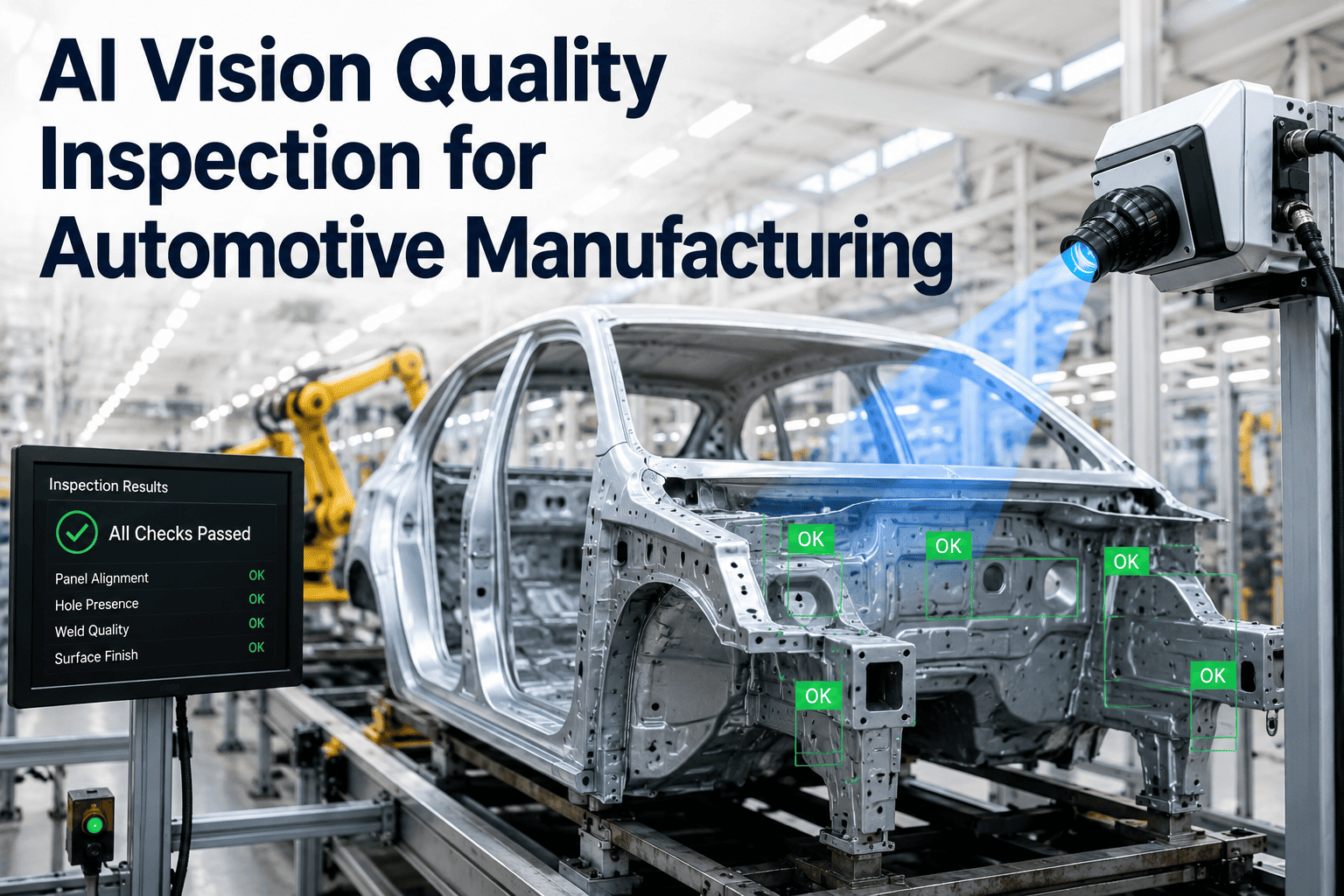
Most NAICS 3363 auto parts plants run sampling-based inspection on moving conveyors — a draw here, a gauge there, a paper traveler that loses sync with the physical part the moment it hits the transfer cart. Retrofit AI vision changes the inspection model from statistical sampling to 100% in-motion verification, and the difference shows up in PPM, scrap cost, and the time it takes to find a bad lot.
Sampling on a Moving Line
- 1 part in 50 visually checked at press exit
- Burrs, porosity, and missing ops caught at final gauging — hours late
- Paper traveler loses identity when parts hit the transfer cart
- Scrap trend surfaces in end-of-shift report, not in real time
- RCA takes days of pulling travelers and replaying operator memory
100% In-Motion Verification
- Every part imaged at line speed on the existing conveyor
- Burrs, porosity, missing ops flagged in <200ms per unit
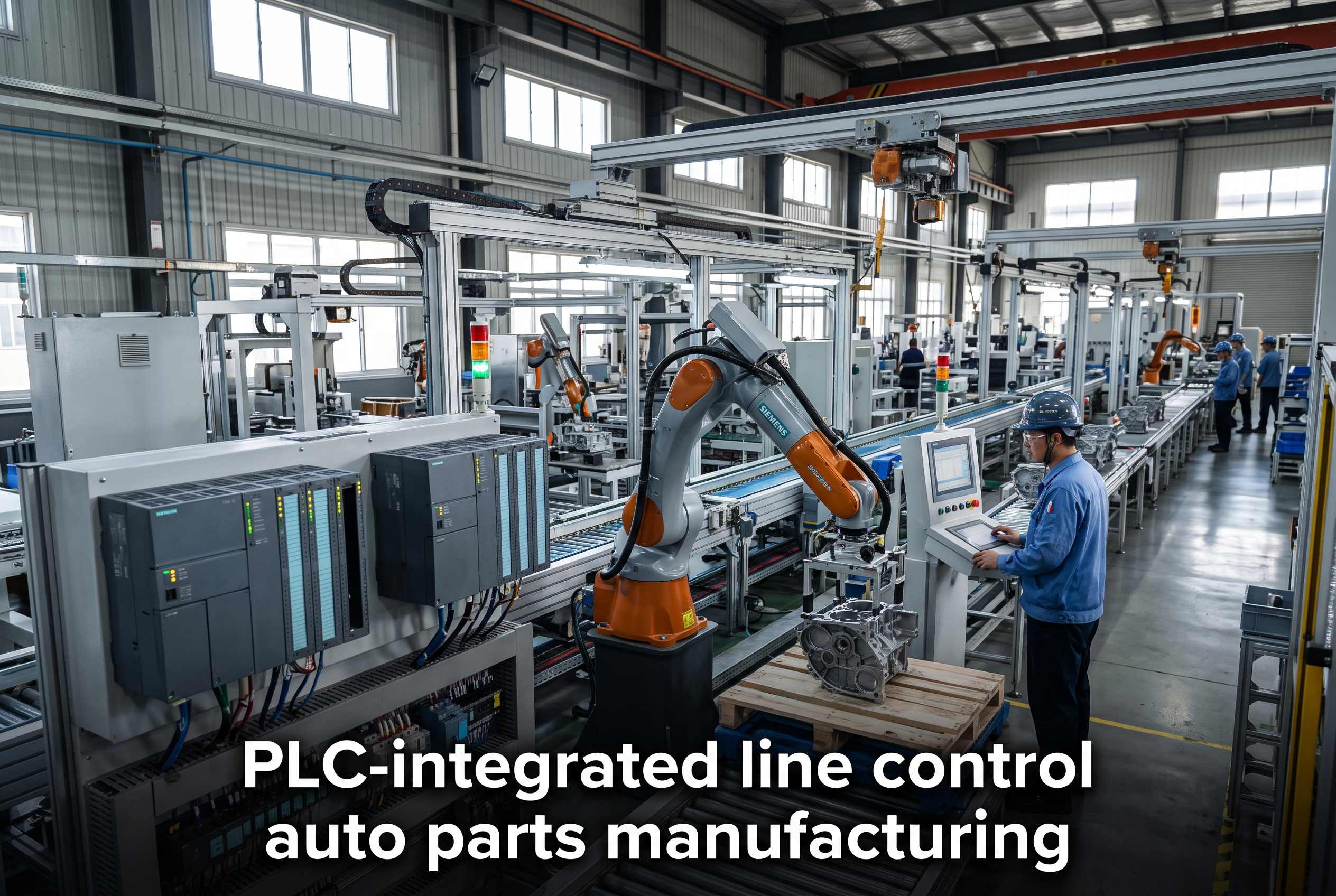
- Three-way pass / rework / scrap routing via Level 2 PLC/DCS
- MES part ID locked to ERP lot at the moment of inspection
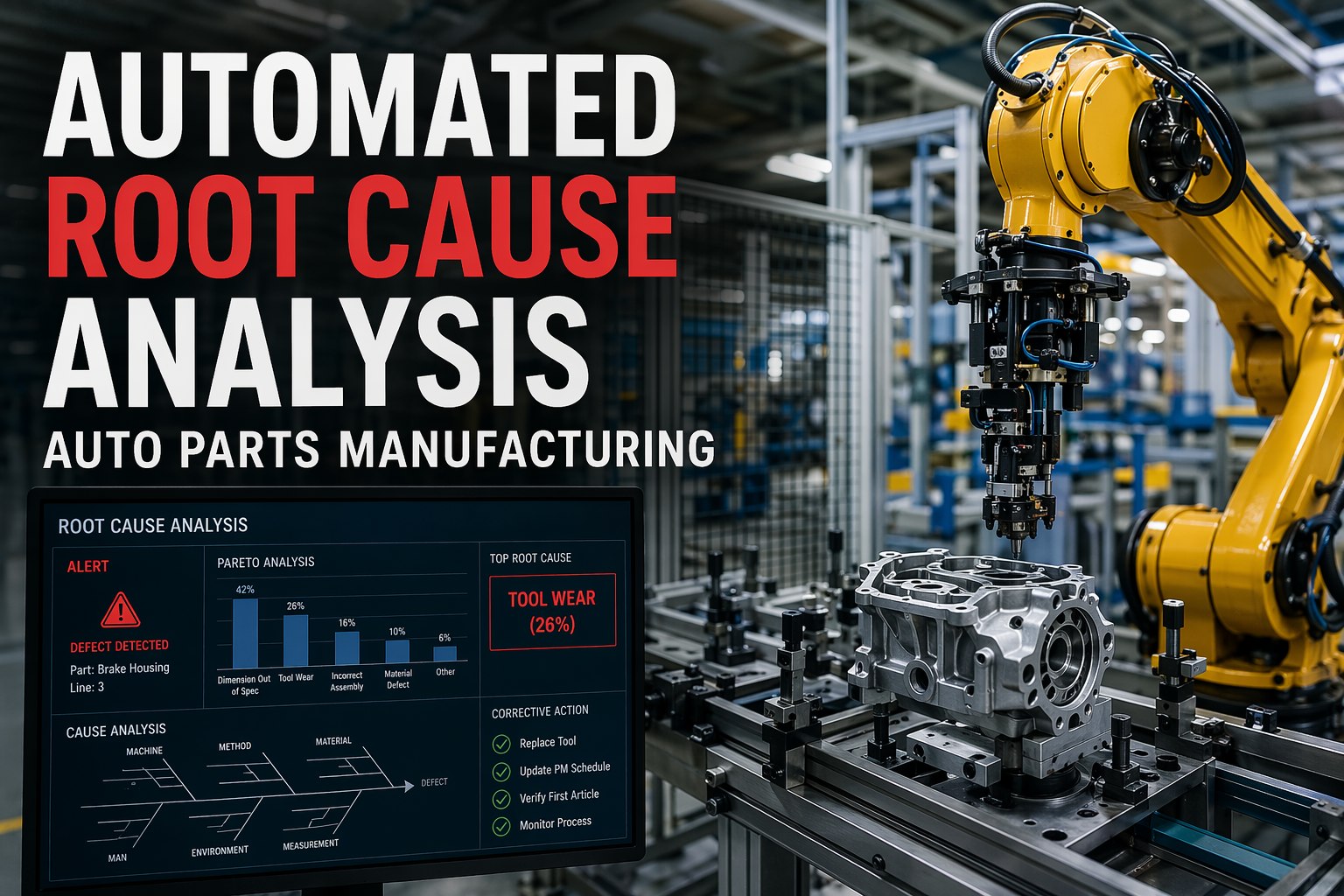
- Automated RCA from PLC tags, vision results, and process parameters
Running a stamping or machining line that still relies on sampling? Book a single-line AI vision assessment to see what 100% inspection would catch on your existing conveyor.
What 100% Inspection Actually Changes
The numbers below are the benchmarks auto parts plants measure against when they move from sampling to full in-motion AI vision. Every figure ties back to a line-floor cost — scrap dollars, warranty exposure, customer PPM chargebacks, and the labor hours burned chasing root cause after the fact.
of parts inspected in motion on existing press exits and machining conveyors — no line speed reduction
inference time per part on on-prem NVIDIA GPU — fast enough for 60+ parts per minute stamping cycles
reduction in customer-reported PPM when 100% inspection replaces 2% sampling on critical-to-quality features
of revenue is what NAICS 3363 auto parts plants typically spend on scrap and rework — vision recovers most of that
The Three-Way Routing Workflow: Pass, Rework, Scrap
The hardest part of retrofitting vision onto an existing auto parts line is not the imaging — it is the routing. A vision system that only flags "good or bad" forces operators to make the rework-or-scrap call manually, which means the decision drifts by shift and by operator. iFactory's workflow pushes that decision to the Level 2 PLC/DCS automatically, using a three-way classify-and-route model that runs the moment the part leaves the field of view.
Image at Line Speed
High-resolution industrial cameras capture the part on the existing conveyor — no stop, no slow-down, no mechanical modification to the press exit chute.
GPU Inference On-Prem
NVIDIA edge GPU runs the trained model — burr detection, porosity classification, missing-operation flagging — in under 200ms per part, fully on-prem with no cloud round-trip.
Classify Pass / Rework / Scrap
The model doesn't just say good or bad — it classifies the defect type and severity, then assigns the part to rework if recoverable or scrap if not, based on your CTQ rules.
Level 2 PLC/DCS Routing
The verdict writes to a PLC tag — diverter gate, rework bin chute, or scrap conveyor activates automatically. No operator interpretation, no manual sort, no drift between shifts.
Want this three-way routing mapped to your specific press exit or machining cell? Schedule a workflow design session with iFactory's auto parts vision team.
What AI Vision Catches on an Auto Parts Line
The defect categories below are the ones that drive the majority of scrap cost and customer PPM on NAICS 3363 lines. Each one is detectable at line speed on existing conveyors — the models are trained on your real defect images, not a generic library.
Burr Detection
Stamping burrs at trim edges, pierce-hole flash, progressive-die carryout tabs, burr direction and size classification
Porosity & Casting Defects
Surface porosity on machined aluminum and iron, shrink cavities, cold shuts, inclusion marks on critical sealing surfaces
Missing Operations
Undrilled holes, missing tap, skipped deburr station, absent groove or undercut, missing weld bead or stud
Dimensional Drift
Bend angle deviation, hole position shift, form tolerance drift across progressive-die stations, trim edge variation
Surface & Finish
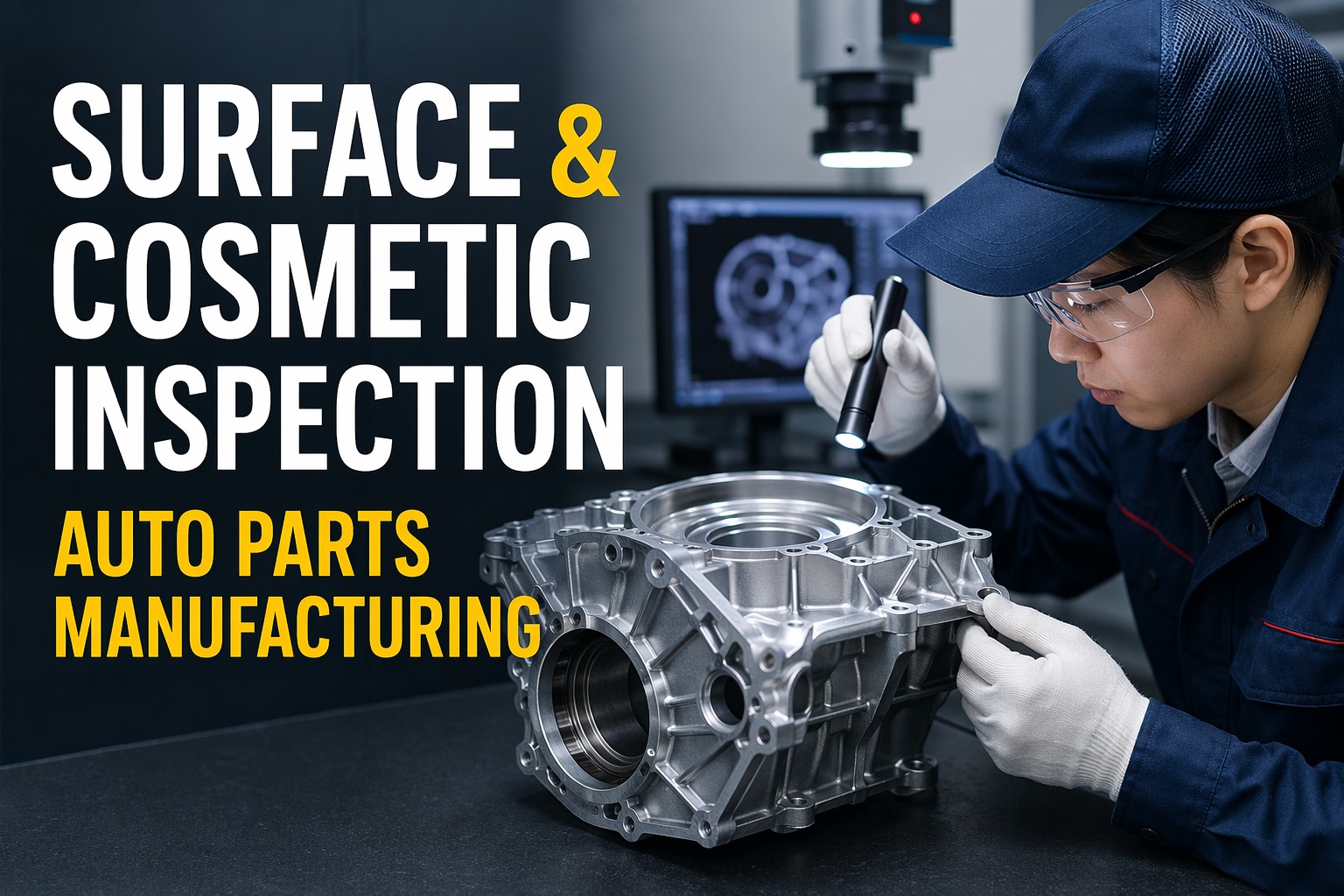
Scratches, die-lines, dents from handling, plating coverage gaps, coating thickness visual indicators, rust spots
Assembly Completeness
Missing fasteners, absent clips or retainers, incomplete sub-assembly, wrong component variant in mixed-model flow
See AI Vision on Your Line in 8 Weeks
iFactory's fixed-price 8-week single-line pilot puts on-prem NVIDIA GPU inference on your existing press exit or machining conveyor — with MES/ERP identity mapping, three-way routing, and an ROI worksheet that shows exactly what 100% inspection recovers in scrap and PPM.
MES and ERP Part Identity: Closing the Traceability Gap
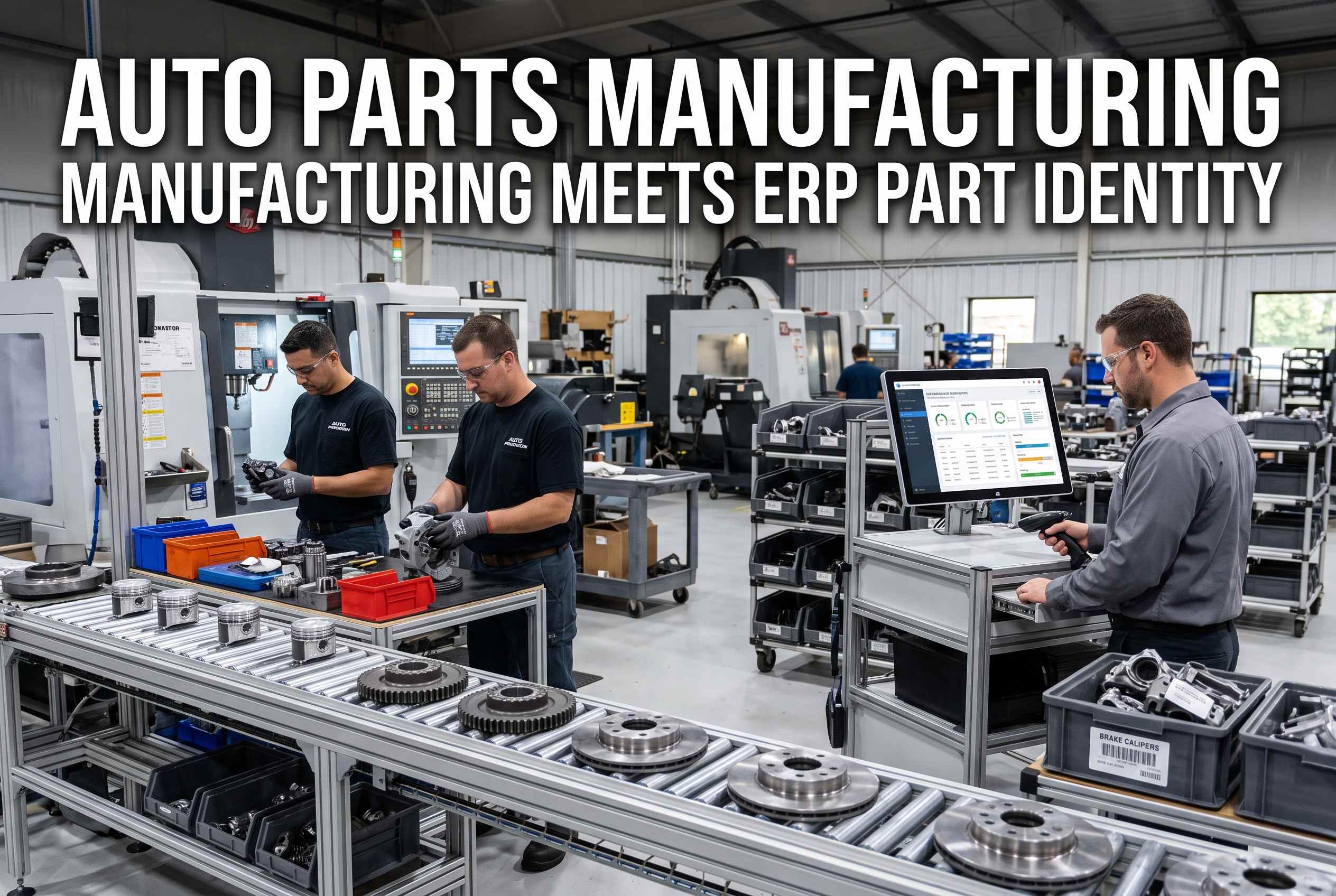
The phrase "MES and ERP part identity" sounds like an IT topic, but on the plant floor it is the difference between a recall that takes two hours and one that takes two weeks. When a vision system flags a porosity defect on a machined bracket, the question that follows immediately is: which ERP lot did this part come from, and where did the rest of that lot go? If the MES part ID and the ERP lot ID are not locked together at the moment of inspection — on the same timestamp, on the same record — that question becomes a manual archaeology project through paper travelers and spreadsheet logs.
Struggling to connect MES part IDs to ERP lots in real time? Book an identity mapping workshop to see how iFactory locks the two together at the moment of inspection. Need to talk through your current architecture first? Connect with a specialist on your MES/ERP stack.
Automated RCA: From PLC Tags to Root Cause in Minutes
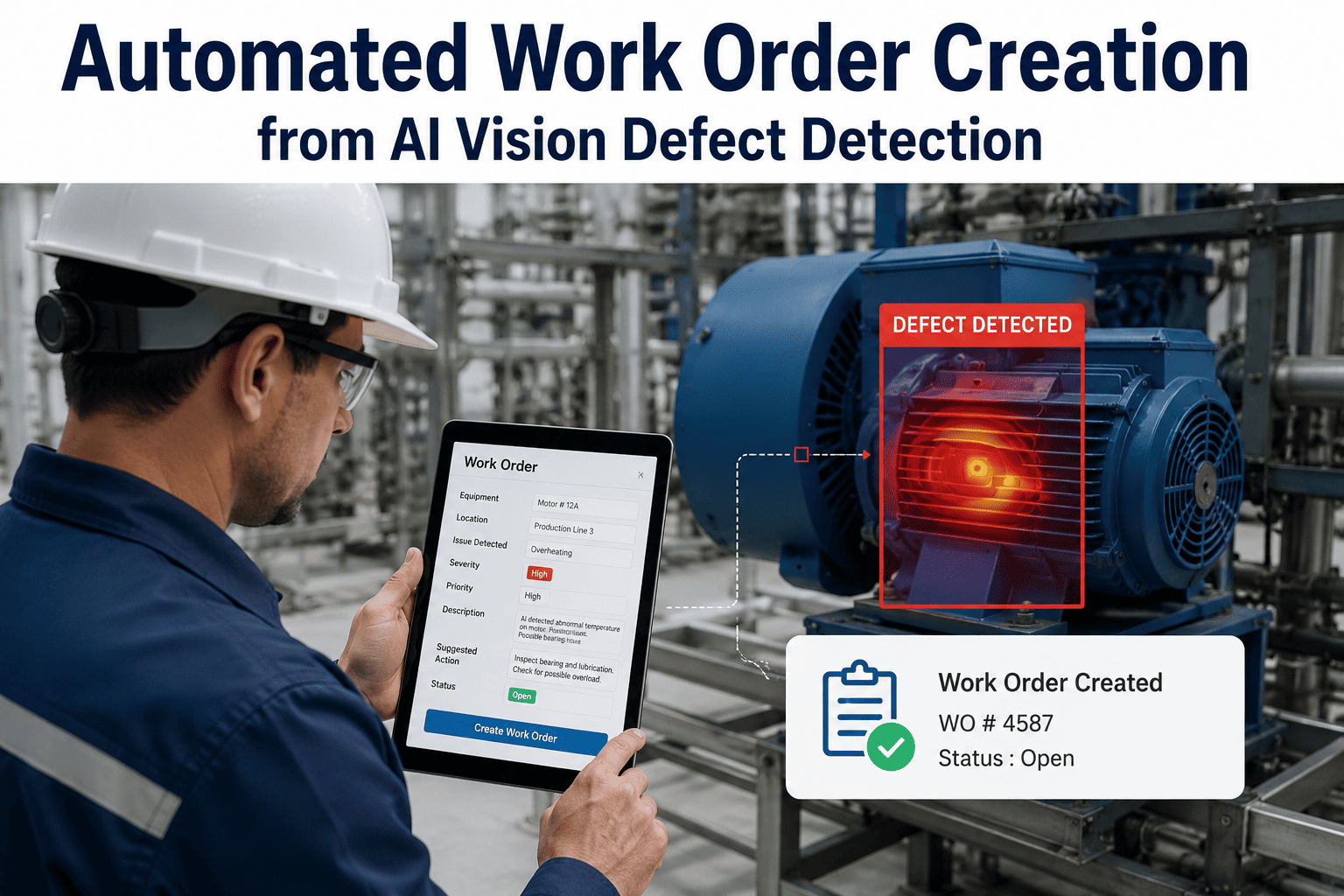
When a defect spike hits, the traditional RCA loop looks like this: a quality engineer pulls the paper travelers, walks to the press, asks the operator what changed, pulls the PLC alarm log from the HMI, opens the ERP work order, and tries to correlate timestamps across three systems that don't share a clock. That takes hours to days. Automated RCA collapses that loop by capturing PLC tags — tonnage, lubrication pressure, die temperature, cycle time — alongside every vision result, so the correlation is already done before the engineer opens the dashboard.
| RCA Step | Manual RCA (Today) | iFactory Automated RCA |
|---|---|---|
| Data Collection | Pull travelers, HMI logs, ERP work orders separately | PLC tags, vision results, and ERP lot captured on one record |
| Timestamp Sync | Three systems, three clocks — manual correlation | Single synchronized timestamp at inspection moment |
| Defect Correlation | Engineer guesses which process parameter caused the defect | Auto-correlation of tonnage, temp, and cycle vs. defect type |
| Lot Tracing | Hours of searching travelers and ERP batch records | ERP lot ID already mapped — trace completes in minutes |
| Time to Root Cause | 4 hours to 3 days depending on shift and data availability | Minutes — dashboard surfaces the drift before the shift ends |
The 8-Week Fixed-Price Single-Line Pilot
The fastest way to prove AI vision value on your auto parts line is not a year-long digital transformation program — it is a focused 8-week pilot on one press exit or machining cell, with a fixed price, a clear scope, and an ROI worksheet delivered before week one. Here is what the eight weeks look like.
Line Audit & ROI Worksheet
iFactory engineers walk the line, catalog defect types and current PPM, capture baseline scrap cost from ERP, and deliver a fixed ROI worksheet showing the break-even point before any hardware ships.
Camera & GPU Install
Industrial cameras mounted on the existing conveyor — no line modification. On-prem NVIDIA edge GPU cabinet installed and networked to the Level 2 PLC/DCS for tag capture.
Model Training & Routing
Model trained on your real defect images — burrs, porosity, missing ops. Three-way pass/rework/scrap classification tuned and wired to PLC diverter tags for automated routing.
MES/ERP Integration & Go-Live
API integration to MES and ERP locks part identity to every vision result. Automated RCA dashboard goes live. Pilot results measured against the week-one ROI worksheet.
Ready to scope a pilot on your line? Book a pilot scoping call and we'll bring the ROI worksheet to the first meeting.
Expert Perspective
We were running 2% sampling on a progressive-die line making suspension brackets and still getting 850 PPM back from the customer. The problem wasn't lazy operators — it was that a burr defect at station three didn't show up visually until the part hit final gauging two hours later, by which point the whole lot was contaminated. Once we put vision on the press exit with automatic three-way routing, we caught the burr at the source and the PPM dropped to under 200 in six weeks. The part that sold me was the PLC tag capture — when tonnage drifted on die station three, the RCA dashboard showed the correlation before the shift ended instead of three days later.
— Marcus Hale, Plant Manager, Tier-1 automotive stamping and machining facility (NAICS 3363)
PPM reduction in the first six weeks after vision went live on the press exit
line speed reduction — existing conveyor ran at full 60 parts per minute throughout
time from defect spike to confirmed root cause with automated PLC tag correlation
Put AI Vision on Your Auto Parts Line
From burr detection on stamping press exits to porosity classification on machining cells, MES and ERP part identity mapping, and automated RCA from PLC tags — iFactory delivers on-prem NVIDIA GPU vision retrofitted to your existing lines in a fixed-price 8-week pilot. Stop sampling. Start inspecting 100%.
Frequently Asked Questions
Can AI vision be retrofitted onto an existing stamping press or machining conveyor without slowing the line down?
Yes. iFactory's vision system is designed to mount on existing press exit conveyors and machining cell outfeeds with no mechanical modification and no line speed reduction. Industrial cameras image parts in motion at full line speed — typically 40 to 80 parts per minute on stamping presses — and on-prem NVIDIA GPU inference completes in under 200ms per part. The diverter or rework chute is activated through existing Level 2 PLC/DCS tags, so routing happens without operator intervention.
What does MES and ERP part identity mean in practice on the plant floor?
MES and ERP part identity means that the moment a vision system inspects a part, the MES assigns a unique part ID and maps it to the ERP lot ID and work order in real time. When a defect is found, the system knows instantly which ERP lot the part came from, where the rest of that lot is, and what scrap cost to post — all on one synchronized record. This eliminates the manual archaeology of pulling paper travelers and correlating timestamps across separate systems during a recall or customer PPM investigation.
How does the three-way pass, rework, and scrap routing actually work?
The AI model doesn't just classify a part as good or bad — it identifies the defect type and severity, then applies your critical-to-quality rules to decide whether the part is salvageable. That verdict writes to a PLC tag that controls a diverter gate, rework bin chute, or scrap conveyor. A burr that can be deburred routes to rework automatically; a porosity defect on a sealing surface routes to scrap. The decision is consistent across shifts because it is made by the model, not by operator judgment at 2 AM.
What is included in the fixed-price 8-week single-line pilot?
The pilot includes a line audit and ROI worksheet in weeks one and two, camera and on-prem NVIDIA GPU installation in weeks three and four, model training on your real defect images and three-way routing setup in weeks five and six, and MES/ERP API integration with automated RCA dashboard go-live in weeks seven and eight. The price is fixed before week one, and the ROI worksheet shows your break-even point before any hardware ships. Book a pilot scoping call to get one started on your line.
How does automated RCA use PLC tags to find root cause faster?
iFactory captures PLC tags — tonnage, die temperature, lubrication pressure, cycle time, spindle load — alongside every vision inspection result on the same timestamp. When a defect spike occurs, the RCA dashboard automatically correlates the defect type and rate against process parameter drift, so the engineer sees that burr defects spiked at the same moment die temperature dropped on station three. What used to take days of pulling HMI logs and paper travelers now surfaces in minutes on a single dashboard. Talk to a specialist about how this works with your specific PLC and DCS architecture.
The Bottom Line on MES and ERP Part Identity
Auto parts plants that keep relying on sampling inspection and paper travelers will keep eating the same scrap cost, the same customer PPM chargebacks, and the same multi-day RCA loops. Retrofitting AI vision onto existing press exits and machining conveyors — with 100% in-motion inspection, three-way pass/rework/scrap routing through Level 2 PLC/DCS, and MES and ERP part identity locked at the moment of inspection — is the fastest path to measurable PPM reduction and scrap recovery without a greenfield rebuild. The fixed-price 8-week pilot makes the risk finite and the ROI visible before you commit to a plant-wide rollout.
Ready to see it on your line? Book a single-line pilot demo or talk to an auto parts vision specialist today.