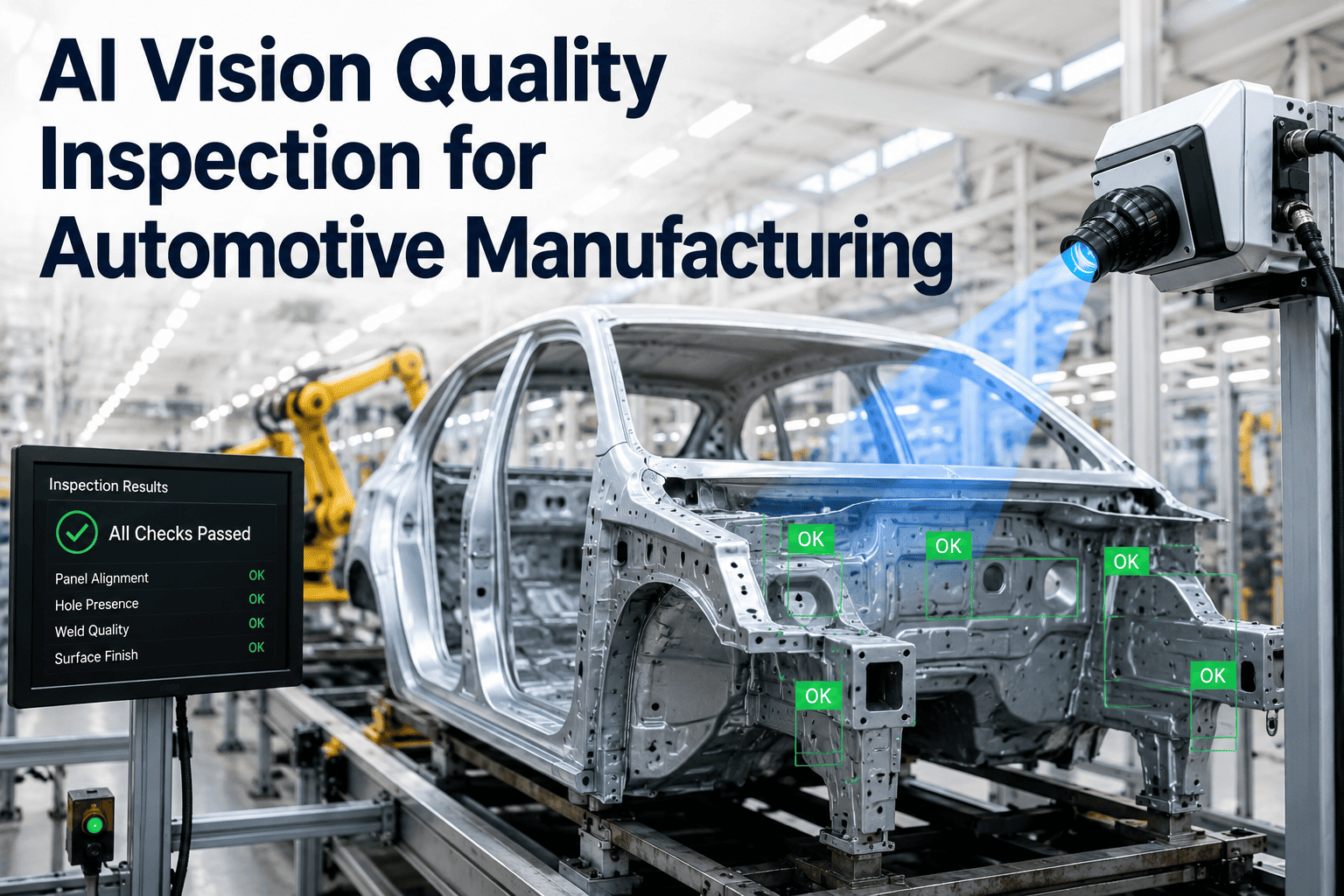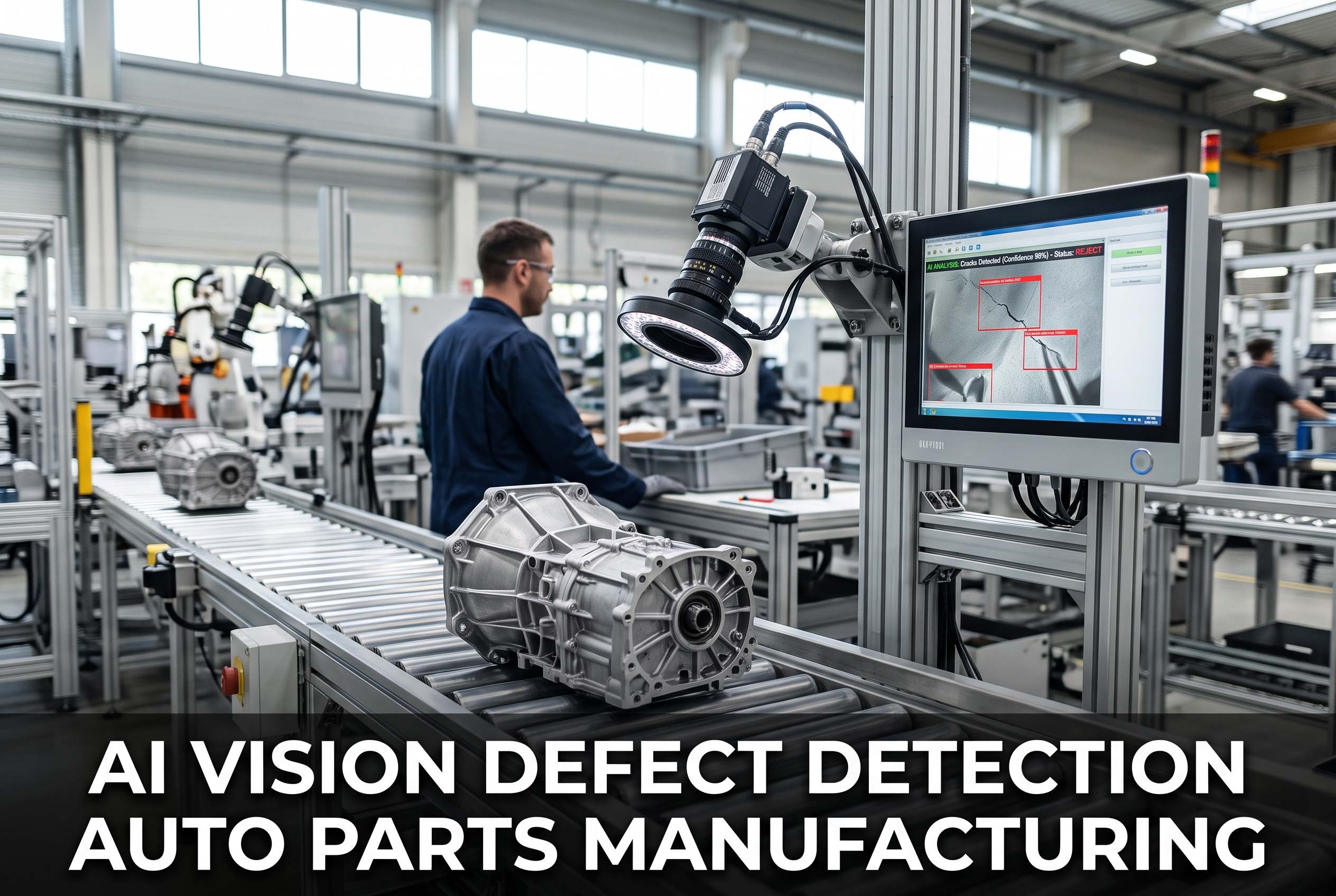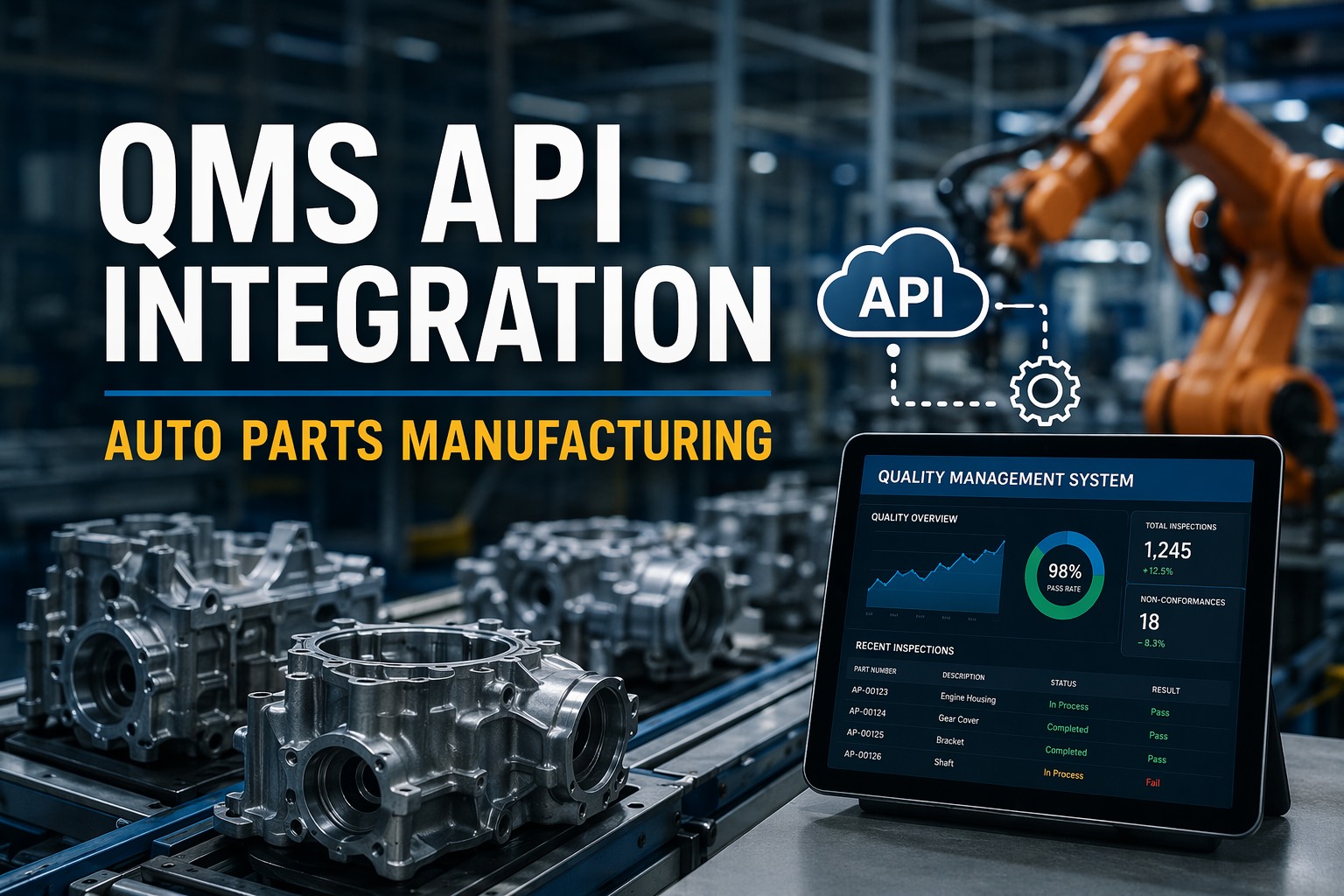
Your stamping press runs at 60 strokes a minute, and every few hundred parts a burr slips through to the machining cell — where it costs ten times more to catch than it did at the press exit. You know the pattern because you've lived it: end-of-line audit finds a defect, someone walks back through three shifts of paper traveler sheets, and by the time you've scoped the suspect population, a full pallet has already shipped. QMS API integration changes that loop entirely. Instead of logging defects into a separate quality system after the fact, AI vision systems inspect 100% of parts in motion at the press and machining cell exits, then route each part — pass, rework, or scrap — directly to the PLC tag that controls the diverter, while writing the result to your QMS, MES and ERP through a single API layer.
How a Defect Travels Through a Connected Auto Parts Line
The difference between a traditional inspection loop and an API-integrated vision loop is not just speed — it is whether the defect ever reaches the next operation at all. Below is the path a stamped bracket takes when AI vision, PLC routing, and QMS API integration are wired together on an existing line.
Press Exit
Part exits the die at line speed. Camera triggers on proximity sensor, captures image in under 40ms.
GPU Inference
On-prem NVIDIA GPU classifies burr, porosity, missing operation, or surface defect in under 200ms per part.
PLC Diverter
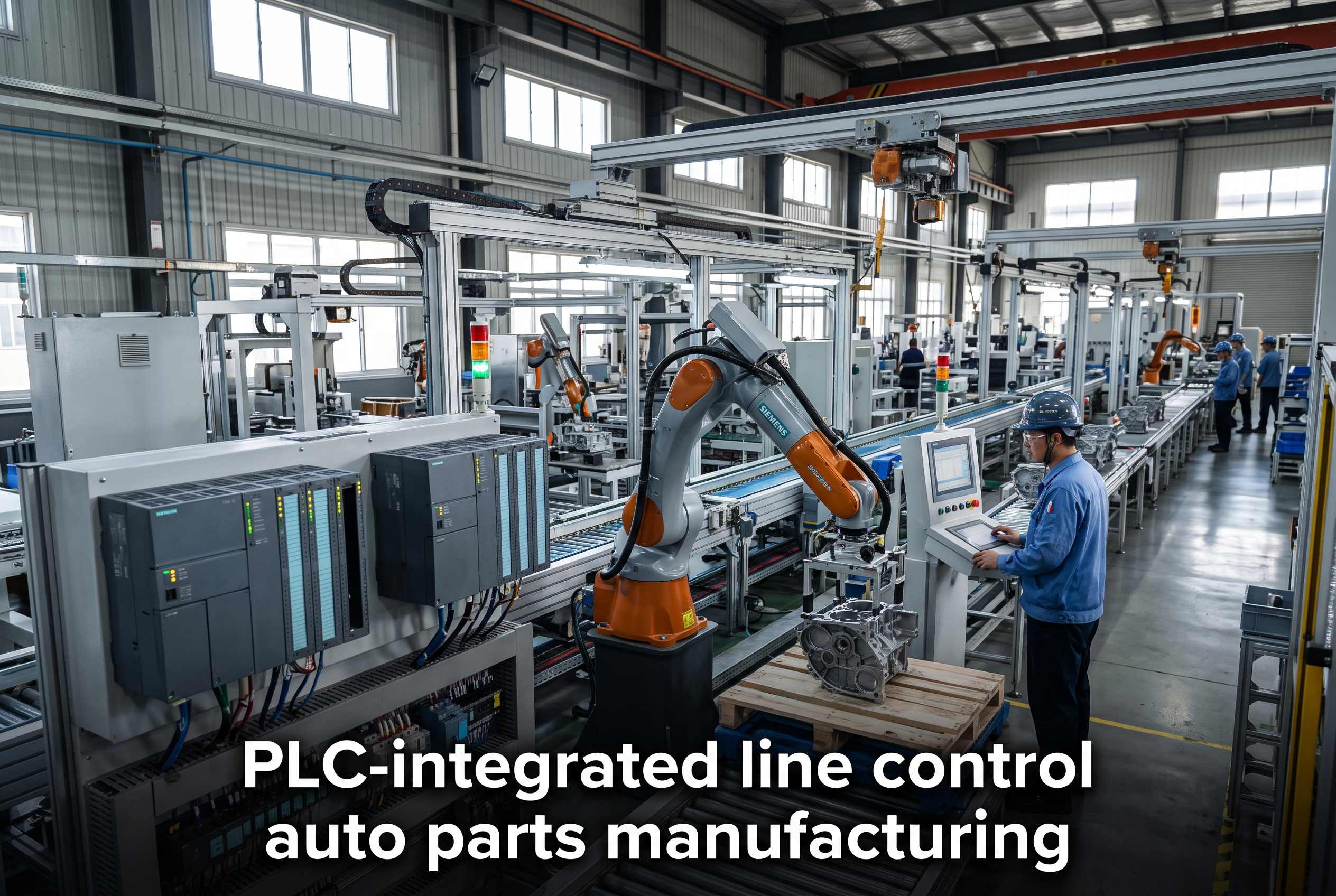
Result writes to PLC tag — pass lane, rework chute, or scrap bin. Part is physically routed before the next operation.
QMS + MES + ERP
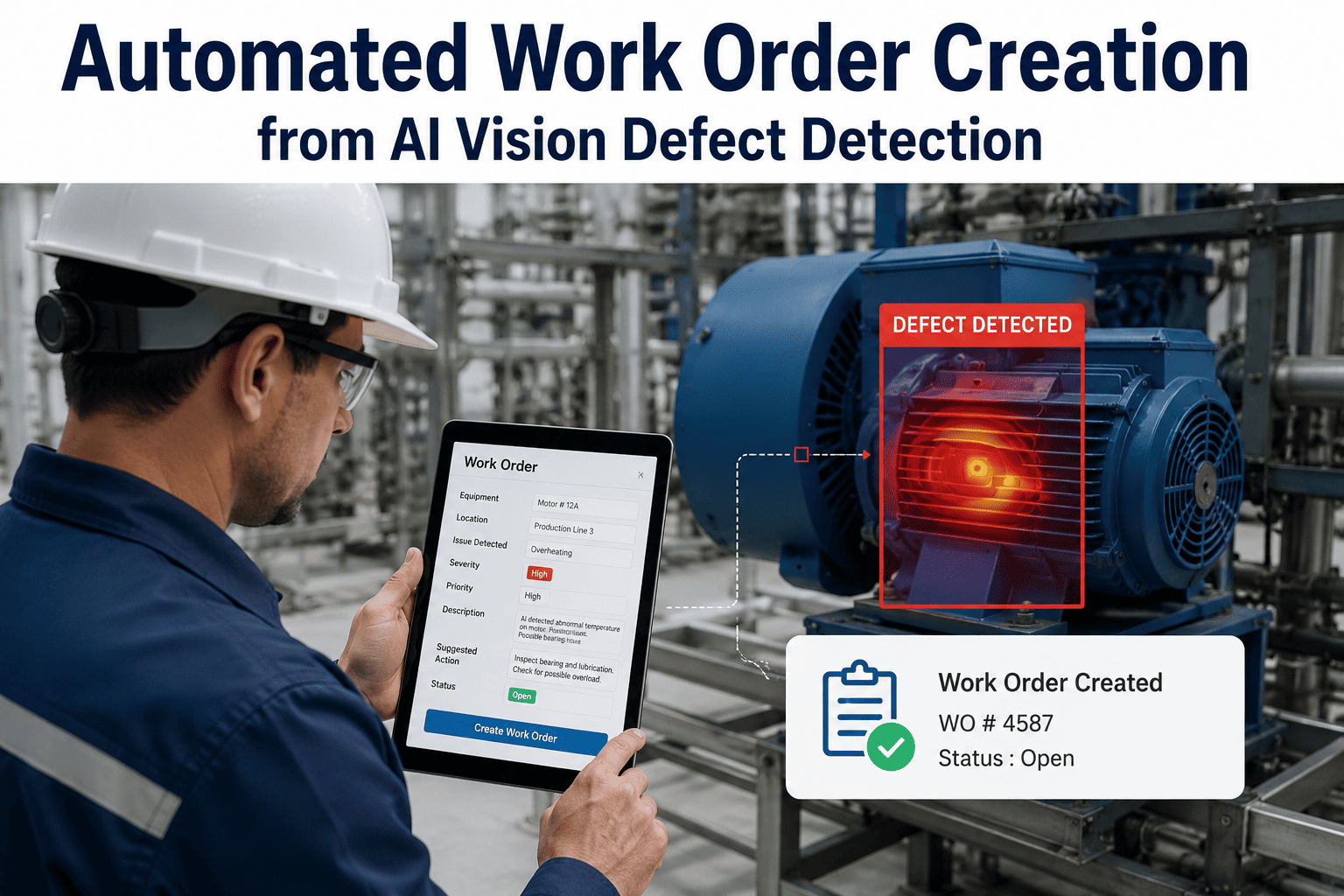
API writes defect code, image, timestamp, and lot ID to all three systems simultaneously — one source of truth, zero rekeying.
Automated RCA
Defect trend triggers automated root-cause analysis — die wear, tool pressure drift, or material lot — before a batch is lost.
Before and After QMS API Integration on a Stamping Line
The shift from sample-based inspection to 100% in-motion vision with API-driven routing is not incremental — it restructures how quality data flows through your plant. Here is what changes on a typical NAICS 3363 stamping and machining line.
- Sampling rate: 5 parts per lot, measured manually at the bench
- Defect routing: Operator flags part, sets it on a rework cart by hand
- QMS entry: Shift supervisor types defect codes into the QMS at end of shift
- Traceability: Paper traveler sheet, manually matched to press log
- RCA trigger: Customer return or end-of-line audit failure — days or weeks late
- Scrap cost visibility: Monthly variance report, no real-time line-level view
- ERP linkage: None — quality and production live in separate systems
- Inspection rate: 100% of parts, every stroke, at line speed
- Defect routing: PLC diverter routes pass, rework, or scrap automatically
- QMS entry: Defect code, image, and lot ID written via API in real time
- Traceability: Every part linked to die, coil lot, machine, and operator ID
- RCA trigger: Defect trend dashboard alerts process engineer within minutes
- Scrap cost visibility: Live scrap dollar value per line, per shift, per defect type
- ERP linkage: Work order, BOM, and routing steps share one part identity
Running a stamping or machining line with sample-based inspection and paper travelers? Book a single-line vision integration scoping call with iFactory's auto parts team.
What the Numbers Say About Auto Parts Inspection
The gap between sample-based inspection and 100% in-motion vision shows up in PPM rates, scrap dollars, and customer audit performance. These are the benchmarks that justify the integration project.
inspection coverage at line speed — vs. the 1–5% sample rate most stamping lines still rely on for SPC
reduction in customer-reported PPM when 100% vision inspection catches defects before they leave the cell
per-part inference time on on-prem NVIDIA GPU — fast enough for 60+ strokes per minute press exits
cost multiplier when a stamping defect reaches the machining cell or, worse, the customer assembly line
What AI Vision Catches on a Stamping and Machining Line
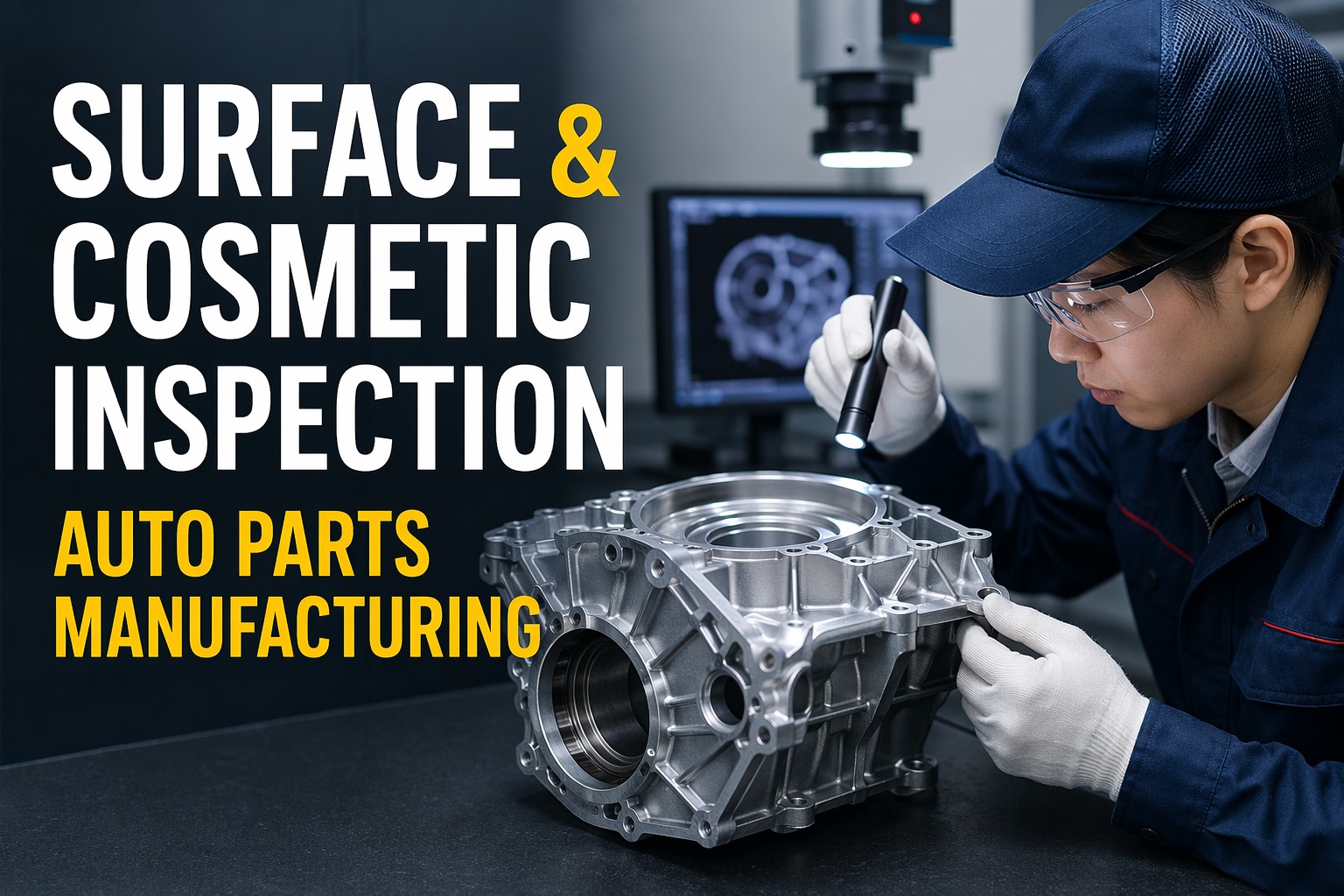
The defect categories below are the ones that drive the majority of scrap cost and customer returns in auto parts manufacturing. Each one is detectable at line speed with a trained deep-learning model — and each one writes directly to your QMS through the API layer.
Burr Detection
Die-wear burrs, punch-edge flash, shearing burrs at trim stations, progressive-die flash on tab edges
Porosity & Casting Defects
Surface porosity on cast brackets, shrinkage cavities, cold shuts, inclusion marks on machined faces
Missing Operations
Undrilled holes, missing tap, skipped deburr station, absent weld nut, missing clinch stud
Dimensional Drift
Hole position shift from die wear, bend-angle deviation, form height drift, trim-edge tolerance creep
Surface & Finish
Scratches, die marks, oil residue, coating skips, plating coverage gaps on visible surfaces
Assembly Feature Verify
Weld nut presence and orientation, clinch pin height, thread presence, insert seat depth
Retrofit AI Vision to Your Existing Stamping Line in 8 Weeks
iFactory deploys on-prem NVIDIA GPU inference, PLC tag integration for three-way pass, rework, and scrap routing, and full QMS, MES, and ERP API connectivity — on your existing press and machining lines, with no production stoppage for installation.
MES and ERP Identity Mapping: One Part, One Record
The hardest part of QMS API integration is not the vision model — it is making sure that when the camera flags a burr on a stamped bracket at 2:47 PM, the defect record lands against the correct work order, BOM line, coil lot, and die ID in every system that needs it. That requires an identity mapping layer that connects the physical part to its digital twin across MES, ERP, and QMS.
Struggling with disconnected quality data across ERP, MES, and QMS? Talk to a specialist about building a unified identity mapping layer for your auto parts lines, or book a QMS integration scoping call to see the architecture on your systems.
From Defect Detection to Automated Root Cause Analysis
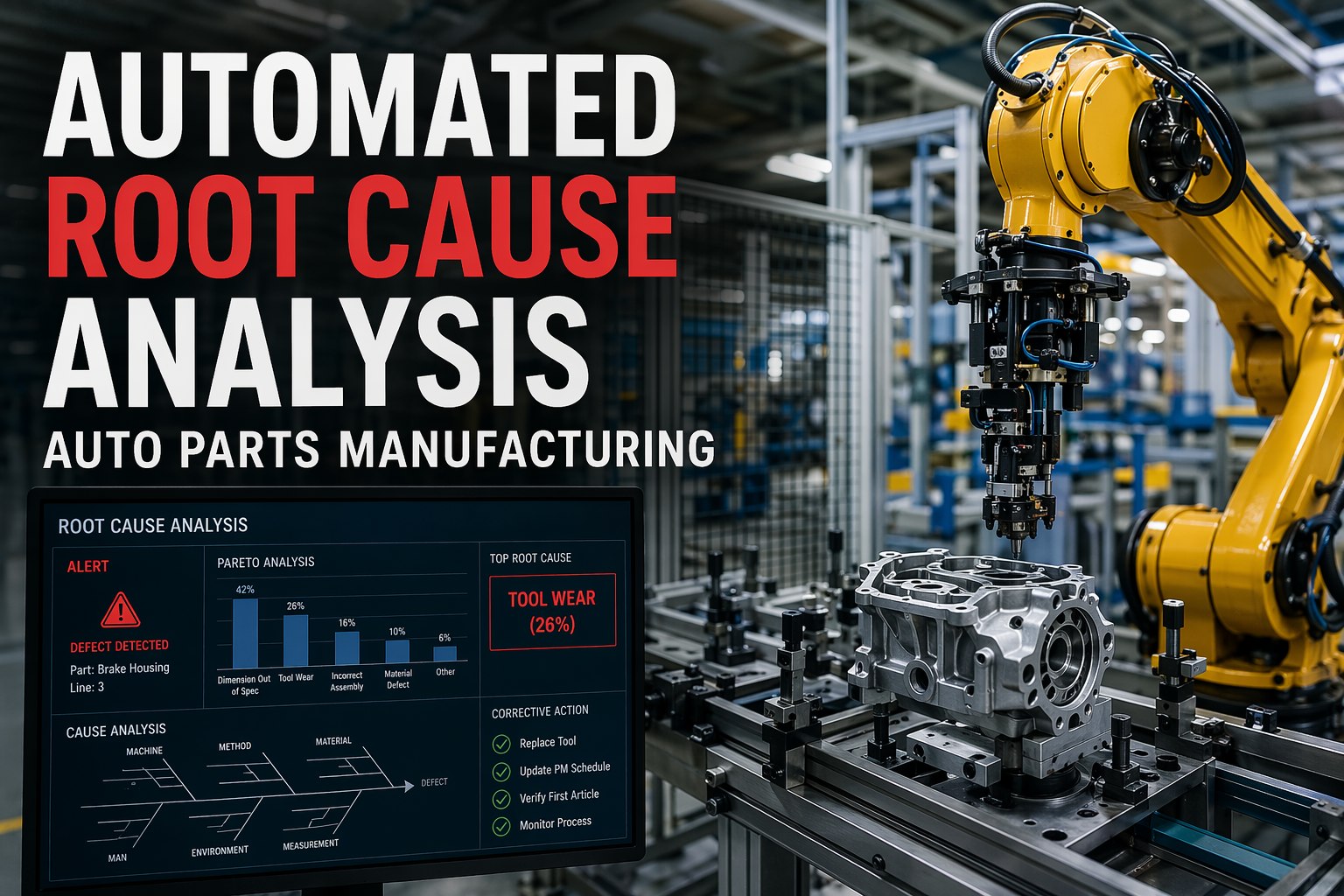
Catching the defect is step one. The real ROI of QMS API integration comes from the automated root-cause analysis loop — the system that watches defect trends, correlates them with process signals, and tells your process engineer which die, which coil lot, or which machine parameter is drifting before a full batch is lost.
PLC Tag Capture
Die pressure, tonnage, stroke count, lubrication flow, and coil lot ID captured per stroke — not per shift.
Vision Result Correlation
Each defect image and classification is time-synced to the exact PLC tag values at the moment of that stroke.
Trend Detection
Burr rate climbing on Die #7? Hole position drifting on Station 3? The system flags the trend before it crosses the scrap threshold.
Automated RCA Alert
Engineer gets a notification: "Burr rate on Die #7 up 340% since coil lot 4421 loaded — investigate die edge or material gauge."
CAPA Loop Closure
Corrective action logged in QMS, PM work order auto-created in CMMS, result verified on the next coil lot — closed loop, no spreadsheets.
Want to see how automated RCA would work on your specific defect patterns? Book an RCA workflow walkthrough with iFactory's process engineering team.
The 8-Week Fixed-Price Single-Line Pilot
The fastest way to prove QMS API integration on your floor is a fixed-price, single-line pilot — one press or machining cell, one defect category, full PLC routing and QMS API connectivity, live in eight weeks. Here is what the timeline looks like.
Line Assessment & Tag Mapping
Walk the line, map PLC tags, identify diverter control points, catalog defect types from your scrap history.
Image Collection
Install temporary cameras, capture 5,000–10,000 images of known good and defective parts across all shift conditions.
Model Training
Train and validate deep-learning model on your defect library — burr, porosity, missing operation — against your acceptance criteria.
GPU & Vision Install
Mount production cameras, deploy on-prem NVIDIA GPU inference server, wire into PLC — installed during planned downtime.
PLC Diverter Integration
Wire pass, rework, and scrap routing to PLC tags. Run shadow mode — system inspects and routes but results are verified by operator.
QMS, MES & ERP API
Connect identity mapping layer. Defect records, images, and lot IDs begin writing to all three systems in real time.
Go Live & ROI Baseline
Full autonomous routing. Baseline PPM, scrap cost, and defect detection rate. Deliver ROI worksheet against your actuals.
What the ROI Worksheet Measures
At the end of the 8-week pilot, you get an ROI worksheet built from your actual line data — not industry averages. These are the metrics it tracks and the improvement ranges you should expect to see.
62% reduction — defects caught and routed before leaving the cell
55% reduction — earlier catch, less value-add lost to downstream scrap
75% reduction — 100% inspection means no defect reaches the customer
Automated trend detection and PLC tag correlation replace manual shift-log digging
Want this ROI worksheet populated with your line's actuals? Book a fixed-price pilot scoping call and we'll build the baseline before you commit.
Expert Perspective
We were running five-part SPC samples off a 60-stroke-per-minute press and honestly believing we had quality under control. The first week the vision system went live, it caught 340 burr defects on Die #7 that our sampling plan had never seen — because the sample happened to land on good strokes. The thing that sold me on the API integration was watching a burr defect write itself into the QMS, trigger a PM work order in the CMMS for die refurbishment, and alert my process engineer — all before the next coil even loaded. That used to take us three shifts of paper-trail digging.
— Plant Manager, Tier 1 automotive stamping and machining supplier, Ohio
previously undetected burr defects caught in week one of pilot on a single die
from line assessment to full autonomous routing and QMS API go-live
from defect detection to automated RCA alert vs. 3–5 days of manual investigation
Deploy QMS API Integration on Your Auto Parts Line
iFactory's fixed-price 8-week pilot puts AI vision inspection, three-way PLC routing, and full QMS, MES, and ERP API connectivity on one of your existing stamping or machining lines — with an ROI worksheet built from your actuals at the end. No greenfield build, no production stoppage, no multi-year transformation project.
Frequently Asked Questions
Can AI vision inspect parts at full stamping press speed without slowing the line?
Yes. On-prem NVIDIA GPU inference processes each image in under 200ms, which is fast enough for stamping presses running at 60 strokes per minute or higher. The camera triggers on a proximity sensor as the part exits the die, captures the image, and the model classifies it before the part reaches the diverter — typically 1–2 seconds downstream. The line never slows down, and the PLC routing happens in real time based on the vision result.
How does the QMS API integration write defect data to my existing quality system?
iFactory builds a REST or OPC UA API layer that connects the vision system's defect output to your QMS, MES, and ERP simultaneously. When the camera flags a defect, the API writes the defect code, classification, timestamp, part image, lot ID, work order number, and machine ID to each system in the format it expects. No rekeying, no end-of-shift data entry. The integration works with standard QMS platforms and can be customized to proprietary systems.
What does the three-way pass, rework, and scrap routing actually control on the line?
The vision result writes to a specific PLC tag that controls a physical diverter mechanism — typically a pneumatic pusher, gate, or conveyor arm — at the exit of the inspection station. Pass parts continue down the main line to the next operation. Rwork parts are diverted to a rework chute or area. Scrap parts are diverted to a scrap bin and automatically removed from the work order count in the ERP. The PLC tag write happens in under 50ms, so routing is instantaneous.
How long does it take to train the AI model on our specific defect types?
Model training typically takes two to three weeks as part of the 8-week pilot. The first week is image collection — we install temporary cameras and capture 5,000 to 10,000 images of both good parts and known defects across all shift conditions, lighting variations, and material lots. The second and third weeks are model training and validation against your acceptance criteria. The model continues to learn in production through a human-in-the-loop feedback process where operators confirm or correct edge cases.
What does the fixed-price 8-week pilot cost and what do we get at the end?
The pilot is a fixed-price engagement scoped to one line and one primary defect category — typically burr detection on a stamping press or missing-operation detection on a machining cell. You get production cameras, an on-prem NVIDIA GPU inference server, PLC diverter integration for three-way routing, QMS and MES and ERP API connectivity, a trained and validated model, and an ROI worksheet populated with your actual PPM, scrap cost, and detection rate data. Book a pilot scoping call to get a fixed-price quote for your specific line, or talk to a specialist about whether your line is a fit.
What QMS API Integration Means for Your Auto Parts Plant
QMS API integration is not a software project — it is a rethinking of how defect data flows through your plant. Instead of quality living in a separate system that gets updated after the shift ends, every inspection result writes itself to QMS, MES, and ERP in real time, routes the part physically through the PLC, and feeds an automated root-cause loop that catches die wear and process drift before they cost you a batch. The plants that wire this loop together on their existing stamping and machining lines are the ones cutting PPM rates by 40–60%, slashing scrap cost, and walking into customer audits with 100% inspection coverage behind every shipment. The 8-week fixed-price pilot is the lowest-risk way to prove it on your floor — one line, one defect category, one ROI worksheet built from your actuals.
Ready to see it on your line? Book a fixed-price pilot scoping call with iFactory's auto parts team today.