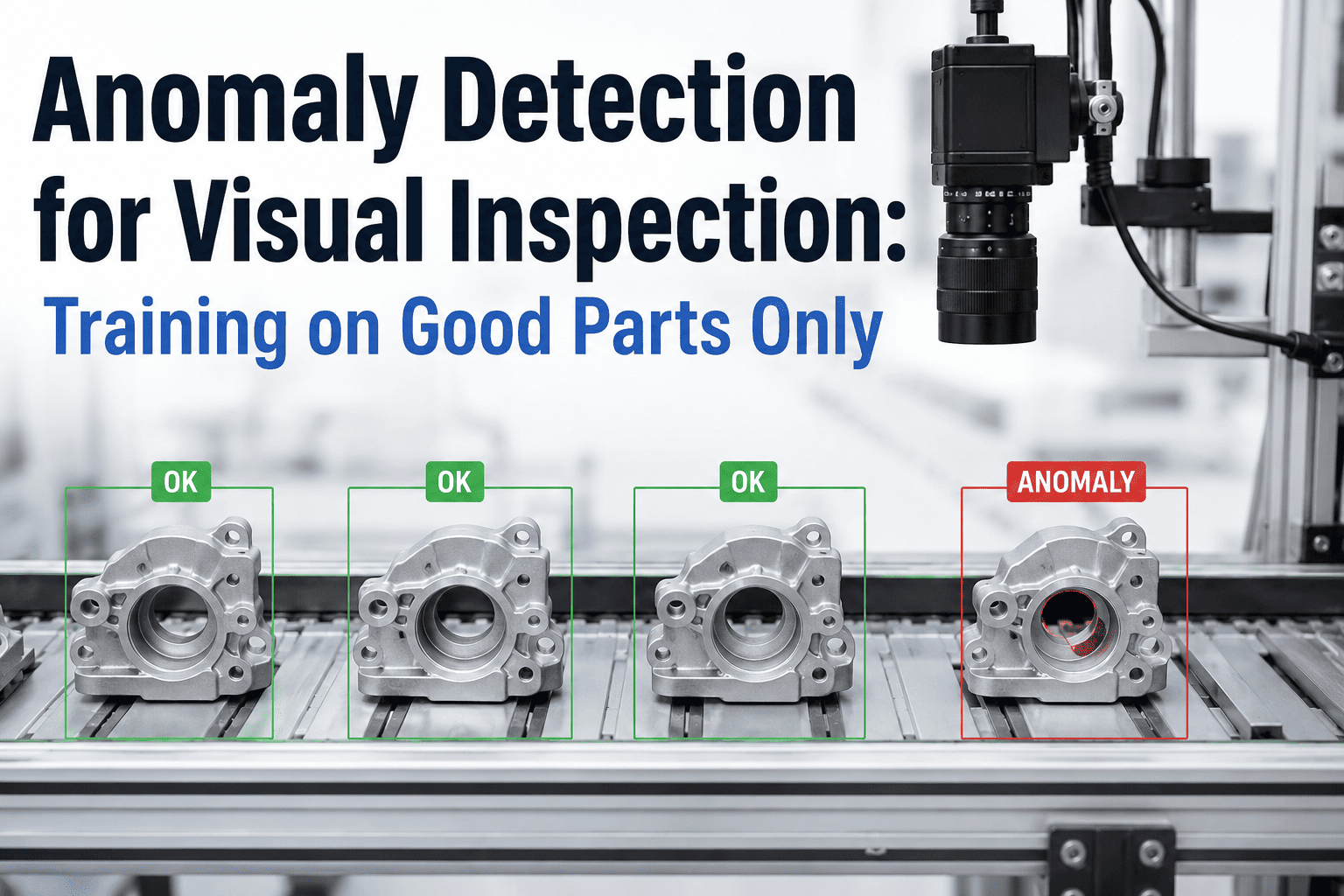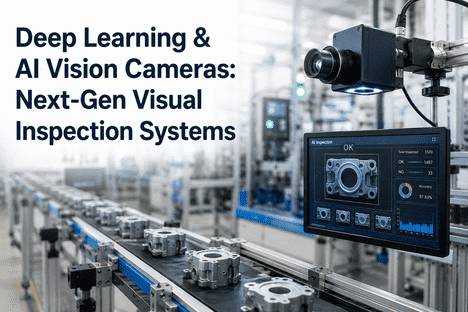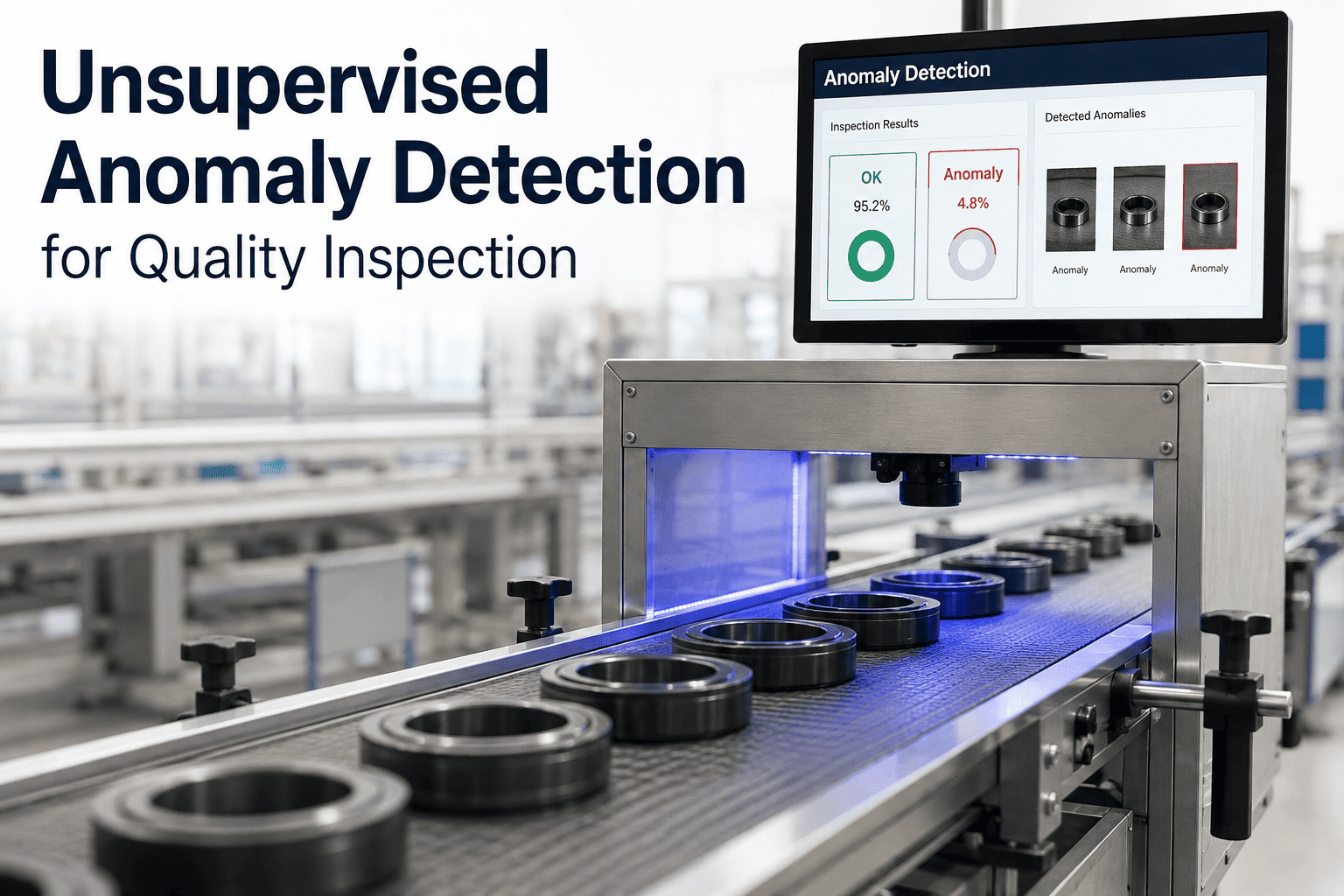
Every plant manager who has fought a supervised defect model knows the paradox — the model is only as good as the defect library it was trained on, but the whole point of running the model is that defects are rare and unpredictable. You spend six months collecting labeled scratches, dents, and inclusions, ship the model to production, and in week two something entirely new walks past the camera — a contamination pattern nobody had photographed, a hairline crack in a new alloy, an assembly gap from a supplier changeover. The supervised model does not flag it because it has never seen anything like it. Unsupervised anomaly detection flips this problem on its head — it trains only on what a good part looks like, and treats anything that deviates from that learned normal as suspect, so it can catch the defect it has never seen before. Quality teams evaluating this approach can book a demo to see iFactory's unsupervised defect detection running against their own line's part images.
The Supervised Trap: Why Labeled Defect Models Keep Missing New Failures
A supervised defect model learns by example — engineers collect thousands of images labeled as scratch, dent, burr, void, discoloration, or good, and the neural network learns the visual fingerprint of each defect class. The approach works well in mature production runs where the defect universe is stable and every failure mode has been photographed and labeled repeatedly. It works poorly in almost every other scenario, and the gap between the two situations is where most quality teams get burned.
The core problem is that defects in real manufacturing are rare, diverse, and unpredictable. A well-run line might see a scratch every ten thousand parts, a contamination event every fifty thousand, an unknown failure mode once a quarter. Collecting a supervised training set of even one hundred examples per defect class can take months, and the moment a new material, new supplier, or new process introduces a defect mode the model has never seen, the model returns confident "good part" predictions on failing product because it has no template for the new failure. Research on industrial defect detection has repeatedly documented that the scarcity of anomaly situations leads to an imbalanced dataset during the early stages of manufacturing, making training of an anomaly detection model under full supervision practically unfeasible, which is exactly why the industry has shifted toward unsupervised approaches.
The Paradigm Shift: Learning What Good Looks Like Instead of What Bad Looks Like
Unsupervised anomaly detection inverts the training problem. Instead of showing the model examples of every possible failure, you show it only examples of good product — hundreds or thousands of parts that passed quality inspection. The model learns the statistical distribution of a good part: the expected texture, color, geometry, edge patterns, and surface finish. At inference time, it scores each new part on how well it fits the learned distribution of normal. Anything that deviates significantly gets flagged as anomalous, regardless of what caused the deviation.
The shift matters most in three situations that describe most real production lines. First, when the defect library is genuinely unknown — a new product launch, a first-of-kind manufacturing line, a supplier changeover that could introduce unfamiliar failure signatures. Second, when defect rates are so low that collecting a labeled defect corpus would take a year or more. Third, when the failure mode landscape evolves faster than the retraining cycle, which is the normal state of any facility running continuous process improvement or frequent product variants.
The Algorithm Landscape: Four Model Families Powering Unsupervised Vision
Under the hood, unsupervised anomaly detection is not one algorithm but a family of approaches, each with different strengths for different inspection surfaces and defect types. Understanding the landscape matters because the wrong algorithm choice for a specific inspection produces exactly the false-positive avalanche that gives unsupervised methods a bad reputation — while the right choice on the right inspection delivers detection rates that supervised models cannot match on novel defects.
Train a neural network to compress an image and reconstruct it from the compressed representation, using only good parts. The network learns to reconstruct normal features accurately. When a defective part is fed in, the reconstruction fails on the defective region — the difference between input and reconstruction highlights the anomaly location.
A pre-trained vision backbone extracts feature vectors from patches across every good training image, building a memory bank of "what normal feature vectors look like." At inference, each patch of the test image is compared to the nearest memory-bank neighbor — patches far from any known normal feature are flagged as anomalous, with the distance serving as an anomaly score.
A flow-based network learns an invertible mapping from good-part feature distributions to a simple mathematical distribution, so likelihood can be computed exactly for any new image. High likelihood means the part fits the learned normal — low likelihood means anomaly. The approach gives calibrated probability scores rather than raw distance metrics.
Classical one-class methods learn a boundary around the good-part feature cloud in a high-dimensional feature space — anything inside the boundary is normal, anything outside is anomalous. Modern deep variants combine learned feature extraction with one-class boundary learning for improved robustness on complex visual inspection tasks.
In practical iFactory deployments, the algorithm choice is not left to the customer — the inspection engineering team profiles the specific surface, defect characteristics, imaging setup, and throughput requirements, then selects and tunes the algorithm family that fits. Most production lines end up with a hybrid: a primary unsupervised model for novel defect detection layered with lightweight supervised classifiers for the handful of well-characterized recurring defects, giving the best of both approaches on the same inspection station.
The Deployment Workflow: From Good-Part Sampling to Live Inspection in Four Weeks
Unsupervised anomaly detection compresses the traditional AI vision timeline dramatically because the longest historical bottleneck — collecting and labeling a defect corpus — disappears entirely. What replaces it is a disciplined four-stage workflow that turns everyday production output into a working inspection model faster than most facilities can procure a traditional vision system.
The Detection Matrix: What Unsupervised Catches That Supervised Misses
The clearest way to see the value of unsupervised detection is to map defect categories against which model type catches them reliably. Supervised models excel at defects they have been explicitly trained to recognize, but the defect landscape in real production always includes categories that were never in the training set — new failure modes, process drift signatures, supplier variation, and one-off contamination events. The matrix below shows where the two approaches actually land in production, and why most sophisticated deployments use both in combination.
| Defect Category | Supervised Model | Unsupervised Model | Practical Recommendation |
|---|---|---|---|
| Recurring known defect — scratches, common dents, standard surface flaws | Strong when labeled corpus exists | Strong, flagged as normal deviation | Either works, supervised often faster |
| Novel defect mode — first-of-kind failure, new material issue | Misses, no training template | Catches on first appearance | Unsupervised critical |
| Supplier drift — subtle raw material or component shift | Misses if drift not in training set | Catches as distribution shift | Unsupervised critical |
| Process anomaly signature — machine wear, tool degradation impact | Misses unless labeled explicitly | Catches as emerging deviation | Unsupervised critical |
| Rare-but-known defect — happens once per hundred thousand parts | Weak, too few training samples | Catches as deviation regardless | Unsupervised preferred |
| Contamination event — foreign object, unexpected residue | Misses unless class exists | Catches, contamination is by definition anomalous | Unsupervised critical |
| Cosmetic variation within spec — legitimate normal variation | Passes correctly if trained on variation | Risk of false positive if variation not in training data | Requires robust normal sampling |
The pattern is clear — unsupervised methods dominate in every category where the defect could plausibly be one the team has not seen before, and match supervised methods on recurring known defects. The only category where unsupervised methods can underperform is legitimate normal variation that was not adequately captured in the good-part training set, which is exactly why disciplined good-part sampling is the most important stage of the deployment workflow. Get the normal baseline right, and the model draws the right boundary between acceptable variation and true anomaly.
A Real Scenario: The Contamination Nobody Saw Coming
A precision-molded plastic components supplier runs high-volume production for automotive interior parts, with quality inspection historically performed by a supervised AI vision model trained on the well-known defect library — short shots, flash, sink marks, weld line issues, surface scratches. The model runs at 98 percent accuracy against known defects for two years, and quality signs off on it as a mature inspection capability. Then a new resin blend arrives from a supplier changeover, and within a week a low-frequency contamination pattern starts appearing on parts: microscopic dark specks scattered irregularly across the surface, invisible in normal handling but visible to the vision system if it were looking.
The supervised model does not flag any of these parts. Every image the model has seen labeled "good" during training was speck-free — the contamination pattern is genuinely new — but the model has no template for "dark specks" as a defect class, so it returns high-confidence good-part predictions on every contaminated part that passes underneath the camera. Two weeks and eight hundred thousand parts later, an automotive assembly customer opens a claim on cosmetic contamination visible after paint application. The supplier's quality team pulls samples, confirms the pattern, and now faces a three-way problem: rework the affected inventory, retrain the supervised model on the new defect (requiring a labeled corpus of contaminated parts to collect), and explain to the customer why the vision system missed it.
Under an unsupervised approach, the same contamination pattern gets flagged on the first part it appears on, because the specks are a clear deviation from the learned distribution of what a normal molded surface looks like. The model does not know the specks are contamination — it only knows the image does not match the good-part distribution — and that is exactly enough to route the part to secondary review and trigger a quality investigation before eight hundred thousand parts ship. The value is not that unsupervised detection is more sophisticated than supervised. The value is that it catches the class of failures the supervised model was structurally incapable of catching, and that class is the one that produces the customer escapes and rework campaigns nobody plans for.
The Business Case: Where Unsupervised Detection Moves the Numbers
The value of unsupervised anomaly detection shows up in four categories of quality-cost impact. Unlike traditional inspection ROI arguments that focus on labor savings from replacing manual inspectors, the unsupervised value story centers on the defect classes the previous inspection approach was missing — the scrap that was leaving the plant, the rework campaigns triggered by customer complaints, and the process drift signatures that were causing quality problems weeks before anyone connected them to the root cause.