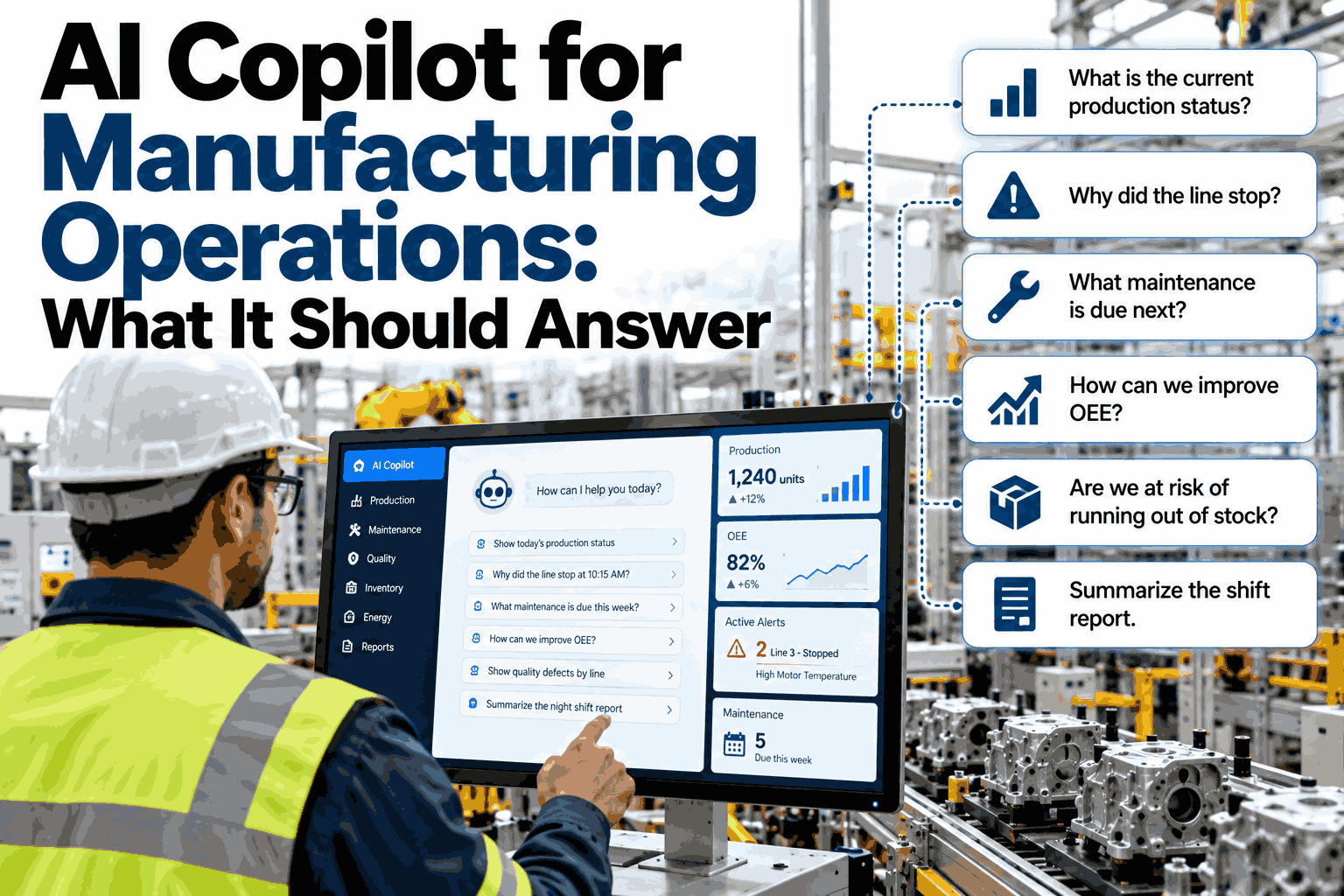
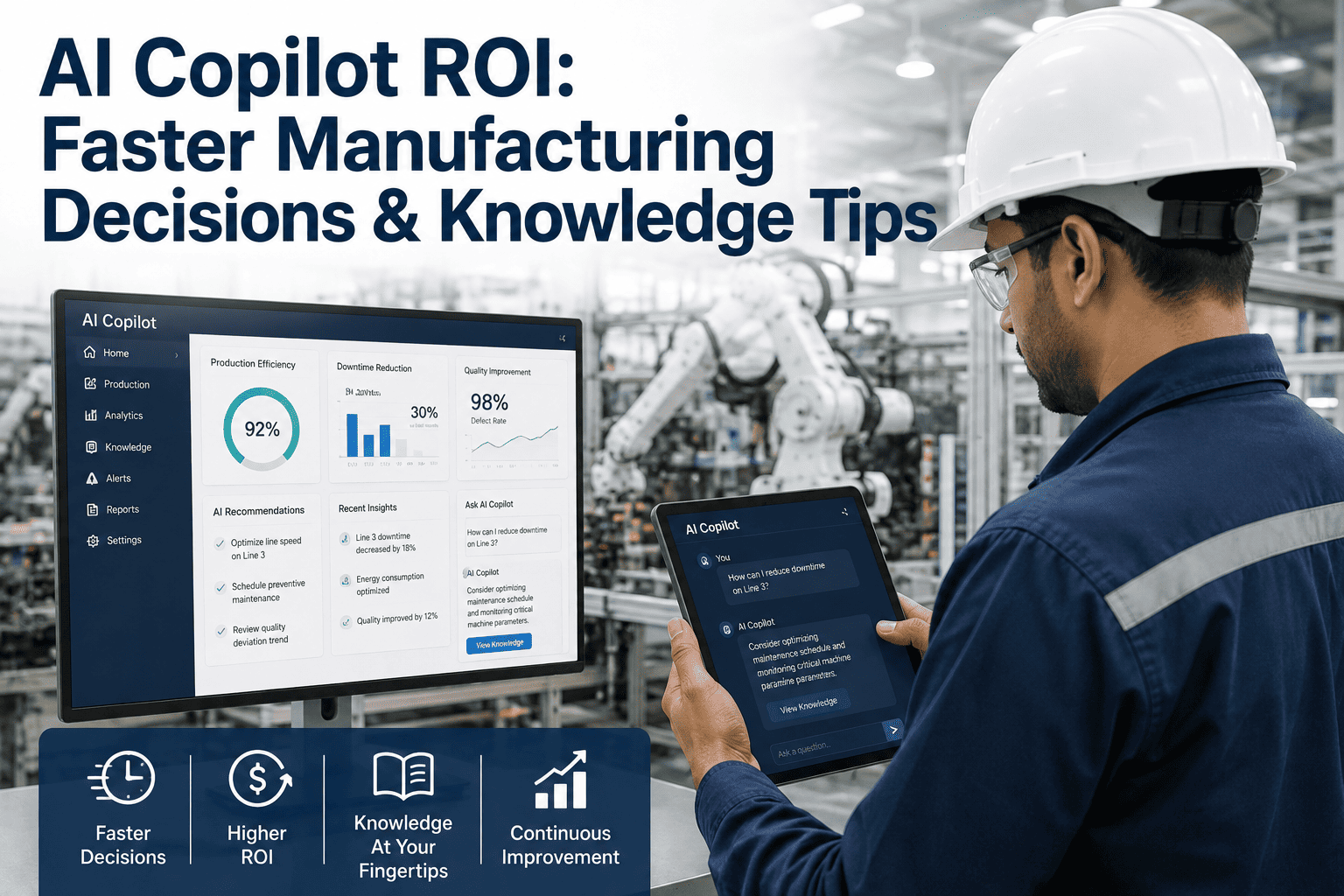
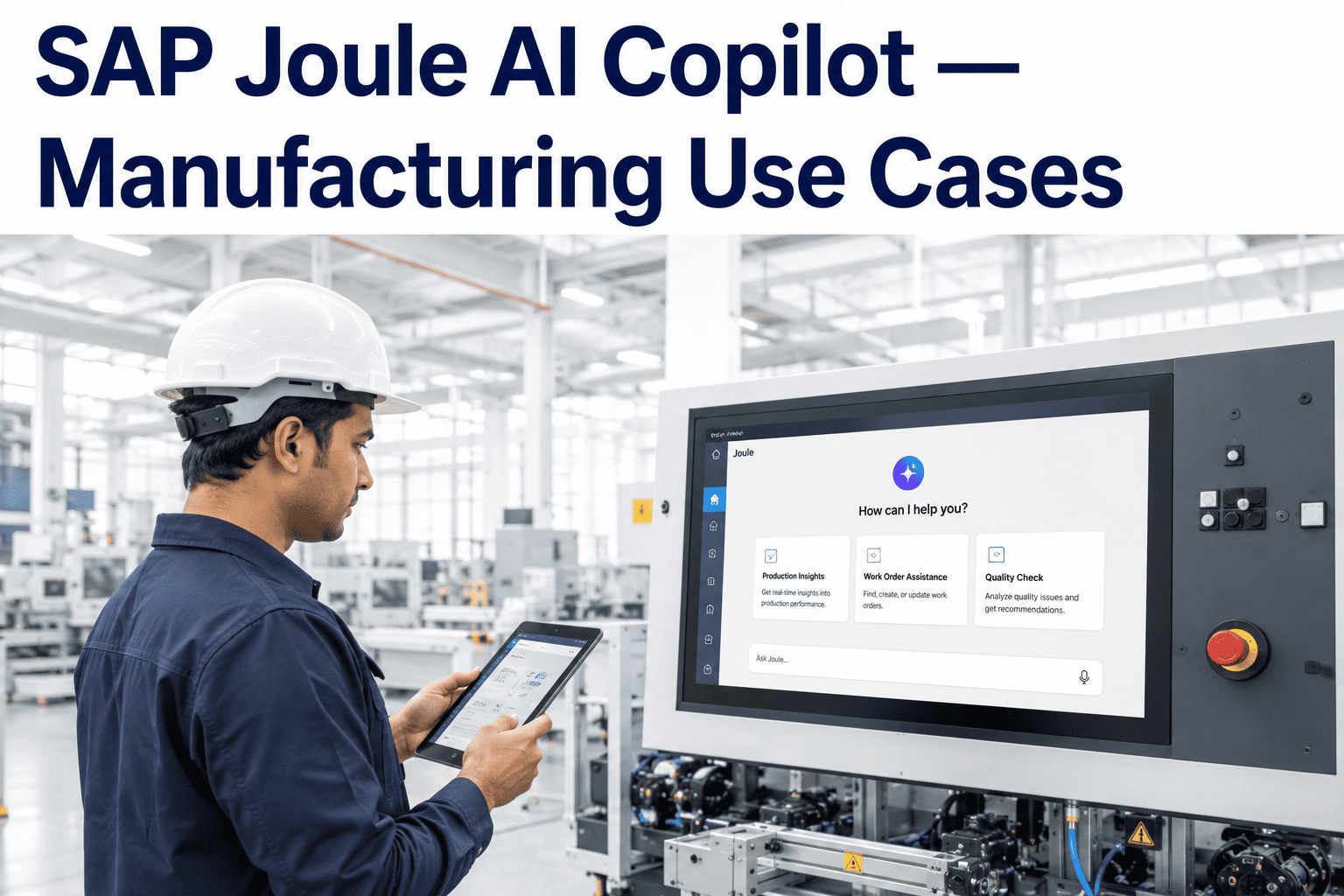
An operator staring at an unfamiliar fault code on a line they don't run every day has exactly two realistic options: page someone more senior and wait, or start guessing. Neither is good, and both happen constantly across manufacturing floors because the knowledge that would answer the question, what this fault usually means, what fixed it last time, which SOP applies, lives scattered across a CMMS, a historian, a shared drive full of PDFs, and the memory of whichever technician has been there longest. An AI copilot exists to collapse that search into a single plain-language question, answered directly from your plant's own systems rather than a generic manual, so the person standing in front of the equipment gets an answer in the moment they actually need it. If your team is still relying on tribal knowledge and phone calls to solve routine problems, book a demo to see what a direct answer looks like.
AI COPILOT · OPERATIONS & MAINTENANCE ASSISTANT
One Question Away From the Answer That's Already in Your Systems
iFactory's AI copilot answers natural language questions from operators and technicians directly, pulling from your MES, CMMS, historian, and SOP library instead of scattering the answer across five different systems.
COPILOT
Natural Language Query
Equipment Diagnostics
Intelligent Recommendations
THREE THINGS IT ACTUALLY DOES
Not a Chatbot, an Operational Assistant
The distinction matters: a generic chatbot answers questions about the world in general. An operations copilot is grounded specifically in your plant's own data, which is what makes its answers actionable rather than merely plausible.
Natural Language Query
Ask a question the way you'd ask a colleague, "why does Line 3 keep tripping on startup," and get an answer synthesized from actual work order and sensor history rather than a keyword search result.
Equipment Diagnostics
Fault codes, sensor readings, and recent maintenance history are correlated automatically to narrow down a likely cause before a technician even opens a panel.
Intelligent Recommendations
Suggested next steps, ranked by how often they've actually resolved this specific issue on this specific asset in the past, not a generic troubleshooting flowchart.
WHAT AN EXCHANGE ACTUALLY LOOKS LIKE
Two Real Questions, Answered Directly
"Why is Extruder 2 running hot again?"
Extruder 2 has logged three thermal warnings in the past two weeks, all correlated with a cooling fan speed reading below its normal range. The last two similar events were resolved by cleaning debris from the fan intake. Suggested first check: fan intake obstruction.
"Is this vibration reading on Pump 6 something to worry about?"
Current reading is within Pump 6's normal operating band, no threshold crossed. For reference, this pump's last bearing replacement was 14 months ago, and the typical service interval for this model is 18-24 months based on your fleet's history.
Ask it a real question from your own floor
iFactory can run the copilot against your own equipment history and show you a live answer to a question your team is actually asking.
WHERE IT ACTUALLY PLUGS IN
Grounded in the Systems You Already Run
MES
Production context, current job, line status, and recent process parameters.
CMMS
Full work order and repair history, so past fixes on this exact asset inform the current answer.
Historian
Sensor and process trend data correlated against the question being asked in real time.
SOP Library
The exact procedure document surfaced automatically, rather than requiring a manual search through a shared drive.
WITH AND WITHOUT A COPILOT
What Actually Changes on the Floor
| Factor |
Without a Copilot |
With an AI Copilot |
| Finding equipment history |
Manual search across separate CMMS screens |
Summarized directly in response to a plain question |
| Diagnosing an unfamiliar fault |
Escalate to a supervisor and wait |
Immediate, asset-specific diagnostic guidance |
| Knowledge from experienced staff |
Lost when that person is off shift or leaves |
Captured in the system and available to everyone |
| SOP retrieval |
Manual search through a shared drive or binder |
Surfaced automatically alongside the diagnostic answer |
| Consistency across shifts |
Varies by who's on shift and what they remember |
The same grounded answer, every shift, every technician |
TURNKEY DEPLOYMENT
How iFactory Gets the Copilot Running
What Gets Delivered
Copilot grounded in your MES, CMMS, historian, and SOP library
Natural language query interface accessible from mobile and desktop
Equipment-specific diagnostic correlation across fault codes and history
Ranked recommendations based on what's actually resolved issues before
A feedback loop so incorrect suggestions get corrected quickly
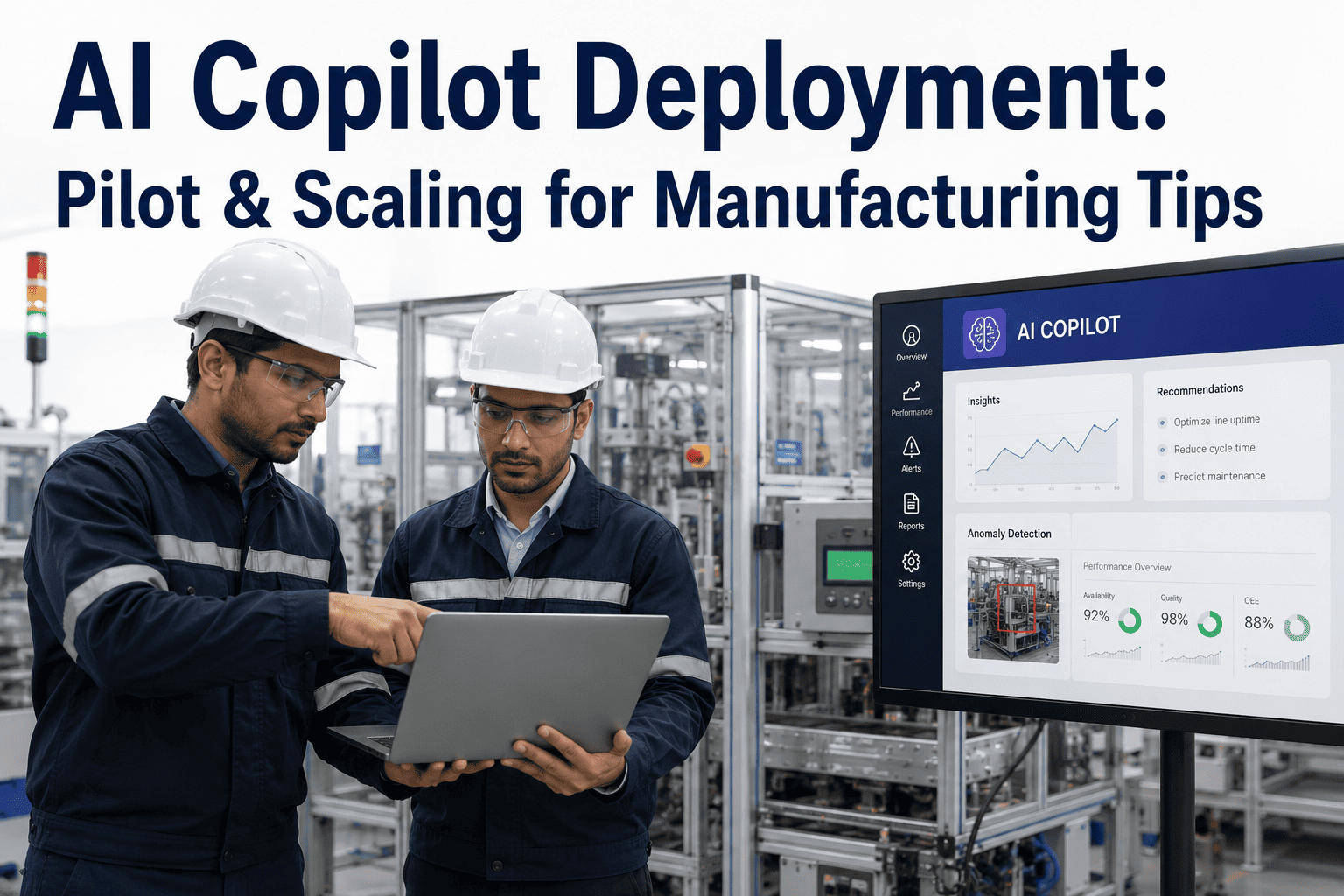
Rollout Timeline
Weeks 1-2: System integration and document ingestion
Weeks 3-4: Diagnostic correlation tuning and testing
Week 5: Team training and first live shift on the copilot
FREQUENTLY ASKED QUESTIONS
What Operations Teams Ask Before Rolling Out a Copilot
Is this a general AI chatbot, or does it actually know our specific equipment?
It's grounded specifically in your plant's own operational data, MES production context, CMMS work order history, historian sensor trends, and your SOP library, rather than answering from general knowledge the way a broad-purpose chatbot would. This grounding is the entire point: a question about why a specific extruder is running hot gets answered using that exact asset's actual fault history and recent sensor readings, not a generic troubleshooting guide that could describe any extruder anywhere.
Book a demo to see it answer a real question grounded in your own equipment history.
What happens if the copilot gives an operator incorrect guidance?
Every recommendation traces back to the specific work order, sensor reading, or document it was drawn from, so an operator can see exactly what the suggestion is based on and apply their own judgment rather than trusting an opaque answer blindly. When a suggestion turns out to be wrong or unhelpful, that feedback is captured directly and used to improve future answers on that same fault pattern, so the system corrects itself from real usage rather than repeating the same mistake indefinitely.
Contact our support team to review the feedback and correction process in detail.
Will this replace the need for experienced technicians on the floor?
The more accurate framing is that it captures and distributes the knowledge experienced technicians already have, rather than replacing the judgment and hands-on skill that repair work still genuinely requires. A newer technician troubleshooting an unfamiliar fault at two in the morning gets the benefit of institutional knowledge that would otherwise only be available if the right senior person happened to be on shift, which extends the value of your most experienced staff rather than making them less necessary.
Book a demo to discuss how this fits alongside your existing team's expertise.
How much setup is required to connect this to our existing systems?
Integration effort depends on how many systems you're connecting and their current state, but most deployments connect to an existing CMMS, historian, and document library without requiring those systems to be replaced or significantly reconfigured first, since the copilot is built to read from what you already have rather than demanding a new source-of-truth system. Document ingestion for SOPs and manuals, PDFs, scanned documents, spreadsheets, typically happens directly without a separate digitization project, though some review during setup helps confirm accuracy on older or lower-quality source material.
Contact our support team to scope integration effort against your specific systems.
How fast does it actually respond during a real troubleshooting situation?
Response time is built around the reality that someone asking a question mid-repair needs an answer in the moment, not a report to review later, so a first response to a natural language question typically returns in well under a minute, drawing simultaneously from equipment history, sensor data, and documentation. This speed is specifically what makes the difference between a tool that actually gets used during an active troubleshooting session and one that gets ignored because it's slower than just guessing or waiting for a supervisor.
Book a demo to see live response time against a real diagnostic question.
EVERY QUESTION, ANSWERED FROM YOUR OWN DATA
Give Every Shift the Knowledge of Your Best Technician
iFactory's AI copilot answers plain-language operations and maintenance questions directly from your MES, CMMS, historian, and SOP library, right when the question is actually asked.