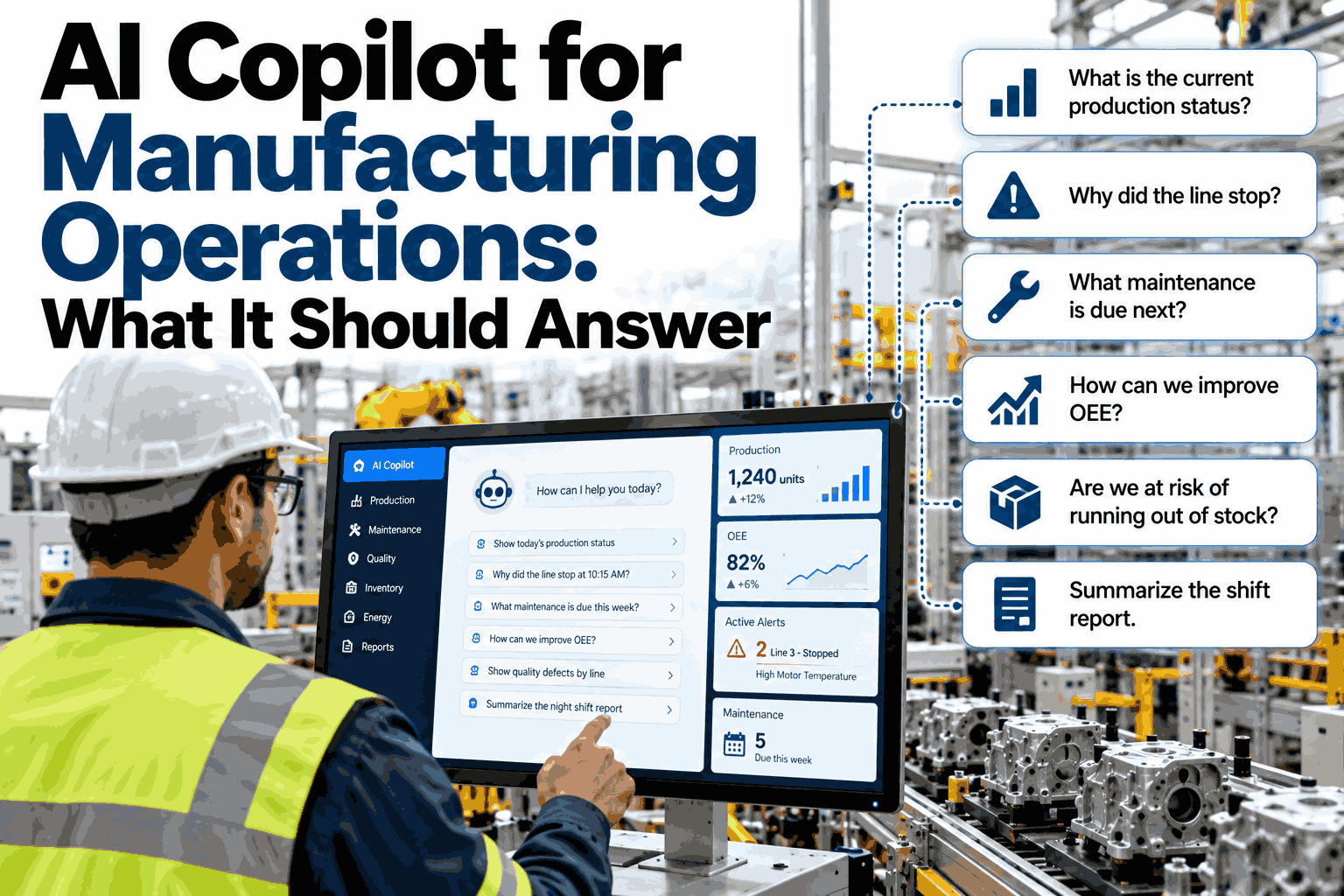
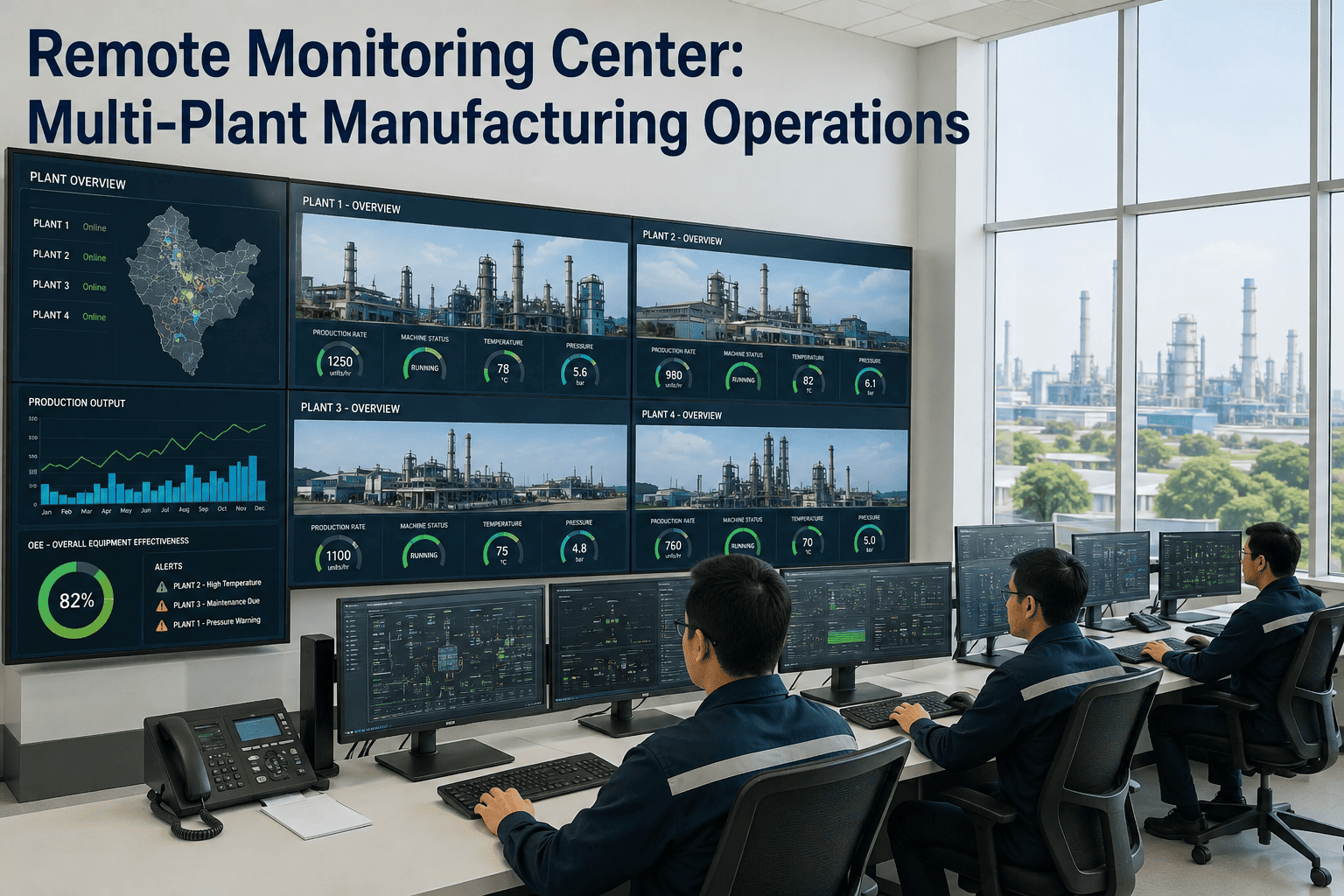
Plant teams do not need another dashboard, they need a faster way to get a straight answer in the middle of a shift. An AI copilot for manufacturing operations lets an operator, technician or manager ask a plain question and receive a clear reply built from live machine, quality and maintenance data. The value depends entirely on which questions it can answer well and how it proves each answer. Before you shortlist any tool, it helps to test a copilot against your own shop floor questions in a guided session.
Industrial AI and smart manufacturing
Ask the Plant a Question and Get an Answer You Can Act On
iFactory AI connects production, quality and maintenance data so a copilot can explain what happened, why it happened and what to do next.
Why did Line 3 slow down after the 2 pm changeover?
Copilot answer
Cycle time rose 9 percent after tool change T-14. Two micro-stops on the feeder explain most of the loss. Check feeder alignment first.
Source: line dataConfidence: high
The real problem
Every Shift Runs on Questions That Take Too Long to Answer
Information exists on the floor, but it sits in separate systems. Finding it means calls, spreadsheets and waiting for someone who knows where to look.
Start of shift
What did the last shift leave open?
Mid shift
Why is output below plan?
After a stop
Has this fault happened before?
End of shift
What should the next team watch?
A copilot compresses that search into seconds. The risk is a confident but wrong reply, which is why the quality of answers matters more than the novelty of chat.
A good copilot says where an answer came from and how sure it is. If it cannot show its evidence, it should say it does not know.
Question families
Five Kinds of Questions a Manufacturing Copilot Must Handle
Strong tools cover the whole range, from simple status checks to guidance on what to do next.
1
What is happening now?
Live status, output against plan, active alarms and downtime.
2
What happened and why?
Root cause across stops, scrap, slow cycles and quality drift.
3
What is likely to happen?
Early warnings for failures, missed schedules and rising defects.
4
What should we do?
Ranked actions with the reason behind each suggestion.
5
How do I do this task?
Procedures, past repairs and manuals found in plain language.
Bring Your Hardest Plant Questions
Share the questions your teams ask most and see how iFactory AI answers them using your own data sources.
Anatomy of an answer
Four Layers That Separate a Useful Answer From a Guess
Every reply should be built the same way, so people learn to trust it and check it quickly.
Direct answer
The short reply to the exact question asked.
Evidence
The data points, events and records behind it.
Confidence
How certain the system is and what is missing.
Next step
One suggested action and who should take it.
When any layer is missing, the answer is harder to act on. Operators should be able to open the evidence in one tap.
Data it depends on
A Copilot Is Only as Good as the Data Behind It
Answers improve as more connected sources feed the same view of the plant.
Machine signalsQuality recordsWork orders
Copilot knowledge layer
Production planManuals and SOPsShift notes
Start with the two or three sources your teams already trust, then widen the circle. Clean, time-stamped data matters more than large volumes of messy data. To plan which sources to connect first, ask our team for a data readiness review.
Questions by role
The Same Copilot Should Speak Differently to Each Person
A technician and a plant head ask different things, so replies must match the job.
Operator
What alarm is this and what do I check first?
Maintenance
Which asset needs attention before the weekend?
Quality
Which batches share this defect pattern?
Plant manager
Where are we losing the most output this week?
Maturity ladder
Climb From Lookup to Guided Action in Four Levels
Few plants jump straight to automated advice. Each level adds value and needs more trust.
Level 1: LookupFind data and documents fast
Level 2: ExplainShow causes behind events
Level 3: RecommendSuggest ranked actions
Level 4: Assist actionPrepare work with human approval
People stay in control at every level. The copilot prepares and explains, and a trained person approves any action that changes the process.
Good versus weak
Spot the Difference Between a Trusted Reply and a Risky One
Ask the same question and compare how two copilots respond.
Weak answer
Gives a conclusion with no source
Hides uncertainty
Ignores recent shift notes
Offers no next step
Trusted answer
Links to the data it used
States confidence and gaps
Uses current plant context
Suggests one clear action
Question to answer map
What Each Question Needs Behind the Scenes
Use this table to judge whether a copilot can really support the questions you care about.
| Question | Data needed | Best answer format | Check before trusting |
|---|
| Why did output drop? | Machine states, stops, plan | Ranked loss causes | Matches downtime log |
| Which asset may fail? | Sensor trends, repair history | Risk list with reasons | Reviewed by maintenance |
| Where is scrap rising? | Quality results, batch data | Pattern by line and shift | Confirmed on samples |
| How do I fix this fault? | Manuals, past work orders | Step list with source | Approved procedure used |
Rollout plan
A 30-60-90 Day Path and Readiness Checklist
Begin with one line and a short list of questions, then grow as trust builds.
Days 1 to 30
Pick ten questions and connect two data sources.
Days 31 to 60
Pilot with one shift and collect operator feedback.
Days 61 to 90
Add roles, more sources and shared reports.
Top ten questions asked every week
Two trusted data sources identified
Named owner from operations and IT
Rules for what the copilot may suggest
Measures such as time to answer and downtime
Route for operators to flag wrong answers
Frequently asked questions
What Plant Teams Ask Before Adopting a Copilot
Will a copilot replace supervisors or engineers?
No, it speeds up their work by finding and explaining information. People still make the decisions and approve any change to the process. Its role is to reduce searching time.
See how teams work with it in a live session.
What if the copilot gives a wrong answer?
Every answer should show its sources and confidence so errors are easy to spot. Operators can flag a wrong reply, and that feedback improves future results. Clear review rules keep risk low.
Ask the support desk about safeguards.
Do we need perfect data to begin?
No, but you need data that is consistent and time-stamped for the questions you choose. Starting with two reliable sources works better than connecting everything at once. We help you decide where to begin.
Plan your first sources with our team.
Can it work with the systems we already use?
It is designed to read from existing production, quality and maintenance systems. The exact connection depends on what your plant runs today. A short review confirms what is possible.
Discuss your systems with support.
How do we measure whether it is working?
Track time to find an answer, unplanned downtime, repeat faults and how often operators trust the reply. Compare these against your baseline before the pilot. Simple measures keep the review honest.
Set pilot measures together with us.
Answers your teams can trust
See an AI Copilot Answer Questions About Your Own Plant
Book a session with iFactory AI to test real shift questions, review the evidence behind each answer and see how smart manufacturing software can support faster decisions.